 Kitsumi
Japanese particles は and が: which one?
A six-page printable PDF that goes deeper than the particles guide: what は and が each do, when the choice is fixed and when both are right, with every example in kanji with furigana, romaji and English.
PDF · 6 pages · 468 KB · no sign-up · free to print and share
Was it useful?Ideas or a mistake? Tell us on Discord
Next, meet these words in real videos: Kitsumi is free for Chrome and Firefox.
What's inside
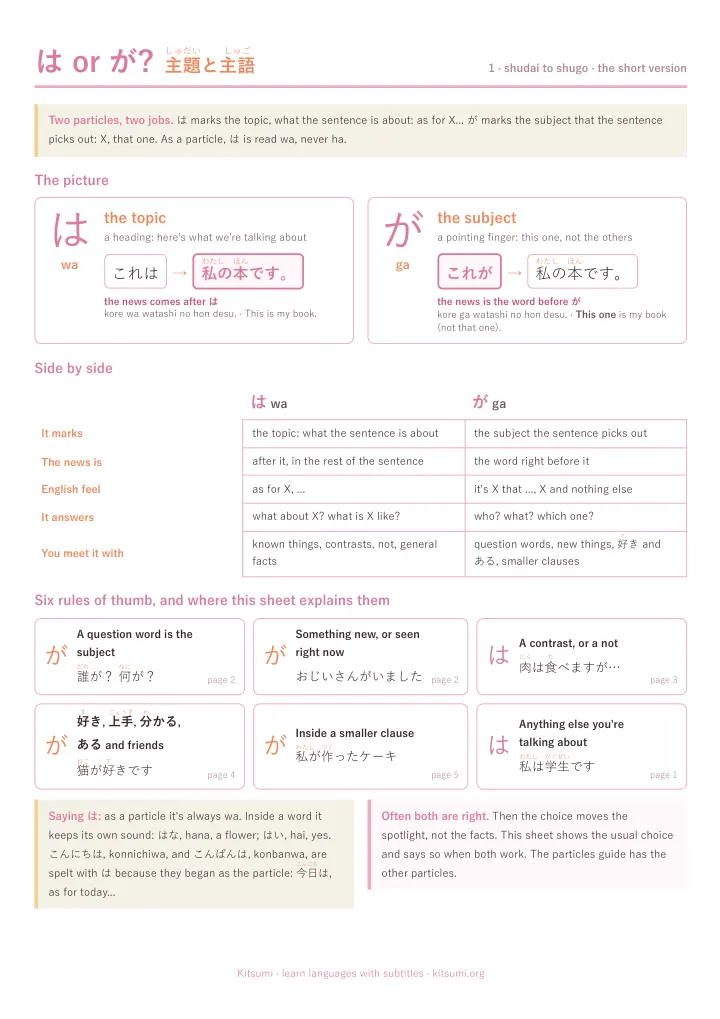
- The short versionは marks the topic, が the subject the sentence picks out, a picture of where the news sits, a side-by-side table, and six rules of thumb that point to the page that explains each one.
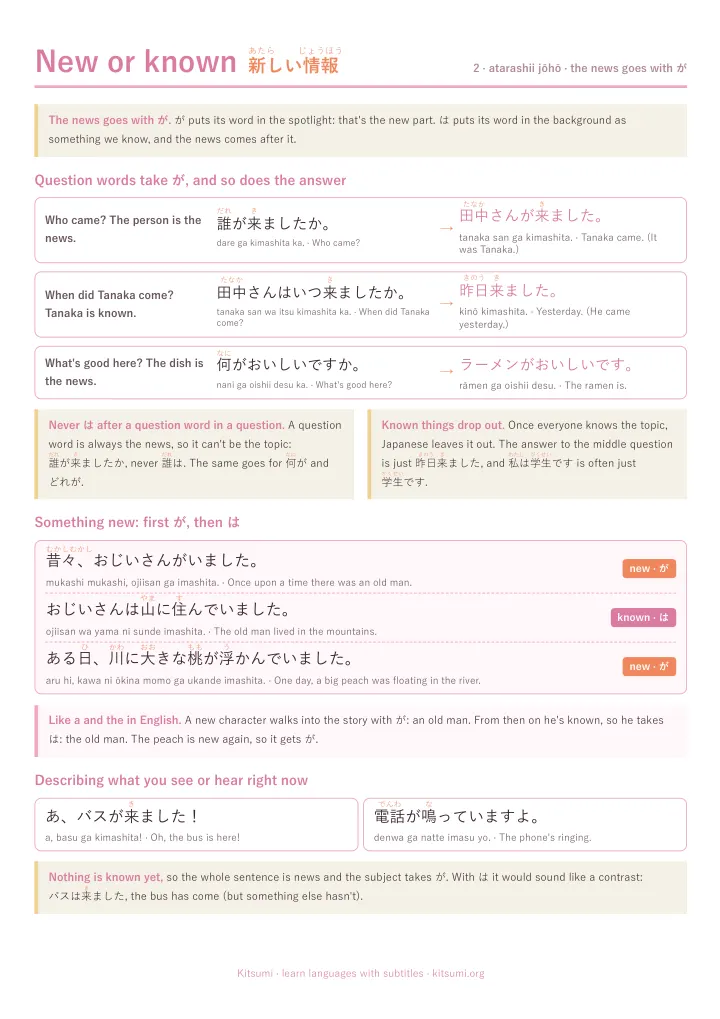
- New or knownQuestion words take が and so does the answer (誰が来ましたか, 田中さんが来ました), new things come in with が and stay with は (昔々、おじいさんがいました), and が for what you see right now.
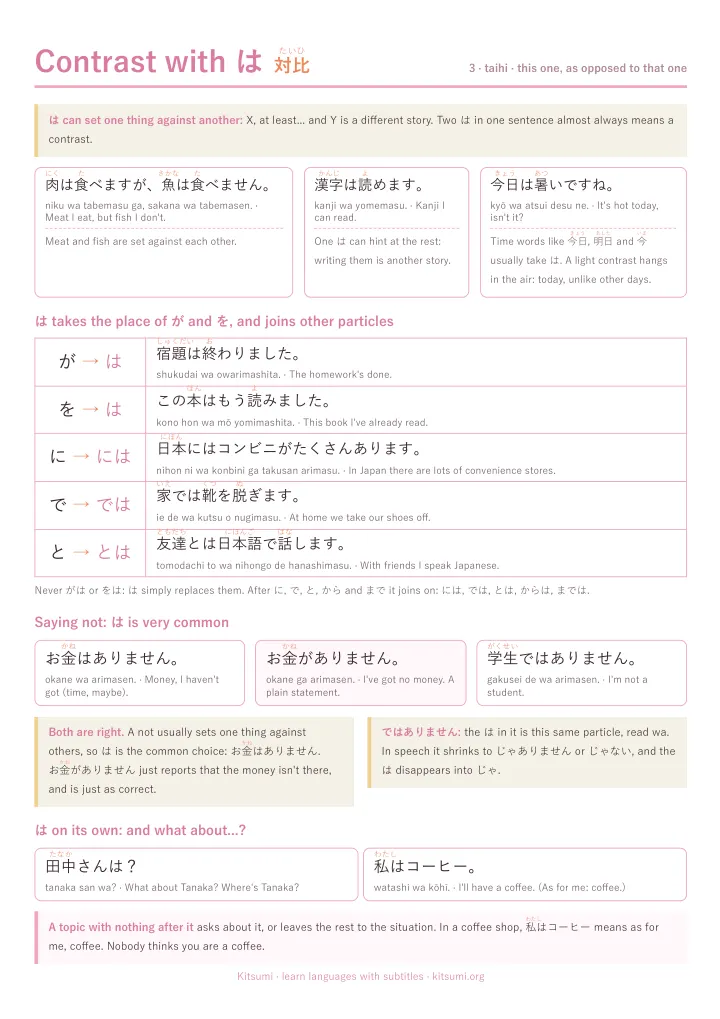
- Contrast with は肉は食べますが、魚は食べません, time words like 今日は, は after other particles (には, では, とは), not with は, and は on its own: 私はコーヒー.
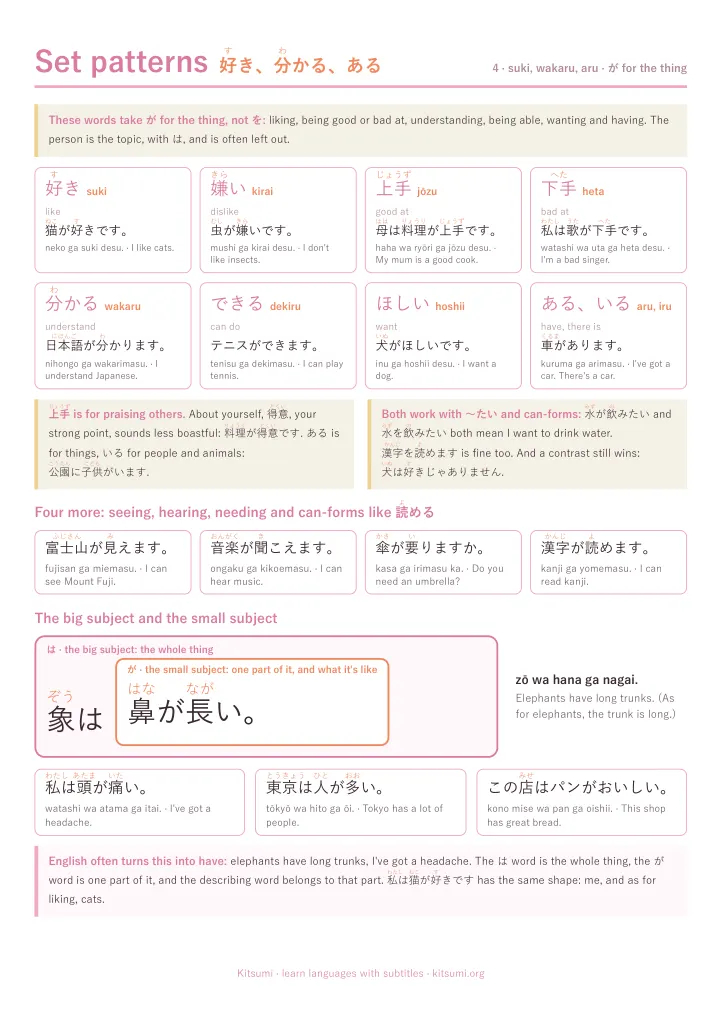 Set patterns with が好き, 嫌い, 上手, 下手, 分かる, できる, ほしい, ある and いる, a few more like 見える, honest notes where both が and を are fine, and the big subject and the small subject: 象は鼻が長い, 私は頭が痛い.
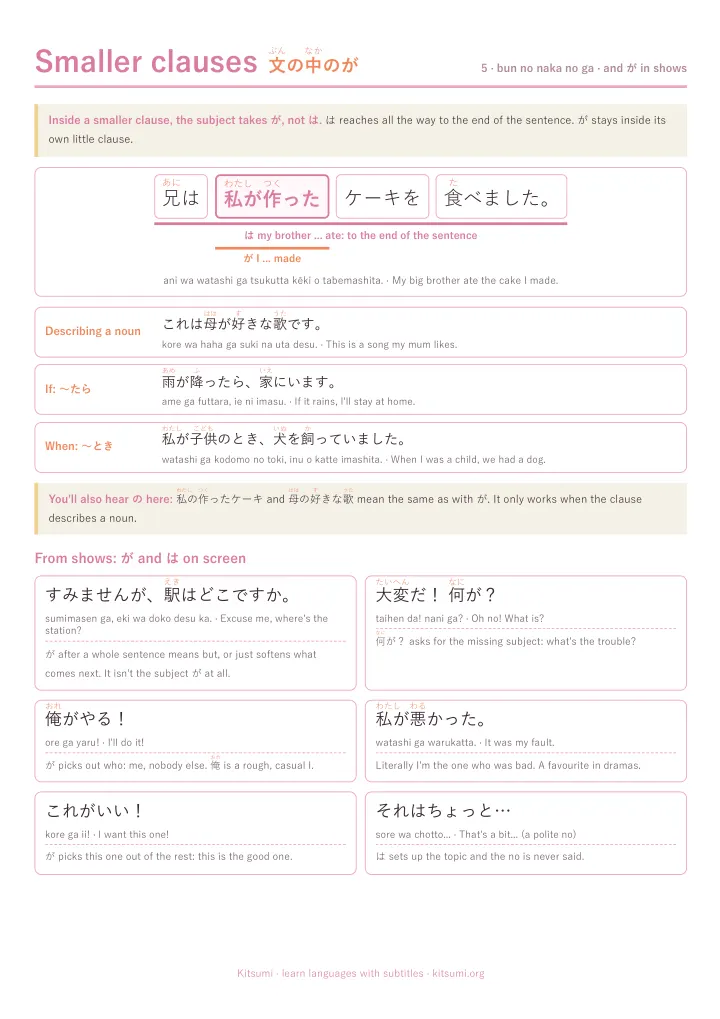 Smaller clauses and showsが inside a clause (私が作ったケーキ, 雨が降ったら), the の you'll also hear there, and lines from shows: すみませんが, 何が?, 俺がやる! and それはちょっと…
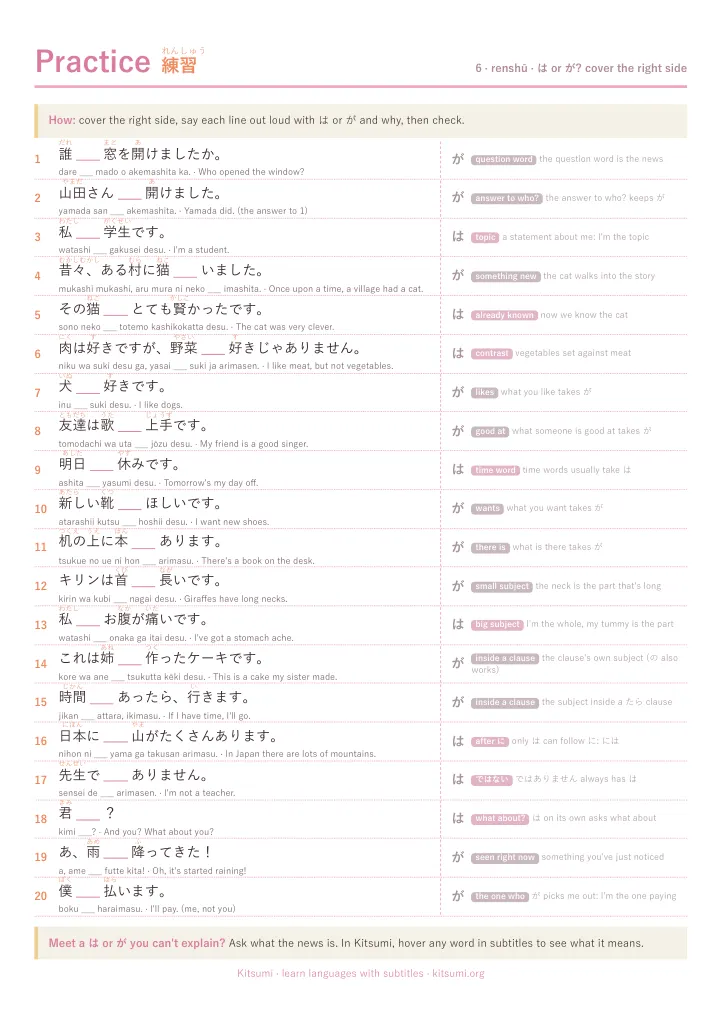 PracticeTwenty は or が gaps. The answers sit in small print on the right, each with its rule and a one-line reason. Cover them with a strip of paper and check yourself.
How to use it
- Read the particles guide first if は and が are new to you.
- Start with page one: the picture and the six rules of thumb cover most sentences.
- When a line in a show surprises you, ask what the news is, then find the page that explains it.
- Cover the answers on the practice page, say each line out loud, then check the reason.
More free Japanese printables
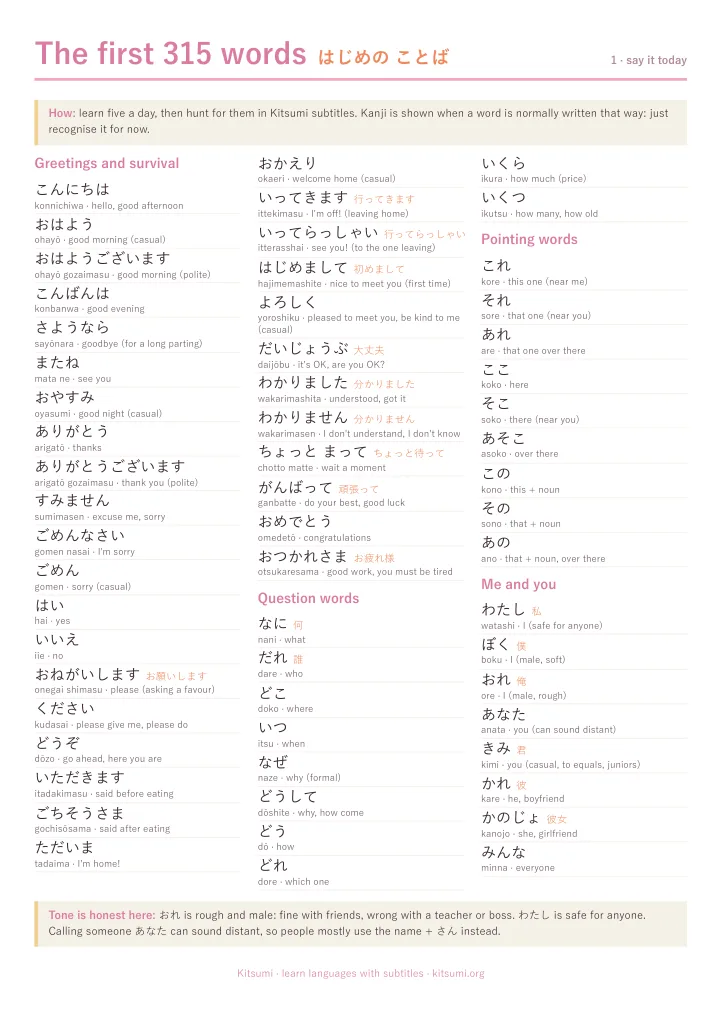 Next stepBasic Japanese words listPick up the first 315 words: greetings, people, numbers, food, verbs and more.
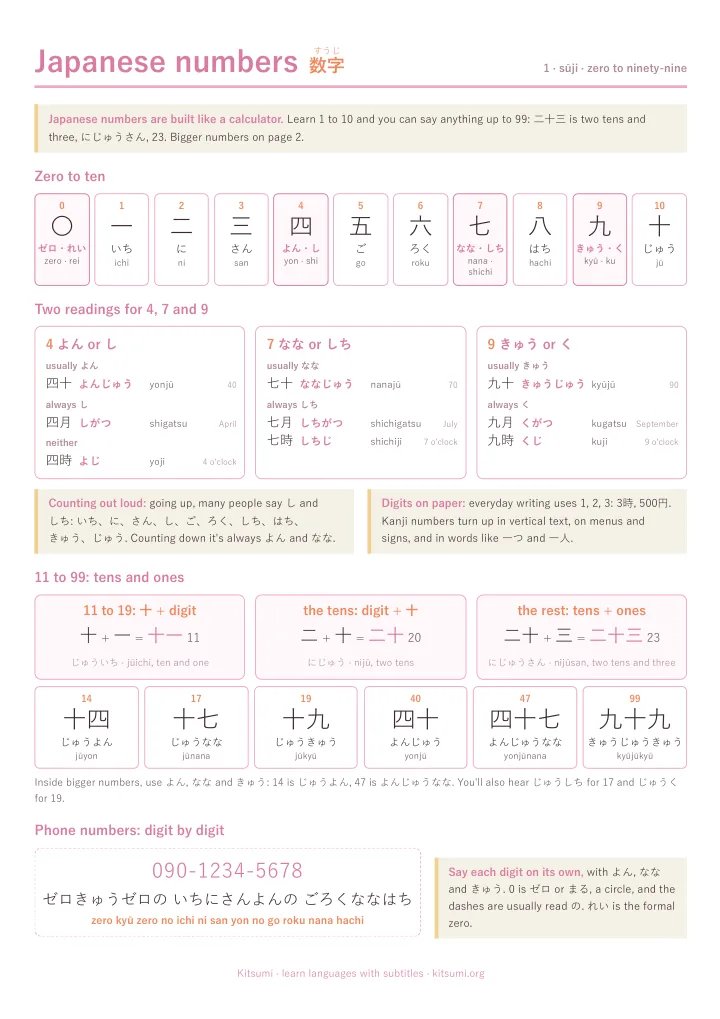 Japanese numbers and countersThen sort out numbers: いち, に, さん and ひとつ, ふたつ, counting in 万, and counters like 本 and 人.
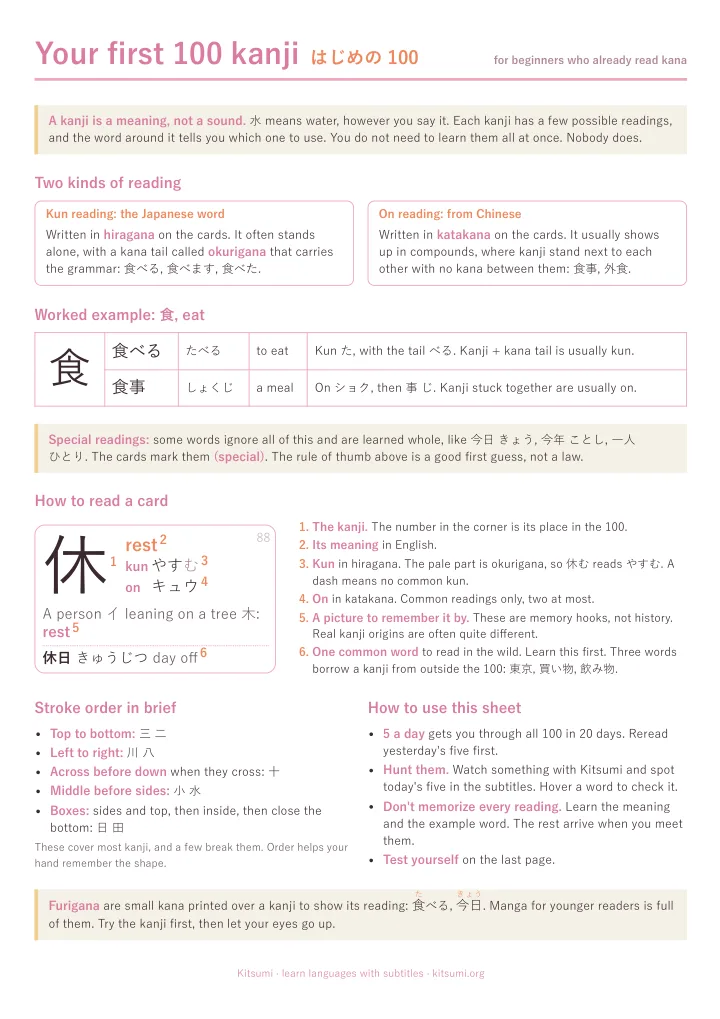 Your first 100 kanjiStart kanji once you read kana comfortably: 100 beginner kanji, each with a picture.
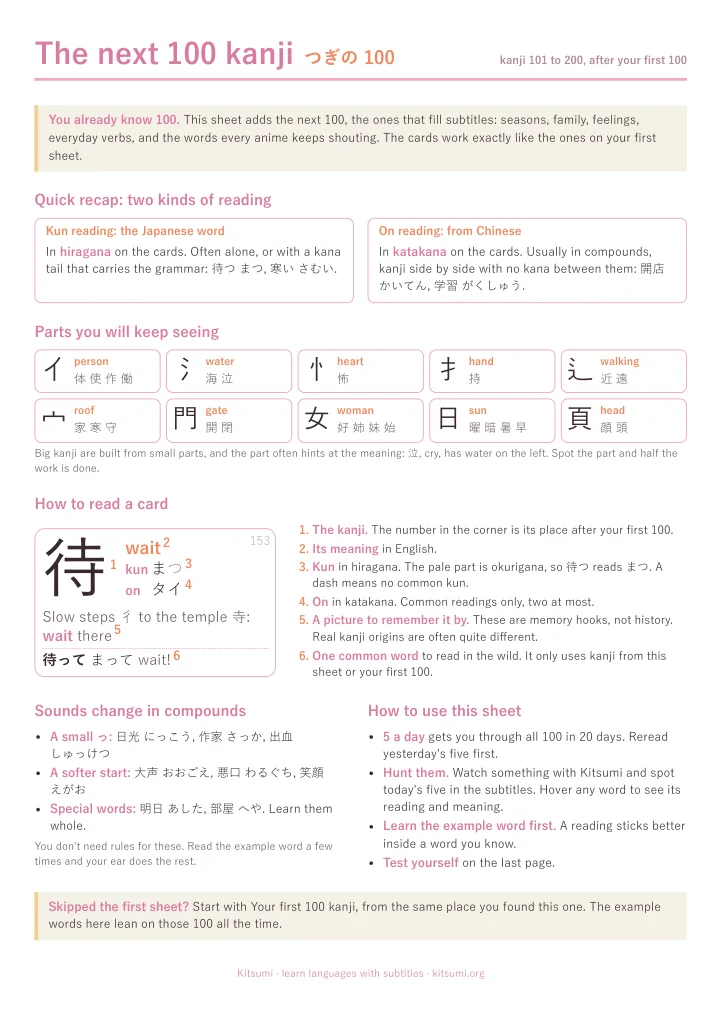 The next 100 kanjiDone with your first 100? Here are the next 100: seasons, family, feelings, verbs and anime words.
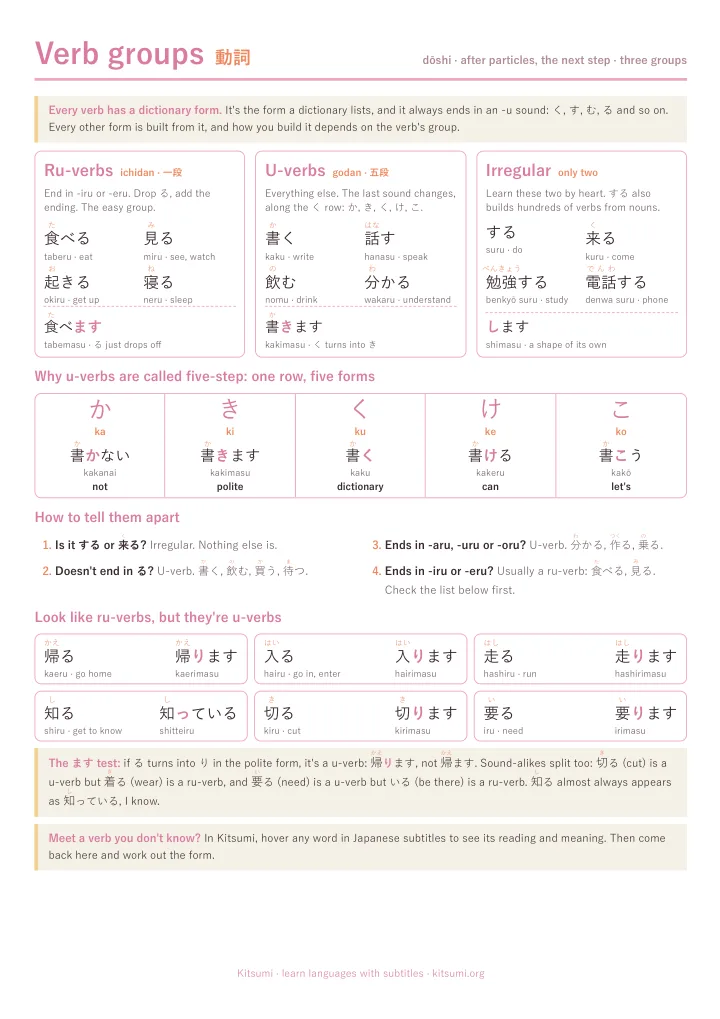 Japanese verb forms guideMake verbs do more: ます, ない, た, て, can, want to and let's, for every kind of verb.
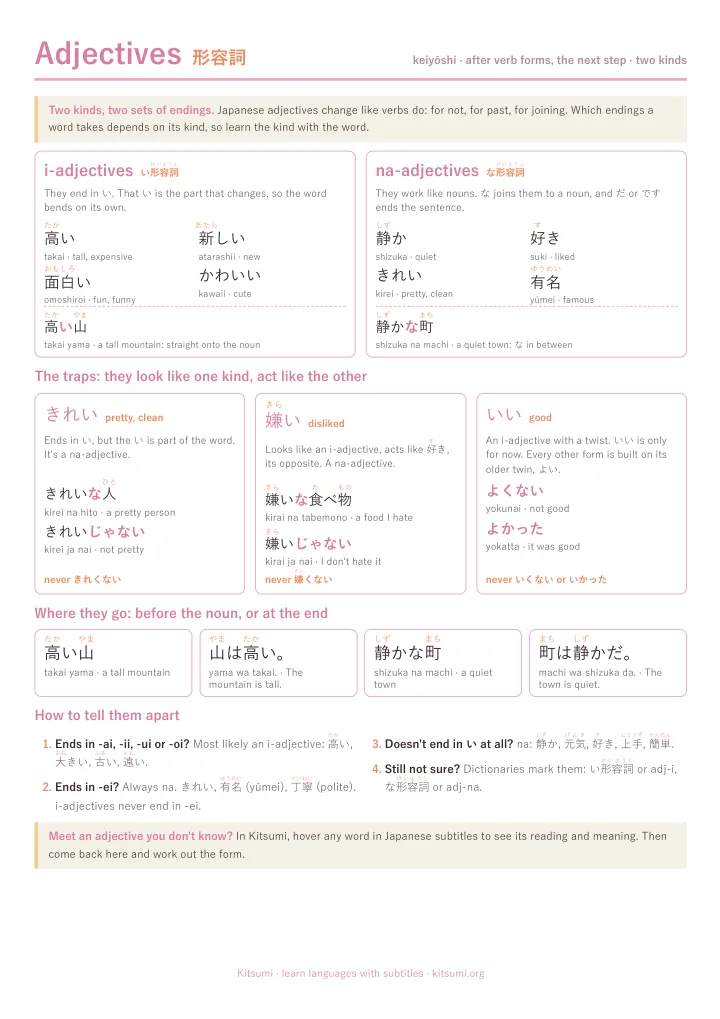 Japanese adjectives guideDescribe things: i-adjectives and na-adjectives in every form, from くない and かった to より and 一番.
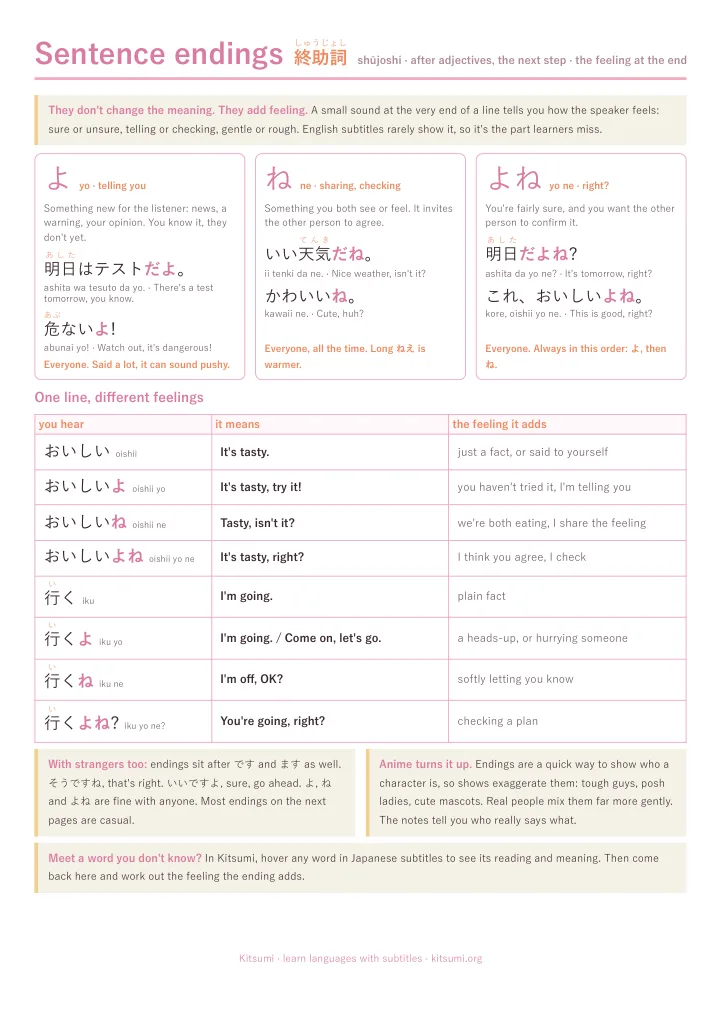 Japanese sentence endings guideHear the feeling: よ, ね, ぞ, わ, かな, じゃん, でしょ and the other endings that close almost every line.
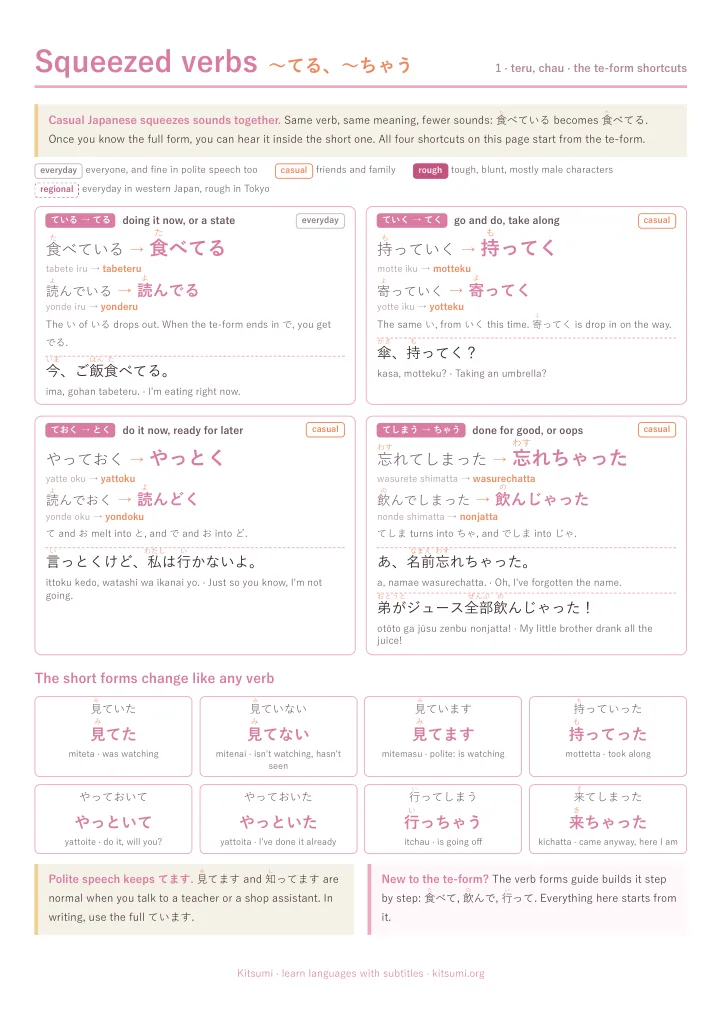 Japanese casual speech: the verb contractions you hear in animeThen hear the squeeze: てる, ちゃう, なきゃ, 分かんない and the other short forms friends use.
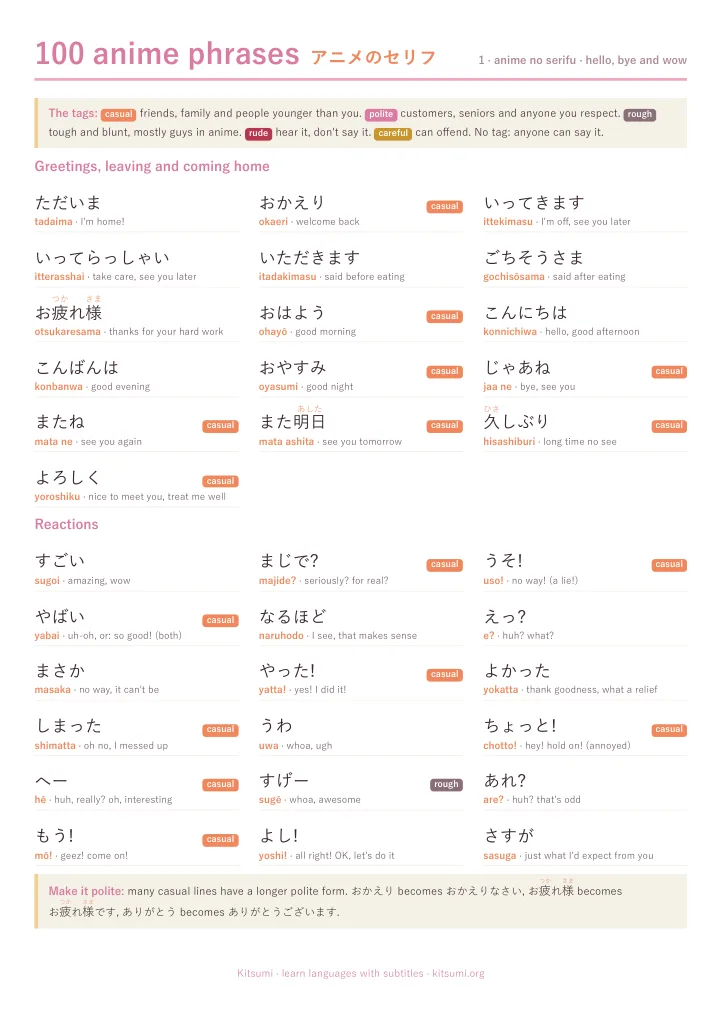 100 anime phrasesThen pick up the lines anime uses all the time: ただいま, まさか, 行くぞ, 任せて and what 先輩 really means.
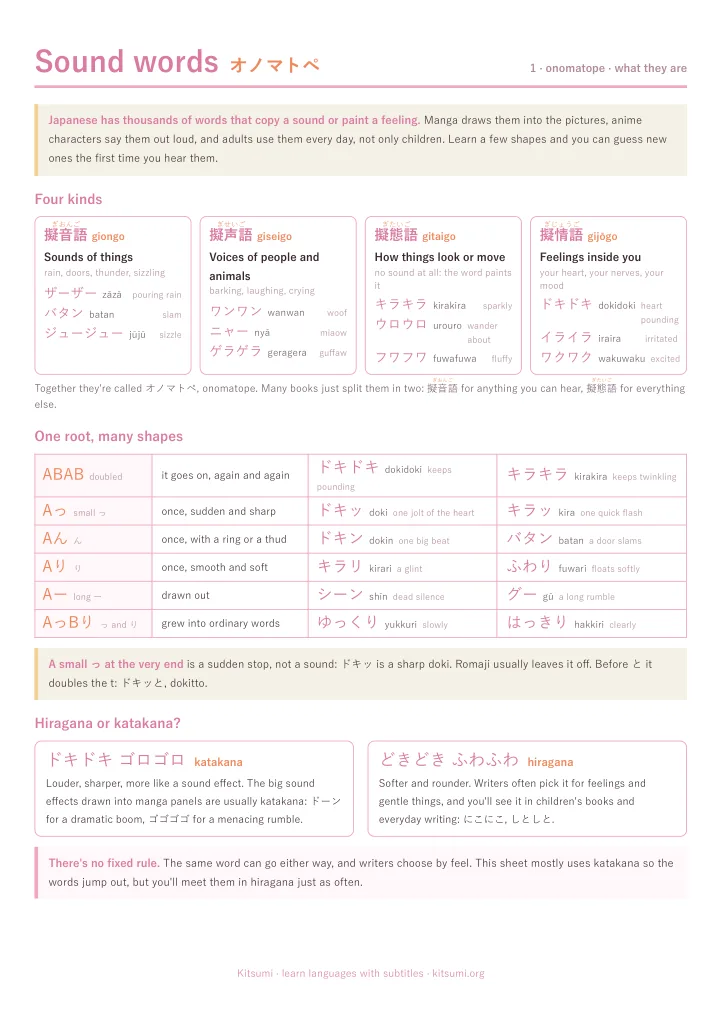 Japanese sound words: ドキドキ, キラキラ and 62 moreThen learn the sound words anime keeps saying: ドキドキ, ワクワク, ペコペコ, シーン and the rest.
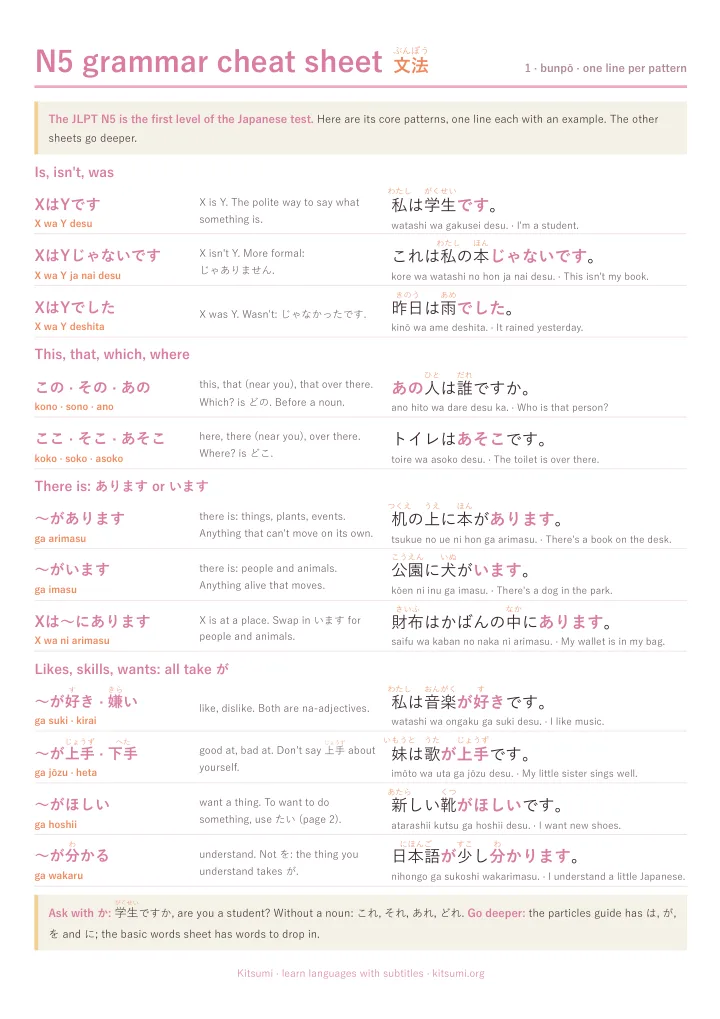 JLPT N5 grammar cheat sheetPut it all together: the core beginner patterns, one line each with an example, from です to たことがある.
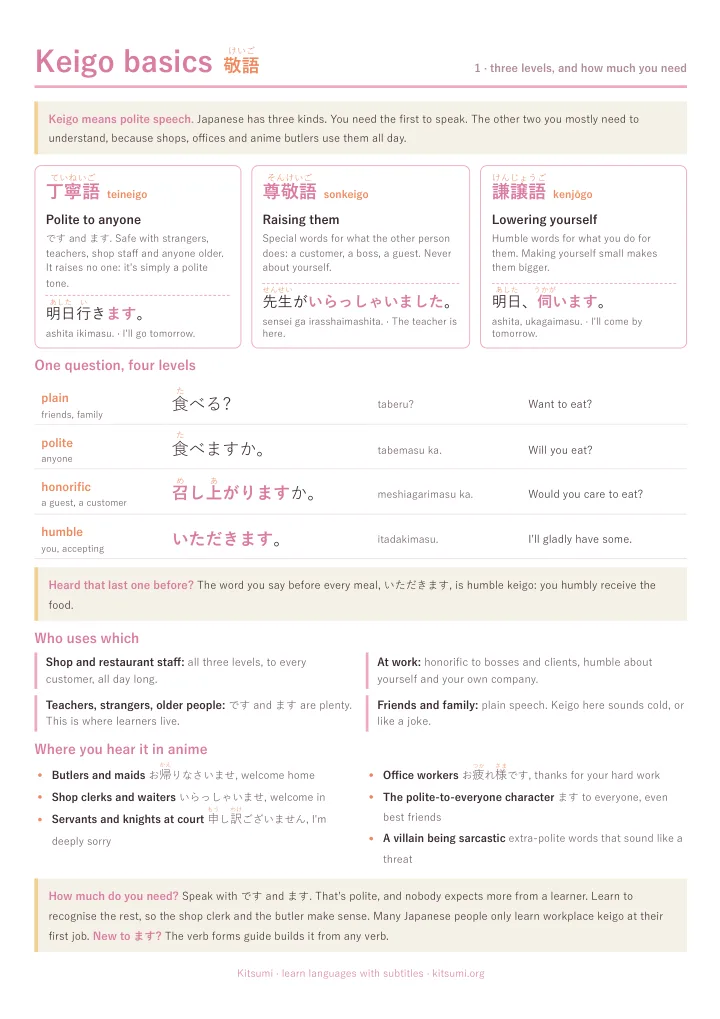 Japanese polite speech: keigo basicsGo polite: what keigo is, how much of it you need, and the phrases every shop clerk and butler uses.
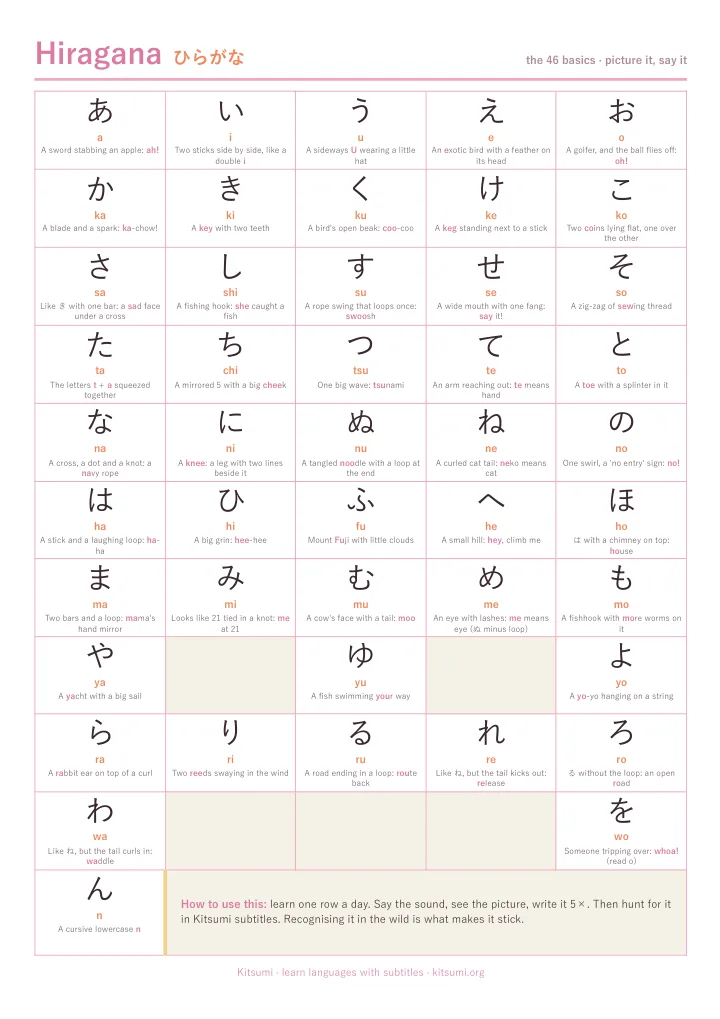 Hiragana and katakana chartLearn to read first. Every hiragana and katakana, with a picture to remember it by.
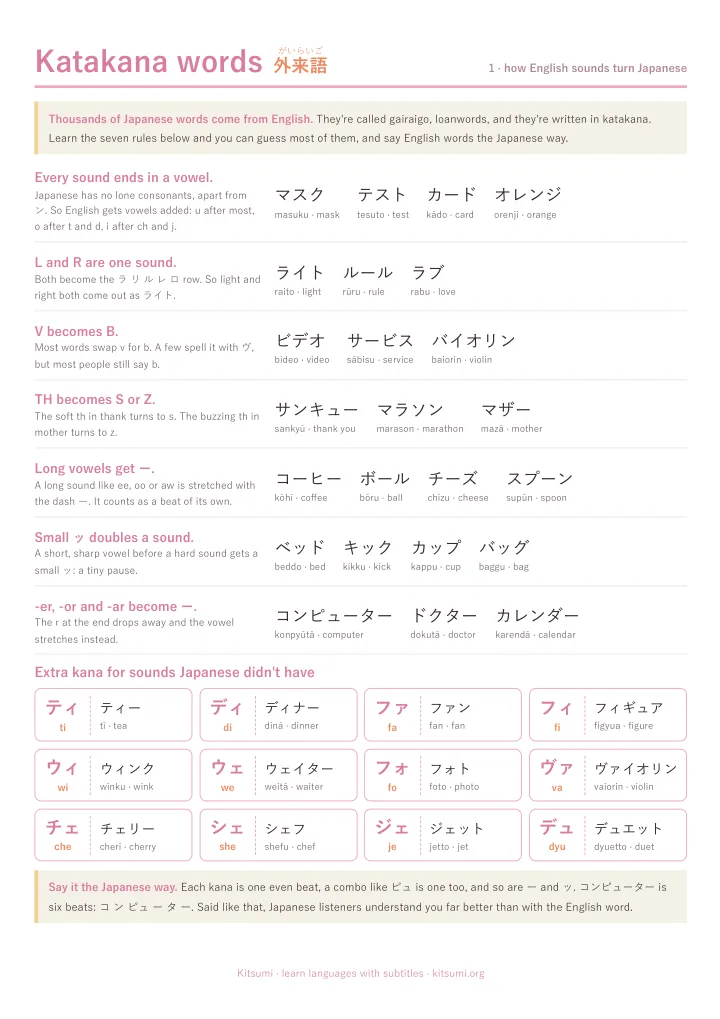 Japanese katakana words: how English becomes JapanesePut your katakana to work: the rules that turn English words into Japanese, and the ones that don't mean what you think.
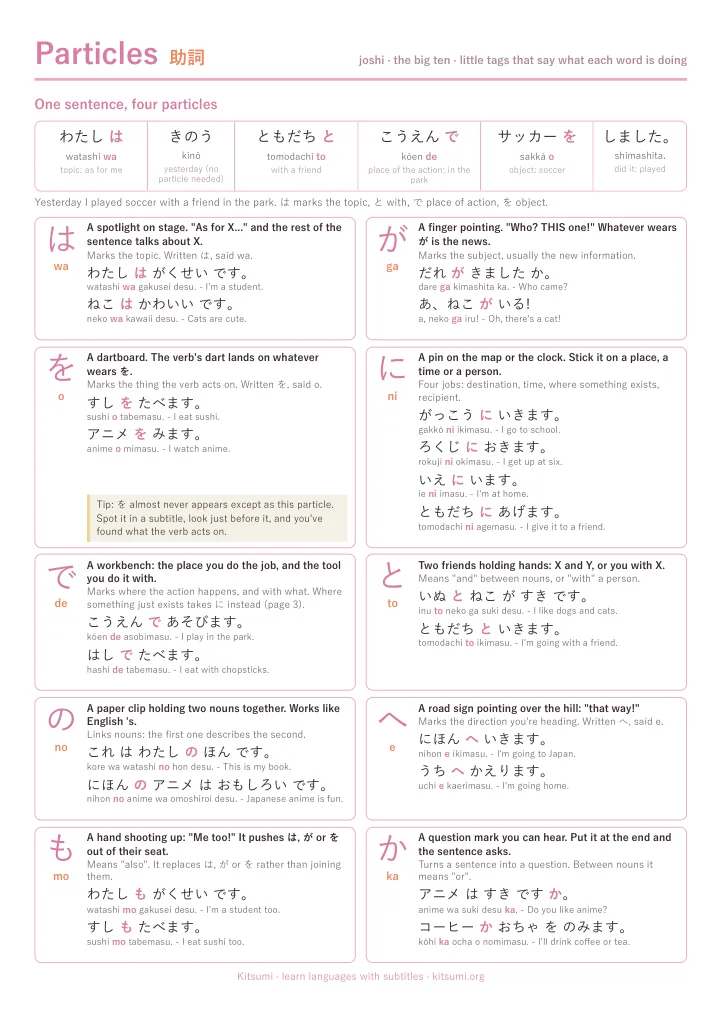 Japanese particles guideLearn the little words that hold a sentence together: は, が, を, に, で and more.
Questions
Is the は and が guide free?
Yes. It's a free PDF with no sign-up. Print it, keep it and share it.
What is the difference between は and が?
は marks the topic, what you're talking about, and the news comes after it. が marks the subject the sentence picks out, so the news is the word before it. これは私の本です means this is my book; これが私の本です means this one is my book.
Why is は read wa?
As a particle, は is always read wa. Inside an ordinary word it keeps its own sound, ha, as in はな, hana, a flower. こんにちは ends in the old particle, which is why it's spelt with は.
Are there times when both are right?
Often. Then the choice moves the focus rather than the facts, as with お金はありません and お金がありません. The guide says so whenever both work.