 Kitsumi
Free Japanese numbers and counters guide
A six-page printable PDF for beginners: how Japanese builds any number, the readings that change, why 100,000 is 10万, the native numbers for counting things, the counters you hear every day, and the time and dates, in kanji and kana with romaji and English.
PDF · 6 pages · 491 KB · no sign-up · free to print and share
Was it useful?Ideas or a mistake? Tell us on Discord
Next, meet these words in real videos: Kitsumi is free for Chrome and Firefox.
What's inside
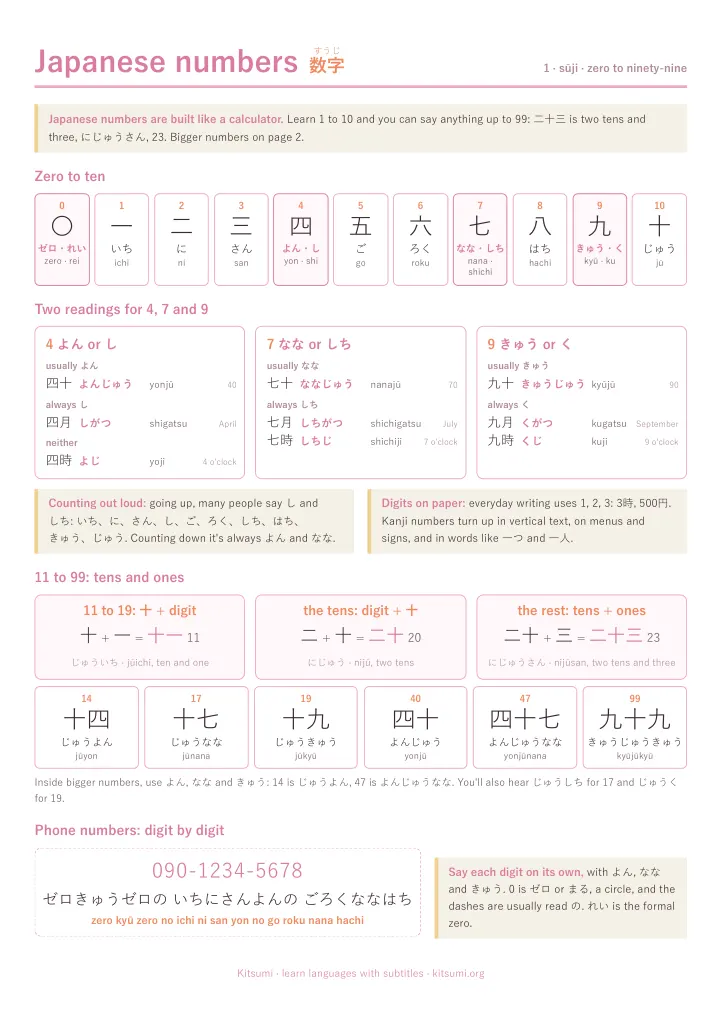
- Japanese numbers〇 to 十 with both readings of 4, 7 and 9 and where each one goes (よんじゅう but しがつ, しちじ and くじ), 11 to 99 built from tens and ones, and phone numbers read digit by digit with ゼロ or まる.
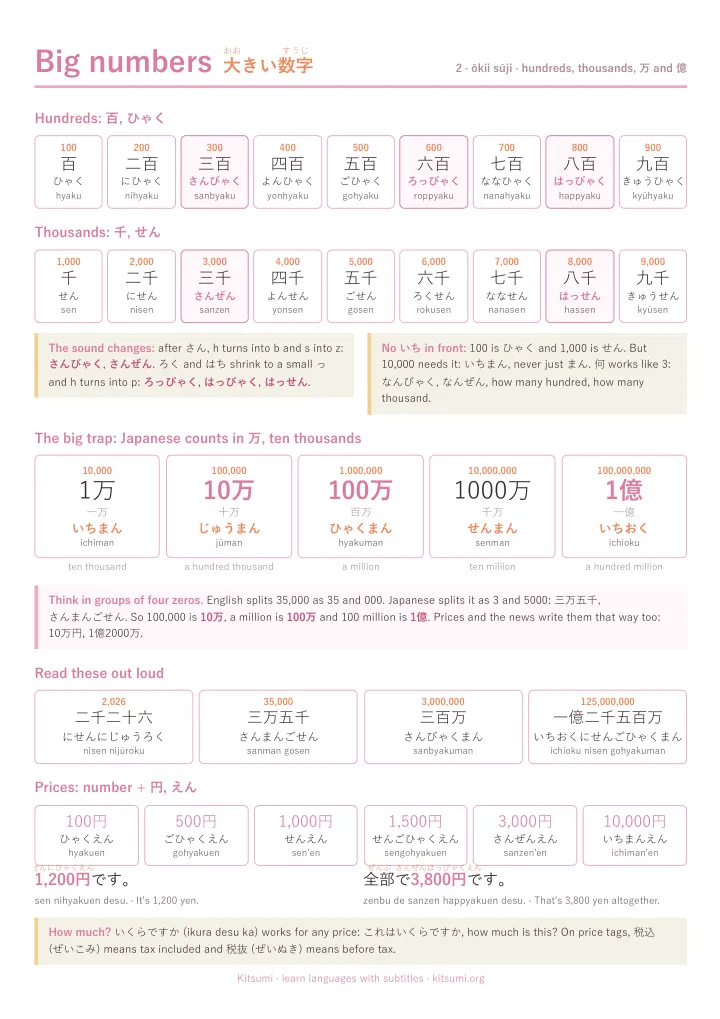
- Big numbers百 and 千 with their sound changes, さんびゃく, ろっぴゃく, はっぴゃく, さんぜん and はっせん, the big trap of counting in 万 (10万 is 100,000, 100万 a million, 1億 a hundred million), and prices in 円 with いくらですか and 税込.
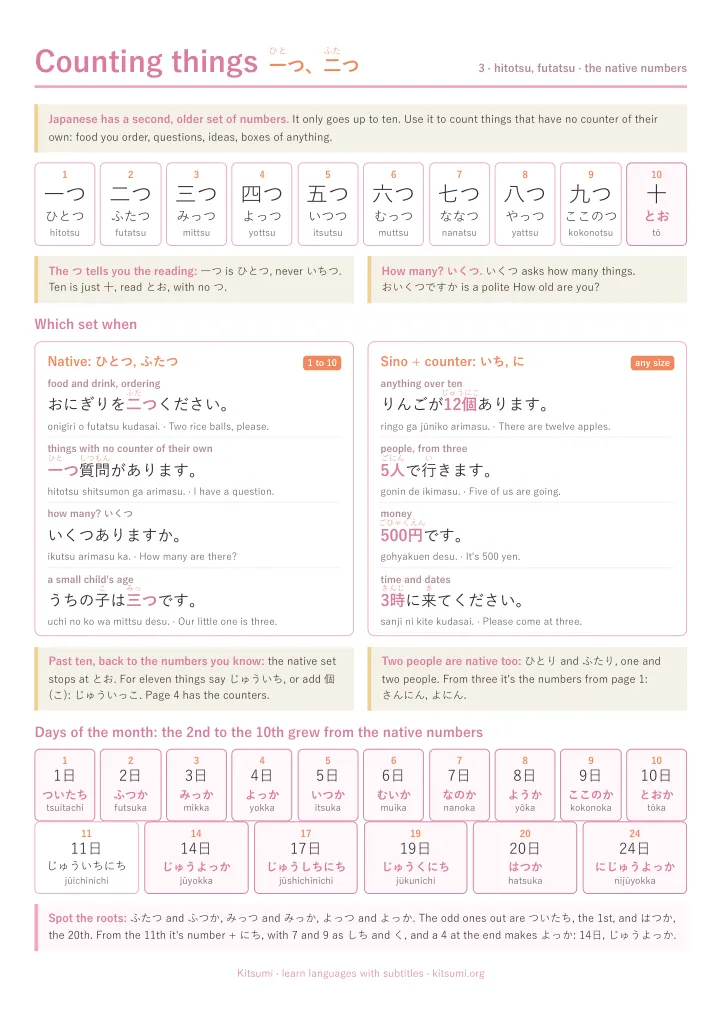
- Counting thingsThe native numbers ひとつ to とお, when to use them and when to use いち, に with a counter, and the days of the month from ついたち and ふつか to はつか.
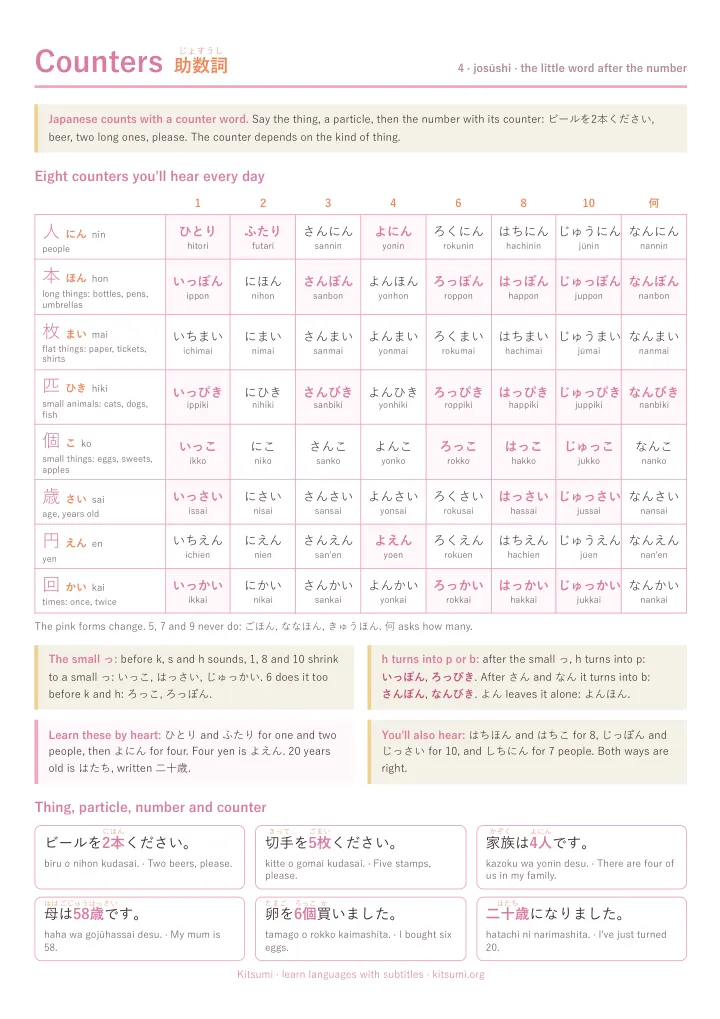 Counters人, 本, 枚, 匹, 個, 歳, 円 and 回 in one table with every sound change in pink, from ひとり and よにん to いっぽん, さんびき, はっさい and はたち, with example lines.
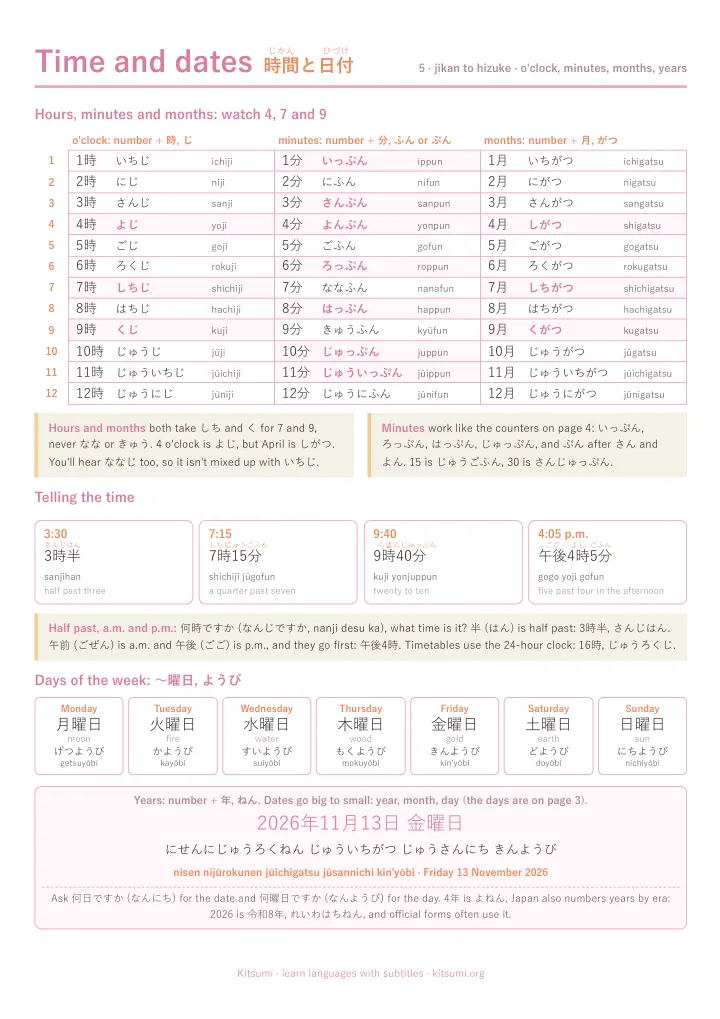 Time and datesHours, minutes and months side by side (よじ, よんぷん, しがつ), half past, 午前 and 午後, the days of the week, years with 年 and the era years used on official forms.
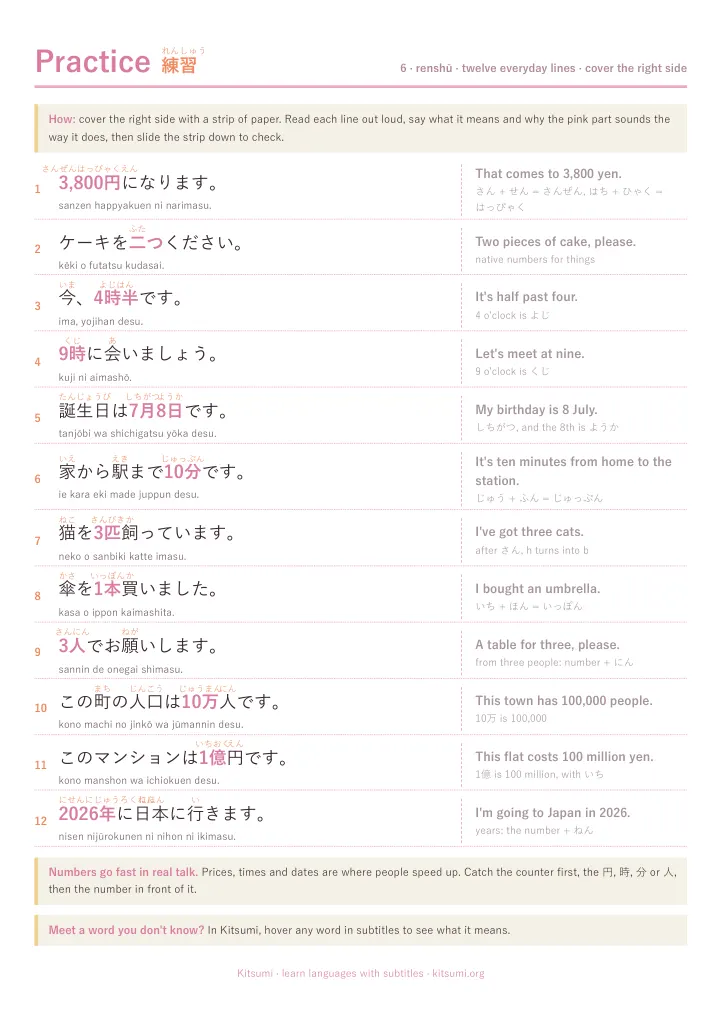 PracticeTwelve everyday lines with prices, times, dates, ages and counters, the numbers in pink. Cover the answers with a strip of paper and check yourself.
How to use it
- Learn to read kana first. This guide is easier once いち and ひとつ look like words to you.
- Count from 1 to 10 out loud both ways: いち, に, さん and ひとつ, ふたつ, みっつ.
- Keep page four nearby: the counter table shows every sound change at a glance.
- Cover the answers on the practice page, then listen for prices and times in anime and dramas with Kitsumi.
More free Japanese printables
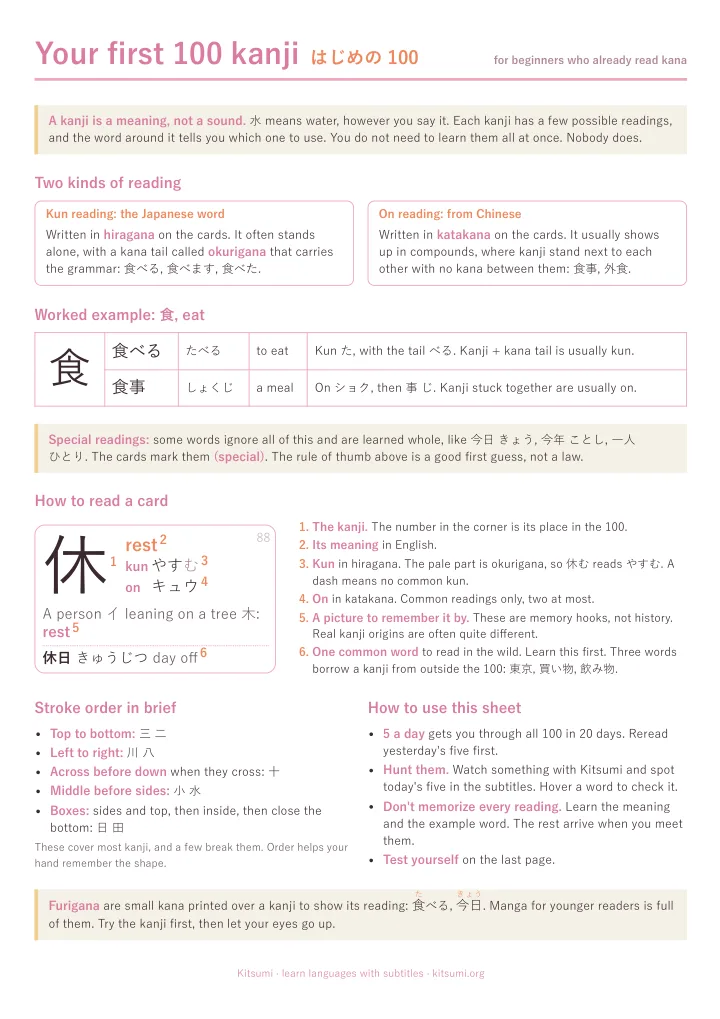 Next stepYour first 100 kanjiStart kanji once you read kana comfortably: 100 beginner kanji, each with a picture.
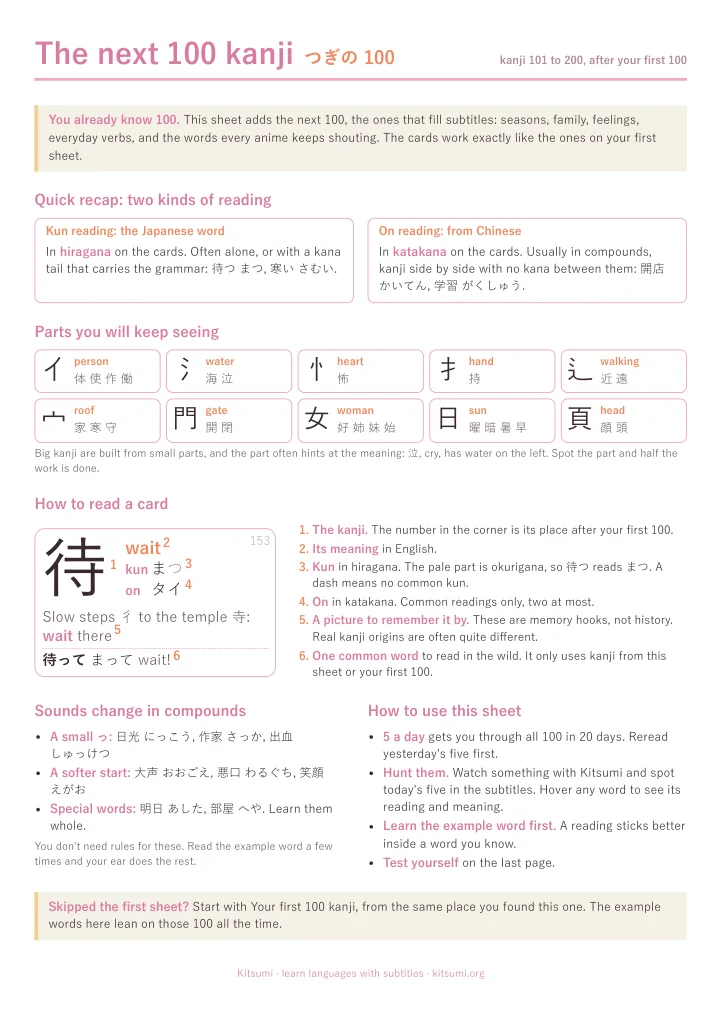 The next 100 kanjiDone with your first 100? Here are the next 100: seasons, family, feelings, verbs and anime words.
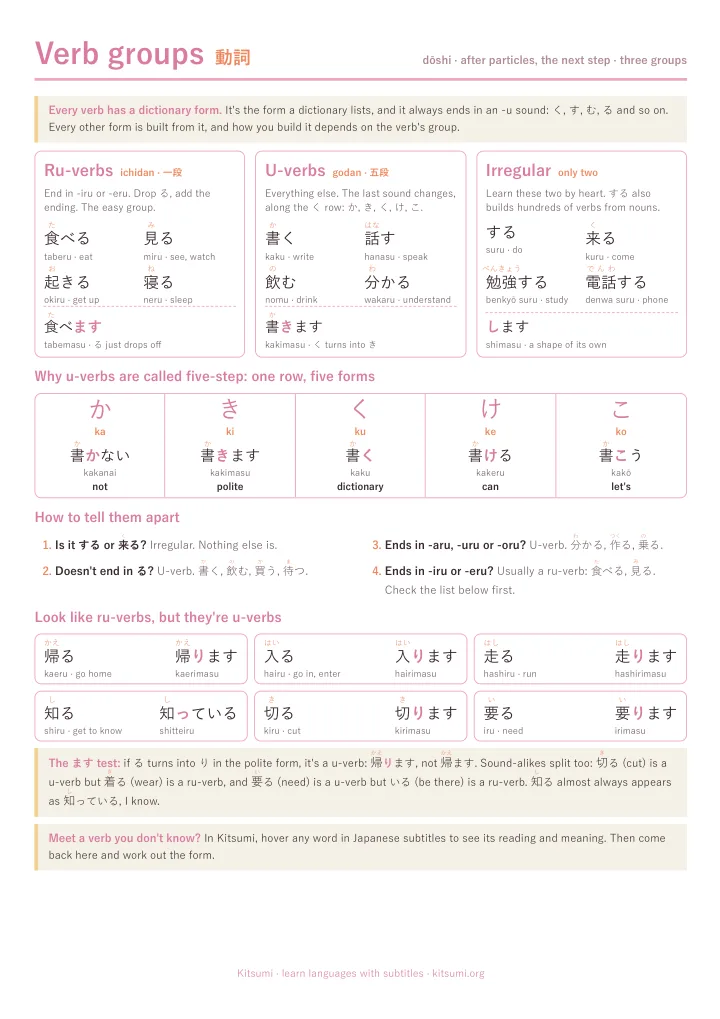 Japanese verb forms guideMake verbs do more: ます, ない, た, て, can, want to and let's, for every kind of verb.
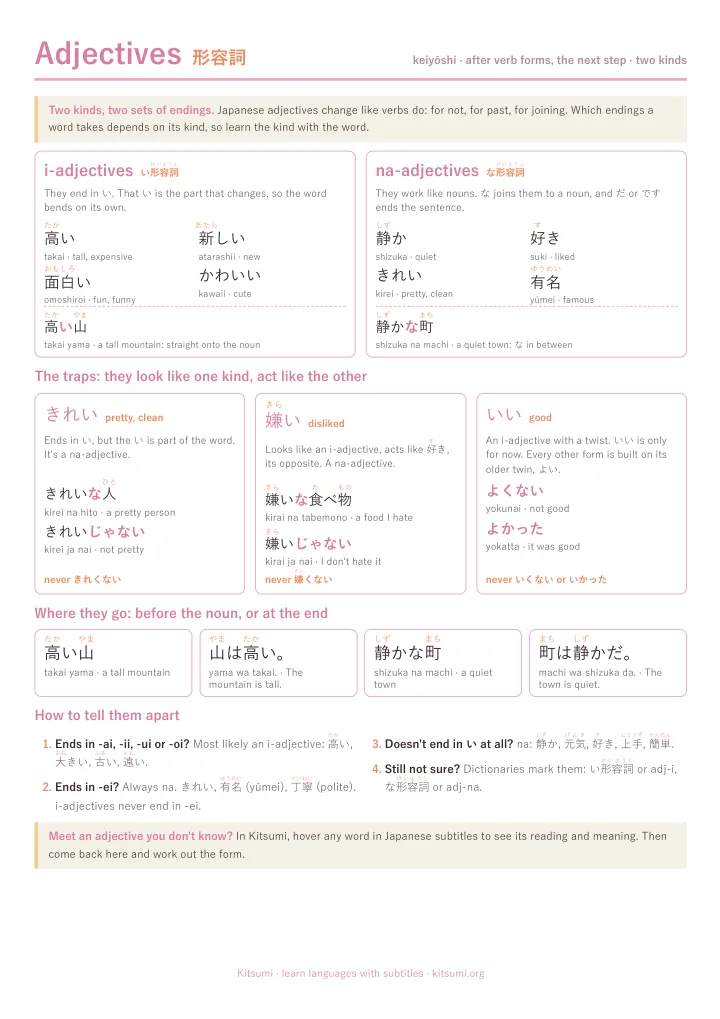 Japanese adjectives guideDescribe things: i-adjectives and na-adjectives in every form, from くない and かった to より and 一番.
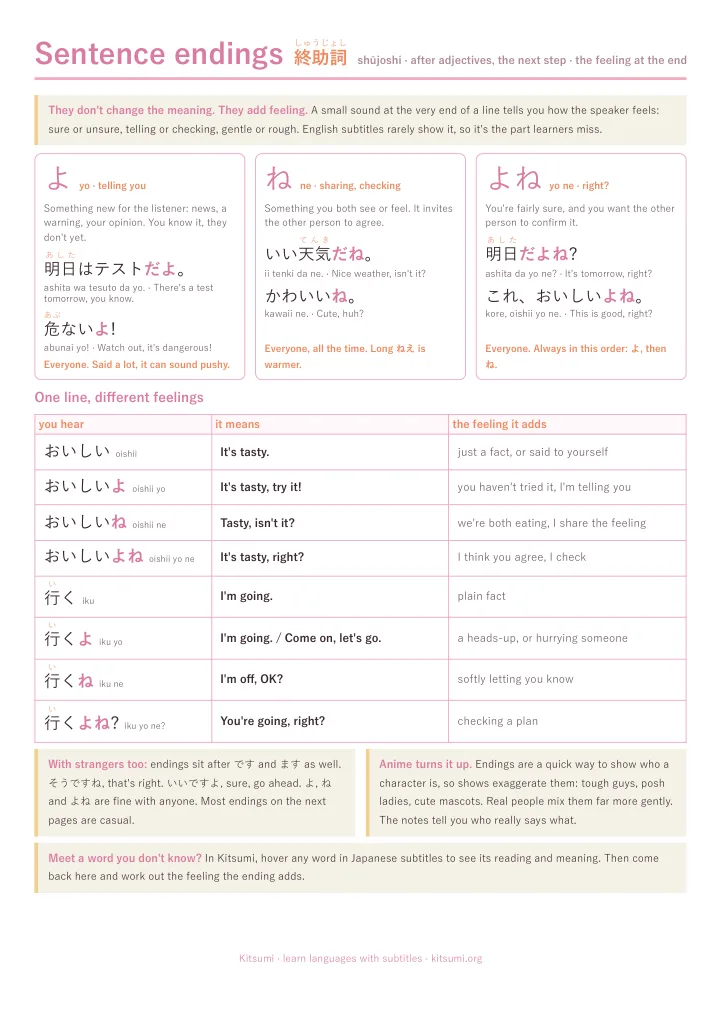 Japanese sentence endings guideHear the feeling: よ, ね, ぞ, わ, かな, じゃん, でしょ and the other endings that close almost every line.
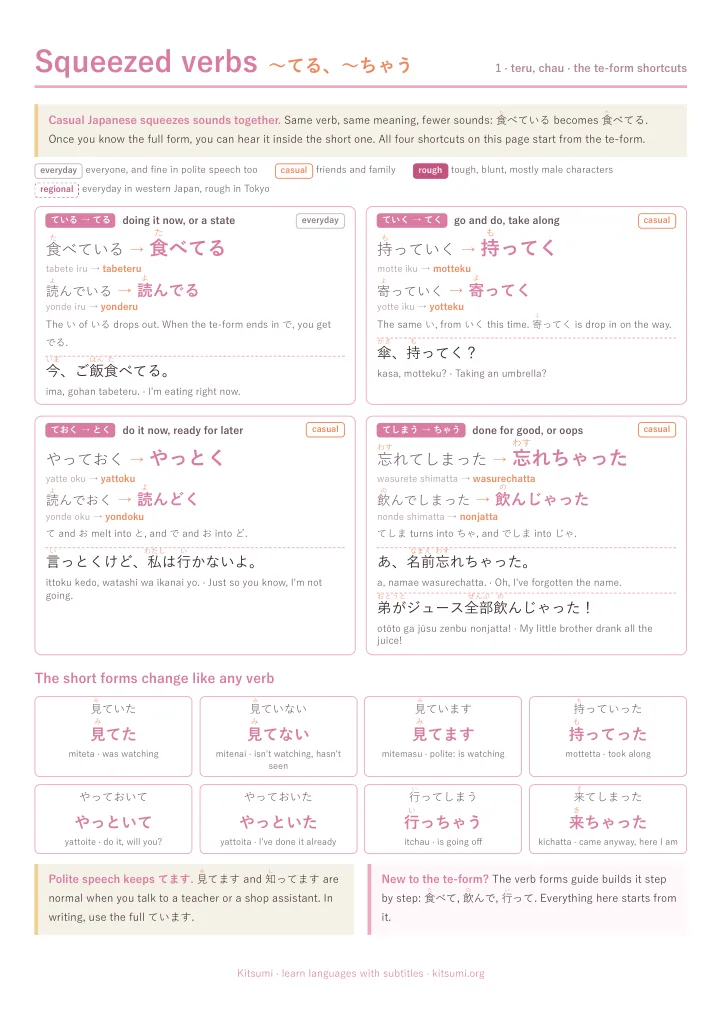 Japanese casual speech: the verb contractions you hear in animeThen hear the squeeze: てる, ちゃう, なきゃ, 分かんない and the other short forms friends use.
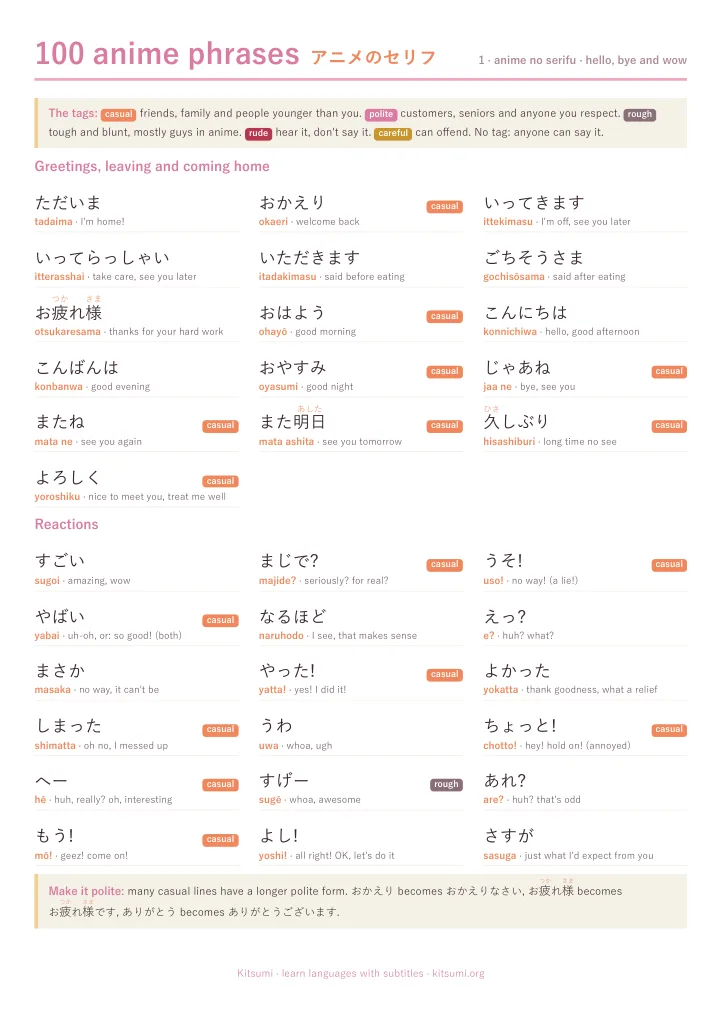 100 anime phrasesThen pick up the lines anime uses all the time: ただいま, まさか, 行くぞ, 任せて and what 先輩 really means.
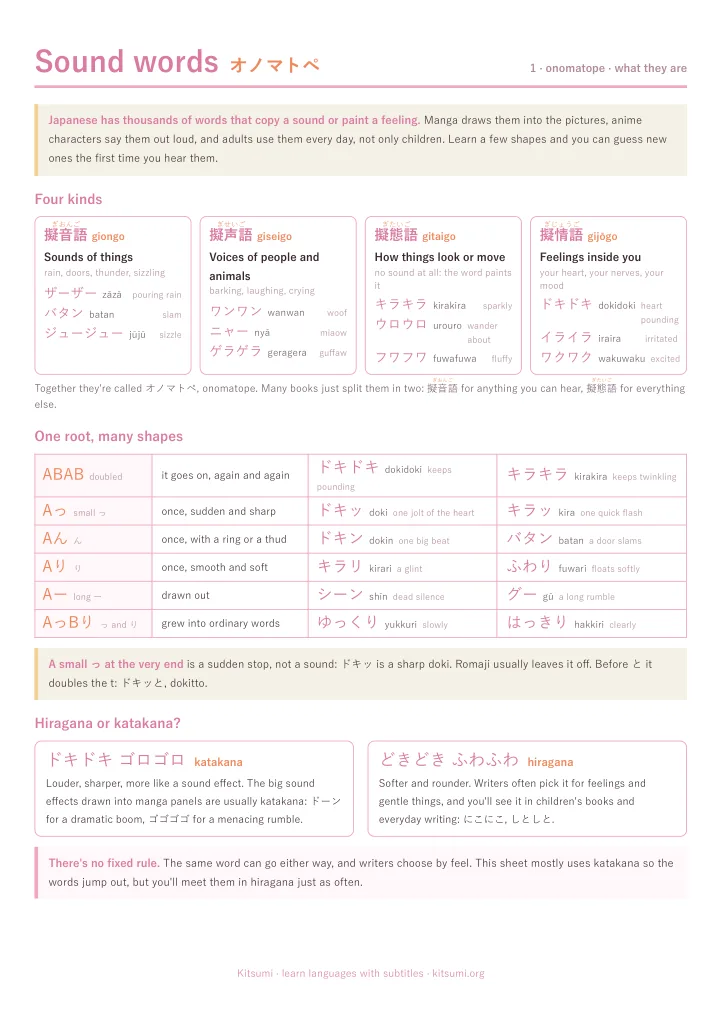 Japanese sound words: ドキドキ, キラキラ and 62 moreThen learn the sound words anime keeps saying: ドキドキ, ワクワク, ペコペコ, シーン and the rest.
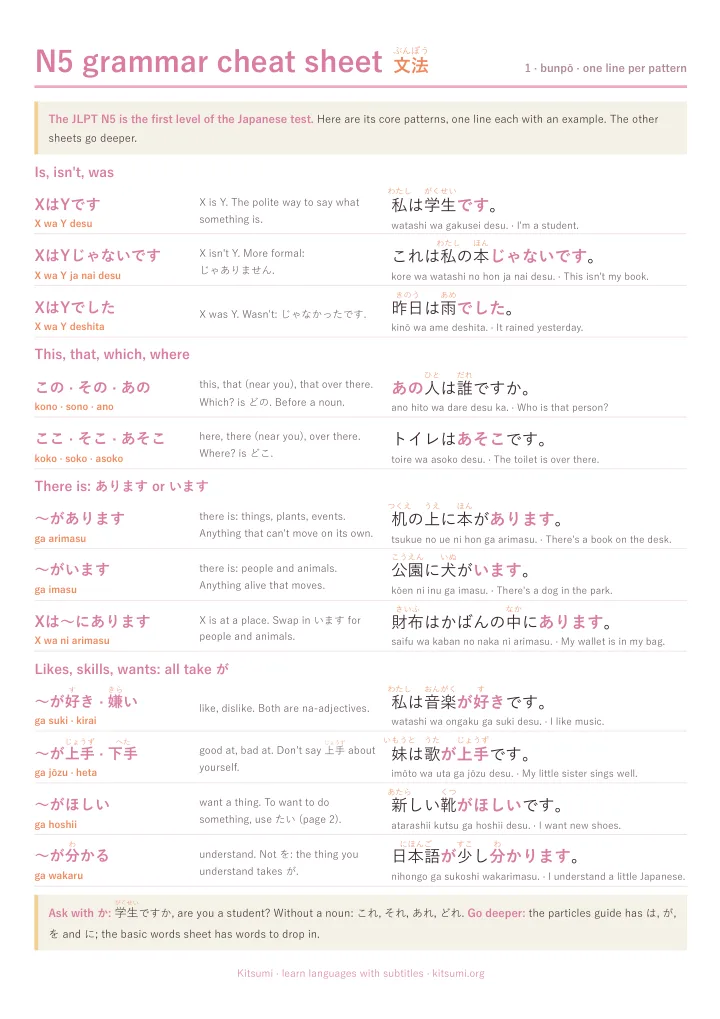 JLPT N5 grammar cheat sheetPut it all together: the core beginner patterns, one line each with an example, from です to たことがある.
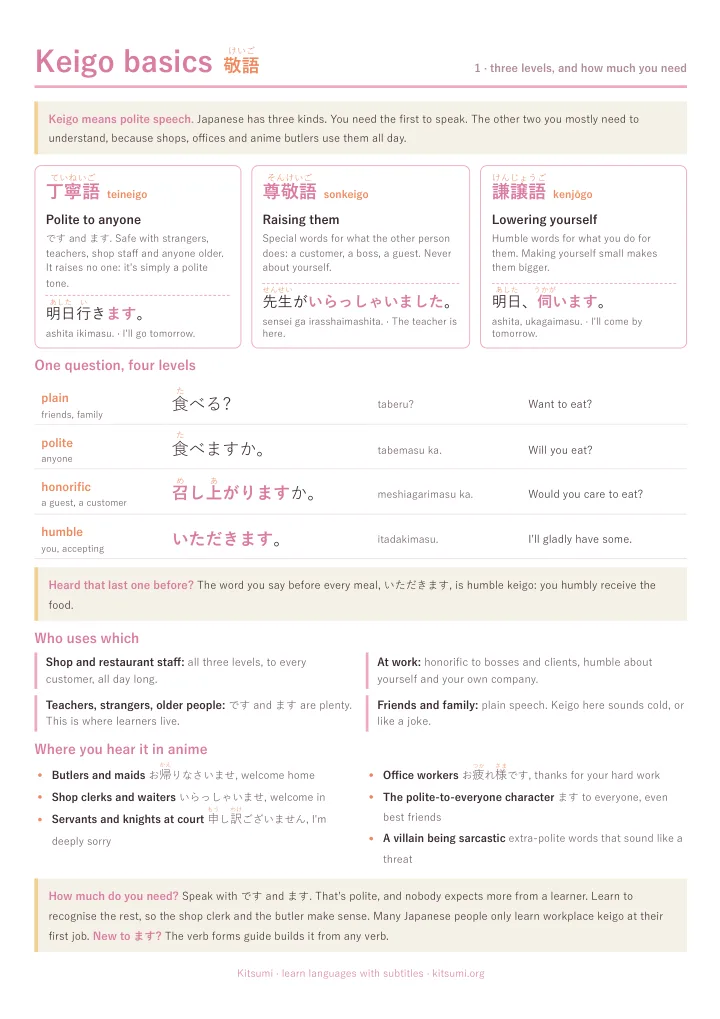 Japanese polite speech: keigo basicsGo polite: what keigo is, how much of it you need, and the phrases every shop clerk and butler uses.
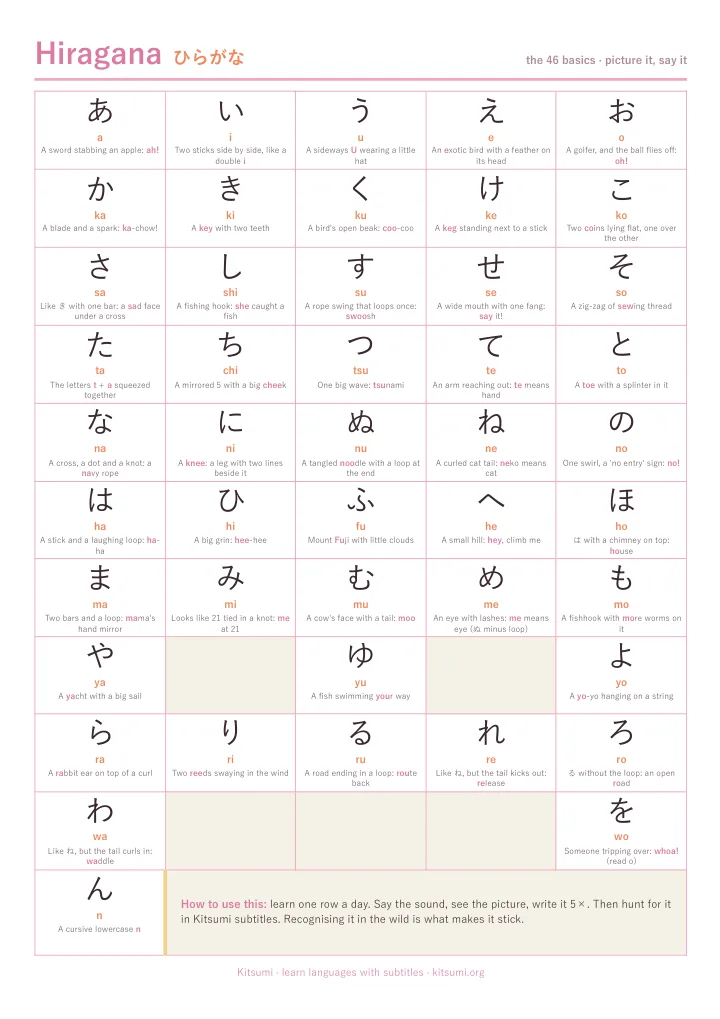 Hiragana and katakana chartLearn to read first. Every hiragana and katakana, with a picture to remember it by.
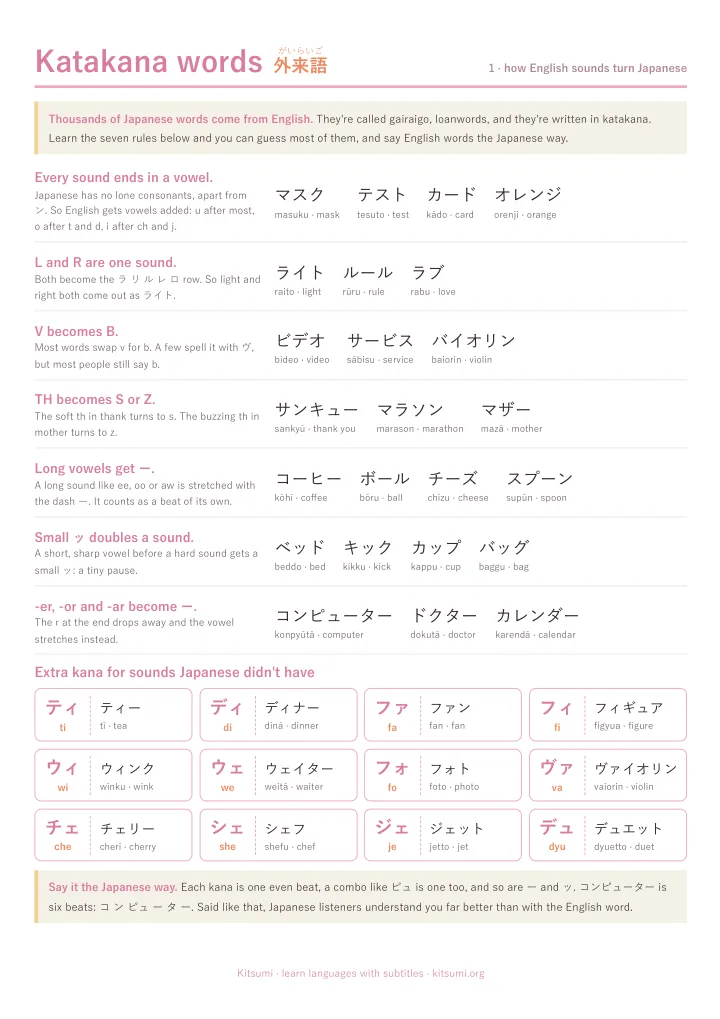 Japanese katakana words: how English becomes JapanesePut your katakana to work: the rules that turn English words into Japanese, and the ones that don't mean what you think.
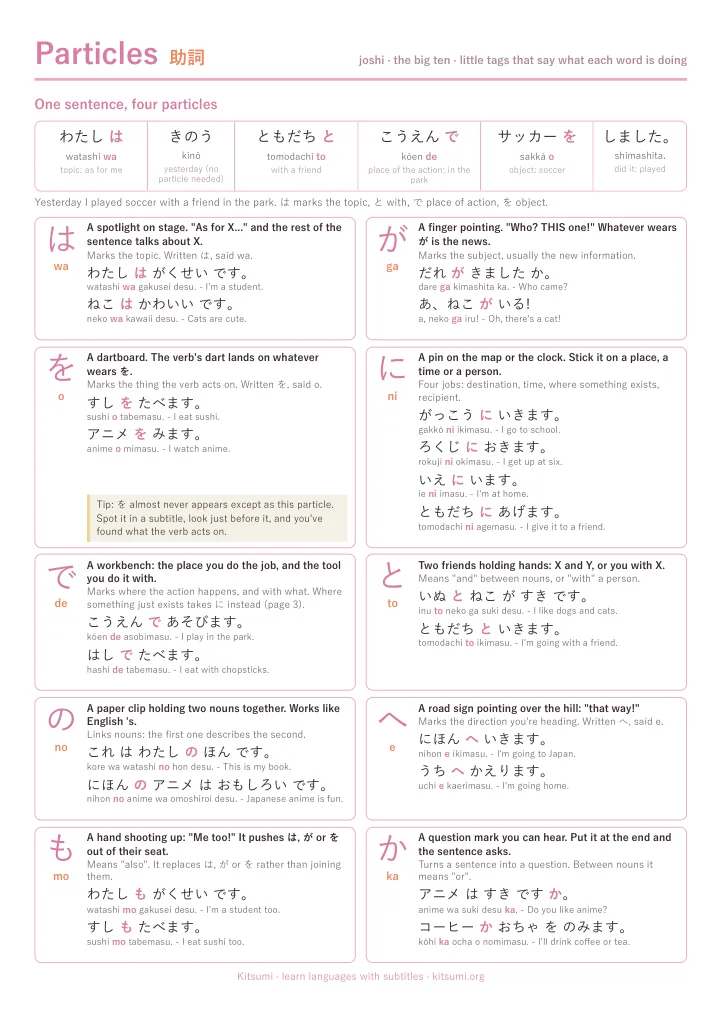 Japanese particles guideLearn the little words that hold a sentence together: は, が, を, に, で and more.
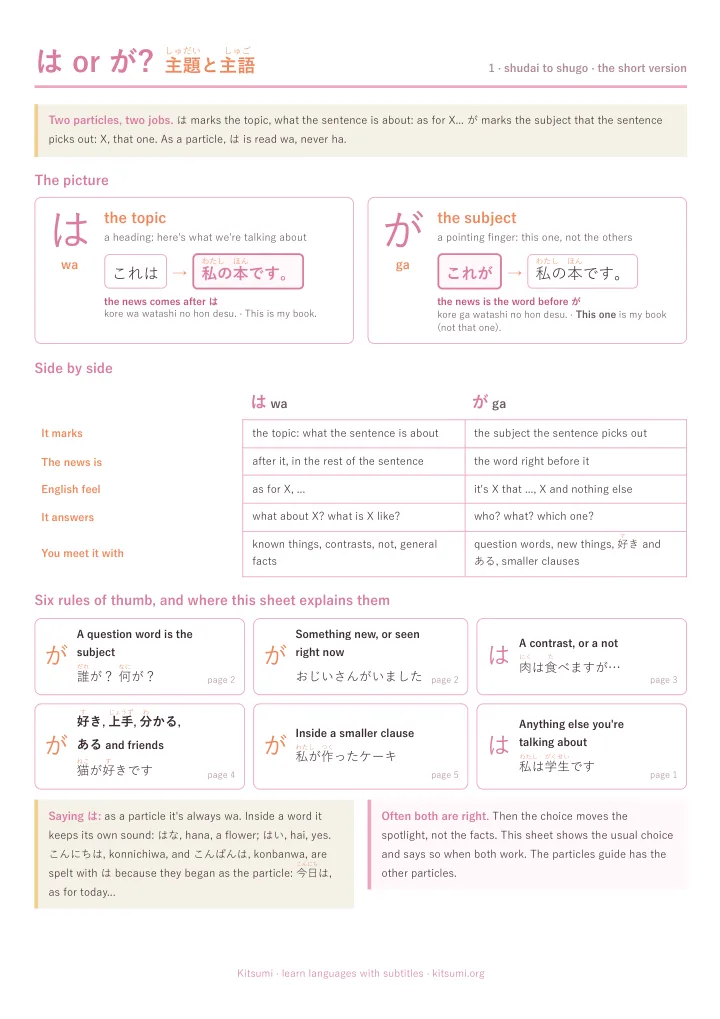 Japanese particles は and が: which one?Then sort out the pair everyone mixes up: は for the topic, が for the subject.
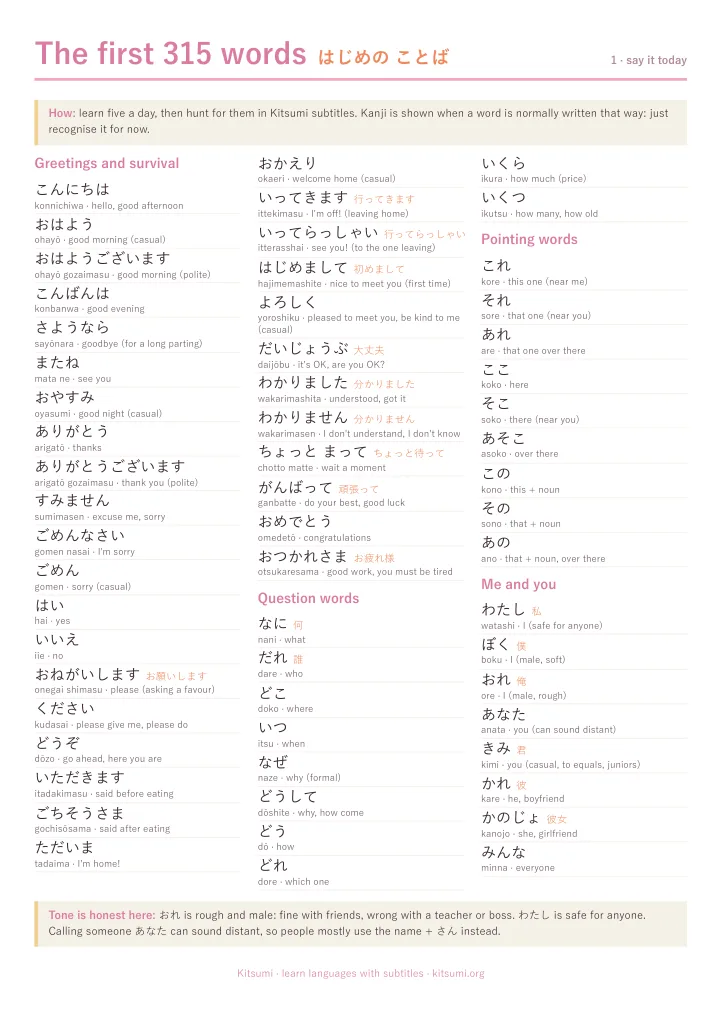 Basic Japanese words listPick up the first 315 words: greetings, people, numbers, food, verbs and more.
Questions
Is the Japanese numbers guide free?
Yes. It's a free PDF with no sign-up. Print it, keep it and share it.
Why does Japanese have two sets of numbers?
いち, に, さん came from Chinese long ago, and ひとつ, ふたつ, みっつ are older Japanese words. The native ones only go up to ten and count things that have no counter of their own. Page three shows which to use when.
Is 4 よん or し?
Usually よん, and 7 is usually なな. But April is しがつ and 7 o'clock is しちじ, while 4 o'clock is よじ. Page one lists where each reading goes.