 Kitsumi
Free Japanese adjectives guide
A five-page printable PDF for beginners: the two kinds of Japanese adjectives and how each one changes for not, past and joining. Every kanji in the examples has its reading in hiragana, with romaji under each word.
PDF · 5 pages · 396 KB · no sign-up · free to print and share
Next, meet these words in real videos: Kitsumi is free for Chrome and Firefox.
What's inside
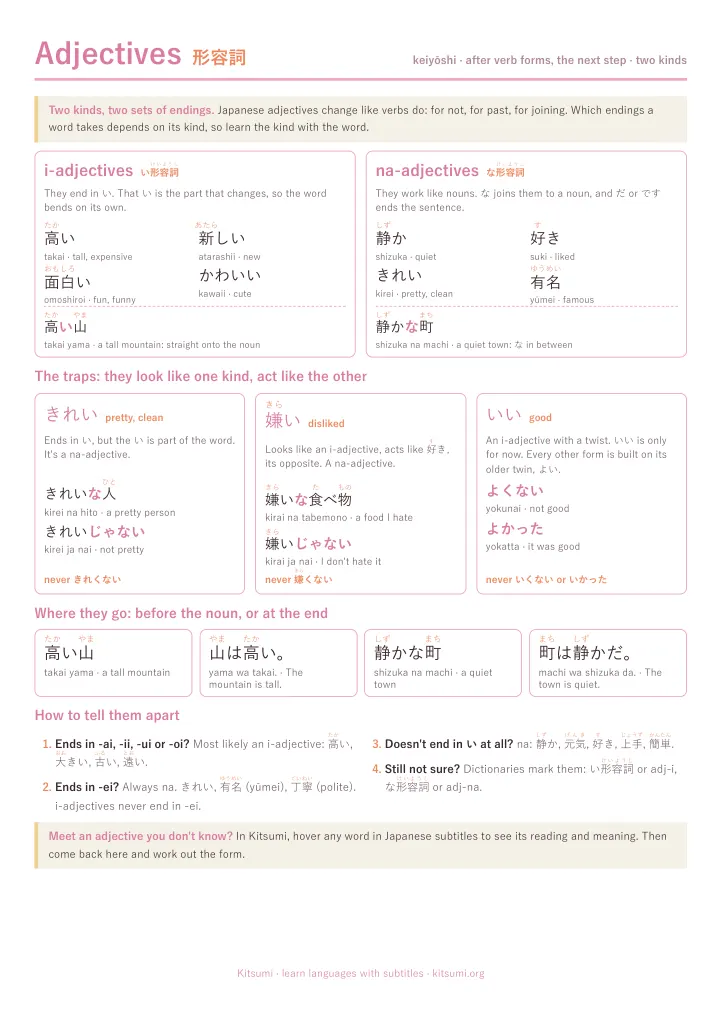
- Two kindsi-adjectives like 高い and na-adjectives like 静か, where each one goes in a sentence, the traps きれい, 嫌い and いい, and a quick way to tell them apart.
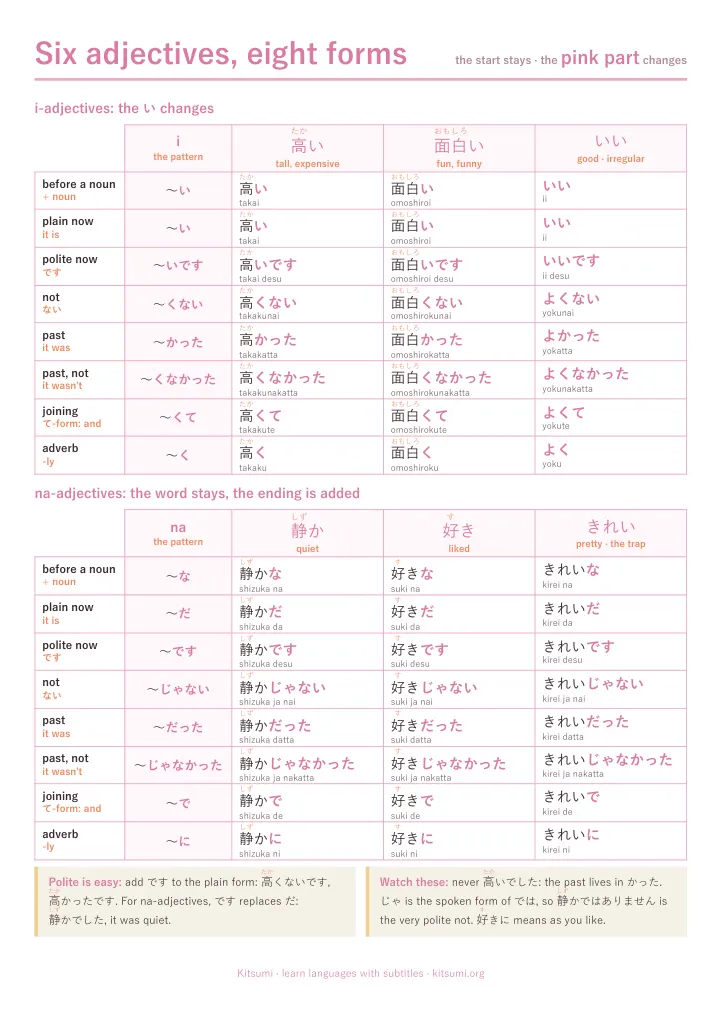
- Six adjectives, eight forms高い, 面白い, いい, 静か, 好き and きれい before a noun, plain, polite, not, past, past not, joining and as an adverb, with the pattern next to each row.
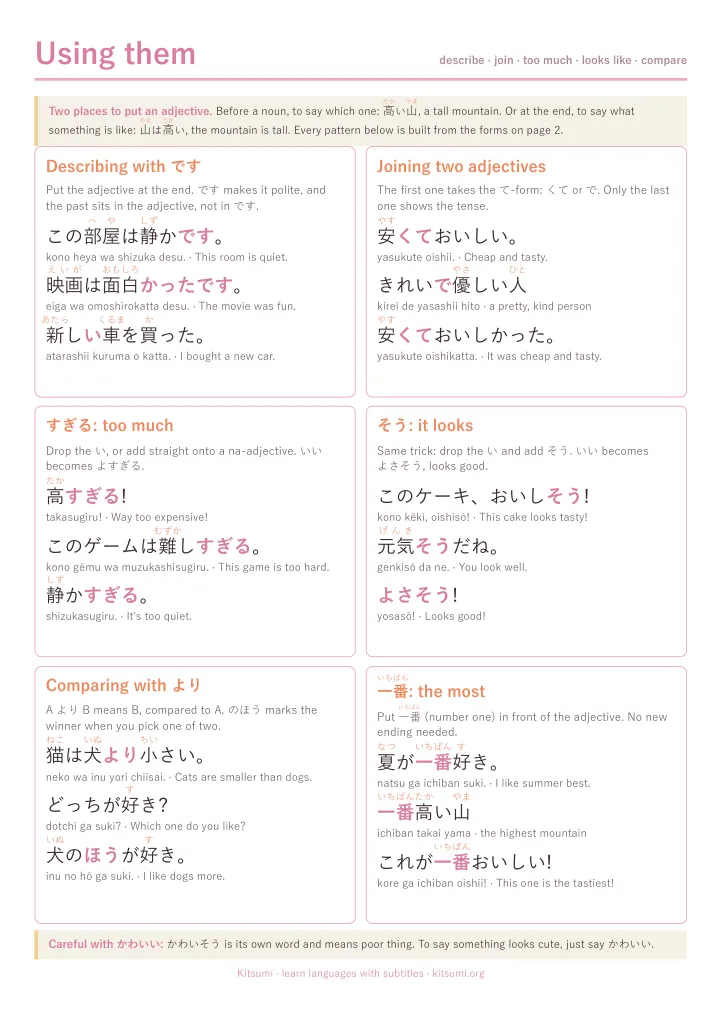
- Using themDescribing with です, joining two adjectives like 安くておいしい, すぎる for too much, そう for looks, and comparing with より, のほう and 一番.
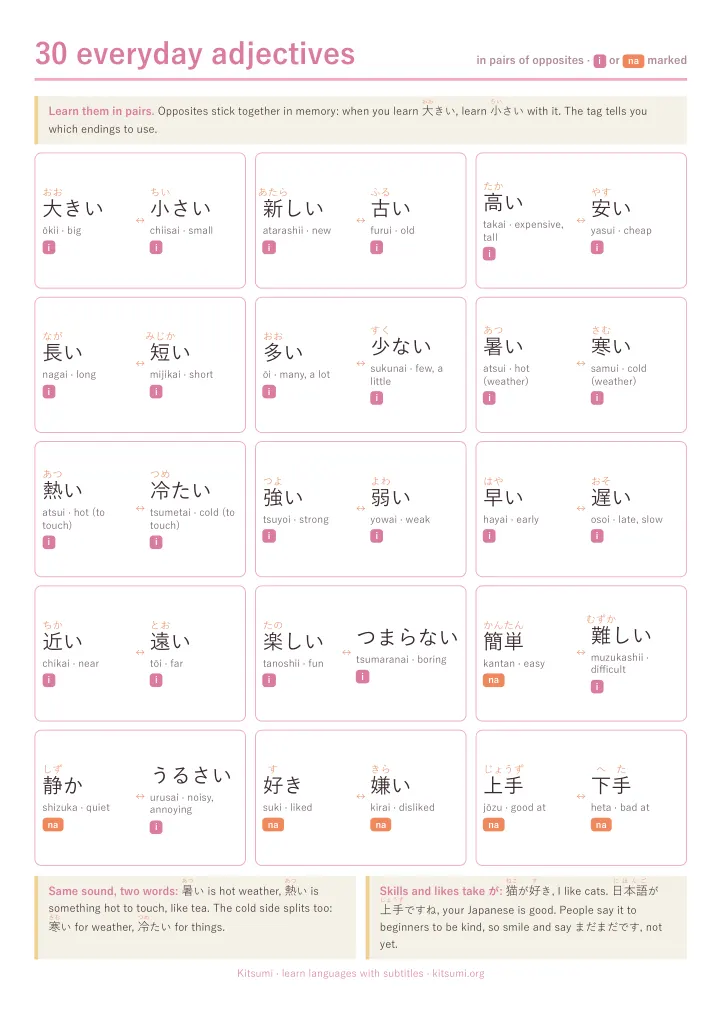 30 everyday adjectivesFifteen pairs of opposites like 大きい and 小さい, 熱い and 冷たい, 好き and 嫌い, 上手 and 下手, each marked i or na.
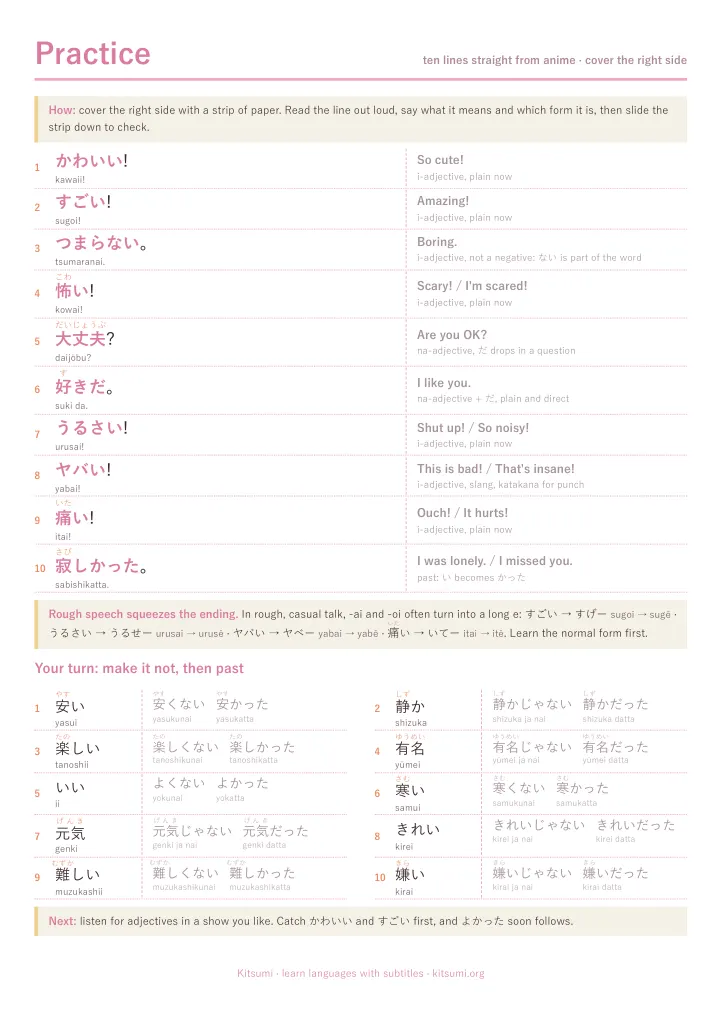 PracticeTen lines you hear in anime, like かわいい, 大丈夫 and 寂しかった, to read and name the form, then ten adjectives to make not and past. Cover the answers with a strip of paper and check yourself.
How to use it
- Learn verb forms first. Adjectives use the same ideas: ない, た and て.
- Read the first page and sort a few adjectives you know into i or na.
- Say one row of the tables out loud each day.
- Cover the answers on the practice page, then listen for the same words in shows with Kitsumi.
More free Japanese printables
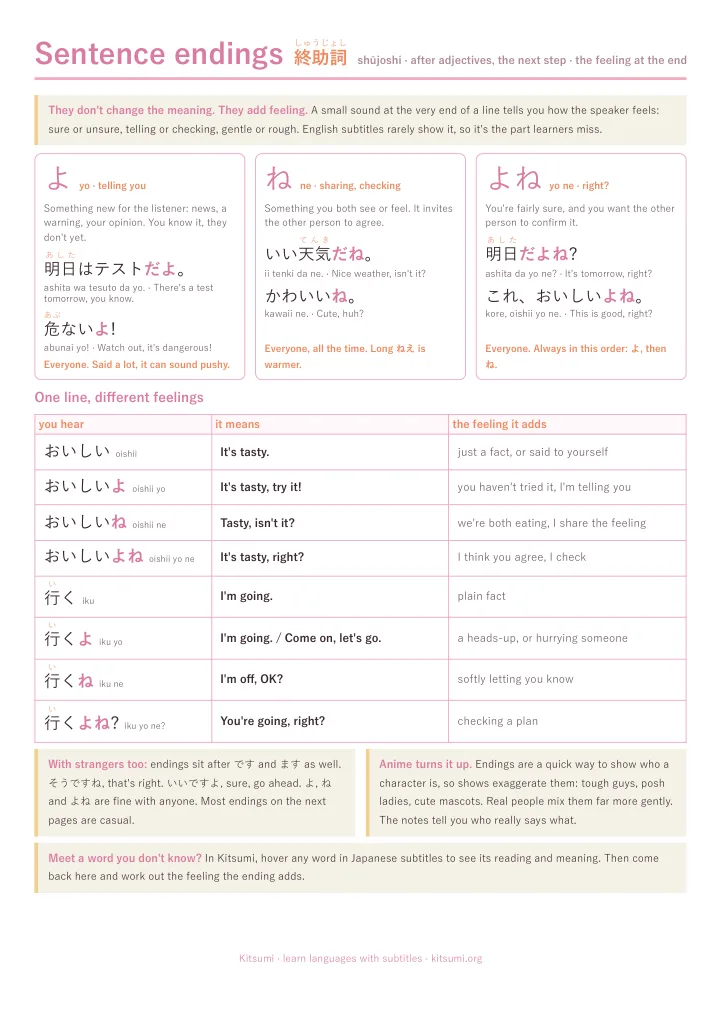 Next stepJapanese sentence endings guideHear the feeling: よ, ね, ぞ, わ, かな, じゃん, でしょ and the other endings that close almost every line.
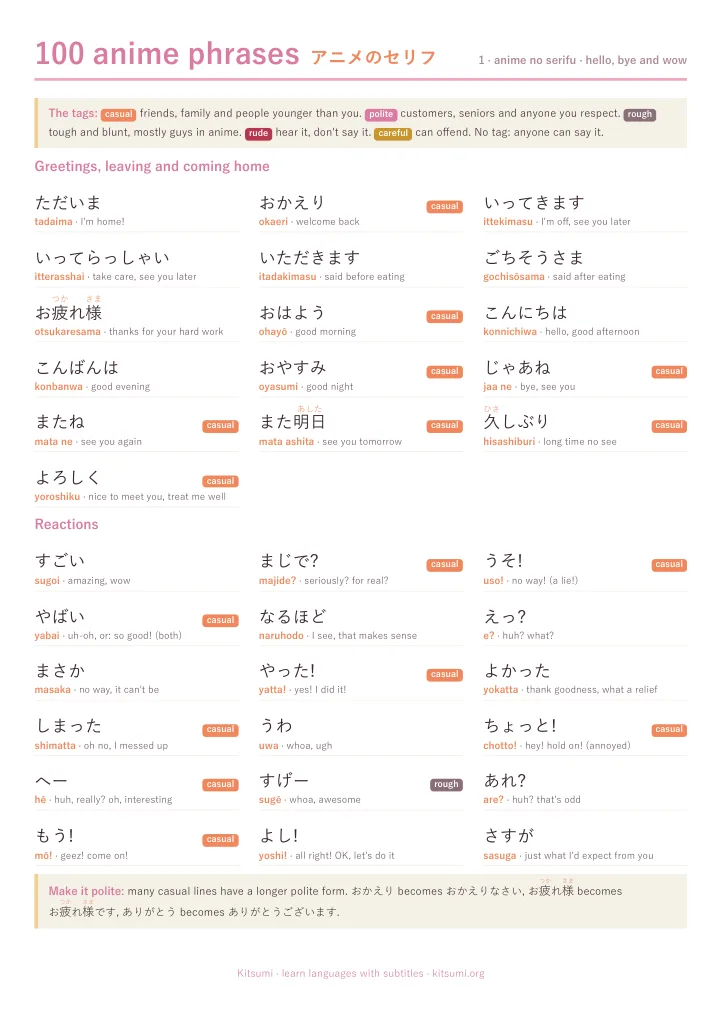 100 anime phrasesThen pick up the lines anime uses all the time: ただいま, まさか, 行くぞ, 任せて and what 先輩 really means.
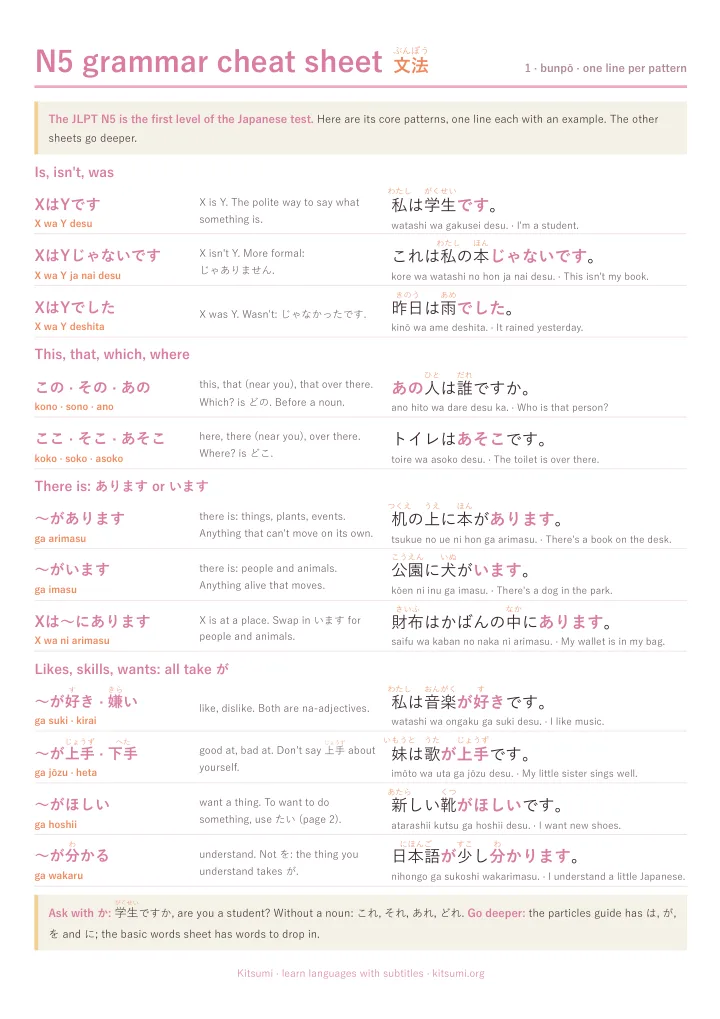 JLPT N5 grammar cheat sheetPut it all together: the core beginner patterns, one line each with an example, from です to たことがある.
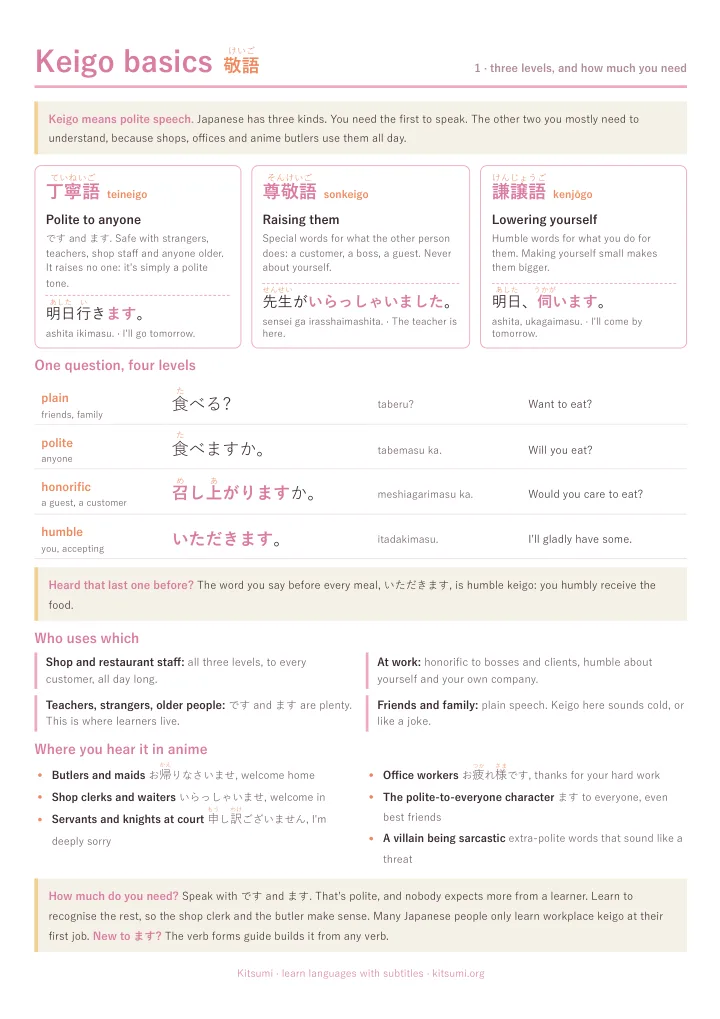 Japanese polite speech: keigo basicsGo polite: what keigo is, how much of it you need, and the phrases every shop clerk and butler uses.
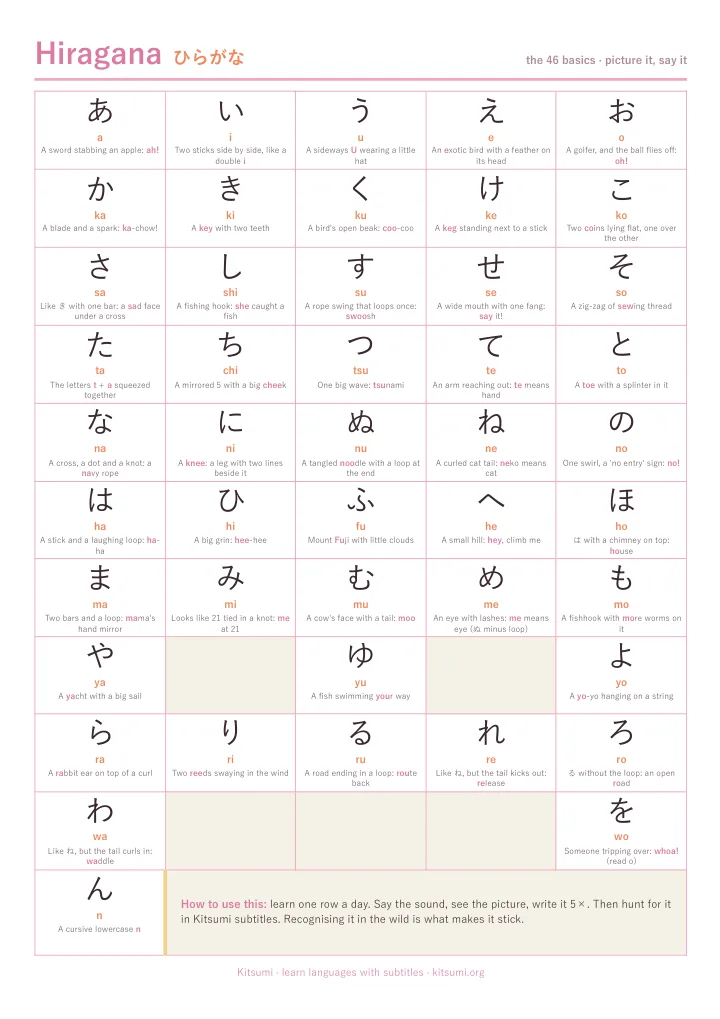 Hiragana and katakana chartLearn to read first. Every hiragana and katakana, with a picture to remember it by.
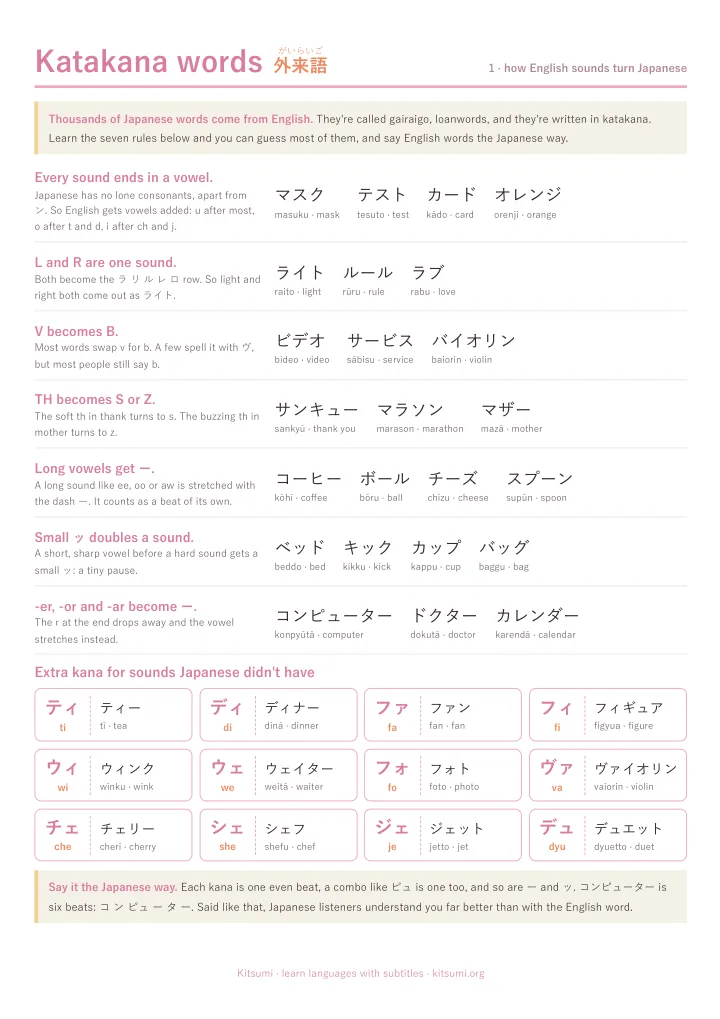 Japanese katakana words: how English becomes JapanesePut your katakana to work: the rules that turn English words into Japanese, and the ones that don't mean what you think.
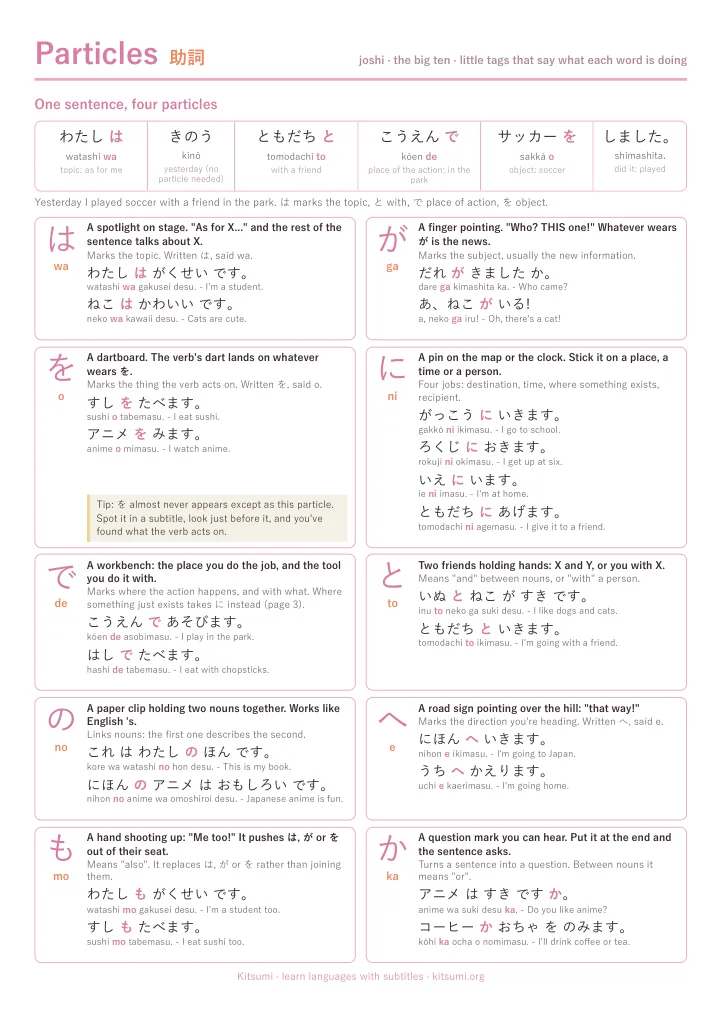 Japanese particles guideLearn the little words that hold a sentence together: は, が, を, に, で and more.
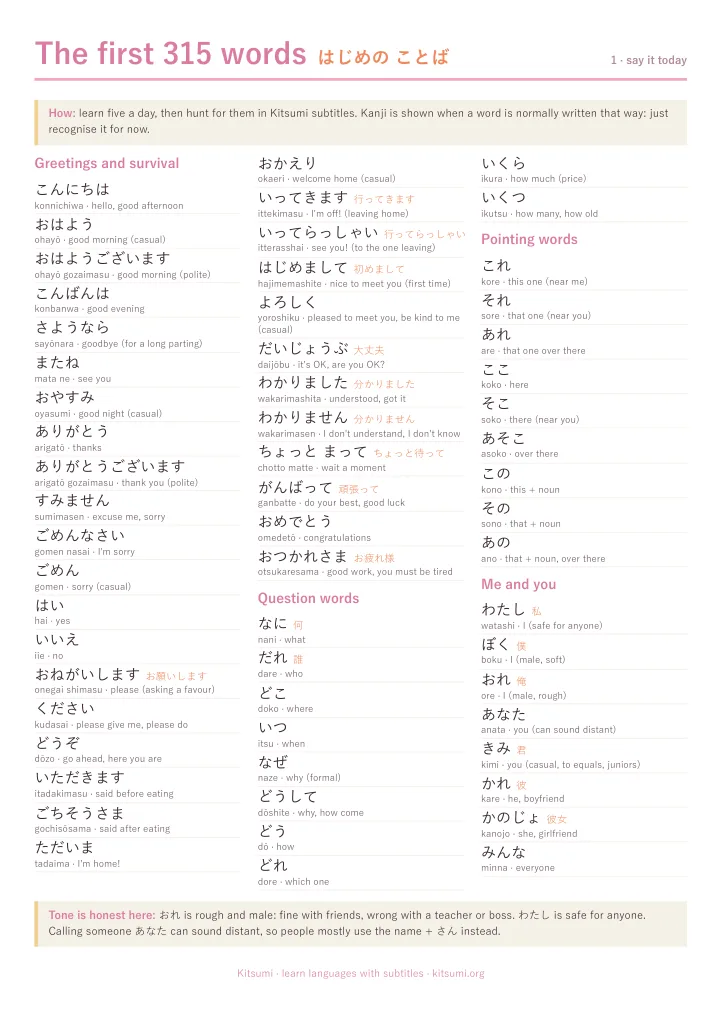 Basic Japanese words listPick up the first 315 words: greetings, people, numbers, food, verbs and more.
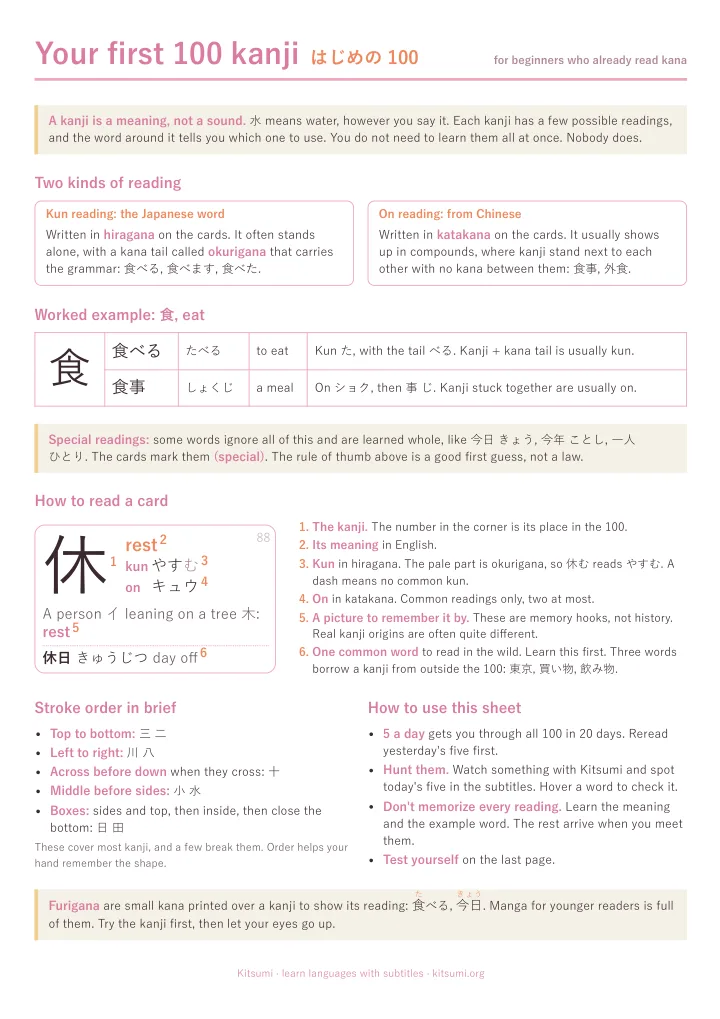 Your first 100 kanjiStart kanji once you read kana comfortably: 100 beginner kanji, each with a picture.
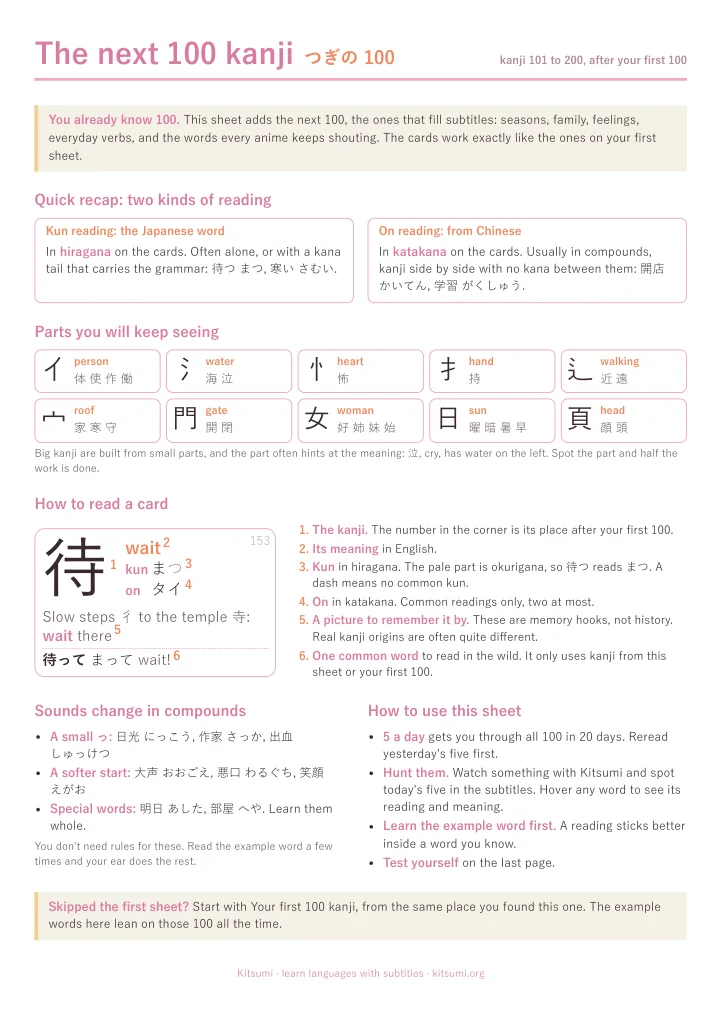 The next 100 kanjiDone with your first 100? Here are the next 100: seasons, family, feelings, verbs and anime words.
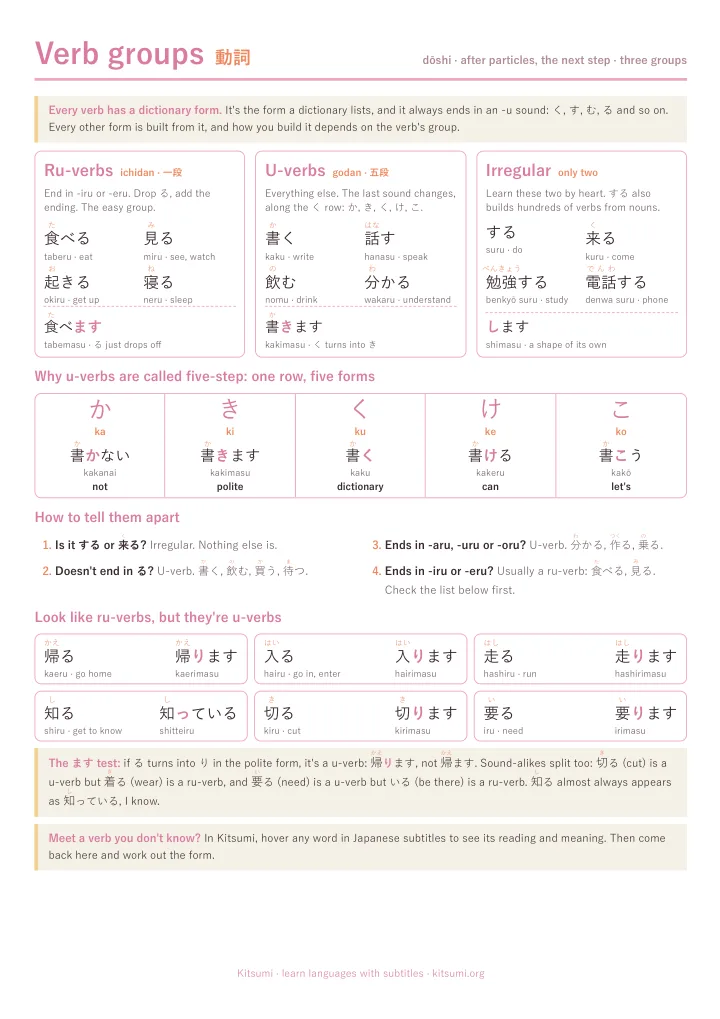 Japanese verb forms guideMake verbs do more: ます, ない, た, て, can, want to and let's, for every kind of verb.
Questions
Is the adjectives guide free?
Yes. It's a free PDF with no sign-up. Print it, keep it and share it.
What is the difference between i-adjectives and na-adjectives?
i-adjectives end in い and change that い: 高い becomes 高くない and 高かった. na-adjectives stay the same and take な before a noun and だ or です at the end: 静かな町, 静かだった. A few, like きれい and 嫌い, end in い but are na-adjectives.
Why is いい irregular?
いい is a newer form of よい. Only the plain now form uses いい. Everything else is built on よい: よくない, not good, and よかった, it was good.