 Kitsumi
Free JLPT N5 grammar cheat sheet
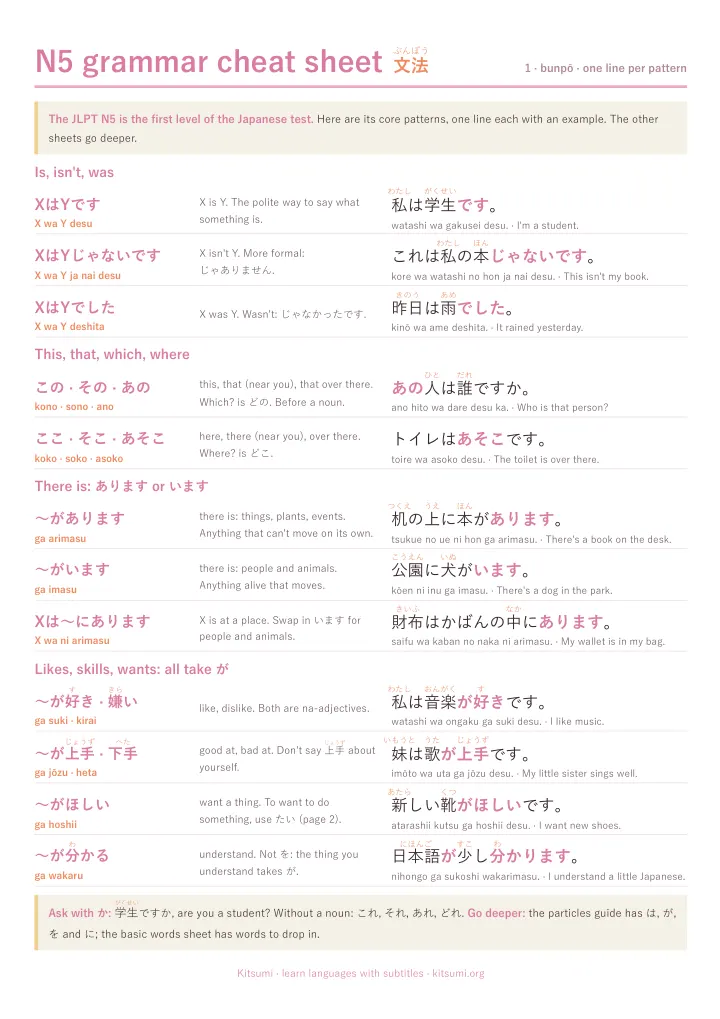
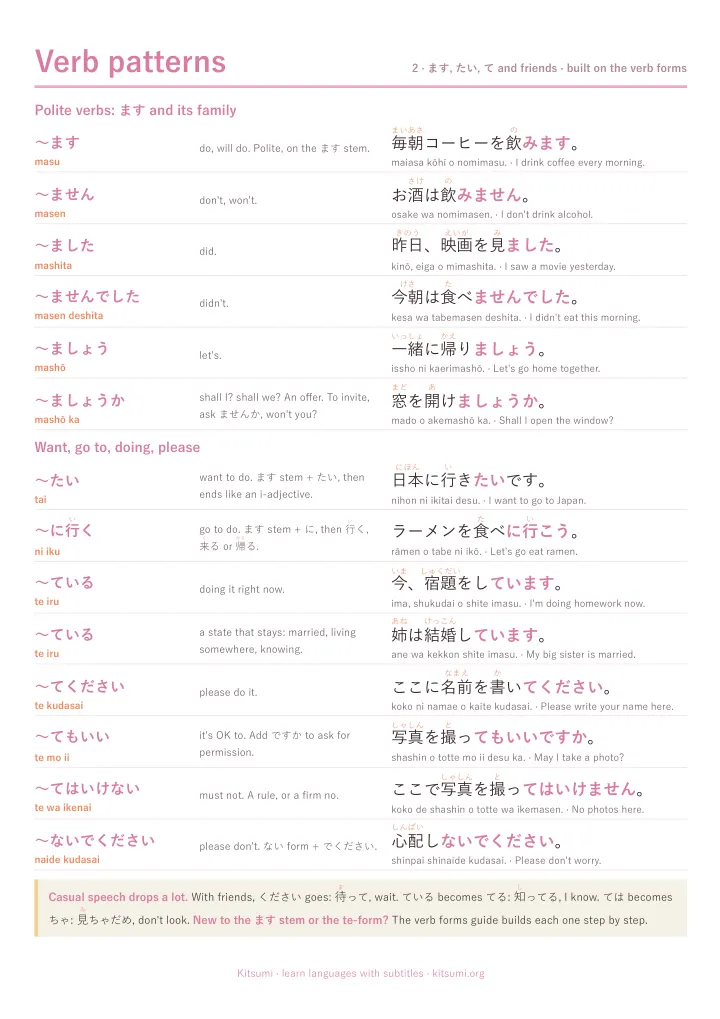
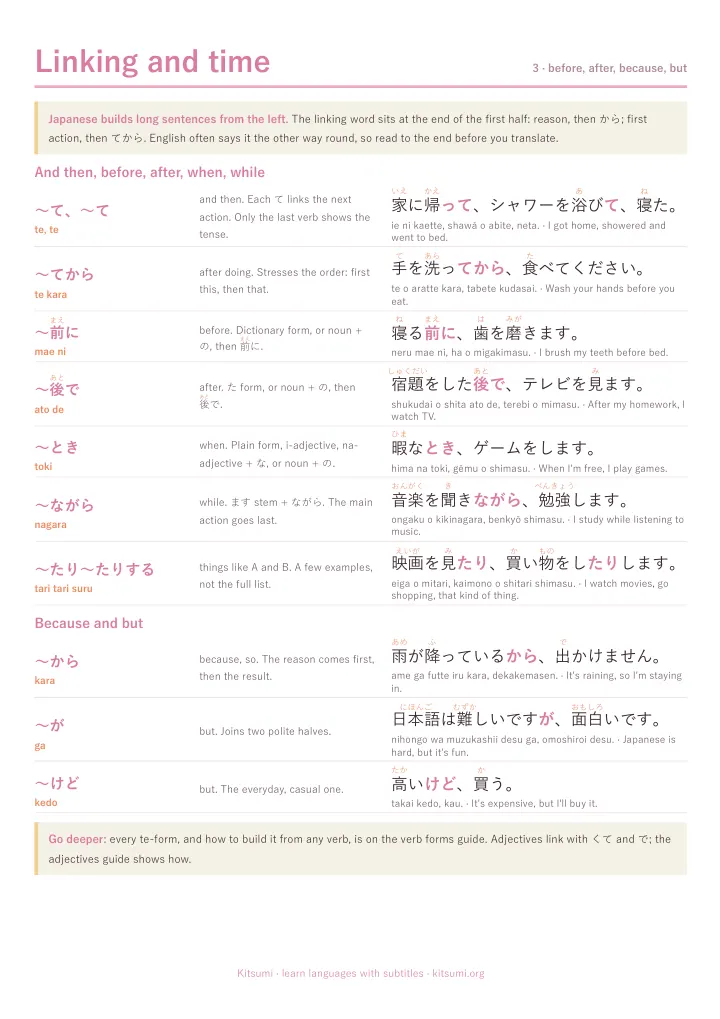
A five-page printable PDF of the grammar patterns the JLPT N5 expects, one line each: the pattern, what it does and one example sentence. Every kanji has its reading in hiragana, with romaji and English under each line.
PDF · 5 pages · 370 KB · no sign-up · free to print and share
Next, meet these words in real videos: Kitsumi is free for Chrome and Firefox.
What's inside
- Sentence basicsです, じゃないです and でした, この, その, あの and ここ, そこ, あそこ, あります or います, and the が words: 好き, 嫌い, 上手, 下手, ほしい and 分かる.
- Verb patternsます, ません, ました and ませんでした, ましょう and ましょうか, たい, 食べに行く, ている for doing and for a state, てください, てもいい, てはいけない and ないでください.
- Linking and timeて for and then, てから, 前に, 後で, とき, ながら, たり and たり, then から for because and が and けど for but.
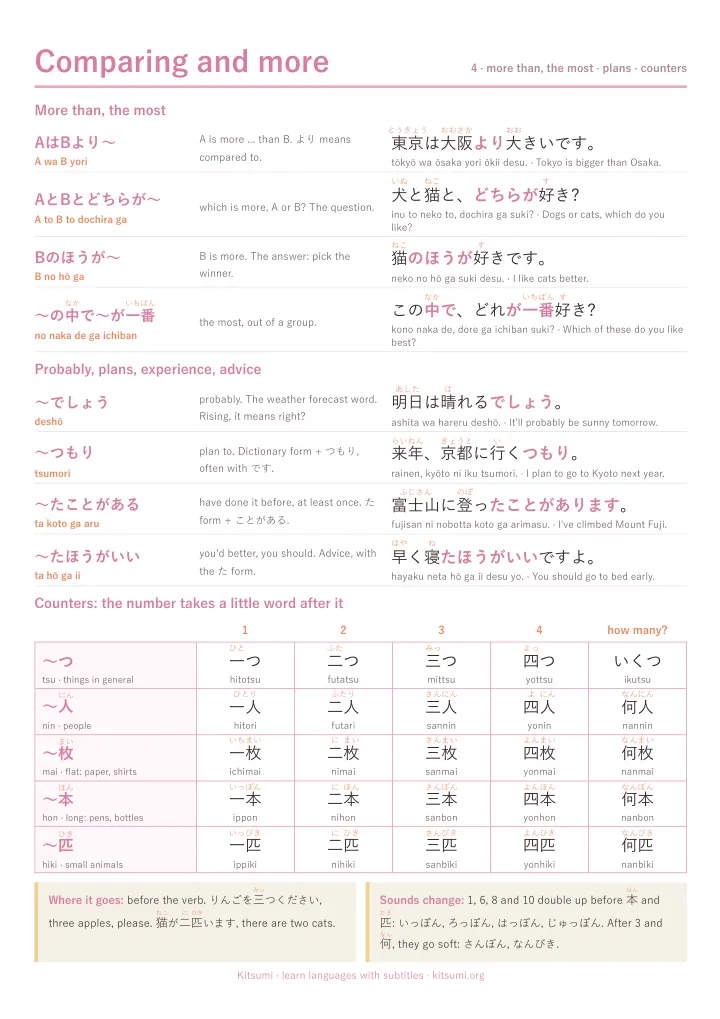 Comparing and moreより, のほうが and 一番, でしょう, つもり, たことがある and たほうがいい, plus a counters table for つ, 人, 枚, 本 and 匹.
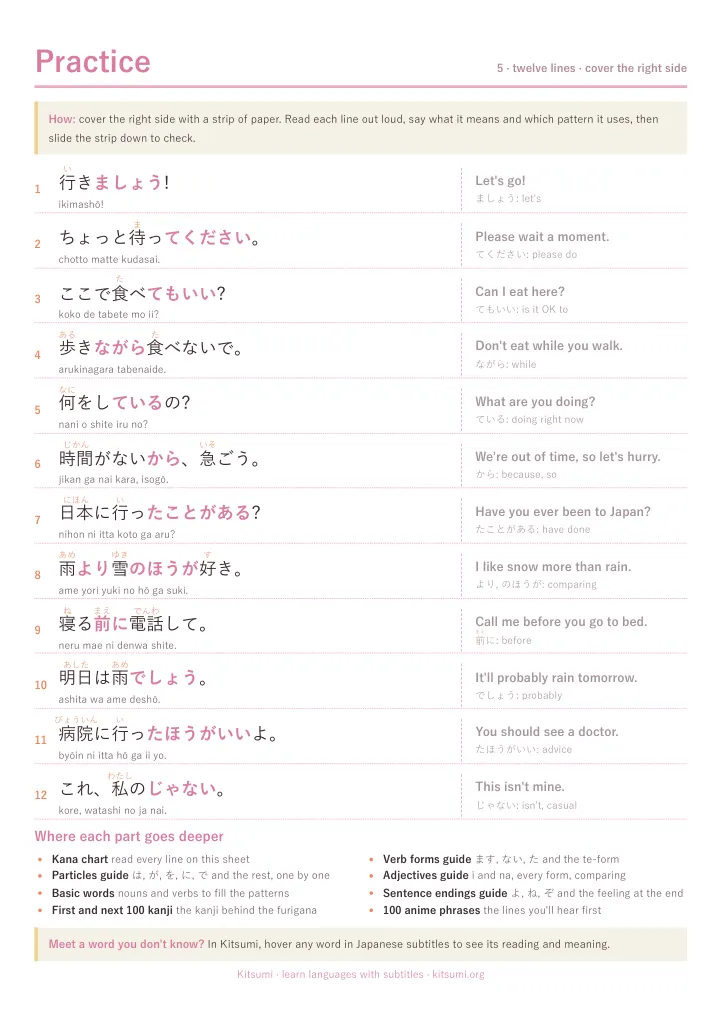 PracticeTwelve lines from shows and daily life with the pattern highlighted. Cover the answers with a strip of paper and check yourself, then see which sheet goes deeper on each part.
How to use it
- Learn hiragana first. The verb forms and adjectives guides show how each form is built.
- Read one page a day, saying each example out loud.
- Cover the right side of the practice page and name the pattern in each line.
- Watch a show with Kitsumi and listen for the same patterns.
More free Japanese printables
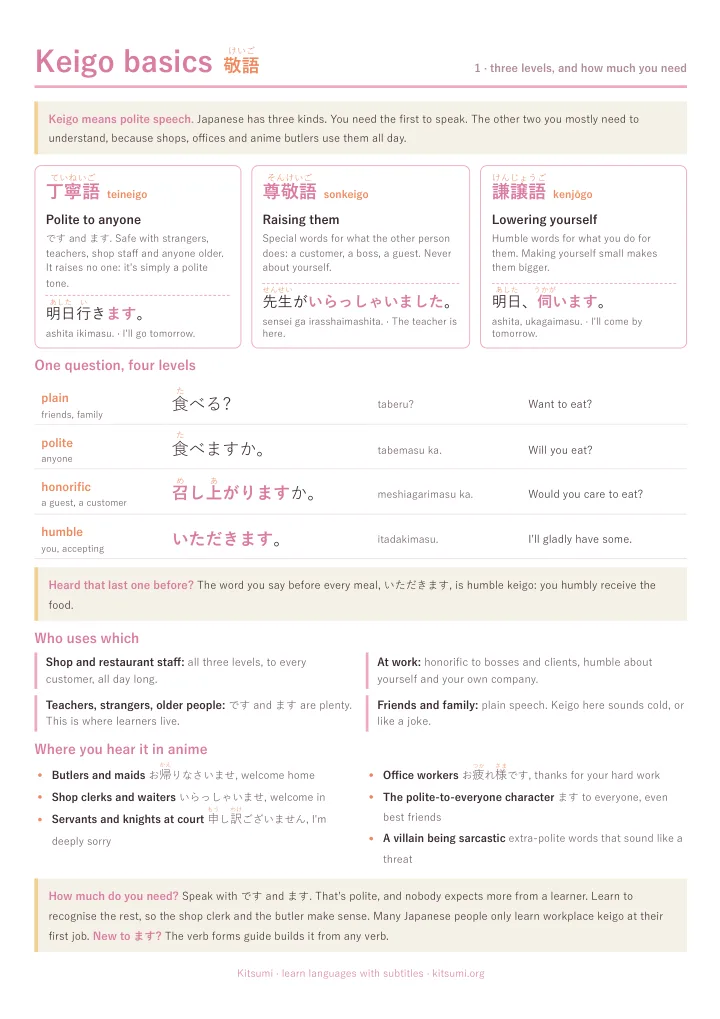 Next stepJapanese polite speech: keigo basicsGo polite: what keigo is, how much of it you need, and the phrases every shop clerk and butler uses.
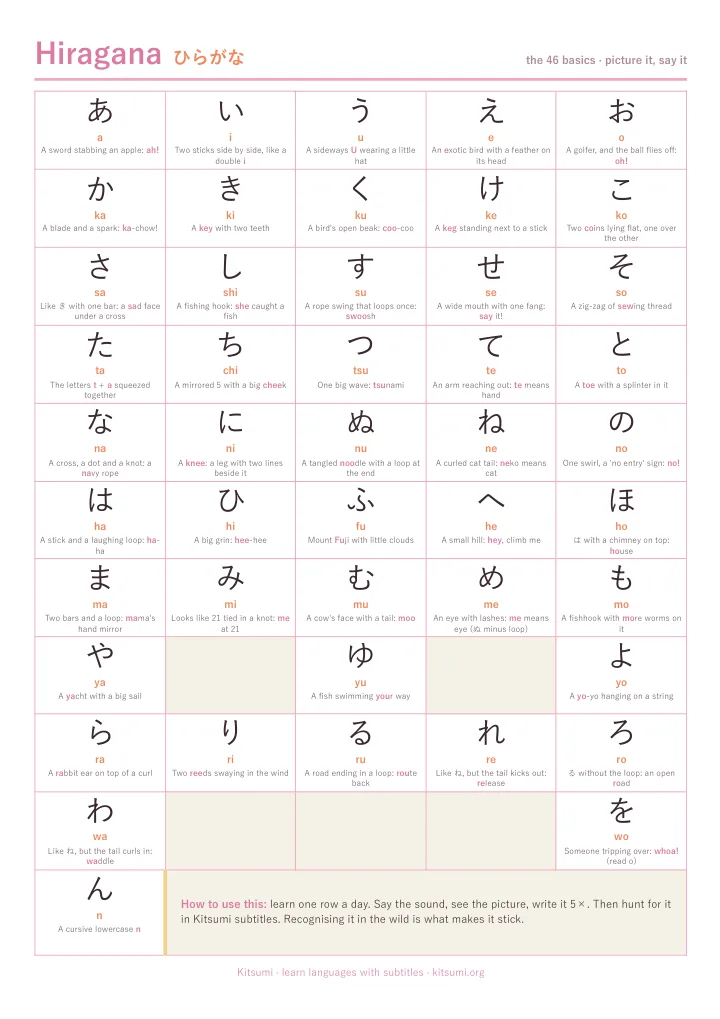 Hiragana and katakana chartLearn to read first. Every hiragana and katakana, with a picture to remember it by.
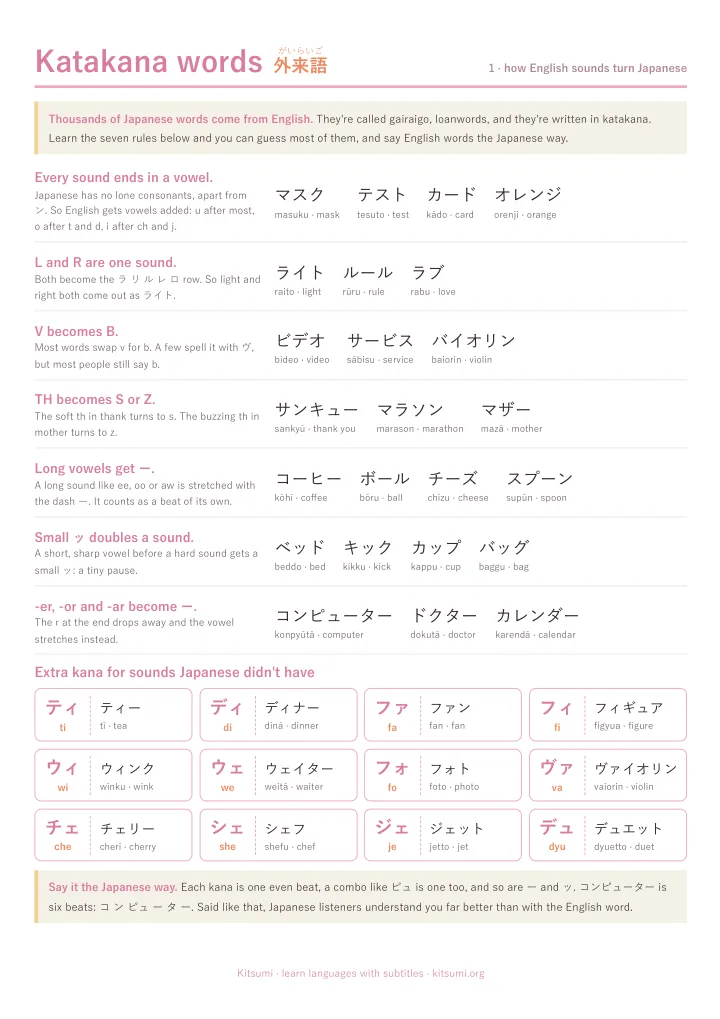 Japanese katakana words: how English becomes JapanesePut your katakana to work: the rules that turn English words into Japanese, and the ones that don't mean what you think.
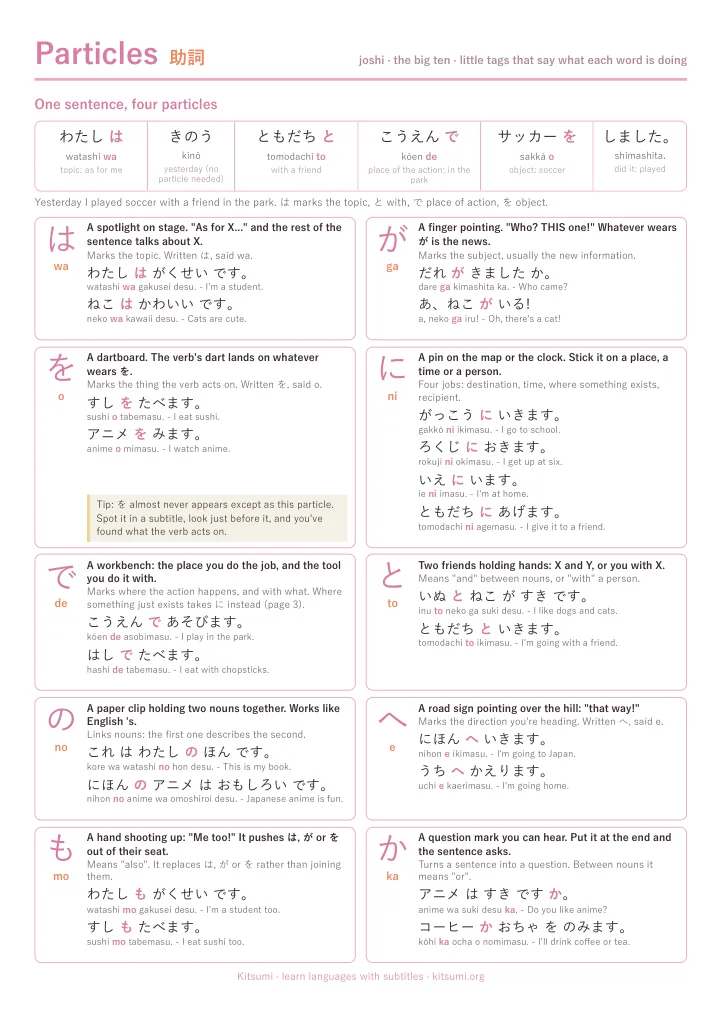 Japanese particles guideLearn the little words that hold a sentence together: は, が, を, に, で and more.
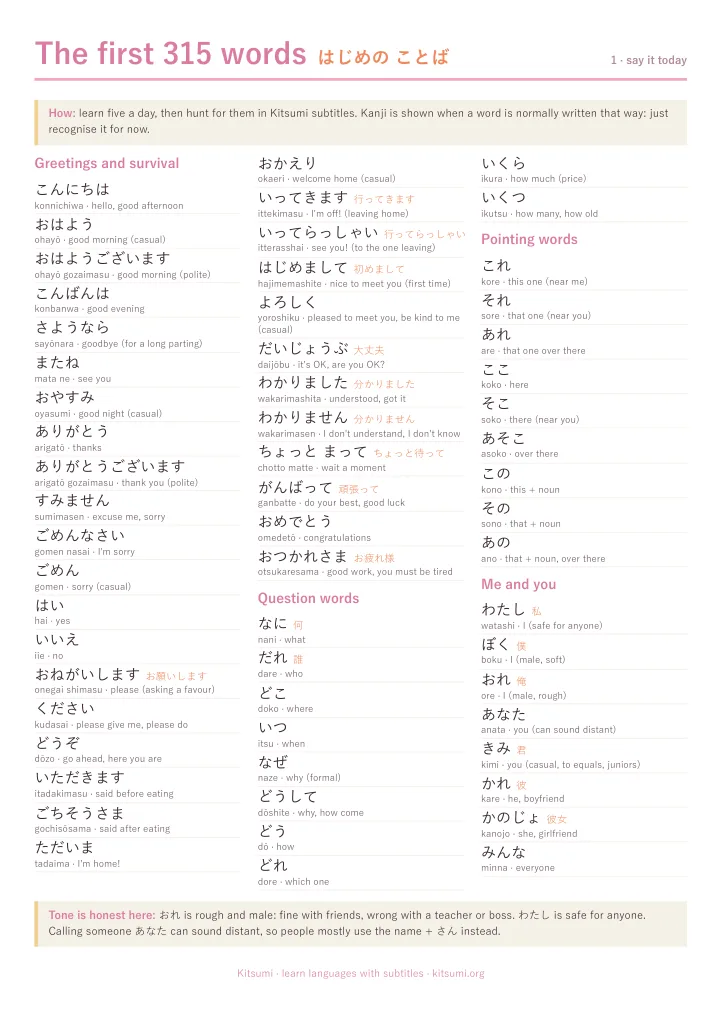 Basic Japanese words listPick up the first 315 words: greetings, people, numbers, food, verbs and more.
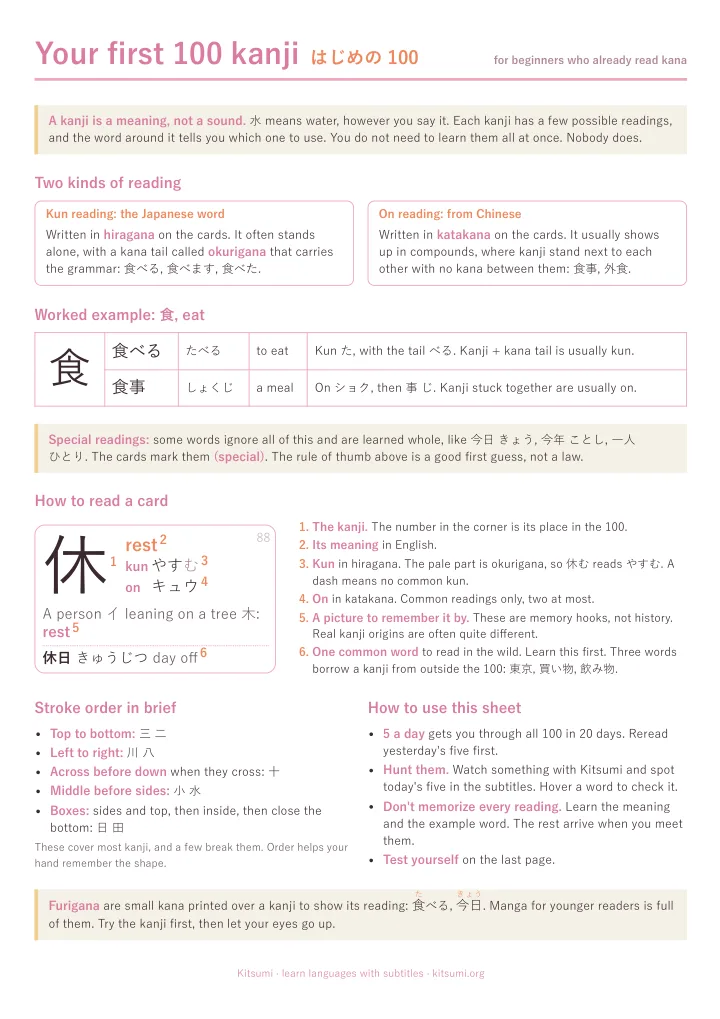 Your first 100 kanjiStart kanji once you read kana comfortably: 100 beginner kanji, each with a picture.
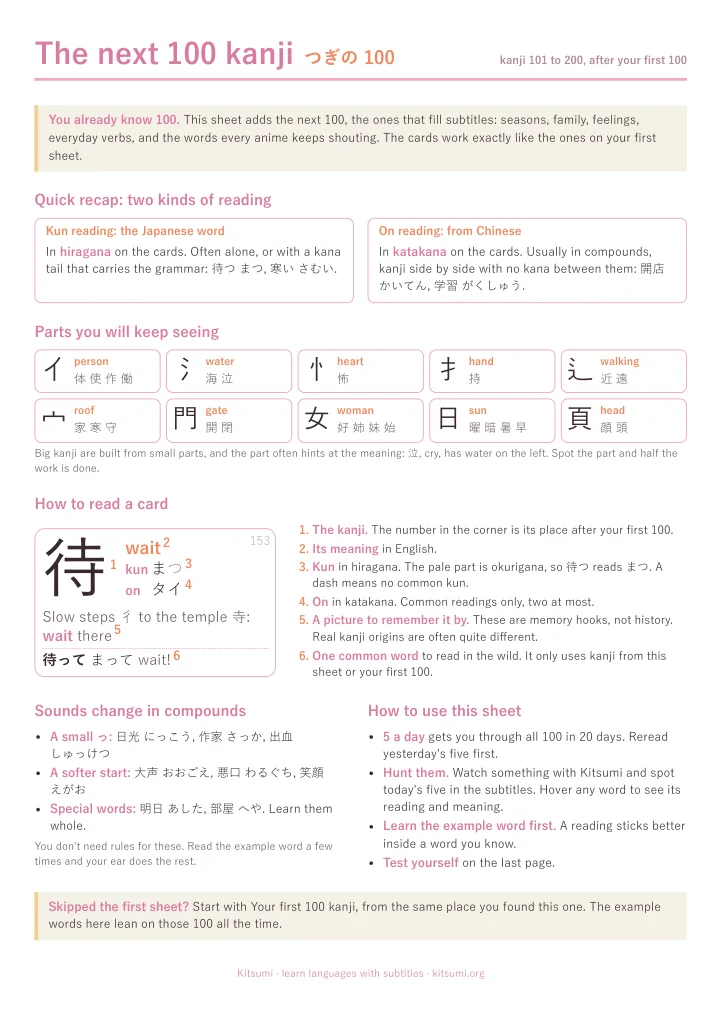 The next 100 kanjiDone with your first 100? Here are the next 100: seasons, family, feelings, verbs and anime words.
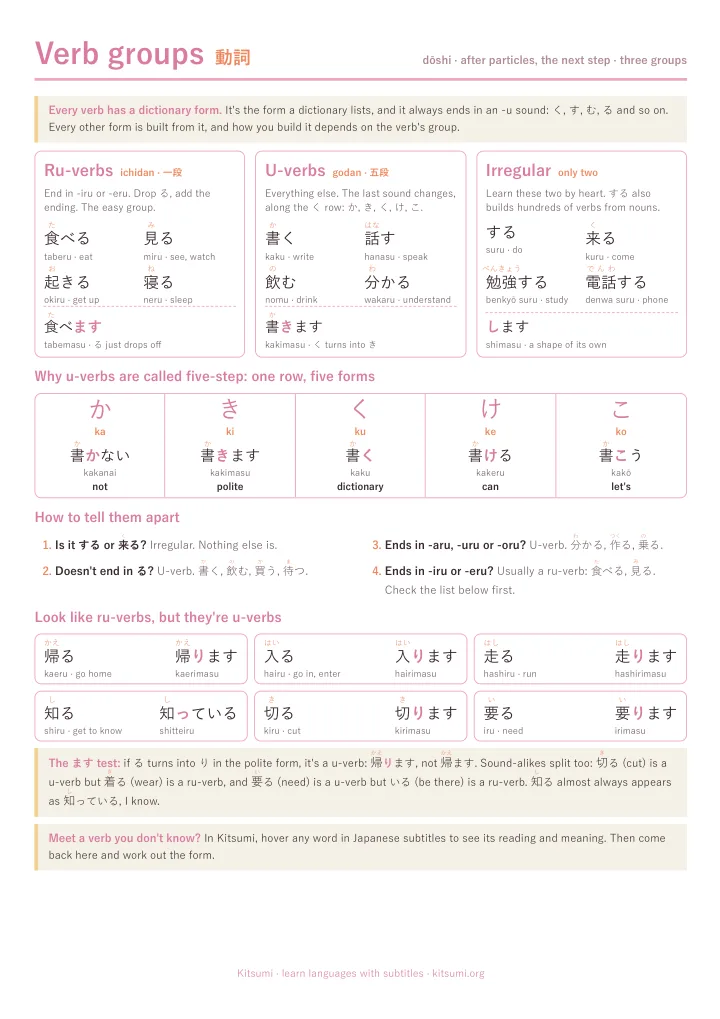 Japanese verb forms guideMake verbs do more: ます, ない, た, て, can, want to and let's, for every kind of verb.
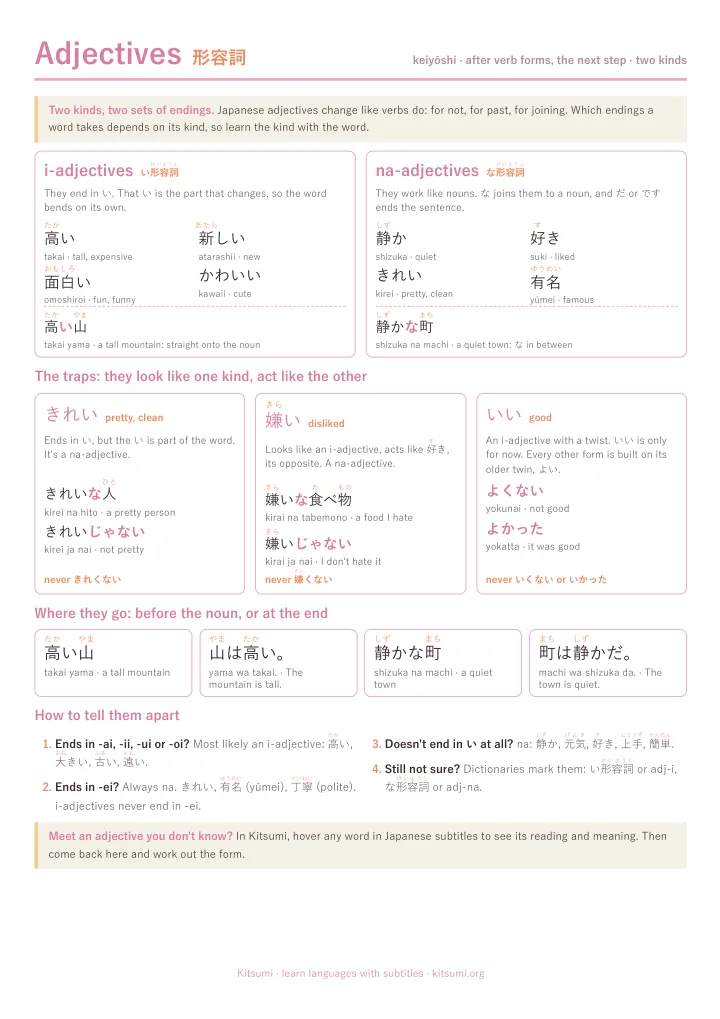 Japanese adjectives guideDescribe things: i-adjectives and na-adjectives in every form, from くない and かった to より and 一番.
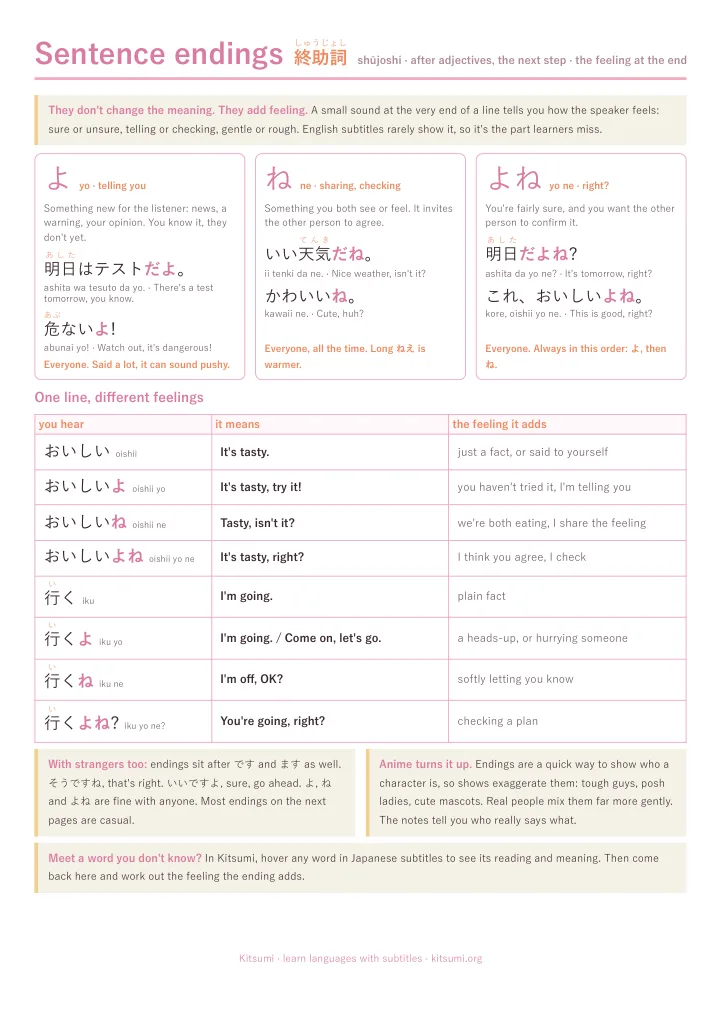 Japanese sentence endings guideHear the feeling: よ, ね, ぞ, わ, かな, じゃん, でしょ and the other endings that close almost every line.
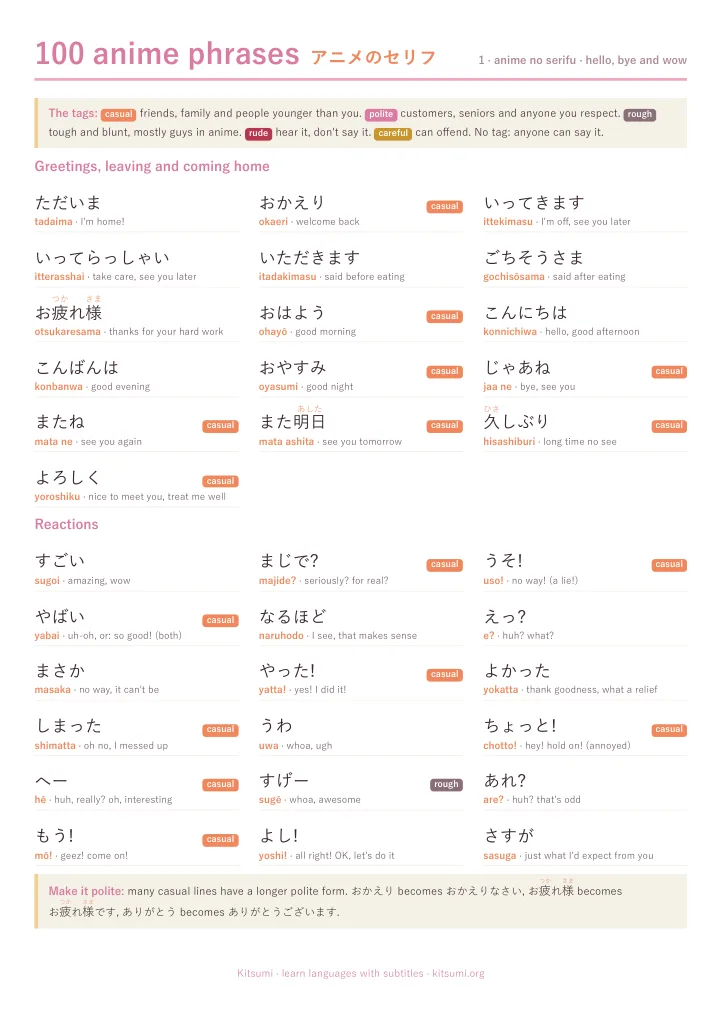 100 anime phrasesThen pick up the lines anime uses all the time: ただいま, まさか, 行くぞ, 任せて and what 先輩 really means.
Questions
Is the N5 grammar cheat sheet free?
Yes. It's a free PDF with no sign-up. Print it, keep it and share it.
What is JLPT N5?
The first and easiest level of the Japanese-Language Proficiency Test. It checks basic grammar, about 100 kanji and the everyday words a beginner needs.
What is the difference between あります and います?
Both mean there is. あります is for things, plants and events, います is for people and animals: 本があります, there's a book; 犬がいます, there's a dog.