 Kitsumi
Free Japanese particles guide
A four-page printable PDF for beginners: what each Japanese particle does, a picture to remember it by, and example sentences in kana and romaji. You only need to read kana.
PDF · 4 pages · 268 KB · no sign-up · free to print and share
What's inside
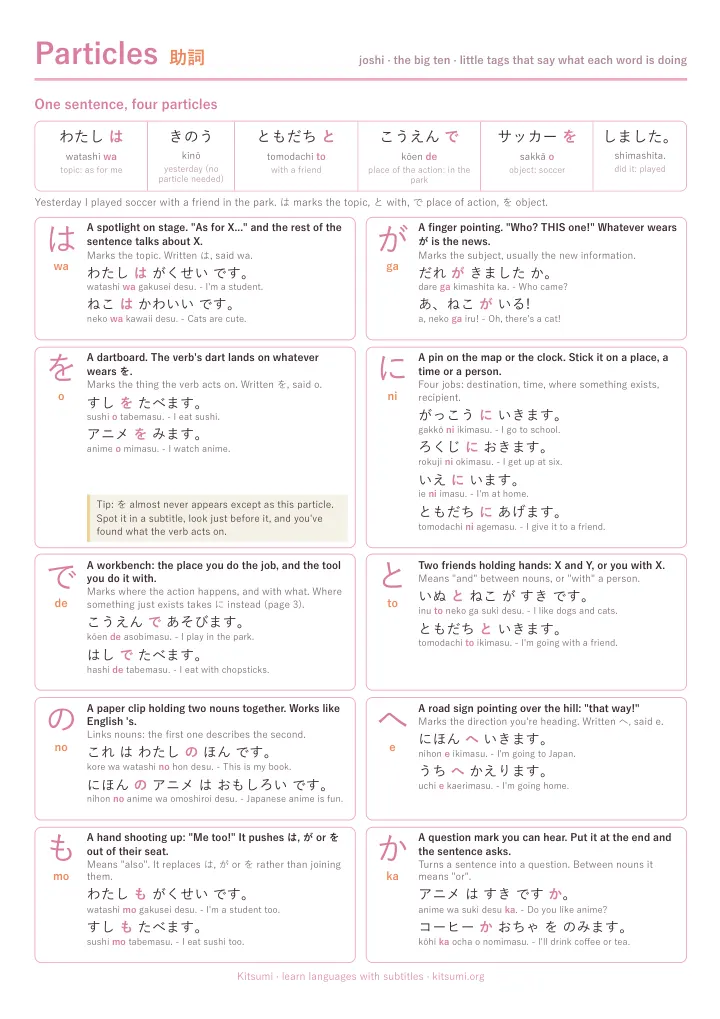
- The big tenは, が, を, に, で, と, の, へ, も and か, each with a hook to remember it by and example sentences, like が, a finger pointing: "Who? THIS one!"
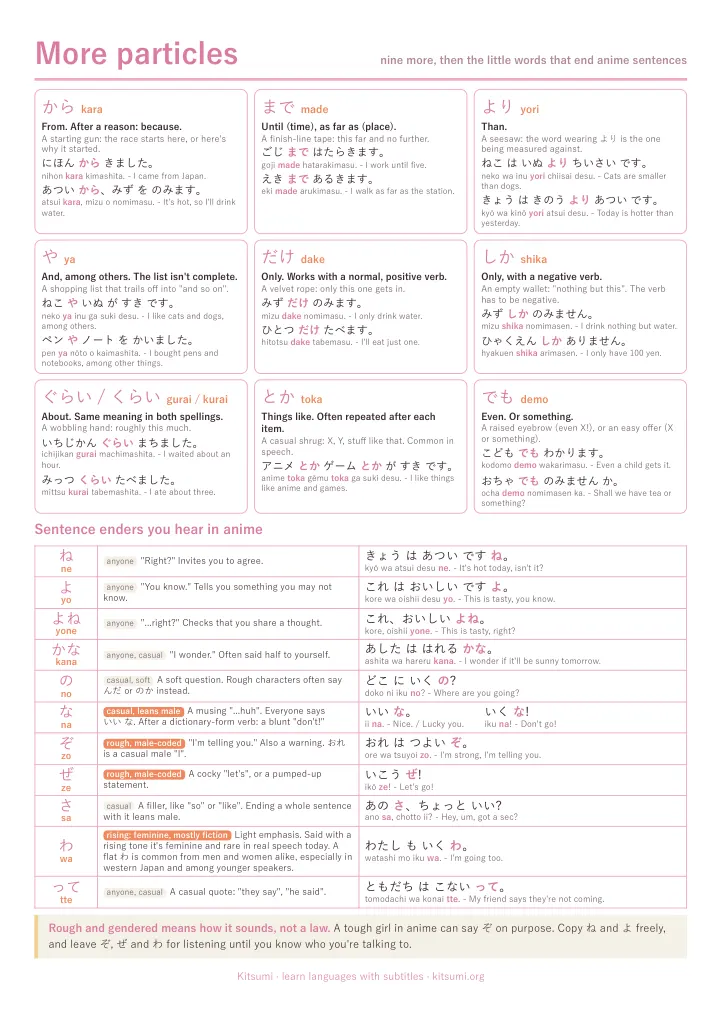
- More particles and sentence endingsから, まで, より, だけ, しか and others, then the endings you hear in anime like ね, よ, かな and ぞ, with honest notes on which ones sound rough.
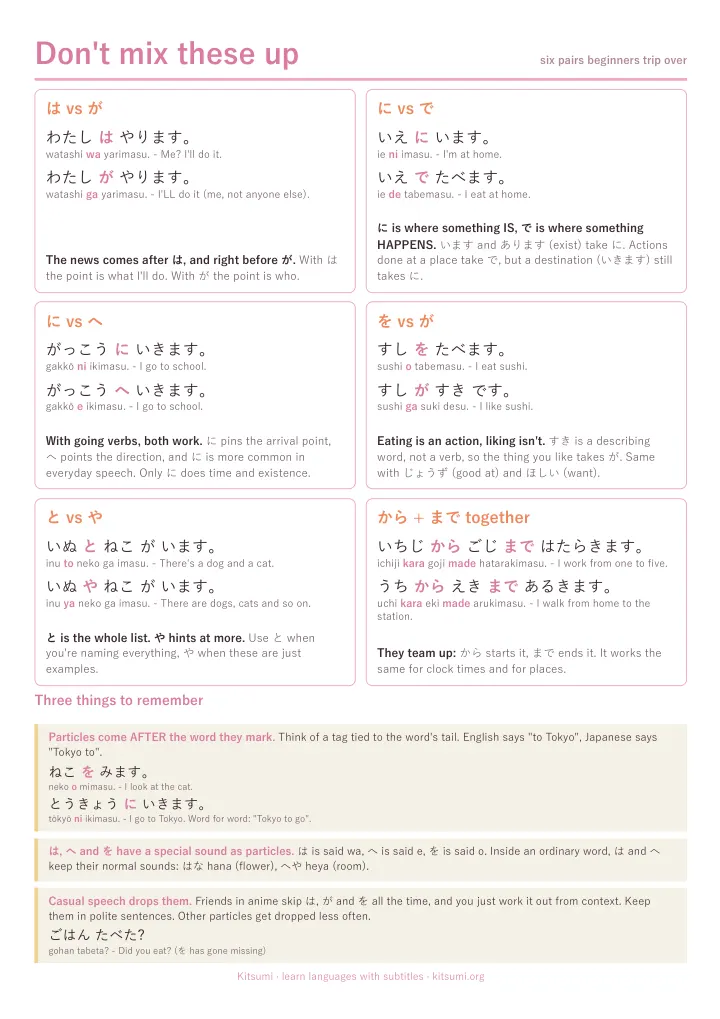
- Don't mix these upThe pairs beginners trip over, side by side: は or が, に or で, に or へ, を or が, と or や, and から with まで.
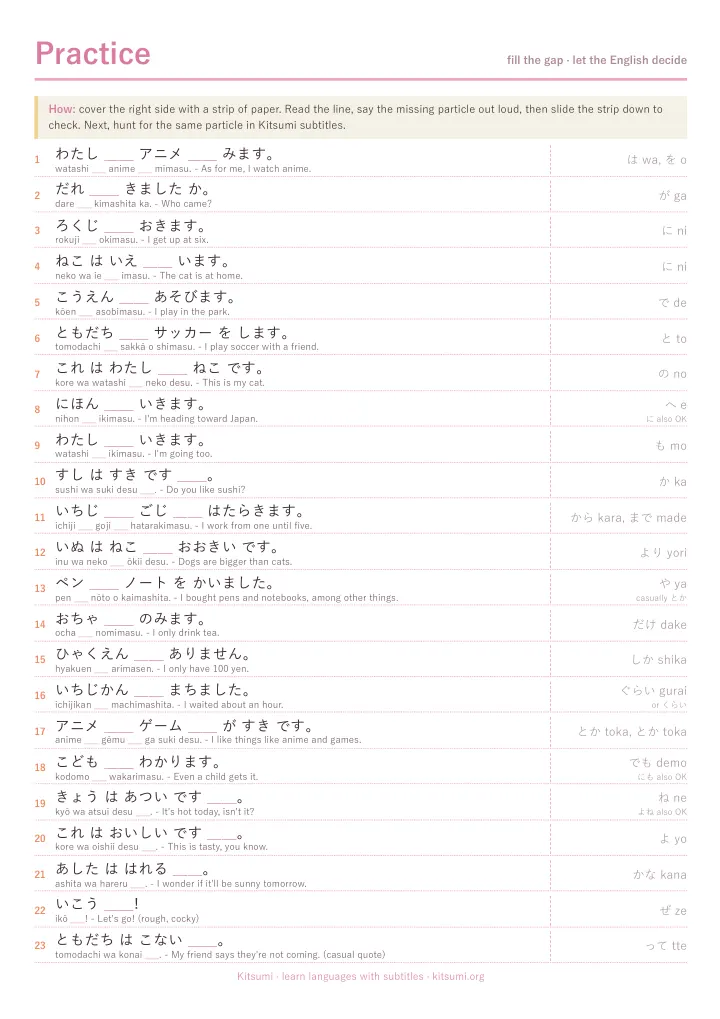 PracticeFill-in-the-blank sentences with the English beside them. Cover the answers with a strip of paper and check yourself.
How to use it
- Read the big ten first and say the example sentences out loud.
- Come back to the second page once the first feels familiar.
- Use the third page whenever two particles start to blur together.
- Cover the answers on the practice page, fill the gaps from memory, then check.
More free Japanese printables
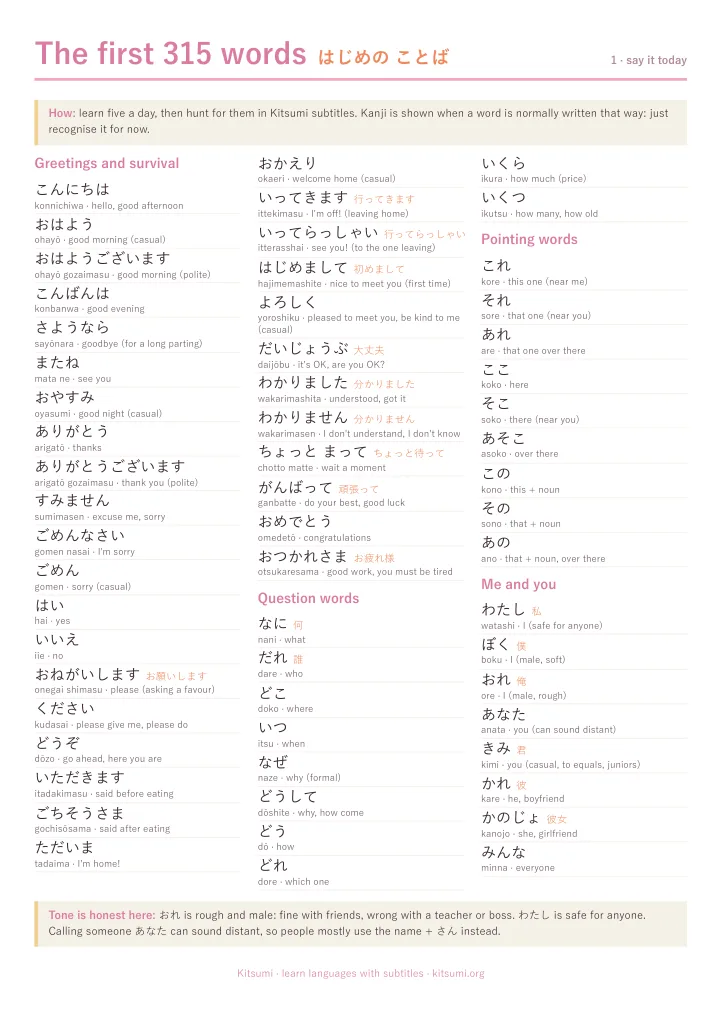 Next stepBasic Japanese words listPick up the first 315 words: greetings, people, numbers, food, verbs and more.
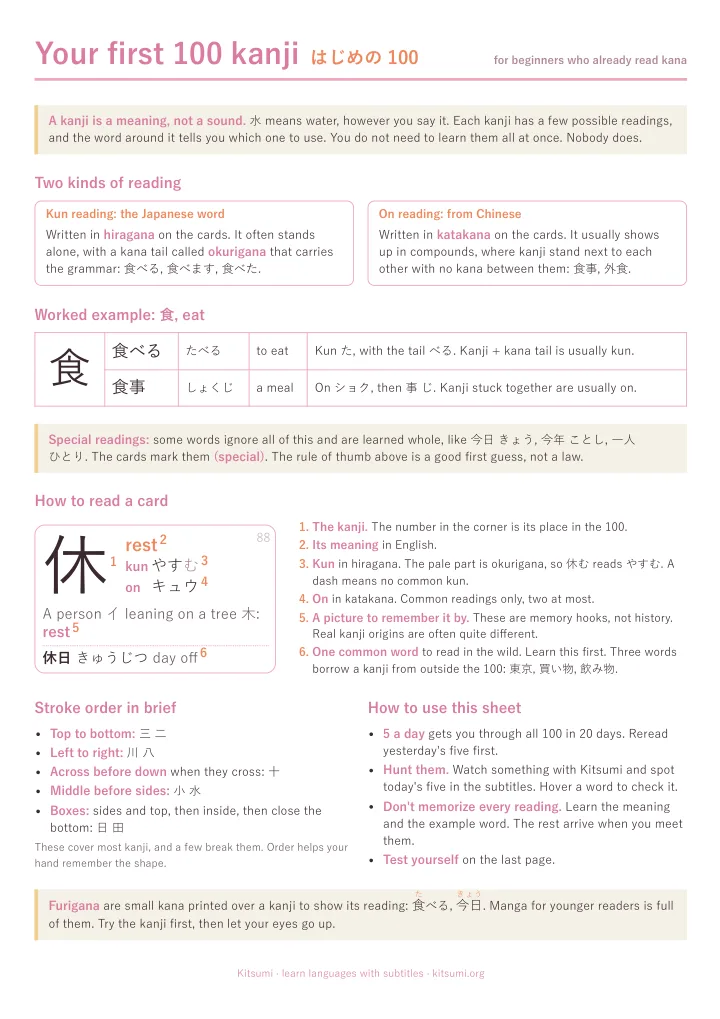 Your first 100 kanjiStart kanji once you read kana comfortably: 100 beginner kanji, each with a picture.
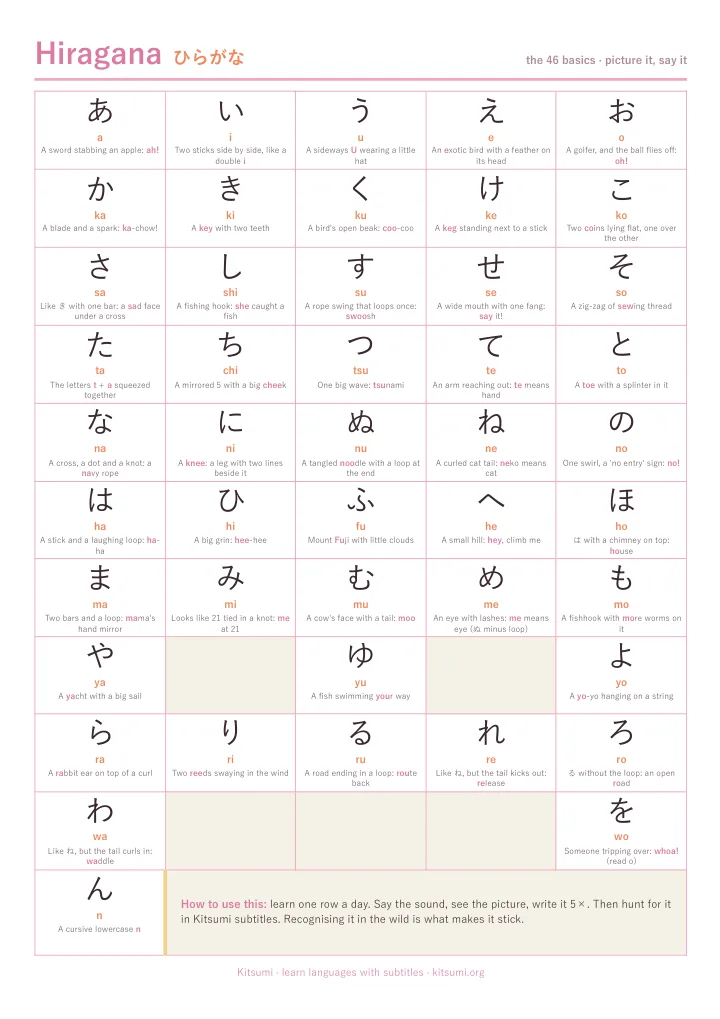 Hiragana and katakana chartLearn to read first. Every hiragana and katakana, with a picture to remember it by.
Questions
Is the particles guide free?
Yes. It's a free PDF with no sign-up. Print it, keep it and share it.
What is the difference between は and が?
は marks what you're talking about, and what follows is the news. が marks the new information itself. わたし は やります means "as for me, I'll do it". わたし が やります means "I'm the one who'll do it". Page three has more pairs like this.
Do I need to know kanji to use it?
No. All the Japanese is in kana with spaces between words, with romaji and English under each example. You only need to read kana.