 Kitsumi
Free Korean Hangul chart
A three-page printable PDF for learning to read Korean: every letter with a picture to remember it by, the full table of syllable blocks, and words and sentences to check yourself on.
PDF · 3 pages · 271 KB · no sign-up · free to print and share
Next, meet these words in real videos: Kitsumi is free for Chrome and Firefox.
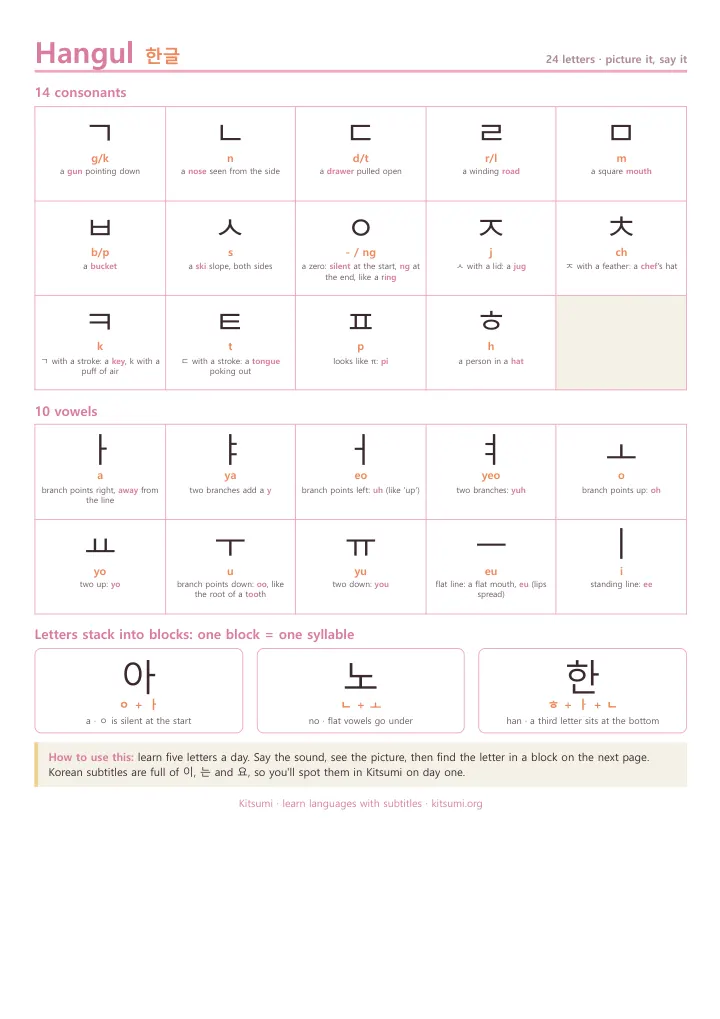
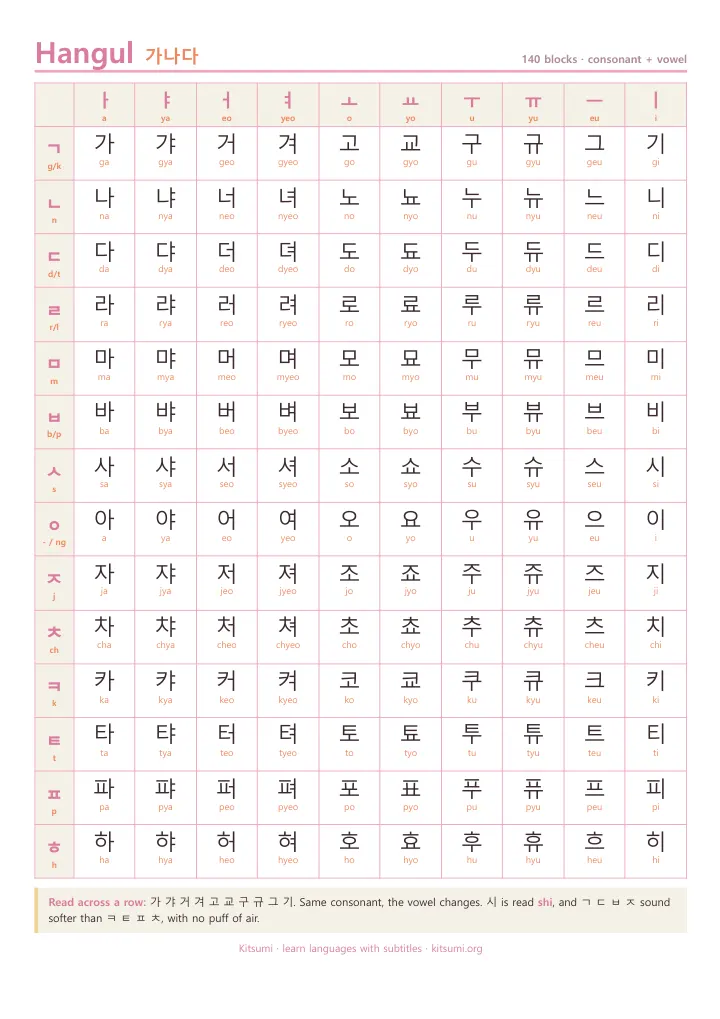
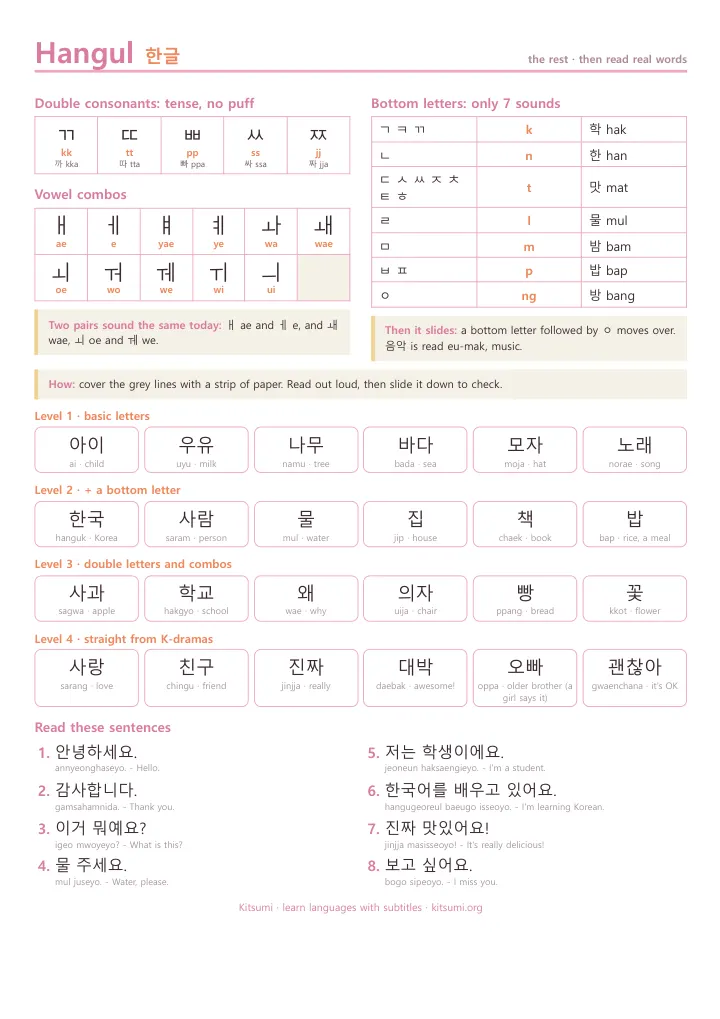
What's inside
- 24 lettersThe 14 consonants and 10 vowels, each with its sound and a picture to hang it on, like ㄴ, a nose seen from the side. Then how letters stack into a block: ㅎ + ㅏ + ㄴ = 한.
- 140 blocksEvery basic consonant with every basic vowel, from 가 to 히, with romanisation under each. Read across a row and only the vowel changes.
- The rest, then real wordsDouble letters like ㄲ, vowel combos like ㅘ, and the seven sounds a bottom letter can make. Then 24 words, some straight from K-dramas, and eight everyday sentences.
How to use it
- Learn five letters a day.
- Say the sound, see the picture, then find the letter in a block on the grid page.
- Cover the grey romanisation on the last page and read aloud, then slide the paper down to check.
- Watch something with Korean subtitles in Kitsumi and spot the blocks you know. 이, 는 and 요 turn up in nearly every line.
More free Korean printables
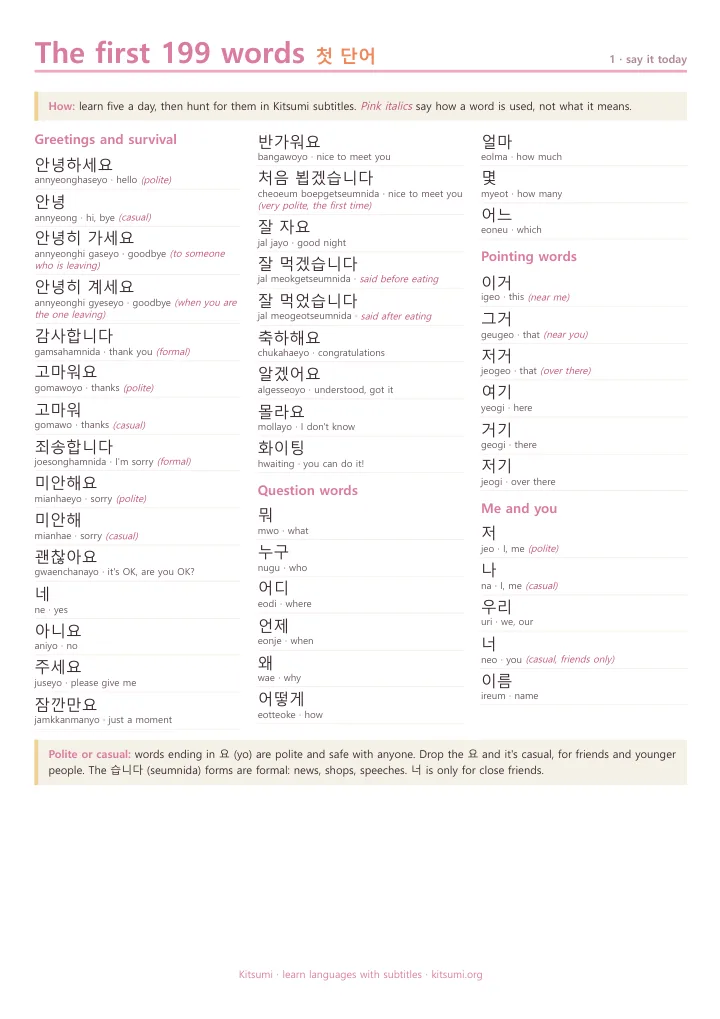 Next stepBasic Korean wordsThen pick up the first 199 words: greetings, family, numbers, food, verbs and K-drama favourites.
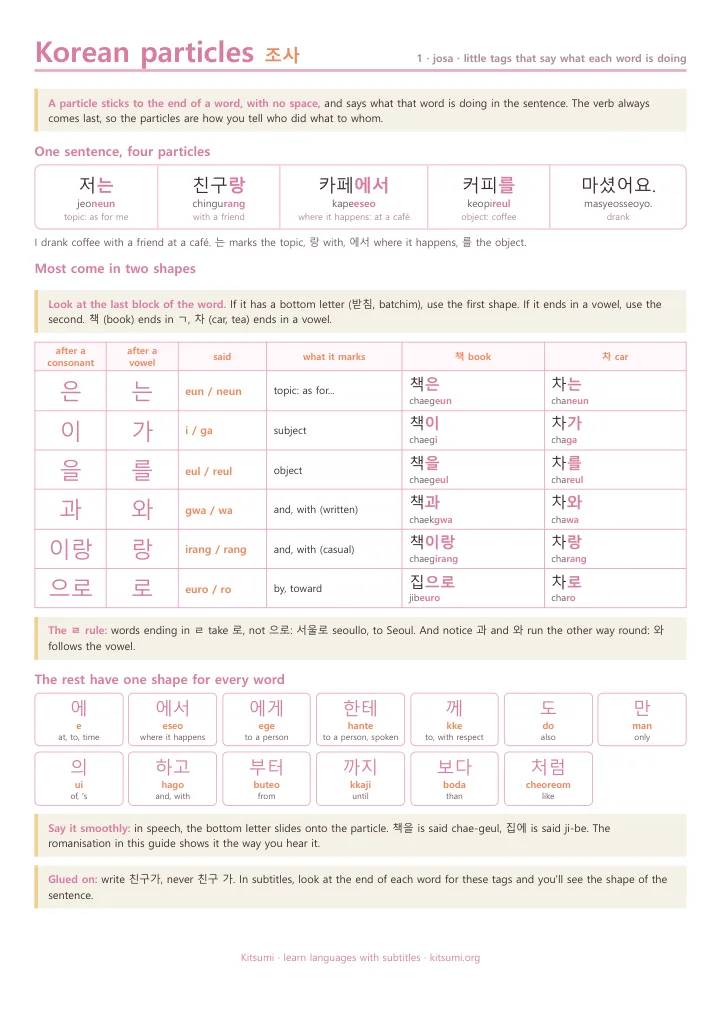 Korean particles guideThen learn the little tags on the end of each word: 은/는, 이/가, 을/를, 에 and more.
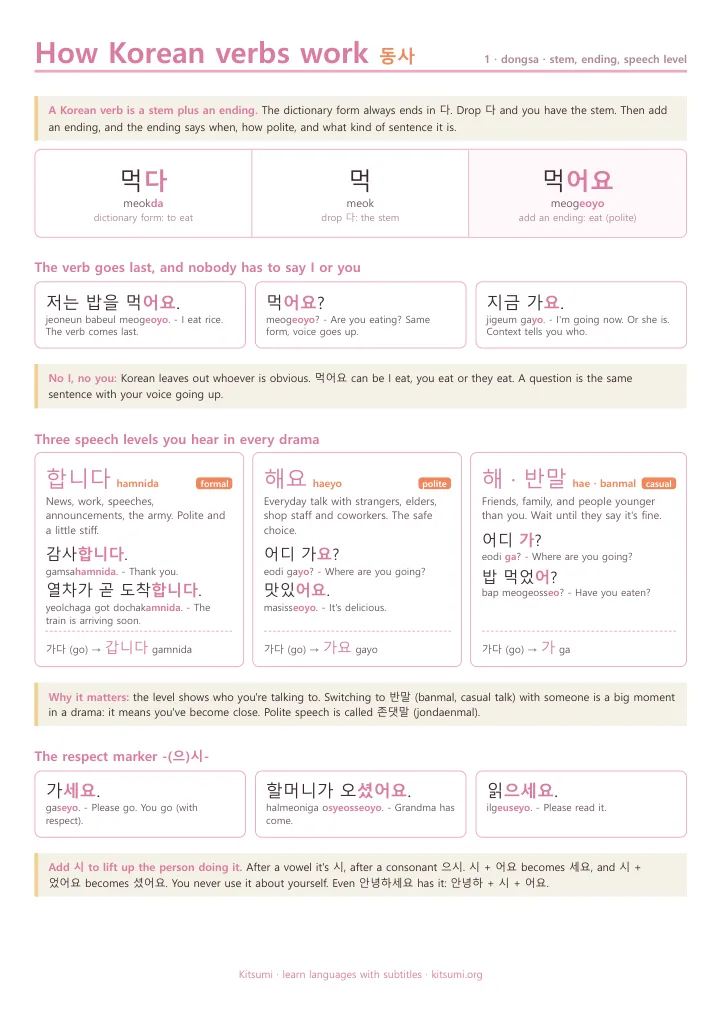 Korean verb endings and speech levelsThen learn how verbs end: 해요, 해 and 합니다, the past, the future and the endings dramas use.
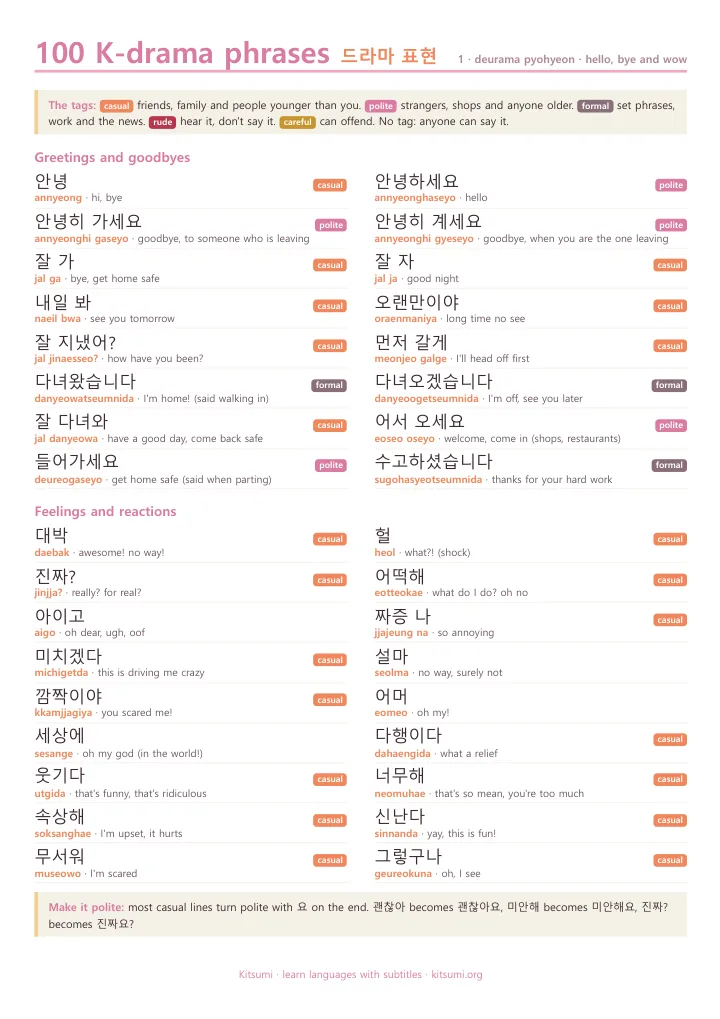 100 Korean drama phrasesThen pick up the lines dramas use all the time: 대박, 보고 싶어, 그만해 and what 오빠 really means.
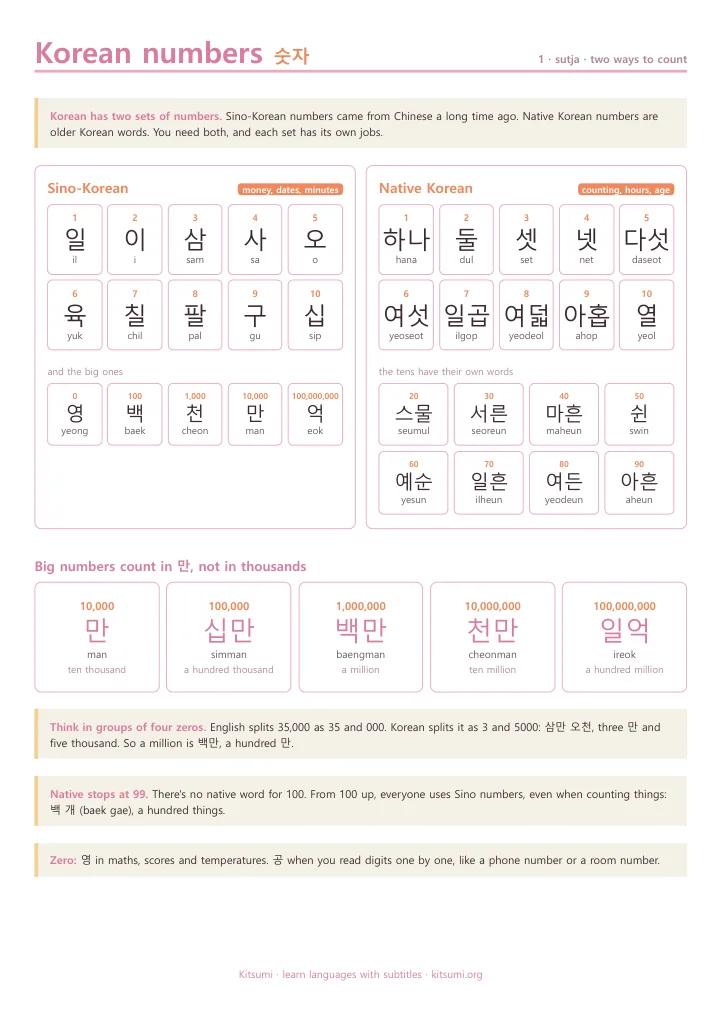 Korean numbers and countersThen sort out numbers: 일 이 삼 and 하나 둘 셋, and which one goes with prices, hours and age.
Questions
Is the Hangul chart free?
Yes. It's a free PDF with no sign-up. Print it, keep it and share it.
How long does it take to learn Hangul?
Most people can sound out words after a few days of practice. It was designed to be easy to learn, and each letter's shape follows a pattern.
Which romanisation does it use?
Revised Romanisation, the system used on South Korean road signs. Treat it as a stepping stone and switch to reading the Hangul itself as soon as you can.