 Kitsumi
Japanese casual speech: the verb contractions you hear in anime
A six-page printable PDF of the short forms that fill casual Japanese, each shown as full form, then casual form, with furigana, romaji, what it means and a line you'd hear in a show. Tags say which ones are fine with anyone and which are rough or regional.
PDF · 6 pages · 510 KB · no sign-up · free to print and share
Was it useful?Ideas or a mistake? Tell us on Discord
Next, meet these words in real videos: Kitsumi is free for Chrome and Firefox.
What's inside
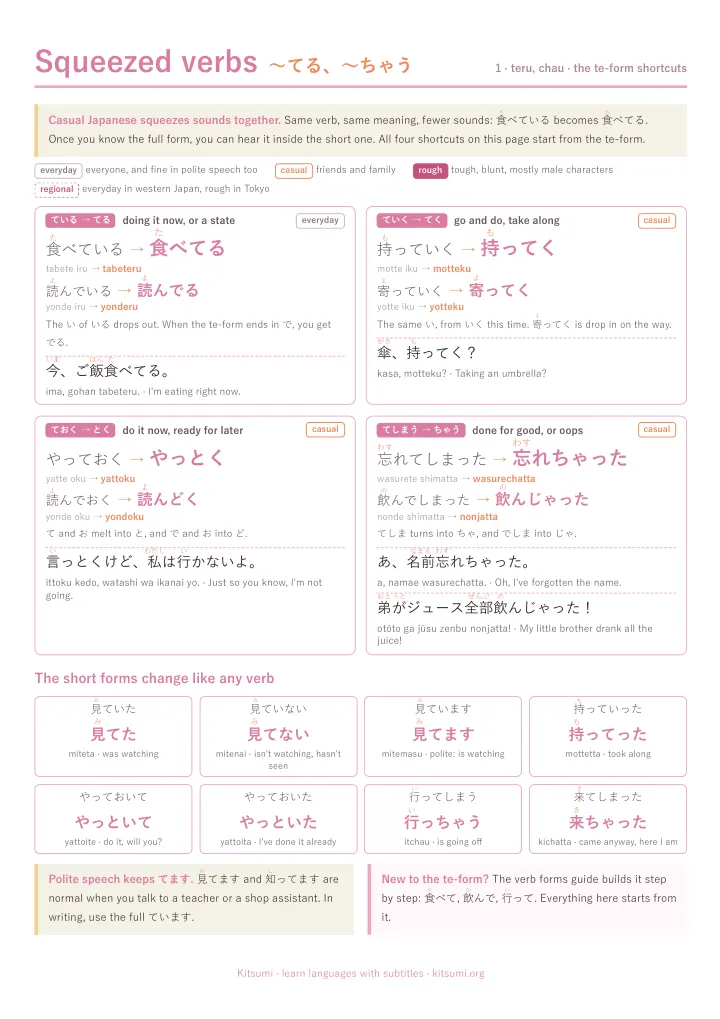
- Squeezed verbsThe te-form shortcuts: ている to てる (食べてる), ていく to てく, ておく to とく (やっとく) and てしまう to ちゃう and じゃう (忘れちゃった, 飲んじゃった), and how the short forms change: 見てた, 見てます, やっといて.
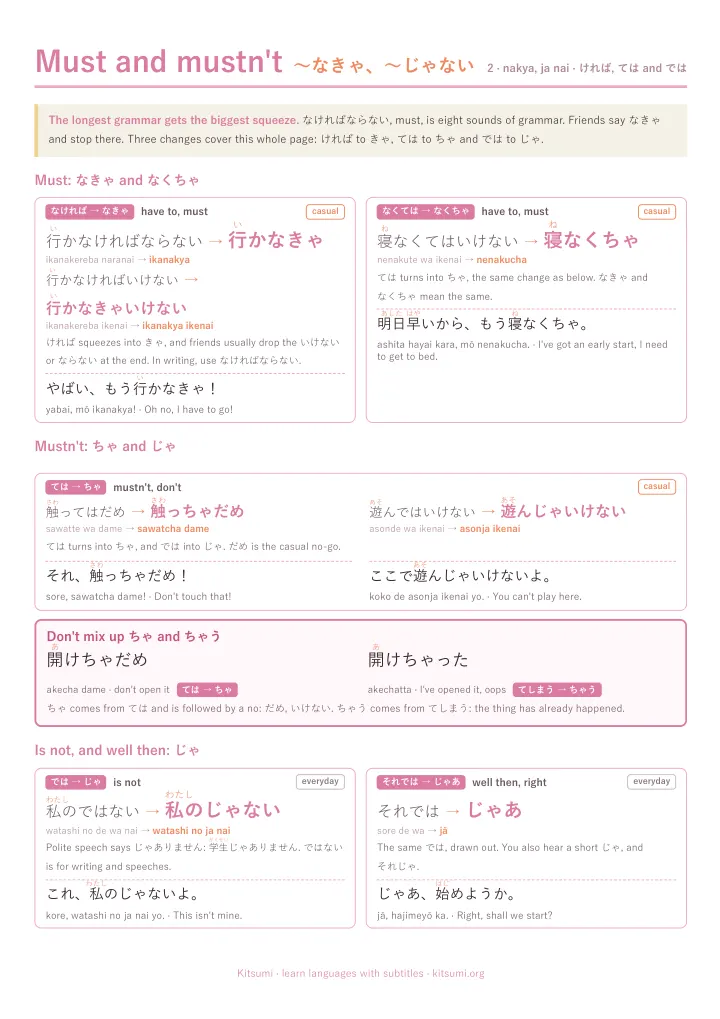
- Must and mustn'tなければならない to なきゃ, なくては to なくちゃ, ては to ちゃ (触っちゃだめ), では to じゃ (じゃない, じゃあ), and how not to mix up ちゃ and ちゃう.
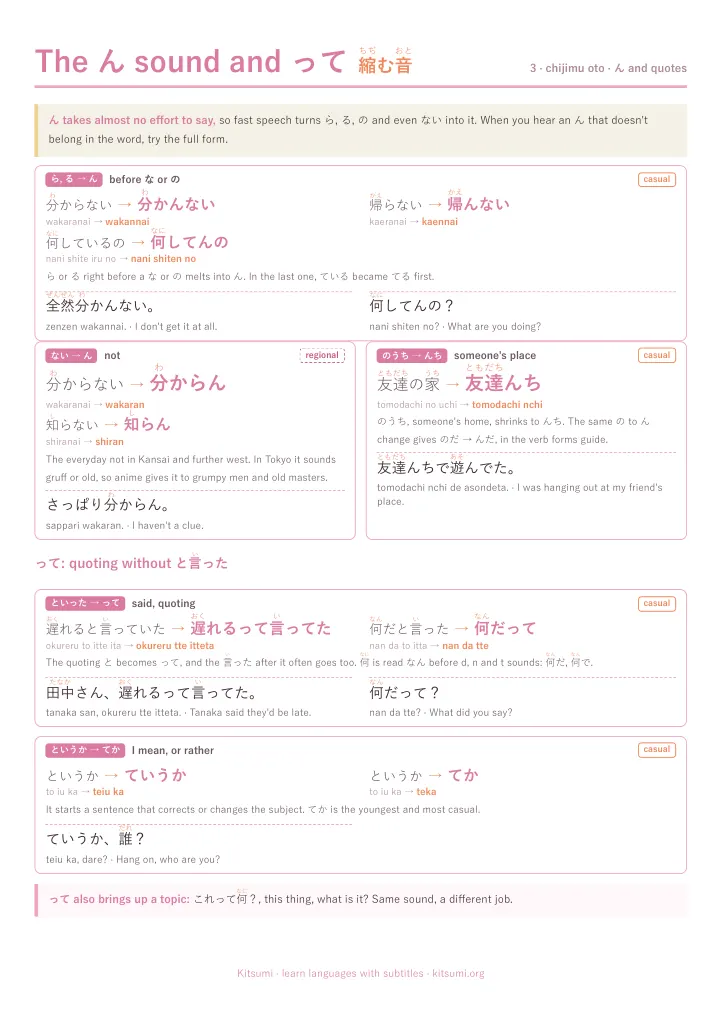
- The ん sound and って分かんない, 帰んない and 何してんの, the regional 分からん, 友達んち, quoting with って (〜って言ってた, 何だって?), and ていうか and てか.
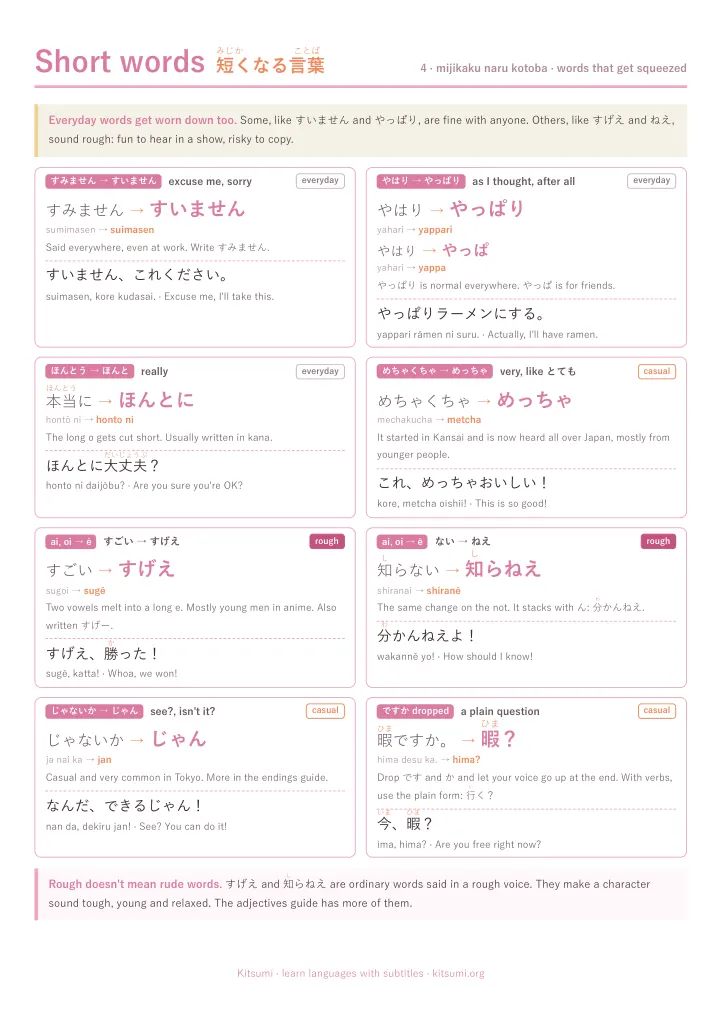 Short wordsすいません, やっぱり, ほんとに, めっちゃ, the rough すげえ and 知らねえ, じゃん, and plain questions with a rising voice instead of ですか.
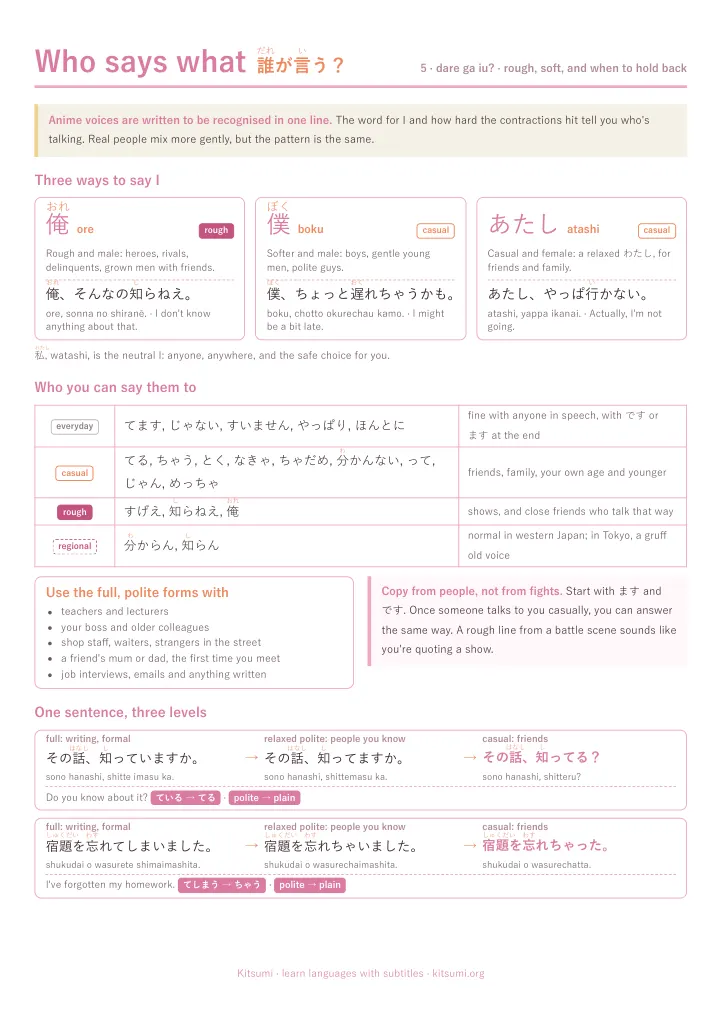 Who says what俺, 僕 and あたし with one line each, which forms are fine with anyone and which are only for friends, who to use full polite forms with, and one sentence on three levels: 知っています, 知ってます, 知ってる.
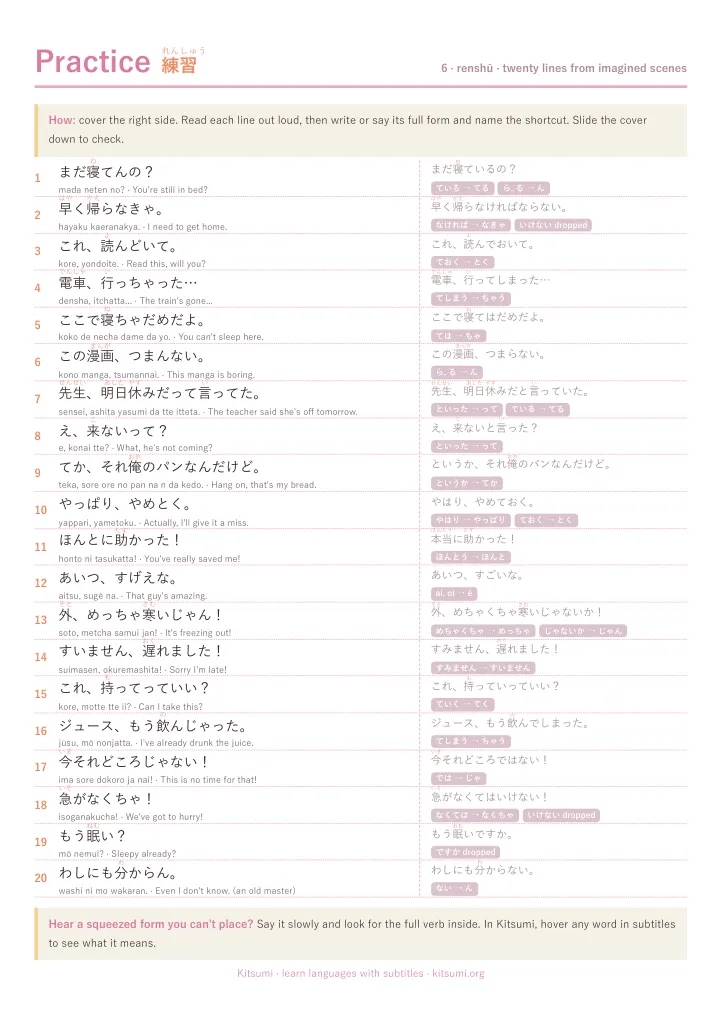 PracticeTwenty casual lines from imagined anime scenes to turn back into the full form. The answers sit in small print on the right with the rule for each. Cover them with a strip of paper and check yourself.
How to use it
- Learn the te-form first if it's new to you: every shortcut on page one starts from it.
- Read each pair out loud, full form then casual, until you can hear one inside the other.
- Check the tags before you copy a form: rough and regional ones sound odd outside a show.
- Cover the answers on the practice page, say the full form of each line, then check the rule.
More free Japanese printables
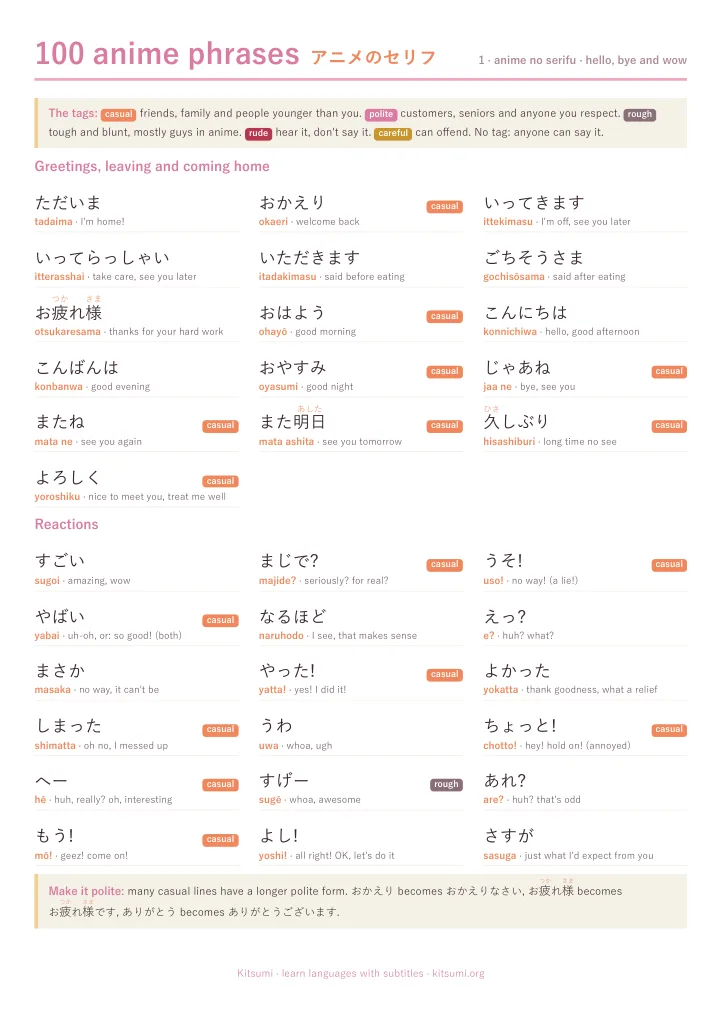 Next step100 anime phrasesThen pick up the lines anime uses all the time: ただいま, まさか, 行くぞ, 任せて and what 先輩 really means.
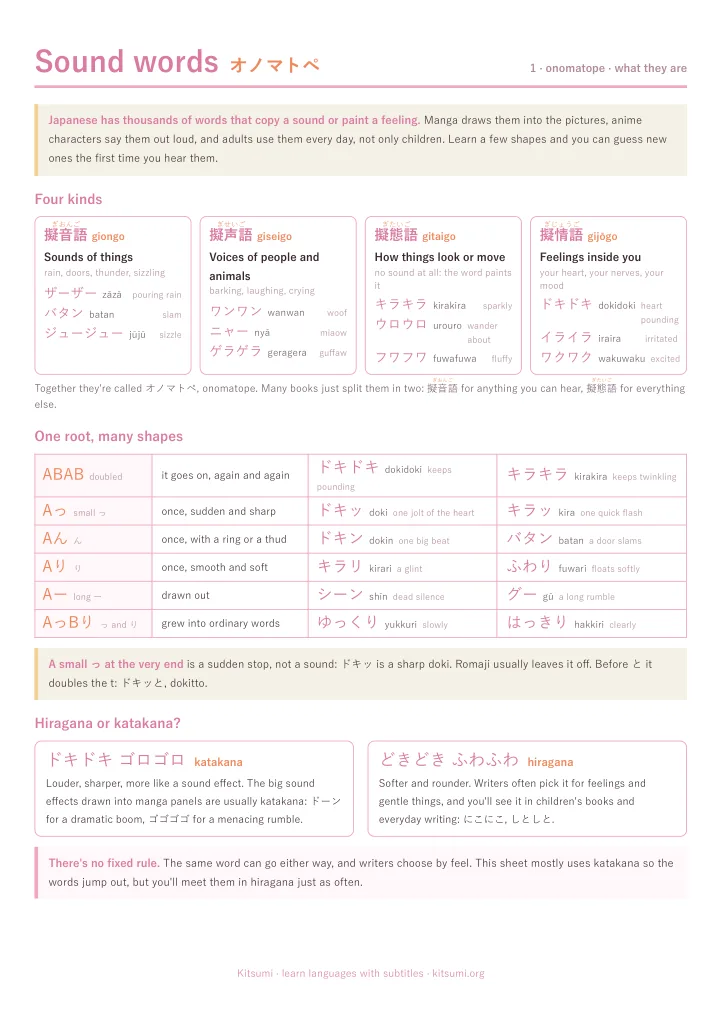 Japanese sound words: ドキドキ, キラキラ and 62 moreThen learn the sound words anime keeps saying: ドキドキ, ワクワク, ペコペコ, シーン and the rest.
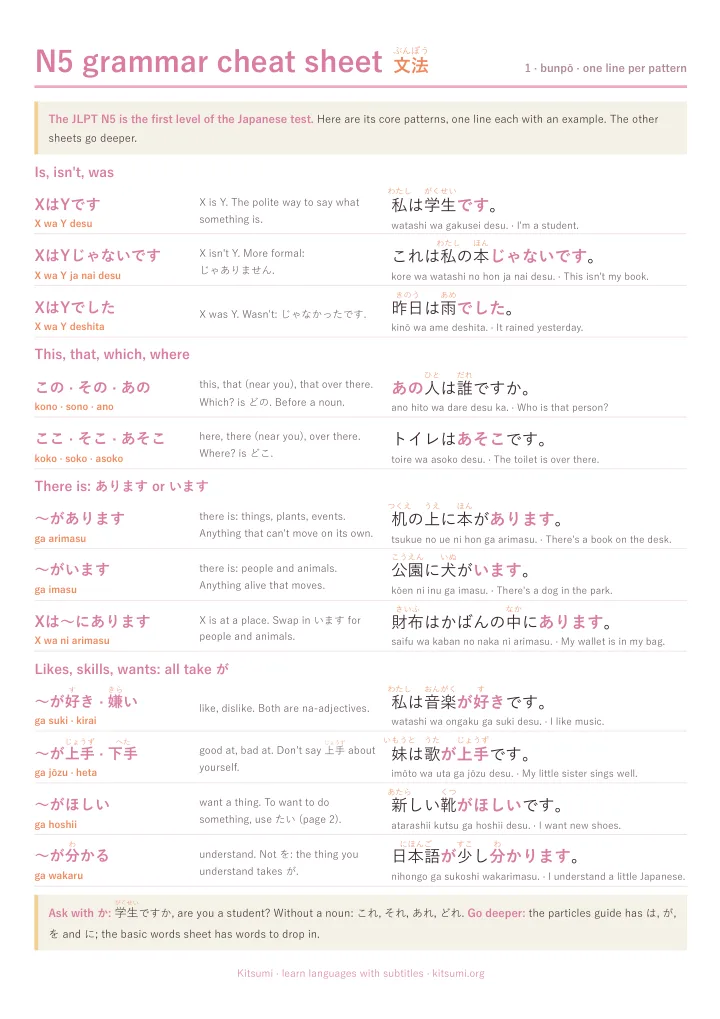 JLPT N5 grammar cheat sheetPut it all together: the core beginner patterns, one line each with an example, from です to たことがある.
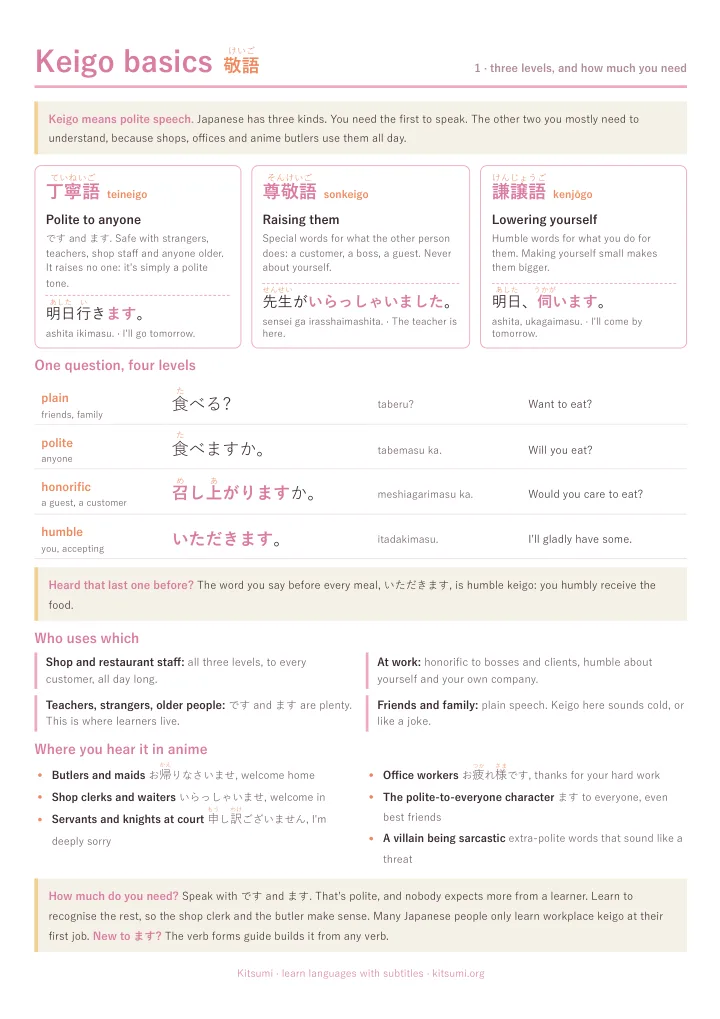 Japanese polite speech: keigo basicsGo polite: what keigo is, how much of it you need, and the phrases every shop clerk and butler uses.
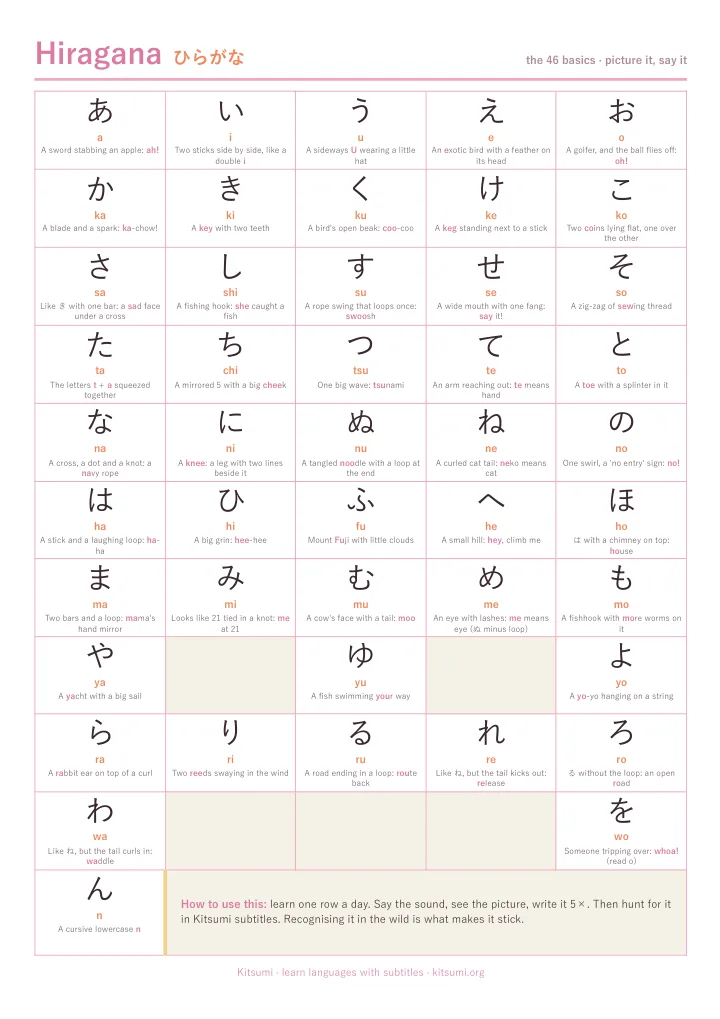 Hiragana and katakana chartLearn to read first. Every hiragana and katakana, with a picture to remember it by.
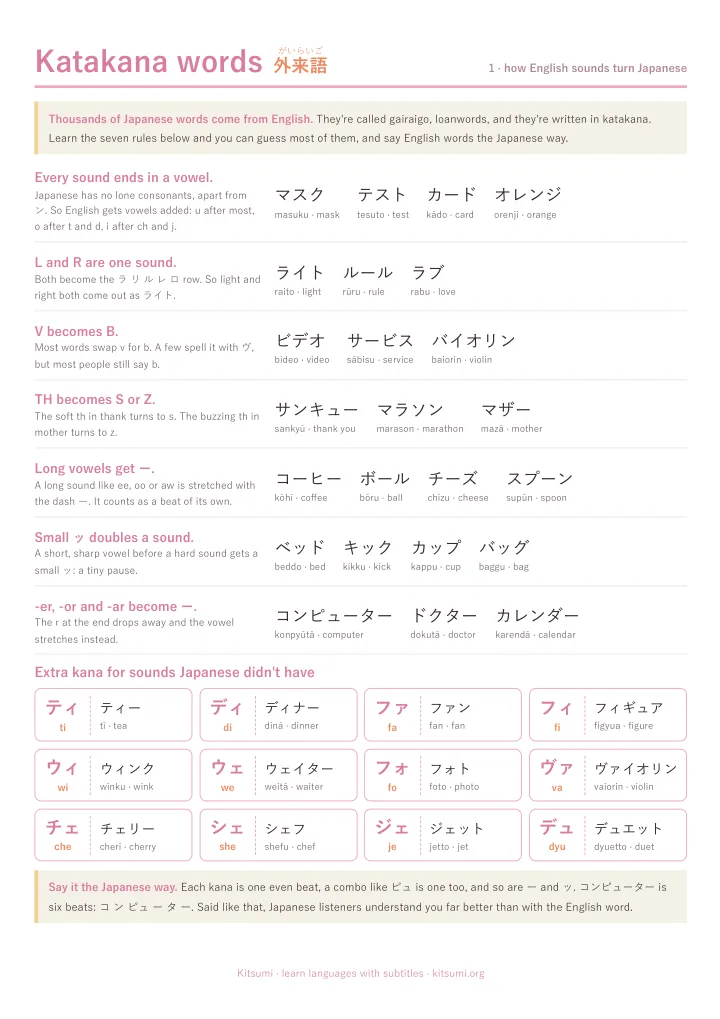 Japanese katakana words: how English becomes JapanesePut your katakana to work: the rules that turn English words into Japanese, and the ones that don't mean what you think.
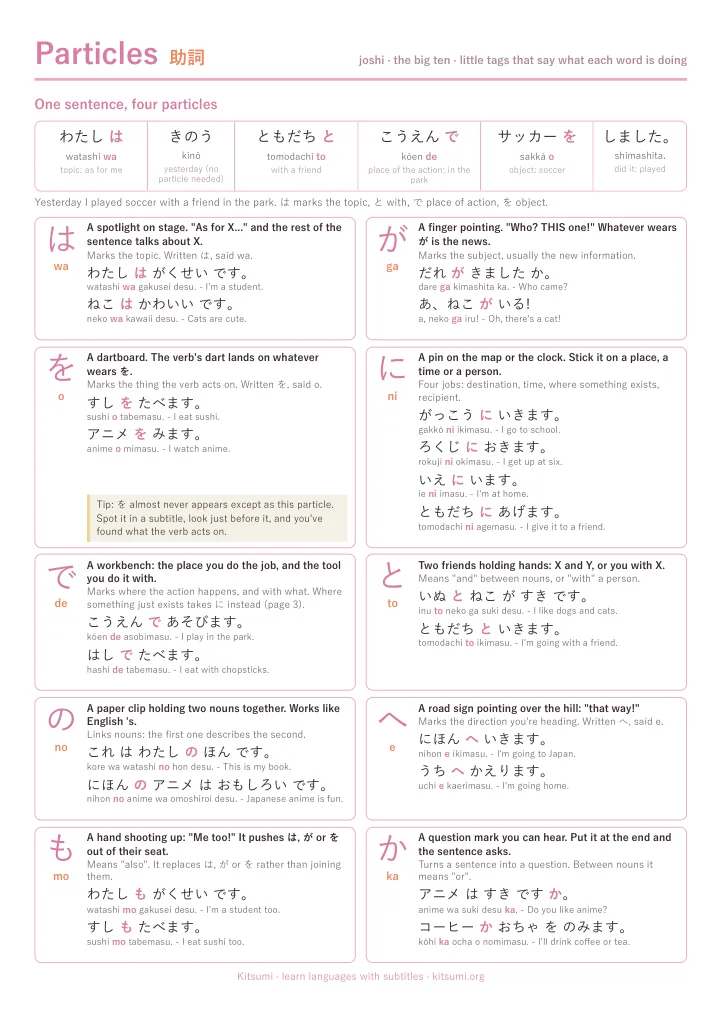 Japanese particles guideLearn the little words that hold a sentence together: は, が, を, に, で and more.
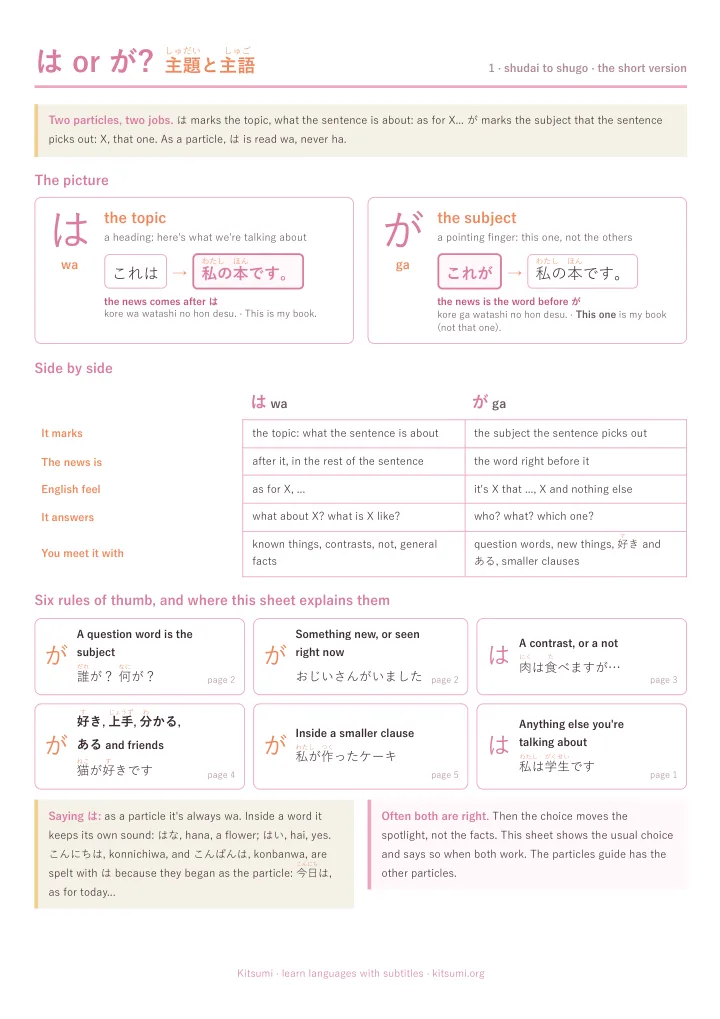 Japanese particles は and が: which one?Then sort out the pair everyone mixes up: は for the topic, が for the subject.
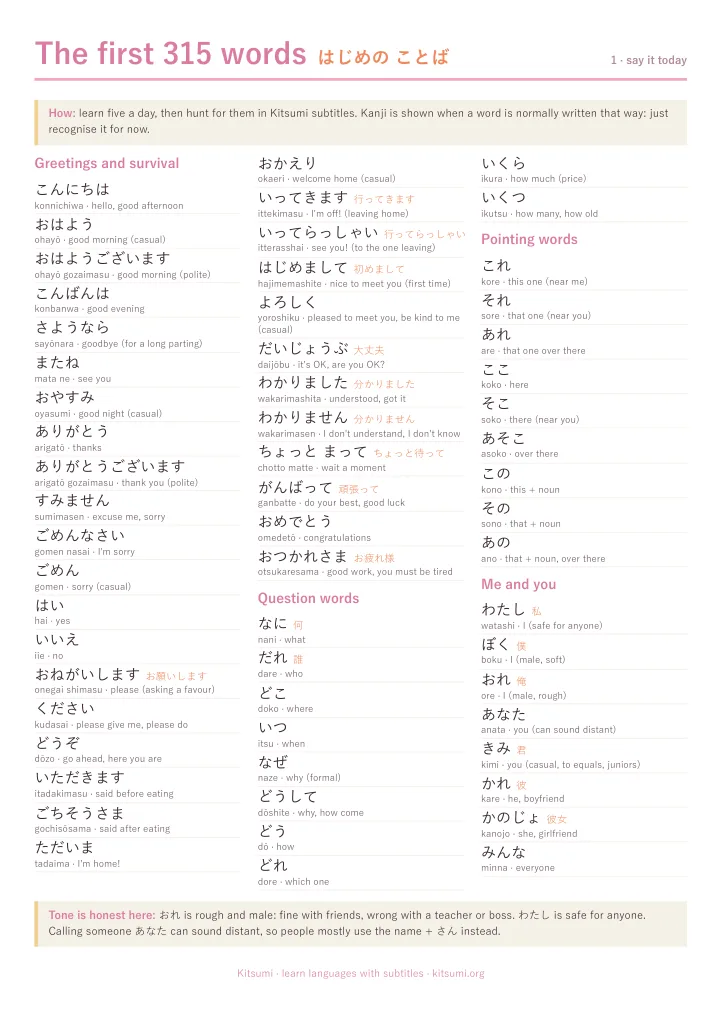 Basic Japanese words listPick up the first 315 words: greetings, people, numbers, food, verbs and more.
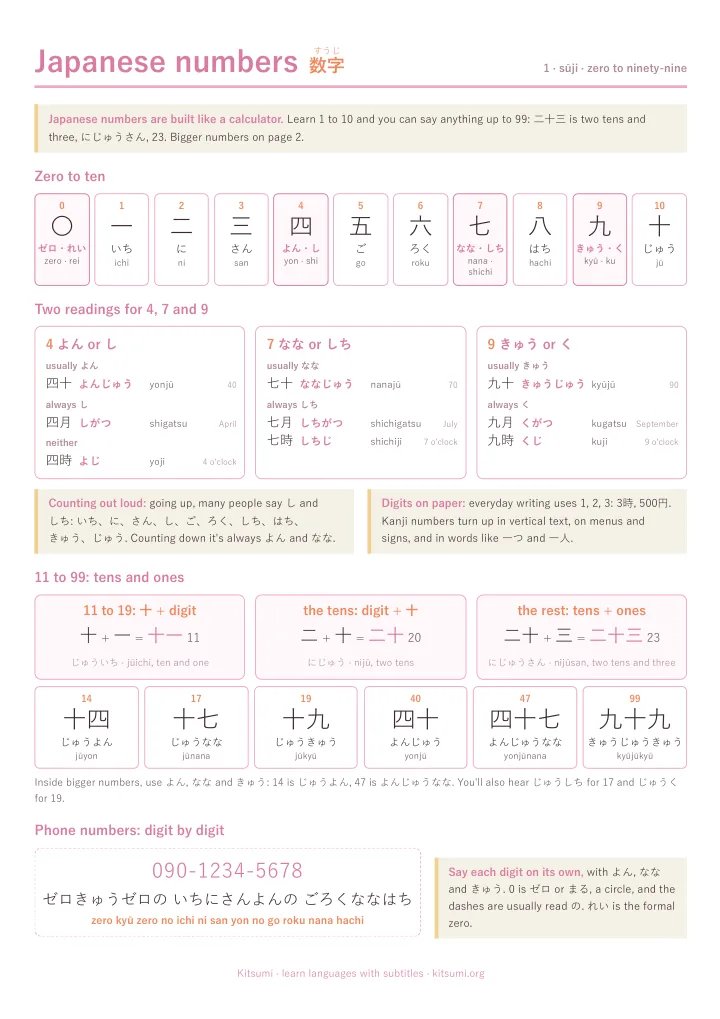 Japanese numbers and countersThen sort out numbers: いち, に, さん and ひとつ, ふたつ, counting in 万, and counters like 本 and 人.
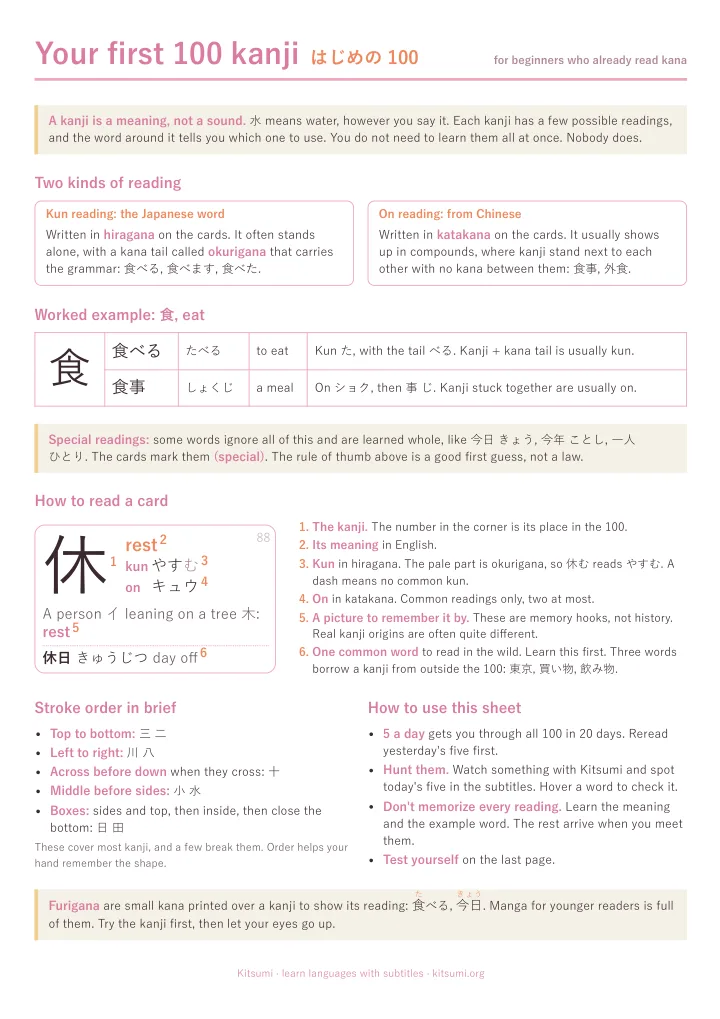 Your first 100 kanjiStart kanji once you read kana comfortably: 100 beginner kanji, each with a picture.
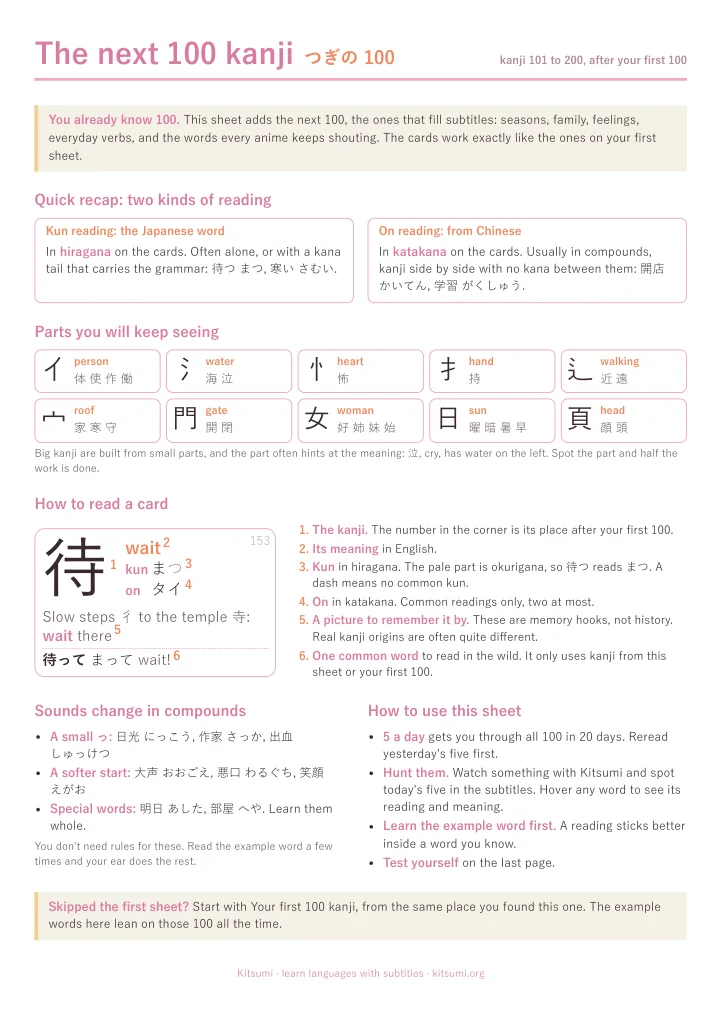 The next 100 kanjiDone with your first 100? Here are the next 100: seasons, family, feelings, verbs and anime words.
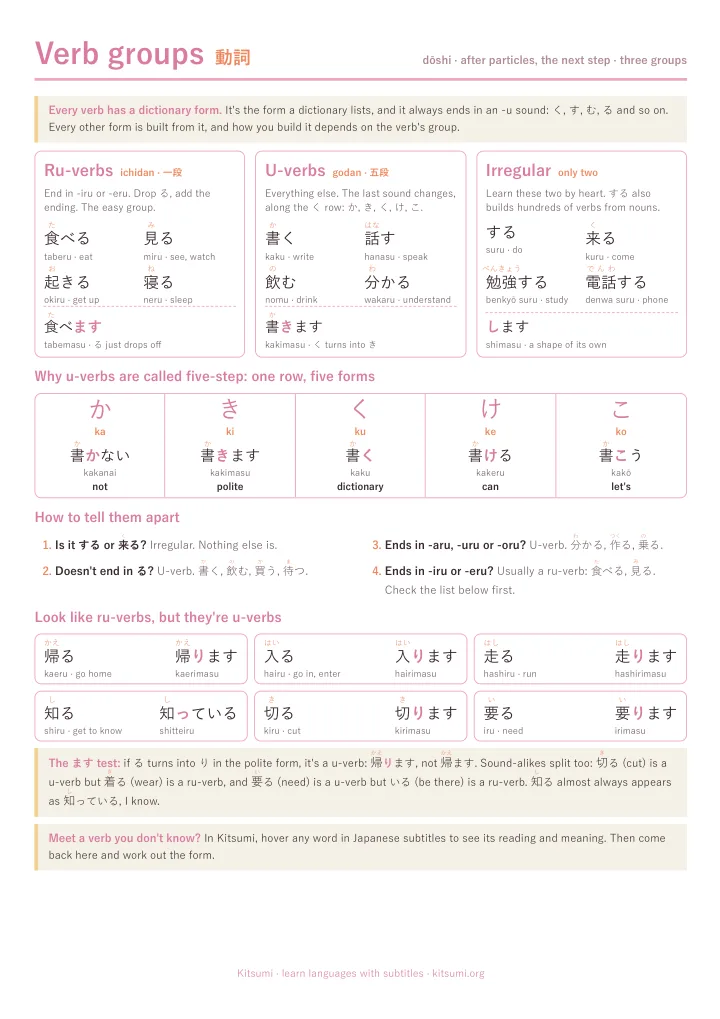 Japanese verb forms guideMake verbs do more: ます, ない, た, て, can, want to and let's, for every kind of verb.
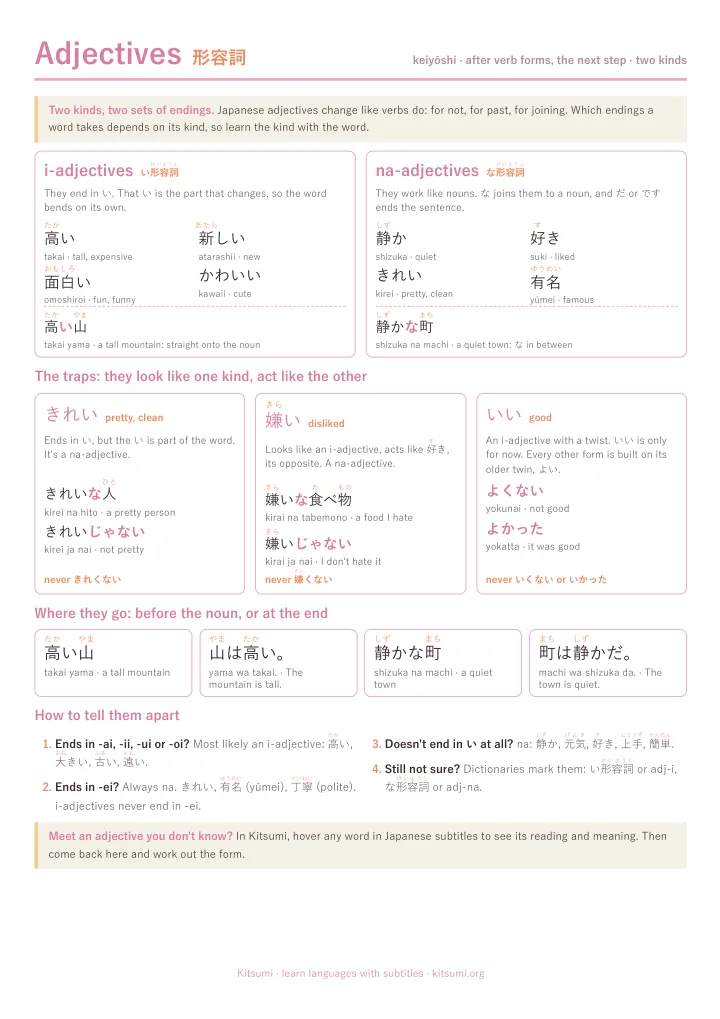 Japanese adjectives guideDescribe things: i-adjectives and na-adjectives in every form, from くない and かった to より and 一番.
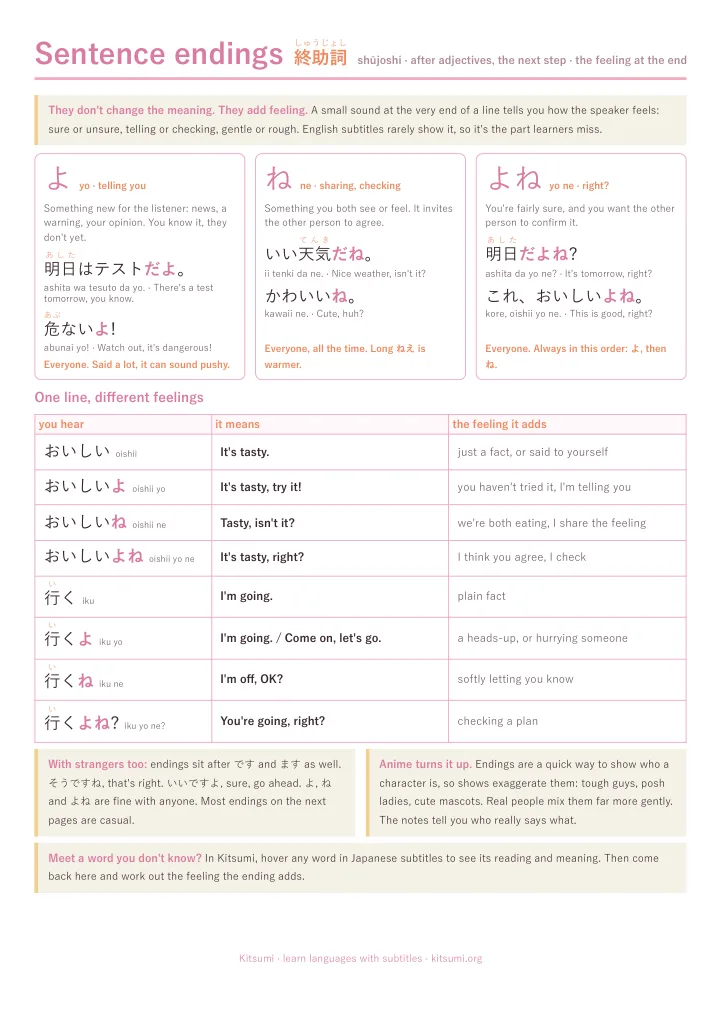 Japanese sentence endings guideHear the feeling: よ, ね, ぞ, わ, かな, じゃん, でしょ and the other endings that close almost every line.
Questions
Is the Japanese casual speech guide free?
Yes. It's a free PDF with no sign-up. Print it, keep it and share it.
What does ちゃう mean in Japanese?
ちゃう is the casual form of てしまう: the action is done for good, or it happened and you regret it. 忘れちゃった is 忘れてしまった, I forgot (oops). After a verb whose te-form ends in で it becomes じゃう: 飲んじゃった.
What is the difference between ちゃ and ちゃう?
ちゃ comes from ては and is followed by a no: 開けちゃだめ, don't open it. ちゃう comes from てしまう: 開けちゃった, I've opened it.
Can I use these contractions with a teacher or a boss?
Some, yes: てます, すいません and やっぱり are normal in polite speech. Most, like なきゃ, ちゃう and 分かんない, are for friends and family, and rough forms like すげえ are best left to shows. Use the full polite forms with teachers, bosses and strangers, and in anything written.