 Kitsumi
Free Japanese verb forms guide
A five-page printable PDF for beginners: how Japanese verbs change, from the dictionary form to ます, ない, た and the te-form. Every kanji in the examples has its reading in hiragana, with romaji under each word.
PDF · 5 pages · 421 KB · no sign-up · free to print and share
Next, meet these words in real videos: Kitsumi is free for Chrome and Firefox.
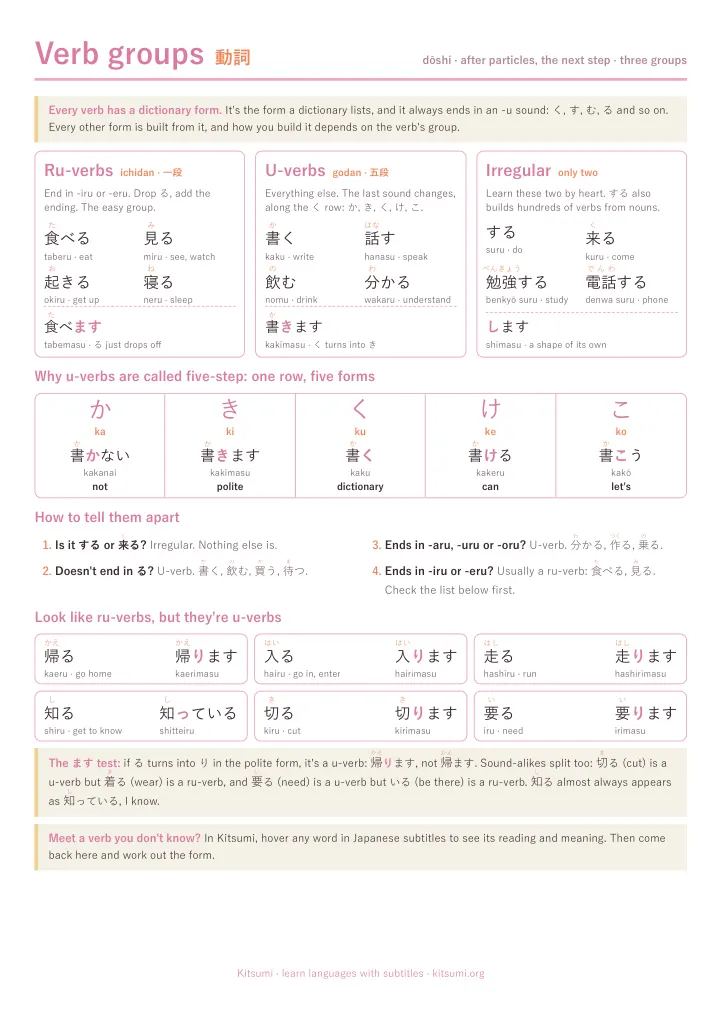
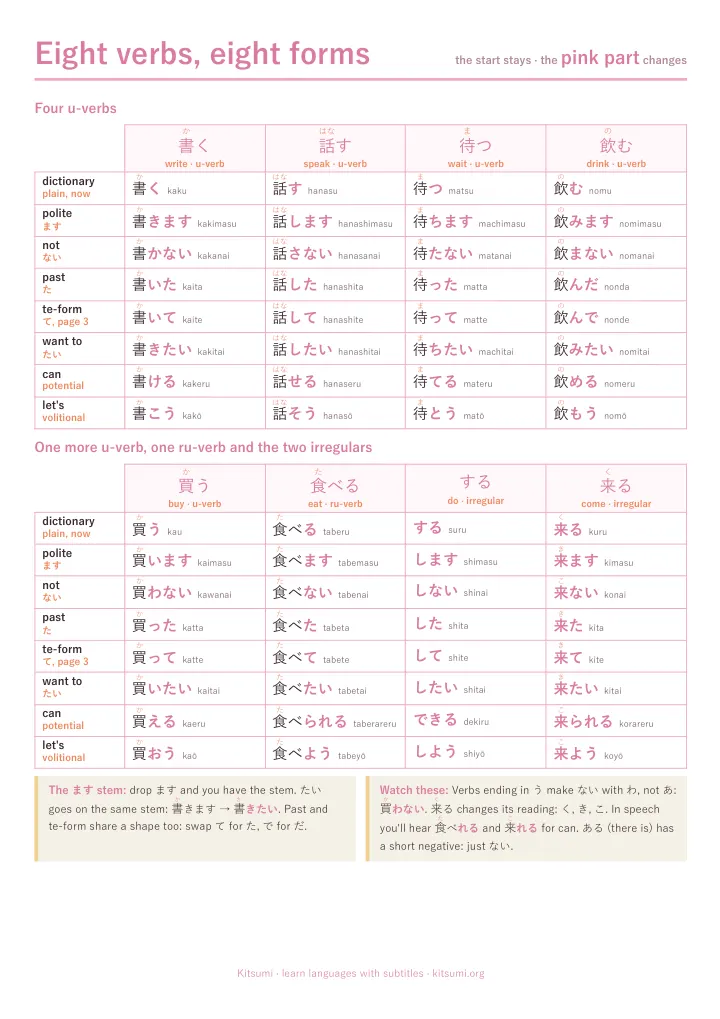
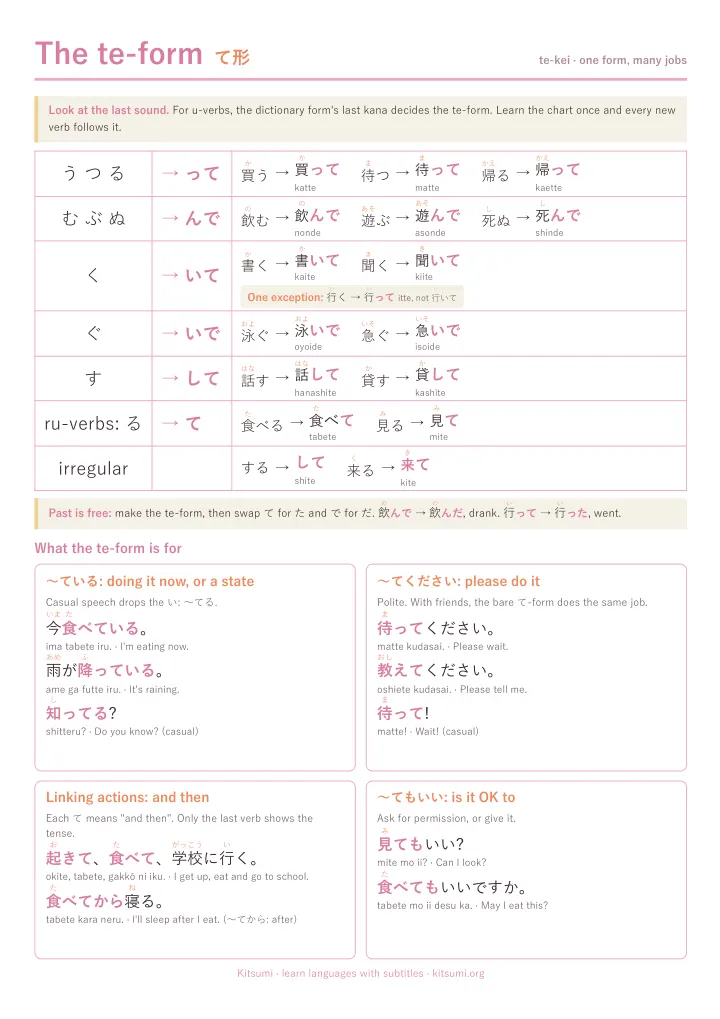
What's inside
- The three verb groupsU-verbs, ru-verbs and the two irregulars, する and 来る. How to tell them apart from the dictionary form, and the verbs like 帰る and 入る that look like ru-verbs but aren't.
- Eight verbs, eight forms書く, 話す, 待つ, 飲む, 買う, 食べる, する and 来る in the dictionary, polite, negative, past, te-form, want to, can and let's forms.
- The te-formThe sound rules as one small chart, like む, ぶ and ぬ becoming んで, the 行って exception, and what the te-form is for: 〜ている, 〜てください and linking actions.
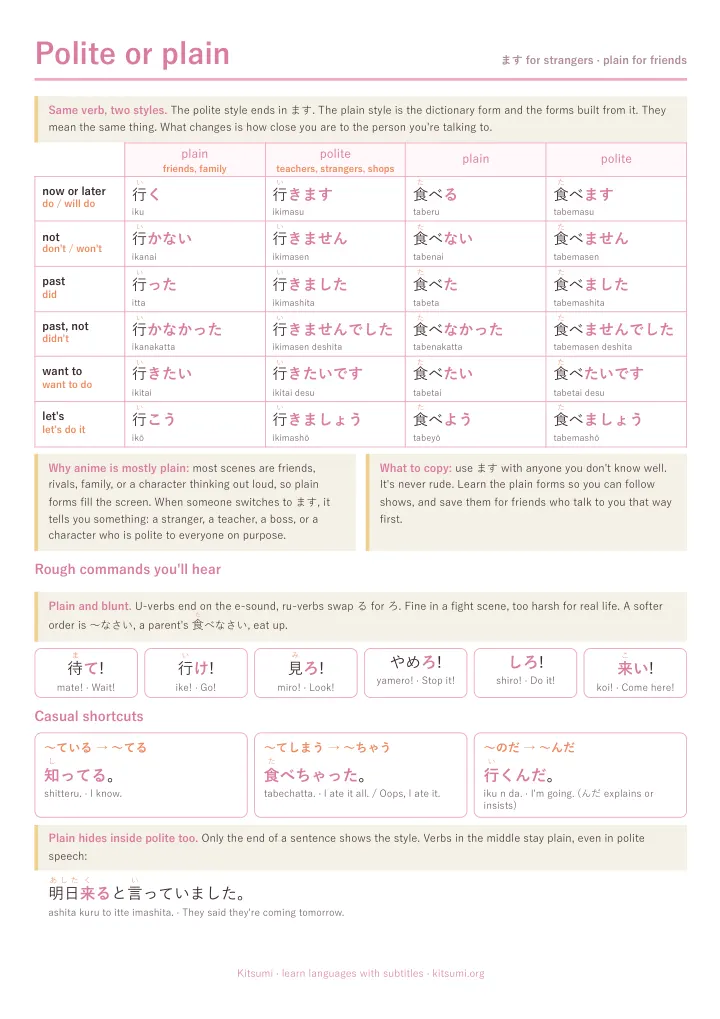 Polite or plainます, ません, ました and ませんでした next to the plain forms, why anime is mostly plain, rough commands like やめろ, and casual shortcuts like 知ってる.
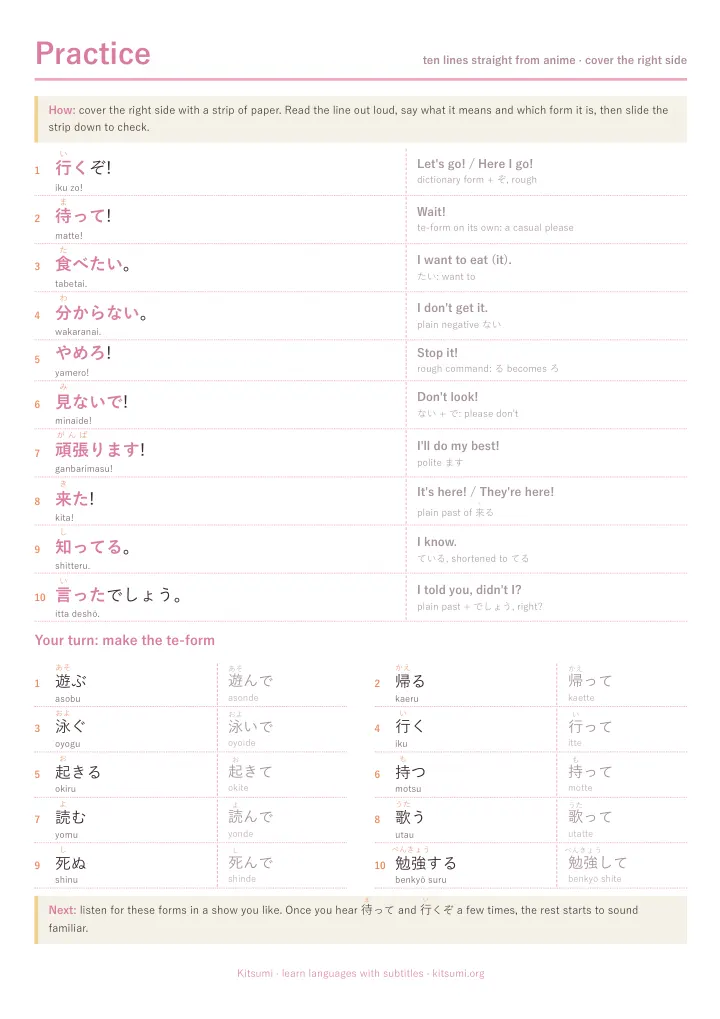 PracticeTen lines you hear in anime, like 待って and 分からない, to read and name the form, then ten verbs to put in the te-form. Cover the answers with a strip of paper and check yourself.
How to use it
- Learn particles and a few basic words first. This guide builds on them.
- Read the first page and sort a few verbs you know into their groups.
- Say one column of the table out loud each day.
- Cover the answers on the practice page, then listen for the same forms in shows with Kitsumi.
More free Japanese printables
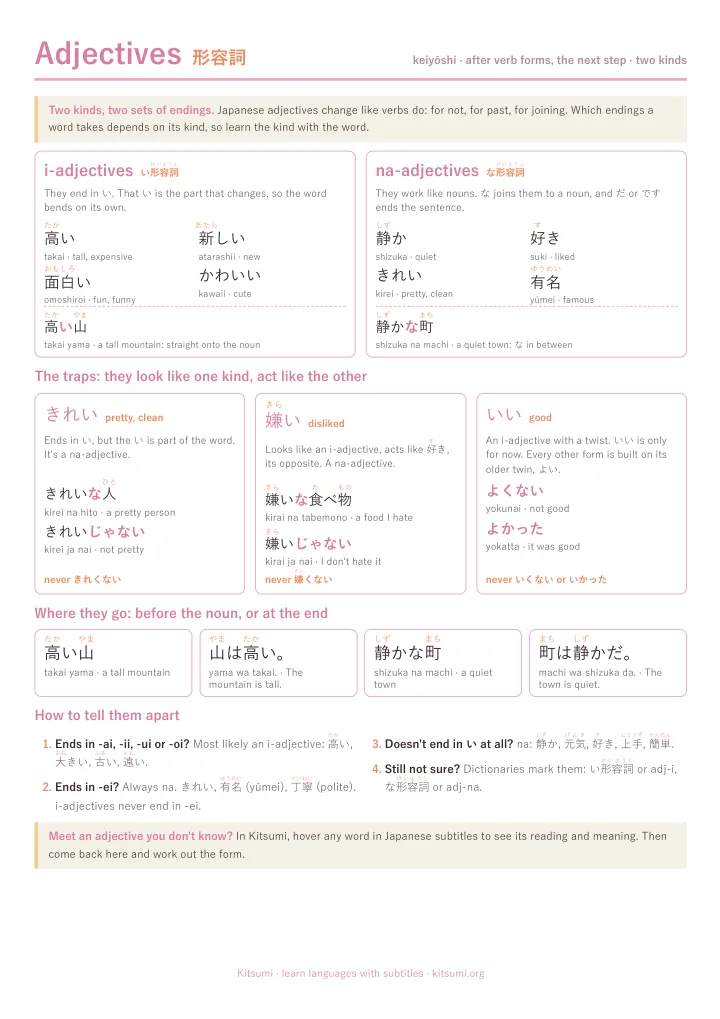 Next stepJapanese adjectives guideDescribe things: i-adjectives and na-adjectives in every form, from くない and かった to より and 一番.
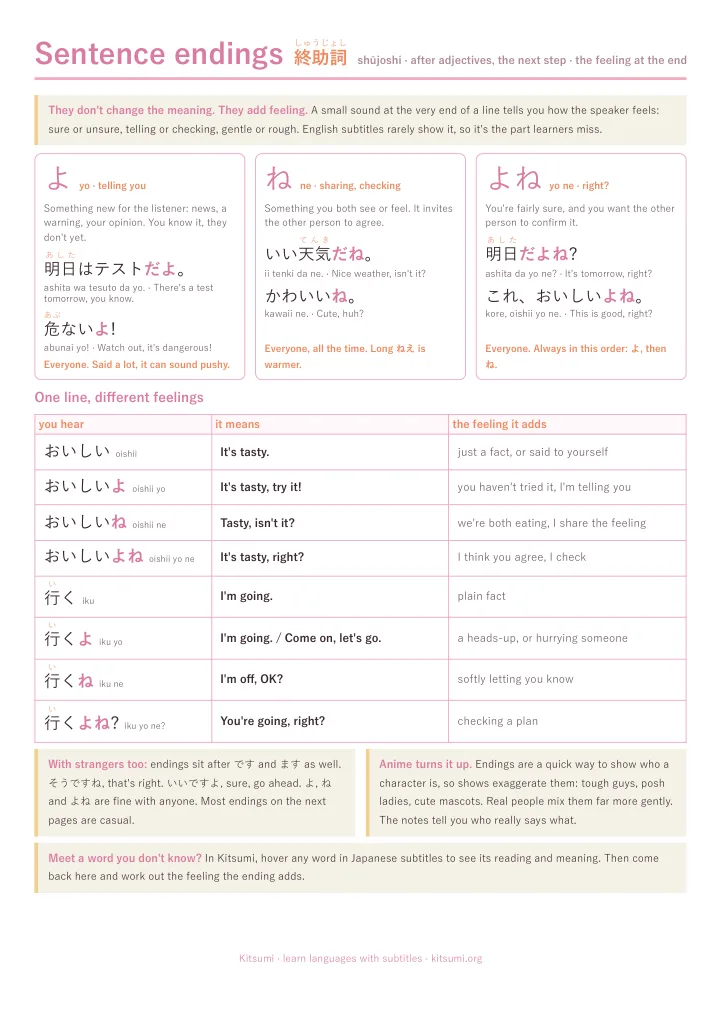 Japanese sentence endings guideHear the feeling: よ, ね, ぞ, わ, かな, じゃん, でしょ and the other endings that close almost every line.
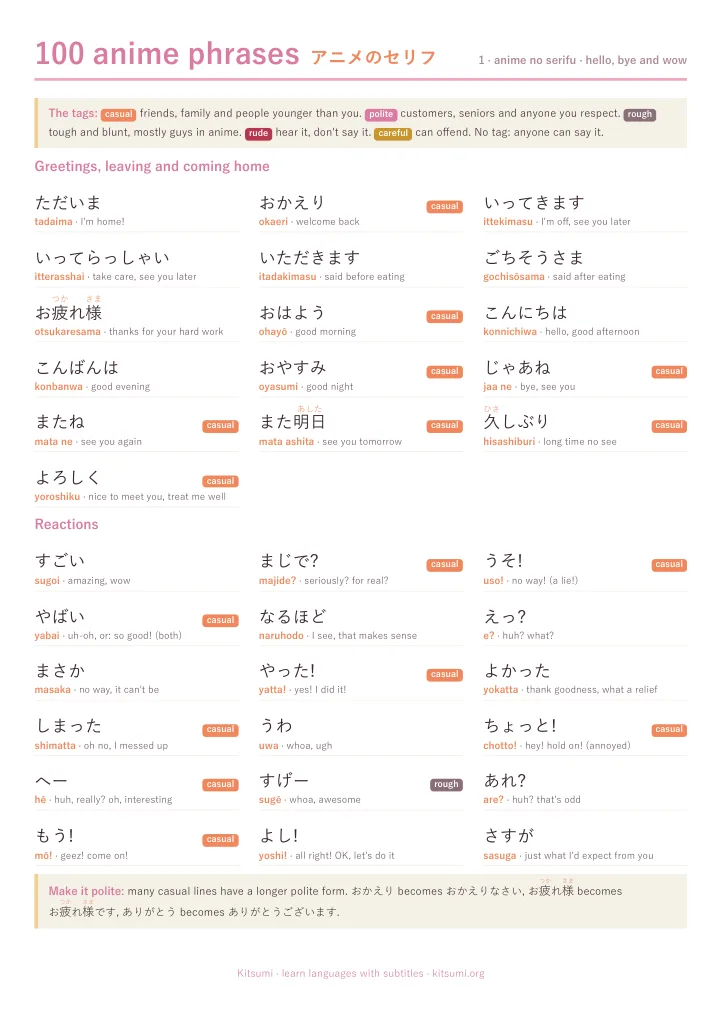 100 anime phrasesThen pick up the lines anime uses all the time: ただいま, まさか, 行くぞ, 任せて and what 先輩 really means.
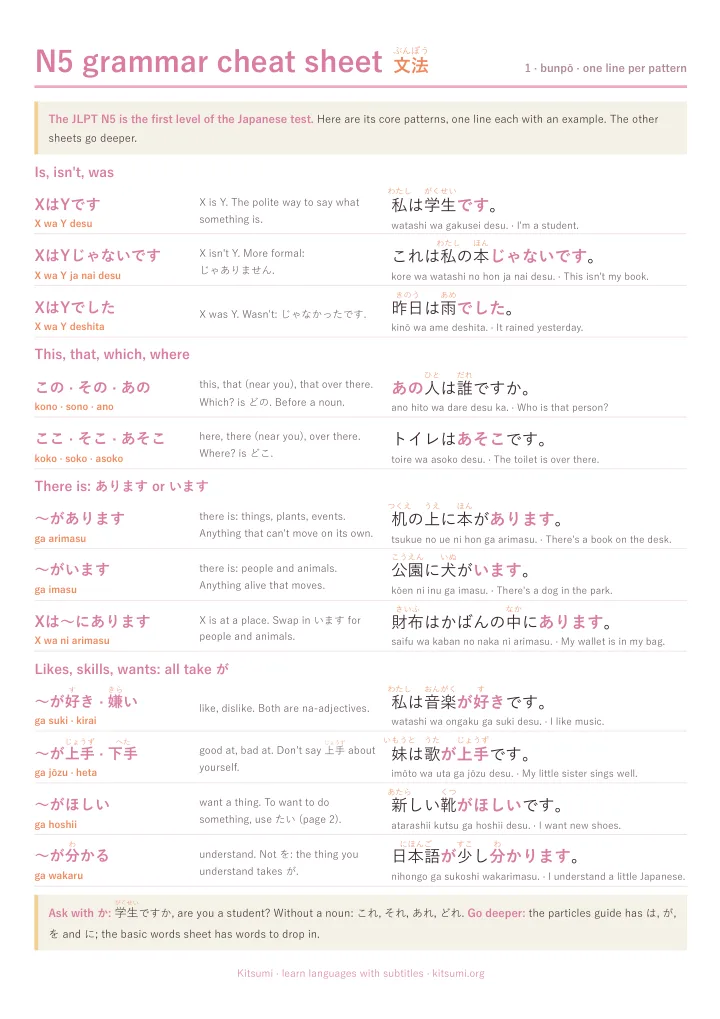 JLPT N5 grammar cheat sheetPut it all together: the core beginner patterns, one line each with an example, from です to たことがある.
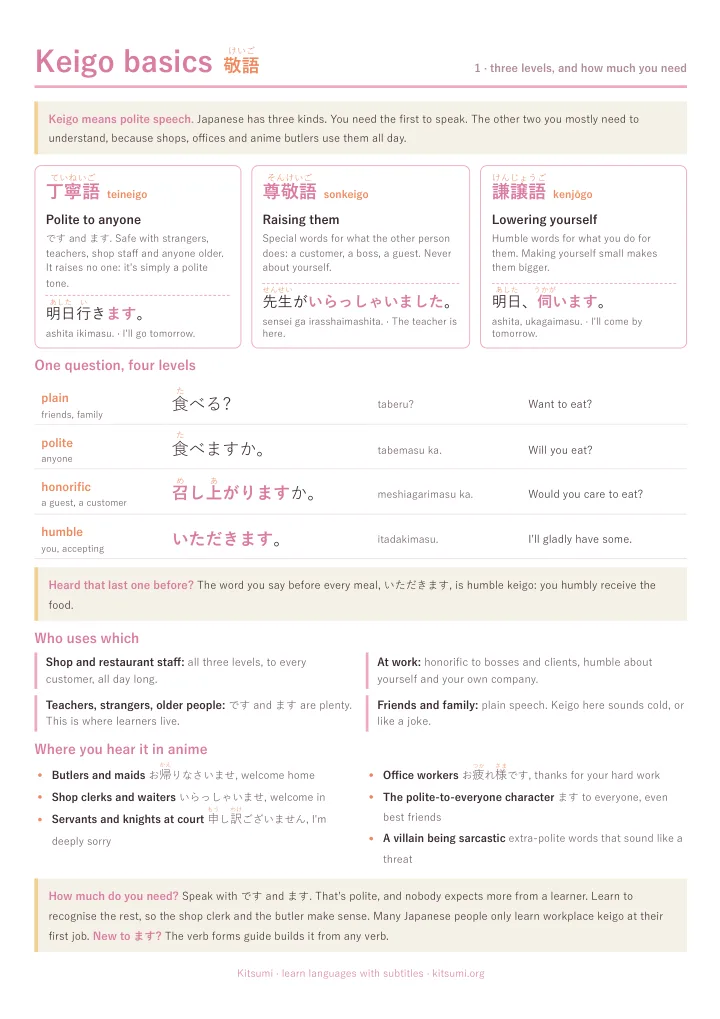 Japanese polite speech: keigo basicsGo polite: what keigo is, how much of it you need, and the phrases every shop clerk and butler uses.
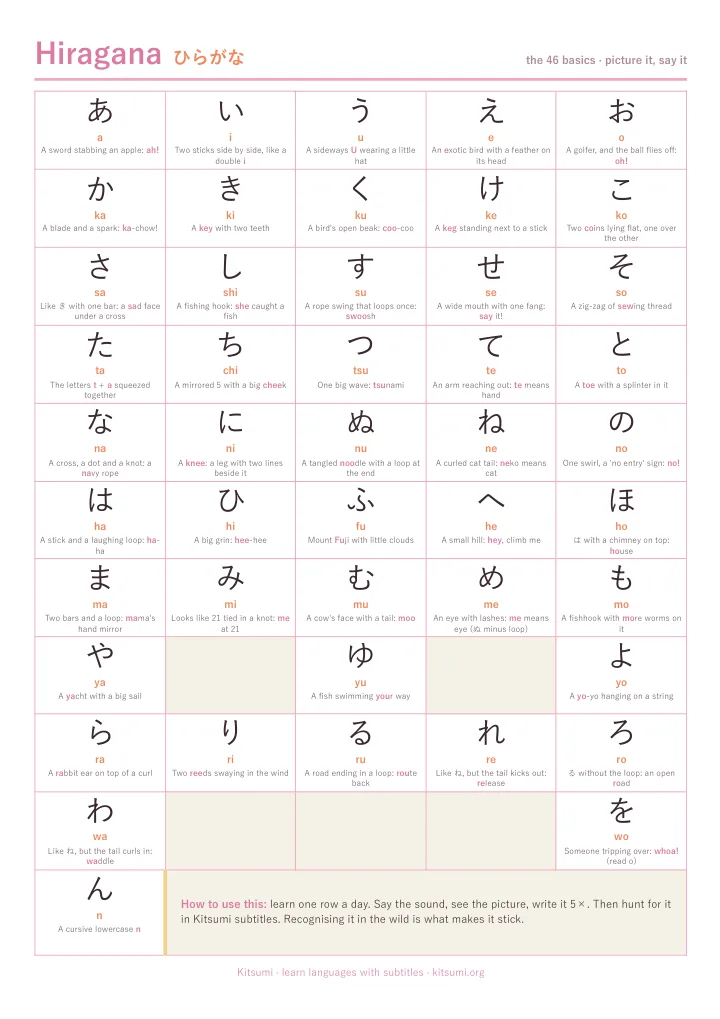 Hiragana and katakana chartLearn to read first. Every hiragana and katakana, with a picture to remember it by.
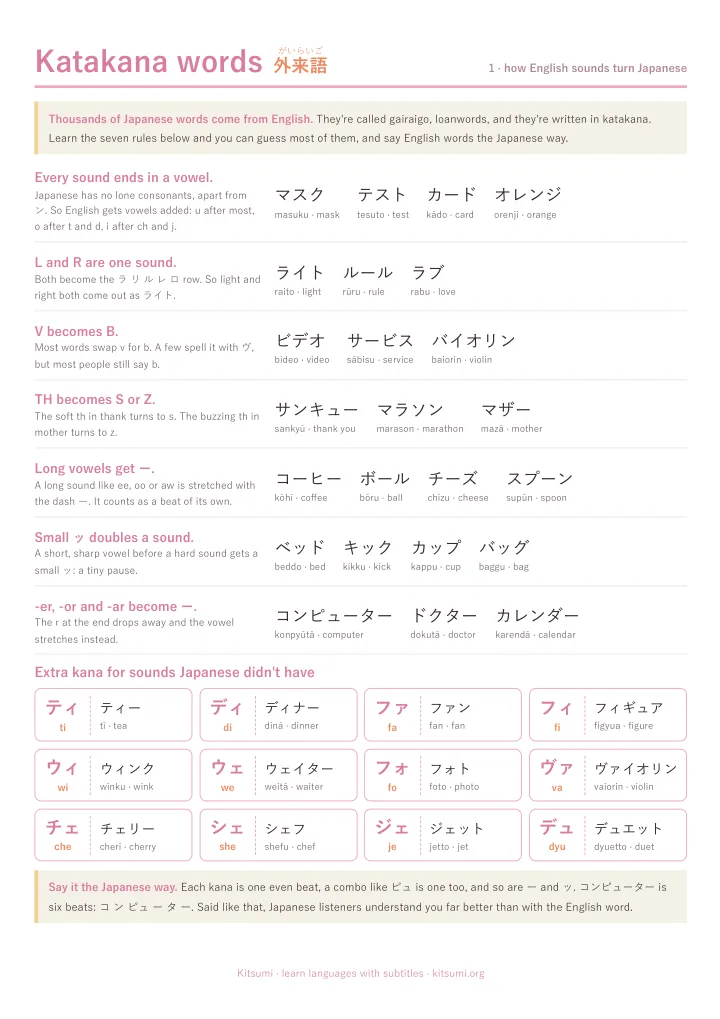 Japanese katakana words: how English becomes JapanesePut your katakana to work: the rules that turn English words into Japanese, and the ones that don't mean what you think.
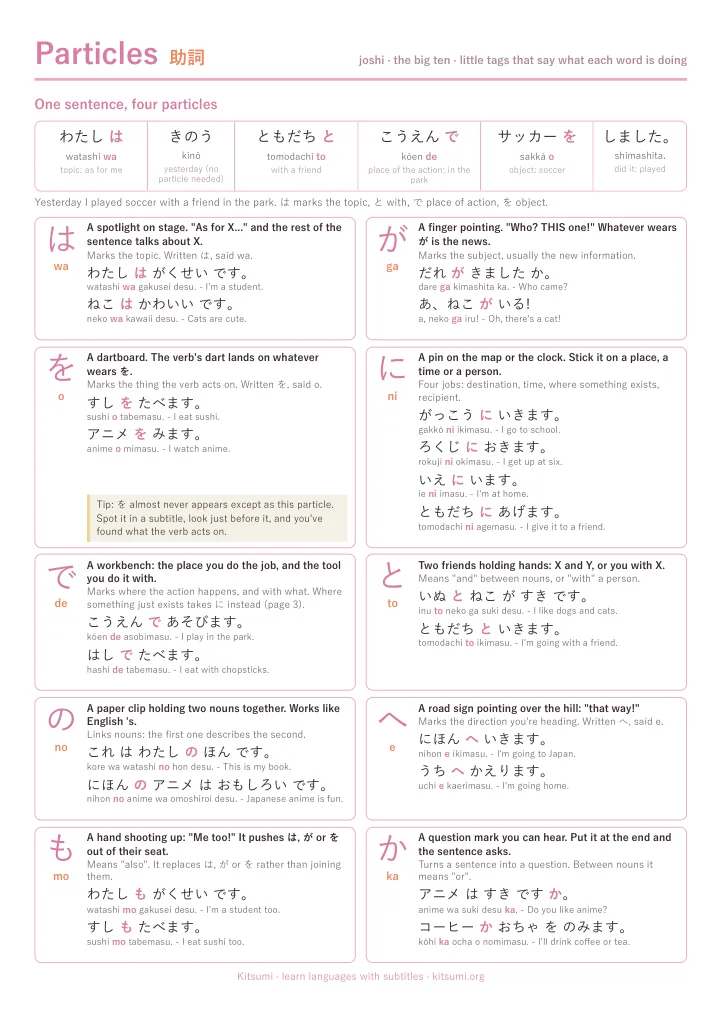 Japanese particles guideLearn the little words that hold a sentence together: は, が, を, に, で and more.
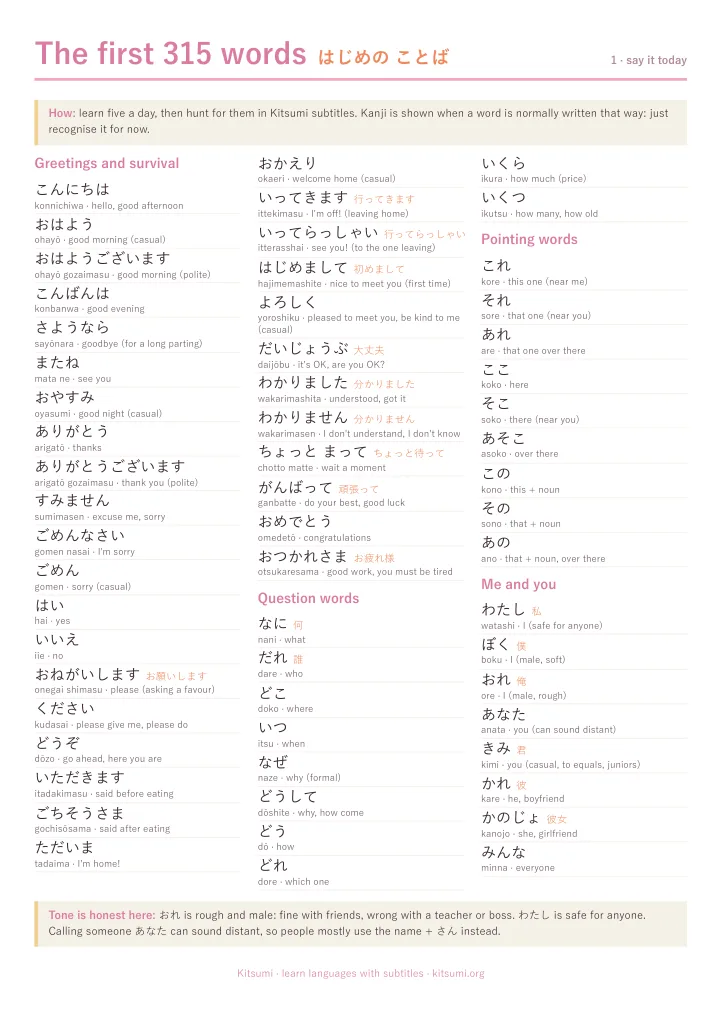 Basic Japanese words listPick up the first 315 words: greetings, people, numbers, food, verbs and more.
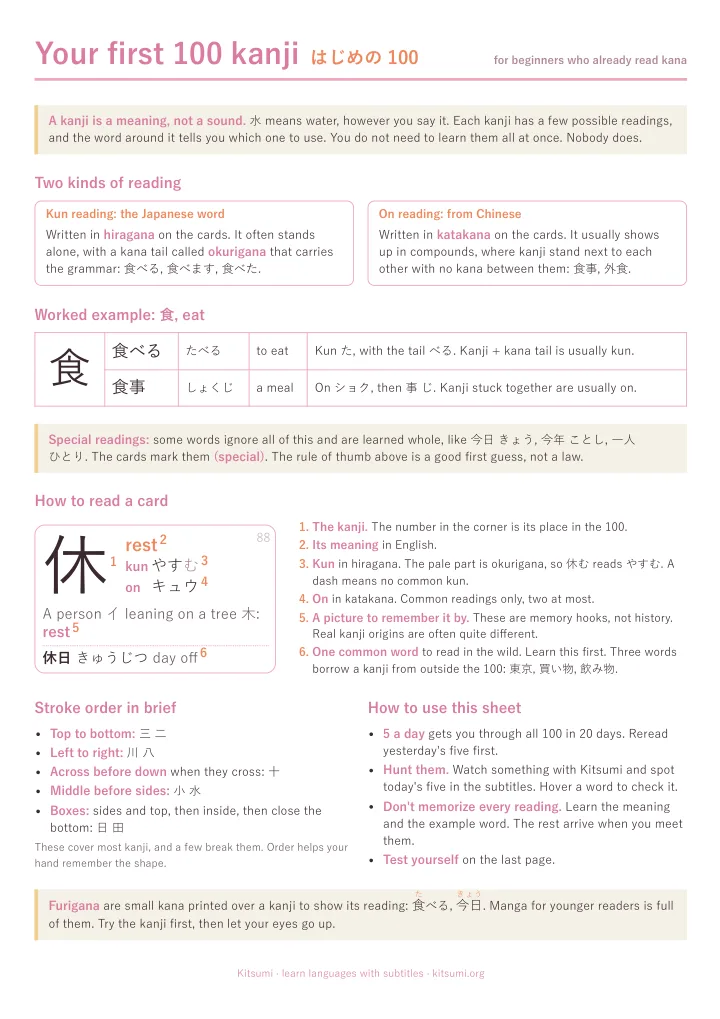 Your first 100 kanjiStart kanji once you read kana comfortably: 100 beginner kanji, each with a picture.
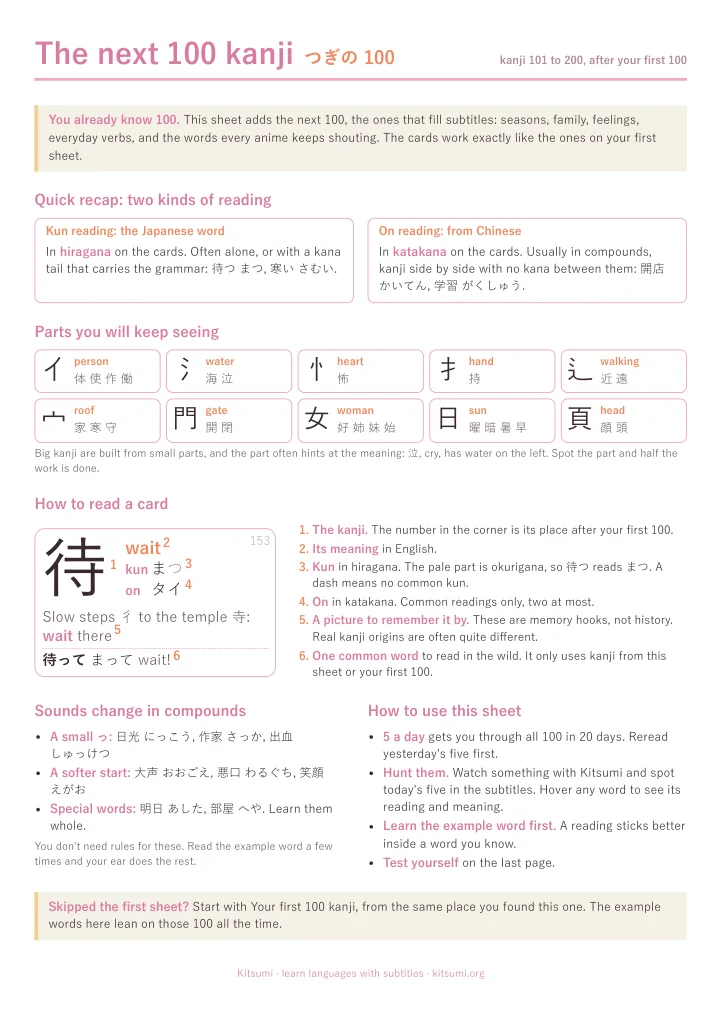 The next 100 kanjiDone with your first 100? Here are the next 100: seasons, family, feelings, verbs and anime words.
Questions
Is the verb forms guide free?
Yes. It's a free PDF with no sign-up. Print it, keep it and share it.
What is the difference between u-verbs and ru-verbs?
Ru-verbs end in -iru or -eru and simply drop る before an ending: 食べる becomes 食べます. U-verbs change their last sound instead: 書く becomes 書きます. A few verbs like 帰る end in -eru but are u-verbs, and page one lists the common ones.
Why do anime characters rarely use ます?
Most scenes are friends, rivals and family talking, and they use plain forms with each other. ます is the polite style, for strangers, teachers and work. Use ます yourself with people you don't know well.