 Kitsumi
Free Japanese keigo cheat sheet
A five-page printable PDF of Japanese polite speech for learners. It explains the three levels of keigo, shows which ones you need to speak and which you only need to recognise, and lists the verbs and phrases you hear in shops, offices and anime. Every kanji has its reading in hiragana, with romaji and English under each line.
PDF · 5 pages · 363 KB · no sign-up · free to print and share
Next, meet these words in real videos: Kitsumi is free for Chrome and Firefox.
What's inside
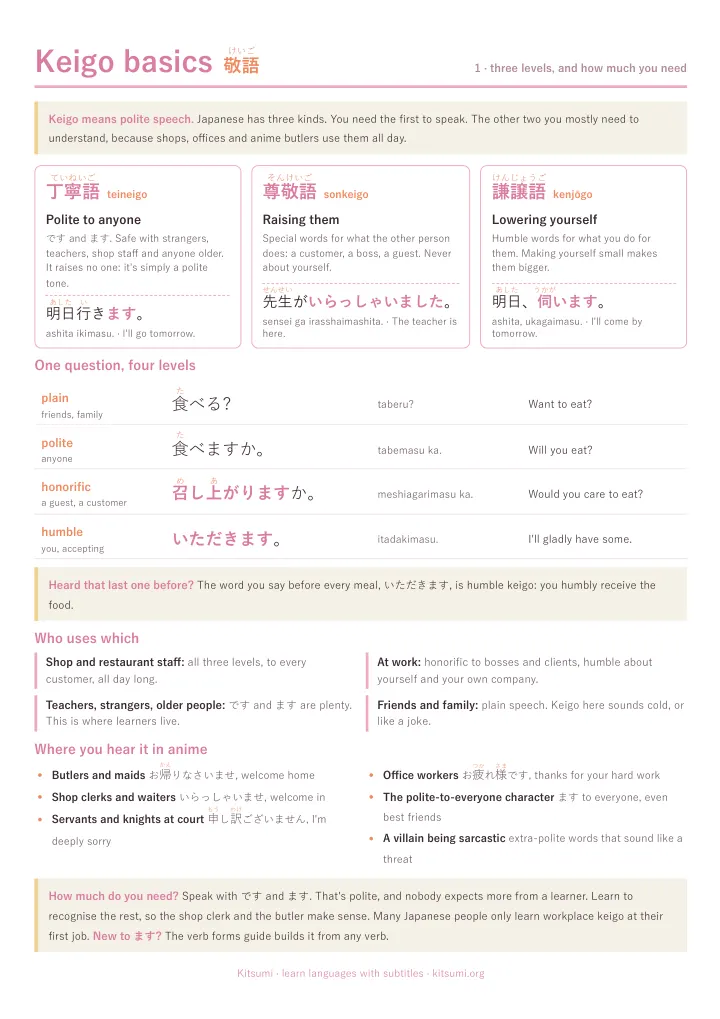
- Three levelsです and ます, honorific words that raise the other person and humble words that lower yourself, one question asked four ways, who uses which, and where you hear keigo in anime.
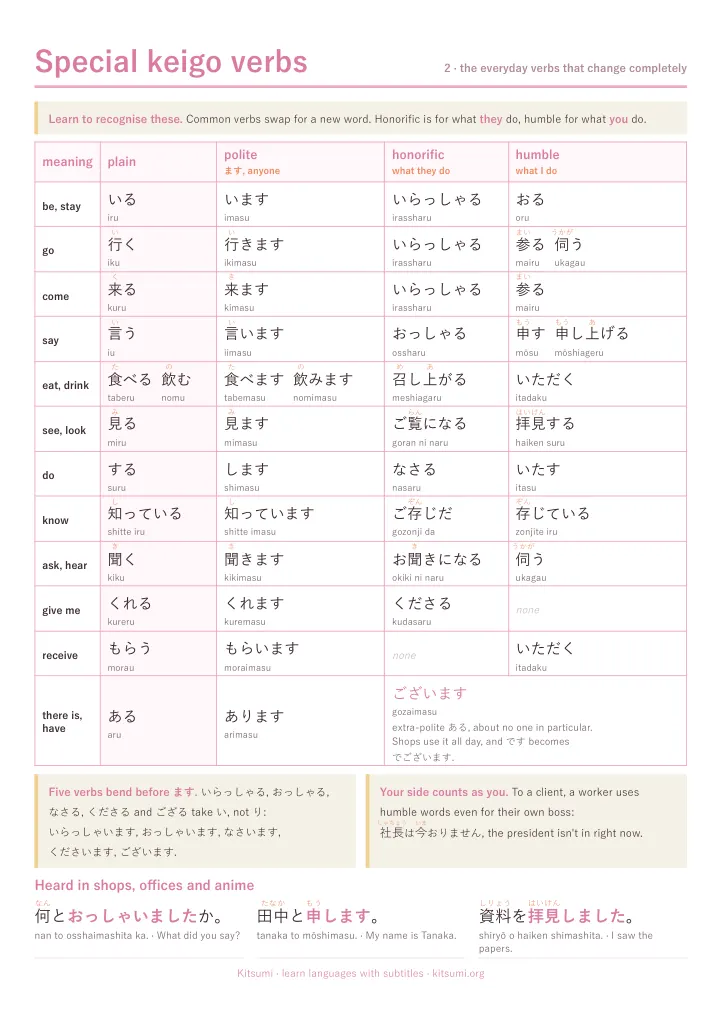
- Special keigo verbsA table of the verbs that change completely: いらっしゃる, おっしゃる, 召し上がる, ご覧になる, なさる, ご存じ, くださる, おる, 参る, 伺う, 申す, いただく, 拝見する, いたす and ございます.
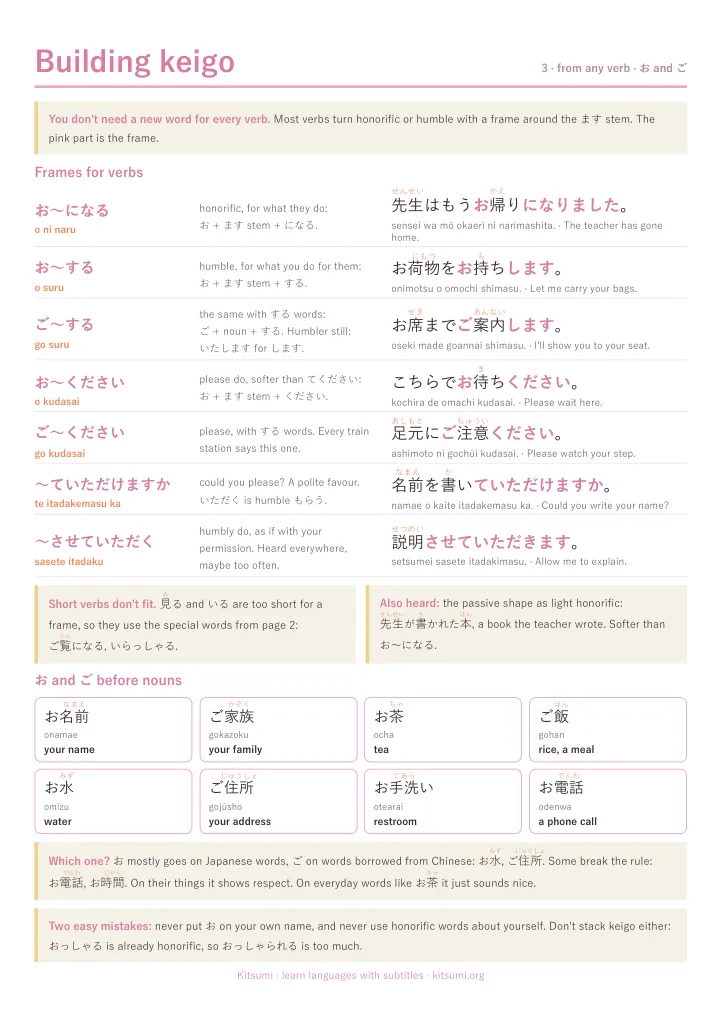
- Building keigoお〜になる, お〜する and ご〜する, お〜ください, ていただけますか and させていただく, plus お and ご before nouns and the mistakes to skip.
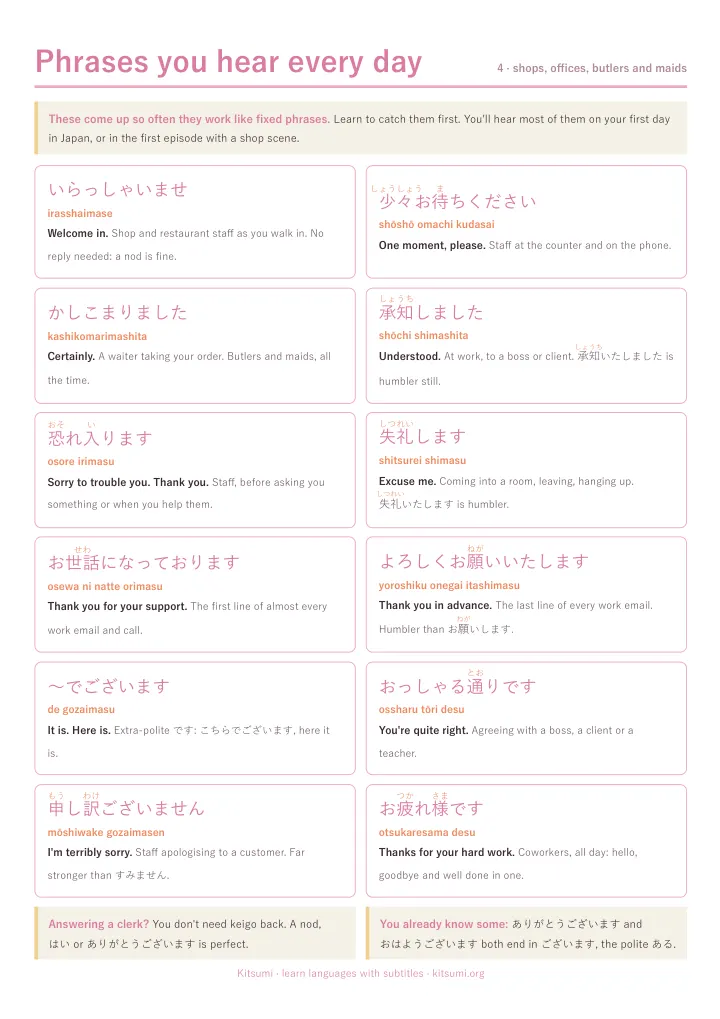 Everyday phrasesいらっしゃいませ, 少々お待ちください, かしこまりました, 承知しました, 恐れ入ります, 失礼します, お世話になっております, よろしくお願いいたします and more, with who says them and when.
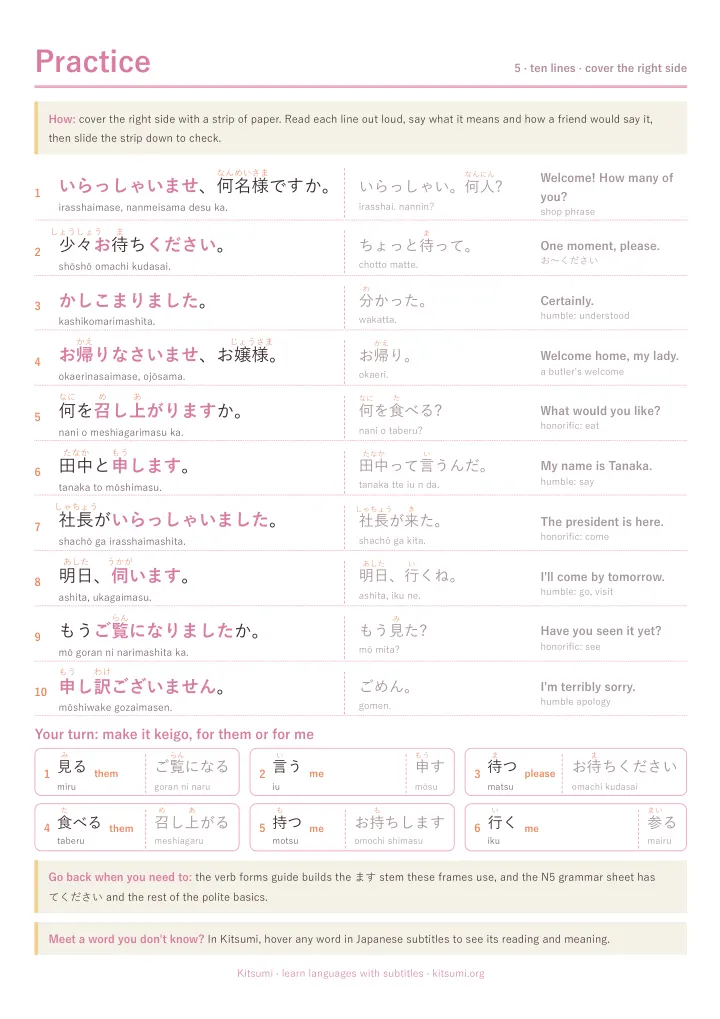 PracticeTen lines from shops and anime with the keigo highlighted and the plain version beside it, then six verbs to turn into keigo yourself. Cover the answers and check.
How to use it
- Get comfortable with ます first. The verb forms guide and the N5 grammar sheet cover it.
- Read page one, then learn to recognise the special verbs rather than memorising them all.
- Cover the right side of the practice page and say each line the plain way.
- Watch a show with Kitsumi and listen for keigo in shop scenes and from butlers and maids.
More free Japanese printables
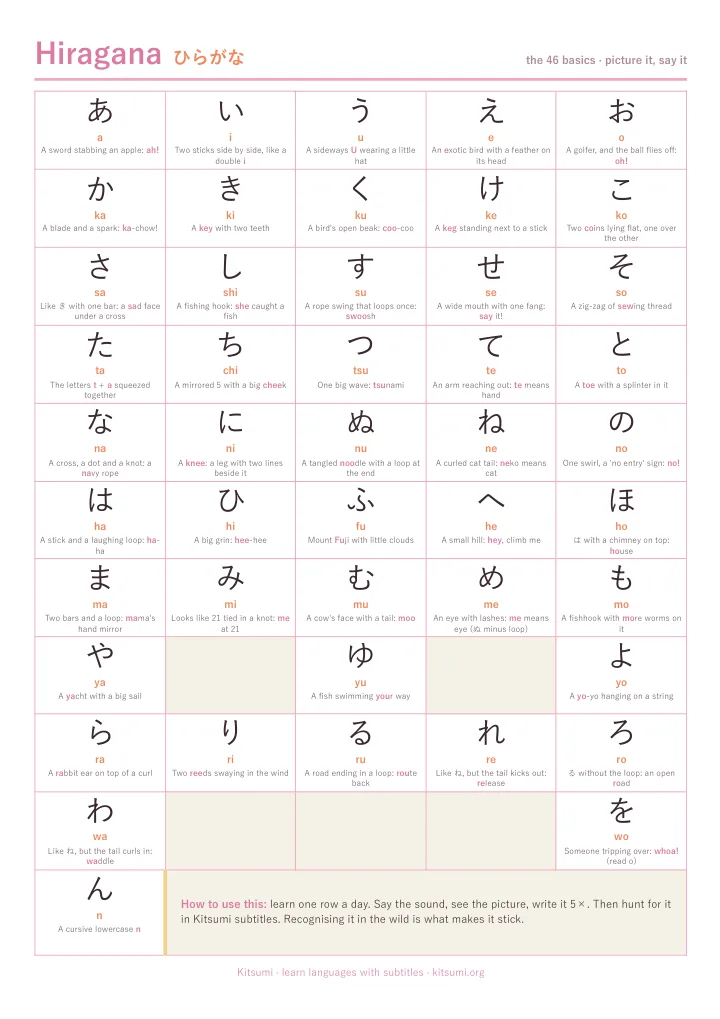 Hiragana and katakana chartLearn to read first. Every hiragana and katakana, with a picture to remember it by.
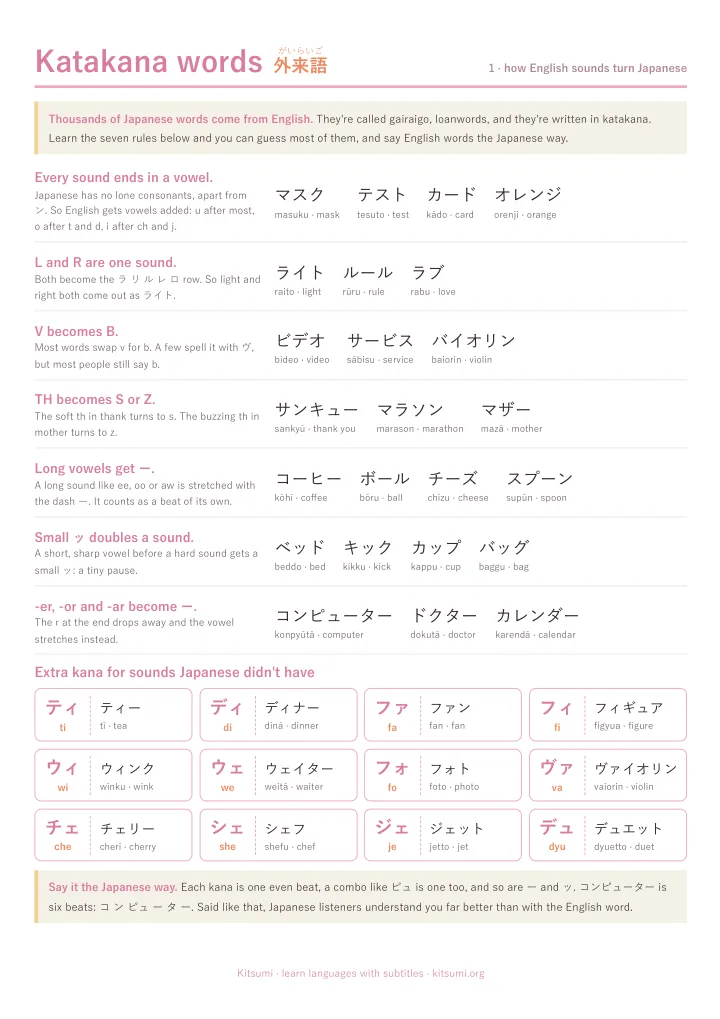 Japanese katakana words: how English becomes JapanesePut your katakana to work: the rules that turn English words into Japanese, and the ones that don't mean what you think.
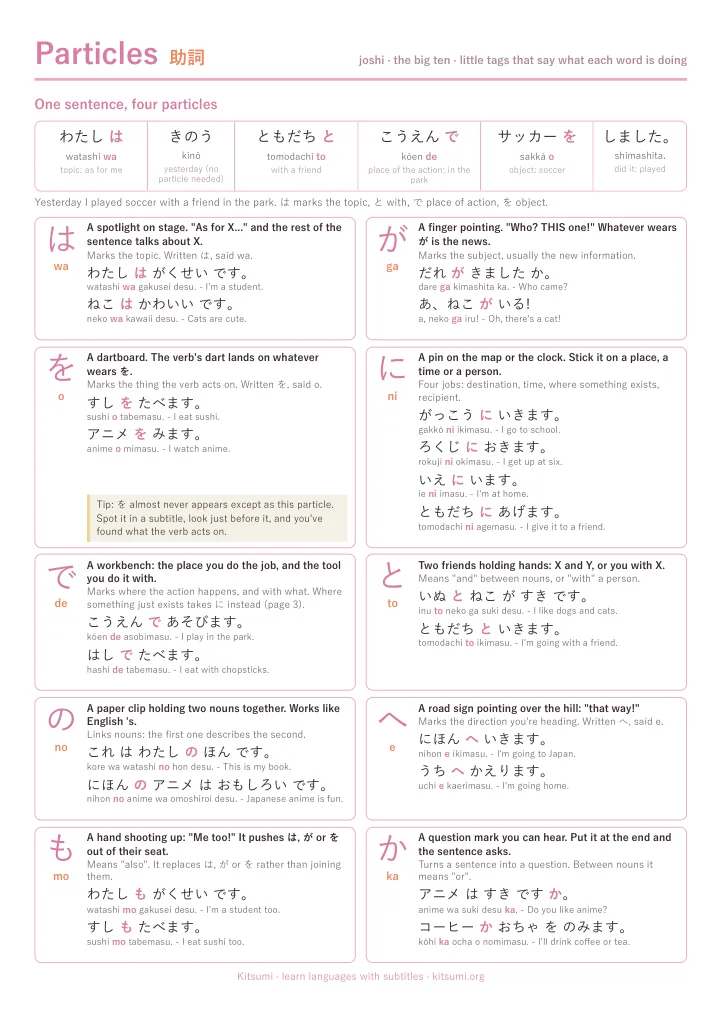 Japanese particles guideLearn the little words that hold a sentence together: は, が, を, に, で and more.
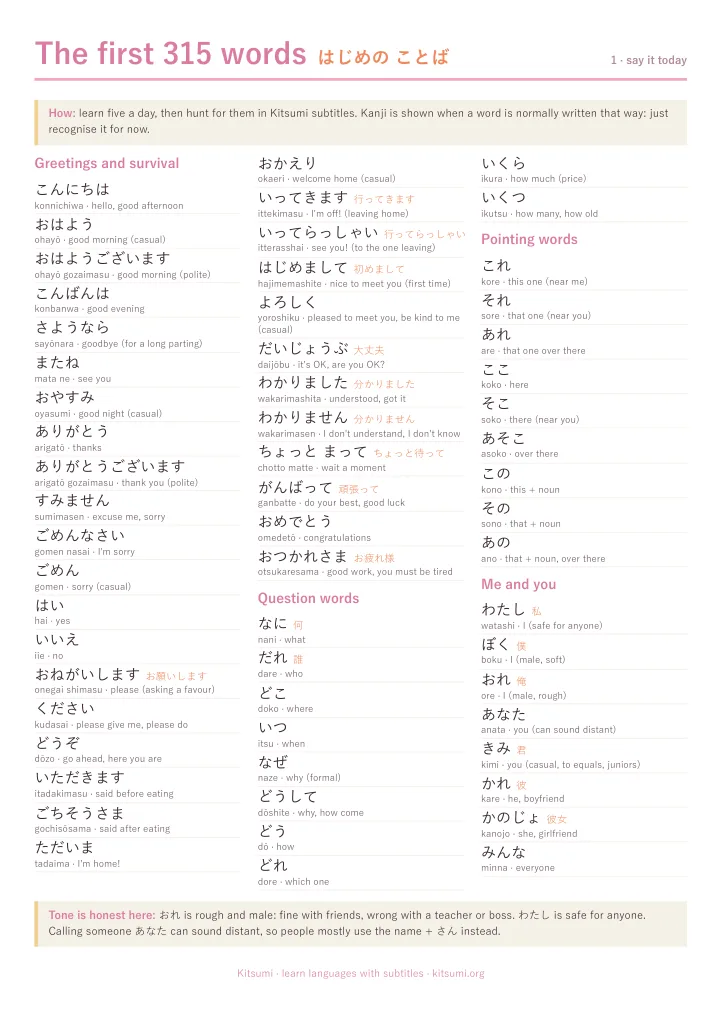 Basic Japanese words listPick up the first 315 words: greetings, people, numbers, food, verbs and more.
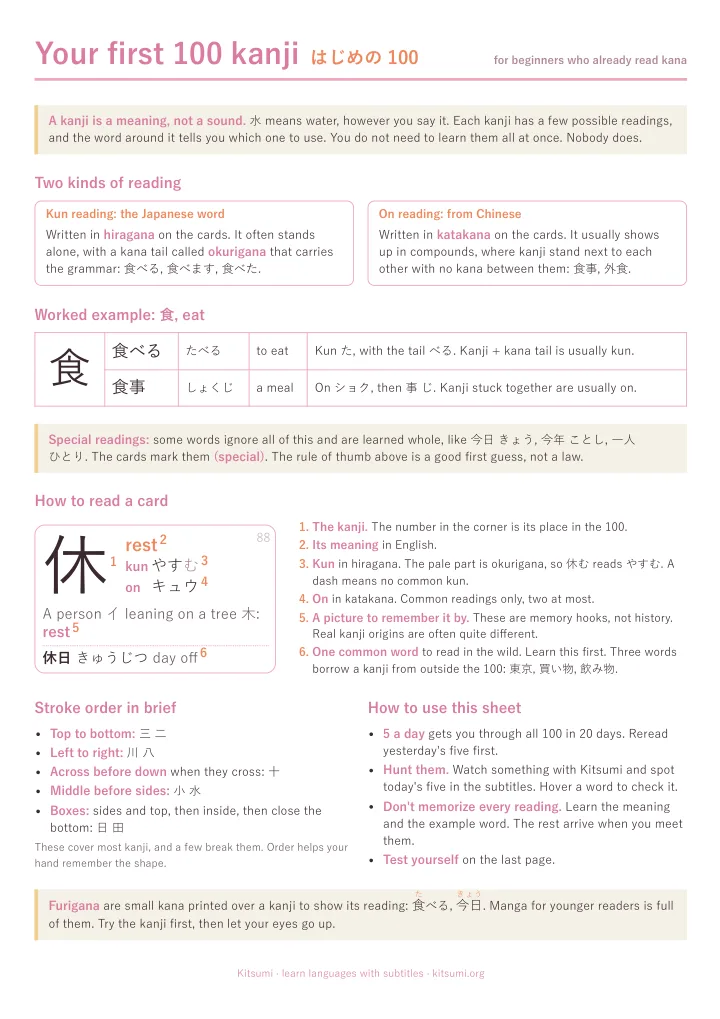 Your first 100 kanjiStart kanji once you read kana comfortably: 100 beginner kanji, each with a picture.
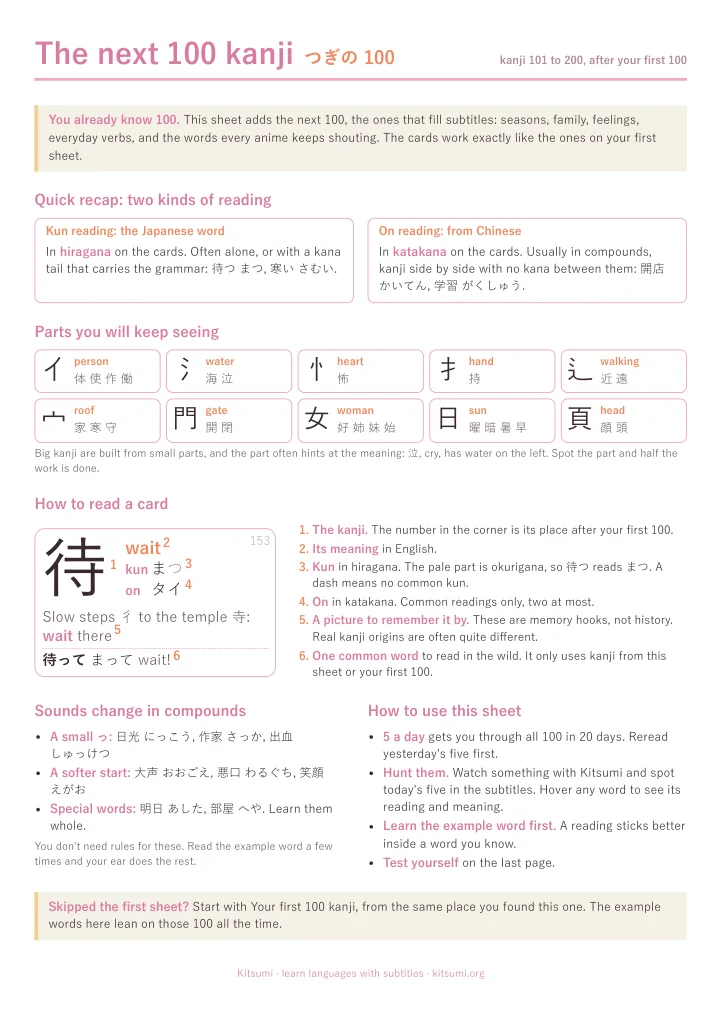 The next 100 kanjiDone with your first 100? Here are the next 100: seasons, family, feelings, verbs and anime words.
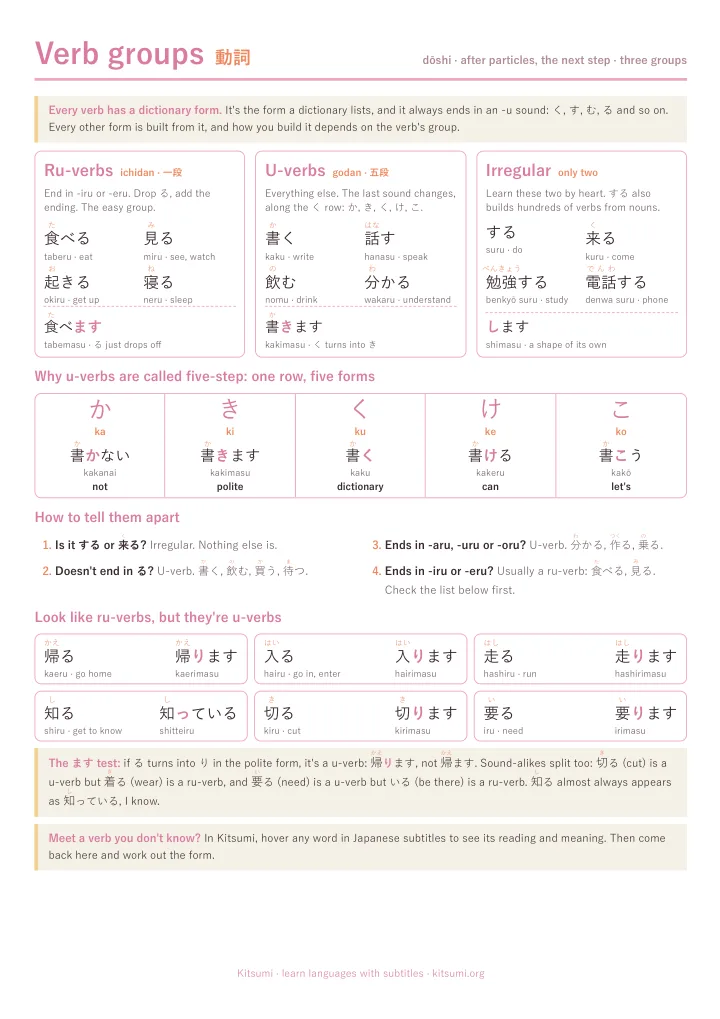 Japanese verb forms guideMake verbs do more: ます, ない, た, て, can, want to and let's, for every kind of verb.
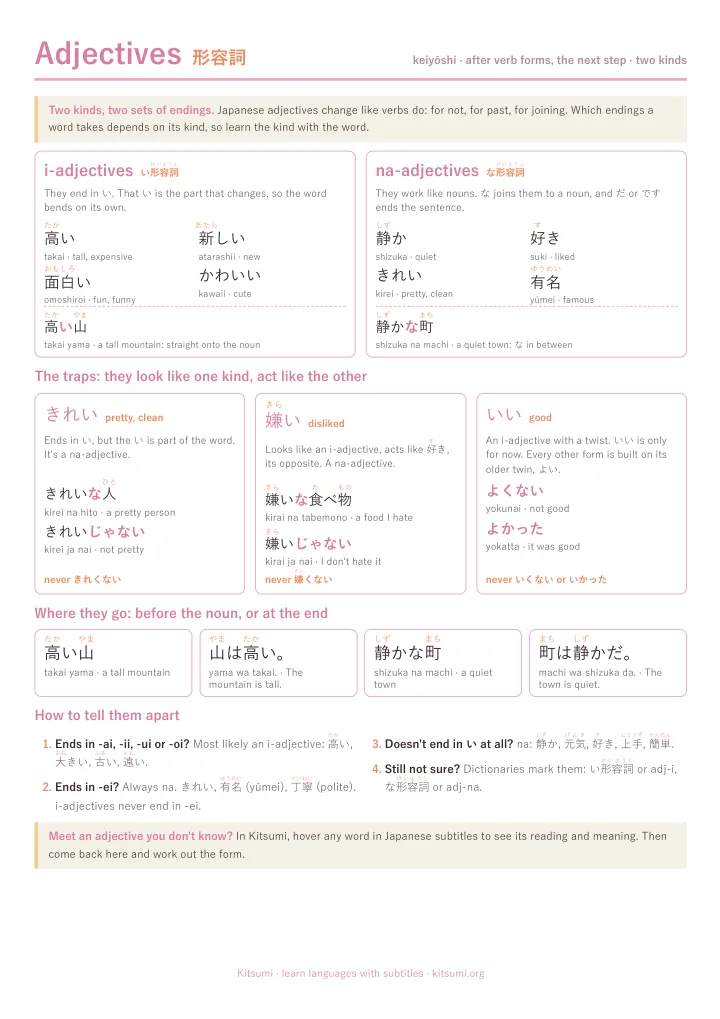 Japanese adjectives guideDescribe things: i-adjectives and na-adjectives in every form, from くない and かった to より and 一番.
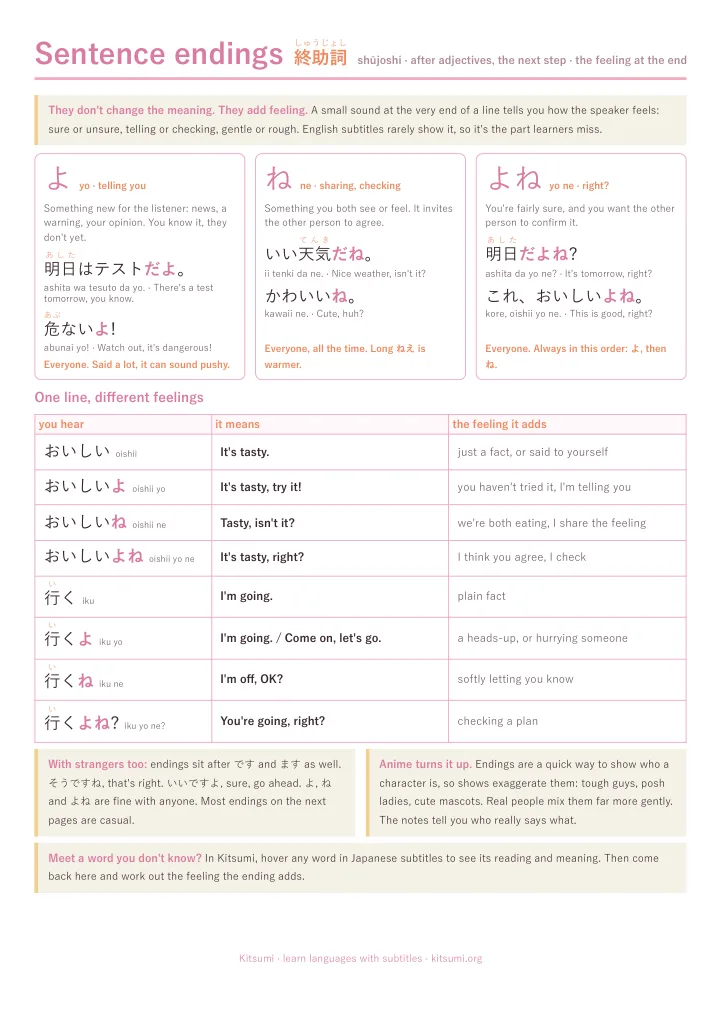 Japanese sentence endings guideHear the feeling: よ, ね, ぞ, わ, かな, じゃん, でしょ and the other endings that close almost every line.
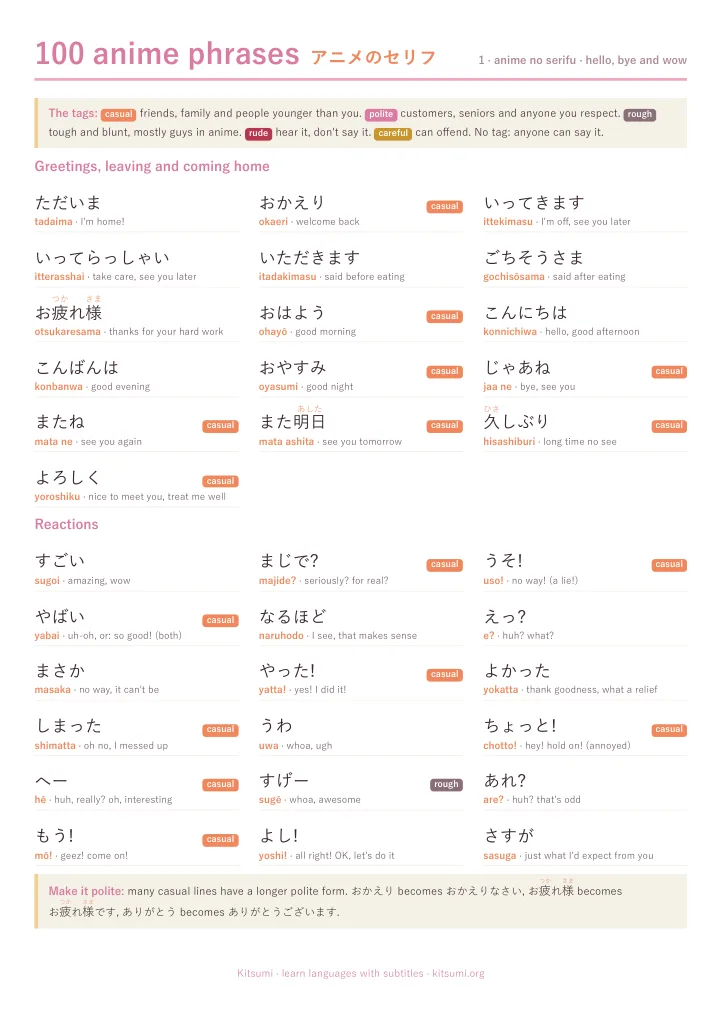 100 anime phrasesThen pick up the lines anime uses all the time: ただいま, まさか, 行くぞ, 任せて and what 先輩 really means.
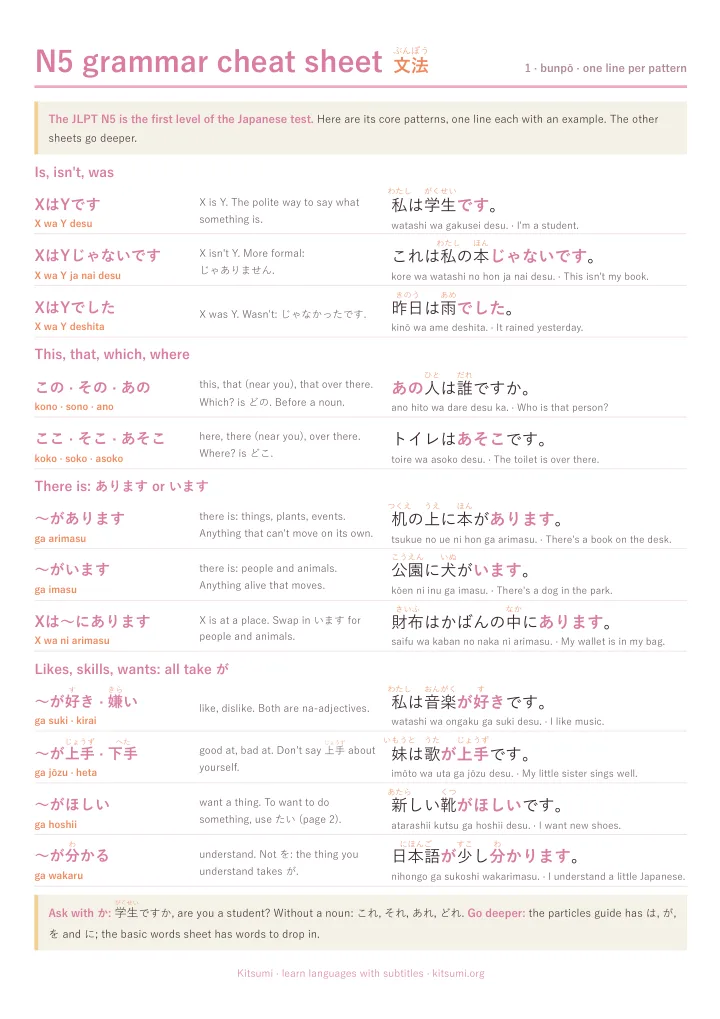 JLPT N5 grammar cheat sheetPut it all together: the core beginner patterns, one line each with an example, from です to たことがある.
Questions
Is the keigo cheat sheet free?
Yes. It's a free PDF with no sign-up. Print it, keep it and share it.
Do I need to learn keigo?
To speak, です and ます are enough, and nobody expects more from a learner. Honorific and humble keigo are worth learning to recognise, because shop staff, offices and many anime characters use them all the time.
What is the difference between sonkeigo and kenjōgo?
Sonkeigo raises the other person and is used for what they do: いらっしゃる, they come. Kenjōgo lowers yourself and is used for what you do: 参る, I come. Both show respect to the listener.