 Kitsumi
Portuguese past tenses: falei, falava and when to use each
A six-page printable PDF that goes deeper than the past page of the Portuguese verbs guide. It builds the pretérito perfeito and the imperfeito step by step, shows when to use which with one simple picture, a dot and a line, and marks Brazil and Portugal with BR and PT wherever they say it differently.
PDF · 6 pages · 393 KB · no sign-up · free to print and share
Was it useful?Ideas or a mistake? Tell us on Discord
Next, meet these words in real videos: Kitsumi is free for Chrome and Firefox.
What's inside
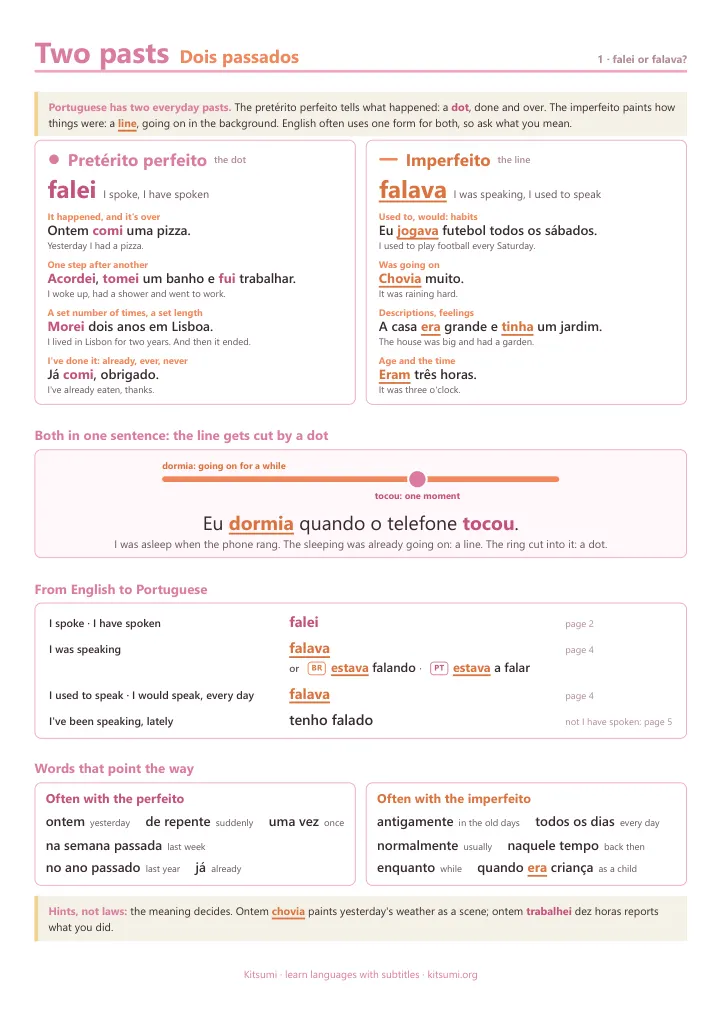
- Two pastsThe perfeito for what happened and the imperfeito for how things were, with a picture of both in one sentence, Eu dormia quando o telefone tocou, how English I spoke, I was speaking and I used to speak map onto them, and words that point the way, like ontem and antigamente.
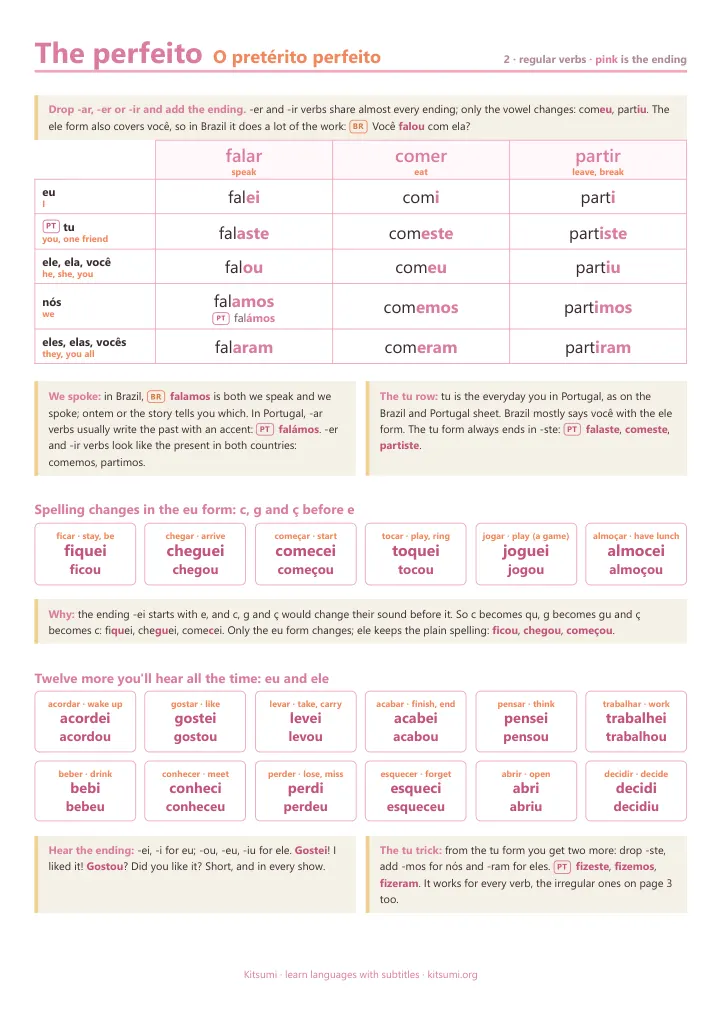
- The perfeitoThe regular endings for -ar, -er and -ir verbs, falamos in Brazil and falámos in Portugal, the tu forms used in Portugal, the eu spelling changes in fiquei, cheguei and comecei, and eighteen everyday verbs in the eu and ele forms.
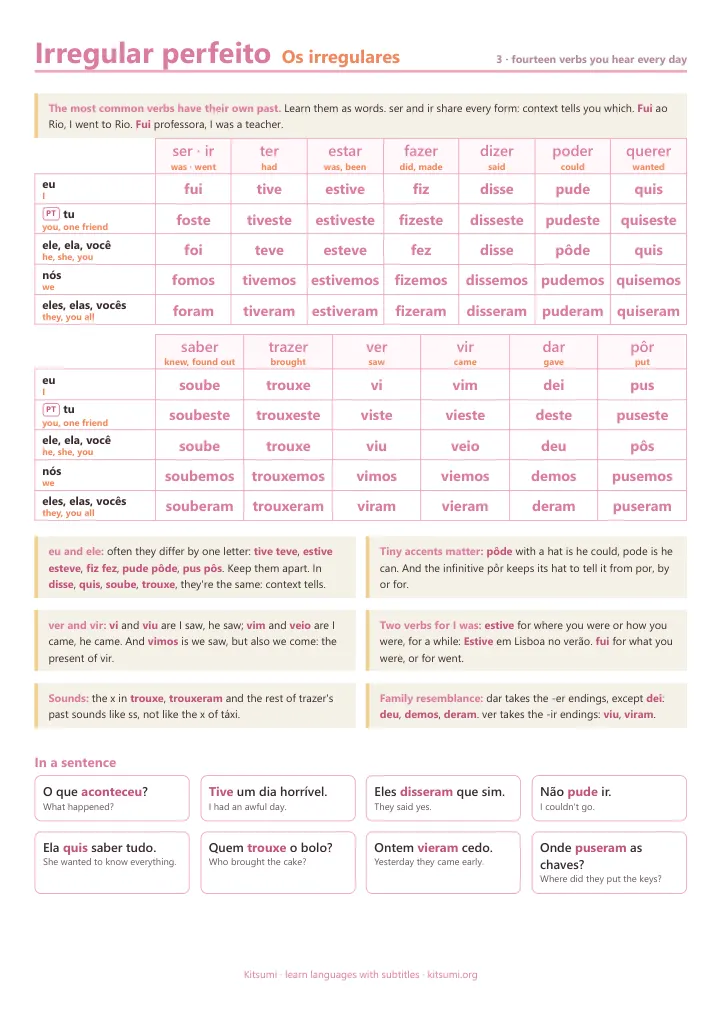
- Irregular perfeitoFourteen verbs in full: fui for both ser and ir, tive, estive, fiz, disse, pude and pôde, quis, soube, trouxe, vi and vim, dei and pus, with the differences that trip learners up.
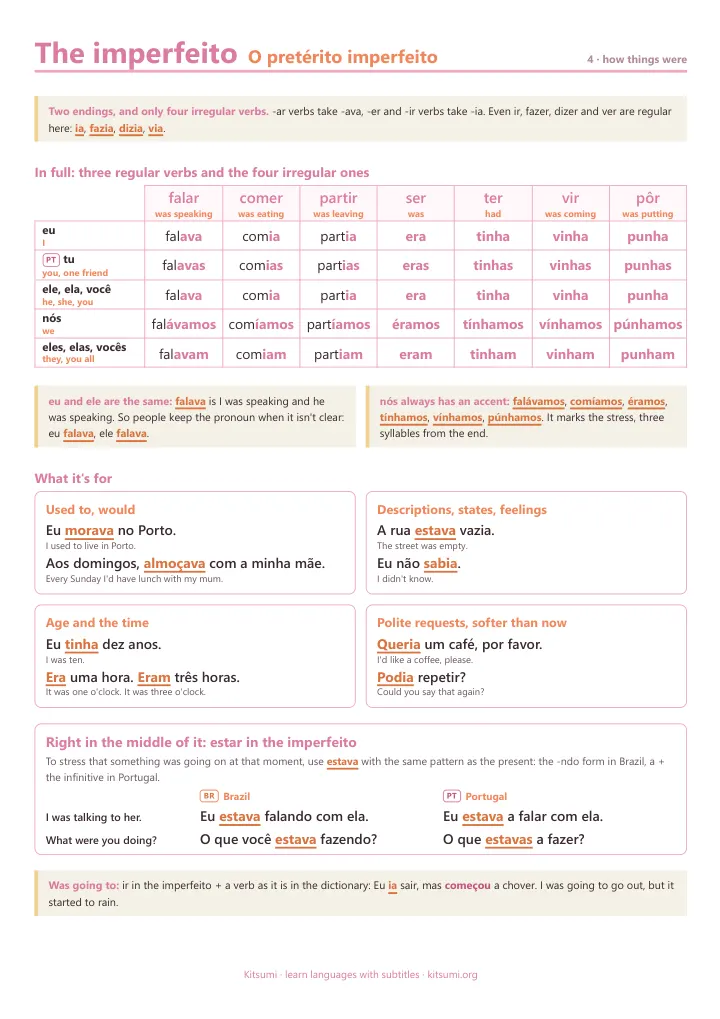 The imperfeitoThe -ava and -ia endings, the only four irregular verbs, era, tinha, vinha and punha, and what it's for: habits, descriptions, age and the time, polite requests like queria um café, estava falando and estava a falar, and ia + infinitive.
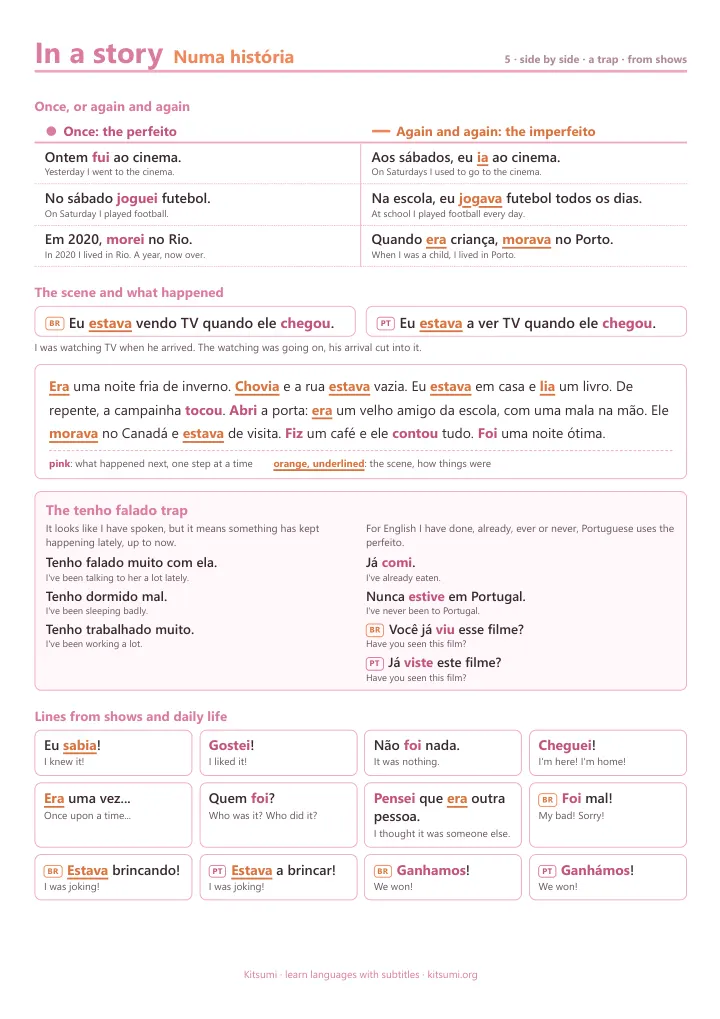 In a storyThe same activities told once and as a habit, Eu estava vendo TV quando ele chegou in Brazil and Portugal, a short story with every past verb coloured, the tenho falado trap, and lines from shows like Eu sabia! and Foi mal!
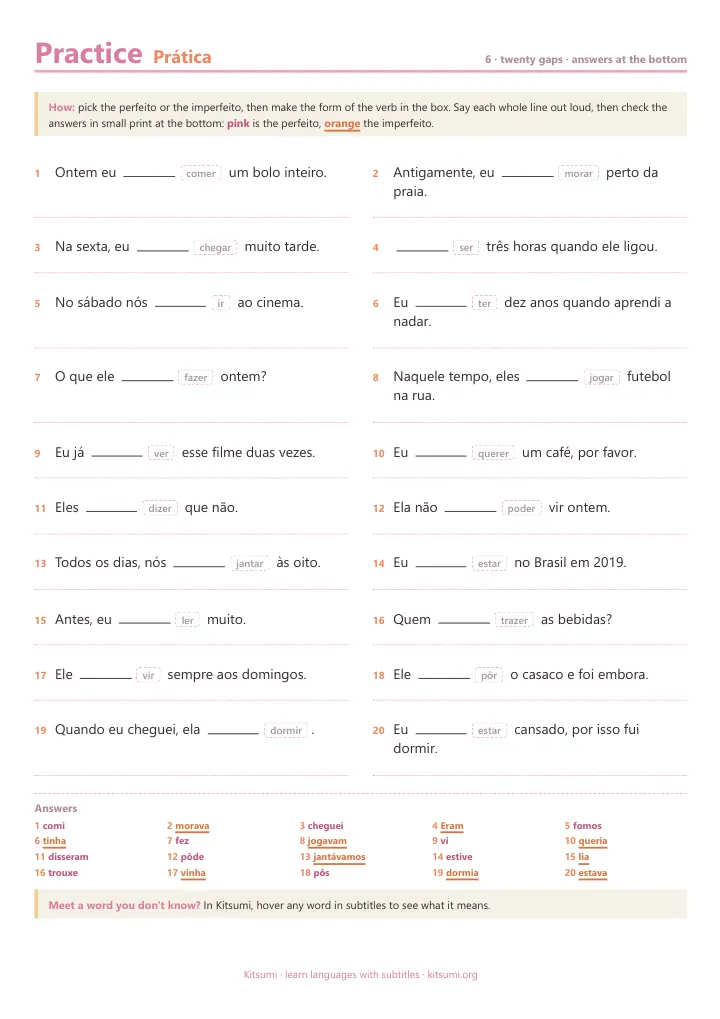 PracticeTwenty sentences where you pick the tense and make the form, with the answers in small print at the bottom.
How to use it
- Start with the Portuguese verbs guide if the past is new to you.
- Say the perfeito and imperfeito tables out loud, a few verbs each day.
- Read the story on page five and say why each verb is pink or orange.
- Do the practice page, then listen for fui and era in Portuguese subtitles. In Kitsumi, hover any word to see what it means.
More free Portuguese printables
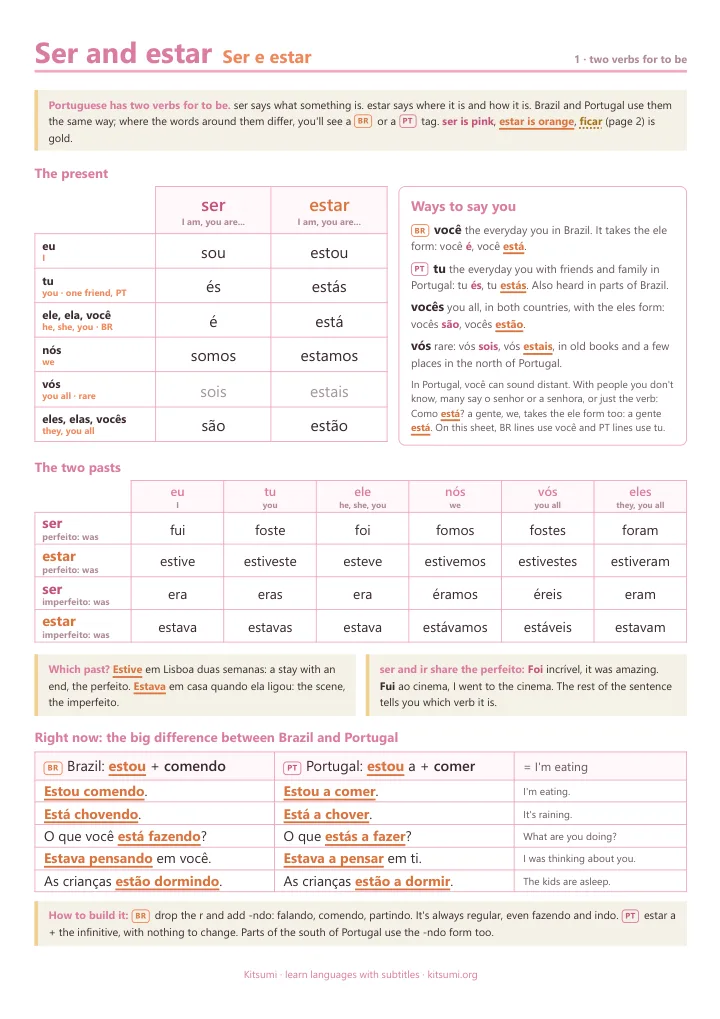 Next stepPortuguese ser and estar: the two verbs for to beThen pin down the two verbs for to be: sou or estou, é or está.
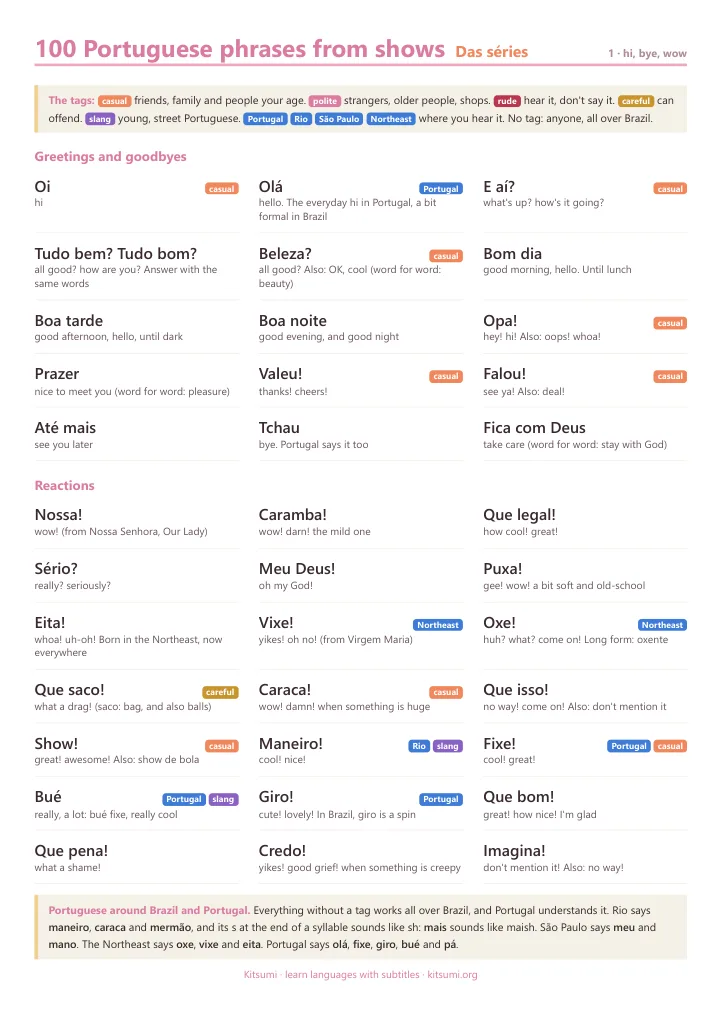 100 Portuguese phrases from showsThen pick up the lines shows use all the time: E aí?, Nossa!, Que saudade!, Me deixa em paz, Deixa pra lá and what mano and mermão really mean.
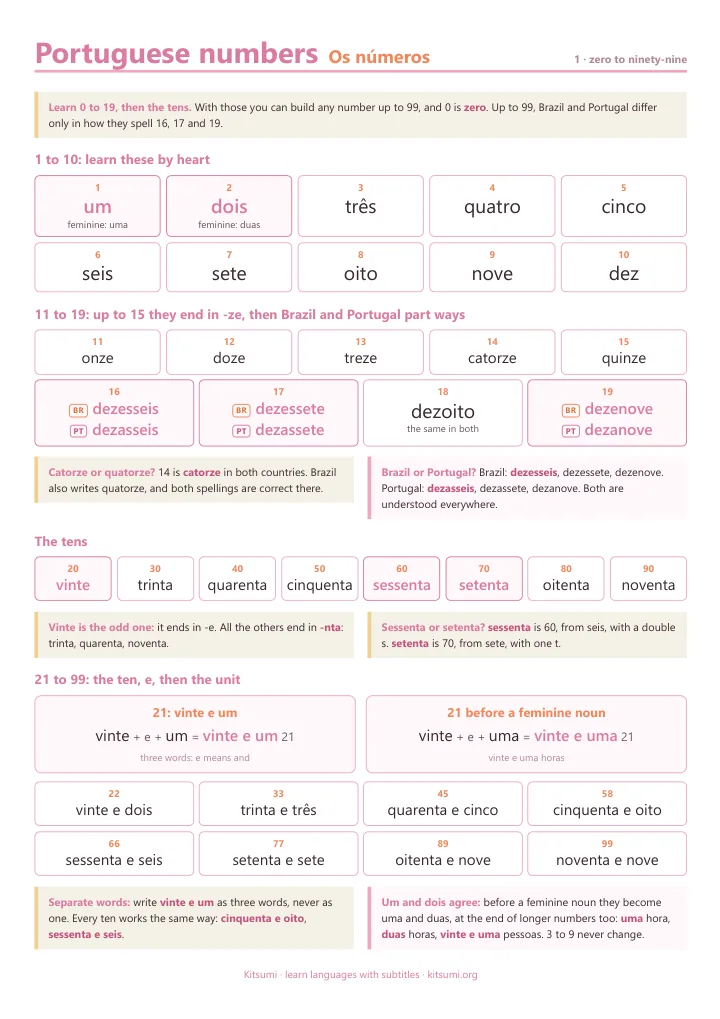 Portuguese numbers, time and moneyThen sort out numbers: vinte e um, cem and cento, um bilhão and mil milhões, then the time, dates and prices.
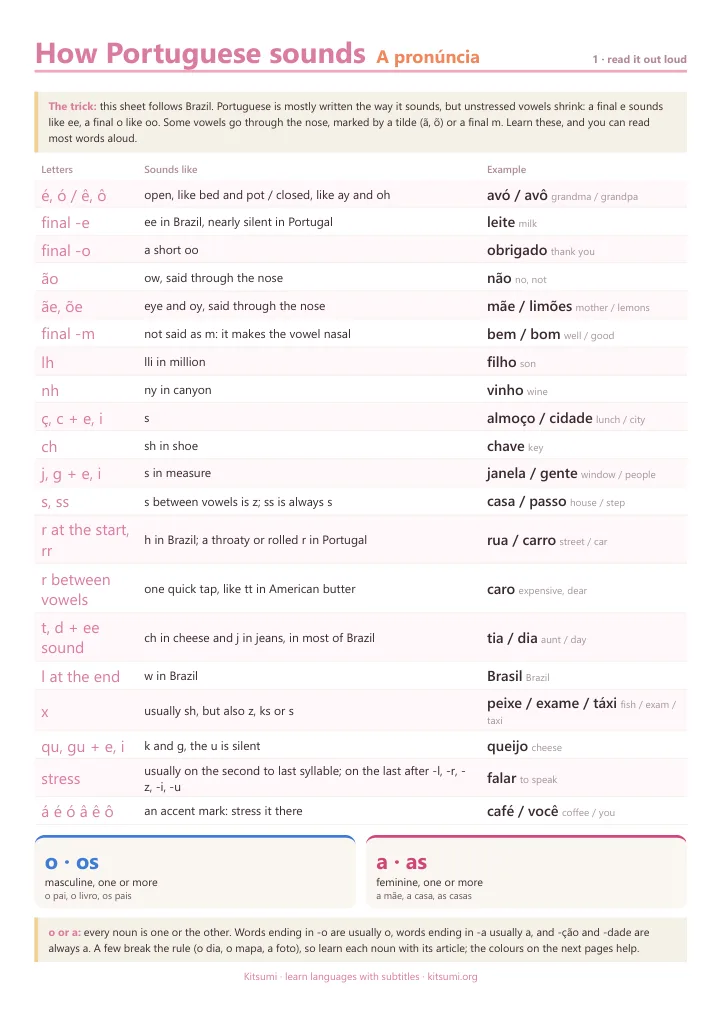 Basic Portuguese wordsStart here. Nasal ão, lh, nh and the Brazilian r made simple, then 222 first words with o and a in colour.
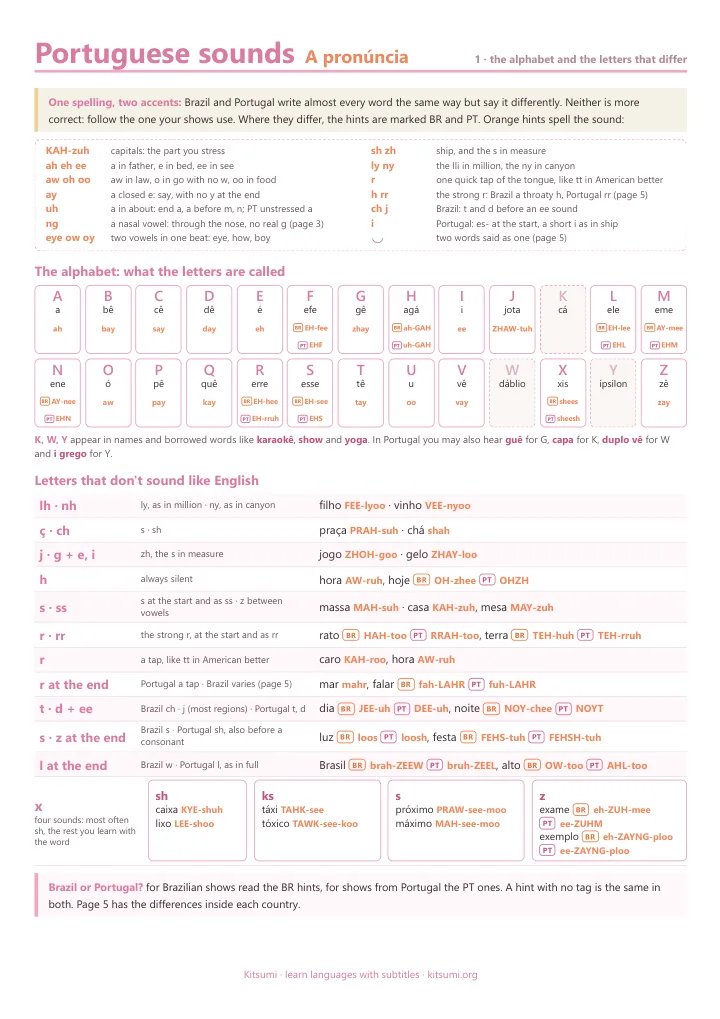 Portuguese pronunciation guideThen learn how the letters really sound in Brazil and Portugal: open and closed vowels, the nasal sounds and where the stress falls.
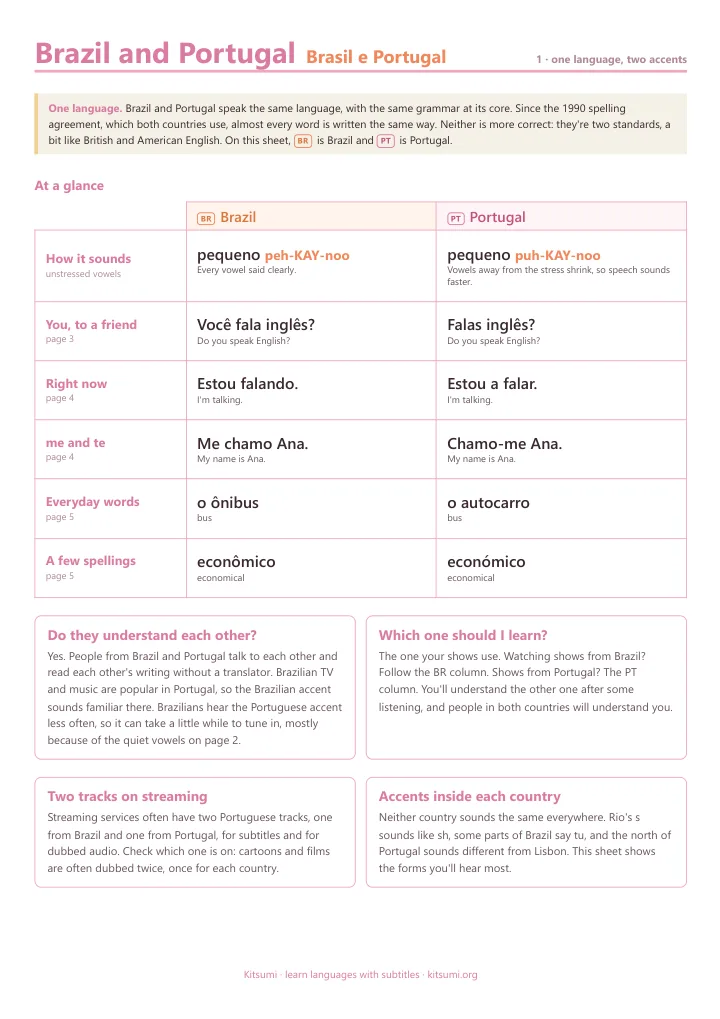 Brazilian and European Portuguese: sounds, words and grammar comparedThen see how Brazil and Portugal differ: the sounds, você and tu, estou falando and estou a falar, and the everyday words.
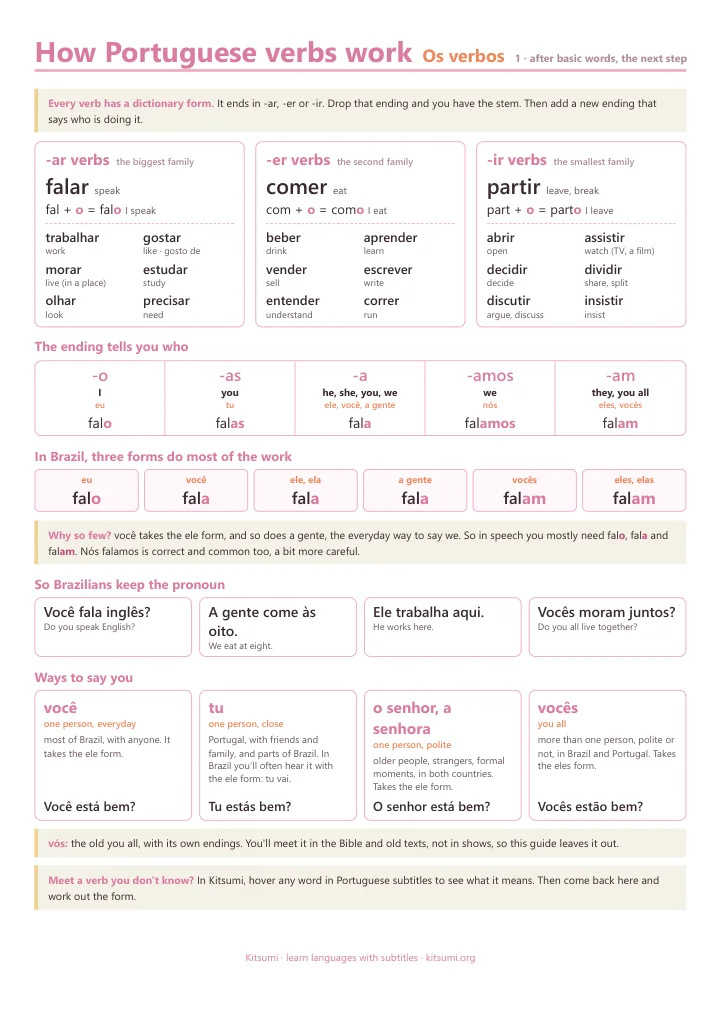 Portuguese verbs guideMake verbs say who and when: the endings, the present, the past, the future with vou and estou comendo.
Questions
Is the Portuguese past tenses guide free?
Yes. It's a free PDF with no sign-up. Print it, keep it and share it.
What is the difference between the perfeito and the imperfeito?
The perfeito tells what happened and finished, like falei, I spoke. The imperfeito paints the background, habits and things in progress, like falava, I was speaking or I used to speak.
Does tenho falado mean I have spoken?
No. Tenho falado means I've been speaking, something that has kept happening lately. For I have spoken, Portuguese uses the perfeito: já falei.
Is it Brazilian or European Portuguese?
Both. The two pasts work the same way in Brazil and Portugal. Where they differ, like falamos and falámos or estava falando and estava a falar, the guide shows both with a BR or PT tag.