 Kitsumi
Brazilian and European Portuguese compared
A six-page printable PDF that puts Brazil and Portugal side by side: how each one sounds, how people say you, the grammar that differs and the everyday words and spellings that change. Both are equally correct, so it helps you follow shows from either country, marked BR and PT throughout.
PDF · 6 pages · 271 KB · no sign-up · free to print and share
Was it useful?Ideas or a mistake? Tell us on Discord
Next, meet these words in real videos: Kitsumi is free for Chrome and Firefox.
What's inside
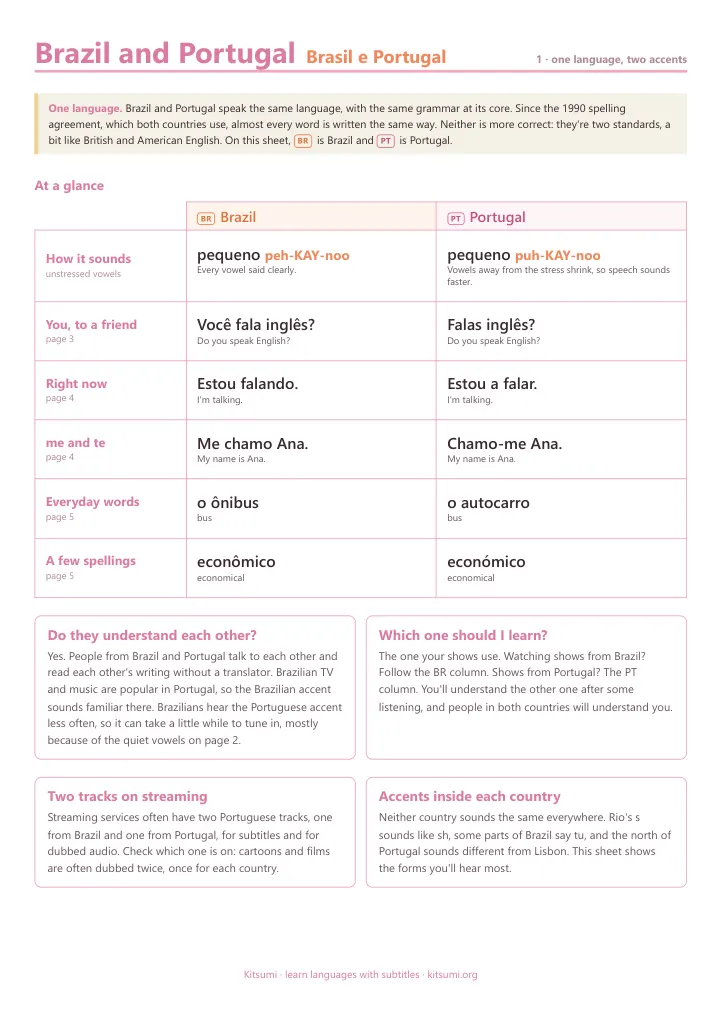
- The big pictureOne language with two standards, written almost the same since the 1990 spelling agreement. A chart of the main differences at a glance, whether the two understand each other, which one to learn, and the two Portuguese tracks on streaming.
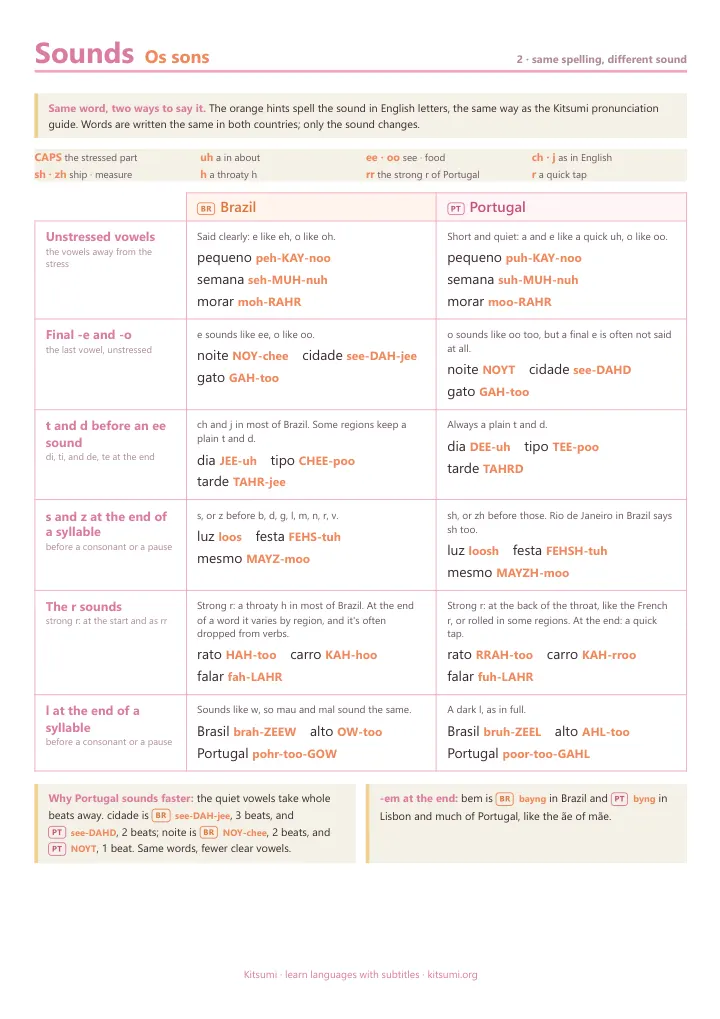
- SoundsUnstressed vowels, clear in Brazil and quiet in Portugal, the final e, Brazil's ch and j in dia and tipo, the s that sounds like sh in Portugal and Rio, the strong r and the r at the end, and the l that sounds like w in Brazil, with plain English sound hints for both.
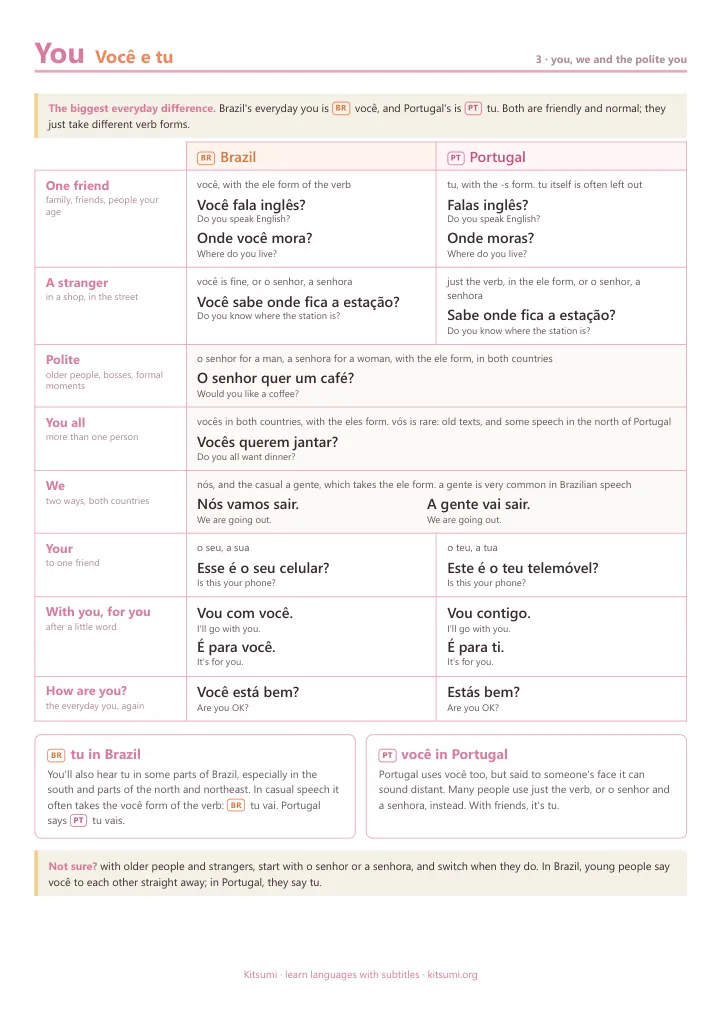
- Youvocê in Brazil and tu in Portugal, the polite o senhor and a senhora, vocês, nós and a gente, o seu and o teu, com você and contigo, tu in parts of Brazil and você in Portugal.
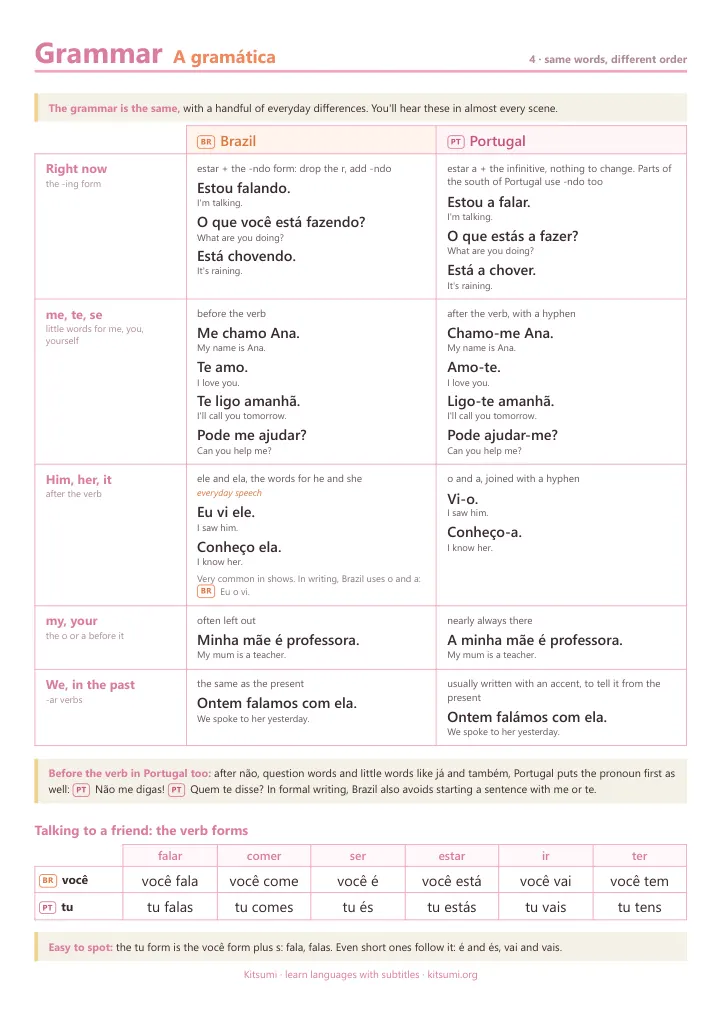 Grammarestou falando and estou a falar, me chamo and chamo-me, te amo and amo-te, eu vi ele in Brazilian speech and vi-o in Portugal, minha mãe and a minha mãe, falamos and falámos, and the tu and você forms of six common verbs.
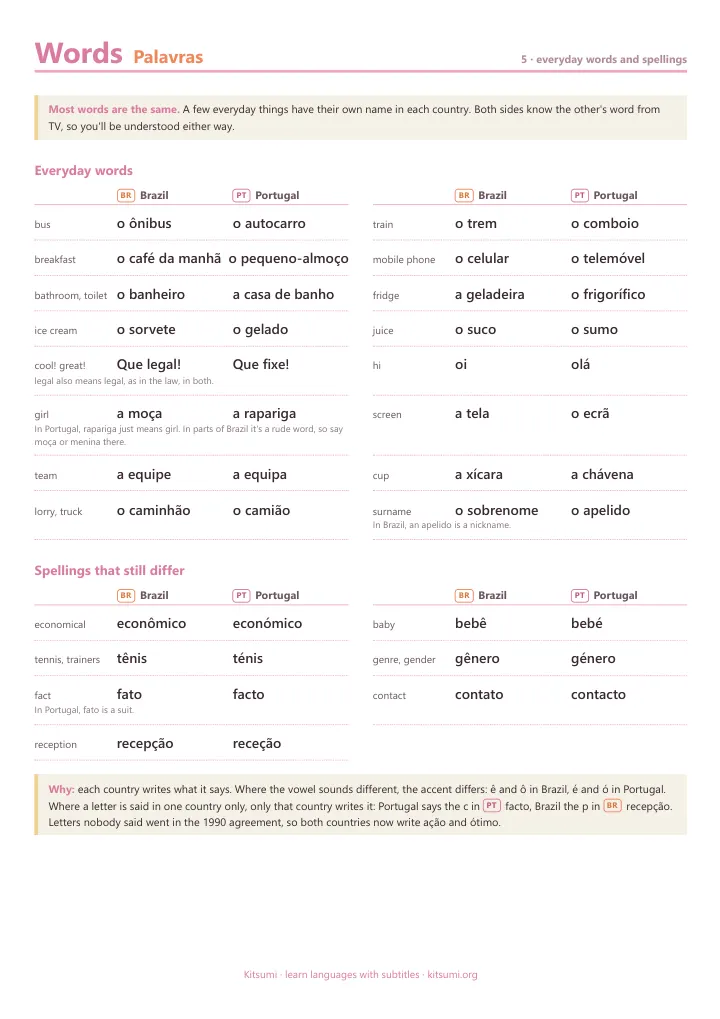 Words and spellingsSixteen everyday words like ônibus and autocarro, celular and telemóvel, banheiro and casa de banho, sorvete and gelado, with a note on rapariga, then spellings like econômico and económico, fato and facto, recepção and receção, and why they differ.
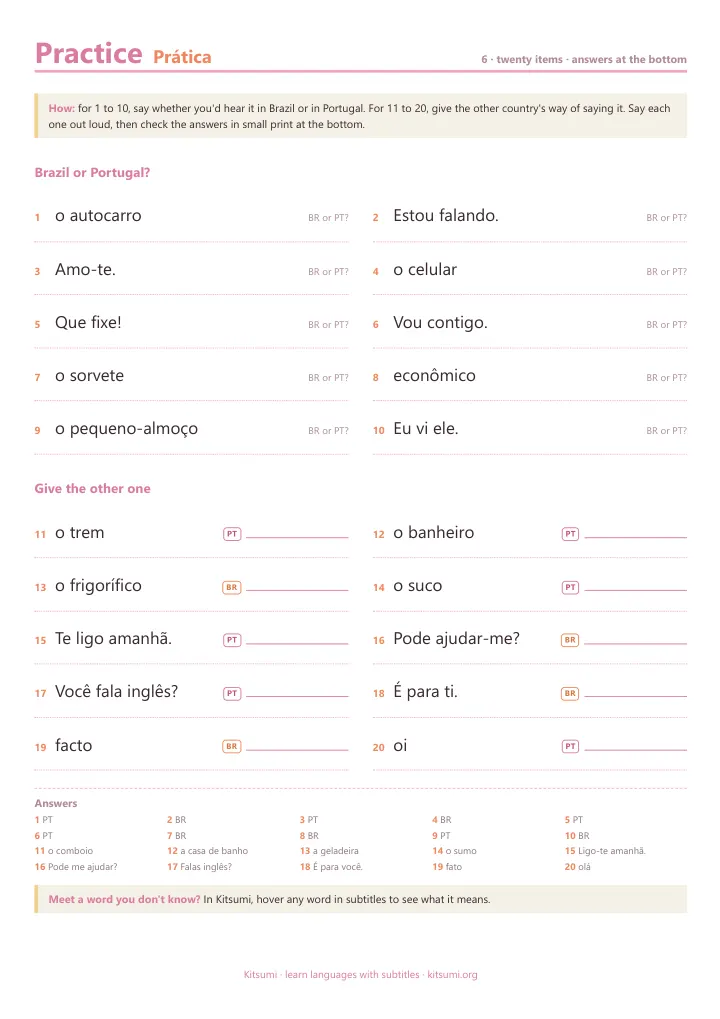 PracticeTen items to sort into Brazil or Portugal and ten to turn into the other country's way of saying it, with the answers in small print at the bottom.
How to use it
- Learn how Portuguese sounds first. The pronunciation guide uses the same sound hints.
- Pick the country your shows come from and read its column out loud.
- Cover one column and say the other from memory.
- Do the practice page, then listen for você or tu, and -ndo or a + infinitive, in shows with Kitsumi.
More free Portuguese printables
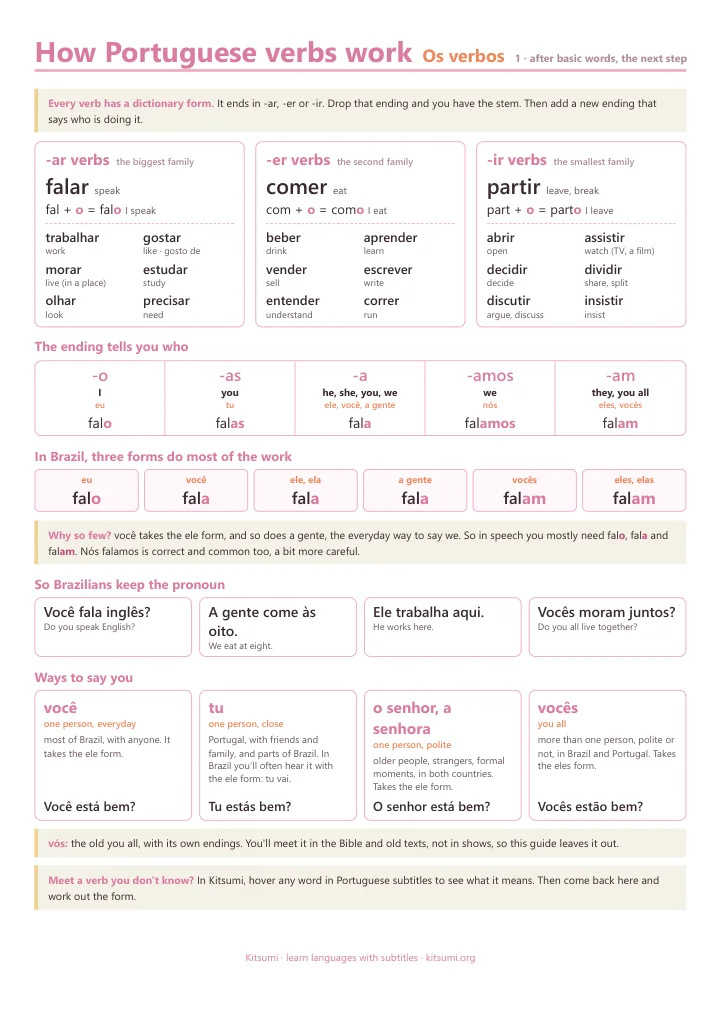 Next stepPortuguese verbs guideMake verbs say who and when: the endings, the present, the past, the future with vou and estou comendo.
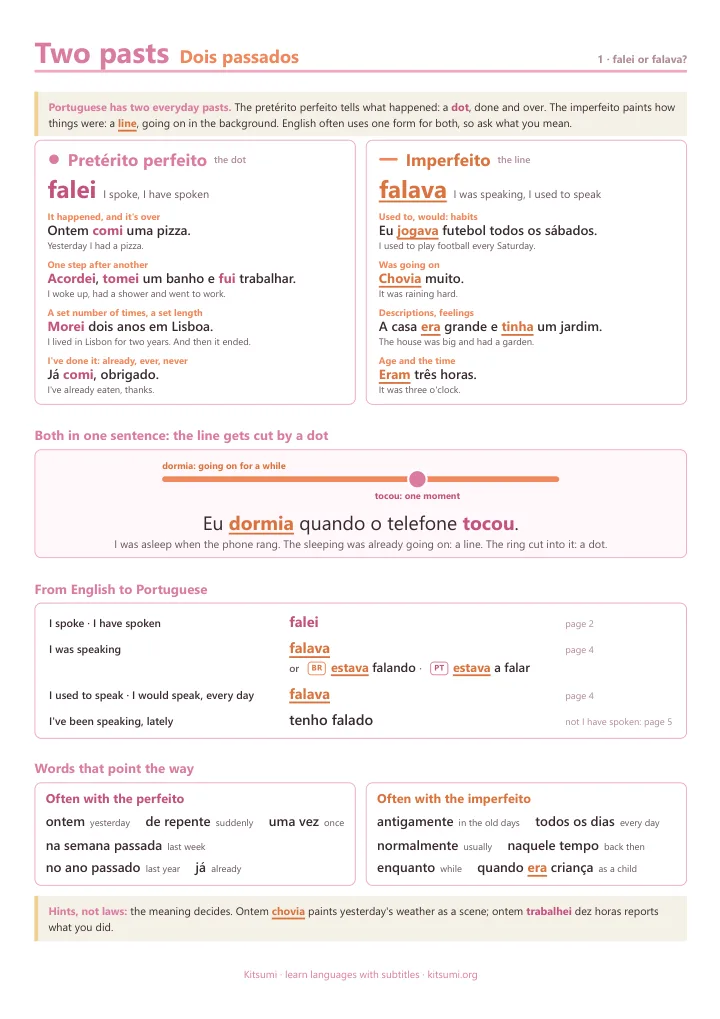 Portuguese past tenses: falei, falava and when to use eachThen sort out the two pasts: falei or falava, fui or era, and why it matters.
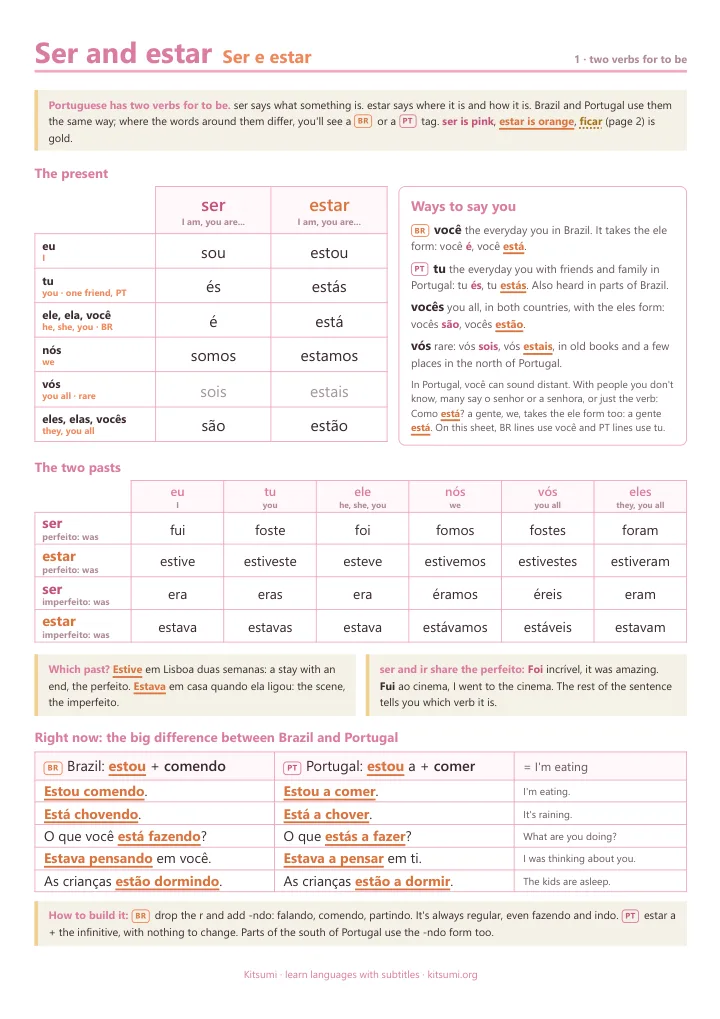 Portuguese ser and estar: the two verbs for to beThen pin down the two verbs for to be: sou or estou, é or está.
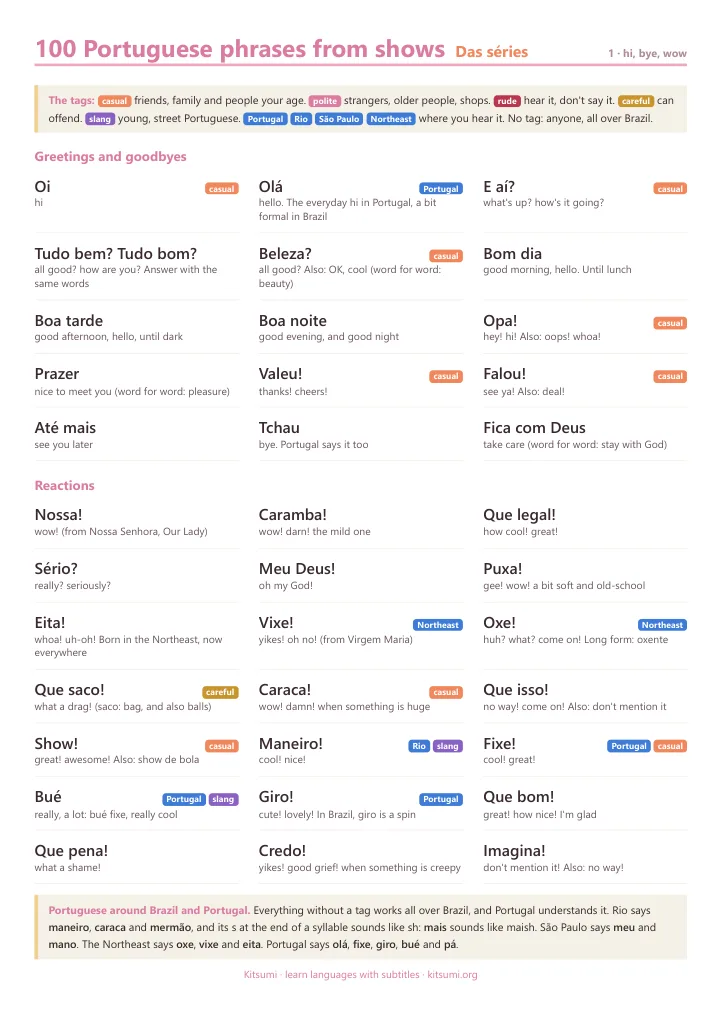 100 Portuguese phrases from showsThen pick up the lines shows use all the time: E aí?, Nossa!, Que saudade!, Me deixa em paz, Deixa pra lá and what mano and mermão really mean.
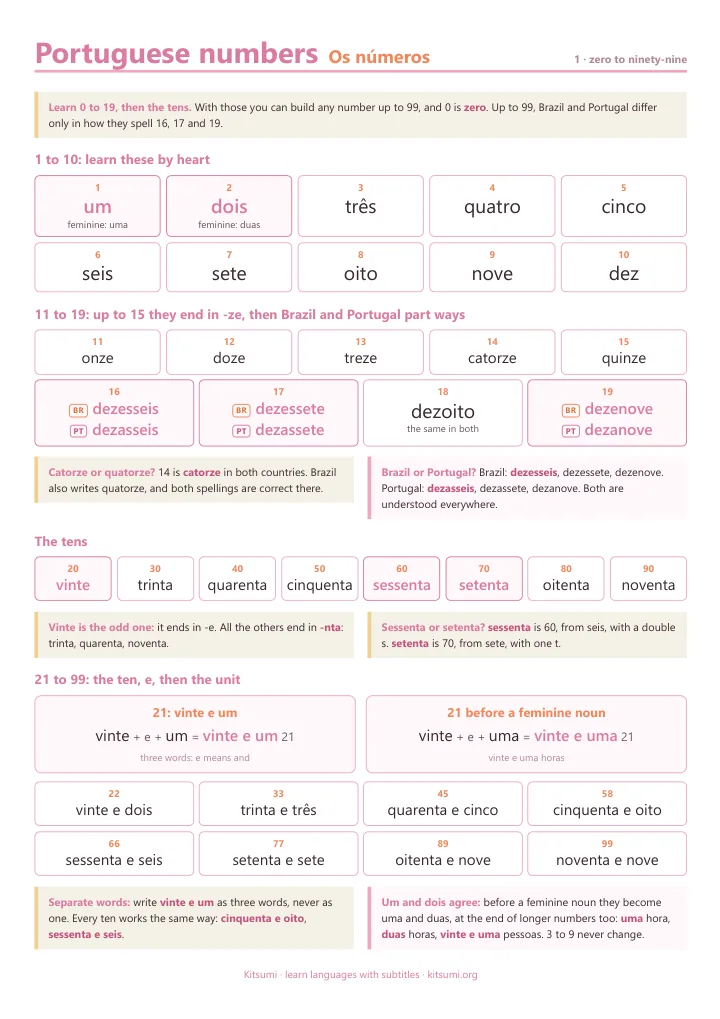 Portuguese numbers, time and moneyThen sort out numbers: vinte e um, cem and cento, um bilhão and mil milhões, then the time, dates and prices.
 Basic Portuguese wordsStart here. Nasal ão, lh, nh and the Brazilian r made simple, then 222 first words with o and a in colour.
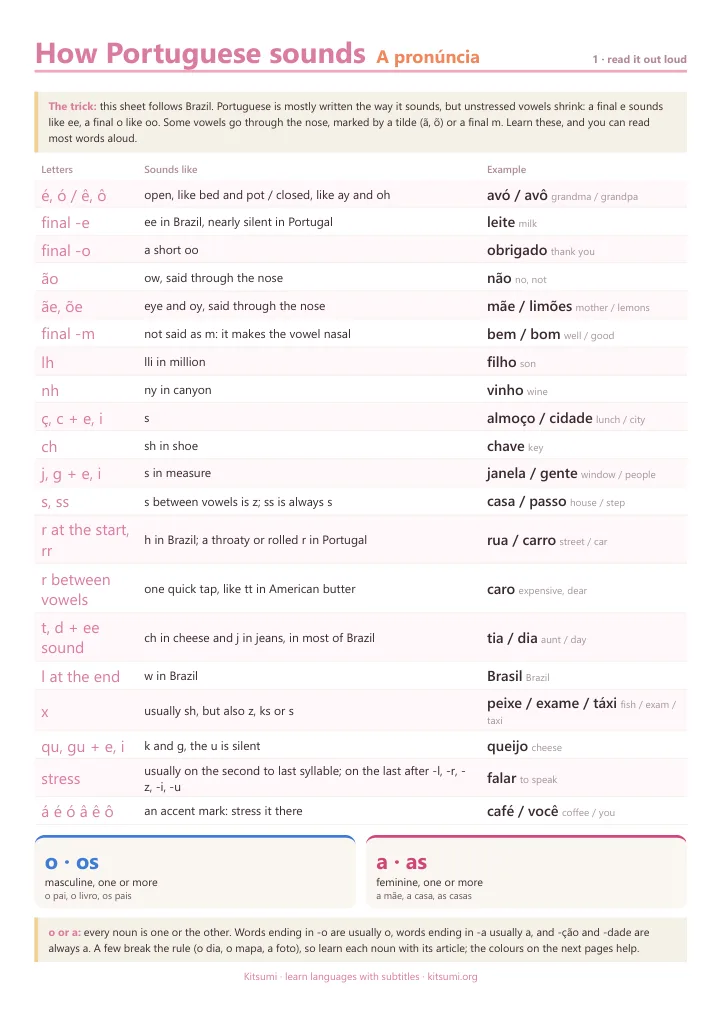
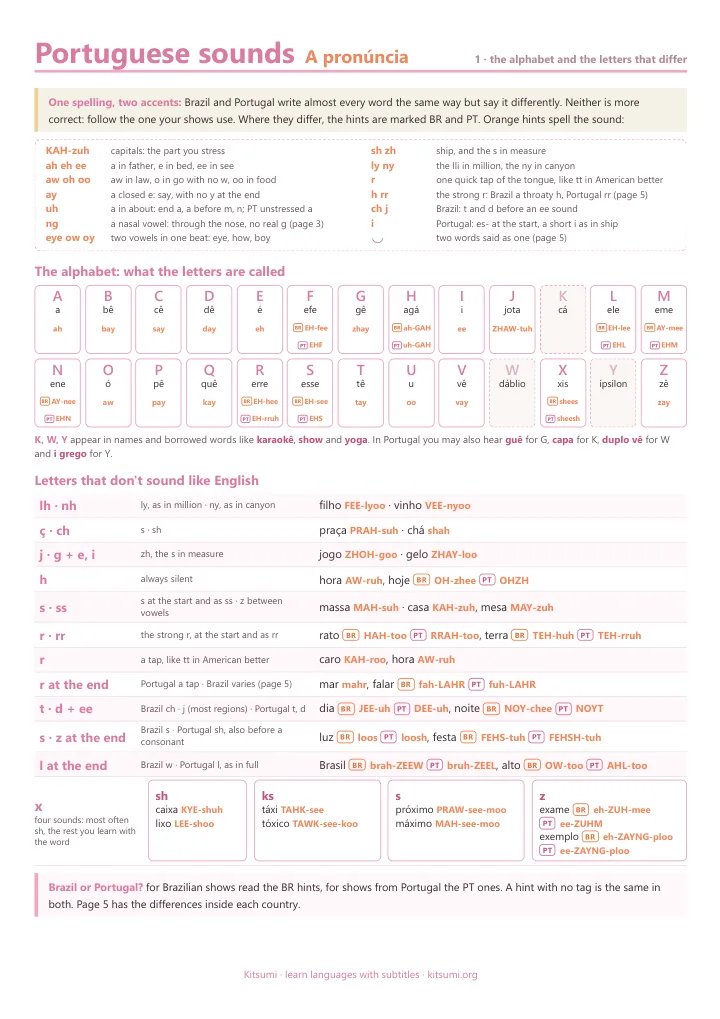 Portuguese pronunciation guideThen learn how the letters really sound in Brazil and Portugal: open and closed vowels, the nasal sounds and where the stress falls.
Questions
Is the Brazilian and European Portuguese guide free?
Yes. It's a free PDF with no sign-up. Print it, keep it and share it.
Is Brazilian or European Portuguese more correct?
Neither. They're two standards of the same language, a bit like British and American English. Learn the one your shows use.
Do Brazilians and Portuguese understand each other?
Yes. The grammar is the same at its core and almost every word is written the same way. Brazilians may need a little time to tune in to the European accent, mostly because of its quiet vowels.
Why does European Portuguese sound faster?
Vowels away from the stress get very short or disappear, so words lose beats: cidade is see-DAH-jee in Brazil and see-DAHD in Portugal.