 Kitsumi
Free Portuguese verbs guide
A five-page printable PDF for beginners: how Brazilian Portuguese verbs change to say who and when, from falo and fala to fui, vou comer and estou comendo. Where Portugal says it differently, the guide shows both.
PDF · 5 pages · 299 KB · no sign-up · free to print and share
Next, meet these words in real videos: Kitsumi is free for Chrome and Firefox.
What's inside
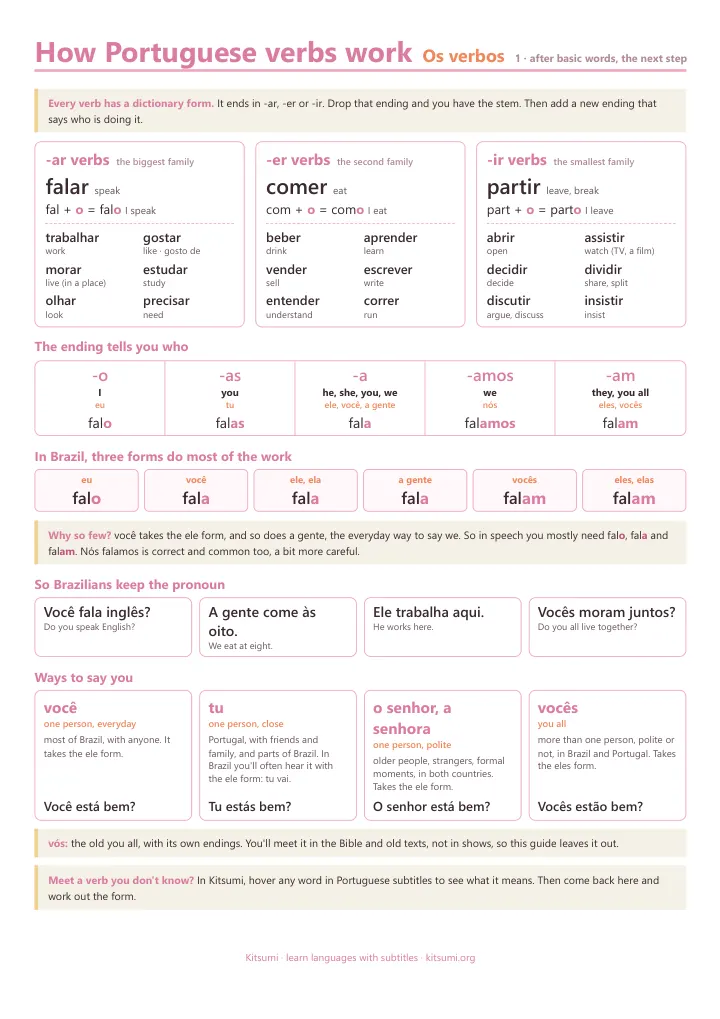
- How Portuguese verbs workThe -ar, -er and -ir families, how the ending tells you who, why Brazil gets by with three forms thanks to você and a gente, and você, tu, o senhor and vocês.
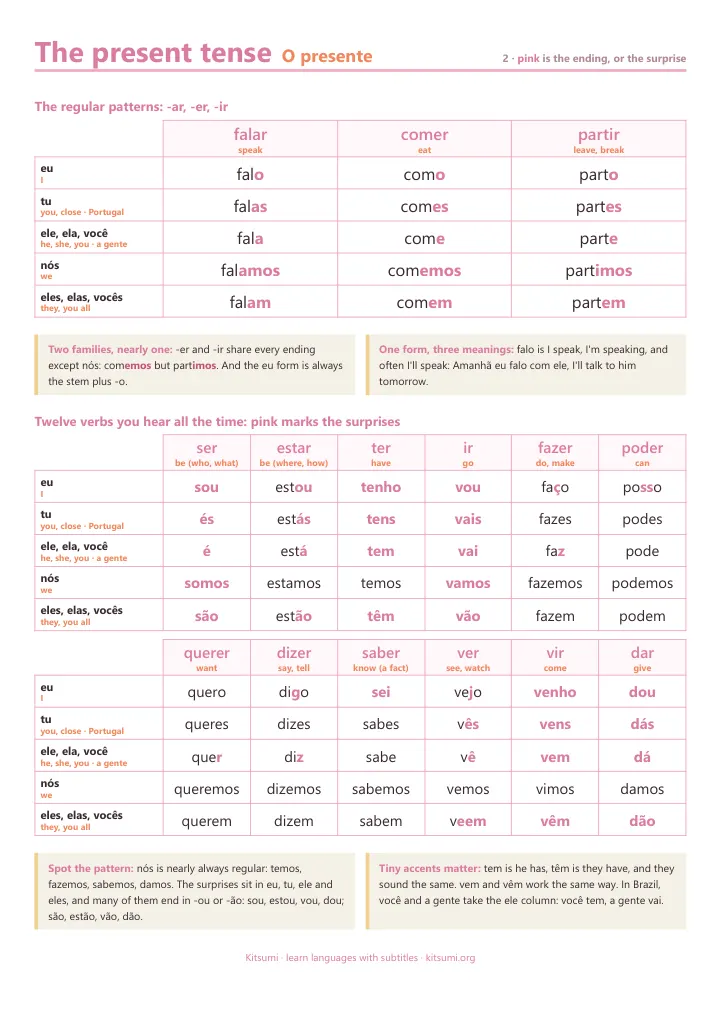
- The present tensefalar, comer and partir in every person, then twelve verbs you hear all the time: ser, estar, ter, ir, fazer, poder, querer, dizer, saber, ver, vir and dar.
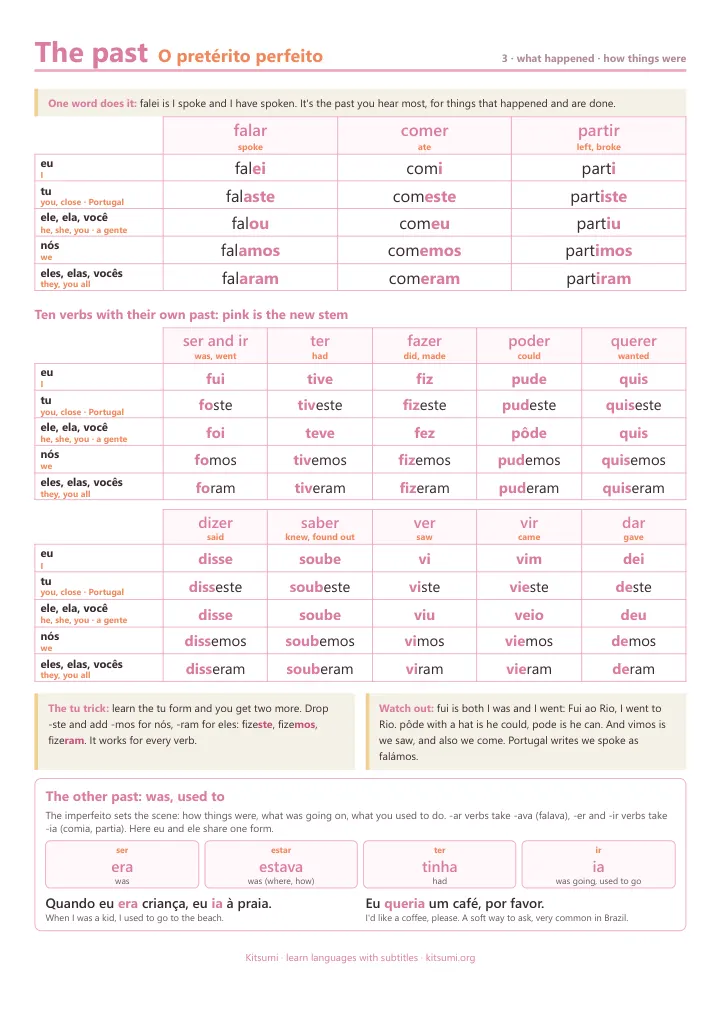
- The pastThe pretérito perfeito of the regular verbs and ten with their own past, like fui, tive, fiz and disse, a trick that gives you nós and eles from the tu form, and the imperfeito for how things were.
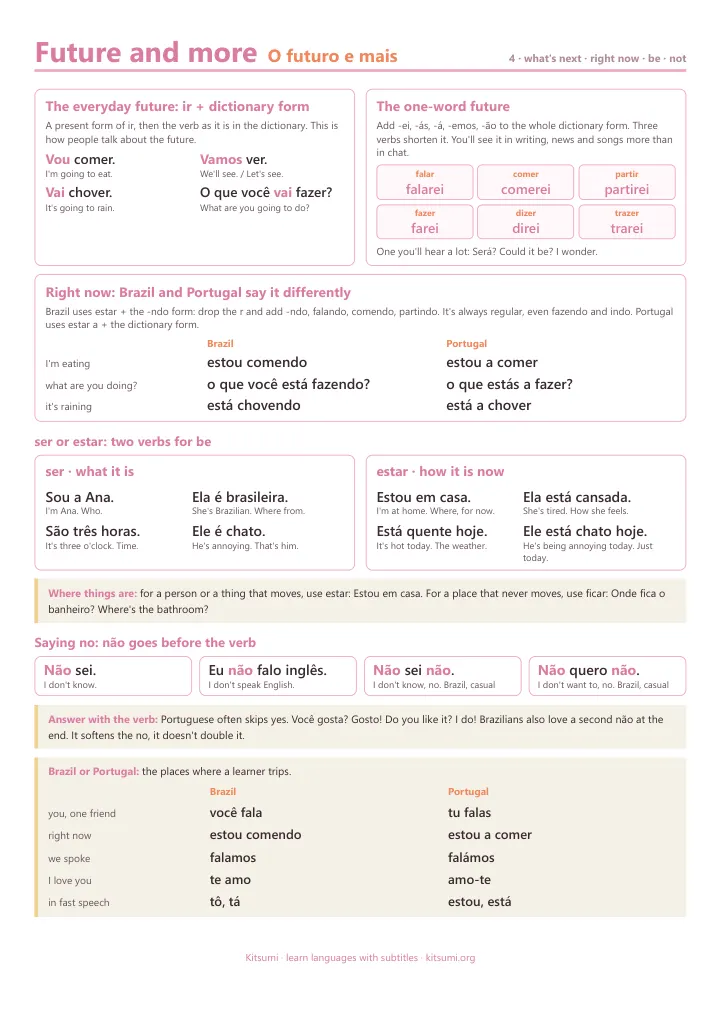 Future and morevou comer for the everyday future, the one-word future in one box, estou comendo in Brazil and estou a comer in Portugal, ser or estar, and não, including the Brazilian não sei não.
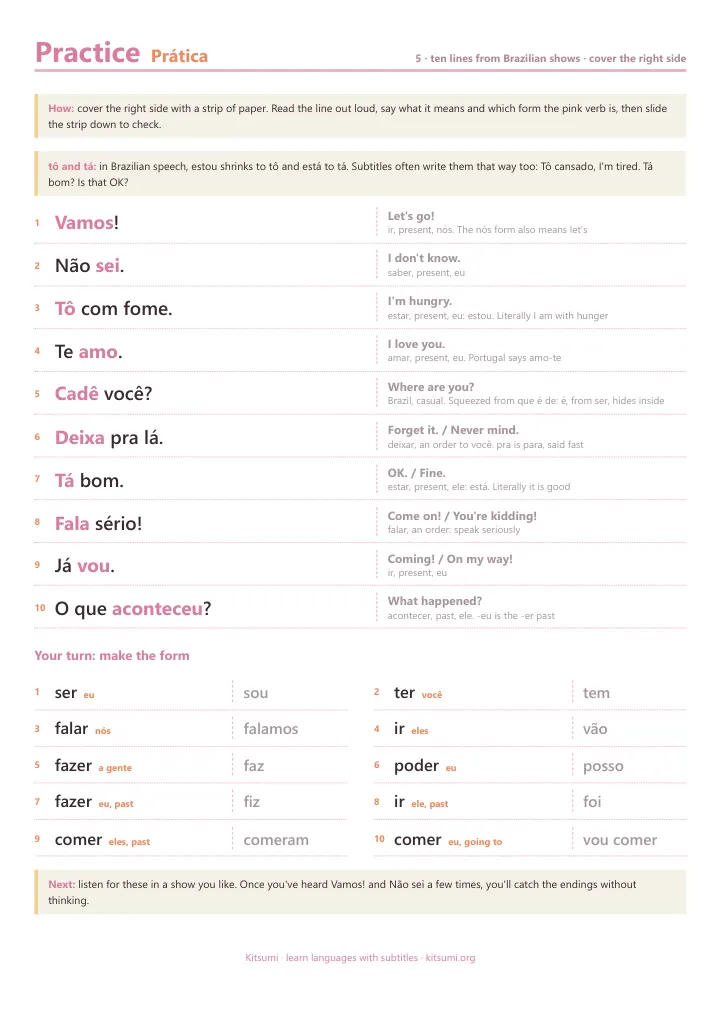 PracticeTen lines you hear in Brazilian shows, like Vamos!, Tô com fome and Deixa pra lá, to read and name the form, then ten verbs to put in the right form. Cover the answers with a strip of paper and check yourself.
How to use it
- Learn a few basic words first. This guide builds on them.
- Read the first page and say falo, fala, falam out loud. In Brazil those three go a long way.
- Say one column of a table each day, then cover it and say it again.
- Cover the answers on the practice page, then listen for the same forms in shows with Kitsumi.
More free Portuguese printables
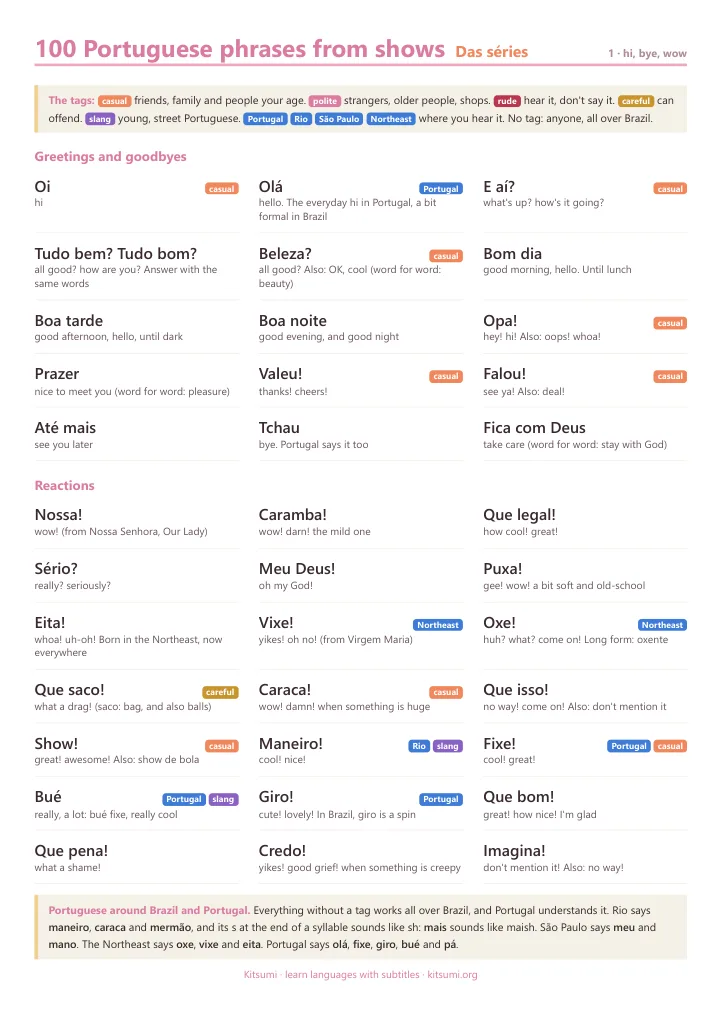 Next step100 Portuguese phrases from showsThen pick up the lines shows use all the time: E aí?, Nossa!, Que saudade!, Me deixa em paz, Deixa pra lá and what mano and mermão really mean.
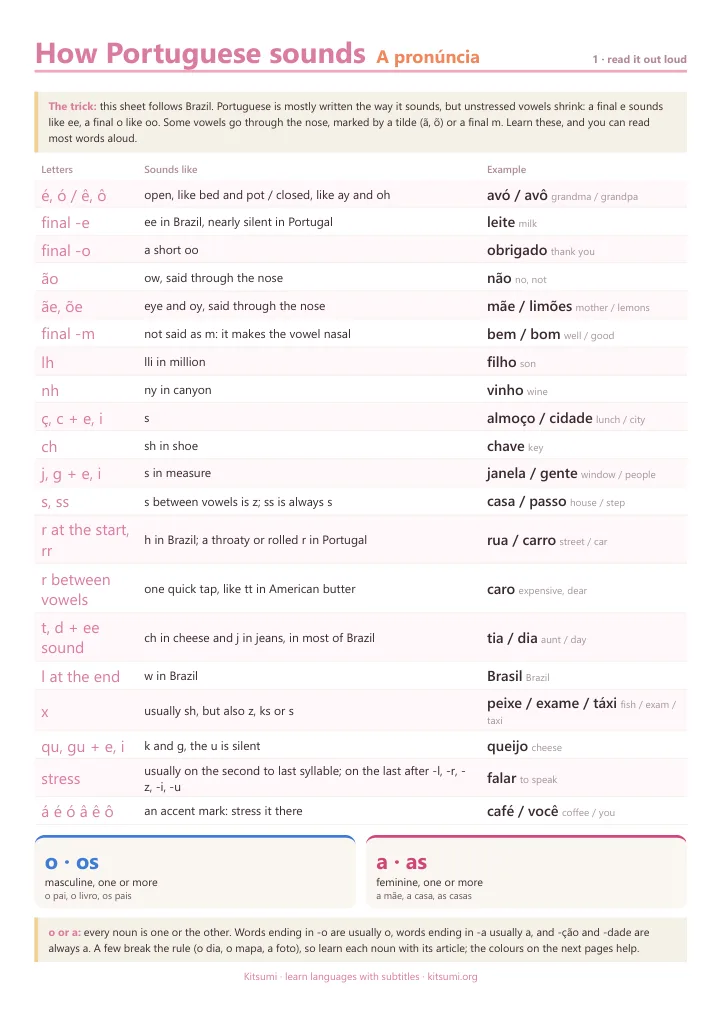 Basic Portuguese wordsStart here. Nasal ão, lh, nh and the Brazilian r made simple, then 222 first words with o and a in colour.
Questions
Is the Portuguese verbs guide free?
Yes. It's a free PDF with no sign-up. Print it, keep it and share it.
Is it Brazilian or European Portuguese?
Brazilian, since that's what most shows use. Where Portugal trips learners up, like tu falas, estou a comer or amo-te, the guide shows both.
What is a gente?
The everyday way to say we in Brazil. It takes the same verb form as ele and você: a gente fala, a gente vai. Nós falamos is correct too, just a bit more careful.