 Kitsumi
Free Korean sound changes guide
A six-page printable PDF that shows how written Hangul turns into what you actually hear, one rule at a time, with every example as written, as heard and in romanisation.
PDF · 6 pages · 481 KB · no sign-up · free to print and share
Was it useful?Ideas or a mistake? Tell us on Discord
Next, meet these words in real videos: Kitsumi is free for Chrome and Firefox.
What's inside
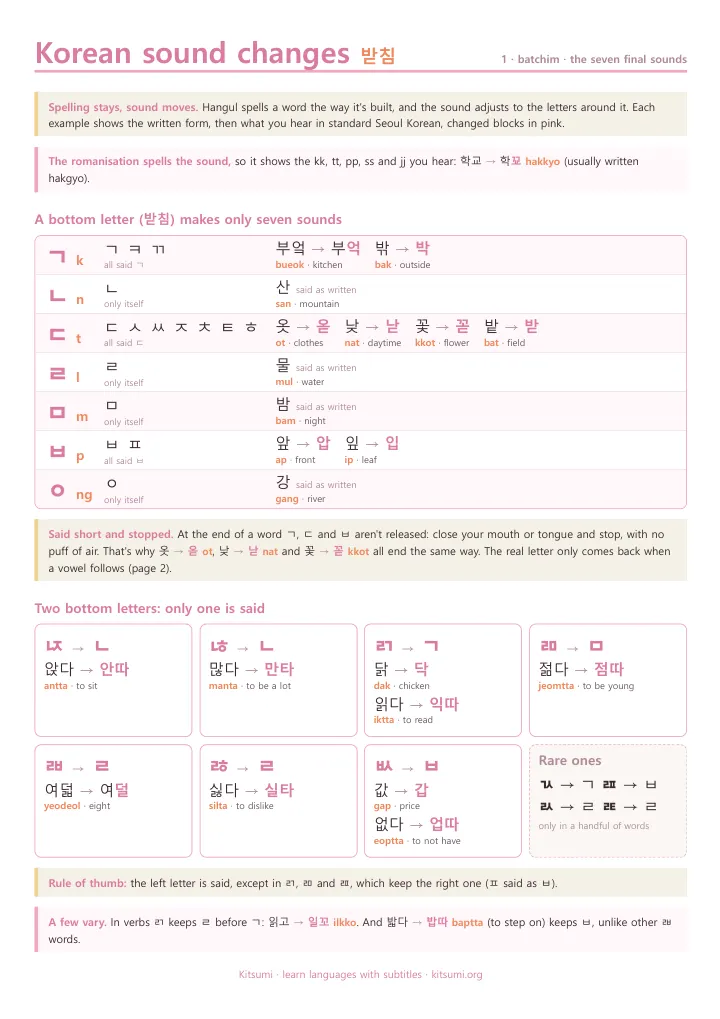
- The seven final soundsWhy a bottom letter makes only seven sounds, which letters fold into each, and the eleven double bottom letters, with the two that vary: 읽고 and 밟다.
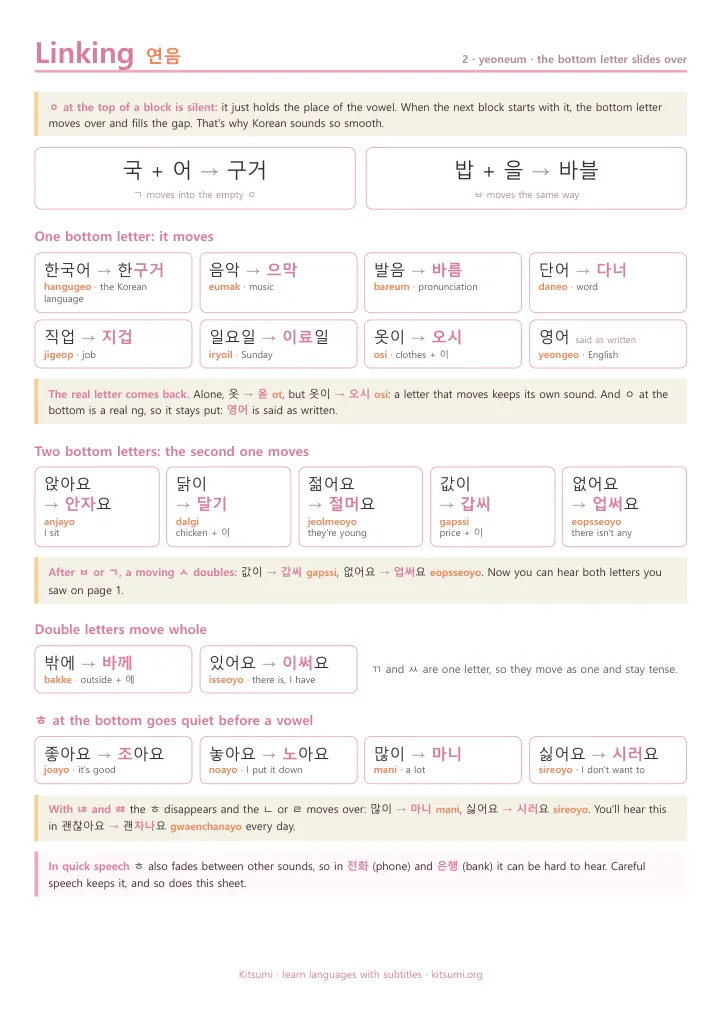
- LinkingHow a bottom letter slides into the next block: 한국어 is said 한구거 and 음악 으막. Then double bottom letters, ㄲ and ㅆ, and the ㅎ that goes quiet in 좋아요.
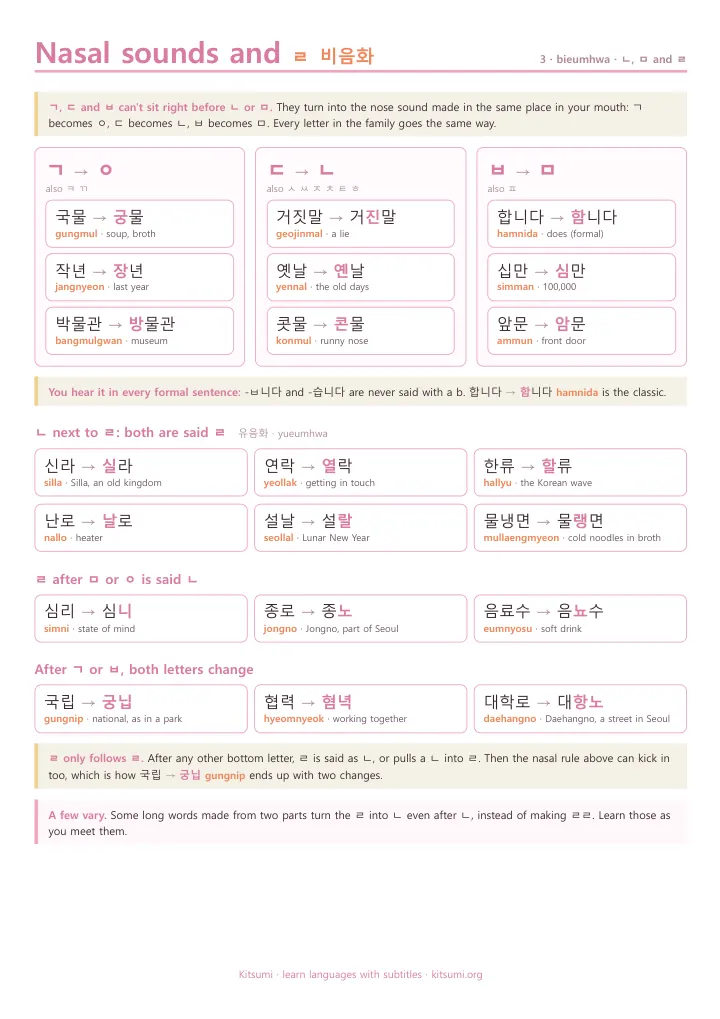
- Nasal sounds and ㄹ합니다 is said 함니다 and 국물 궁물. ㄴ next to ㄹ makes ㄹㄹ in 신라 and 연락, and ㄹ is said ㄴ in 종로 and 심리.
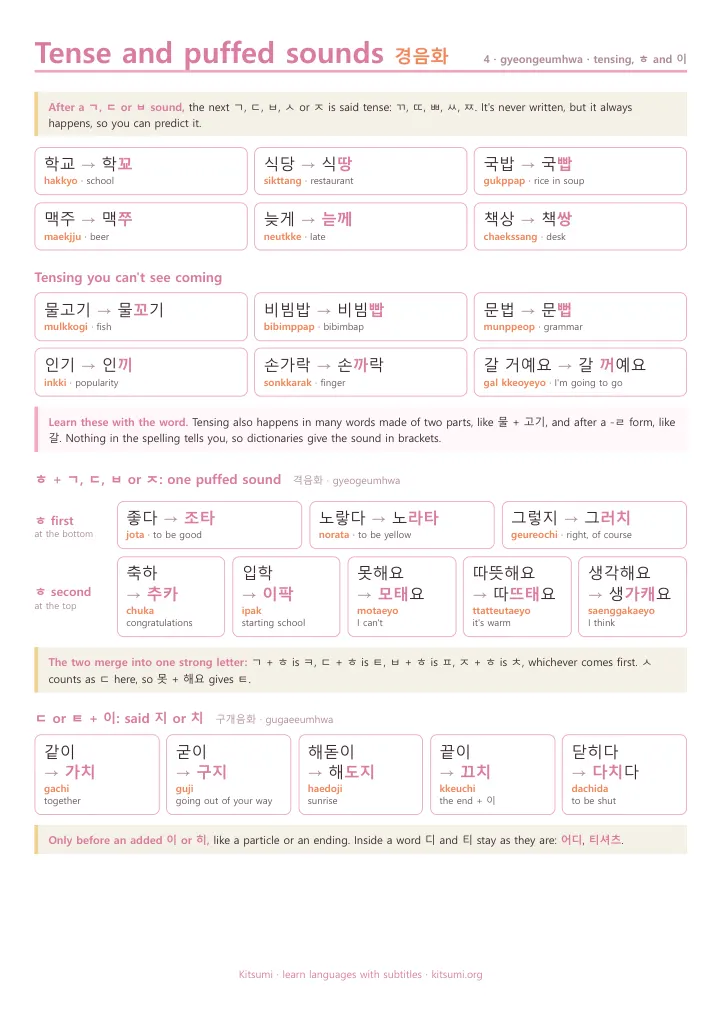 Tense and puffed sounds학교 is said 학꾜 and 식당 식땅, the tensing you learn word by word, ㅎ turning 축하 into 추카, and 같이 said 가치.
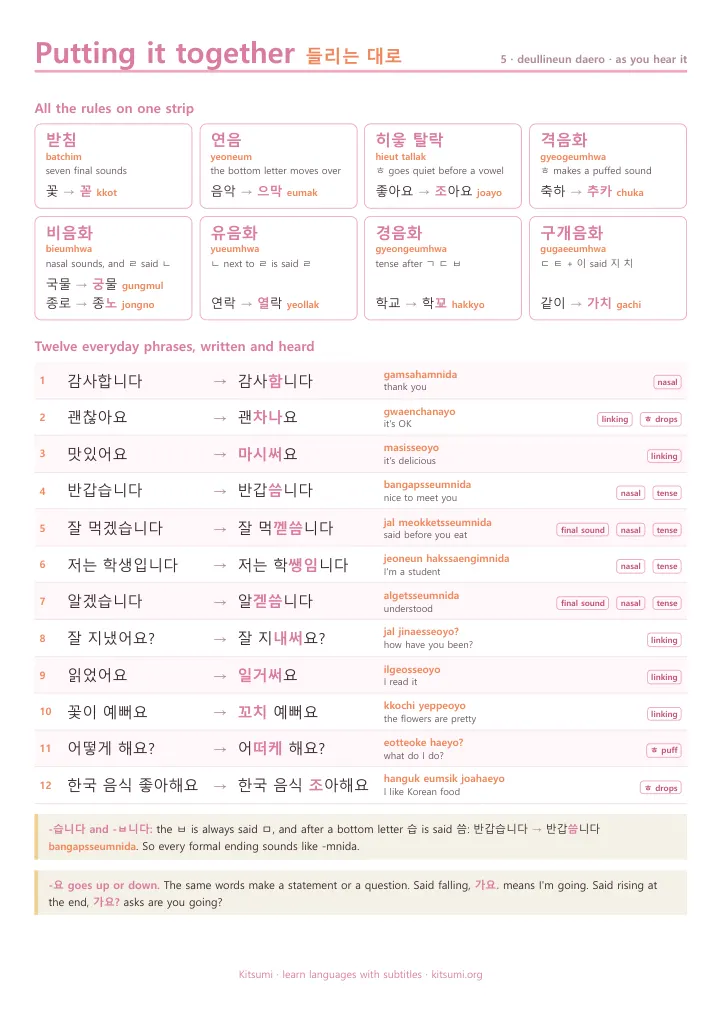 Putting it togetherEvery rule on one strip, then twelve everyday phrases like 감사합니다 and 괜찮아요, written and heard, tagged with the rules they use.
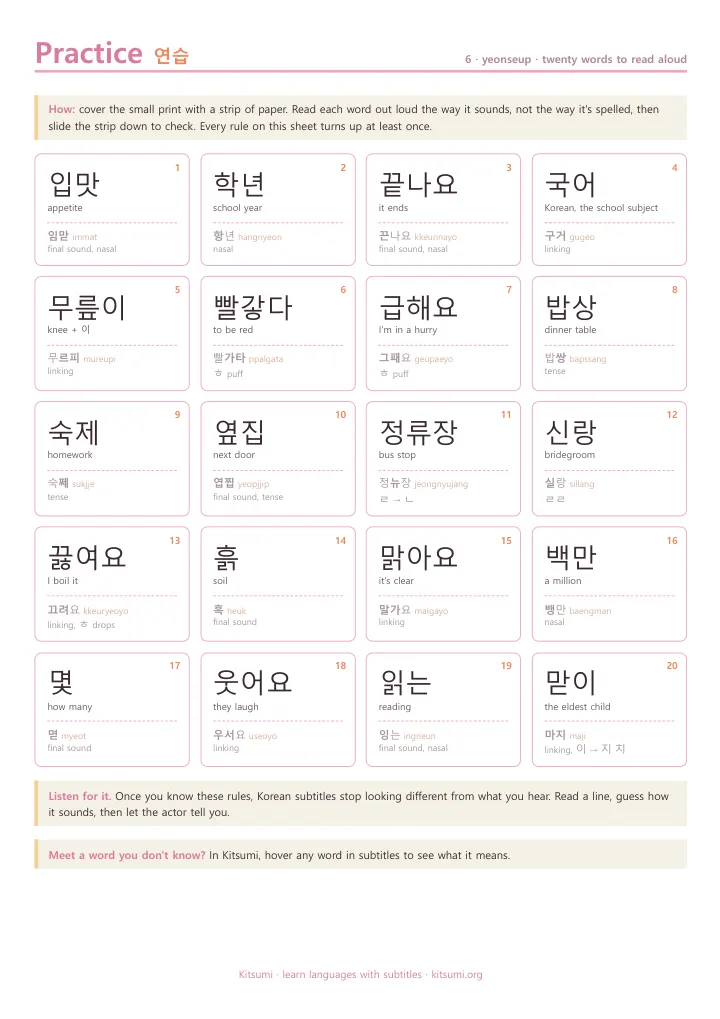 PracticeTwenty words to read aloud the way they sound, with the answers in small print. Cover them with a strip of paper and check yourself.
How to use it
- Learn to read Hangul first. This guide builds on the chart.
- Take one page at a time and say each example out loud, the written form first, then the sound.
- Keep page five nearby: one strip with every rule on it.
- Cover the answers on the practice page, then listen for the same changes in K-dramas with Kitsumi.
More free Korean printables
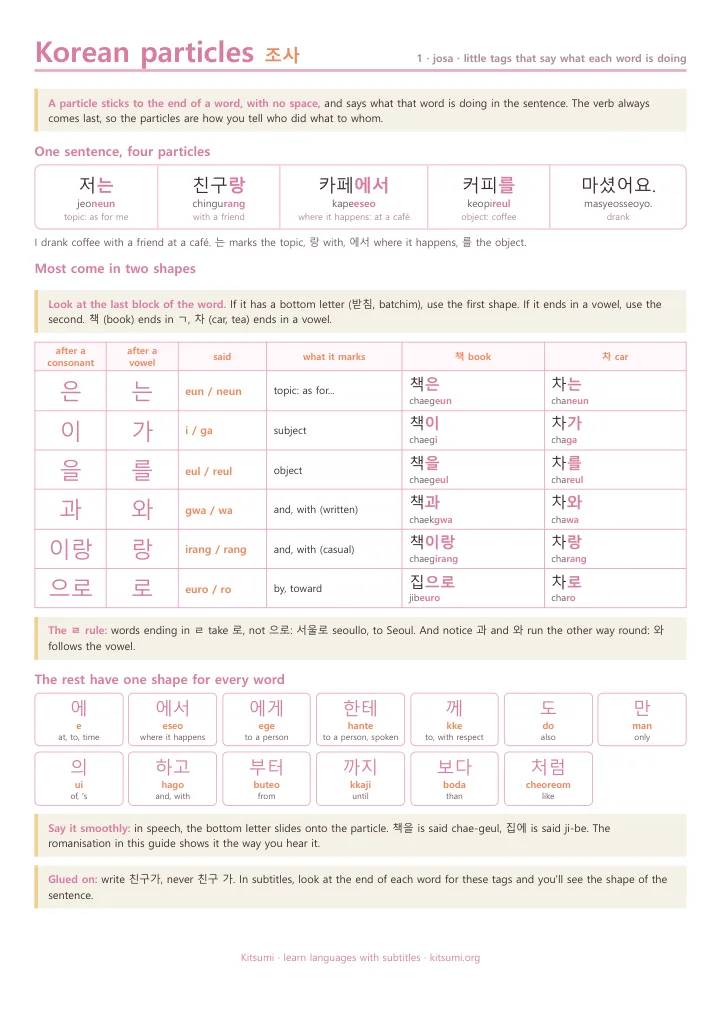 Next stepKorean particles guideThen learn the little tags on the end of each word: 은/는, 이/가, 을/를, 에 and more.
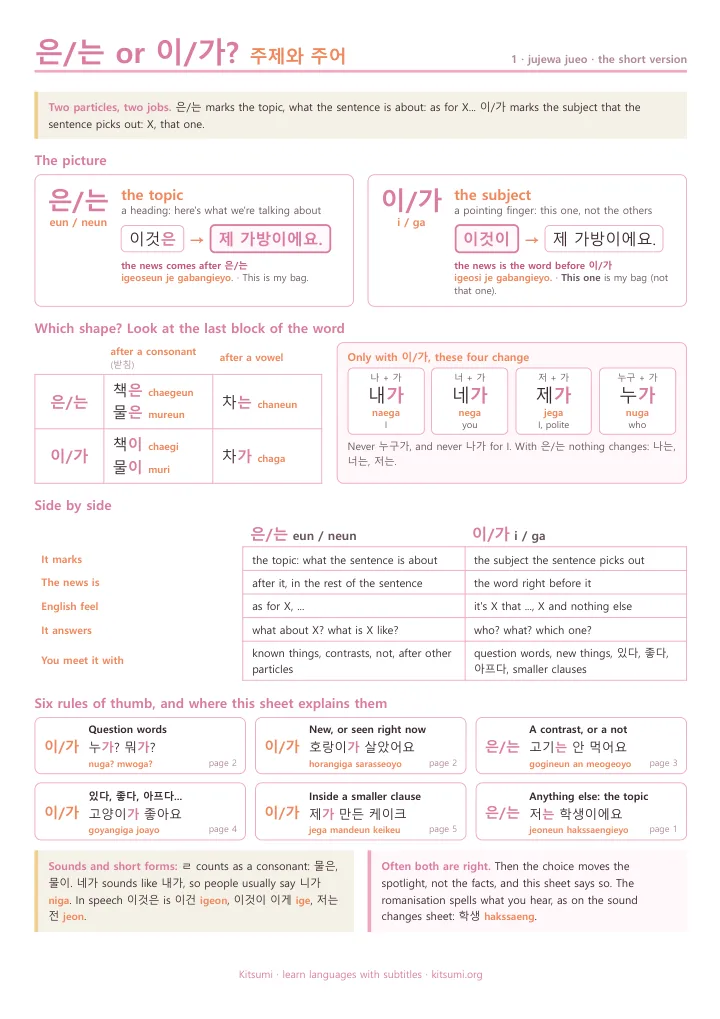 Korean particles 은/는 and 이/가: which one?Then sort out the pair everyone mixes up: 은/는 for the topic, 이/가 for the subject.
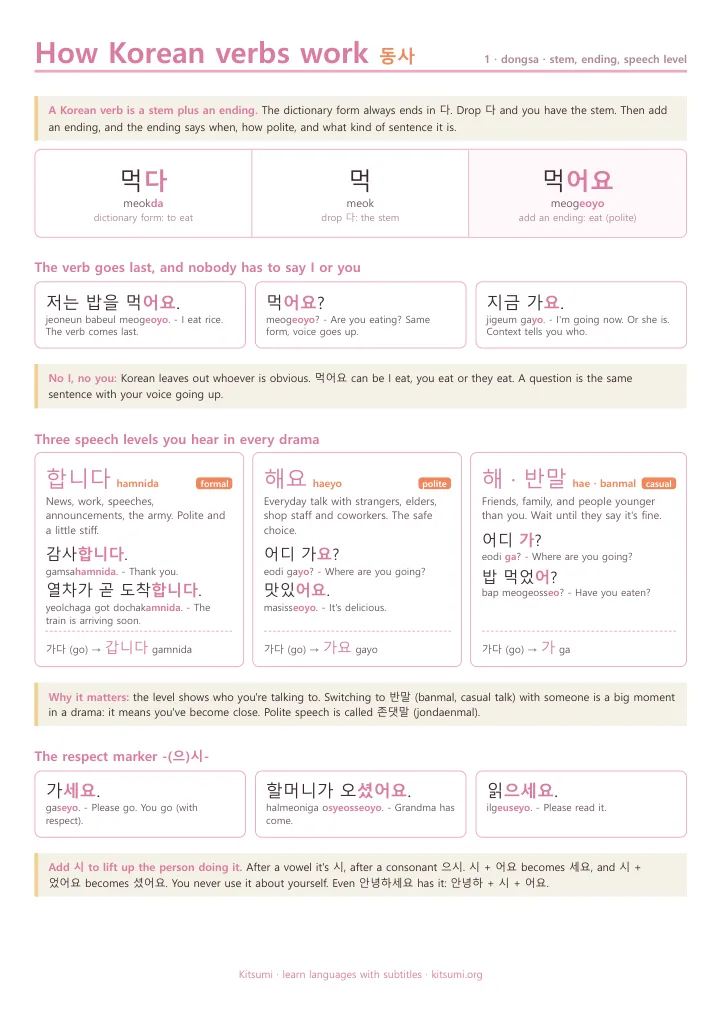 Korean verb endings and speech levelsThen learn how verbs end: 해요, 해 and 합니다, the past, the future and the endings dramas use.
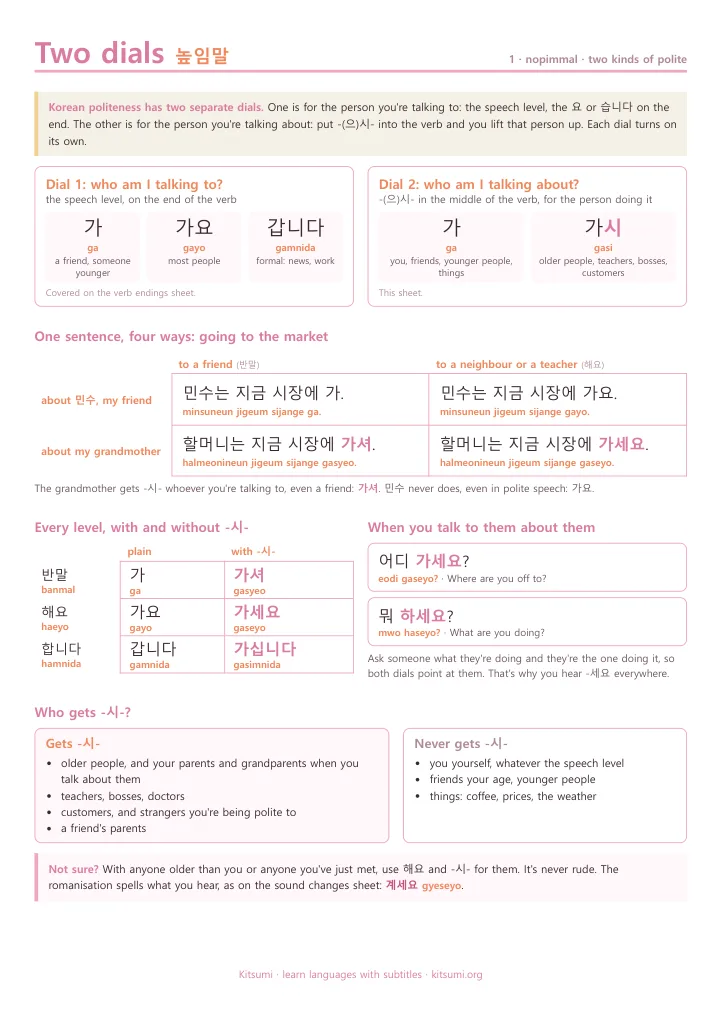 Korean honorifics: polite verb forms, nouns and particlesThen learn to honour the person you talk about: -(으)시-, 드시다, 계시다 and 드리다.
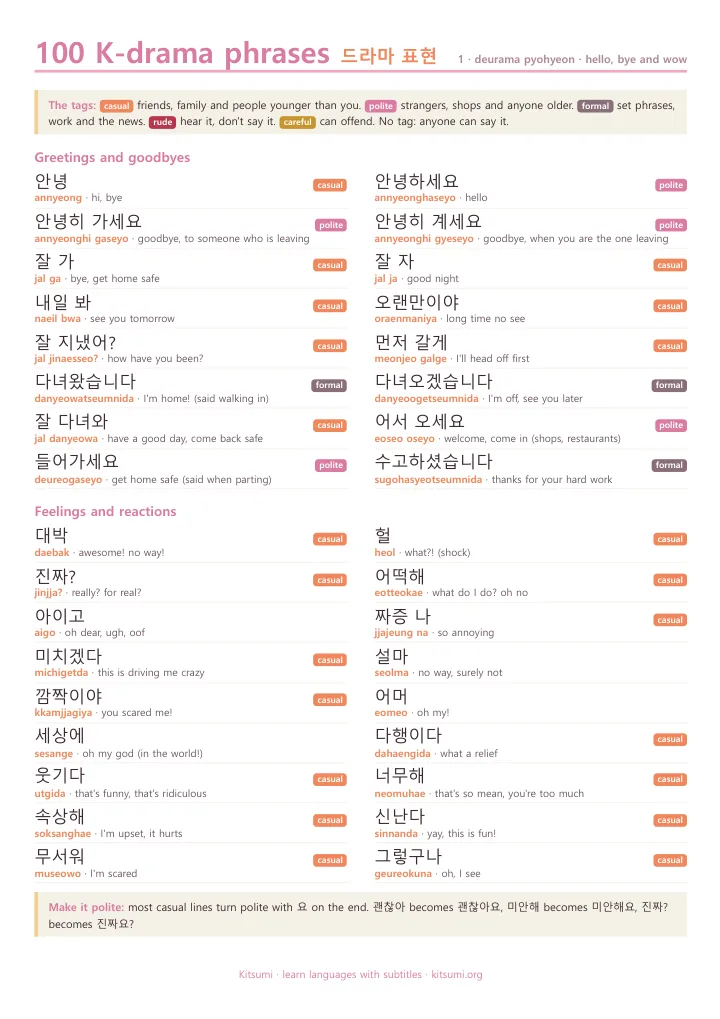 100 Korean drama phrasesThen pick up the lines dramas use all the time: 대박, 보고 싶어, 그만해 and what 오빠 really means.
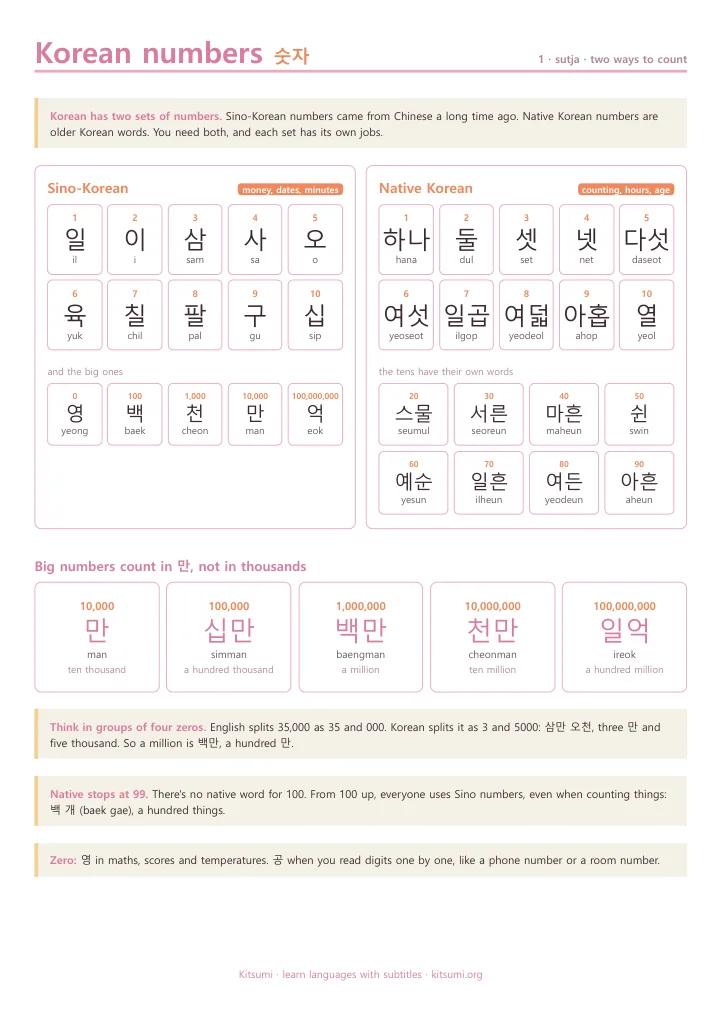 Korean numbers and countersThen sort out numbers: 일 이 삼 and 하나 둘 셋, and which one goes with prices, hours and age.
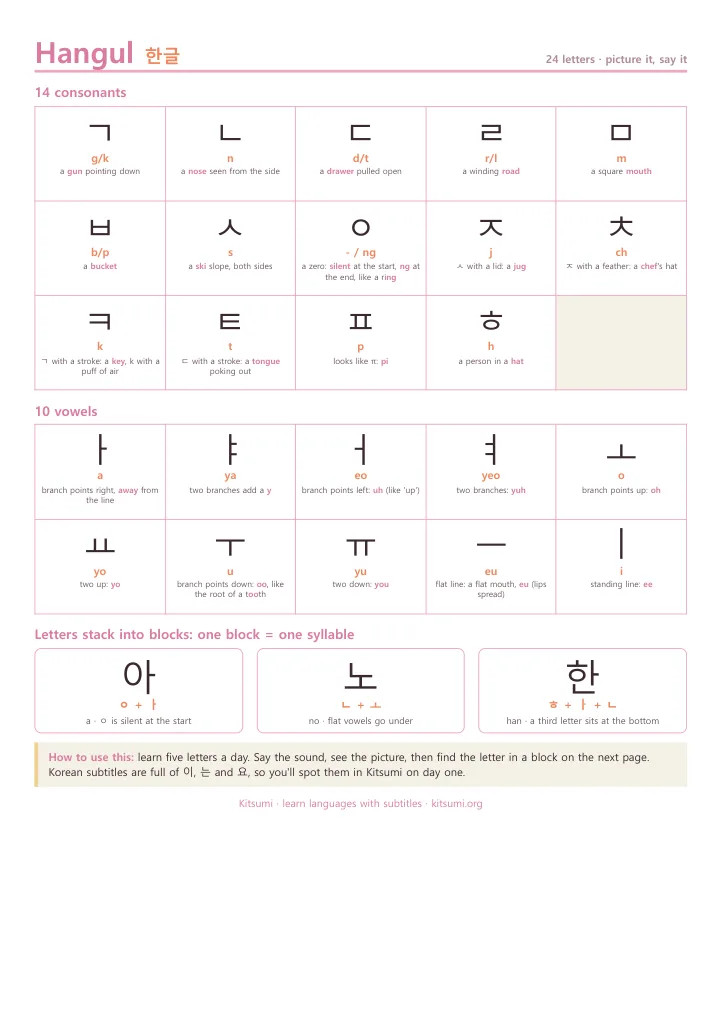 Korean Hangul chartLearn to read first. All 24 letters with a picture to remember each, and how they stack into blocks.
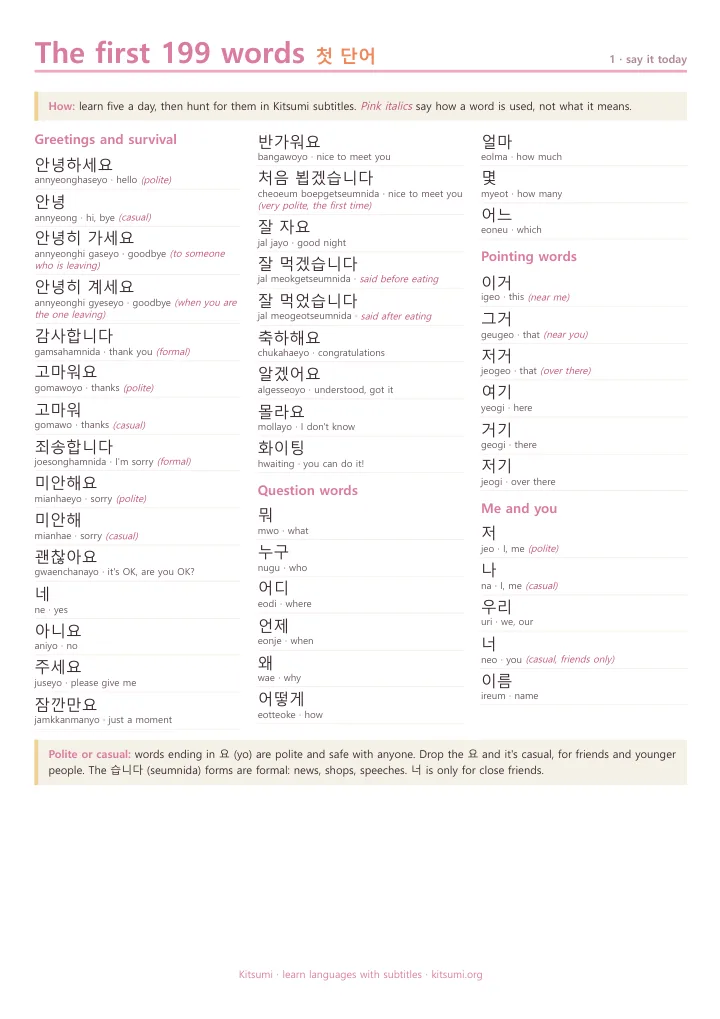 Basic Korean wordsThen pick up the first 184 words: greetings, family, numbers, food, verbs and K-drama favourites.
Questions
Is the Korean sound changes guide free?
Yes. It's a free PDF with no sign-up. Print it, keep it and share it.
Why doesn't Korean sound the way it's written?
Hangul spells each word the way it's built, so it always looks the same. Where sounds meet, they adjust: a bottom letter moves into a silent ㅇ, ㄱ ㄷ ㅂ turn nasal before ㄴ and ㅁ, and so on. The rules are regular, and the guide shows each one.
Which romanisation does it use?
Revised Romanisation of the sound you hear, so it shows the doubled letters tensing adds: 학교 is hakkyo here, not hakgyo. Treat it as a stepping stone and read the Hangul itself as soon as you can.