 Kitsumi
Korean particles 은/는 and 이/가: which one?
A six-page printable PDF that goes deeper than the particles guide: what 은/는 and 이/가 each do, when the choice is fixed and when both are right, with every example in Hangul with romanisation and English.
PDF · 6 pages · 393 KB · no sign-up · free to print and share
Was it useful?Ideas or a mistake? Tell us on Discord
Next, meet these words in real videos: Kitsumi is free for Chrome and Firefox.
What's inside
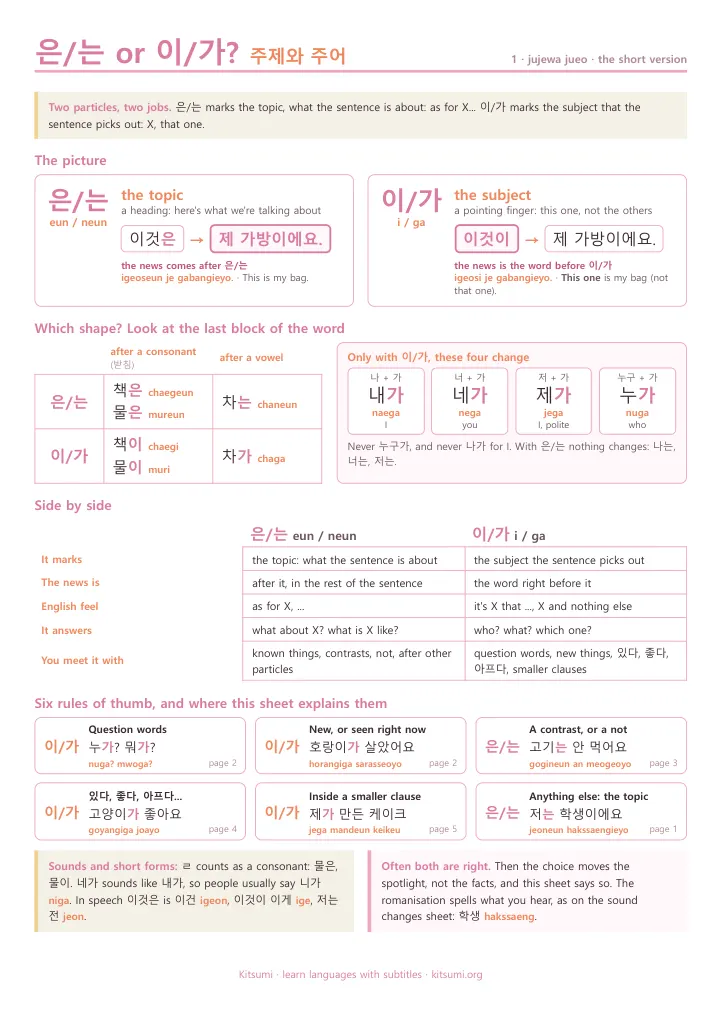
- The short version은/는 marks the topic, 이/가 the subject the sentence picks out, a picture of where the news sits, which shape follows a consonant or a vowel, the four that change (내가, 네가, 제가, 누가), and six rules of thumb that point to the page that explains each one.
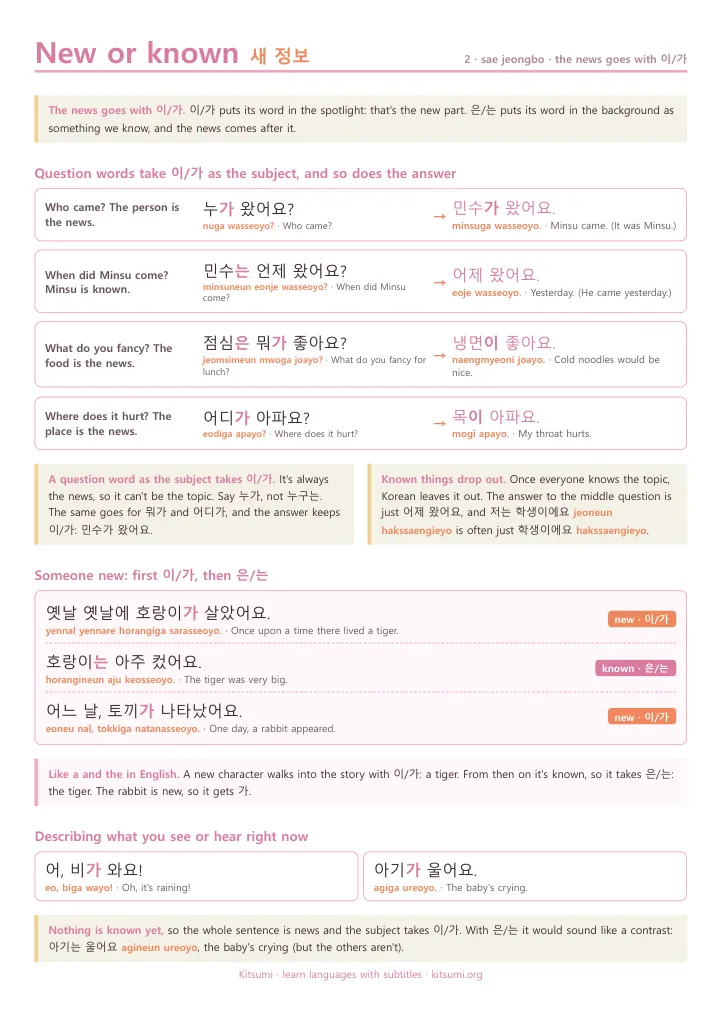
- New or knownQuestion words take 이/가 and so does the answer (누가 왔어요?, 민수가 왔어요), new things come in with 이/가 and stay with 은/는 (옛날 옛날에 호랑이가 살았어요), and 이/가 for what you see right now.
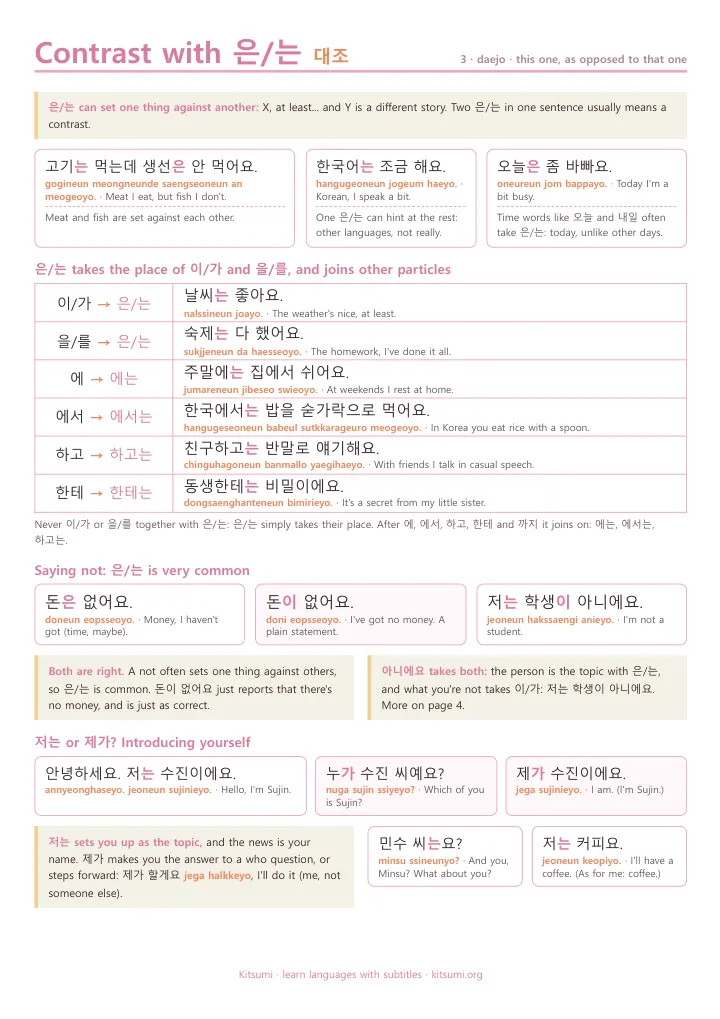
- Contrast with 은/는고기는 먹는데 생선은 안 먹어요, time words like 오늘은, 은/는 after other particles (에는, 에서는, 하고는), not with 은/는, and 저는 or 제가 when you introduce yourself.
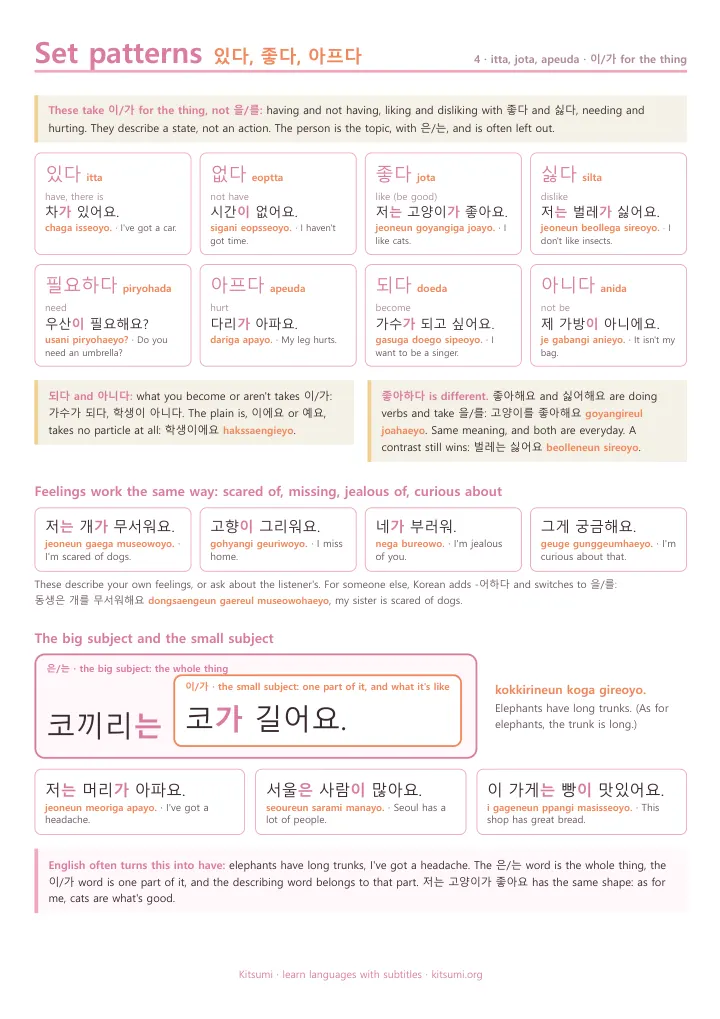 Set patterns with 이/가있다, 없다, 좋다, 싫다, 필요하다, 아프다, 되다 and 아니다, feelings like 무섭다 and 부럽다, honest notes on 좋아하다 with 을/를, and the big subject and the small subject: 코끼리는 코가 길어요, 저는 머리가 아파요.
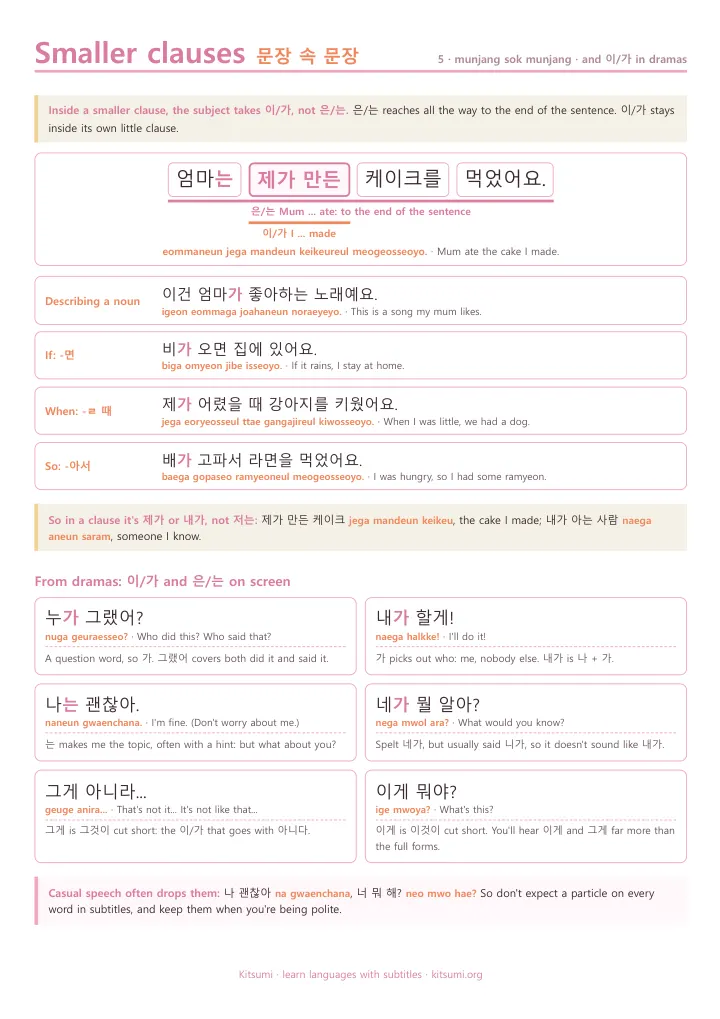 Smaller clauses and dramas이/가 inside a clause (제가 만든 케이크, 비가 오면), and K-drama lines: 누가 그랬어?, 내가 할게!, 나는 괜찮아 and 그게 아니라..., plus why casual speech often drops both.
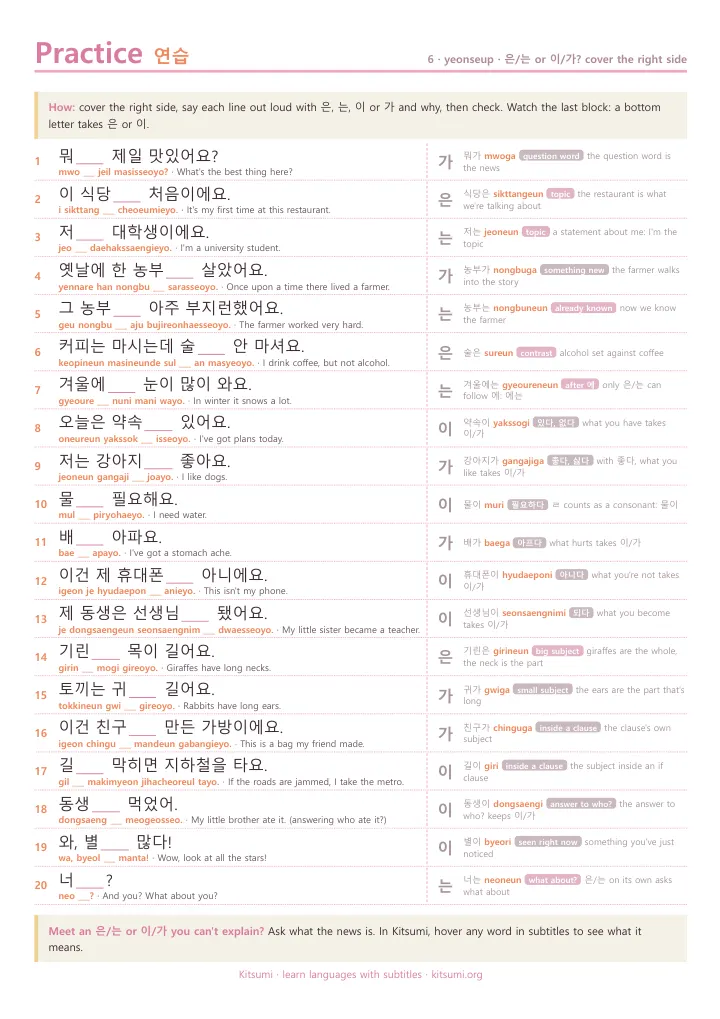 PracticeTwenty 은, 는, 이 or 가 gaps. The answers sit in small print on the right, each with its rule and a one-line reason. Cover them with a strip of paper and check yourself.
How to use it
- Read the particles guide first if 은/는 and 이/가 are new to you.
- Start with page one: the picture, the shapes and the six rules of thumb cover most sentences.
- When a line in a K-drama surprises you, ask what the news is, then find the page that explains it.
- Cover the answers on the practice page, say each line out loud, then check the reason.
More free Korean printables
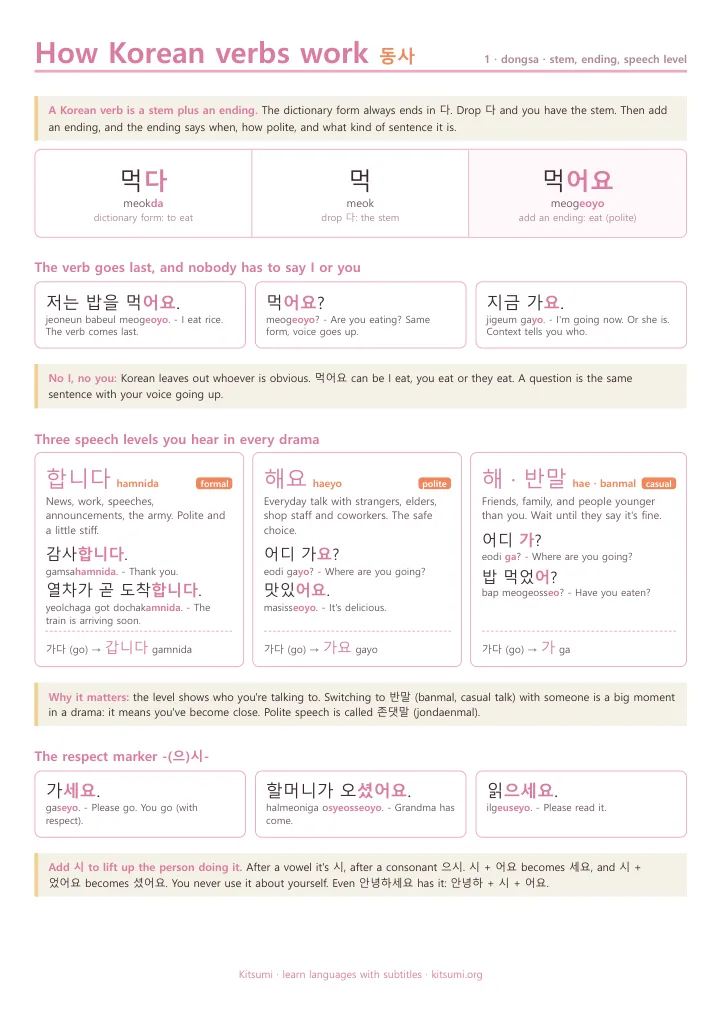 Next stepKorean verb endings and speech levelsThen learn how verbs end: 해요, 해 and 합니다, the past, the future and the endings dramas use.
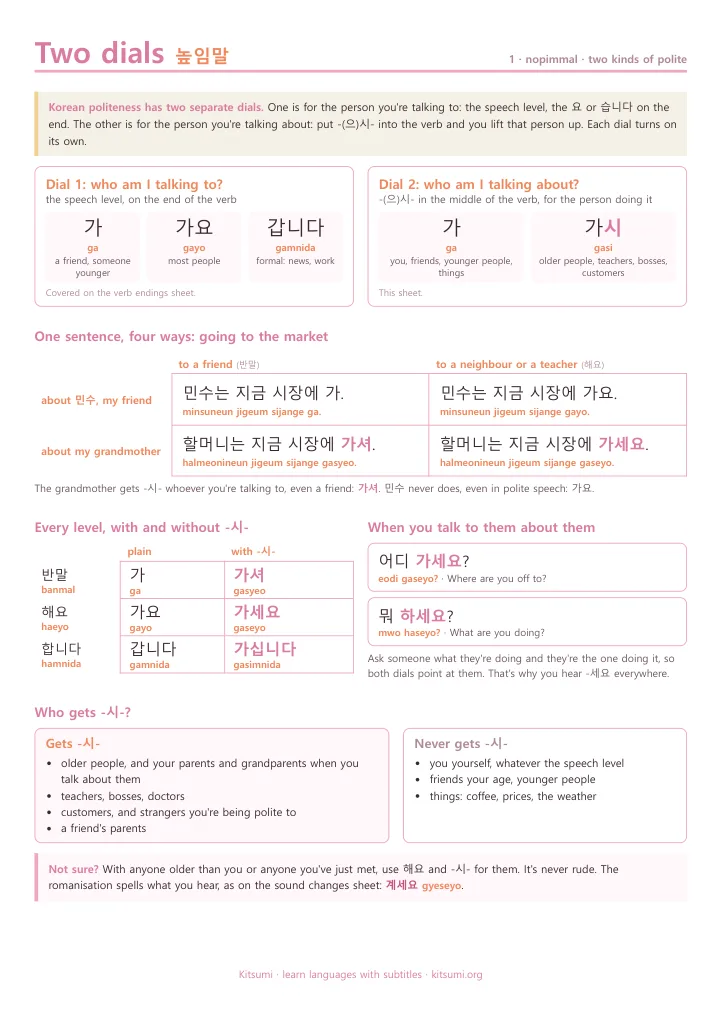 Korean honorifics: polite verb forms, nouns and particlesThen learn to honour the person you talk about: -(으)시-, 드시다, 계시다 and 드리다.
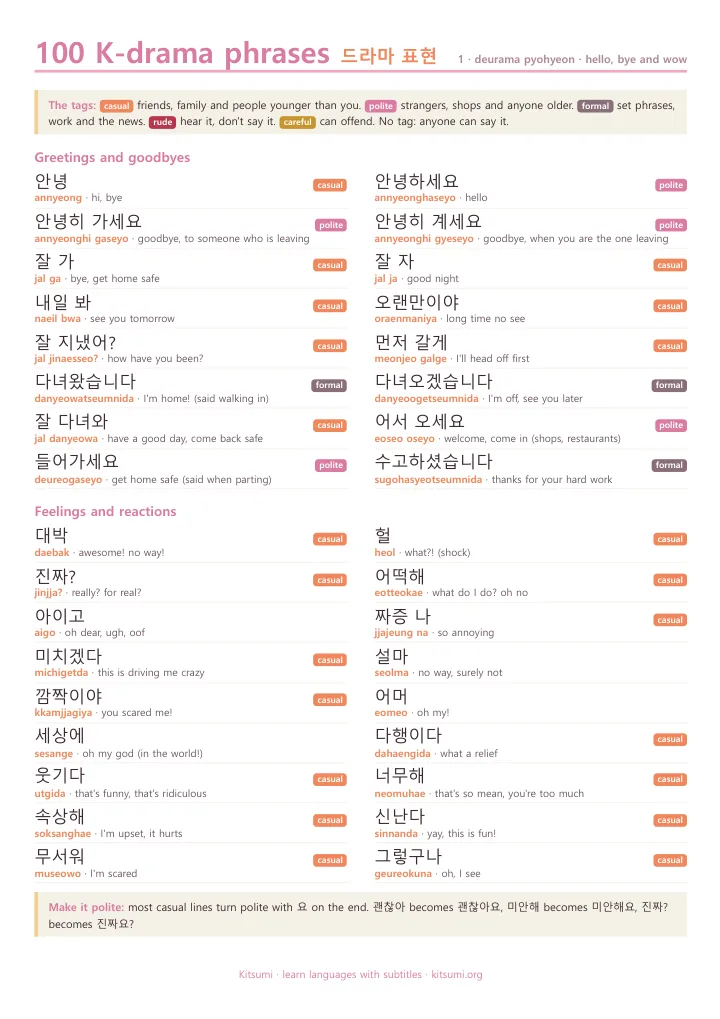 100 Korean drama phrasesThen pick up the lines dramas use all the time: 대박, 보고 싶어, 그만해 and what 오빠 really means.
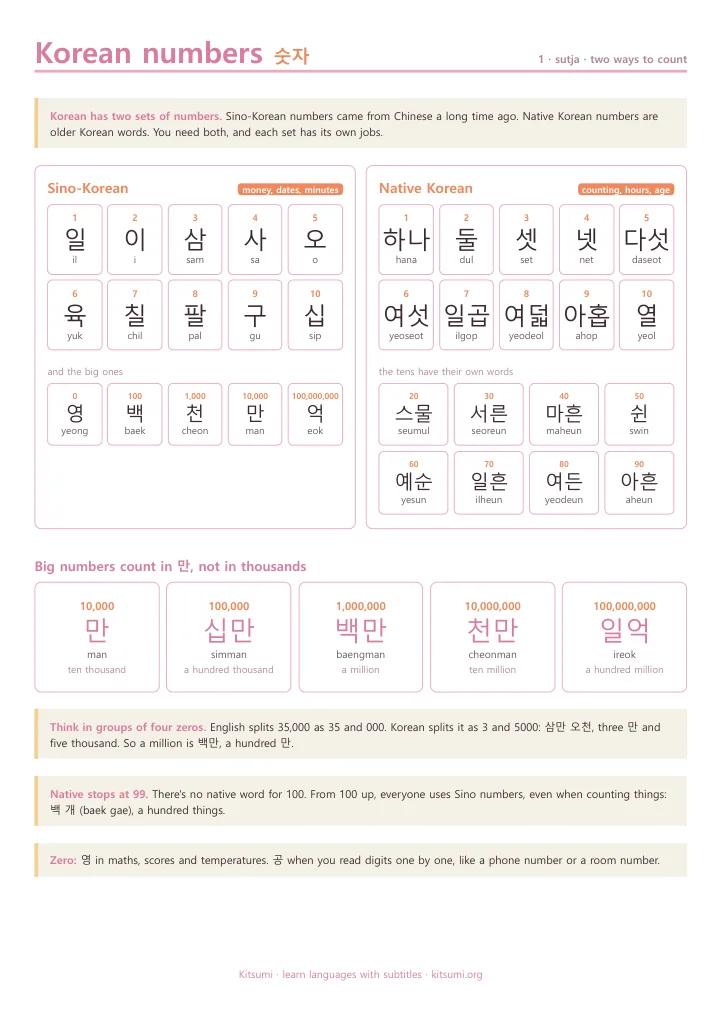 Korean numbers and countersThen sort out numbers: 일 이 삼 and 하나 둘 셋, and which one goes with prices, hours and age.
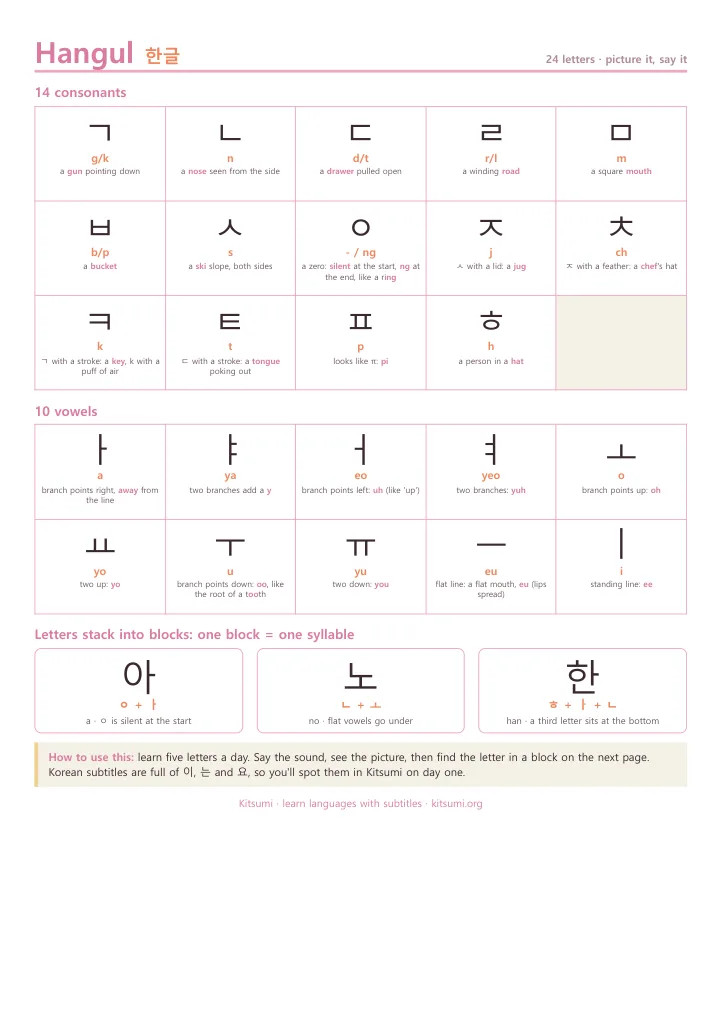 Korean Hangul chartLearn to read first. All 24 letters with a picture to remember each, and how they stack into blocks.
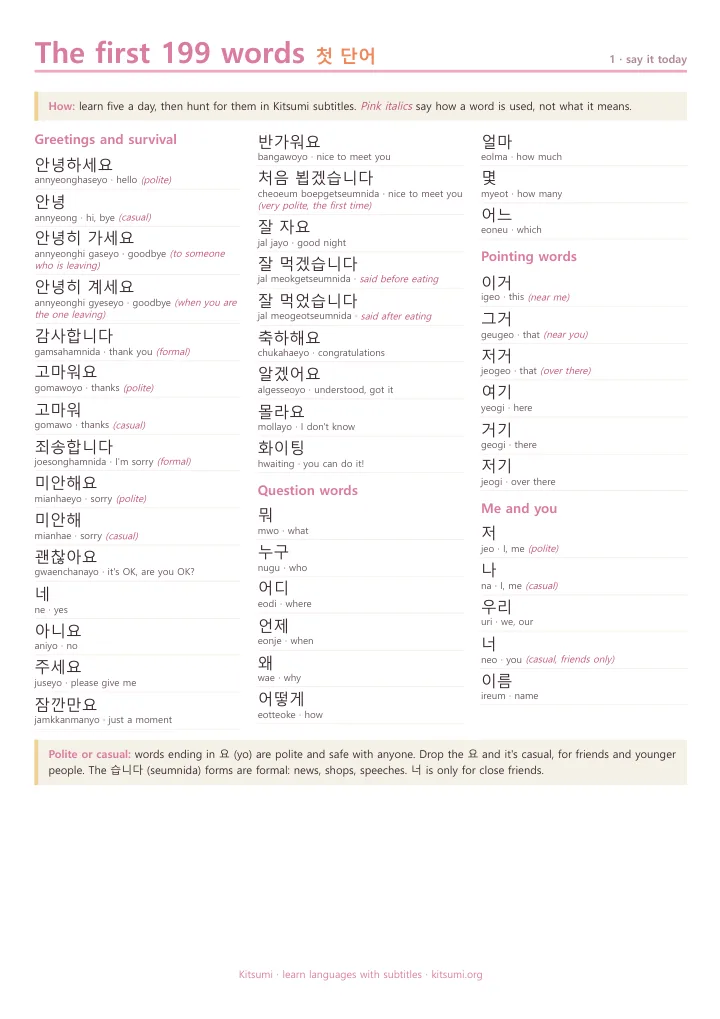 Basic Korean wordsThen pick up the first 184 words: greetings, family, numbers, food, verbs and K-drama favourites.
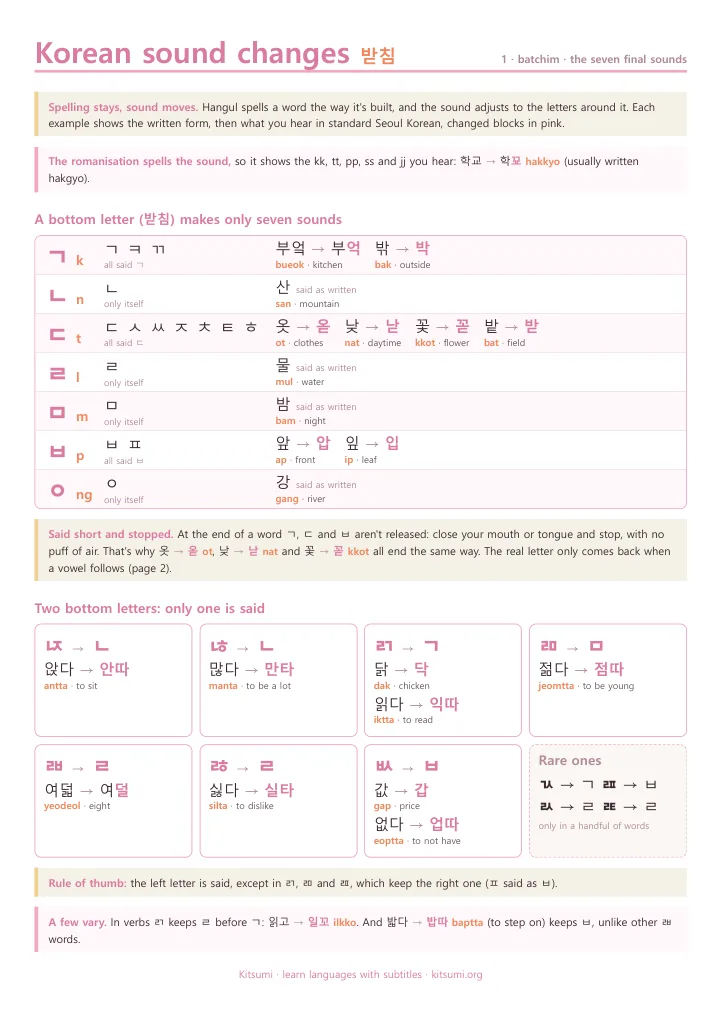 Korean sound changesThen learn why Korean doesn't sound the way it's spelled: 합니다 is said 함니다 and 학교 is said 학꾜.
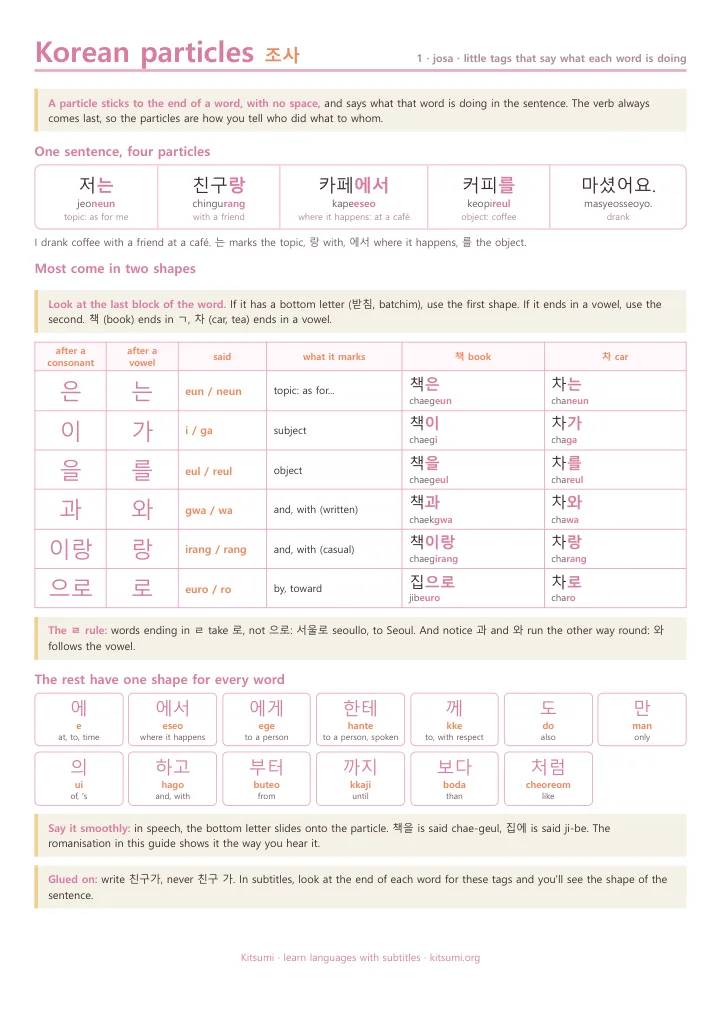 Korean particles guideThen learn the little tags on the end of each word: 은/는, 이/가, 을/를, 에 and more.
Questions
Is the 은/는 and 이/가 guide free?
Yes. It's a free PDF with no sign-up. Print it, keep it and share it.
What is the difference between 은/는 and 이/가?
은/는 marks the topic, what you're talking about, and the news comes after it. 이/가 marks the subject the sentence picks out, so the news is the word before it. 이것은 제 가방이에요 means this is my bag; 이것이 제 가방이에요 means this one is my bag.
When do I use 은 or 는, 이 or 가?
Look at the last block of the word. With a bottom letter (받침) use 은 or 이: 책은, 책이. After a vowel use 는 or 가: 차는, 차가. With 가, 나, 너, 저 and 누구 change to 내가, 네가, 제가 and 누가.
Are there times when both are right?
Often. Then the choice moves the focus rather than the facts, as with 돈은 없어요 and 돈이 없어요. The guide says so whenever both work.