 Kitsumi
Free Korean particles guide
A five-page printable PDF for beginners: what each Korean particle does, which of its two shapes to use, and example sentences in Hangul with romanisation and English.
PDF · 5 pages · 282 KB · no sign-up · free to print and share
Next, meet these words in real videos: Kitsumi is free for Chrome and Firefox.
What's inside
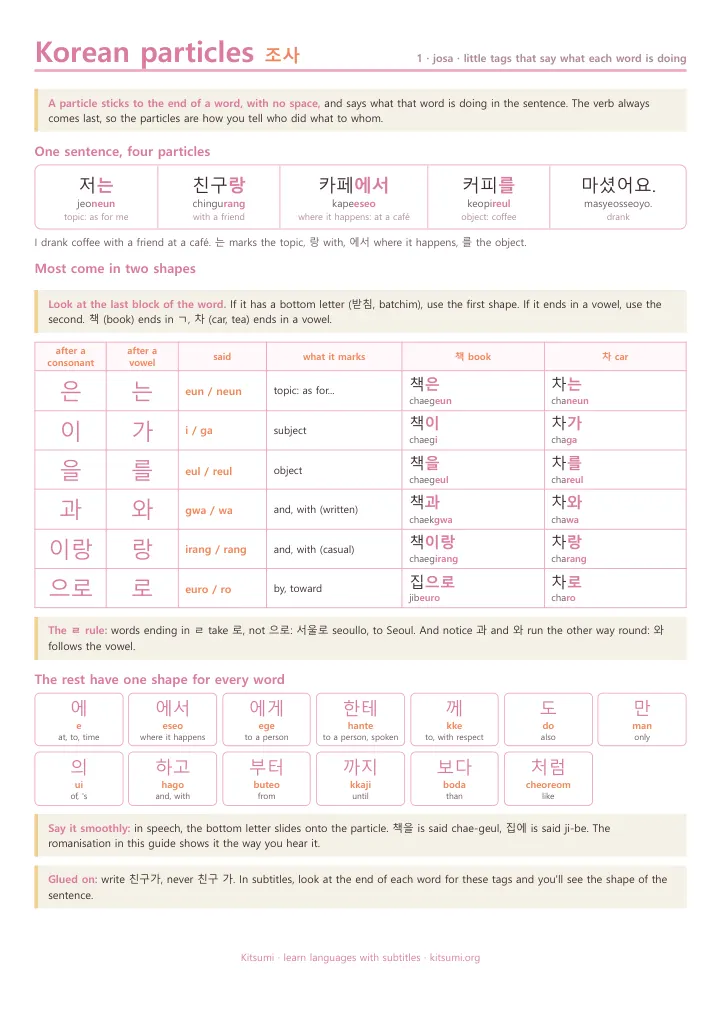
- What particles areHow a particle sticks to the end of a word, the two shapes most of them take after a consonant or a vowel, and the ones that never change.
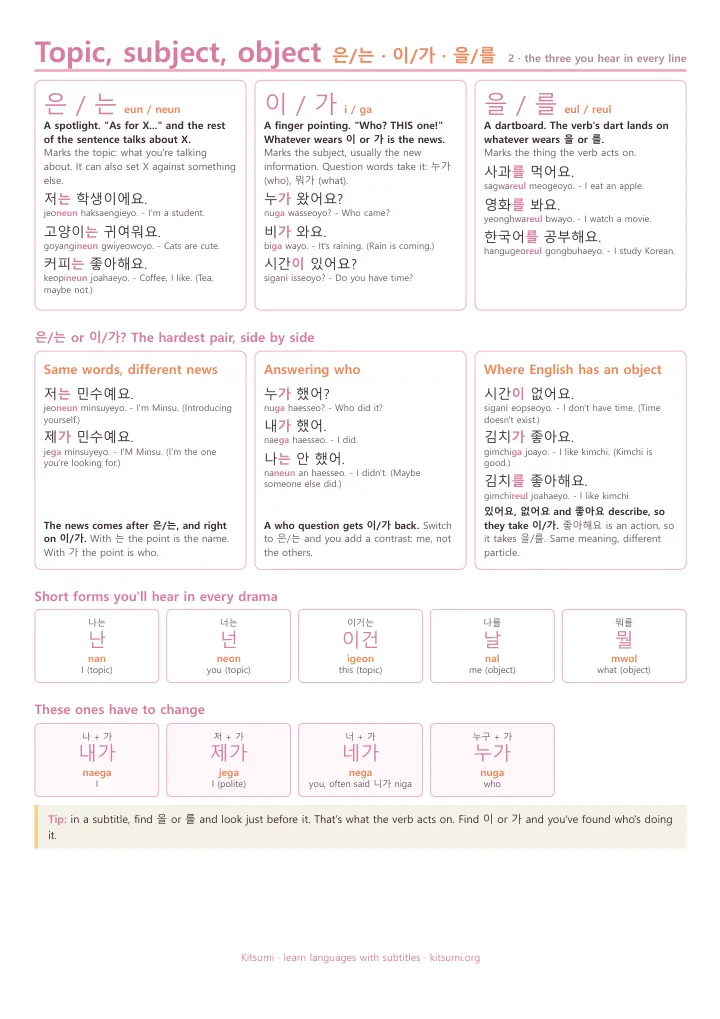
- Topic, subject, object은/는, 이/가 and 을/를 with a picture to remember each, the hardest pair side by side, and the short forms dramas use, like 난, 넌 and 내가.
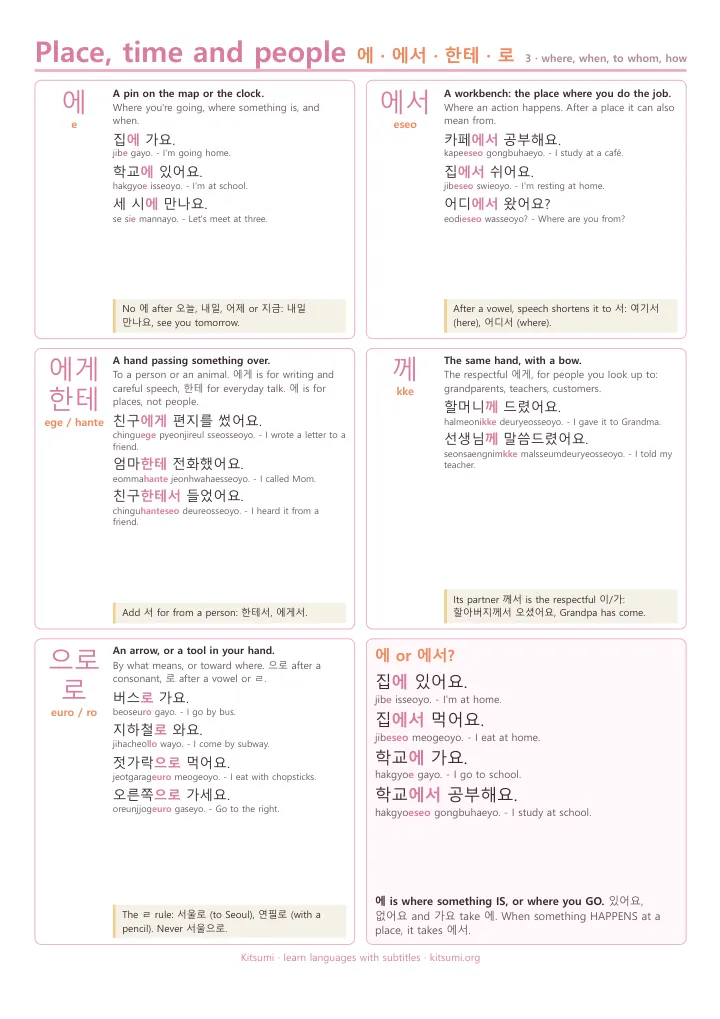
- Place, time and people에, 에서, 에게, 한테, 께 and 으로/로, with the ㄹ rule and when to use 에 or 에서.
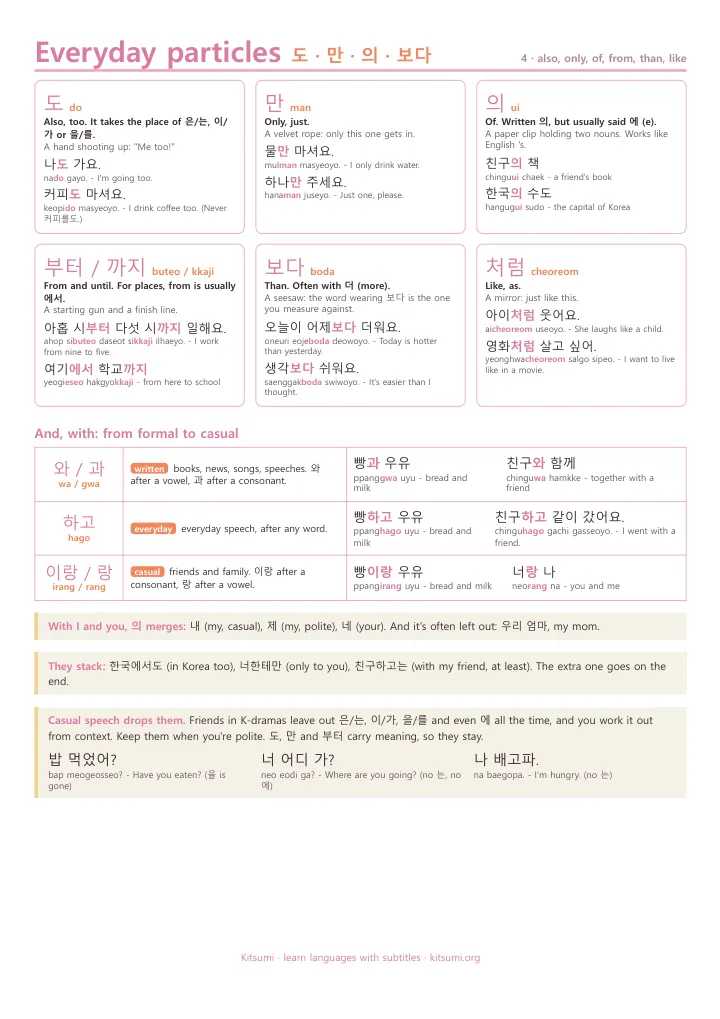 Everyday particles도, 만, 의, 부터, 까지, 보다 and 처럼, three ways to say and from formal to casual, and why friends drop particles altogether.
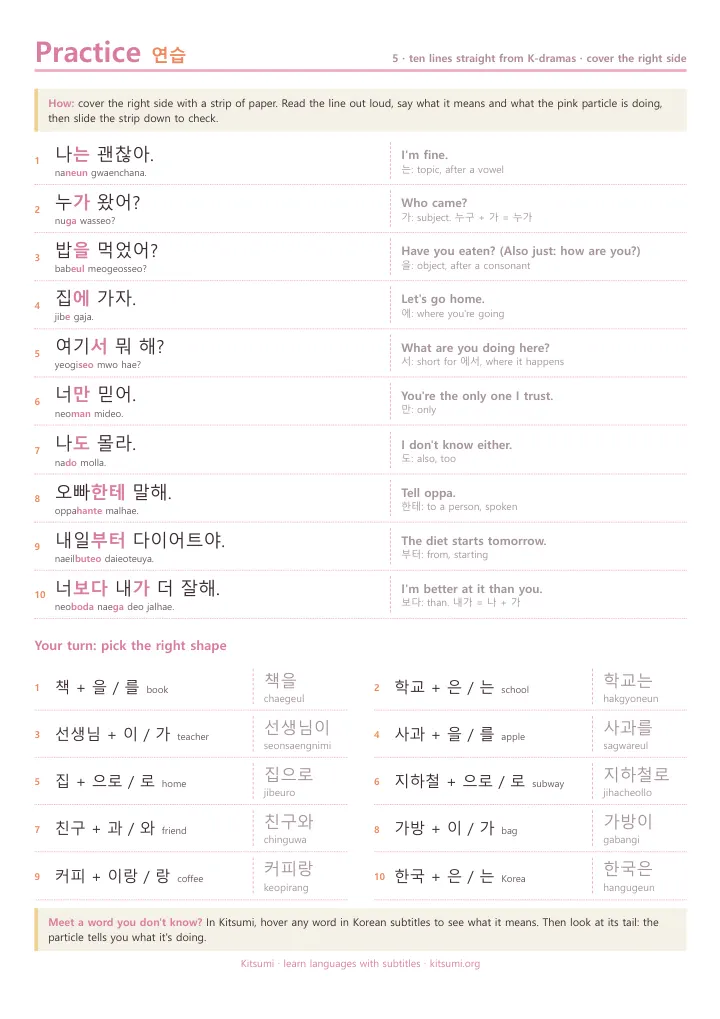 PracticeTen lines you hear in K-dramas, like 나도 몰라 and 여기서 뭐 해?, to read and explain, then ten words to give the right particle shape. Cover the answers with a strip of paper and check yourself.
How to use it
- Learn to read Hangul and a few basic words first. This guide builds on them.
- Read the first page and say both shapes of each particle out loud.
- Come back to the second page whenever 은/는 and 이/가 start to blur together.
- Cover the answers on the practice page, then listen for the same particles in K-dramas with Kitsumi.
More free Korean printables
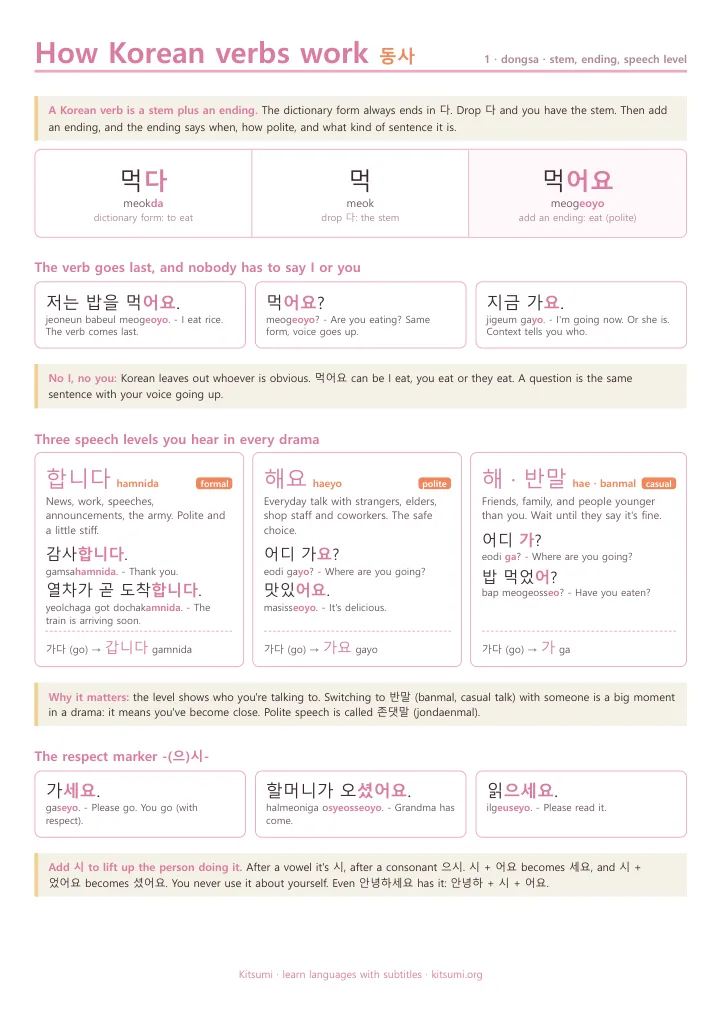 Next stepKorean verb endings and speech levelsThen learn how verbs end: 해요, 해 and 합니다, the past, the future and the endings dramas use.
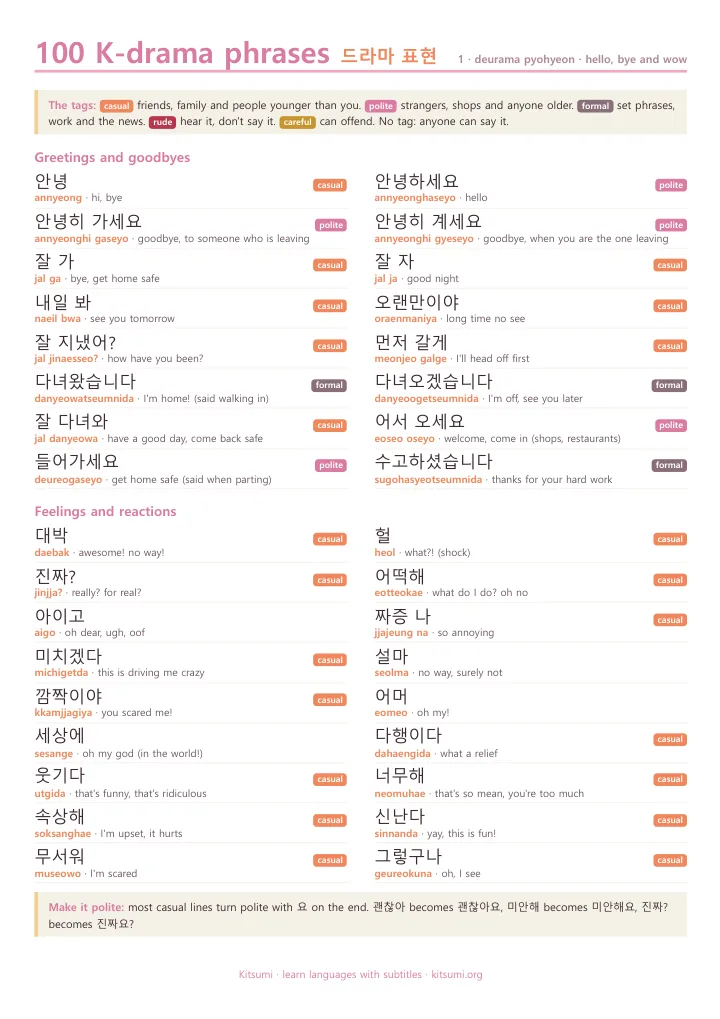 100 Korean drama phrasesThen pick up the lines dramas use all the time: 대박, 보고 싶어, 그만해 and what 오빠 really means.
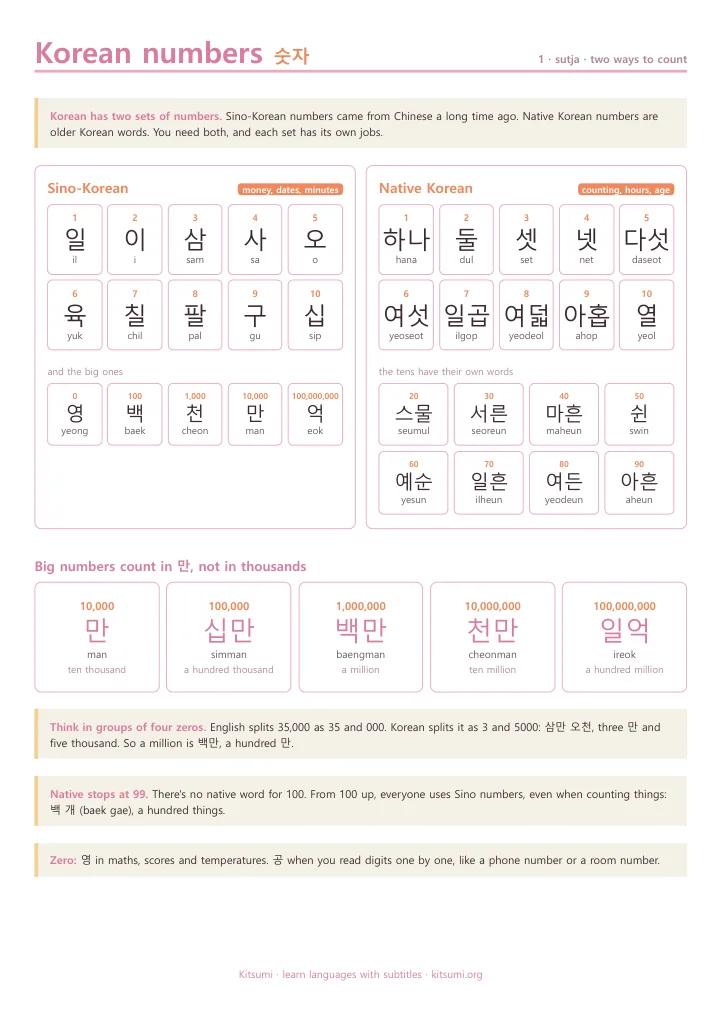 Korean numbers and countersThen sort out numbers: 일 이 삼 and 하나 둘 셋, and which one goes with prices, hours and age.
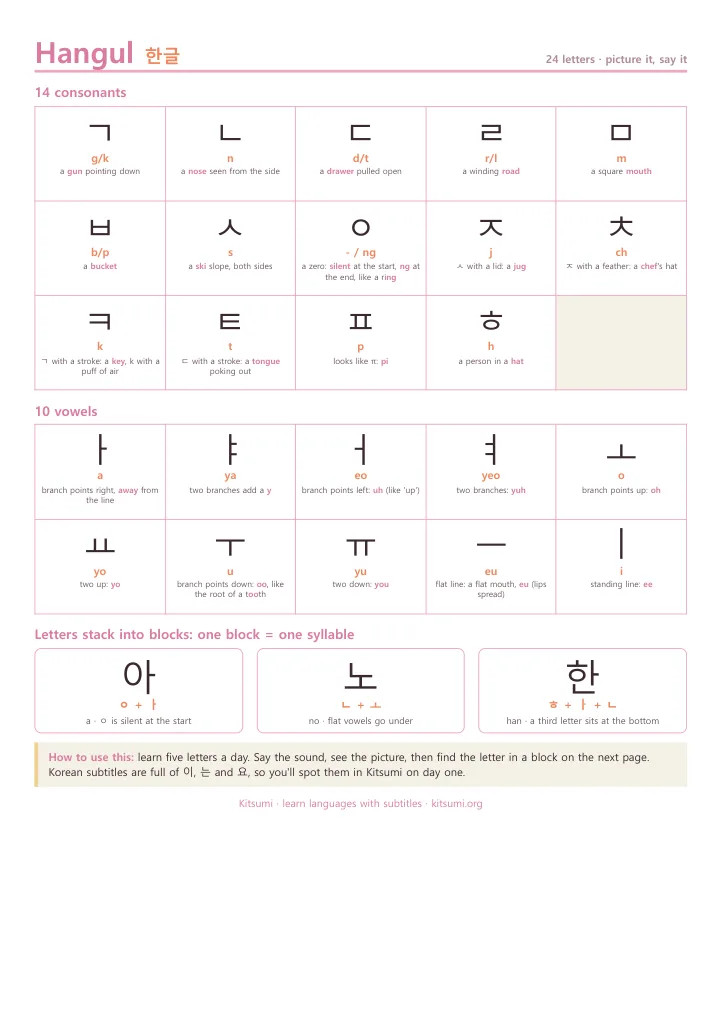 Korean Hangul chartLearn to read first. All 24 letters with a picture to remember each, and how they stack into blocks.
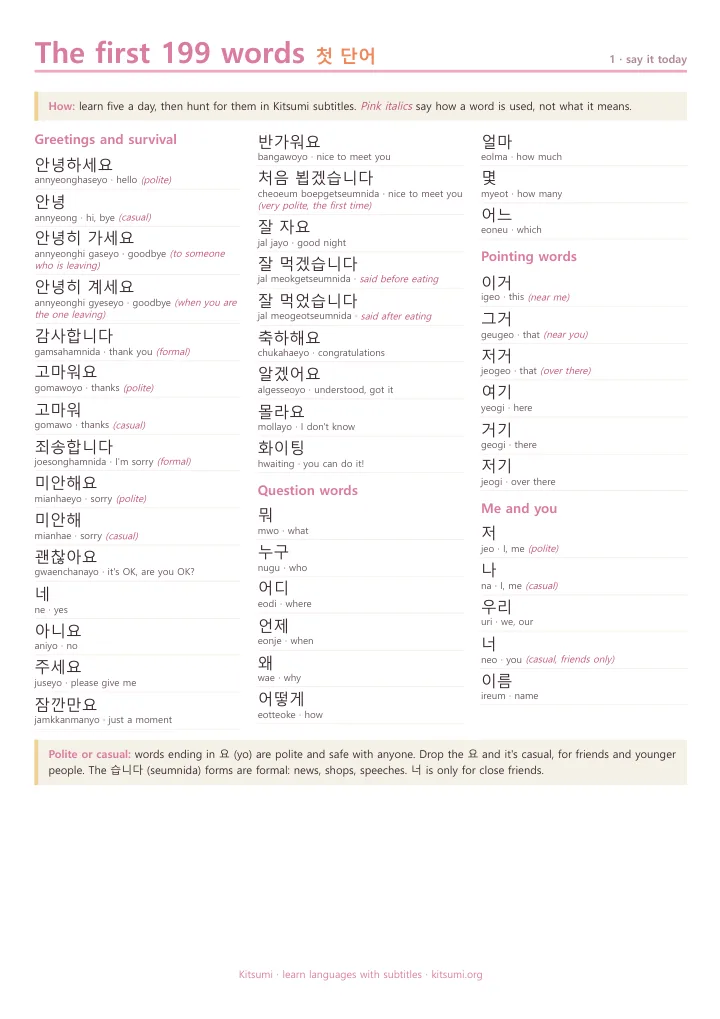 Basic Korean wordsThen pick up the first 199 words: greetings, family, numbers, food, verbs and K-drama favourites.
Questions
Is the Korean particles guide free?
Yes. It's a free PDF with no sign-up. Print it, keep it and share it.
What is the difference between 은/는 and 이/가?
은/는 marks what you're talking about, and the news comes after it. 이/가 marks the new information itself. 저는 민수예요 means "I'm Minsu". 제가 민수예요 means "I'm the one who's Minsu". Page two has more pairs like this.
Why do particles have two shapes?
It depends on the last sound of the word. After a consonant you use 은, 이, 을, and after a vowel 는, 가, 를. The first page has a table of every pair.