 Kitsumi
Free Korean verb endings guide
A five-page printable PDF for beginners: how Korean verbs are built, the three speech levels you hear in dramas, and the endings that come up in almost every scene, in Hangul with romanisation and English.
PDF · 5 pages · 291 KB · no sign-up · free to print and share
Next, meet these words in real videos: Kitsumi is free for Chrome and Firefox.
What's inside
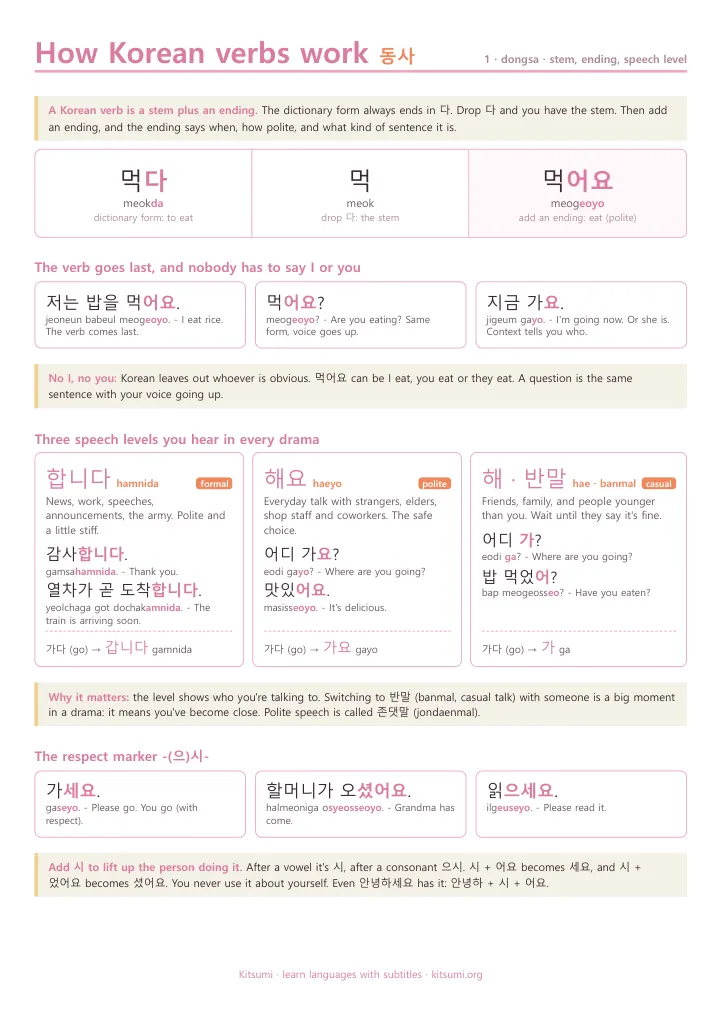
- How Korean verbs workA verb is a stem plus an ending, and the verb goes last. The three speech levels, formal 합니다, polite 해요 and casual 반말, and the respect marker -(으)시-.
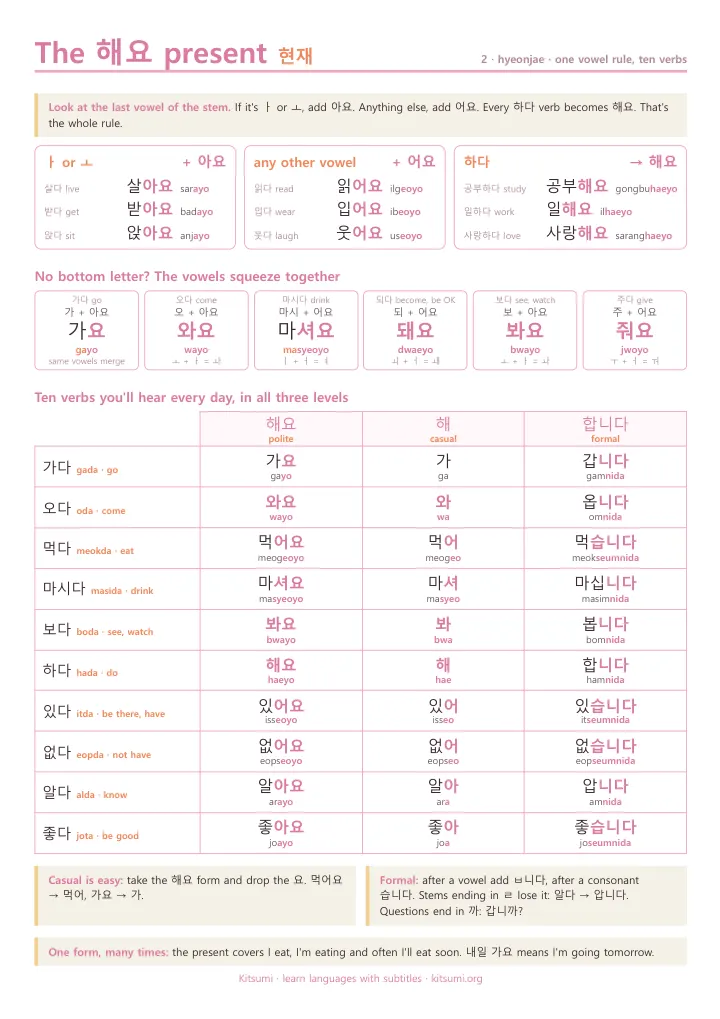
- The 해요 presentThe one vowel rule: 아요 after ㅏ or ㅗ, 어요 after the rest, 해요 for 하다. How 오다 becomes 와요 and 마시다 becomes 마셔요, then ten everyday verbs in all three levels.
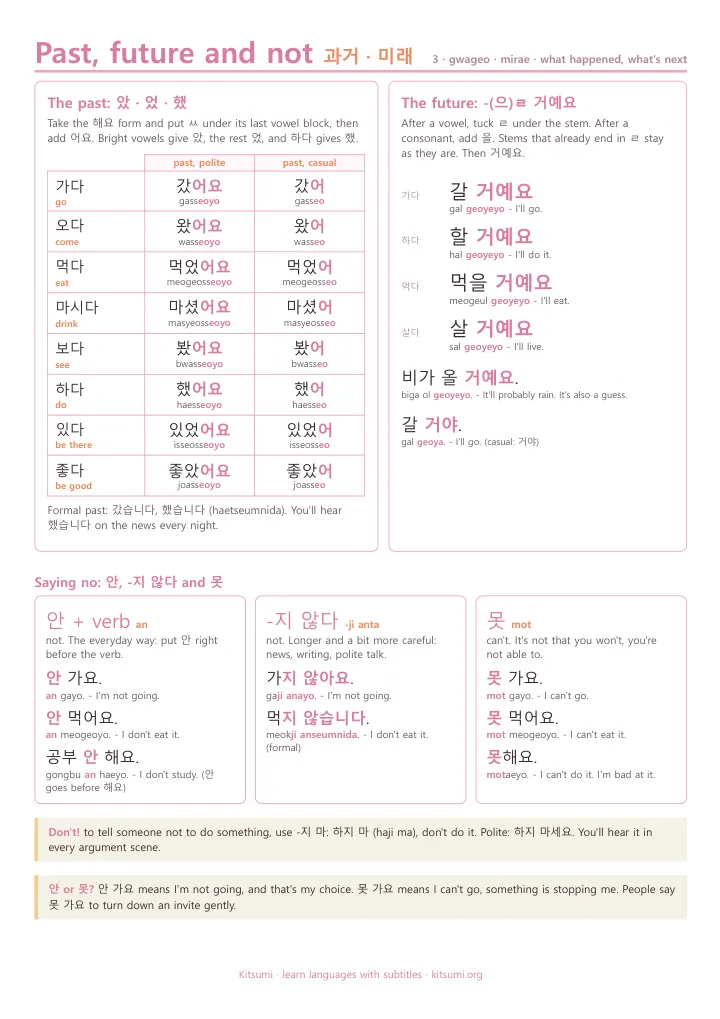
- Past, future and notThe past with 았, 었 and 했, the future with -(으)ㄹ 거예요, and three ways to say no: 안, -지 않다 and 못.
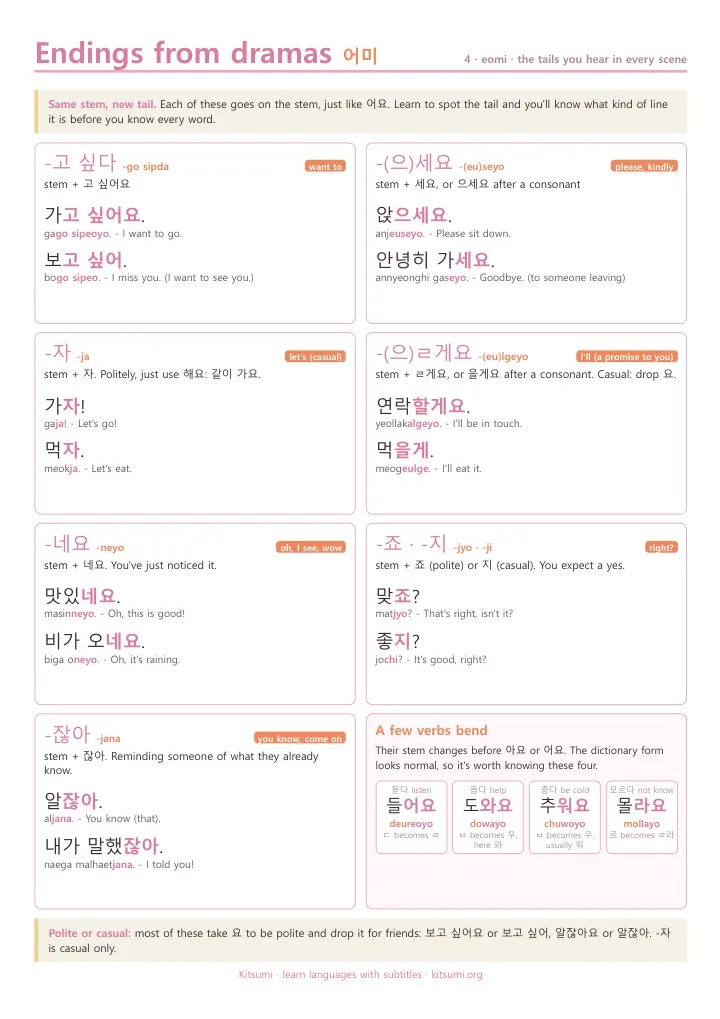 Endings from dramas-고 싶다, -(으)세요, -자, -(으)ㄹ게요, -네요, -죠 and -잖아, with two lines each, plus four verbs that bend, like 듣다 and 모르다.
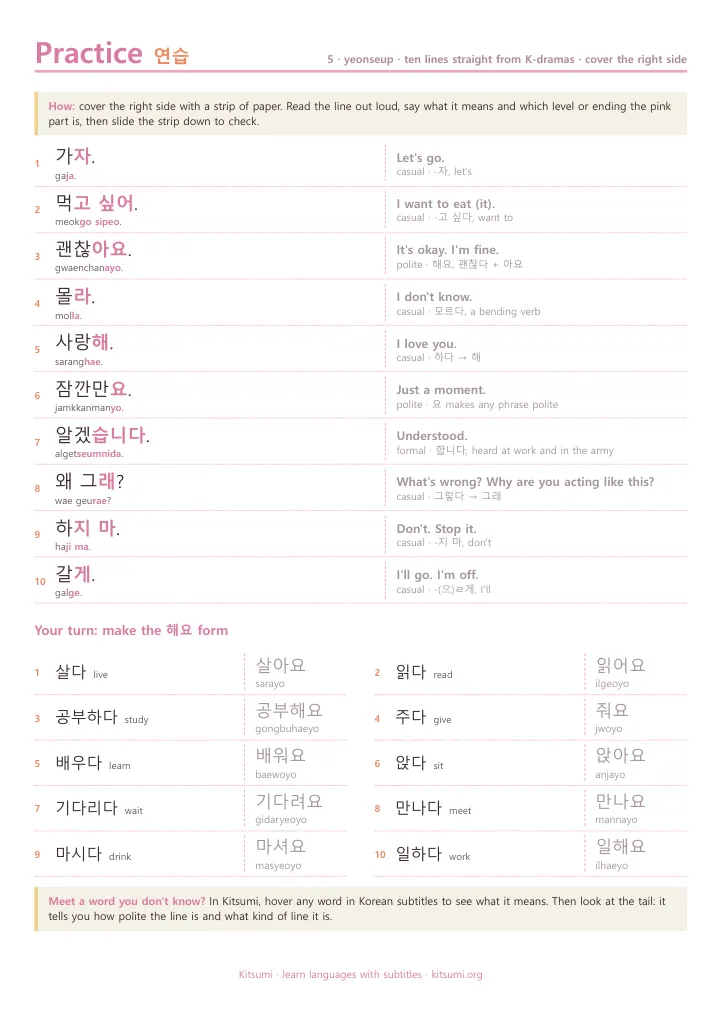 PracticeTen lines you hear in K-dramas, like 가자, 몰라 and 하지 마, to read and explain, then ten verbs to put in the 해요 form. Cover the answers with a strip of paper and check yourself.
How to use it
- Learn to read Hangul, a few basic words and the particles first. This guide builds on them.
- Read the first page and say each speech level out loud.
- Come back to the table on page two whenever you can't remember a form.
- Cover the answers on the practice page, then listen for the same endings in K-dramas with Kitsumi.
More free Korean printables
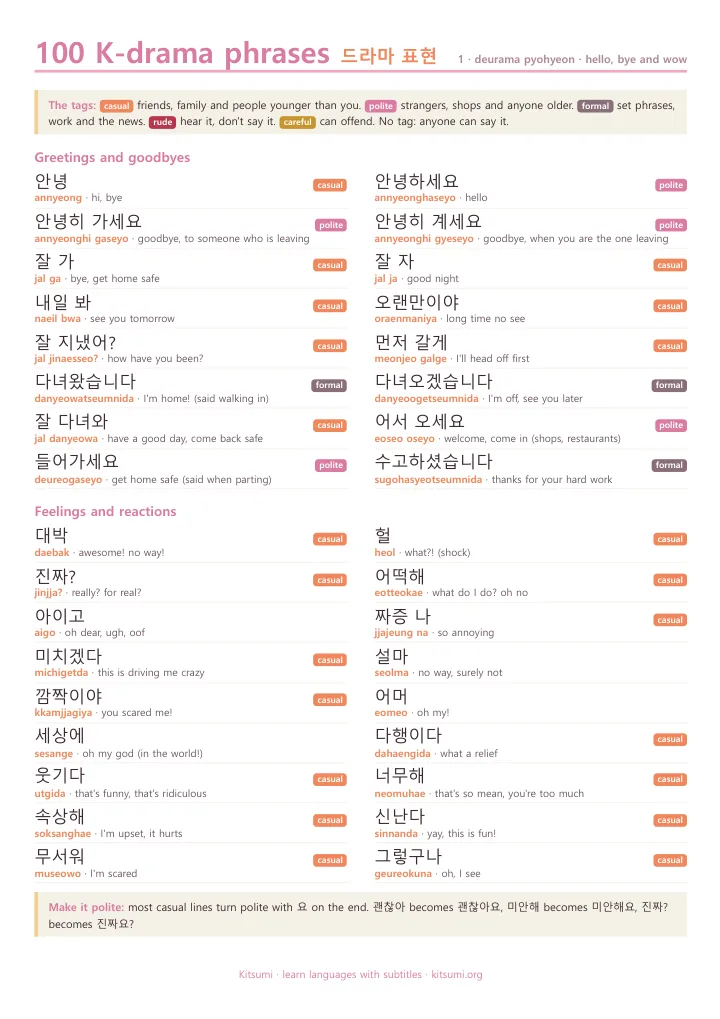 Next step100 Korean drama phrasesThen pick up the lines dramas use all the time: 대박, 보고 싶어, 그만해 and what 오빠 really means.
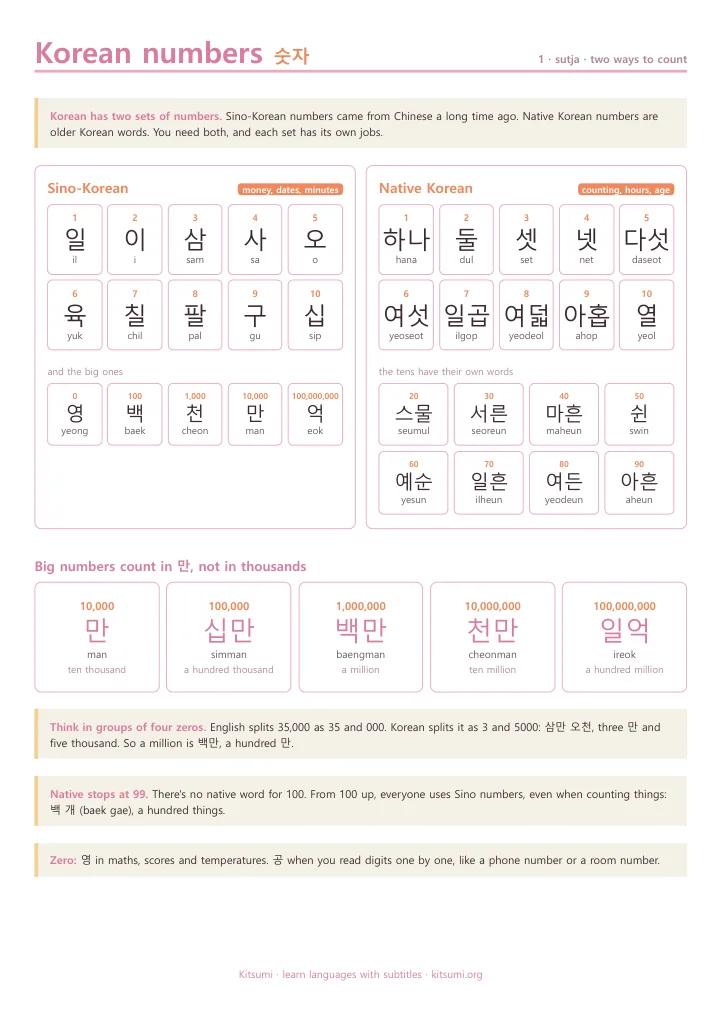 Korean numbers and countersThen sort out numbers: 일 이 삼 and 하나 둘 셋, and which one goes with prices, hours and age.
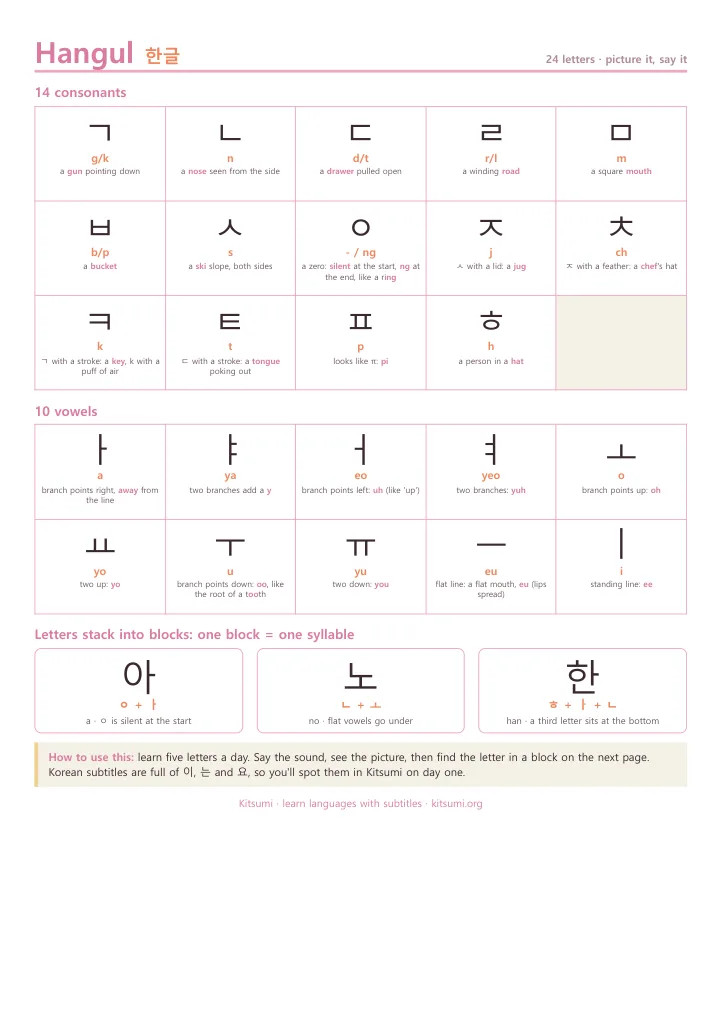 Korean Hangul chartLearn to read first. All 24 letters with a picture to remember each, and how they stack into blocks.
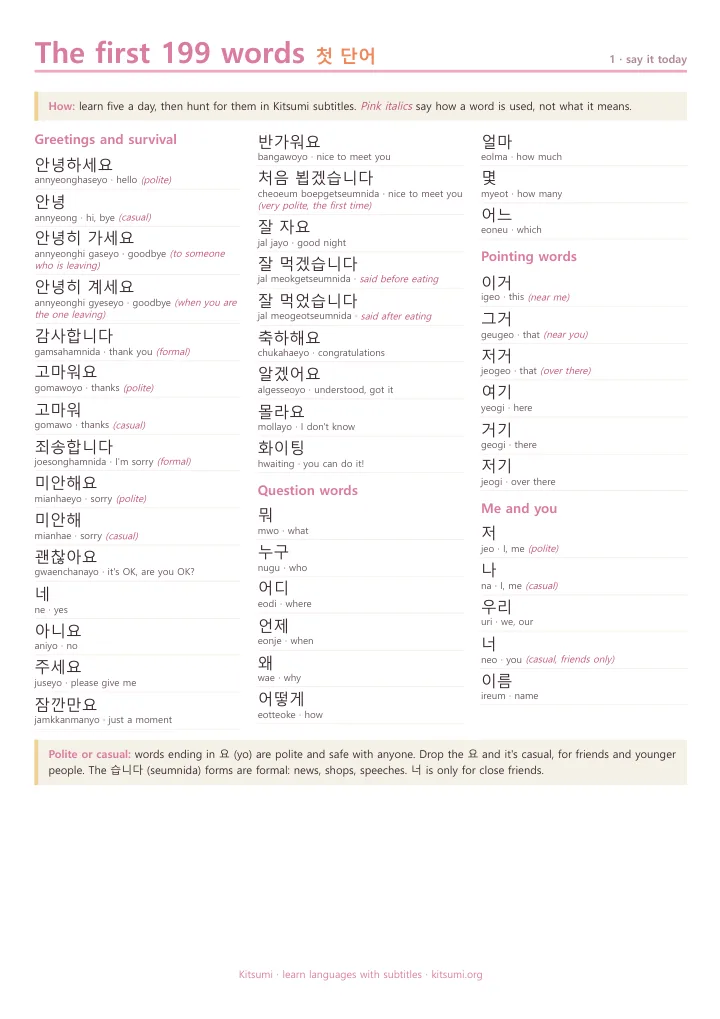 Basic Korean wordsThen pick up the first 199 words: greetings, family, numbers, food, verbs and K-drama favourites.
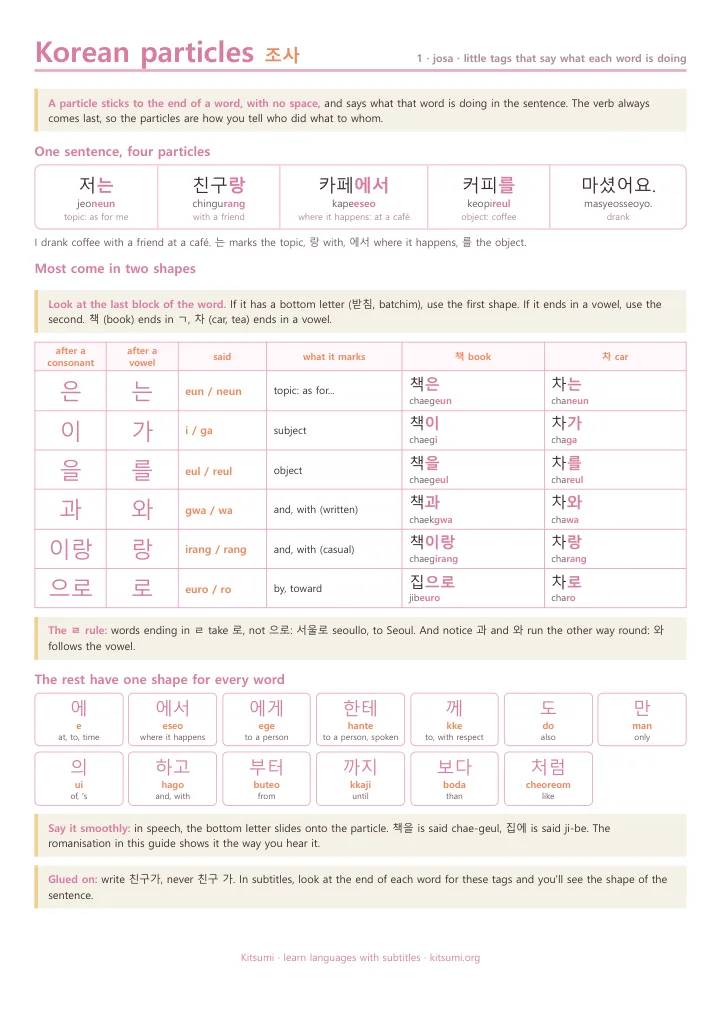 Korean particles guideThen learn the little tags on the end of each word: 은/는, 이/가, 을/를, 에 and more.
Questions
Is the Korean verb endings guide free?
Yes. It's a free PDF with no sign-up. Print it, keep it and share it.
What is the difference between 해요, 해 and 합니다?
They're speech levels. 해요 is polite and safe with almost anyone. 해 (반말) is casual, for friends, family and people younger than you. 합니다 is formal, for the news, work and announcements. Page one shows all three.
When do I use 아요 and when 어요?
Look at the last vowel of the stem. If it's ㅏ or ㅗ, add 아요: 살아요. Anything else, add 어요: 먹어요. 하다 verbs become 해요. Page two has the rule and ten verbs.