 Kitsumi
Korean honorifics: polite verb forms, nouns and particles
A six-page printable PDF that goes past the speech levels: how Korean honours the person you're talking about with -(으)시-, the verbs and nouns that change completely, and the humble words you use about yourself, with every example in Hangul with romanisation and English.
PDF · 6 pages · 458 KB · no sign-up · free to print and share
Was it useful?Ideas or a mistake? Tell us on Discord
Next, meet these words in real videos: Kitsumi is free for Chrome and Firefox.
What's inside
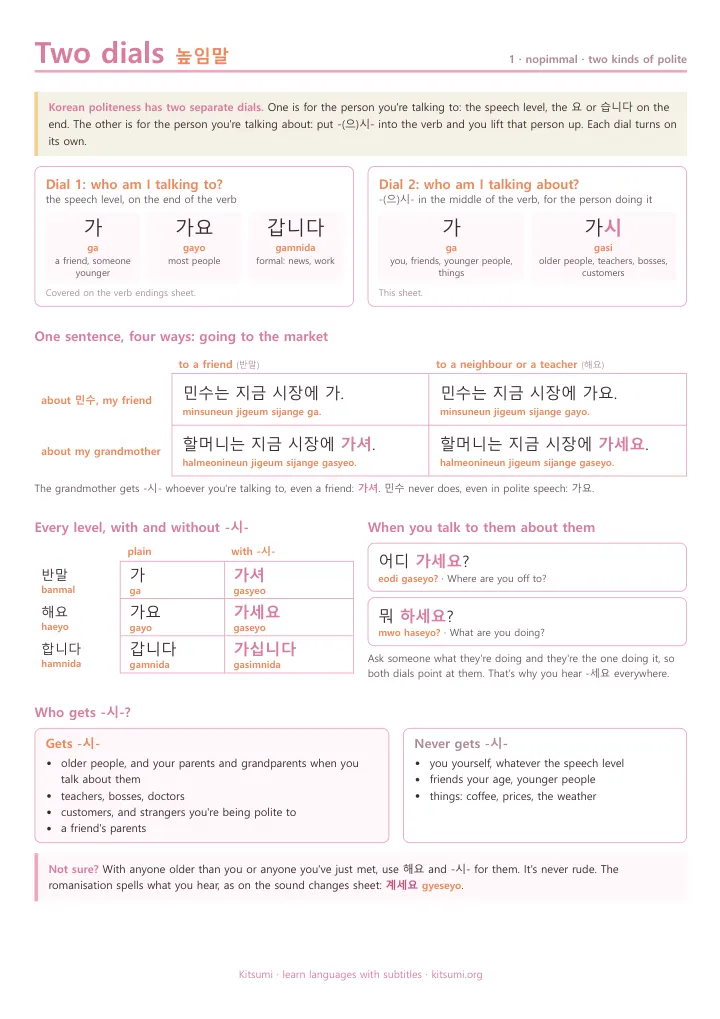
- Two dialsPoliteness to the listener (the speech level) and respect for the person you talk about (-시-) set separately, one sentence in four combinations (가, 가요, 가셔, 가세요), why you hear -세요 everywhere, and who gets -시- and who never does.
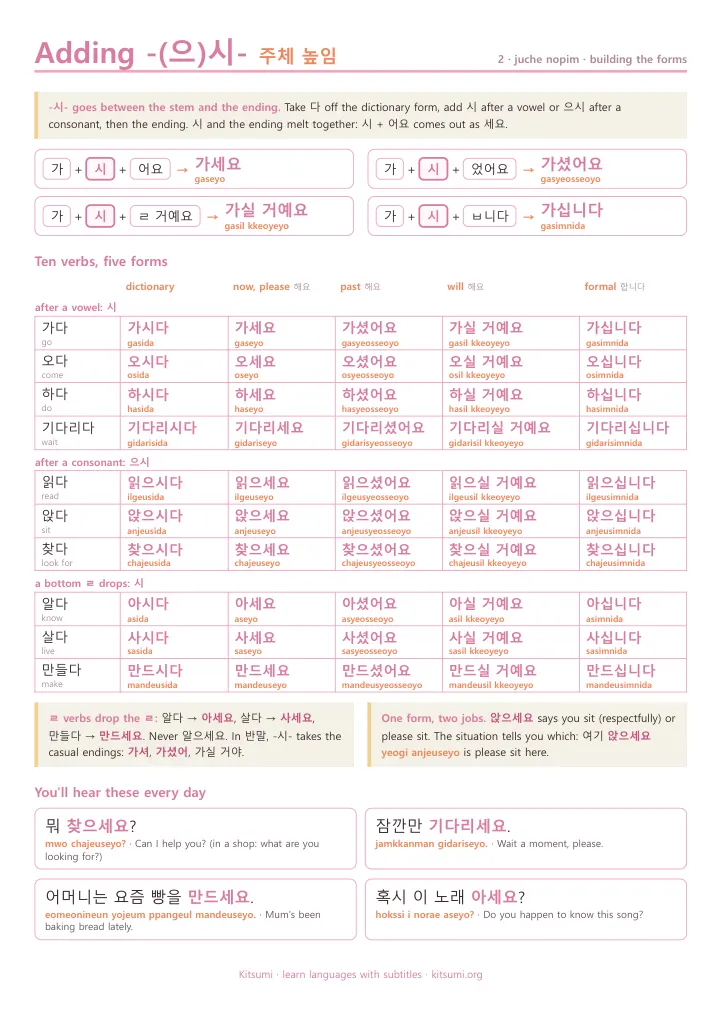
- Adding -(으)시-시 after a vowel, 으시 after a consonant and the ㄹ that drops (아세요, 사세요), with ten verbs in five forms: 가시다, 가세요, 가셨어요, 가실 거예요 and 가십니다, plus everyday lines like 뭐 찾으세요?
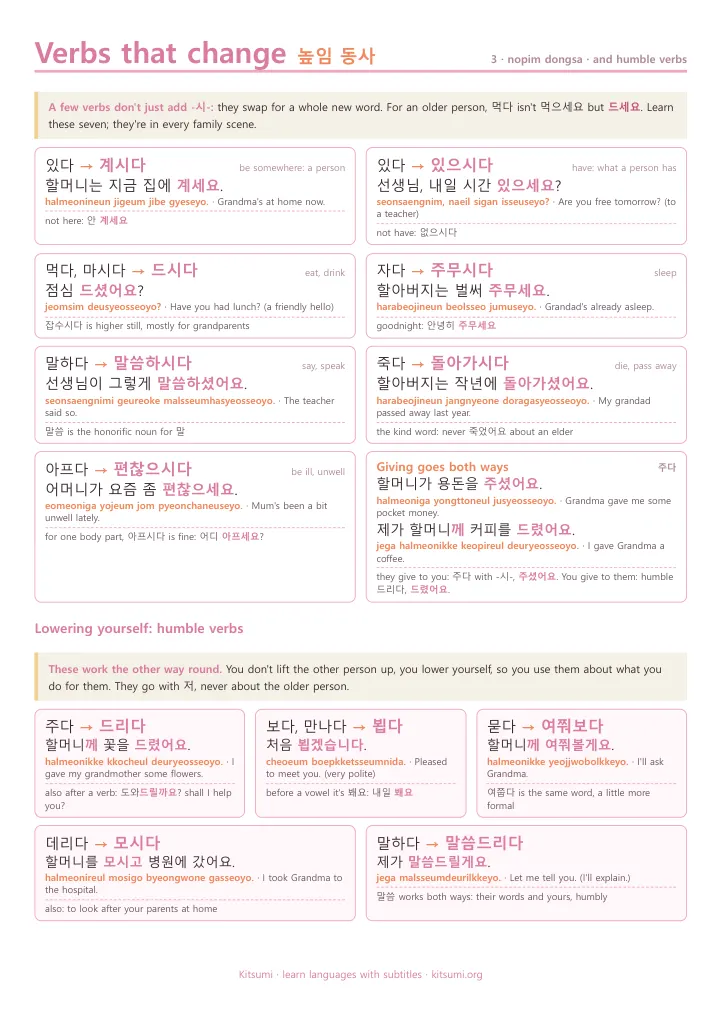
- Verbs that change계시다 and 있으시다, 드시다, 주무시다, 말씀하시다, 돌아가시다 and 편찮으시다, then the humble verbs 드리다, 뵙다, 여쭤보다, 모시다 and 말씀드리다, and 주셨어요 against 드렸어요.
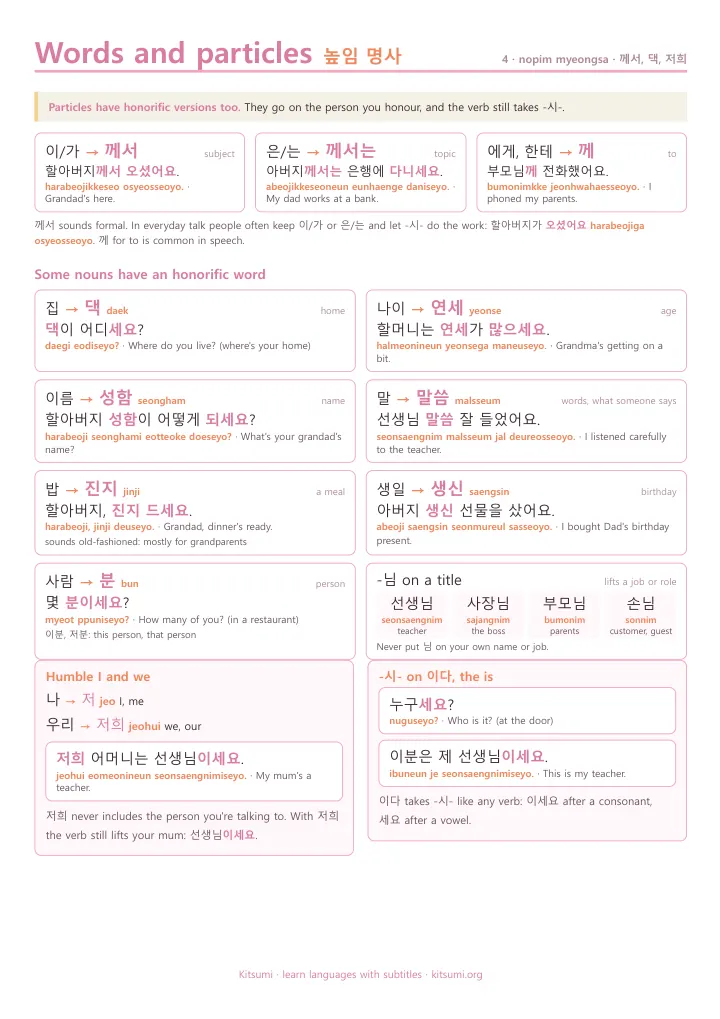 Words and particles께서, 께서는 and 께, the honorific nouns 댁, 연세, 성함, 말씀, 진지, 생신 and 분, -님 on a title, humble 저 and 저희, and 이다 with -시-: 누구세요?
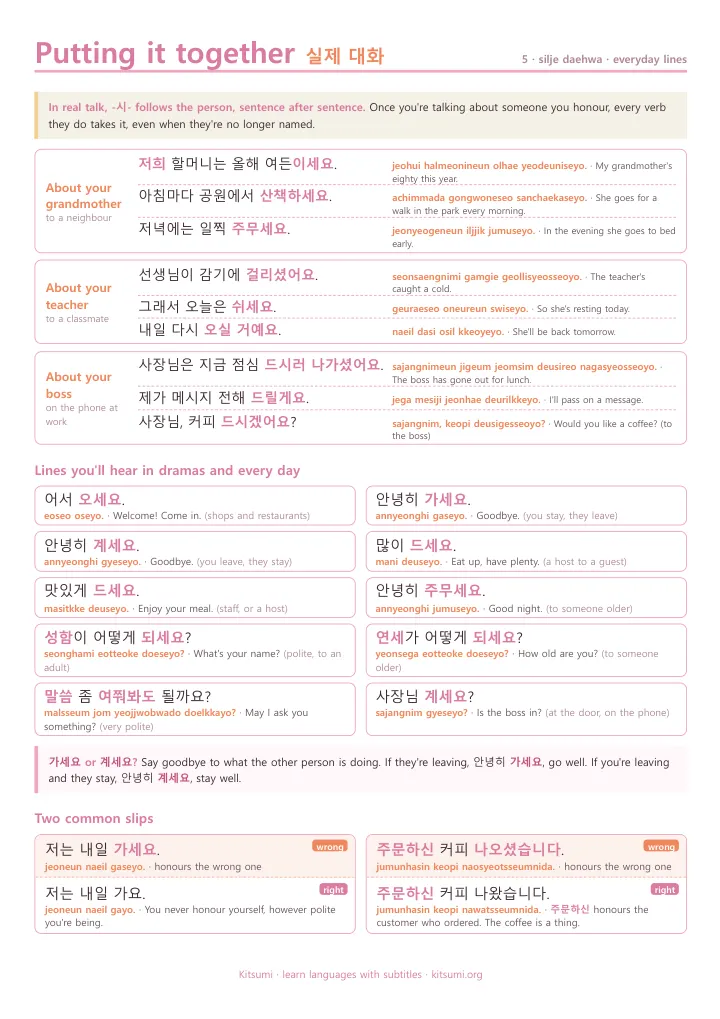 Putting it togetherTalking about a grandmother, a teacher and a boss, ten everyday lines like 안녕히 가세요 and 안녕히 계세요, 맛있게 드세요 and 성함이 어떻게 되세요?, and two common slips: honouring yourself and honouring things.
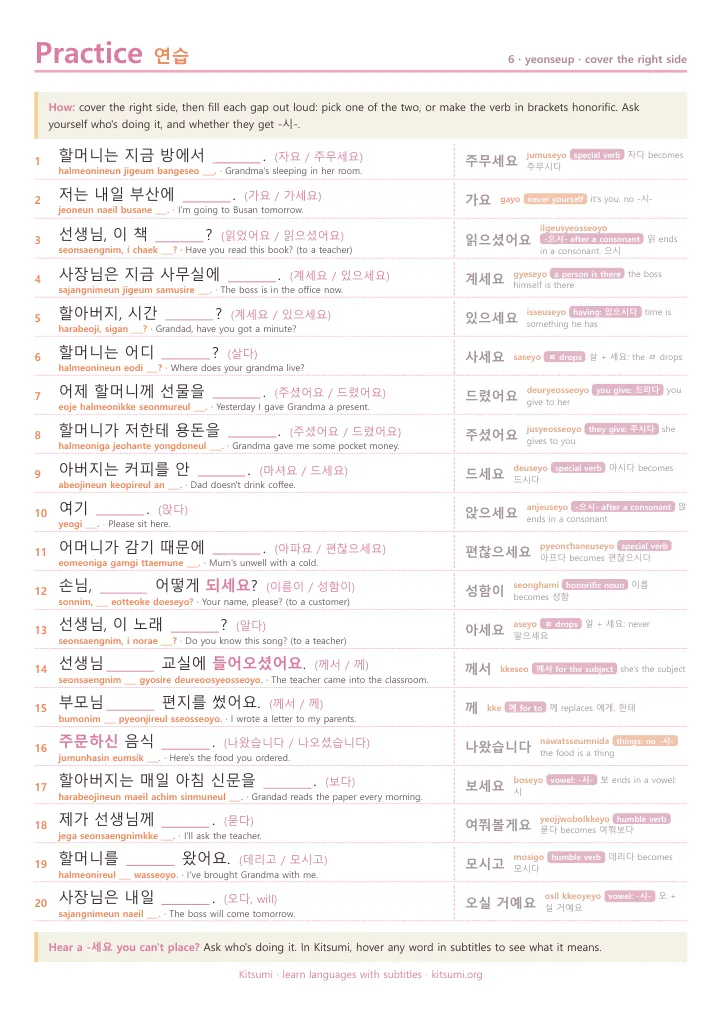 PracticeTwenty items: pick the right form or make the verb honorific. The answers sit in small print on the right, each with its rule and a one-line reason. Cover them with a strip of paper and check yourself.
How to use it
- Read the verb endings guide first if 해요, 해 and 합니다 are new to you.
- Start with page one: the two dials explain most of what you hear.
- Learn the seven verbs on page three; they come up in every family scene.
- Cover the answers on the practice page, say each line out loud, then check the reason.
More free Korean printables
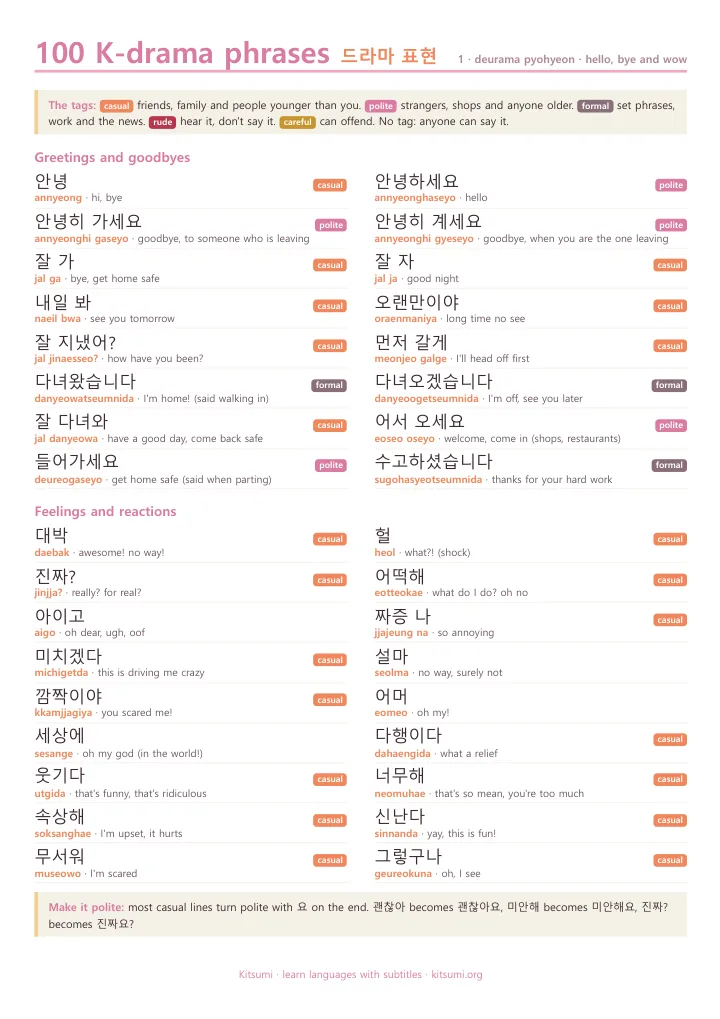 Next step100 Korean drama phrasesThen pick up the lines dramas use all the time: 대박, 보고 싶어, 그만해 and what 오빠 really means.
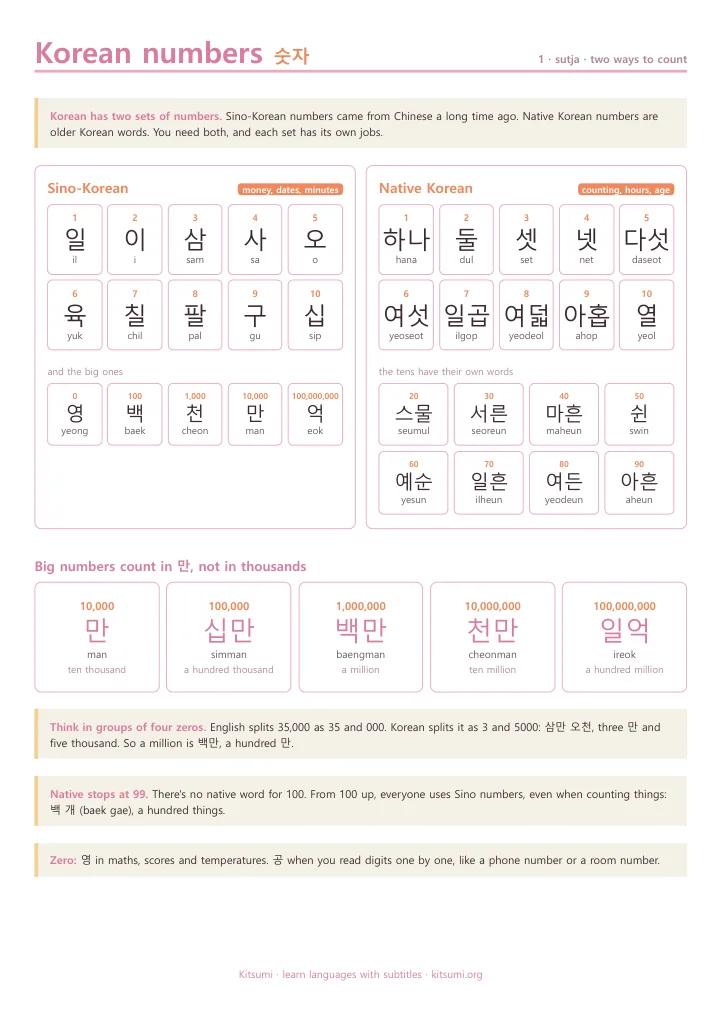 Korean numbers and countersThen sort out numbers: 일 이 삼 and 하나 둘 셋, and which one goes with prices, hours and age.
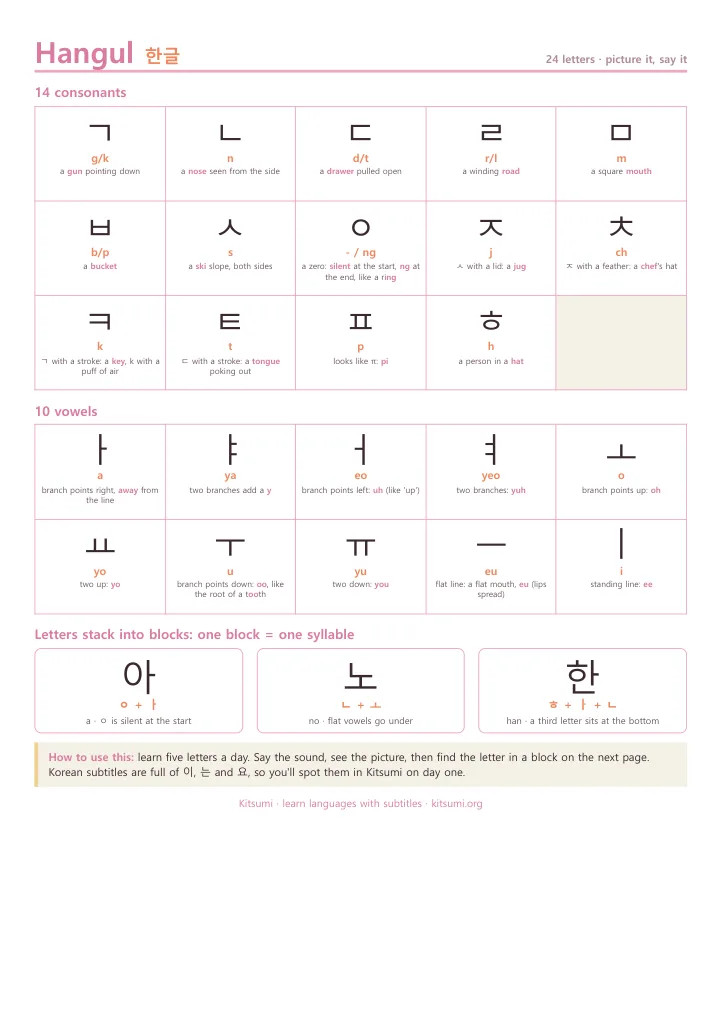 Korean Hangul chartLearn to read first. All 24 letters with a picture to remember each, and how they stack into blocks.
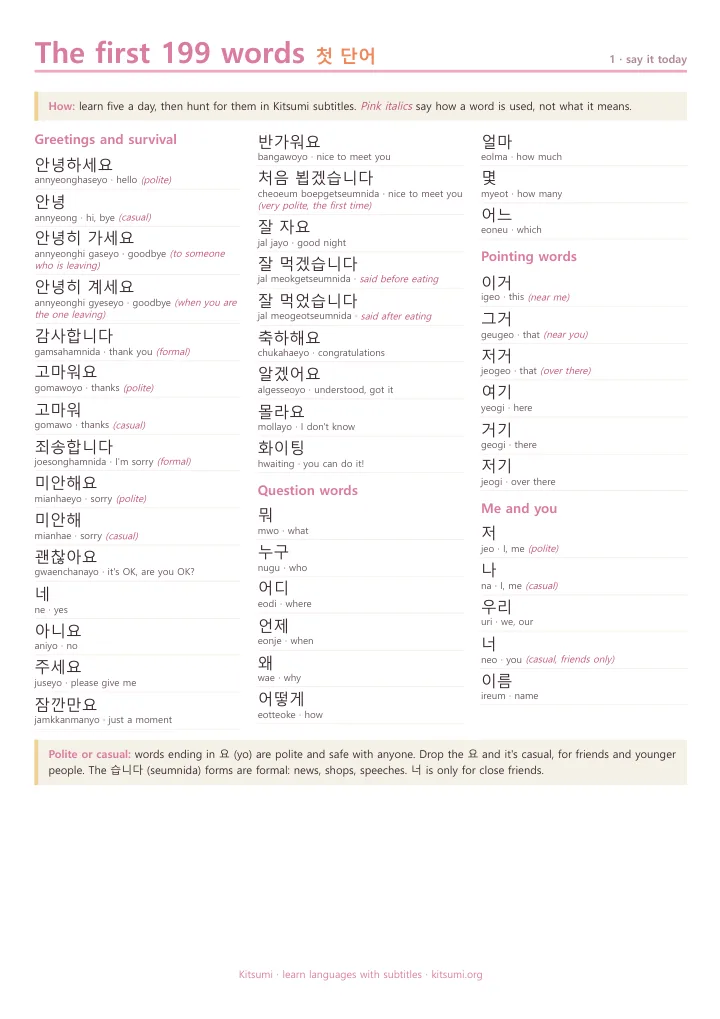 Basic Korean wordsThen pick up the first 184 words: greetings, family, numbers, food, verbs and K-drama favourites.
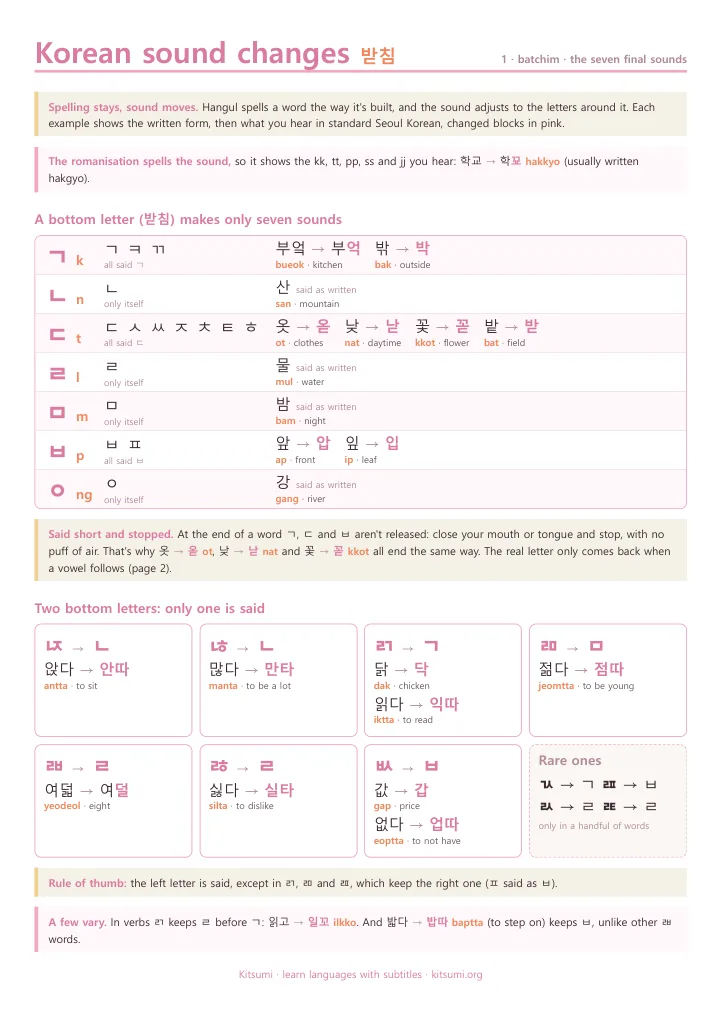 Korean sound changesThen learn why Korean doesn't sound the way it's spelled: 합니다 is said 함니다 and 학교 is said 학꾜.
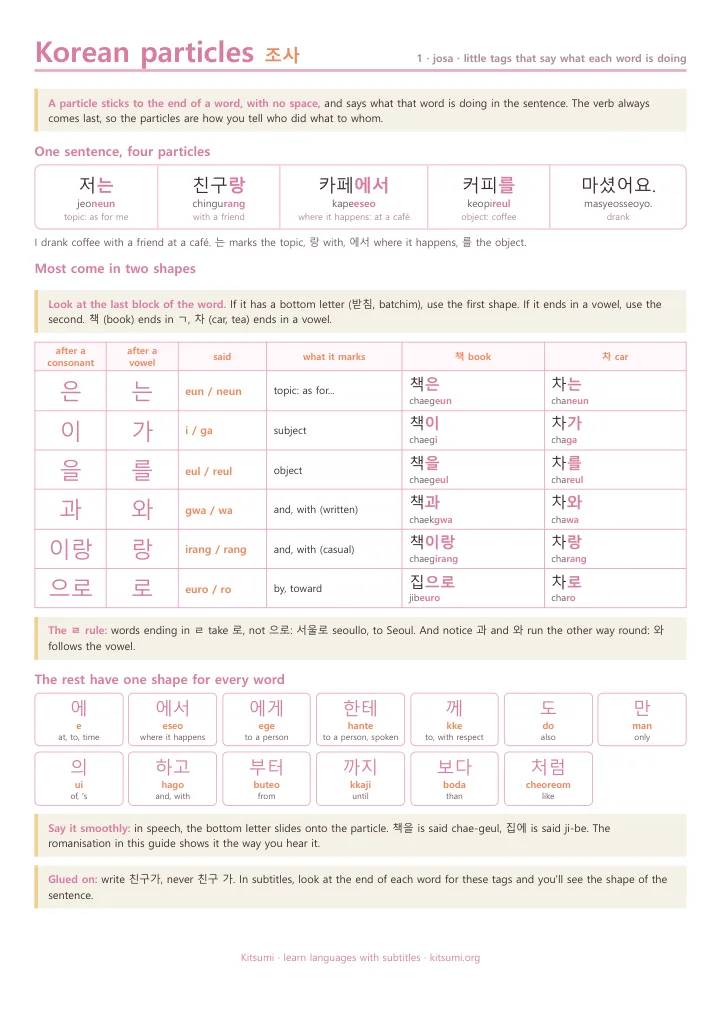 Korean particles guideThen learn the little tags on the end of each word: 은/는, 이/가, 을/를, 에 and more.
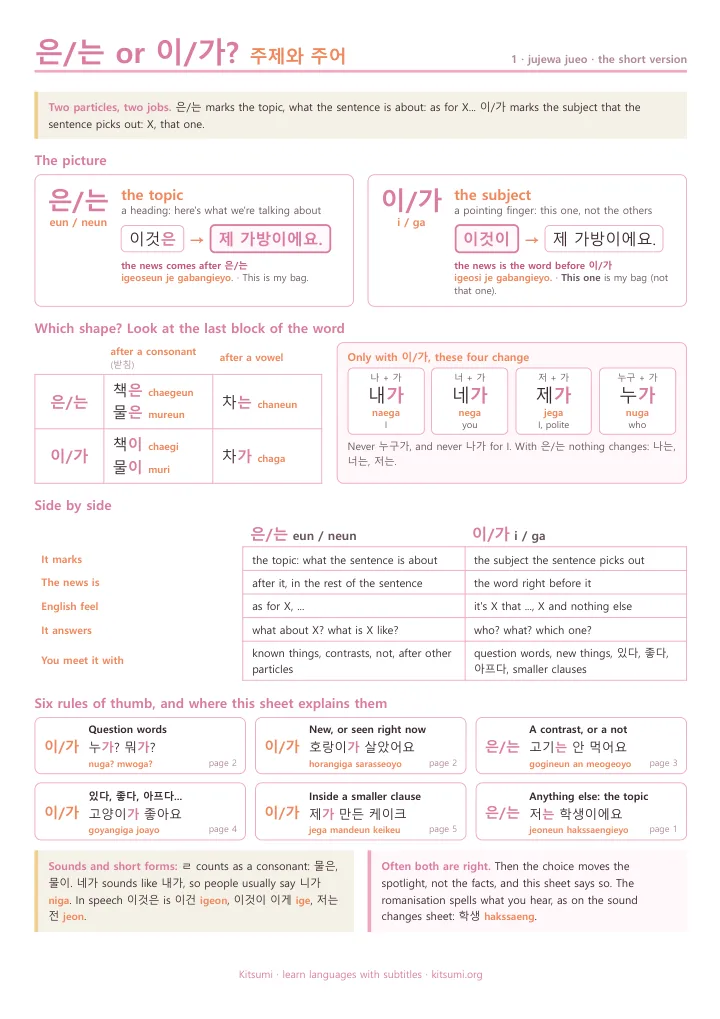 Korean particles 은/는 and 이/가: which one?Then sort out the pair everyone mixes up: 은/는 for the topic, 이/가 for the subject.
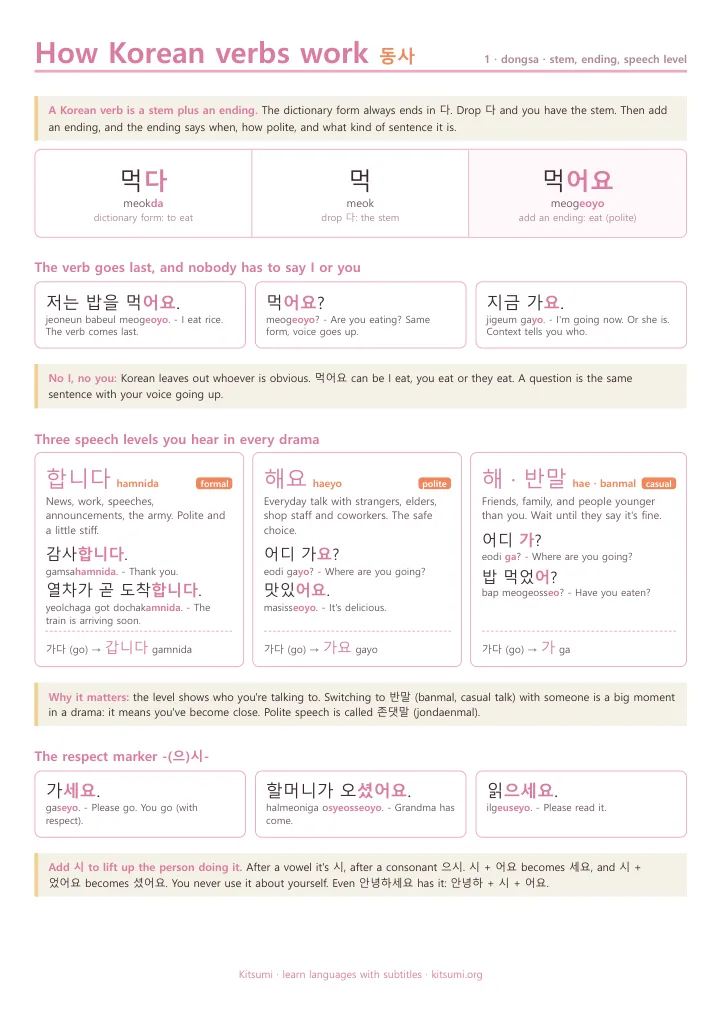 Korean verb endings and speech levelsThen learn how verbs end: 해요, 해 and 합니다, the past, the future and the endings dramas use.
Questions
Is the Korean honorifics guide free?
Yes. It's a free PDF with no sign-up. Print it, keep it and share it.
What does -시- do in Korean?
It honours the person doing the action. 가요 and 가세요 are both polite to the listener, but 가세요 also shows respect for the person who's going. You never use it about yourself.
What is the difference between 계세요 and 있으세요?
계시다 is the honorific for a person being somewhere: 할머니는 집에 계세요. 있으시다 is for something a person has: 시간 있으세요?
When do I say 안녕히 가세요 and when 안녕히 계세요?
Say goodbye to what the other person is doing. If they're leaving, 안녕히 가세요. If you're leaving and they stay, 안녕히 계세요.