 Kitsumi
100 free Korean drama phrases
A five-page printable PDF of the lines you hear in every K-drama, grouped by situation, in Hangul with romanisation, English and a tag that says how casual or polite each one is.
PDF · 5 pages · 211 KB · no sign-up · free to print and share
Next, meet these words in real videos: Kitsumi is free for Chrome and Firefox.
What's inside
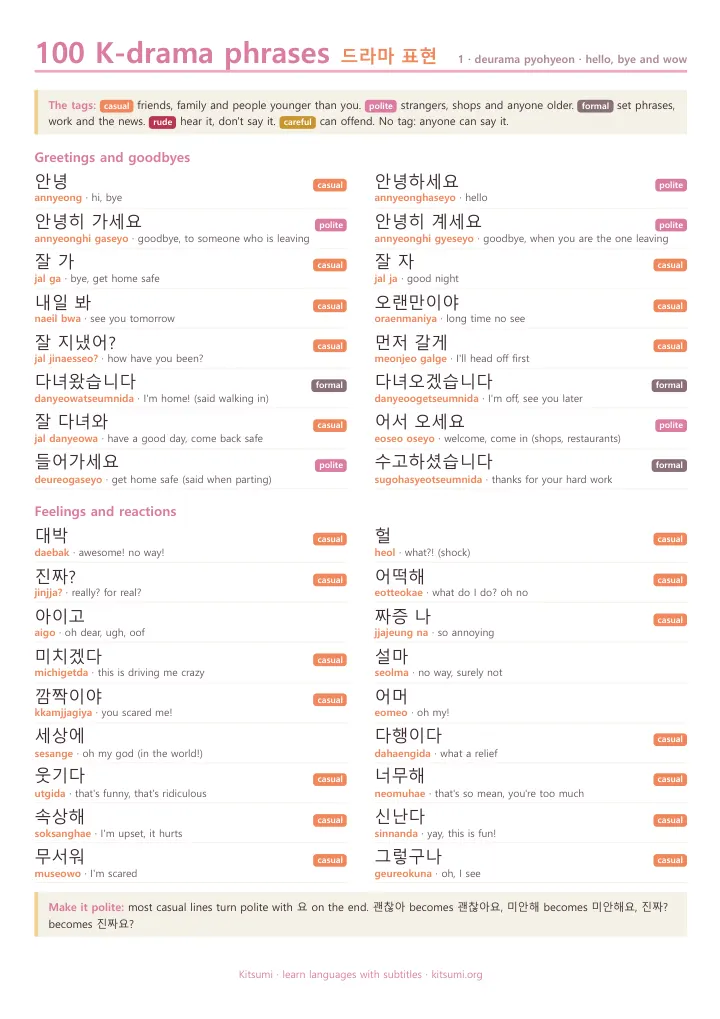
- Greetings and reactions34 lines like 안녕, 다녀왔습니다, 어서 오세요, 수고하셨습니다, 대박, 헐, 어떡해 and 미치겠다, with a key to the casual, polite, formal and rude tags.
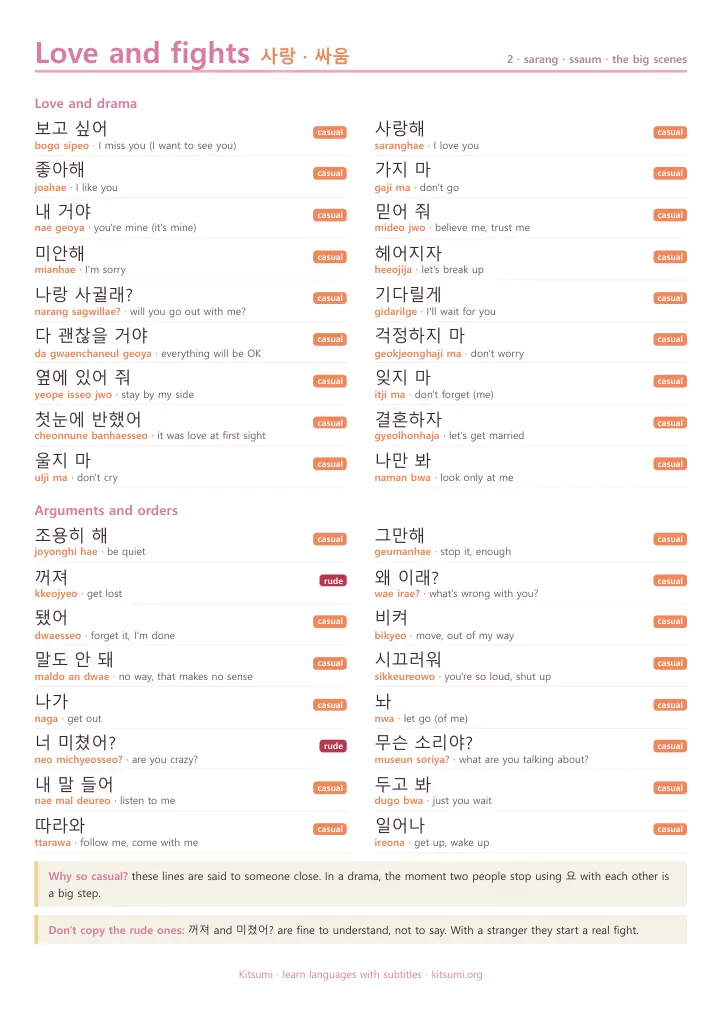
- Love and fights보고 싶어, 사랑해, 가지 마 and 헤어지자, then the argument lines: 그만해, 됐어, 비켜, 말도 안 돼, and 꺼져, marked rude.
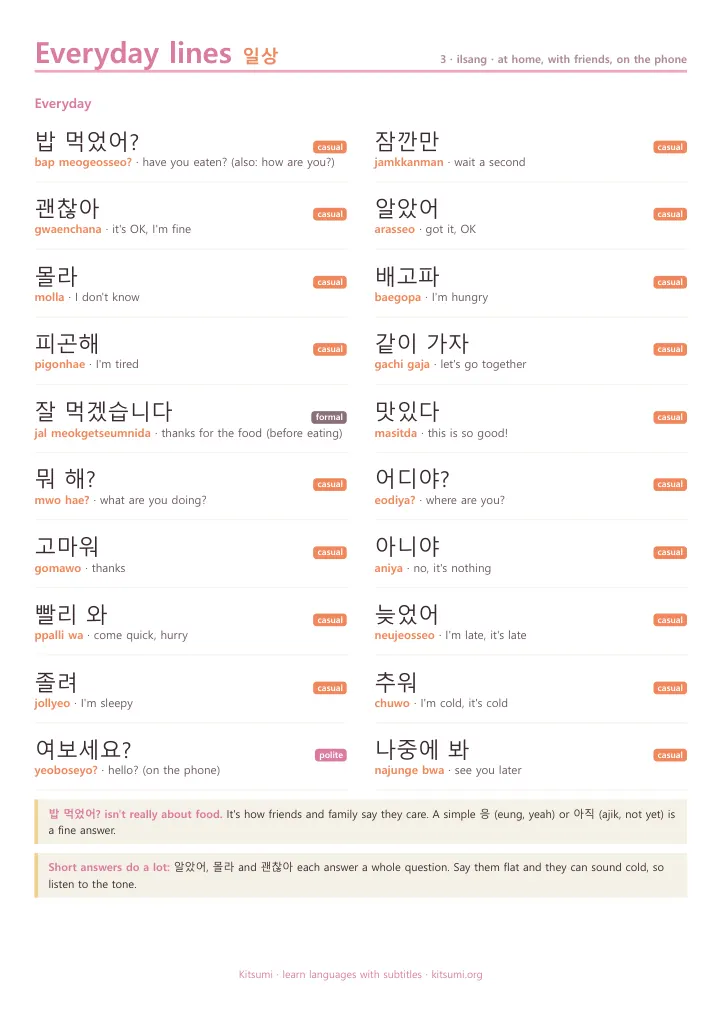
- Everyday lines20 things people say at home and with friends, like 밥 먹었어?, 잠깐만, 괜찮아, 몰라 and 같이 가자.
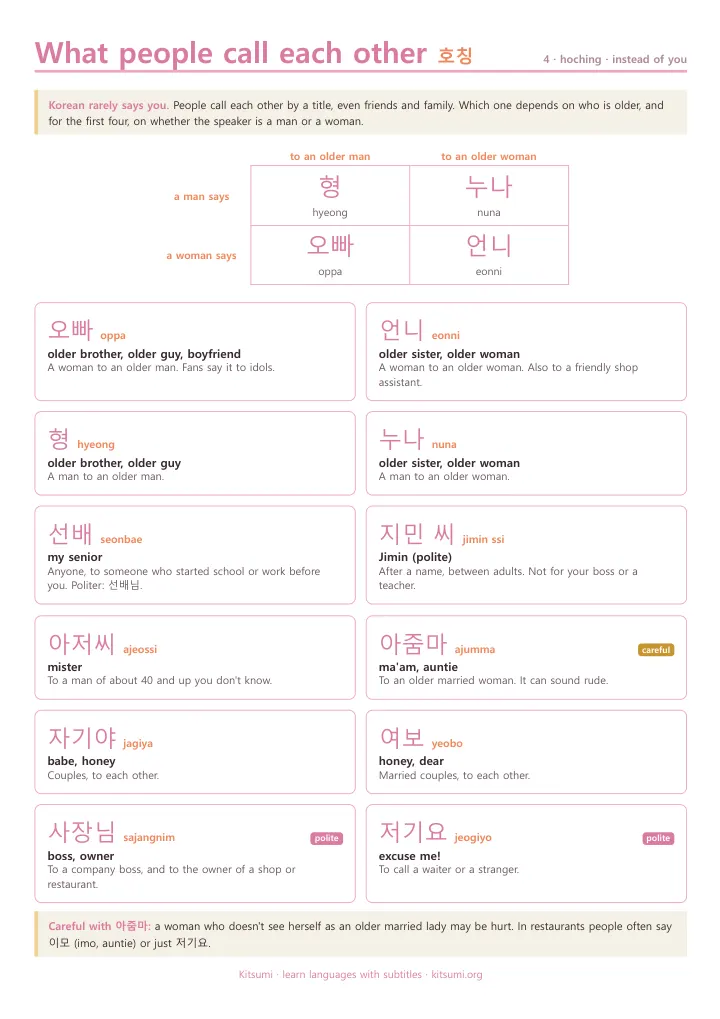 What people call each other오빠, 언니, 형 and 누나, and why the speaker's gender decides which one, then 선배, 씨, 아저씨, 아줌마, 자기야 and more, with who says each.
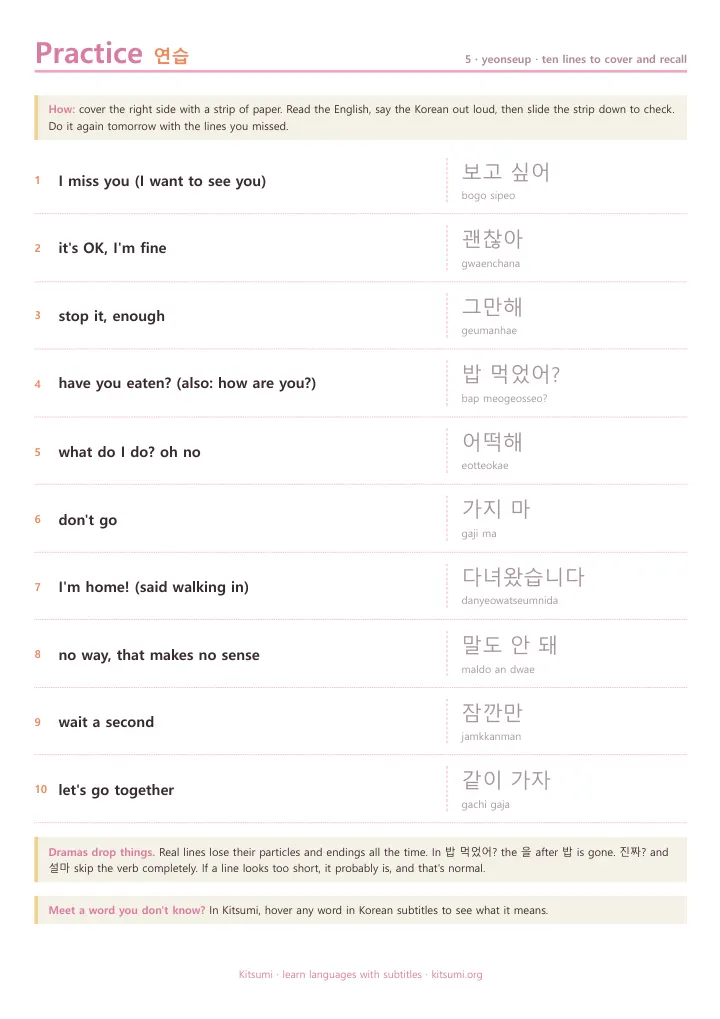 PracticeTen lines to cover and recall, plus a note on why drama lines drop their particles and endings.
How to use it
- Learn to read Hangul first. The particles and verb endings guides help you see why each line looks the way it does.
- Read a page out loud, a few lines at a time, and notice the tags.
- Cover the right side of the practice page and say each line from the English.
- Watch a K-drama with Kitsumi and listen for the same lines.
More free Korean printables
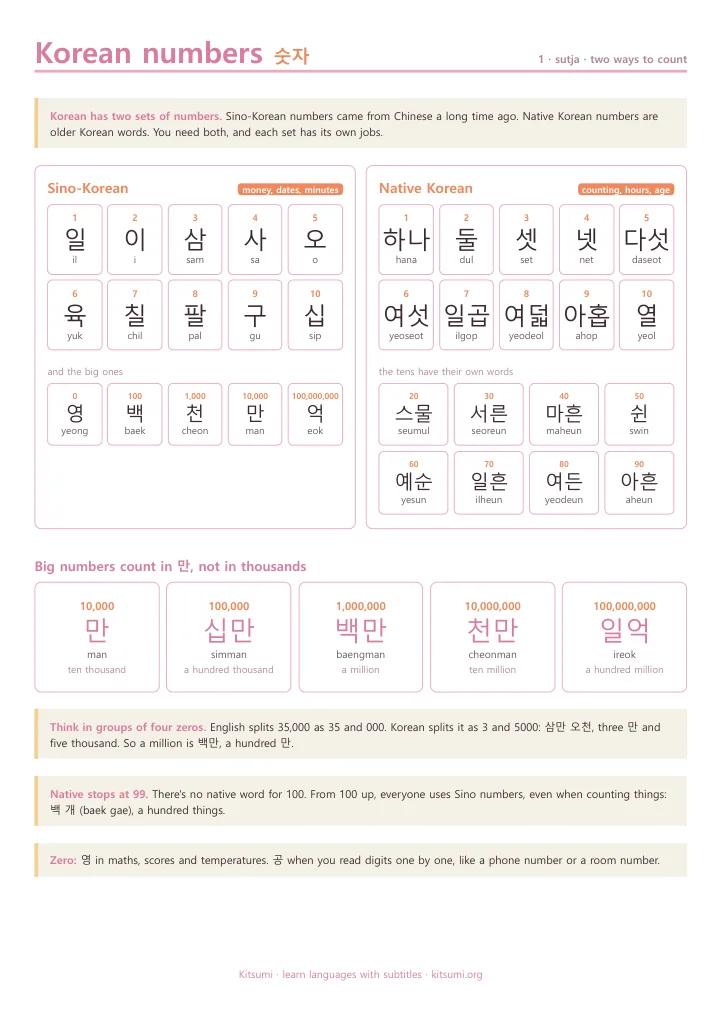 Next stepKorean numbers and countersThen sort out numbers: 일 이 삼 and 하나 둘 셋, and which one goes with prices, hours and age.
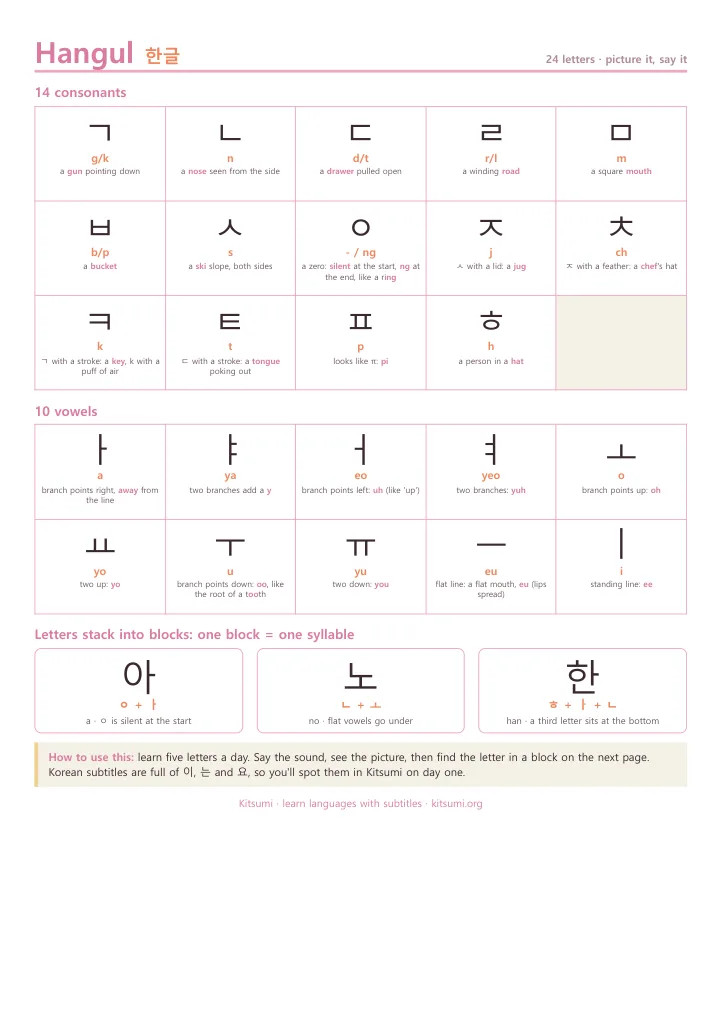 Korean Hangul chartLearn to read first. All 24 letters with a picture to remember each, and how they stack into blocks.
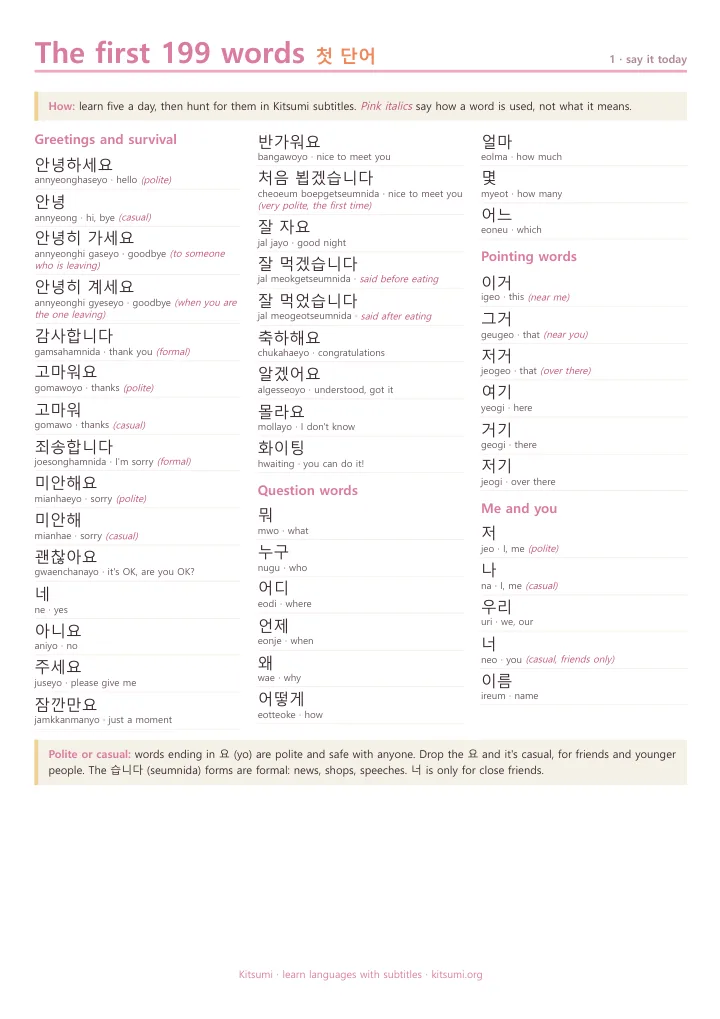 Basic Korean wordsThen pick up the first 199 words: greetings, family, numbers, food, verbs and K-drama favourites.
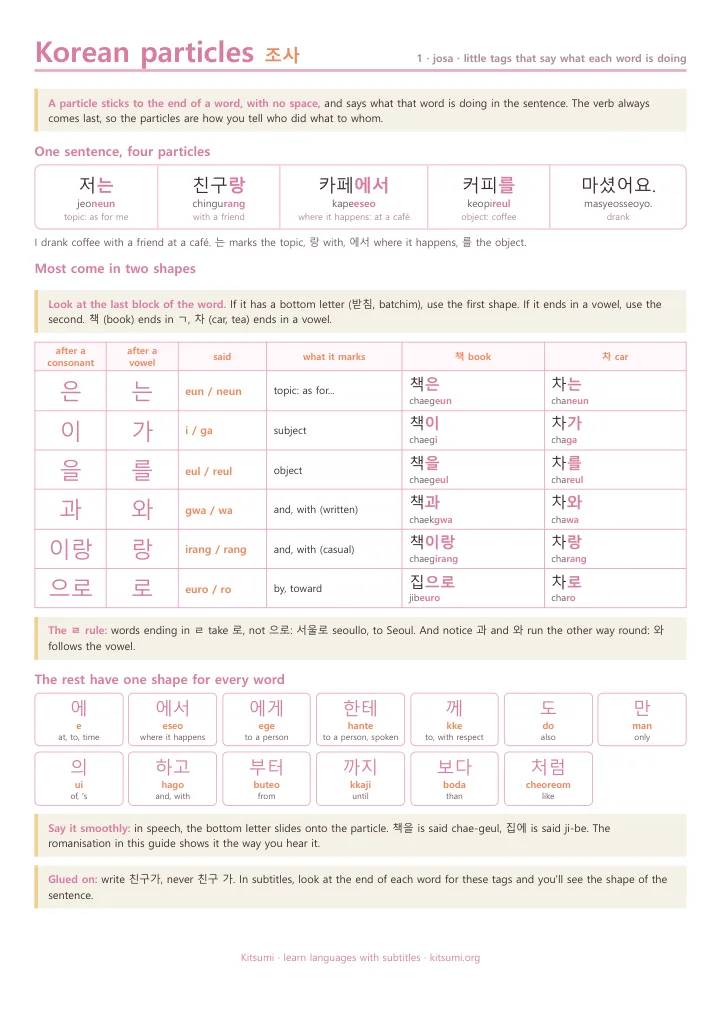 Korean particles guideThen learn the little tags on the end of each word: 은/는, 이/가, 을/를, 에 and more.
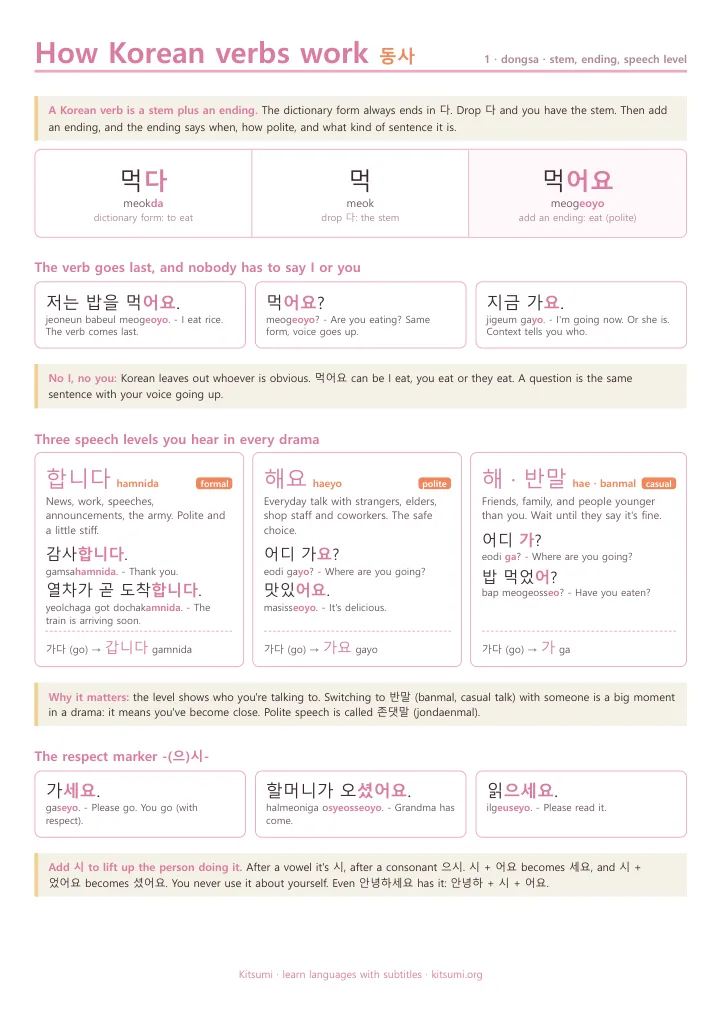 Korean verb endings and speech levelsThen learn how verbs end: 해요, 해 and 합니다, the past, the future and the endings dramas use.
Questions
Is the Korean drama phrases PDF free?
Yes. It's a free PDF with no sign-up. Print it, keep it and share it.
Can I say these phrases to anyone?
Most are casual, for friends, family and people younger than you. Each line has a tag, and adding 요 makes most of them polite: 괜찮아 becomes 괜찮아요. Lines marked rude are for understanding, not saying.
What is the difference between 오빠 and 형?
Both mean older brother or older guy. A woman says 오빠 and a man says 형. In the same way, a woman says 언니 and a man says 누나 for an older woman. Page four has a table.