 Kitsumi
Free basic Korean words list
A six-page printable PDF with the first Korean words worth knowing, grouped by topic, with romanisation, plain notes on what's polite and what's casual, and sentences to read at the end.
PDF · 6 pages · 191 KB · no sign-up · free to print and share
Next, meet these words in real videos: Kitsumi is free for Chrome and Firefox.
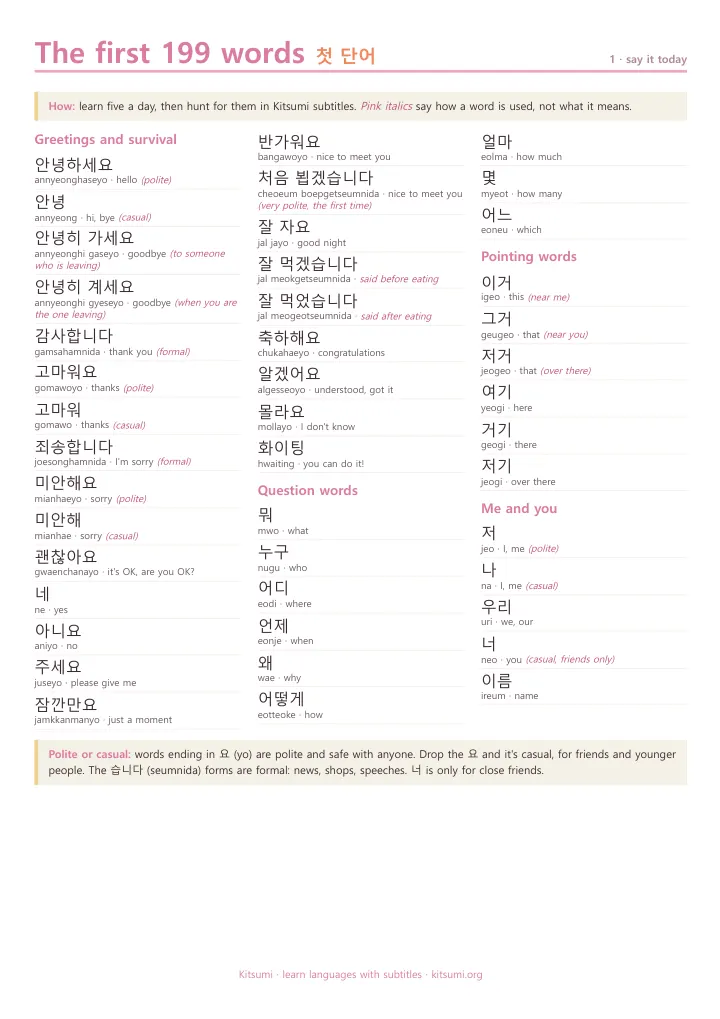
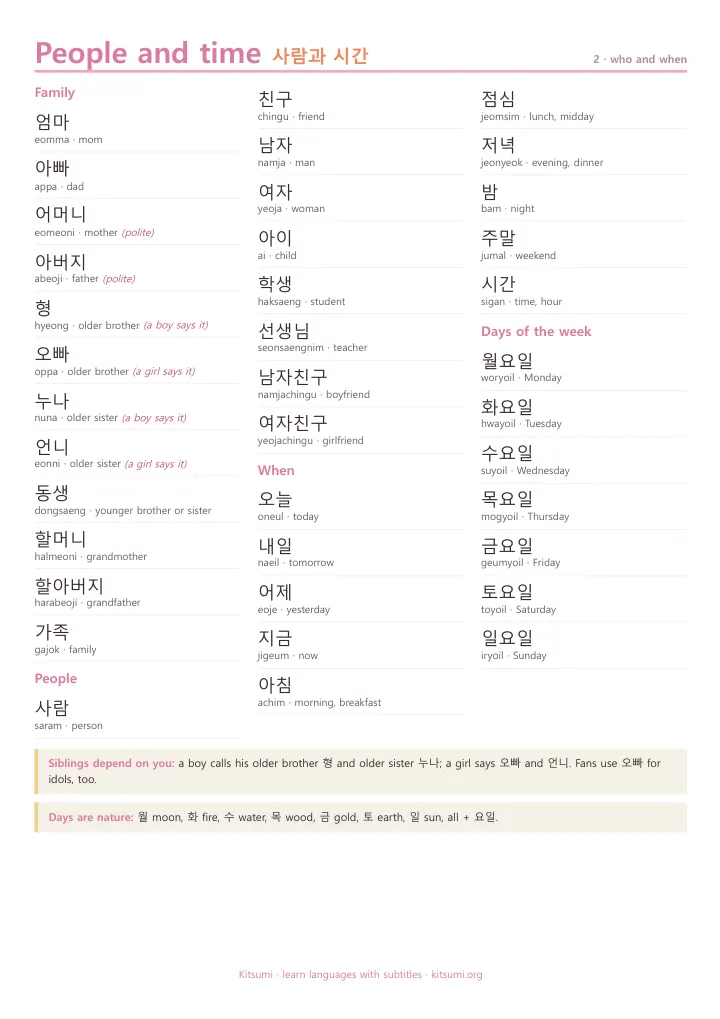
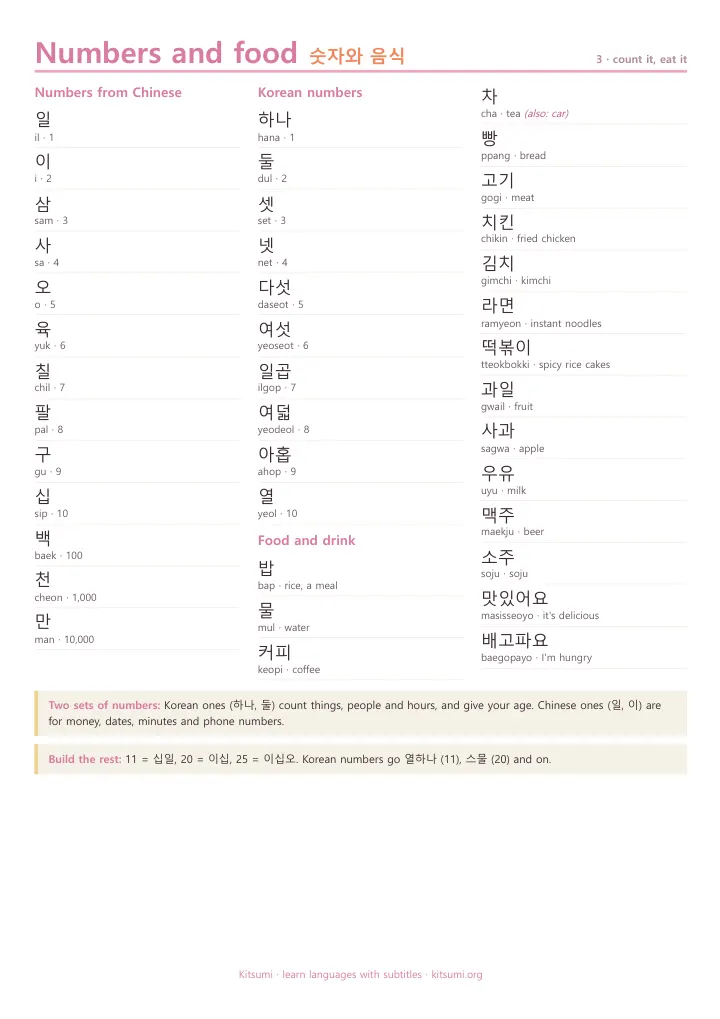
What's inside
- The first wordsGreetings, question words, pointing words and how to say I and you, with which ones are polite and which are casual.
- People and timeFamily words that change with who's speaking, people, times of day and the days of the week.
- Numbers and foodBoth number systems and when to use each, then food and drink, from 밥 to 떡볶이.
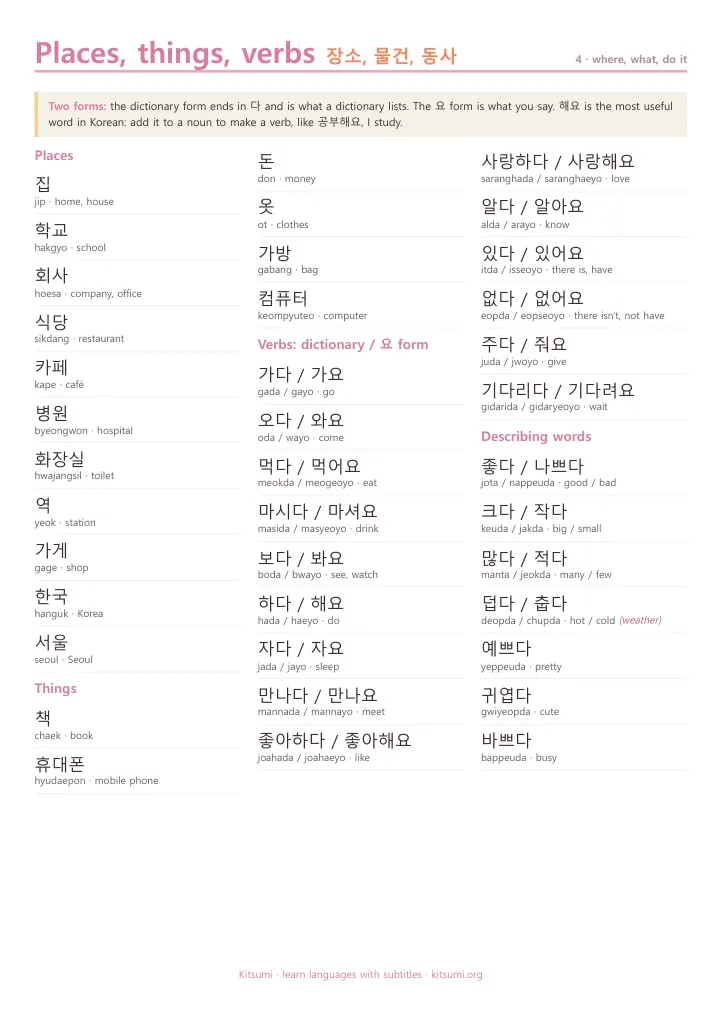 Places, things, verbsWhere you go, what you carry, 15 verbs in dictionary and polite form, and describing words.
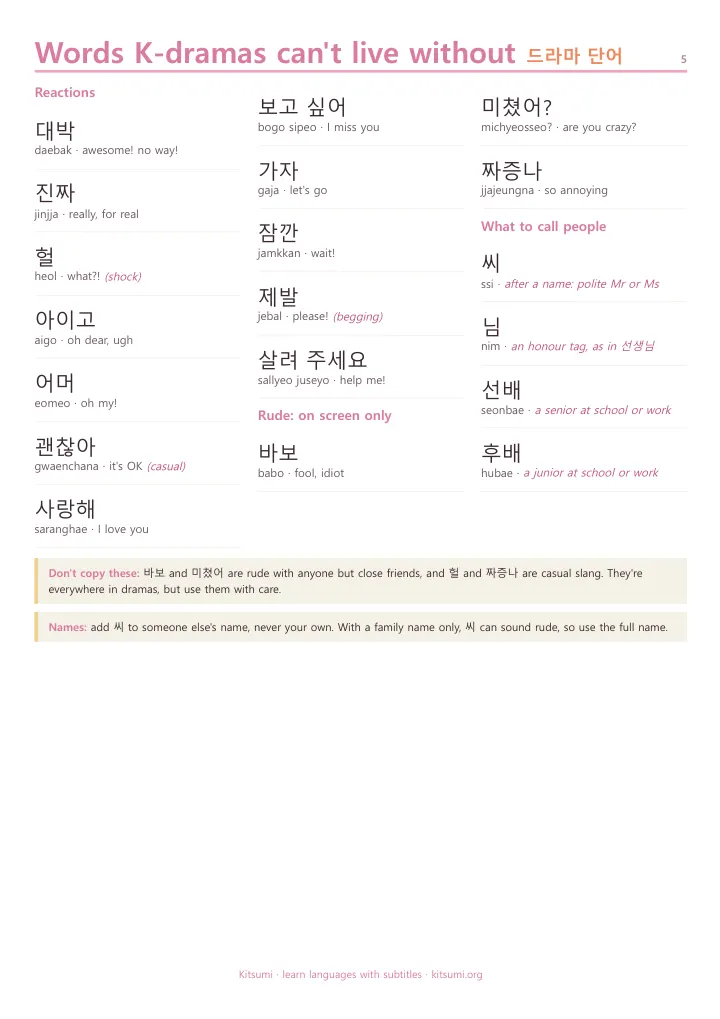 K-drama words대박, 헐, 아이고 and friends, the rude ones to only hear, and what to call people.
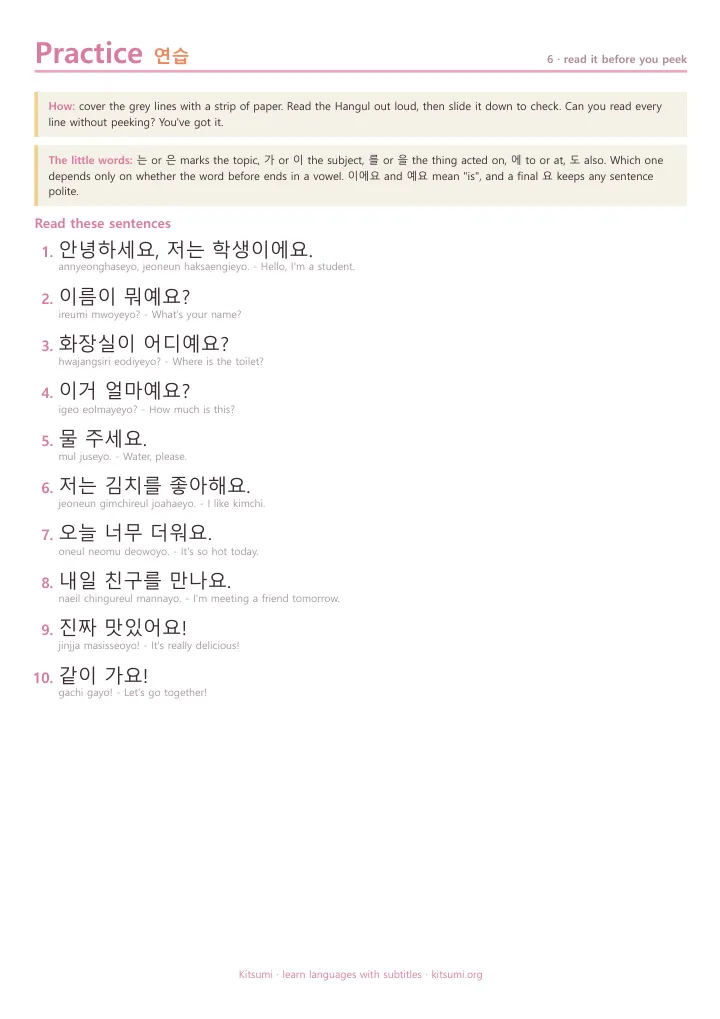 PracticeThe little particle words explained in one box, then ten sentences to read before you peek.
How to use it
- Learn five words a day.
- Say each one out loud and read the Hangul before the romanisation.
- Cover the grey lines on the practice page and read aloud, then check.
- Watch something with Korean subtitles in Kitsumi and catch the words as they come up.
More free Korean printables
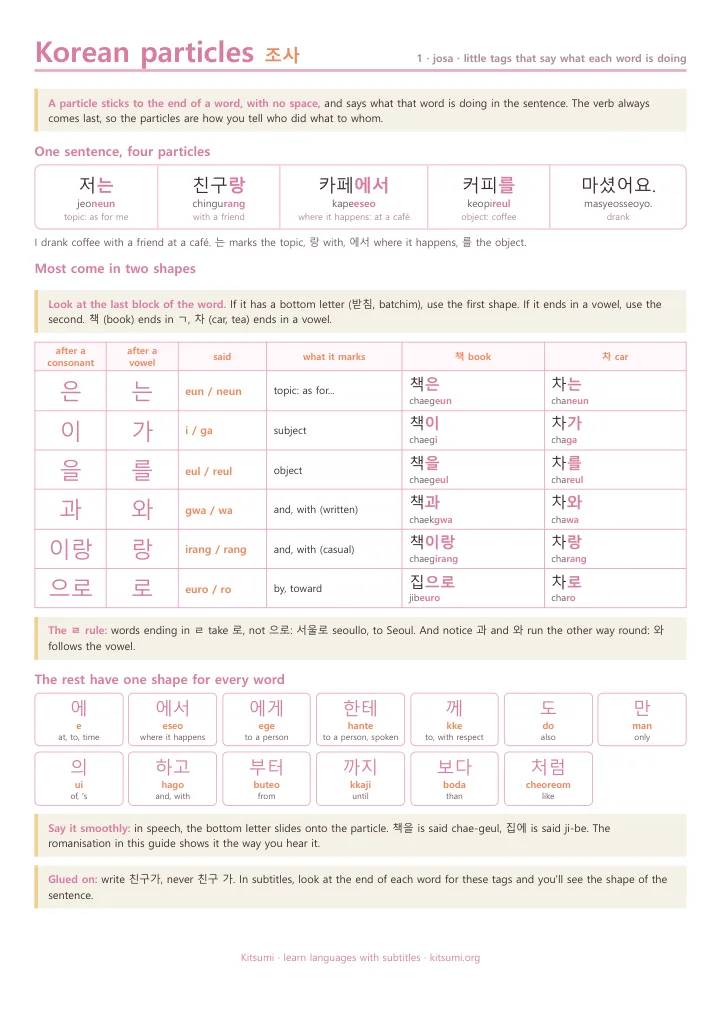 Next stepKorean particles guideThen learn the little tags on the end of each word: 은/는, 이/가, 을/를, 에 and more.
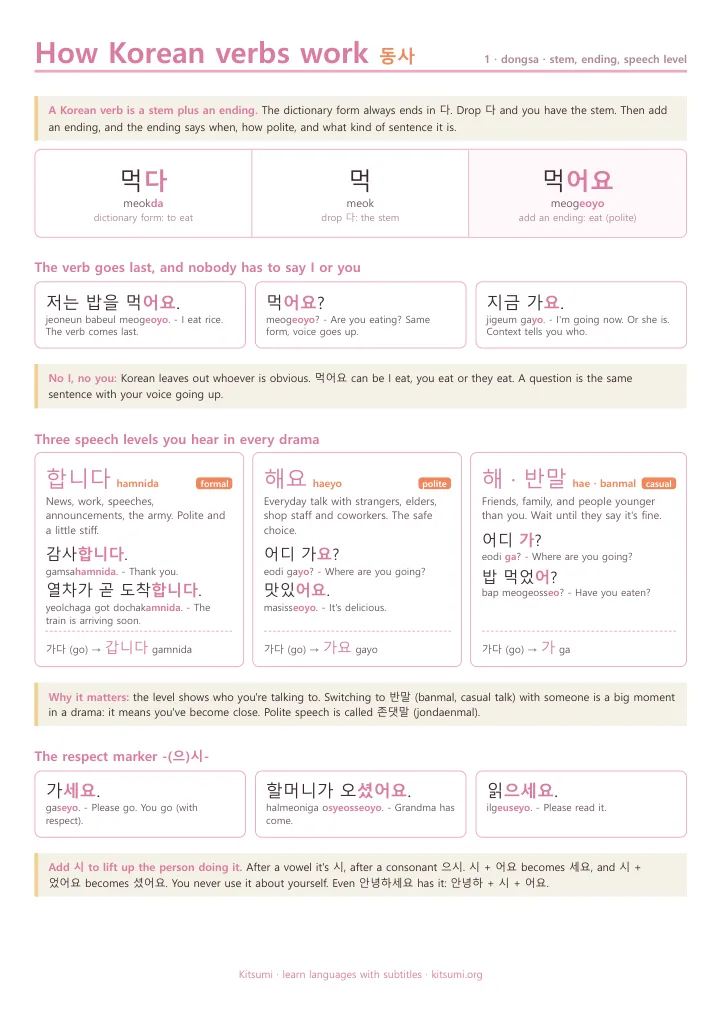 Korean verb endings and speech levelsThen learn how verbs end: 해요, 해 and 합니다, the past, the future and the endings dramas use.
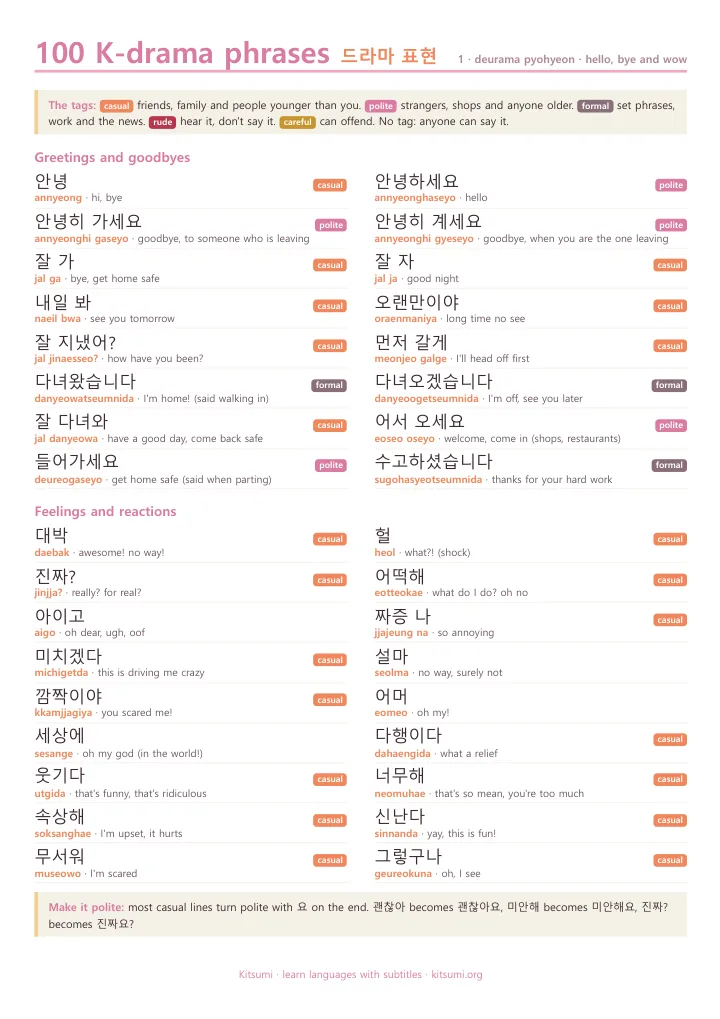 100 Korean drama phrasesThen pick up the lines dramas use all the time: 대박, 보고 싶어, 그만해 and what 오빠 really means.
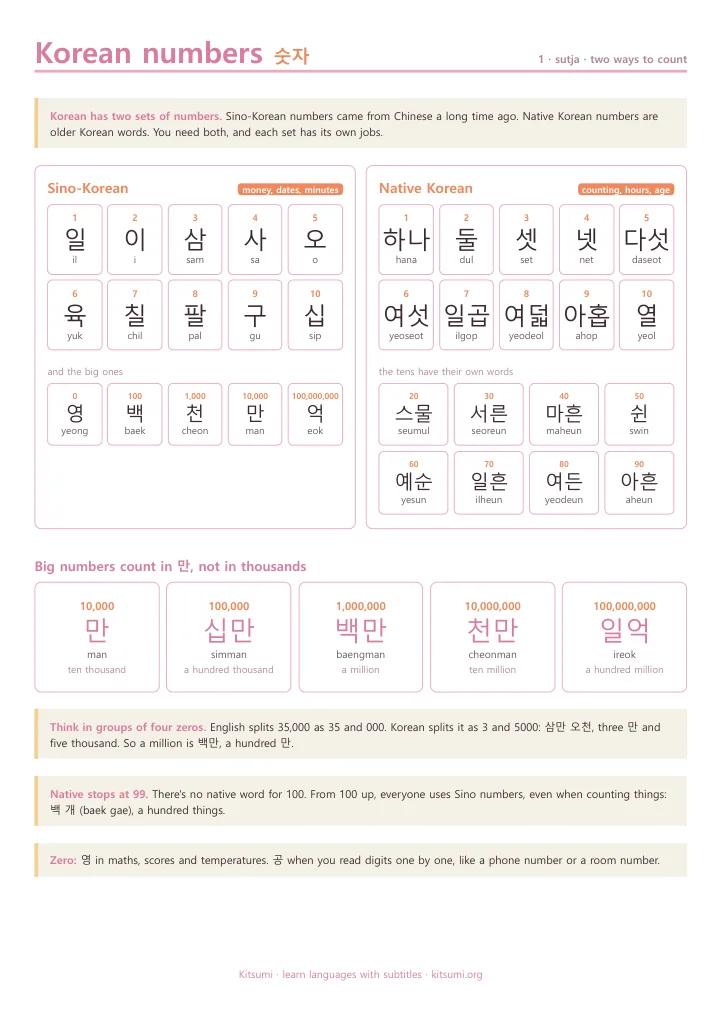 Korean numbers and countersThen sort out numbers: 일 이 삼 and 하나 둘 셋, and which one goes with prices, hours and age.
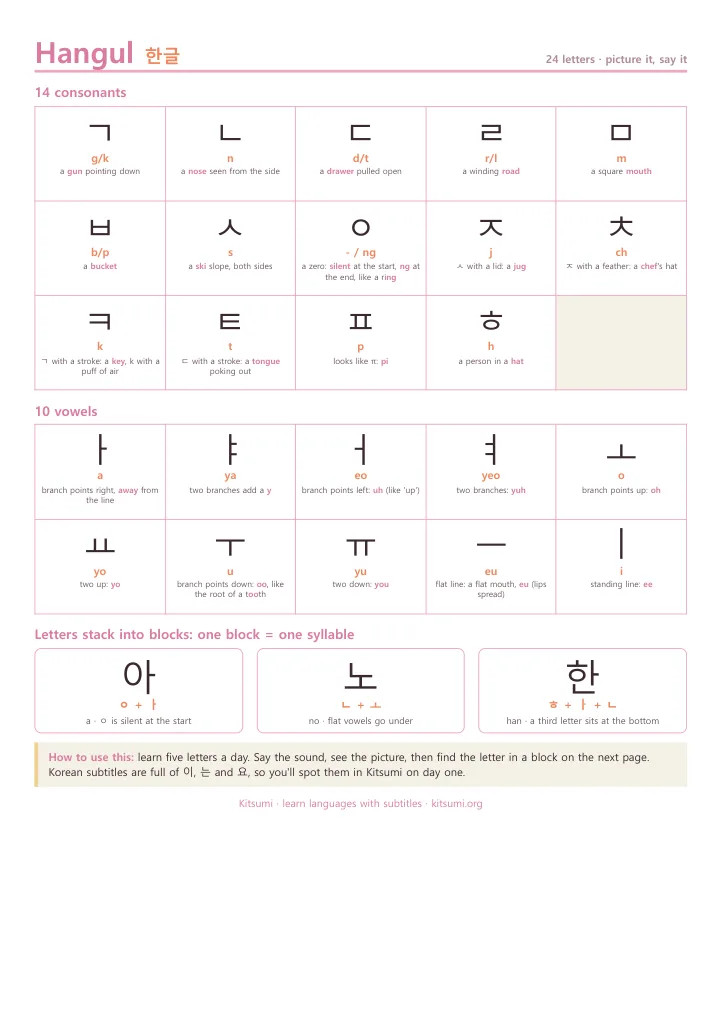 Korean Hangul chartLearn to read first. All 24 letters with a picture to remember each, and how they stack into blocks.
Questions
Is the Korean word list free?
Yes. It's a free PDF with no sign-up. Print it, keep it and share it.
Do I need to read Hangul first?
It helps. The romanisation is there as a crutch, but the free Hangul chart takes a few days and makes every word here easier.
Why are there two number systems?
Korean uses its own numbers for counting things, people, hours and age, and numbers from Chinese for money, dates, minutes and phone numbers. The list has both.