 Kitsumi
Free basic Czech words
A seven-page printable PDF for your first weeks of Czech: how it sounds, how words work, 231 everyday words and sentences to read aloud.
PDF · 7 pages · 262 KB · no sign-up · free to print and share
Next, meet these words in real videos: Kitsumi is free for Chrome and Firefox.
What's inside
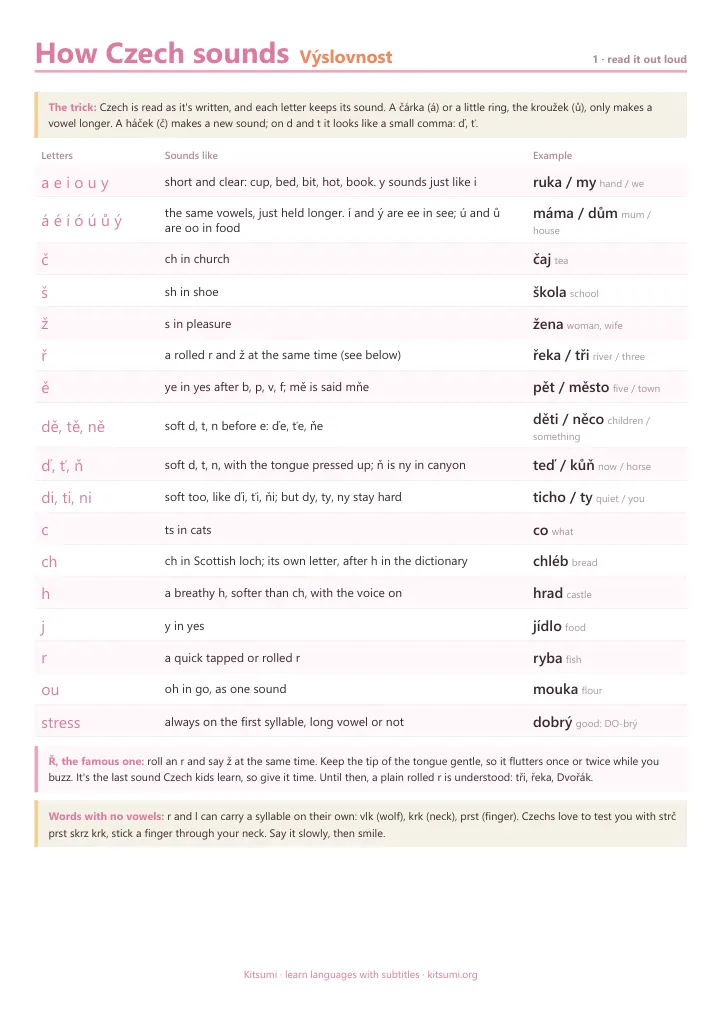
- How Czech soundsLong vowels with á and ů, the háček letters č, š, ž and ě, soft ď, ť and ň, ch, and the famous ř, with an honest tip. Plus words with no vowels at all, like vlk and krk, and stress on the first syllable.
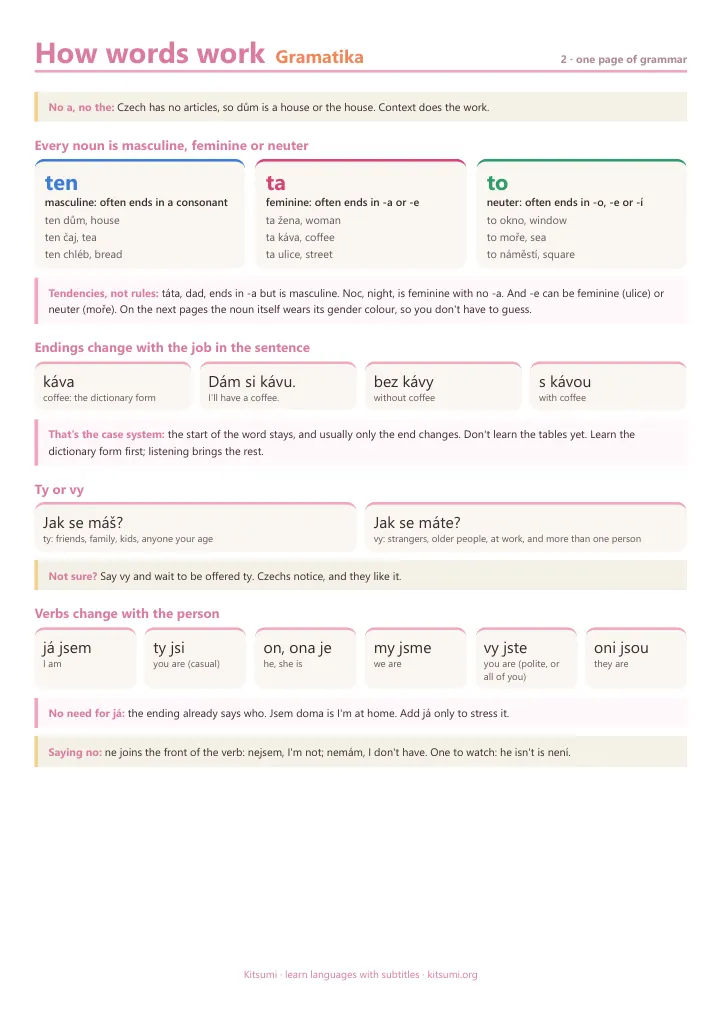
- How words workNo articles, masculine, feminine and neuter nouns with ten, ta and to in three colours, how endings change (káva, kávu, kávy), ty or vy, and být: jsem, jsi, je, jsme, jste, jsou.
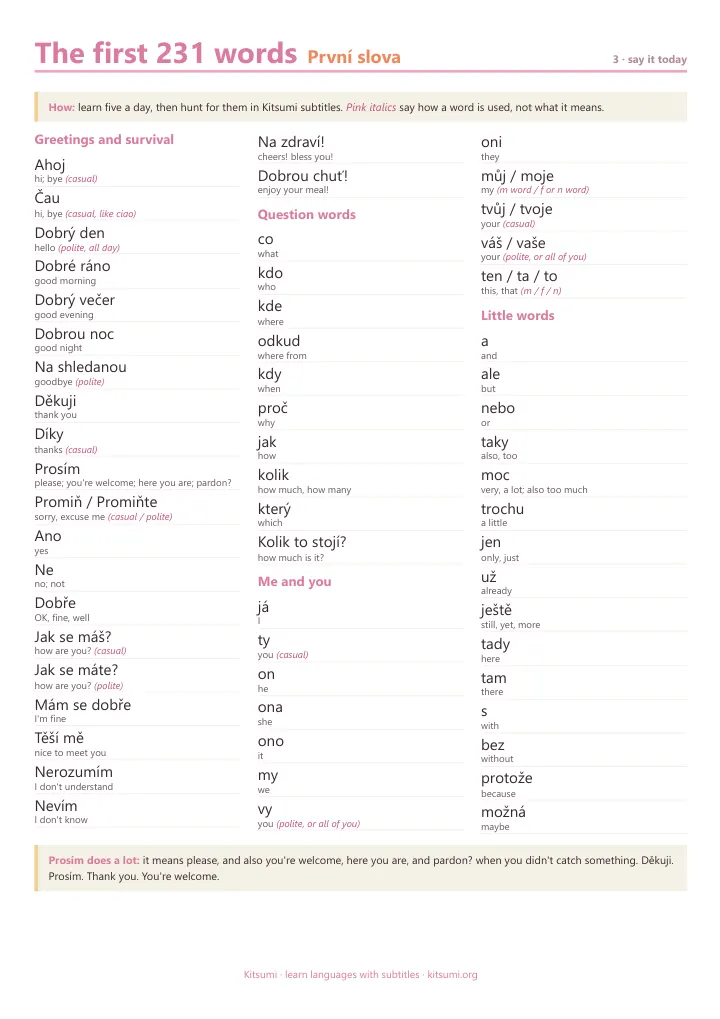
- 231 words, then show wordsAhoj, dobrý den and děkuji, family, numbers, pivo and knedlíky, places and verbs. Then jo!, fakt?, hustý and no, which means yes, what to call people, and ten sentences to read before you check.
How to use it
- Read the sounds page aloud, one row at a time. Keep it next to you while you read the rest.
- Read the grammar page twice. You don't need to learn it, just to notice ten, ta and to, and how the verb ending changes.
- Learn five words a day. Cover the grey English on the last page, read each sentence aloud, then slide the paper down to check.
- Watch something in Czech with Kitsumi and catch the words you know. Jo, no and jasně turn up in every scene.
Questions
Is it free?
Yes. It's a free PDF with no sign-up. Print it, keep it and share it.
Is Czech hard to pronounce?
Less than it looks. Czech is read as it's written, and each letter keeps its sound. Ř takes time, even for Czech kids, and a plain rolled r is understood until you get it.
Do I need to learn the cases first?
No. Learn each word in its dictionary form, the way the sheet lists it. The endings come with listening.