 Kitsumi
Free Arabic alphabet and first words
A seven-page printable PDF for your first weeks of Arabic: the letters, how they join, how words work, 171 everyday words with romanization and sentences to read aloud.
PDF · 7 pages · 397 KB · no sign-up · free to print and share
Next, meet these words in real videos: Kitsumi is free for Chrome and Firefox.
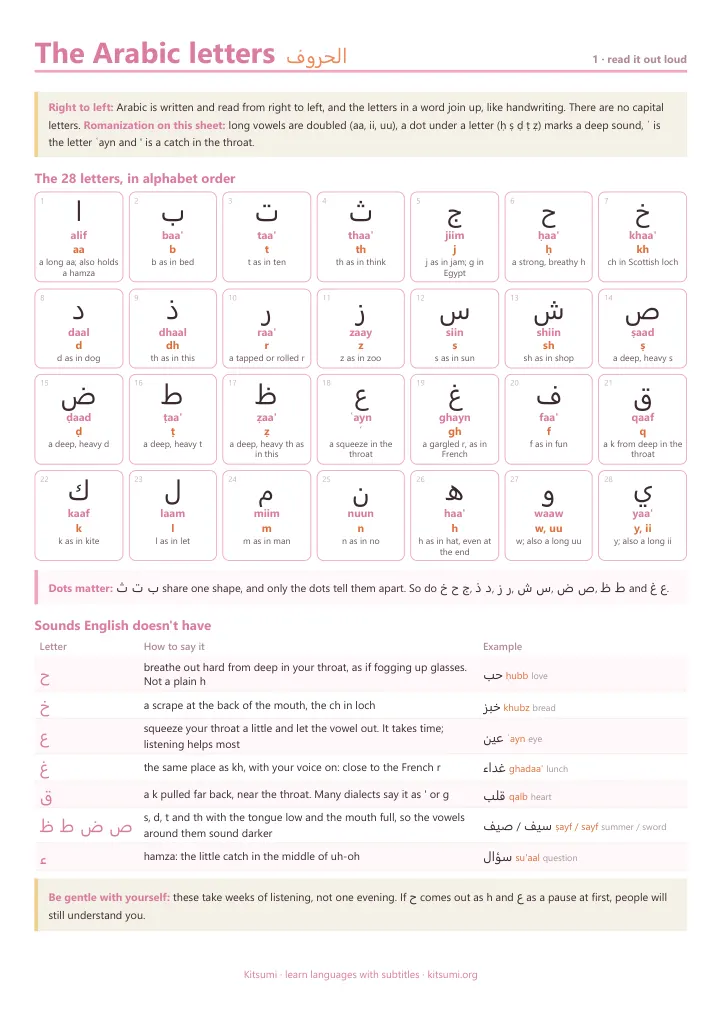
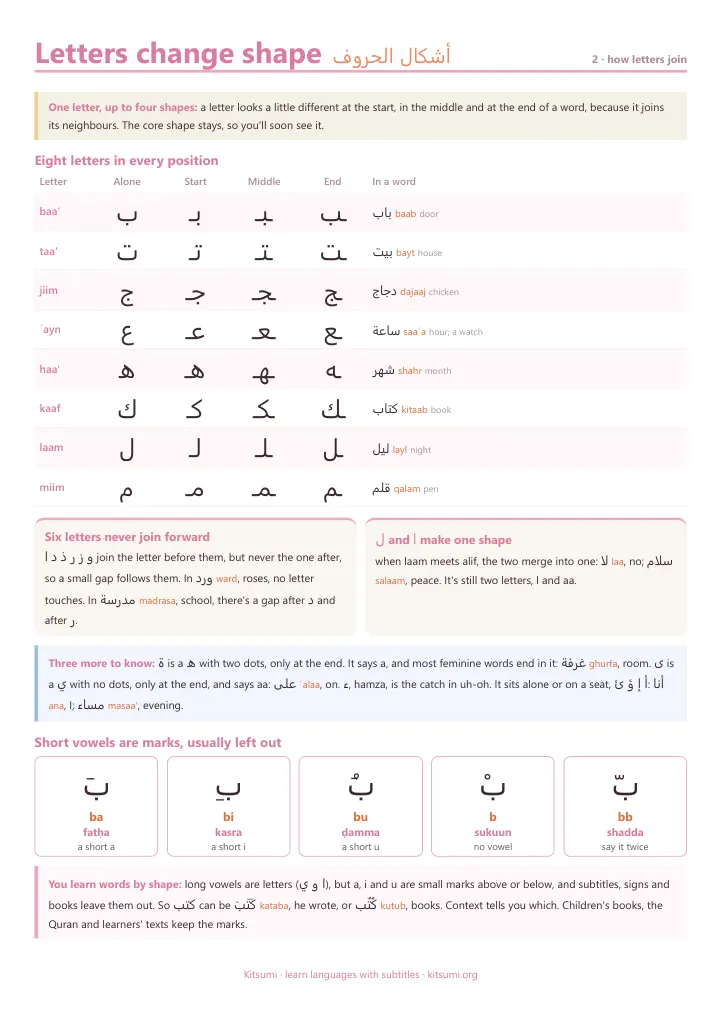
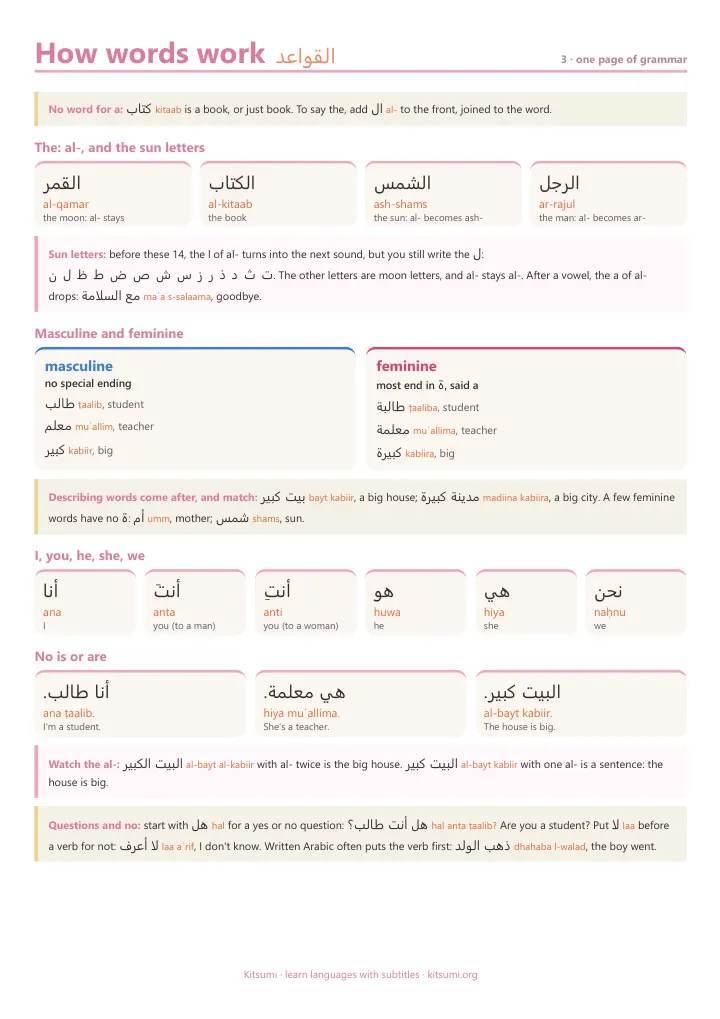
What's inside
- The letters and their shapesAll 28 letters in alphabet order, with a gentle guide to the sounds English doesn't have, from the throat sound of ع to the deep, heavy s, d and t. Then how a letter changes at the start, middle and end of a word, the six letters that never join forward, and the short vowel marks subtitles leave out.
- How words workNo word for a, the article al- and the sun letters (ash-shams, the sun), masculine and feminine, I, you, he and she, and why Arabic needs no is: أنا طالب, I'm a student.
- 171 words, then show wordsGreetings like السلام عليكم and شكرا, family, numbers in Arabic digits, food, places and verbs. Then reactions like يلا and خلاص, what to call people, a note on dialects, and ten sentences to read before you check.
How to use it
- Read the letters page aloud, one card at a time. Don't worry if the throat sounds take a while.
- Look at the shapes page, don't learn it. You'll start to see the core shape of each letter as you read words.
- Learn five words a day. Cover the romanization and the grey English on the last page, read each sentence aloud, then slide the paper down to check.
- Watch something in Arabic and catch the words you know. Hover any word in Arabic subtitles with Kitsumi to see what it means.
Questions
Is it free?
Yes. It's a free PDF with no sign-up. Print it, keep it and share it.
Do I need to learn the letters first?
No. Every word has a romanization, so you can start today. The letters come faster once you know a few words by shape.
Which Arabic is it?
Modern Standard Arabic, the Arabic of news, books and most subtitles. People speak dialects at home, and the sheet has a short note on those, but Standard Arabic is understood everywhere.