 Kitsumi
Spanish subjunctive: a friendly first guide
A six-page printable PDF that makes the Spanish subjunctive feel normal. It says what the subjunctive is in one line, shows how to build it from a form you already know, explains when Spanish uses it and when it doesn't, and is honest about the places where both moods are right with a different meaning.
PDF · 6 pages · 324 KB · no sign-up · free to print and share
Was it useful?Ideas or a mistake? Tell us on Discord
Next, meet these words in real videos: Kitsumi is free for Chrome and Firefox.
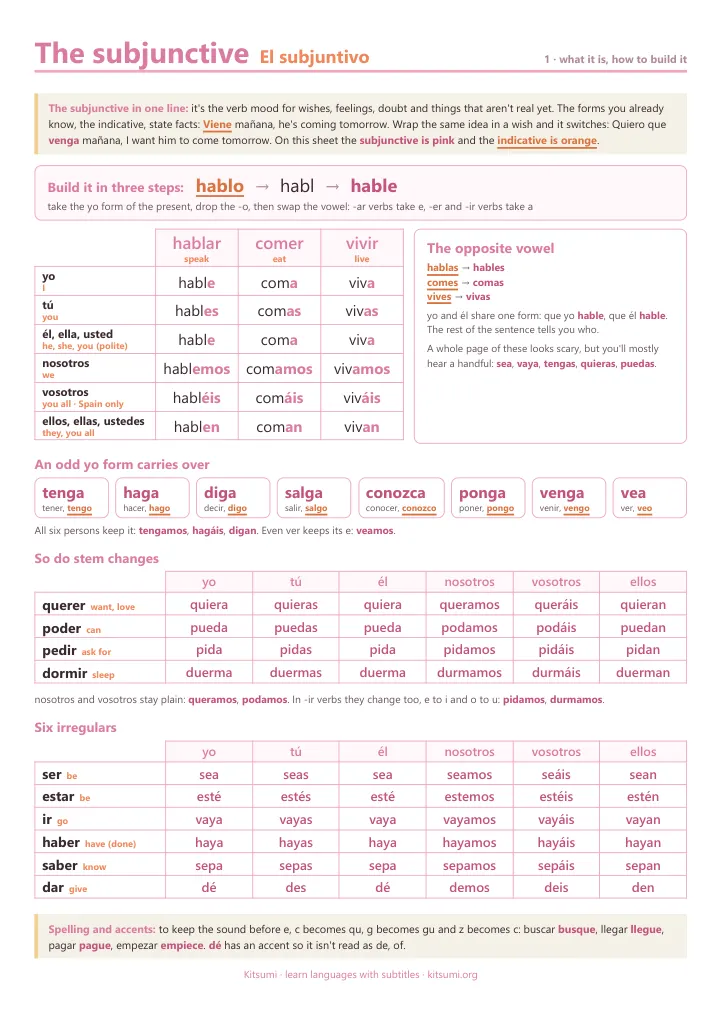
What's inside
- The subjunctiveWhat it is in one line, how to build it in three steps from the yo form, hable, coma, viva, how tenga, haga and diga carry over, stem changes like quiera and pidamos, the six irregulars, sea, esté, vaya, haya, sepa and dé, and the spelling changes in busque, llegue and empiece.
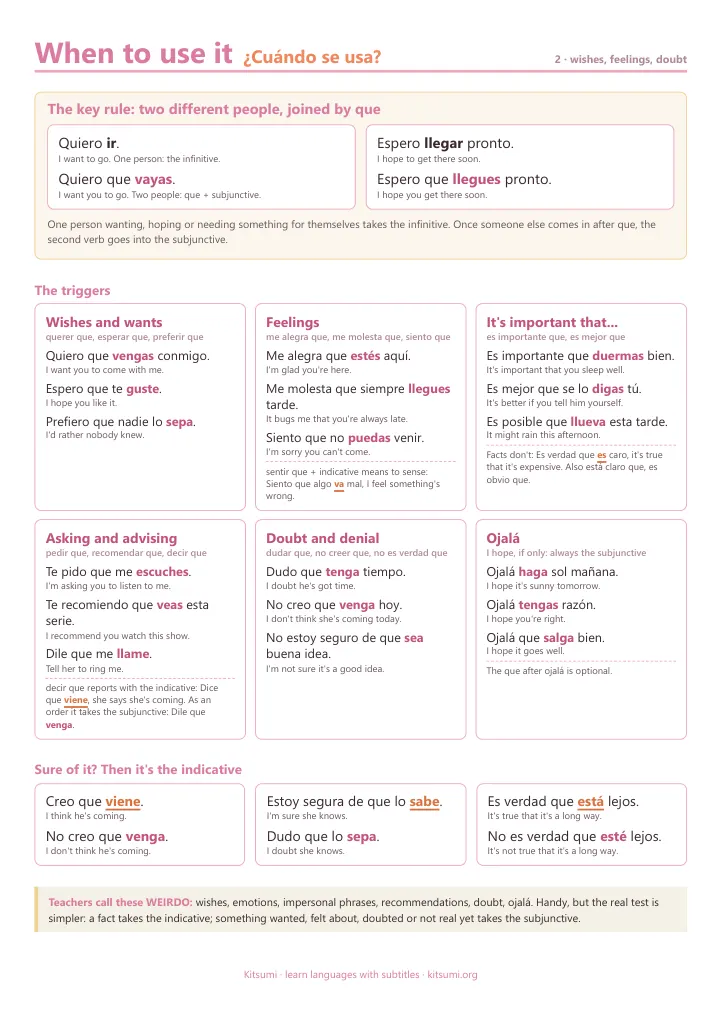
- When to use itThe key rule, Quiero ir but Quiero que vayas, then the triggers: wishes, feelings, It's important that, asking and advising, doubt and denial, and ojalá, with Creo que viene next to No creo que venga.
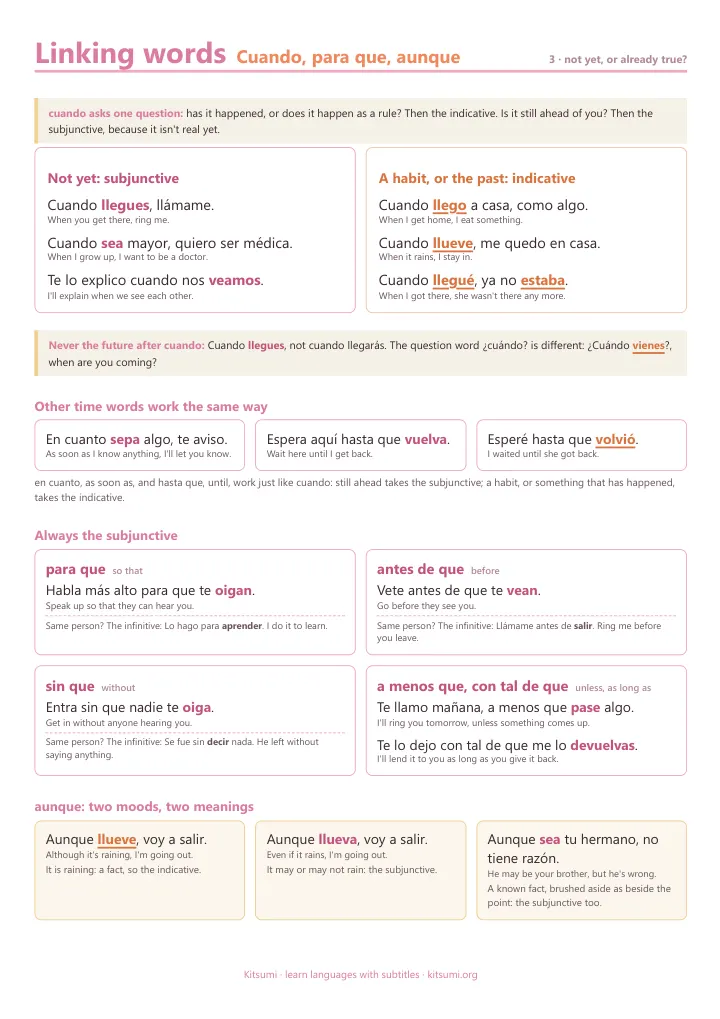
- Linking wordscuando for what's still ahead, Cuando llegues, llámame, next to habits and the past, en cuanto and hasta que, para que, antes de que and sin que, and aunque in both moods: Aunque llueve and Aunque llueva.
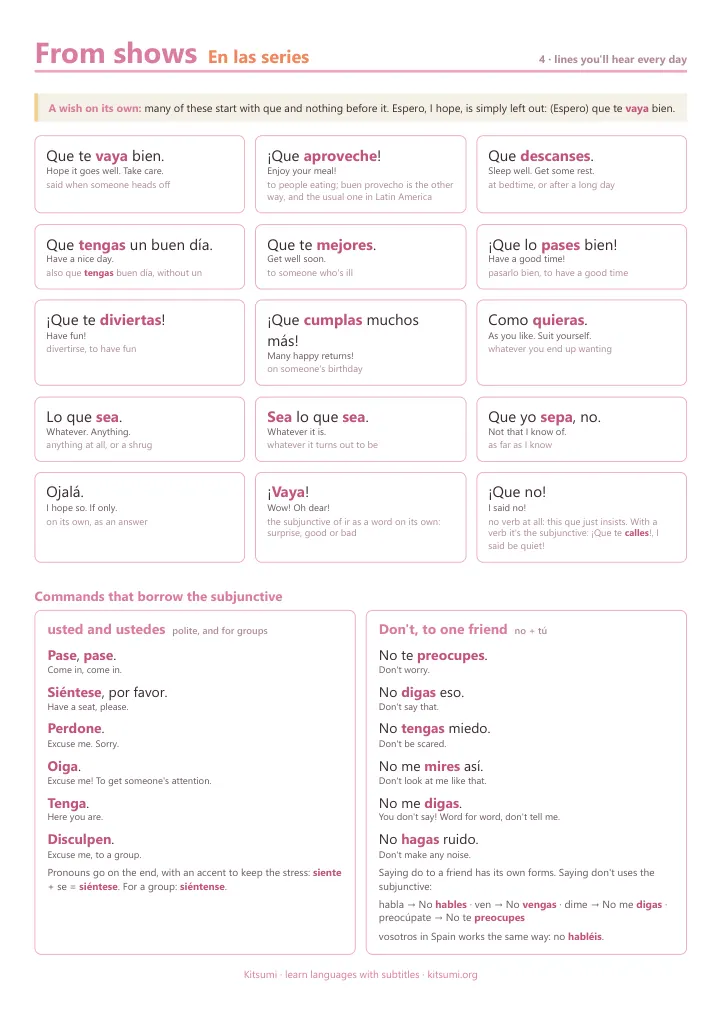 From showsFifteen everyday lines like Que te vaya bien, Que descanses, Como quieras and Sea lo que sea, then the commands that borrow the subjunctive: Siéntese, Oiga, No te preocupes and No me digas.
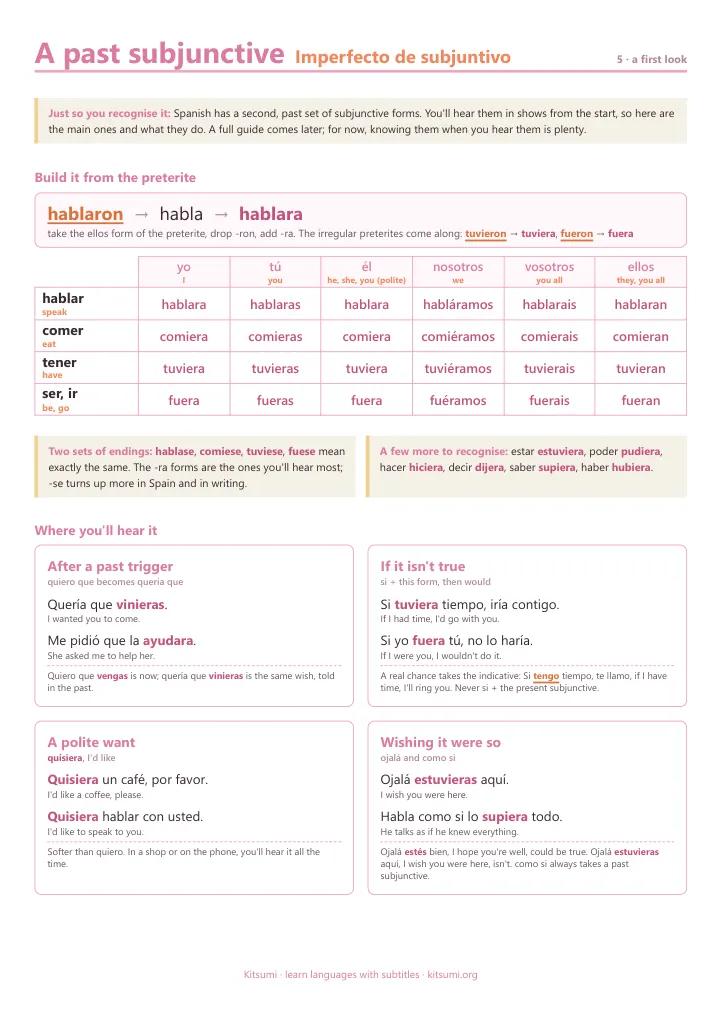 A past subjunctiveA first look at hablara, tuviera and fuera, so you recognise them: after a past wish, Si tuviera tiempo..., Quisiera un café and como si.
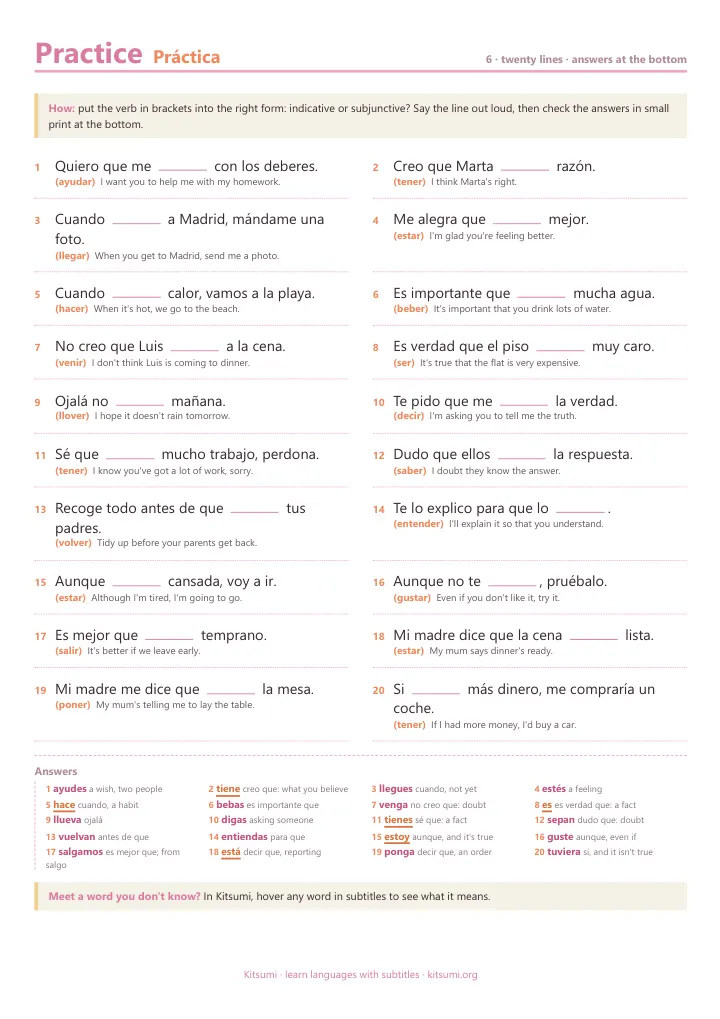 PracticeTwenty sentences where you pick the indicative or the subjunctive and the right form, with the answers and the reason in small print at the bottom.
How to use it
- Start with the Spanish verbs guide if present tense endings are new to you.
- Build a few verbs on the first page yourself before you look at the tables.
- Read the examples on pages two and three out loud and ask: a fact, or not?
- Do the practice page, then listen for que + subjunctive in Spanish subtitles. In Kitsumi, hover any word to see what it means.
More free Spanish printables
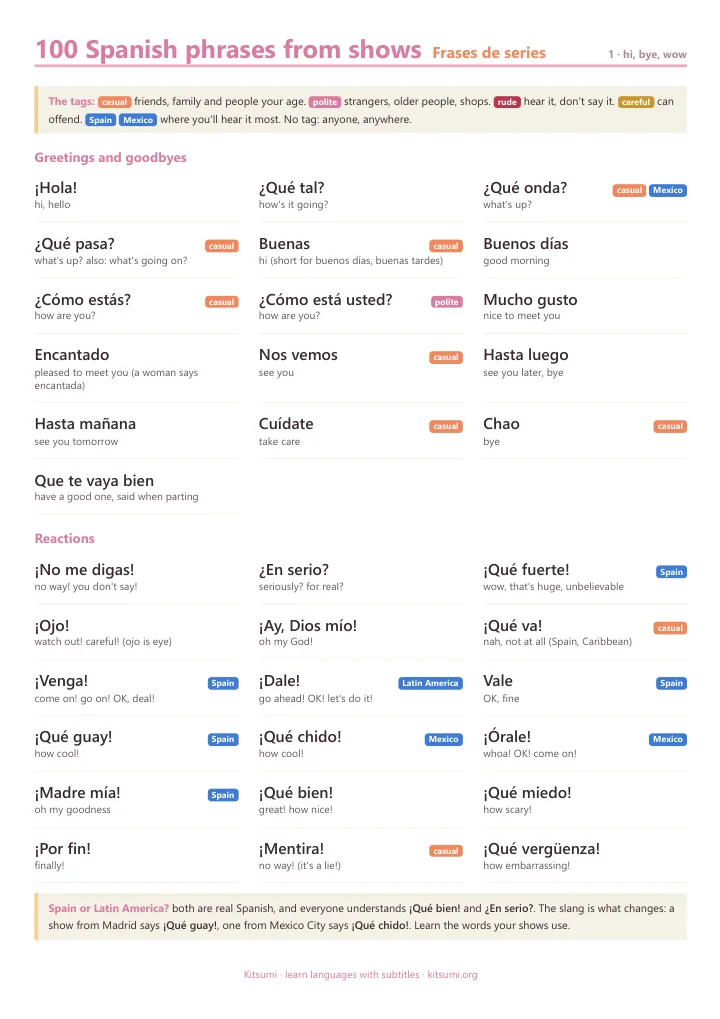 Next step100 Spanish phrases from showsThen pick up the lines series use all the time: ¡No me digas!, te quiero or te amo, ¡Déjame en paz! and what güey really means.
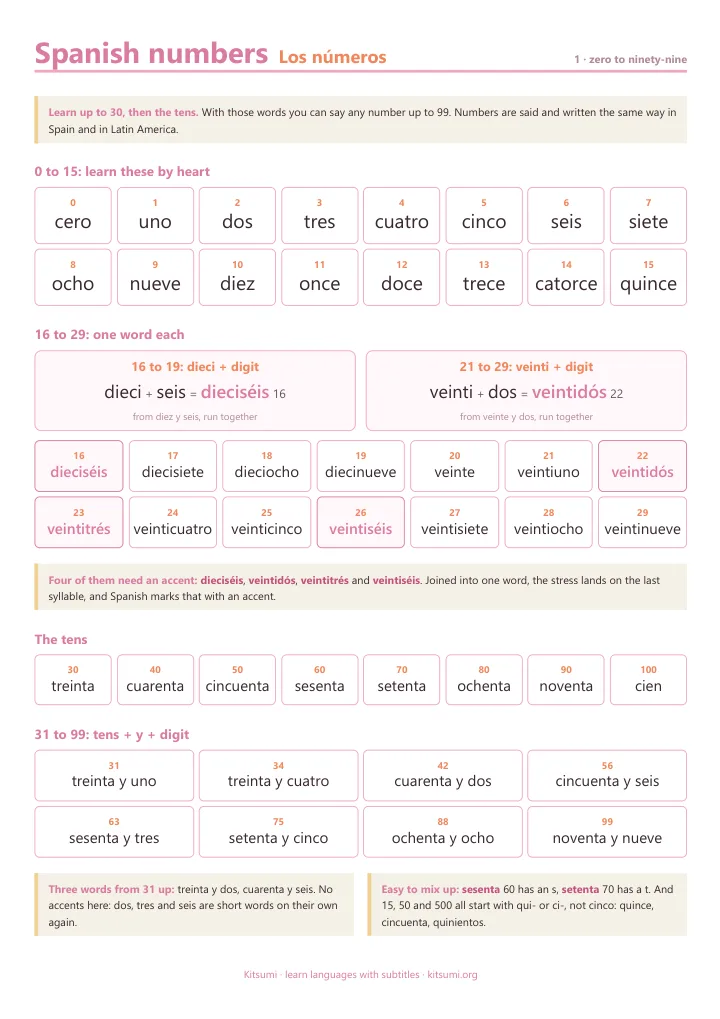 Spanish numbers, time and moneyThen sort out numbers: dieciséis and veintidós, quinientos and un millón, then the time, dates and prices.
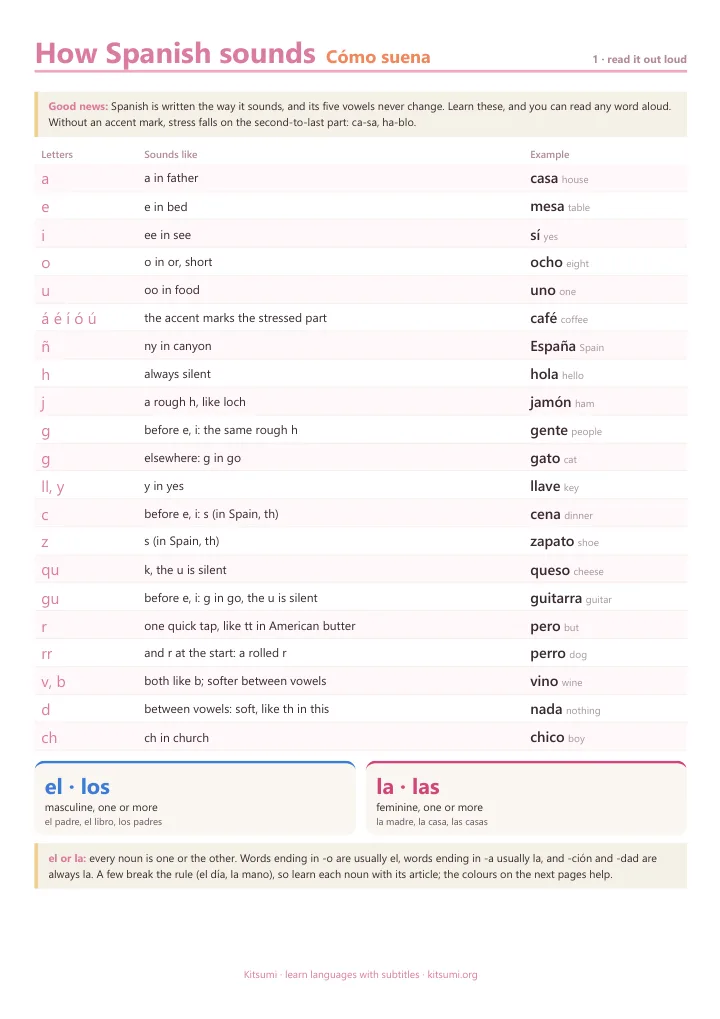 Basic Spanish wordsStart here. How every letter sounds, then 218 first words with el and la in colour.
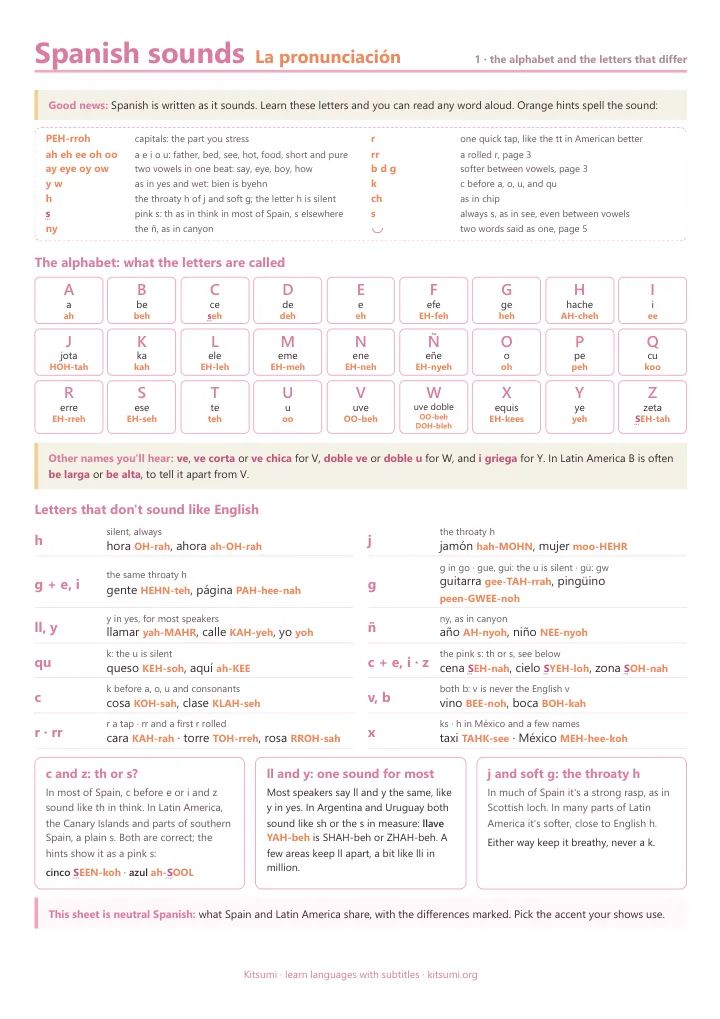 Spanish pronunciation guideThen learn how the letters really sound: the five vowels, the two r's, c and z in Spain and Latin America, and where the stress falls.
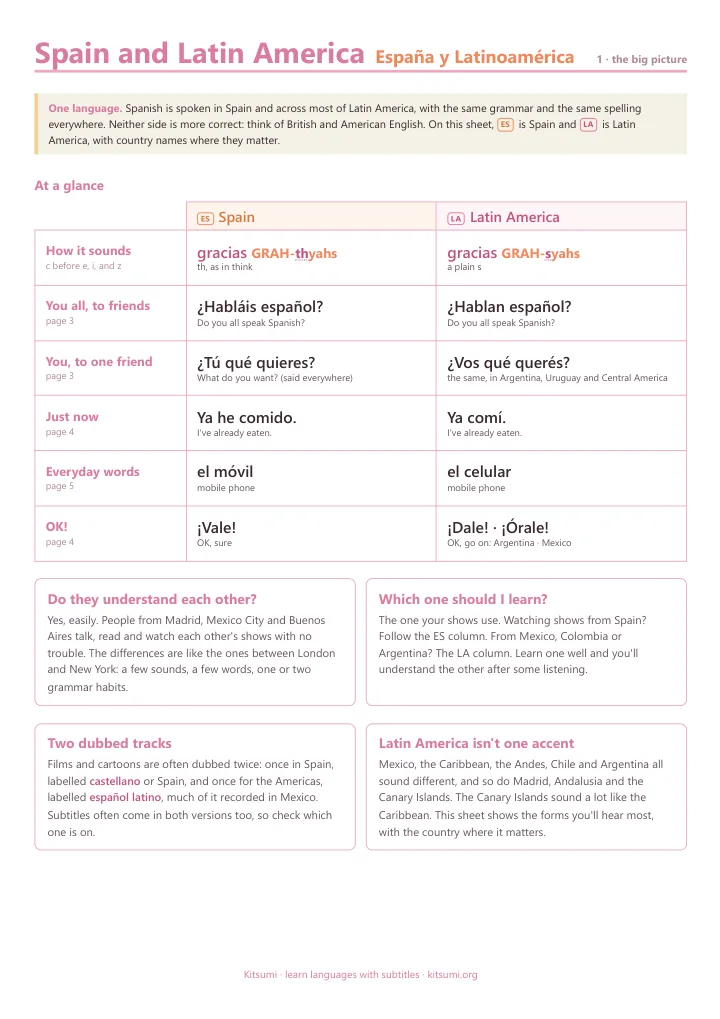 Spanish in Spain and Latin America: sounds, you, words and slang comparedThen see how Spain and Latin America differ: the c and z sound, vosotros, ustedes and vos, he comido and comí, and the everyday words.
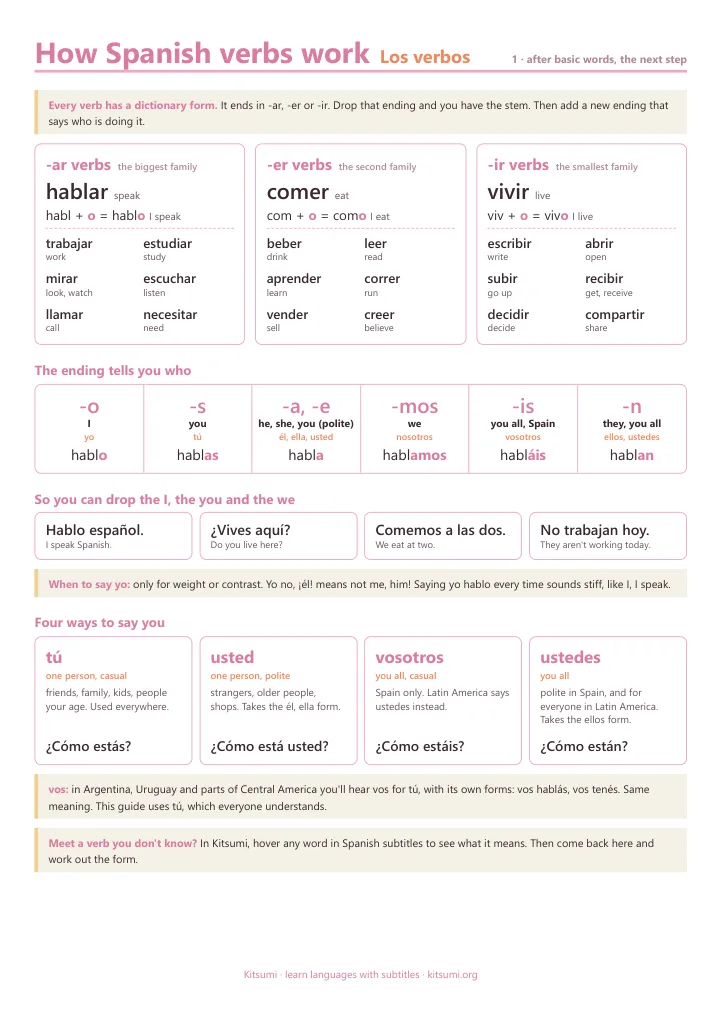 Spanish verbs guideMake verbs say who and when: the present, the boot verbs, the past and ir a.
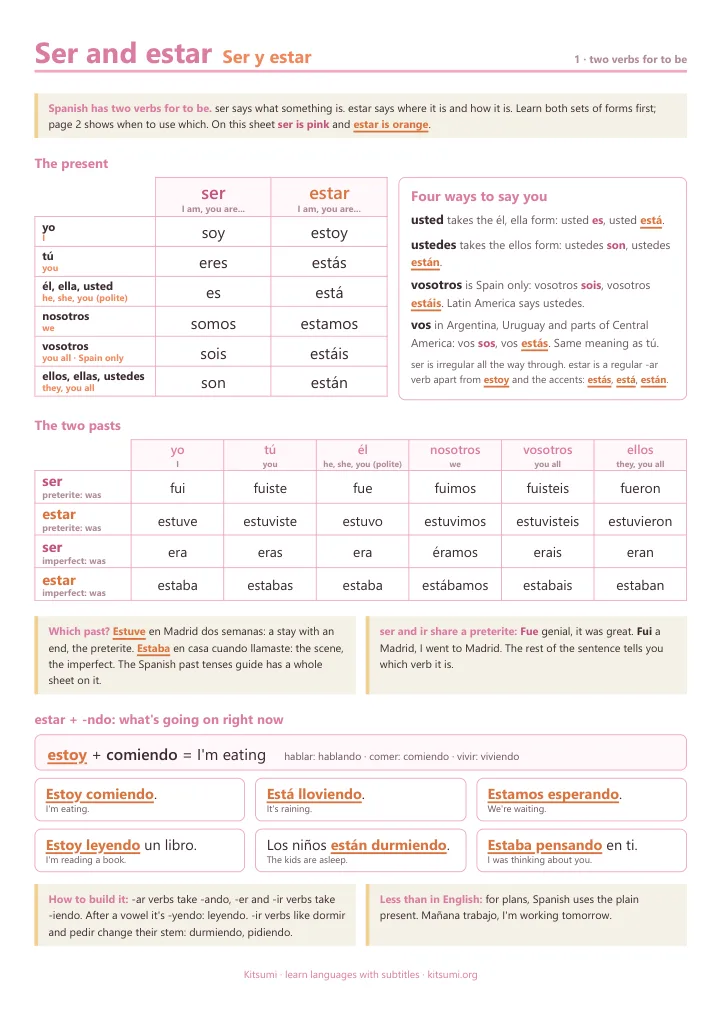 Spanish ser and estar: the two verbs for to beThen pin down the two verbs for to be: soy or estoy, es or está.
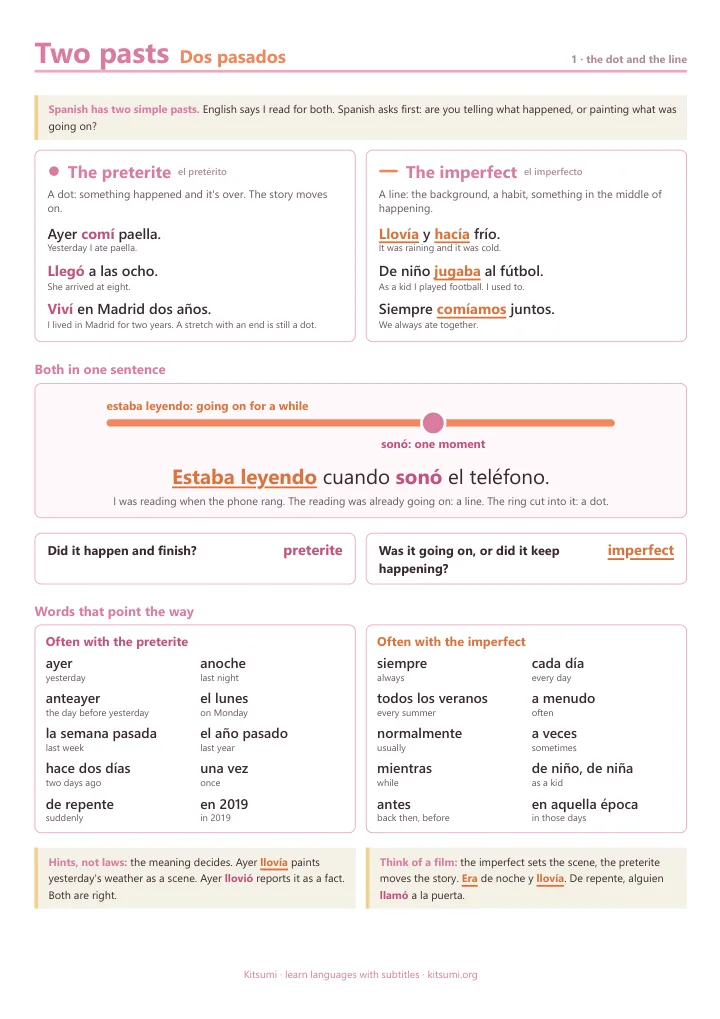 Spanish past tenses: preterite or imperfect?Then sort out the two pasts: fue or era, supe or sabía, and why it matters.
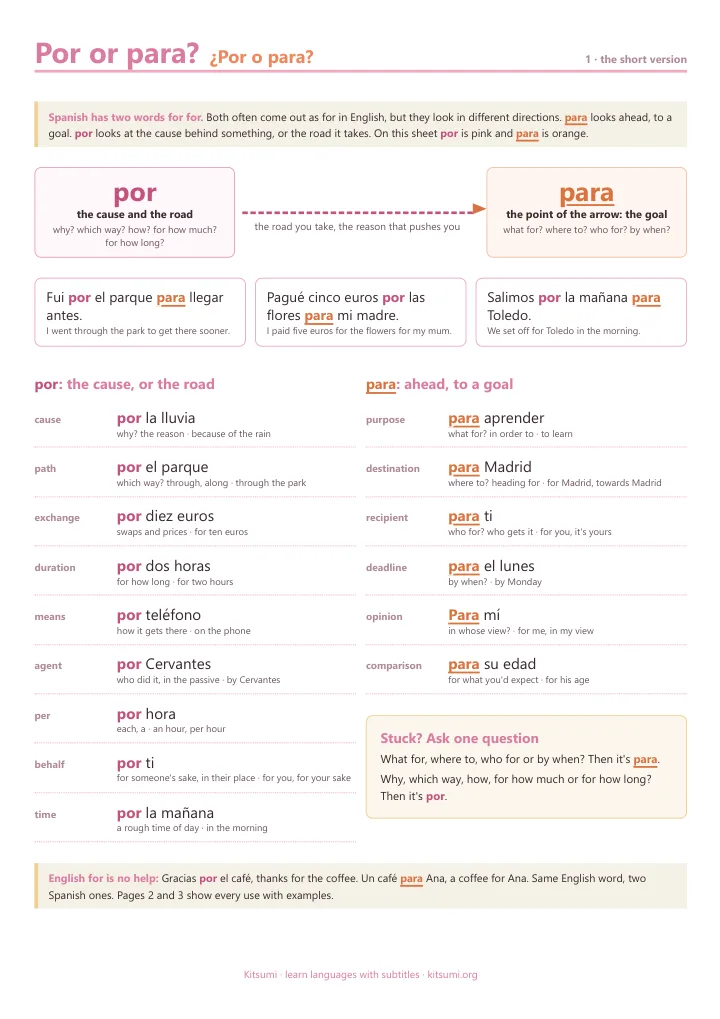 Spanish grammar: por or para?Then sort out the two words for for: por or para.
Questions
Is the Spanish subjunctive guide free?
Yes. It's a free PDF with no sign-up. Print it, keep it and share it.
When do you use the subjunctive in Spanish?
Mostly after que when the sentence is about wanting, feeling, doubting or something that isn't real yet: Quiero que vengas, I want you to come. Facts and beliefs take the indicative: Creo que viene.
How do you form the present subjunctive?
Take the yo form of the present, drop the -o and swap the vowel: -ar verbs take e, -er and -ir verbs take a. hablo gives hable, como gives coma, and tengo gives tenga.