 Kitsumi
Spanish in Spain and Latin America compared
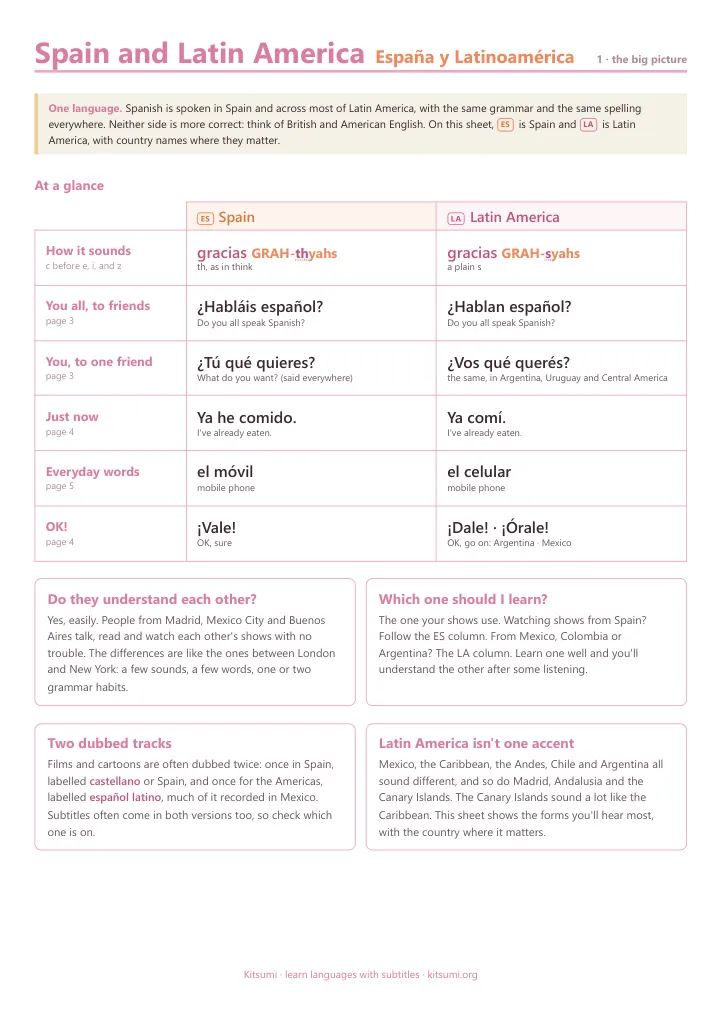
A six-page printable PDF that puts Spain and Latin America side by side: how each one sounds, the four ways to say you, the past tense each side prefers, the everyday words that change by country and the little words that tell you where a speaker is from. Both are equally correct, so it helps you follow shows from anywhere, marked ES and LA throughout.
PDF · 6 pages · 281 KB · no sign-up · free to print and share
Was it useful?Ideas or a mistake? Tell us on Discord
Next, meet these words in real videos: Kitsumi is free for Chrome and Firefox.
What's inside
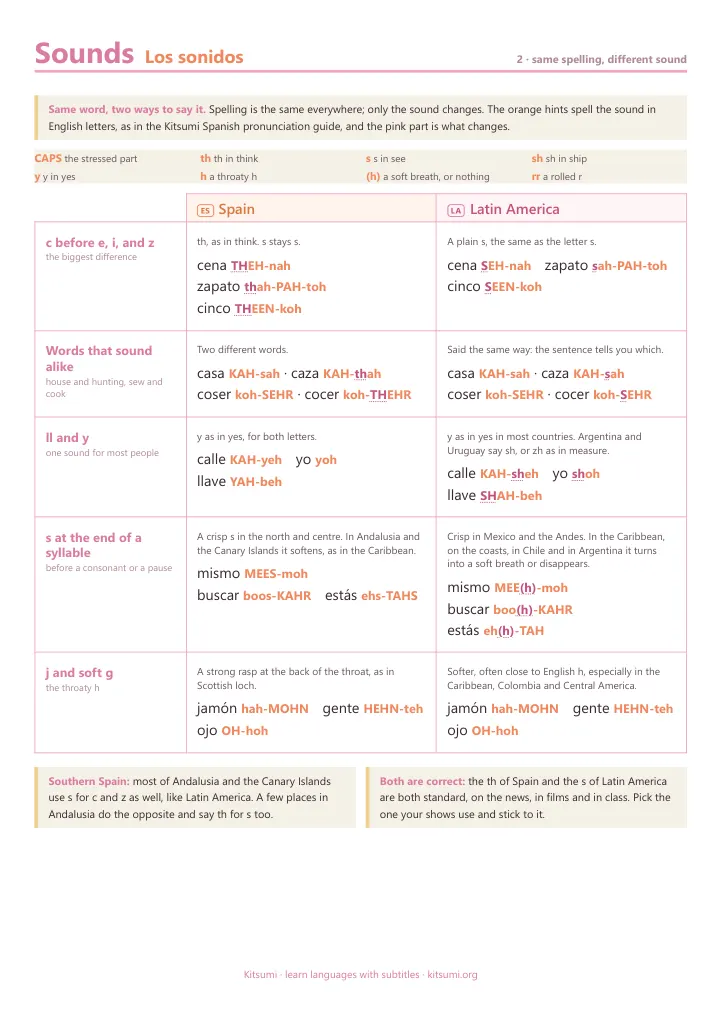
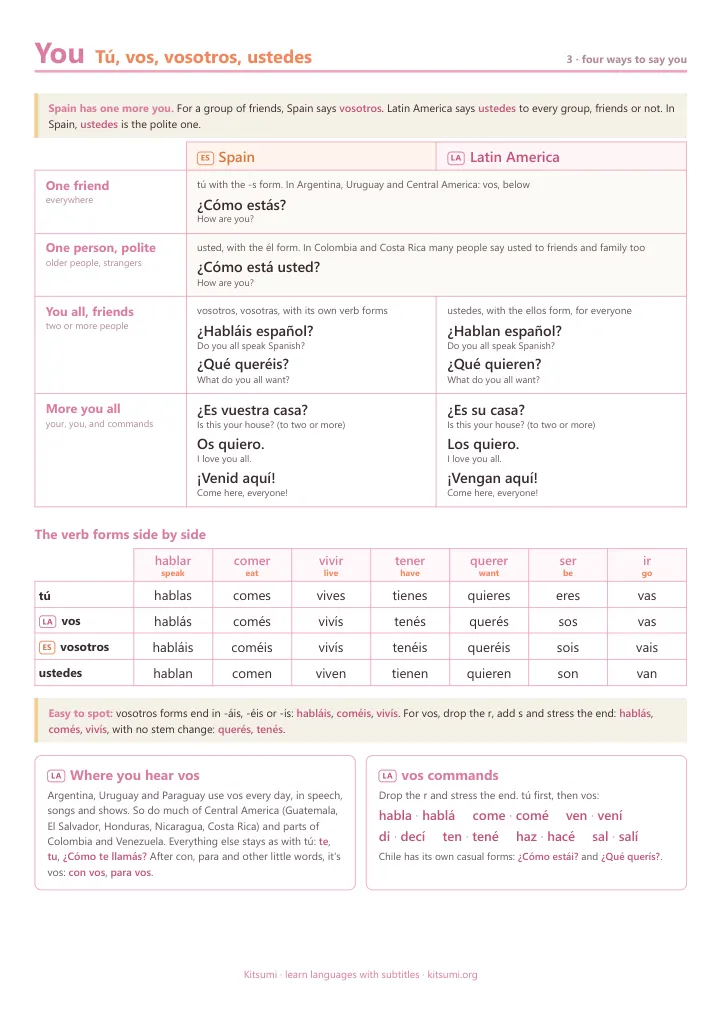
- Sounds and youThe th of Spain and the s of Latin America in cena, zapato and cinco, casa and caza said alike, ll and y as sh in Argentina and Uruguay, the soft s of the Caribbean and Andalusia, the j, then tú, usted, vosotros, ustedes and vos with a table of seven verbs in every form and the vos commands hablá, vení and decí.
- The past and the little wordsHoy he hablado in Spain and hoy hablé in Latin America, ¿Qué ha pasado? and ¿Qué pasó?, then greetings and fillers from Spain, Mexico, Argentina and Uruguay, Colombia, Venezuela, Chile and the Caribbean: vale, órale, che, chévere, cachai, pana and more.
- Words and practiceSixteen everyday words like coche, carro and auto, ordenador and computadora, zumo and jugo, piscina, alberca and pileta, with the country for each, words like tortilla and torta that mean different things, coger and three more to use with care, and twenty practice items with answers.
How to use it
- Learn how Spanish sounds first. The pronunciation guide uses the same sound hints.
- Pick the side your shows come from and read its column out loud.
- Cover one column and say the other from memory, then try the vos forms.
- Do the practice page, then listen for vosotros or ustedes, and vale or órale, in shows with Kitsumi.
More free Spanish printables
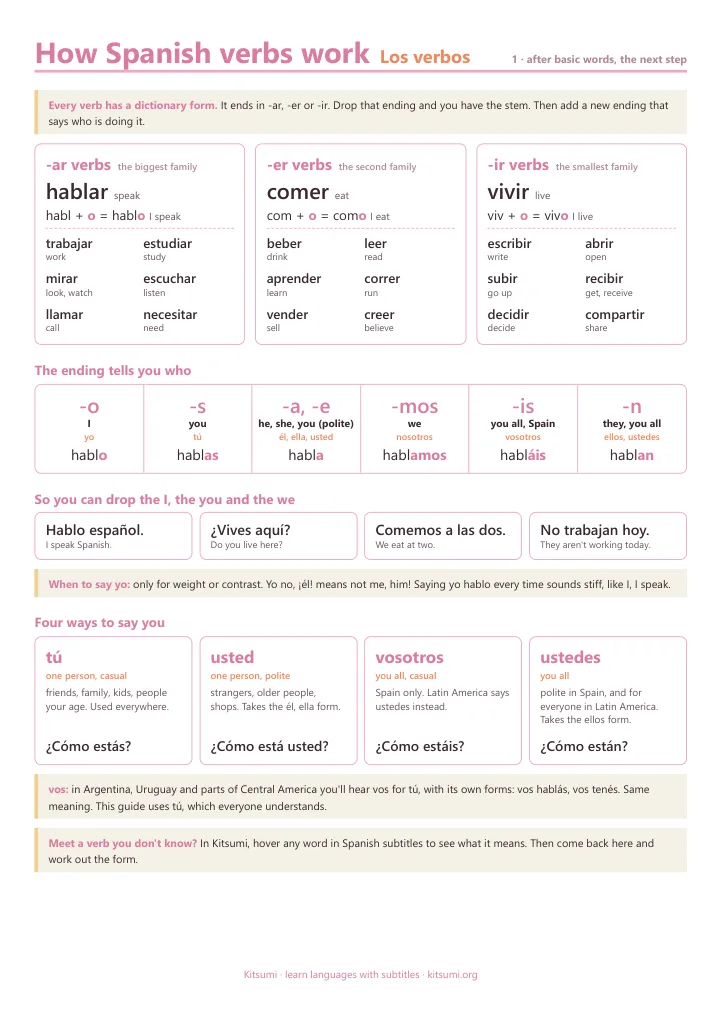 Next stepSpanish verbs guideMake verbs say who and when: the present, the boot verbs, the past and ir a.
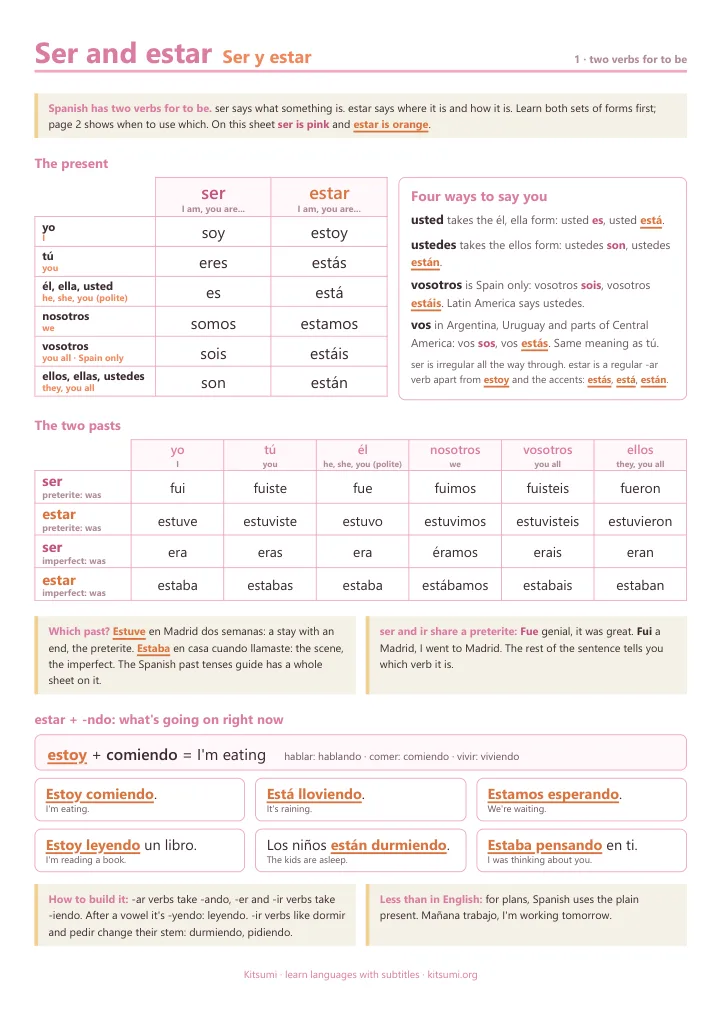 Spanish ser and estar: the two verbs for to beThen pin down the two verbs for to be: soy or estoy, es or está.
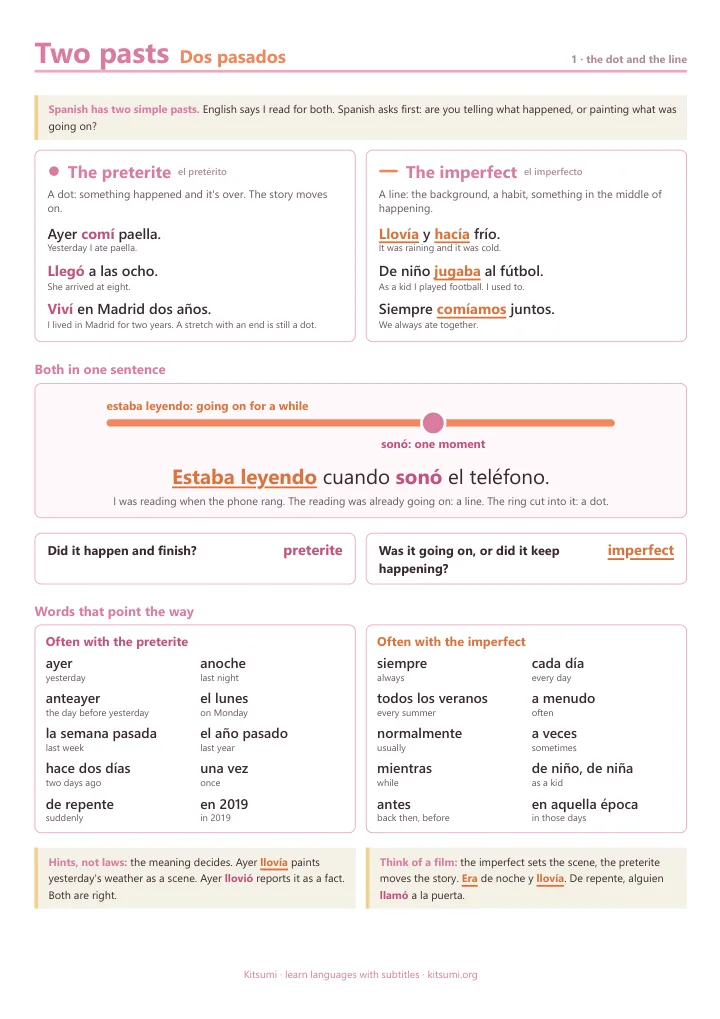 Spanish past tenses: preterite or imperfect?Then sort out the two pasts: fue or era, supe or sabía, and why it matters.
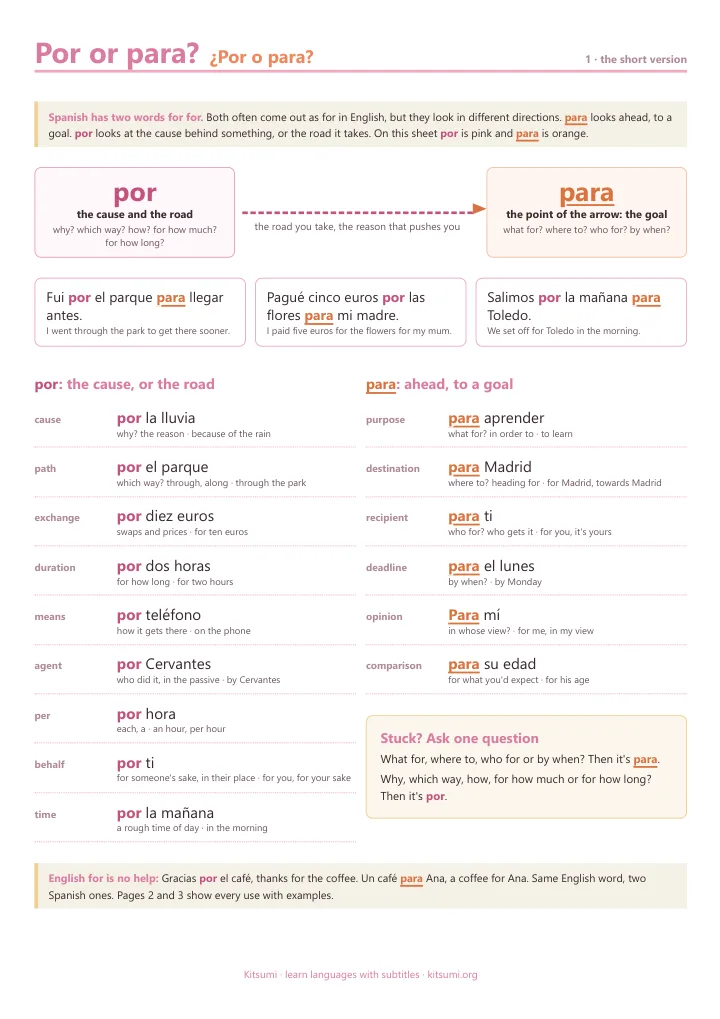 Spanish grammar: por or para?Then sort out the two words for for: por or para.
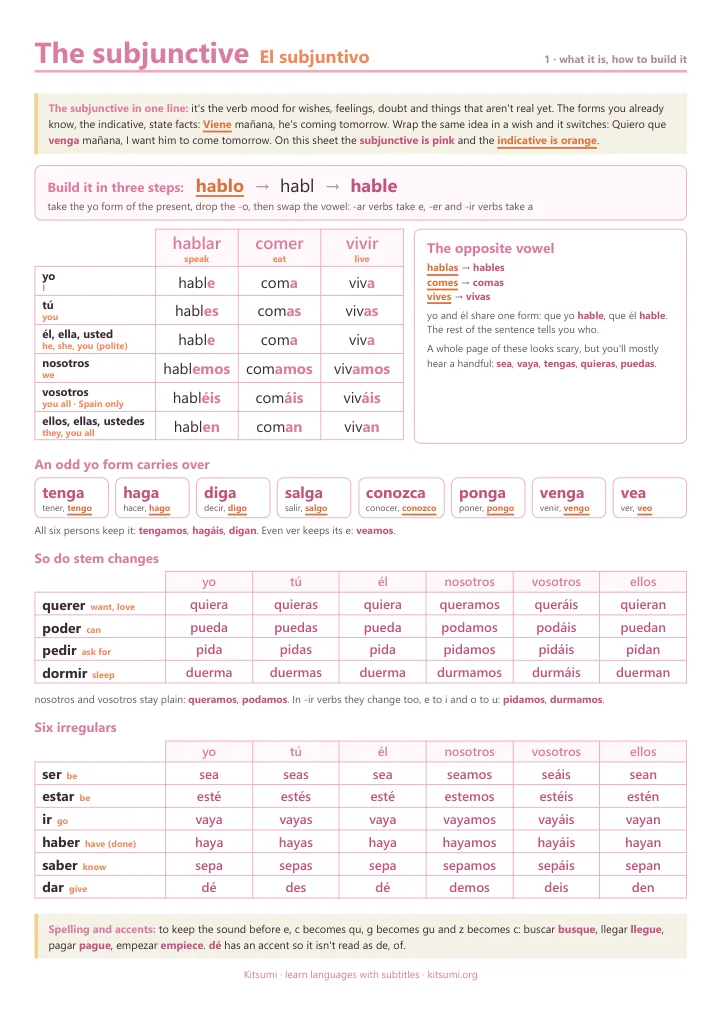 Spanish subjunctive: a friendly first guide to the verb moodThen meet the subjunctive: Quiero que vengas, Ojalá, Que te vaya bien.
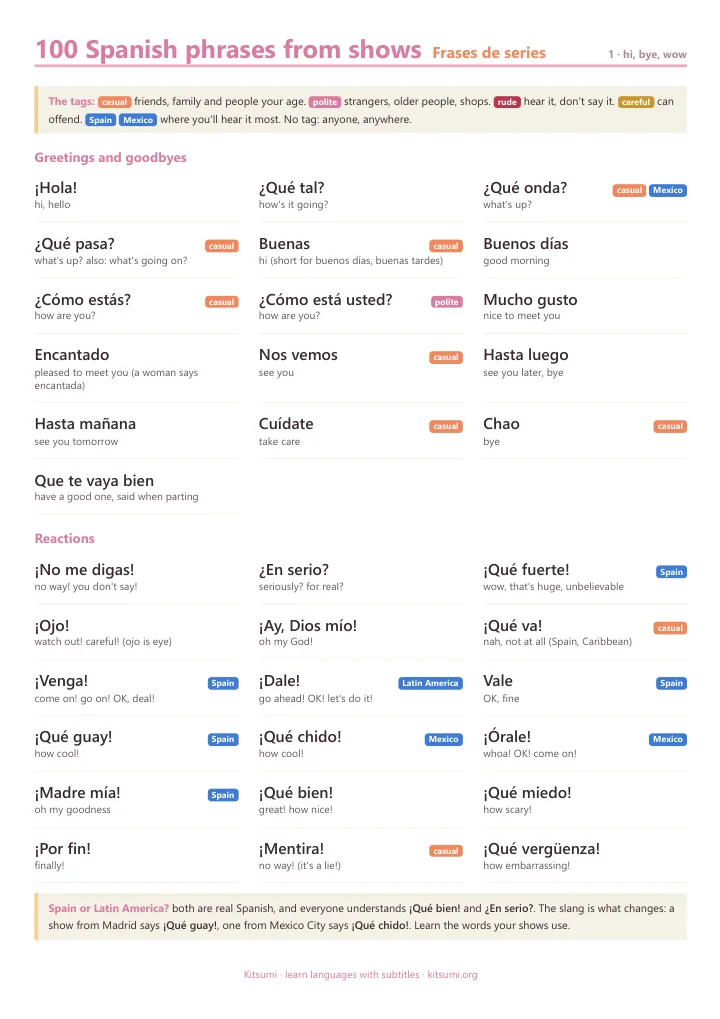 100 Spanish phrases from showsThen pick up the lines series use all the time: ¡No me digas!, te quiero or te amo, ¡Déjame en paz! and what güey really means.
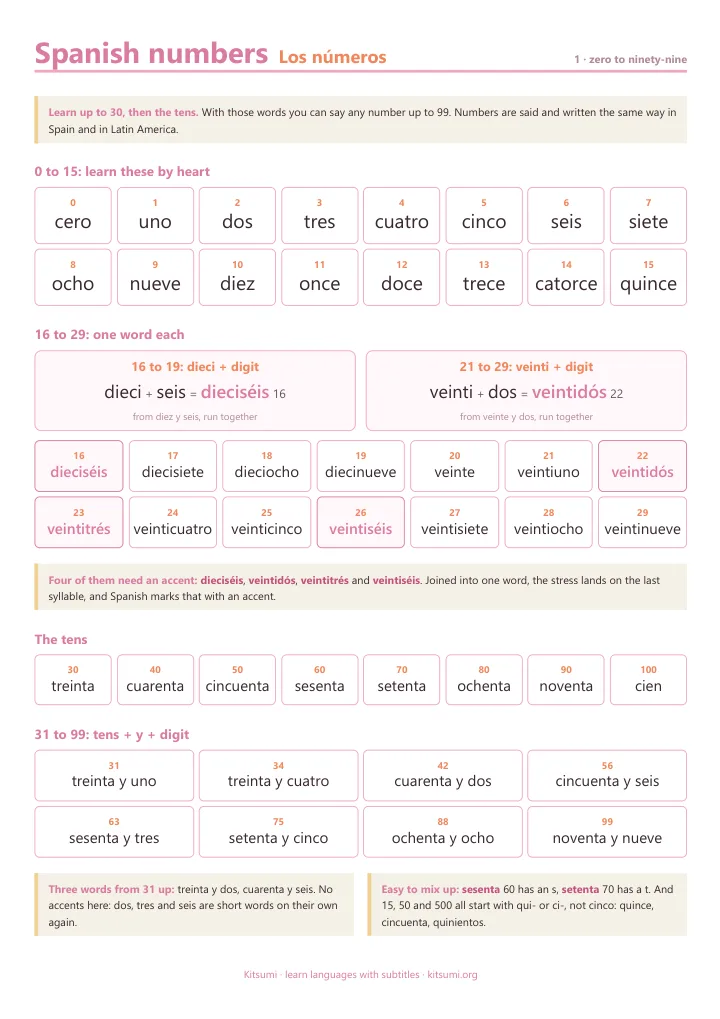 Spanish numbers, time and moneyThen sort out numbers: dieciséis and veintidós, quinientos and un millón, then the time, dates and prices.
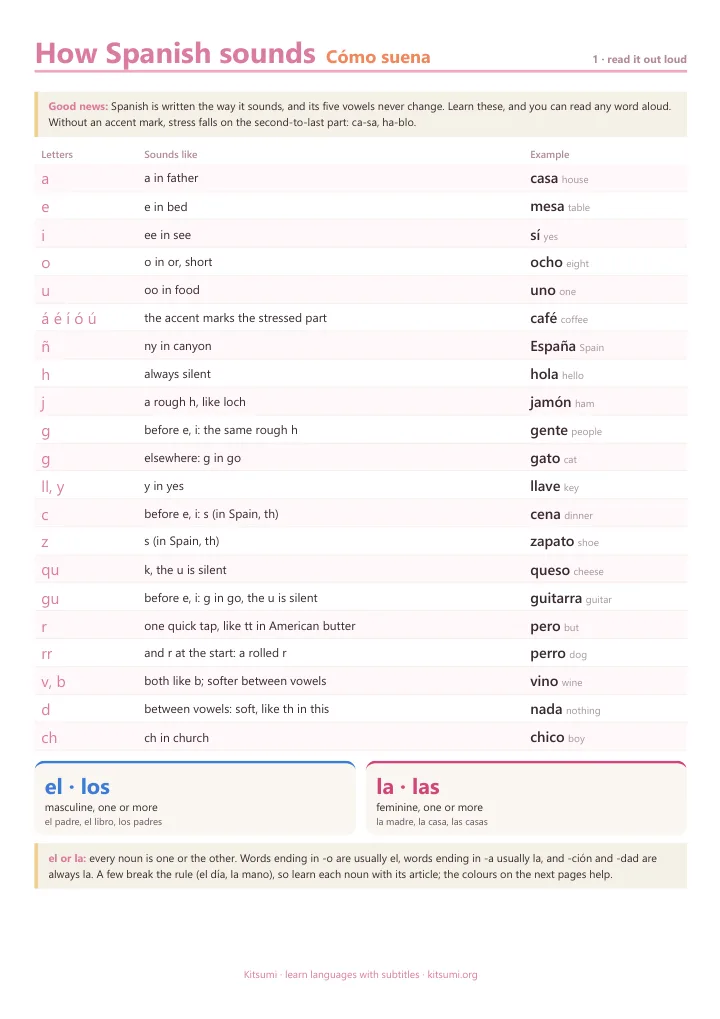 Basic Spanish wordsStart here. How every letter sounds, then 218 first words with el and la in colour.
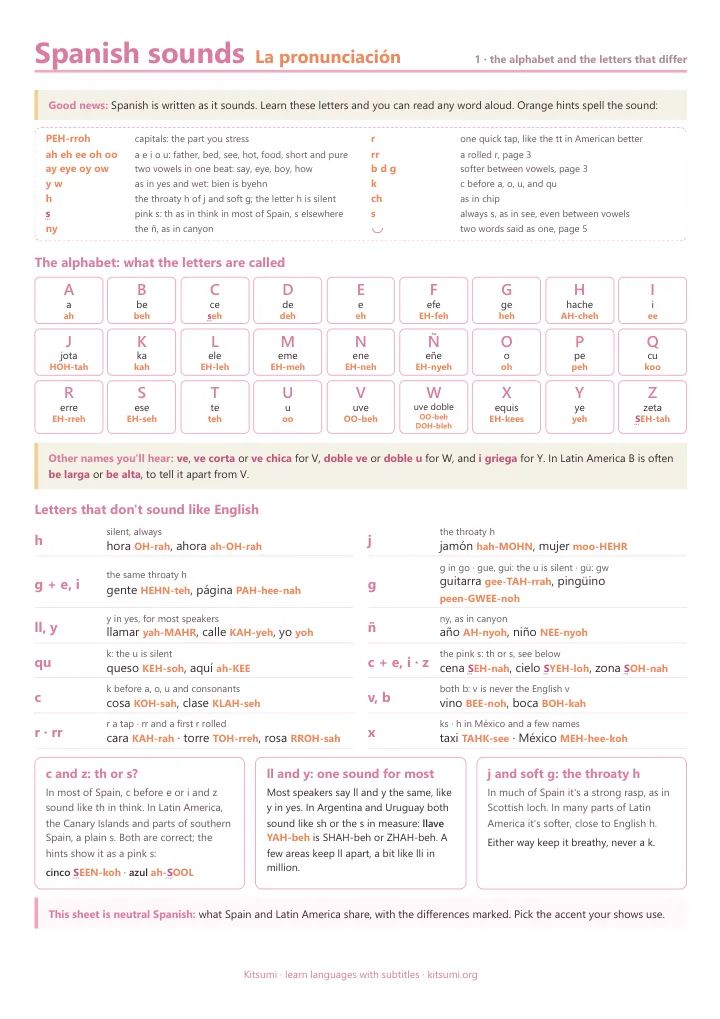 Spanish pronunciation guideThen learn how the letters really sound: the five vowels, the two r's, c and z in Spain and Latin America, and where the stress falls.
Questions
Is the Spain and Latin America Spanish guide free?
Yes. It's a free PDF with no sign-up. Print it, keep it and share it.
Is Spanish from Spain or Latin America more correct?
Neither. They're two standards of the same language, a bit like British and American English. Learn the one your shows use and you'll understand the other after some listening.
What is vos?
The everyday word for you to one person in Argentina, Uruguay, Paraguay and much of Central America. It has its own verb forms, like hablás, sos and tenés, and the sheet has a table of them next to tú, vosotros and ustedes.