 Kitsumi
Spanish ser and estar: the two verbs for to be
A five-page printable PDF on the two Spanish verbs for to be. It gives every form you need, shows when to use ser and when estar with plenty of everyday examples, and is honest about the permanent or temporary shortcut and where it breaks.
PDF · 5 pages · 250 KB · no sign-up · free to print and share
Was it useful?Ideas or a mistake? Tell us on Discord
Next, meet these words in real videos: Kitsumi is free for Chrome and Firefox.
What's inside
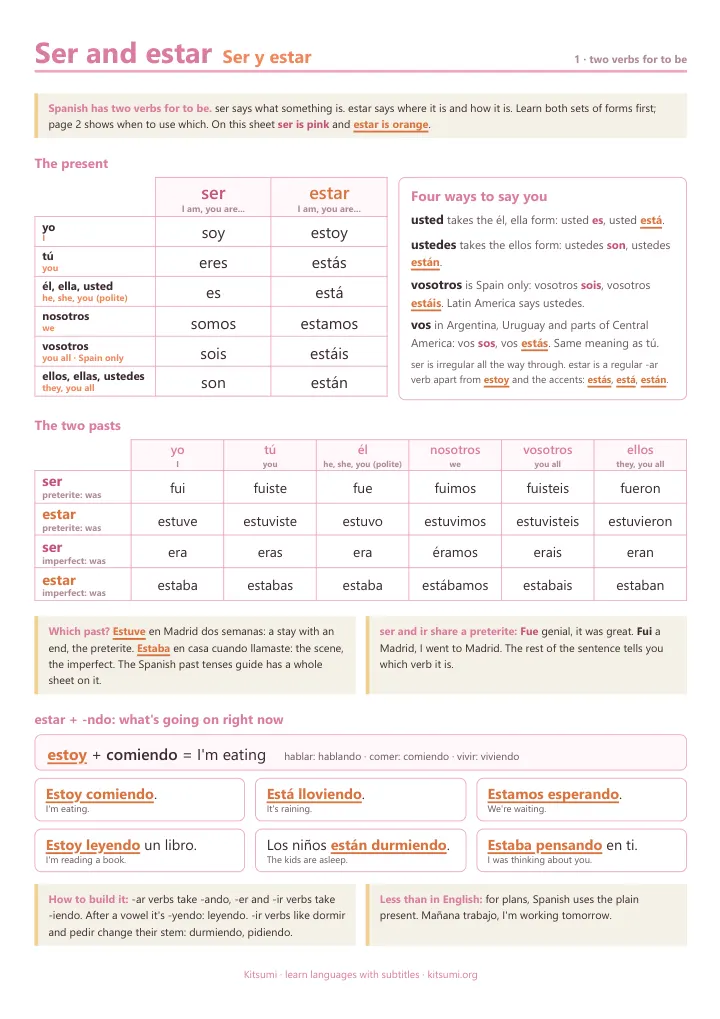
- Ser and estarBoth verbs in the present for every person, including usted, ustedes, vosotros and vos, the two pasts, fui and estuve, era and estaba, and estar + -ndo: estoy comiendo.
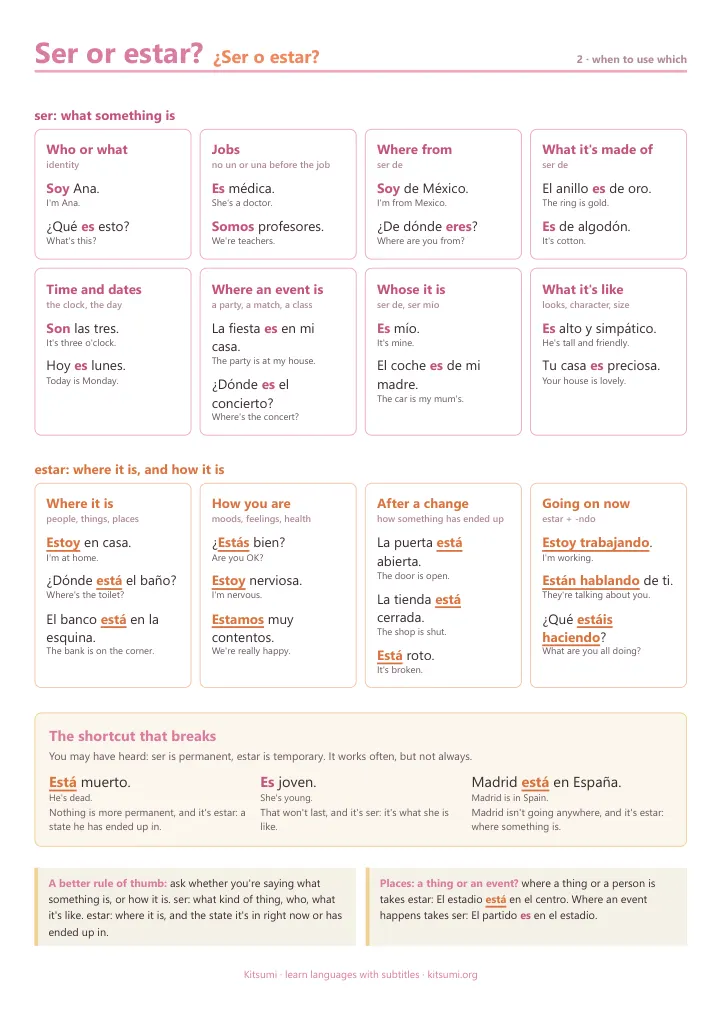
- Ser or estar?ser for who and what, jobs, where from, what it's made of, time and dates, where an event is, whose it is and what it's like. estar for where it is, how you are, the result of a change and what's going on now. Then why está muerto and es joven break the permanent or temporary rule.
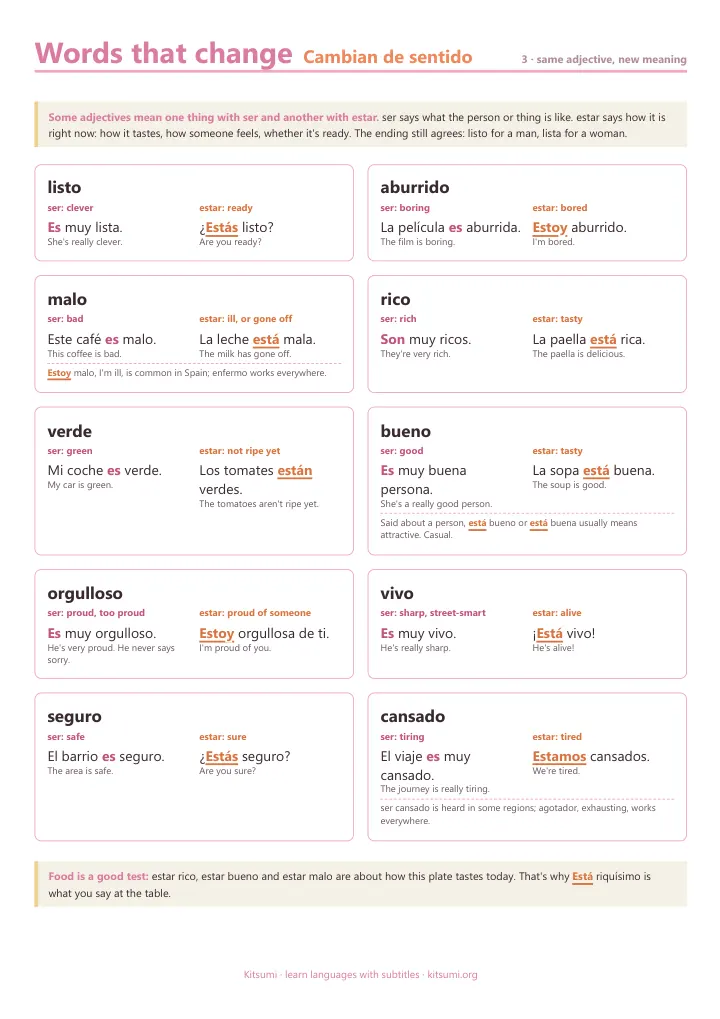
- Words that changeTen adjectives that mean one thing with ser and another with estar: listo, aburrido, malo, rico, verde, bueno, orgulloso, vivo, seguro and cansado.
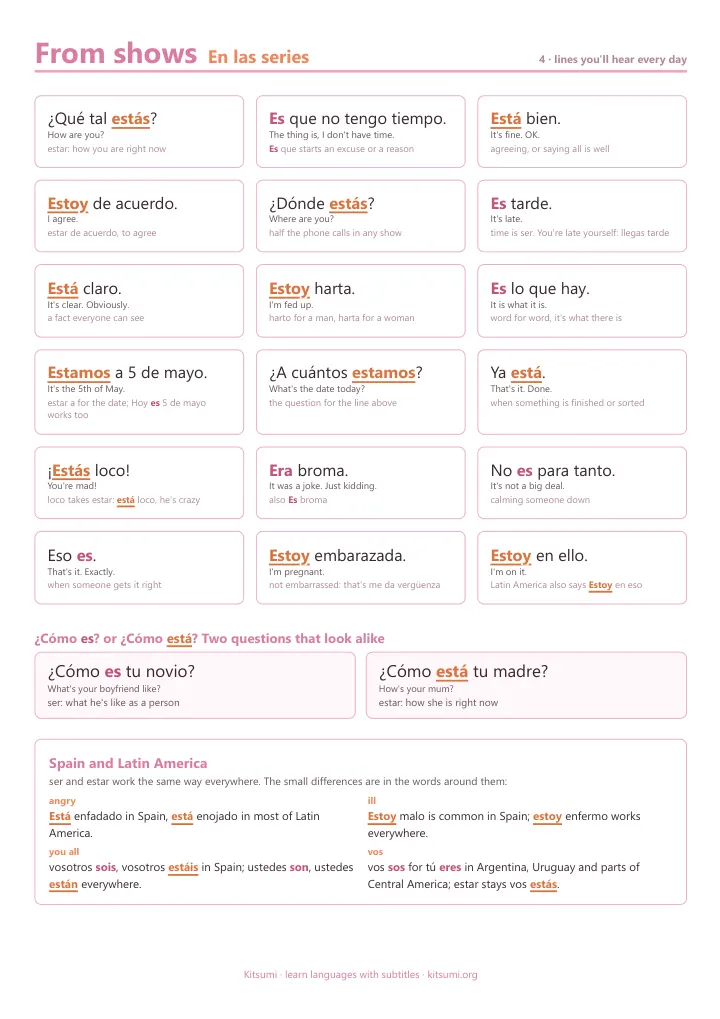 From showsEighteen lines you'll hear every day, like ¿Qué tal estás?, Es que..., Está bien, Estoy harta and Es lo que hay, then ¿Cómo es? or ¿Cómo está?, and what differs between Spain and Latin America.
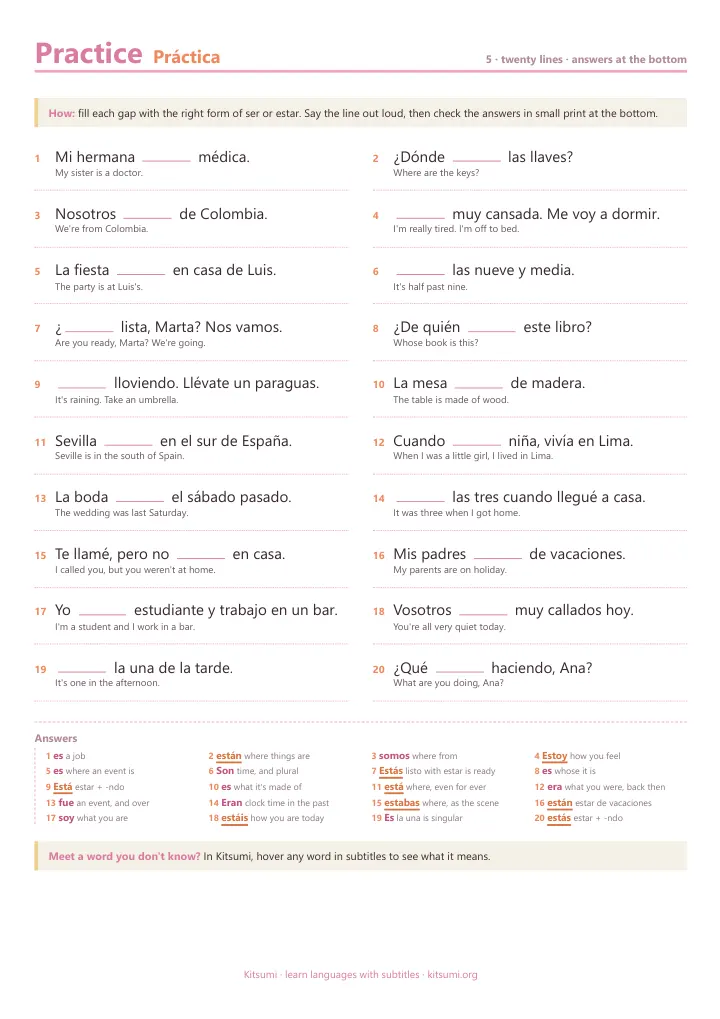 PracticeTwenty sentences to fill with the right form of ser or estar, with the answers and the reason in small print at the bottom.
How to use it
- Start with the Spanish verbs guide if verb endings are new to you.
- Learn the forms on the first page, then read each example on page two out loud.
- Cover the English on the adjectives page and guess the meaning from ser or estar.
- Do the practice page, then listen for es and está in Spanish subtitles. In Kitsumi, hover any word to see what it means.
More free Spanish printables
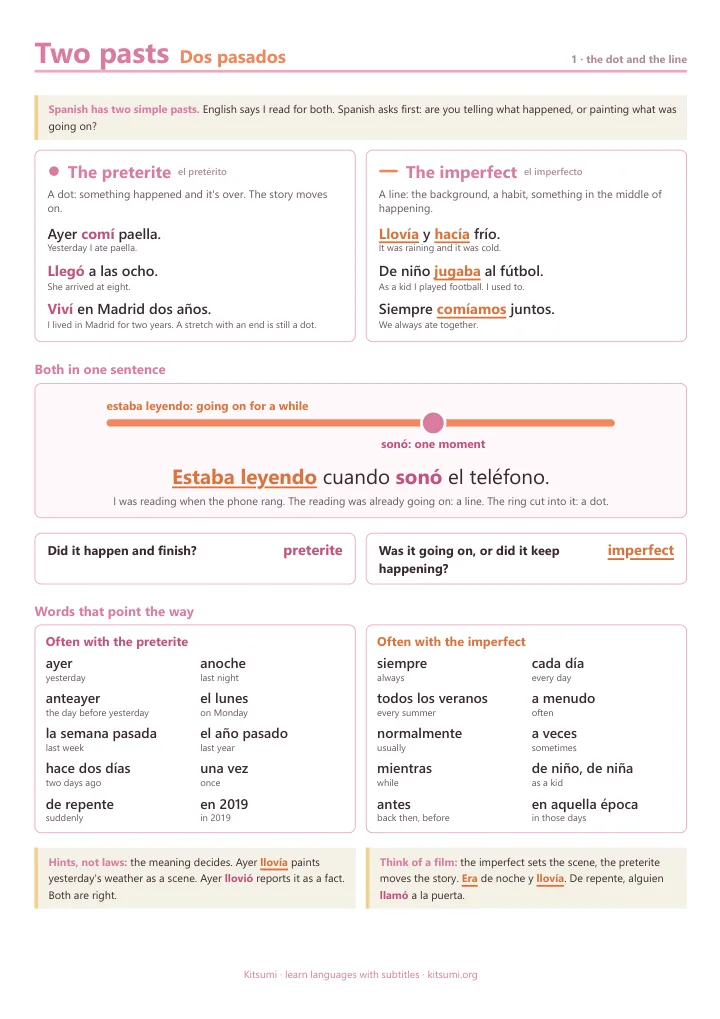 Next stepSpanish past tenses: preterite or imperfect?Then sort out the two pasts: fue or era, supe or sabía, and why it matters.
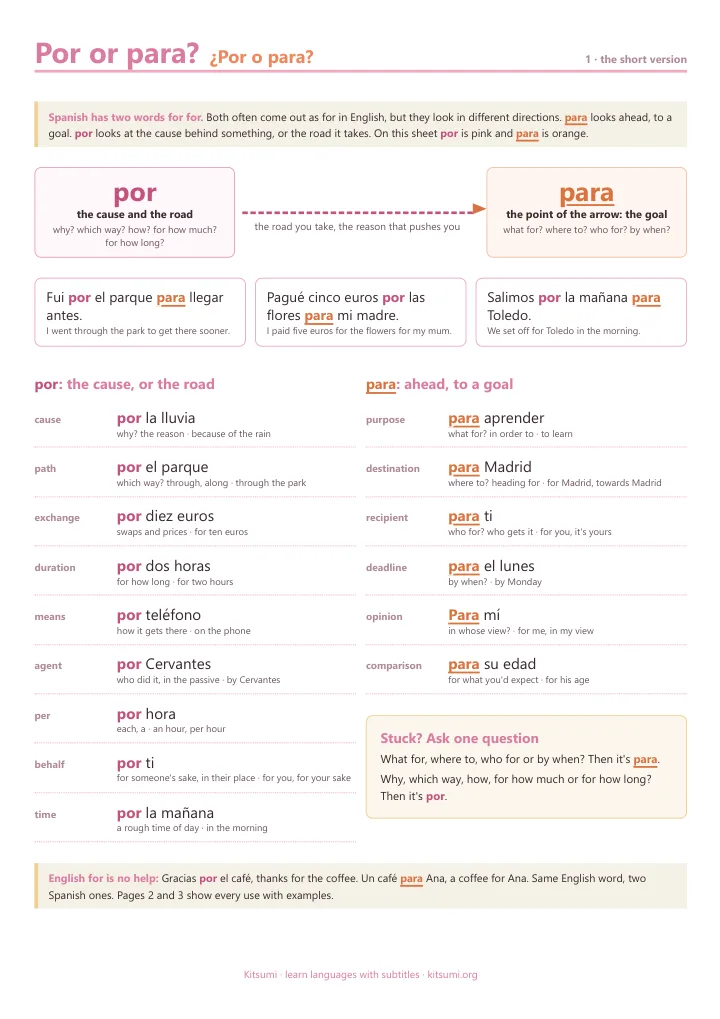 Spanish grammar: por or para?Then sort out the two words for for: por or para.
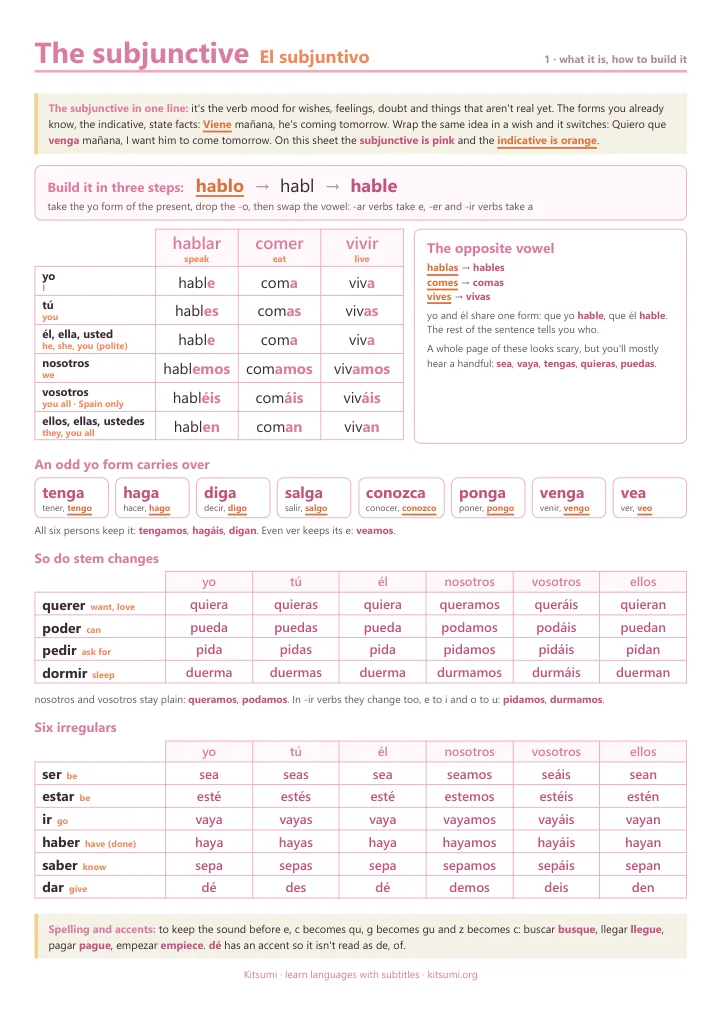 Spanish subjunctive: a friendly first guide to the verb moodThen meet the subjunctive: Quiero que vengas, Ojalá, Que te vaya bien.
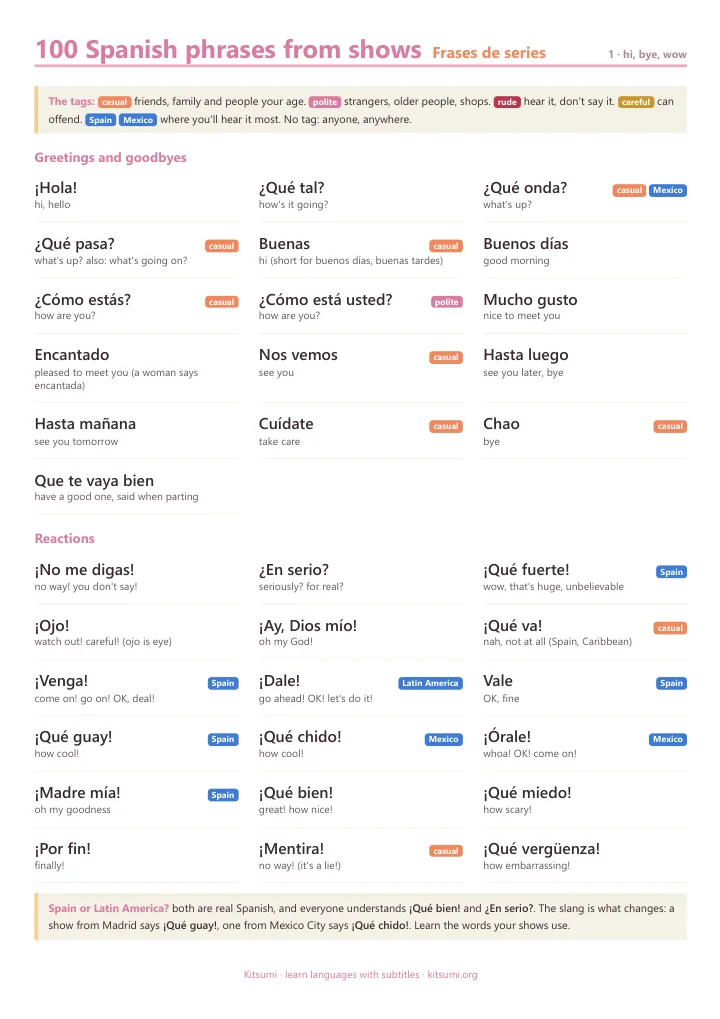 100 Spanish phrases from showsThen pick up the lines series use all the time: ¡No me digas!, te quiero or te amo, ¡Déjame en paz! and what güey really means.
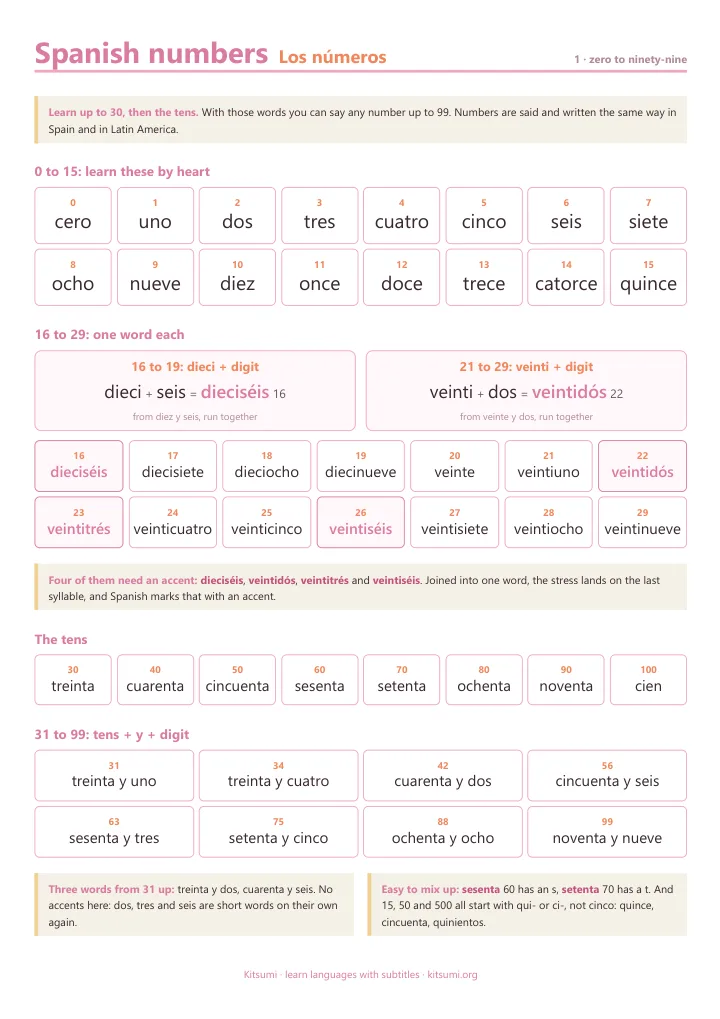 Spanish numbers, time and moneyThen sort out numbers: dieciséis and veintidós, quinientos and un millón, then the time, dates and prices.
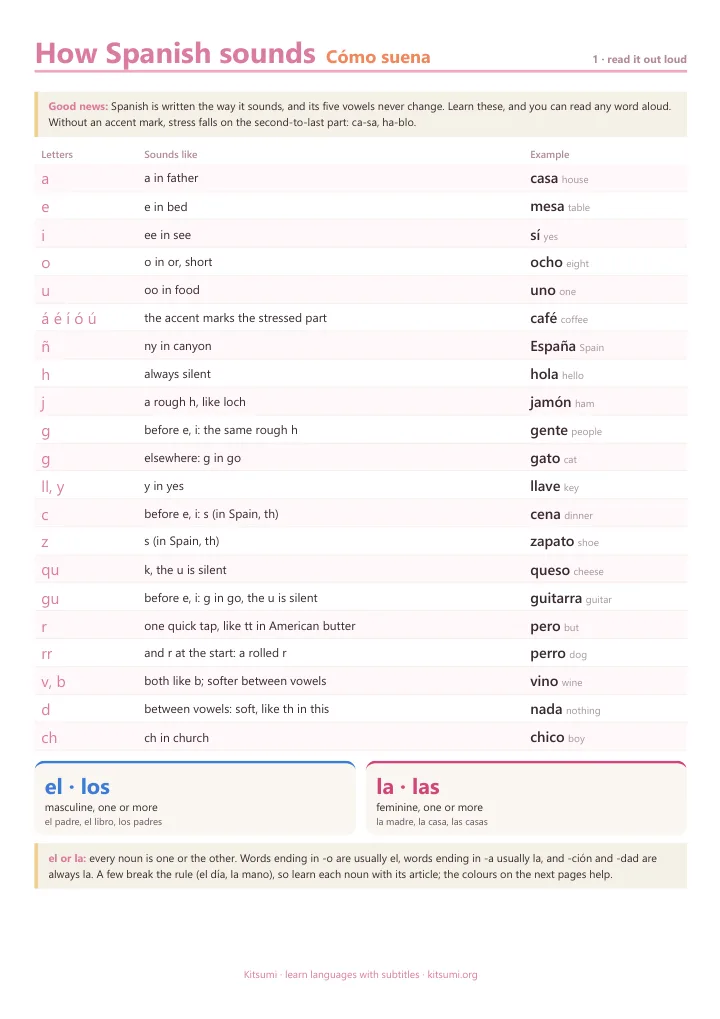 Basic Spanish wordsStart here. How every letter sounds, then 218 first words with el and la in colour.
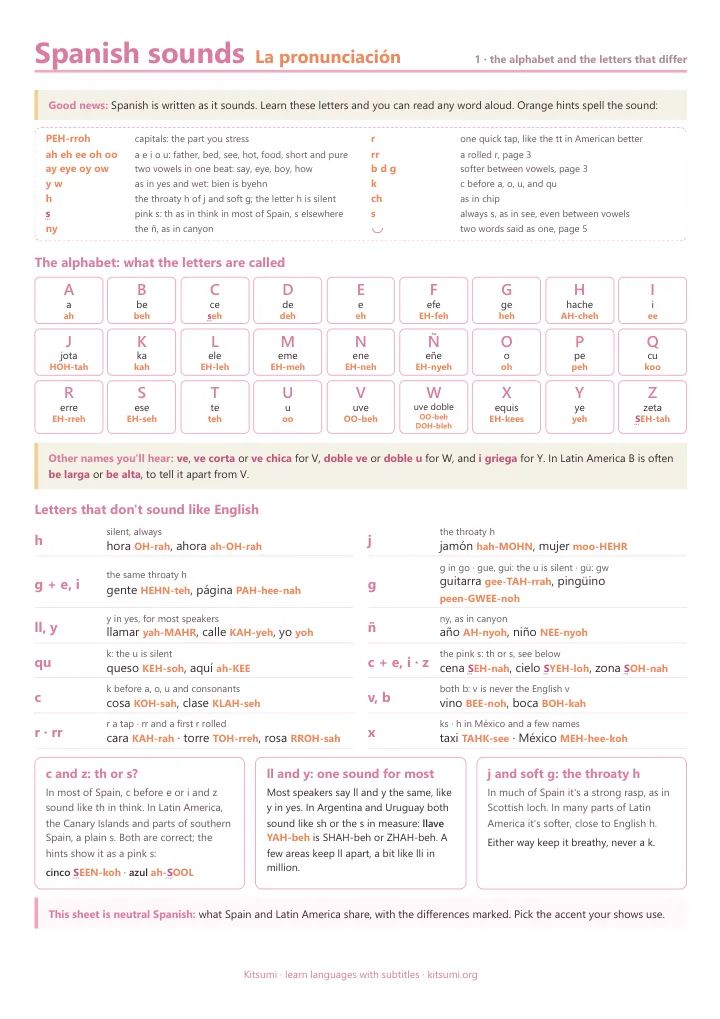 Spanish pronunciation guideThen learn how the letters really sound: the five vowels, the two r's, c and z in Spain and Latin America, and where the stress falls.
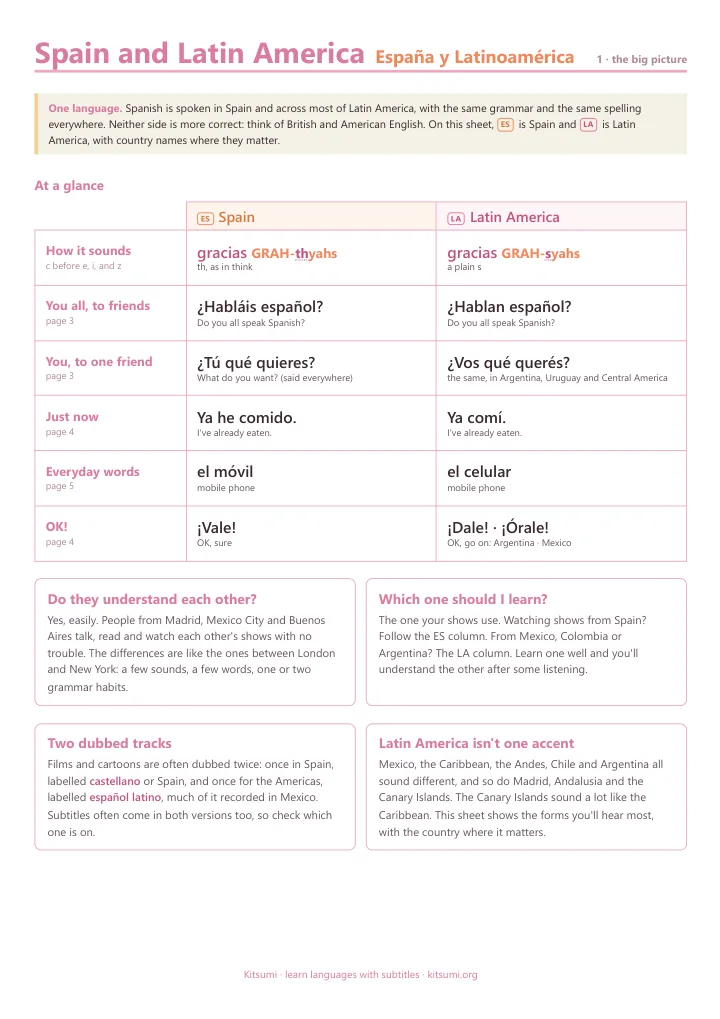 Spanish in Spain and Latin America: sounds, you, words and slang comparedThen see how Spain and Latin America differ: the c and z sound, vosotros, ustedes and vos, he comido and comí, and the everyday words.
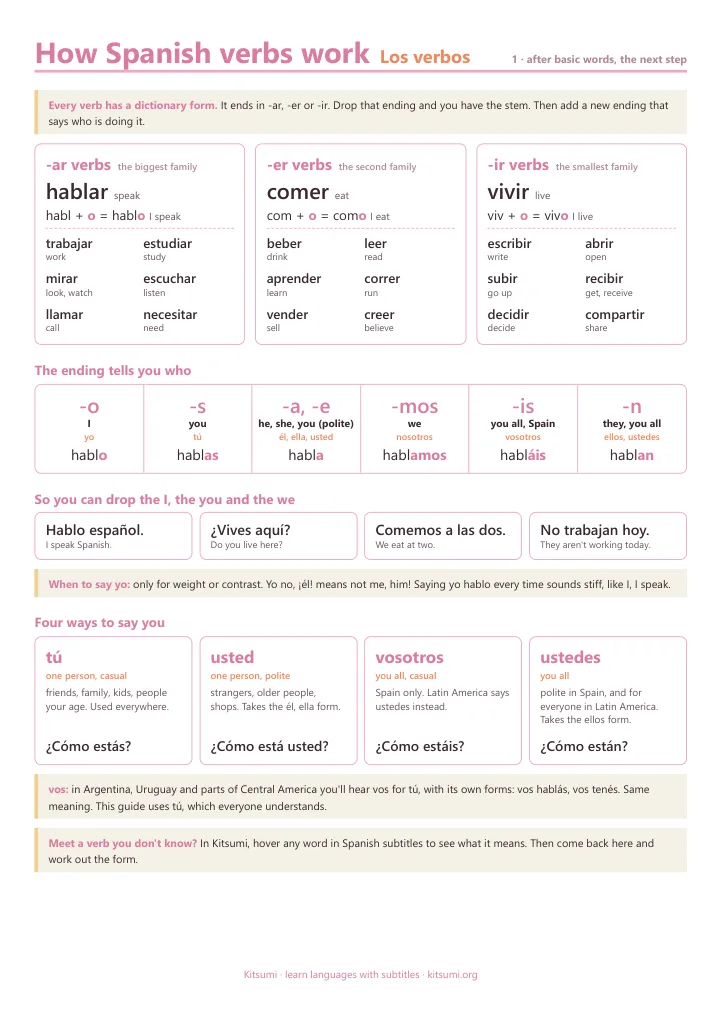 Spanish verbs guideMake verbs say who and when: the present, the boot verbs, the past and ir a.
Questions
Is the Spanish ser and estar guide free?
Yes. It's a free PDF with no sign-up. Print it, keep it and share it.
What is the difference between ser and estar?
ser says what something is: who, what kind of thing, where it's from, what it's like. estar says where it is and how it is right now: Soy Ana, I'm Ana, but Estoy cansada, I'm tired.
Is ser permanent and estar temporary?
Often, but not always. Está muerto, he's dead, uses estar, and Es joven, she's young, uses ser. A better test is whether you're saying what something is or how it is.