 Kitsumi
100 free Spanish phrases from shows
A five-page printable PDF of the lines you hear in every Spanish-language series, grouped by situation, with English and a tag that says how casual each one is and where it's said.
PDF · 5 pages · 182 KB · no sign-up · free to print and share
Next, meet these words in real videos: Kitsumi is free for Chrome and Firefox.
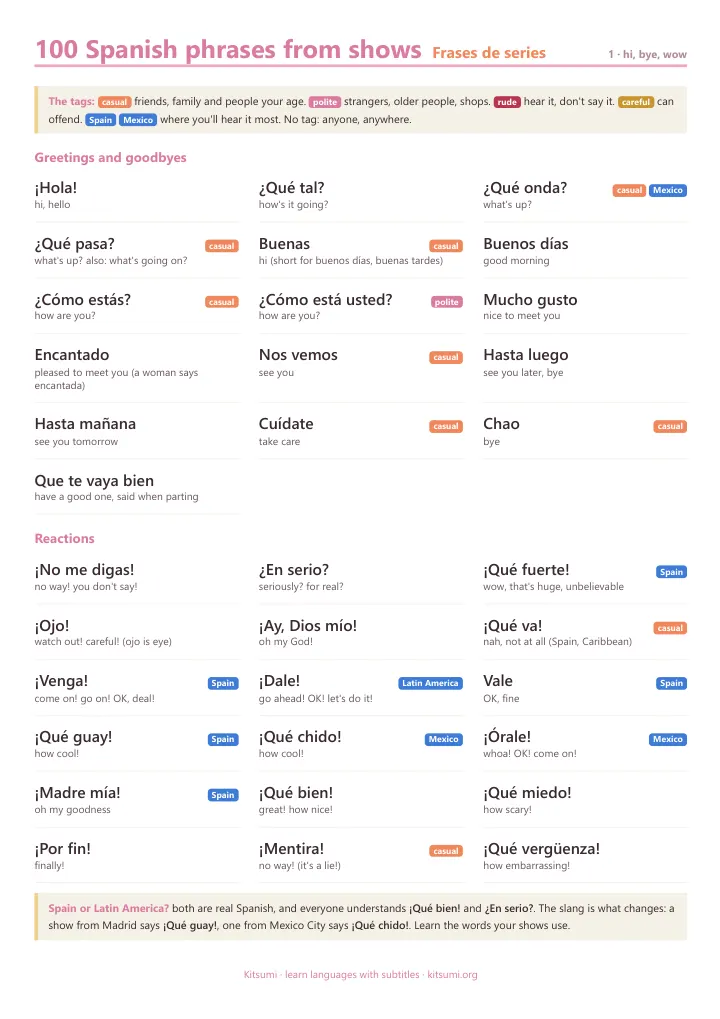
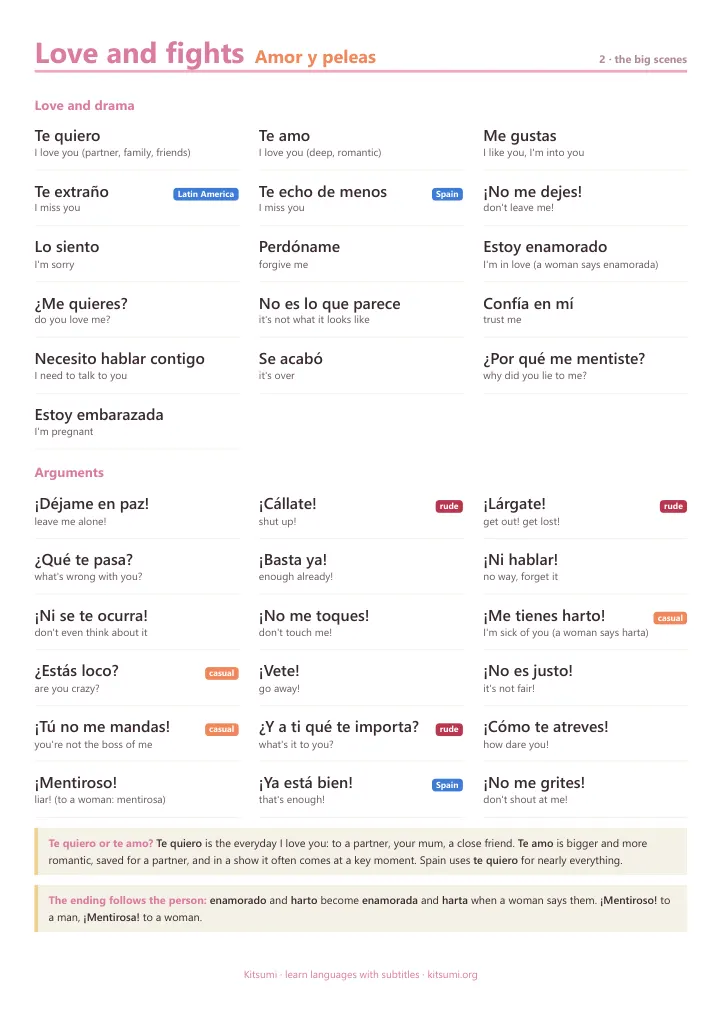
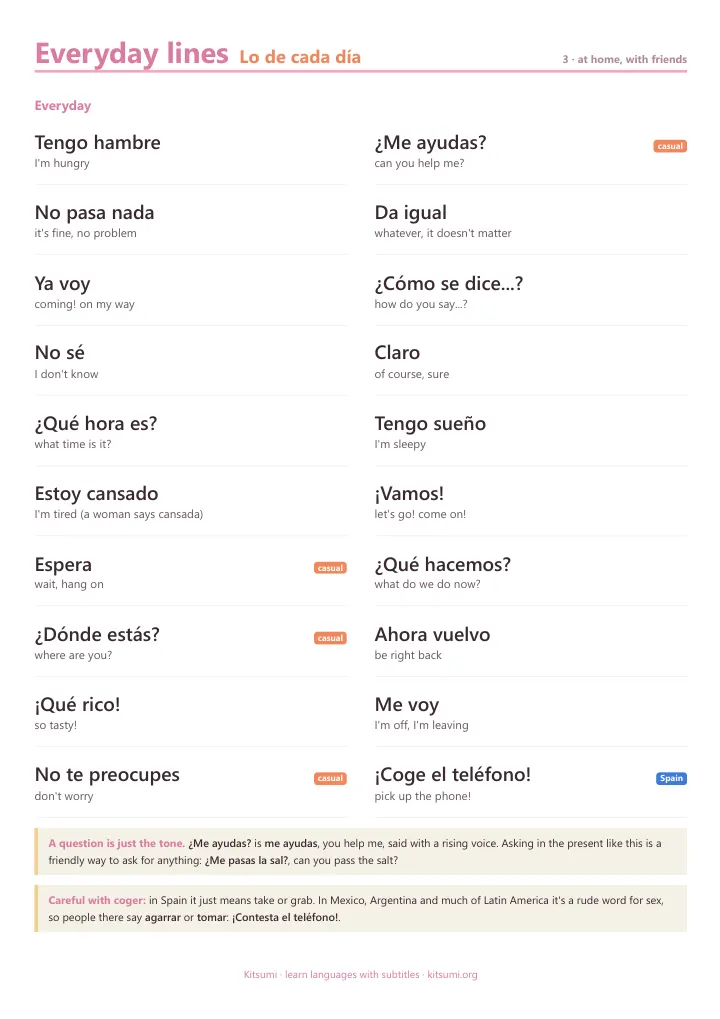
What's inside
- Greetings and reactions34 lines like ¿Qué tal?, ¿Qué onda?, Nos vemos, Cuídate, ¡No me digas!, ¡Qué fuerte!, ¡Ojo! and ¡Dale!, with a key to the tags.
- Love and fightsTe quiero and te amo and how they differ, te extraño and te echo de menos, ¡No me dejes!, then the argument lines: ¡Basta ya!, ¡Ni hablar!, and ¡Cállate! and ¡Lárgate!, marked rude.
- Everyday lines20 things people say at home and with friends, like Tengo hambre, ¿Me ayudas?, No pasa nada, Da igual and Ya voy, plus a warning about coger.
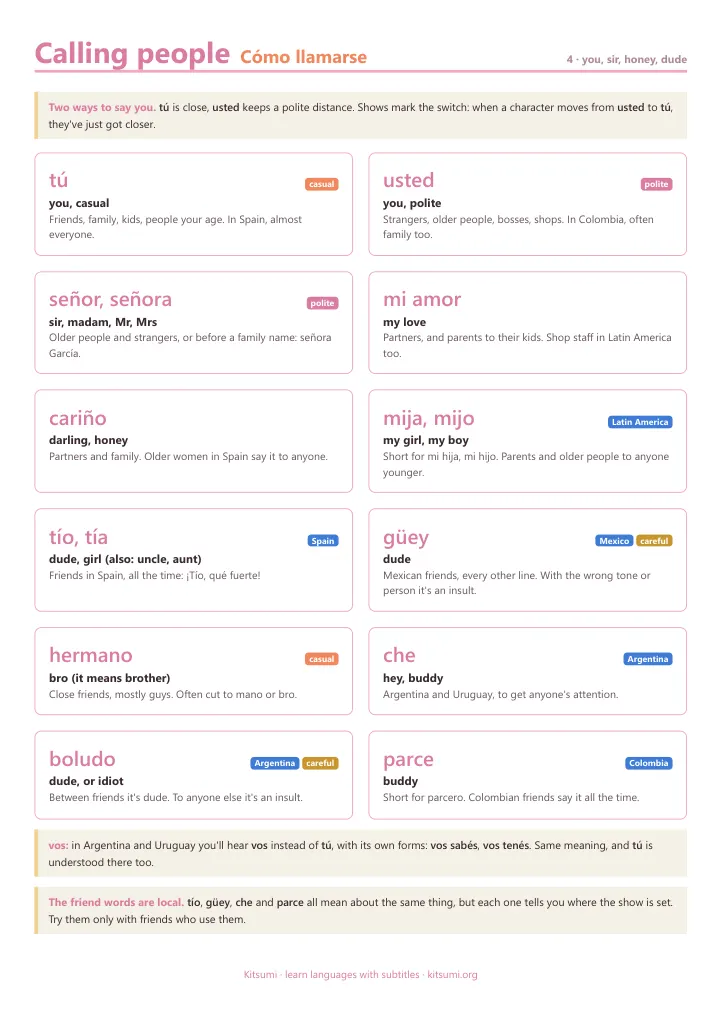 What people call each othertú and usted, señor and señora, mi amor, cariño and mija, then the friend words that give a show away: tío in Spain, güey in Mexico, che and boludo in Argentina, parce in Colombia.
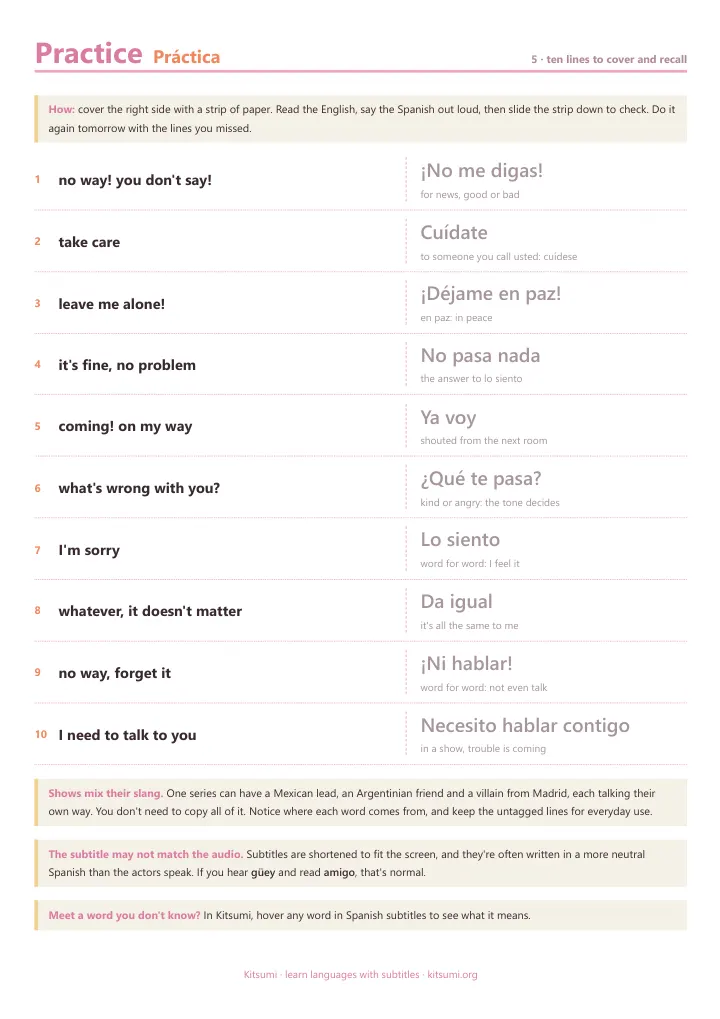 PracticeTen lines to cover and recall, plus a note on why shows mix regional slang and why the subtitle may not match the audio word for word.
How to use it
- Learn a few basic words first. The verbs guide helps you see why each line looks the way it does.
- Read a page out loud, a few lines at a time, and notice the tags.
- Cover the right side of the practice page and say each line from the English.
- Watch a Spanish-language series with Kitsumi and listen for the same lines.
More free Spanish printables
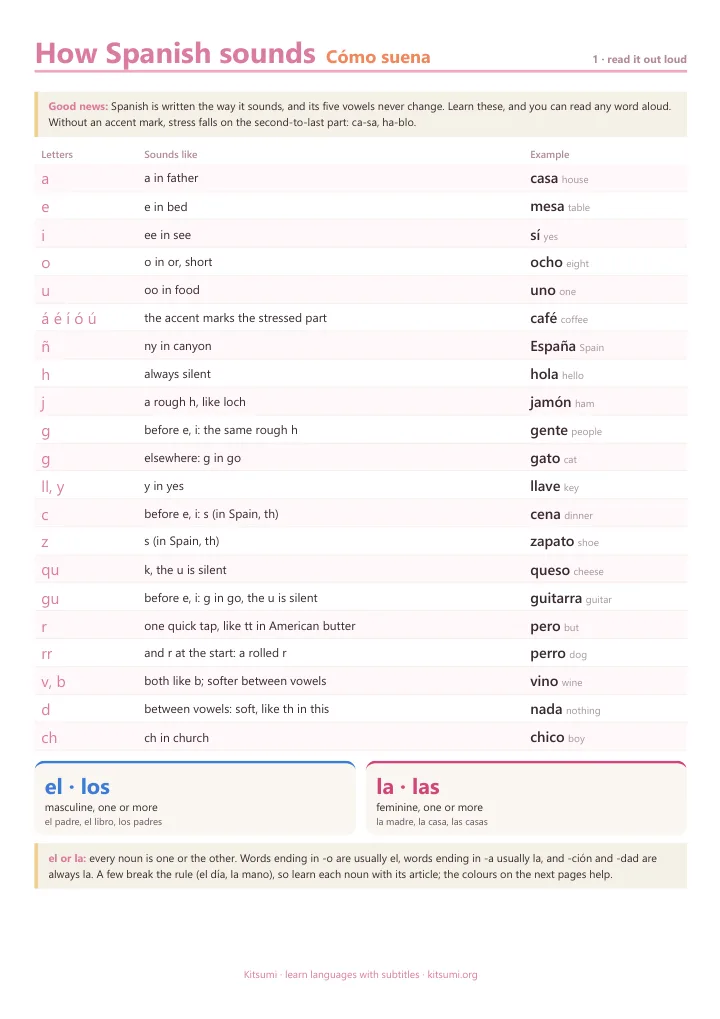 Basic Spanish wordsStart here. How every letter sounds, then 218 first words with el and la in colour.
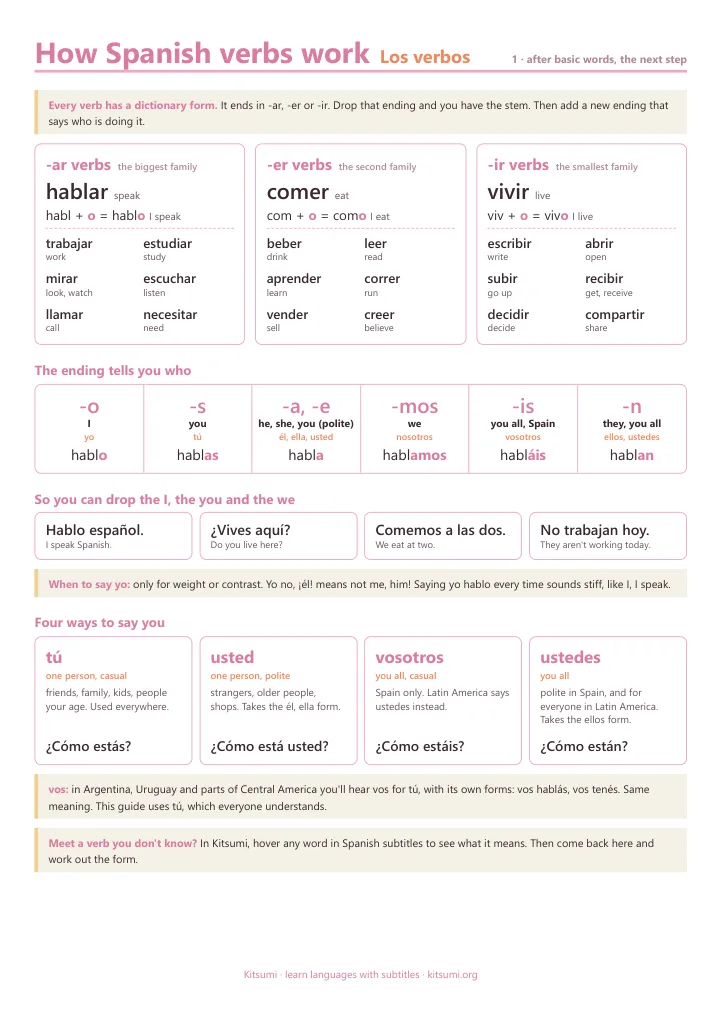 Spanish verbs guideMake verbs say who and when: the present, the boot verbs, the past and ir a.
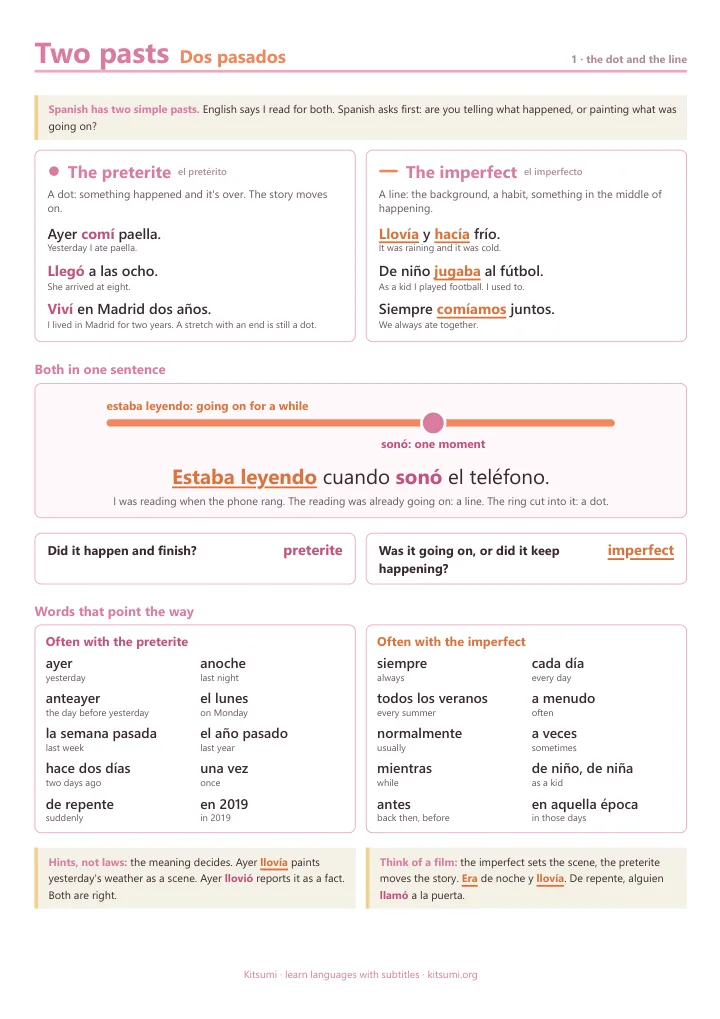 Spanish past tenses: preterite or imperfect?Then sort out the two pasts: fue or era, supe or sabía, and why it matters.
Questions
Is the Spanish show phrases PDF free?
Yes. It's a free PDF with no sign-up. Print it, keep it and share it.
Spain or Latin America?
Both. Most lines are understood everywhere and have no region tag. Where Spain and Latin America differ, like te echo de menos and te extraño, the sheet gives both and says where each is used.
What is the difference between te quiero and te amo?
Both mean I love you. Te quiero is the everyday one, for a partner, family or close friends. Te amo is bigger and more romantic, and in Spain people use te quiero for nearly everything.