 Kitsumi
Spanish past tenses: preterite or imperfect?
A six-page printable PDF that goes deeper than the past page of the Spanish verbs guide. It shows when to use the preterite and when the imperfect with one simple picture, a dot and a line, then gives every form you need and plenty of lines to check yourself on.
PDF · 6 pages · 341 KB · no sign-up · free to print and share
Next, meet these words in real videos: Kitsumi is free for Chrome and Firefox.
What's inside
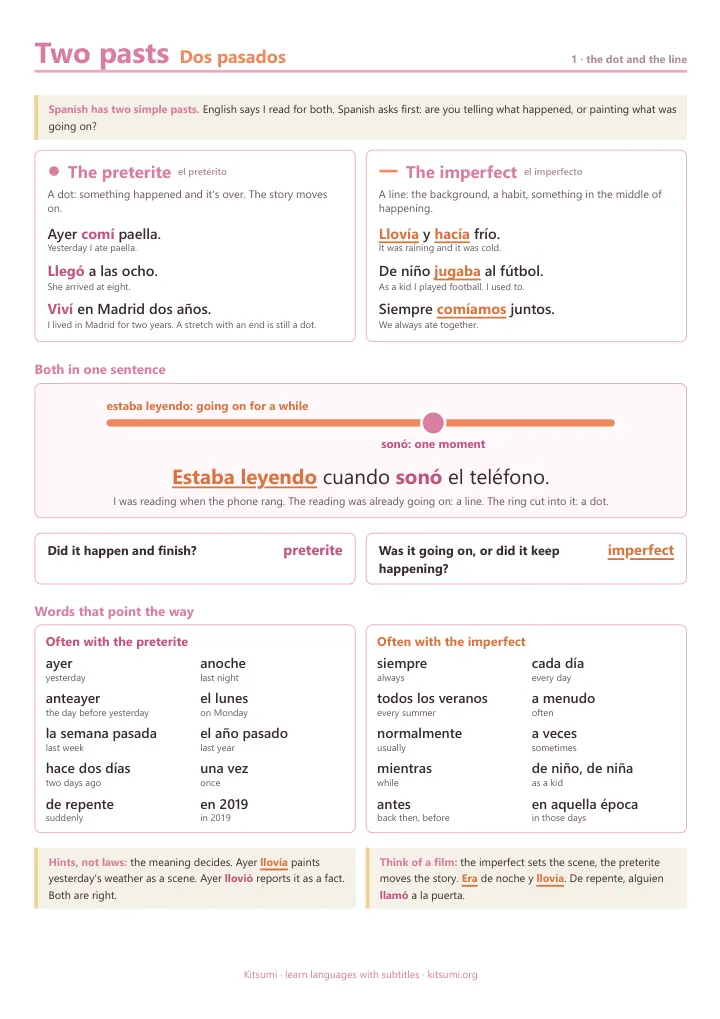
- Two pastsThe preterite as a dot and the imperfect as a line, the classic Estaba leyendo cuando sonó el teléfono, two questions to ask yourself, and the words that point the way, like ayer, de repente, siempre and mientras.
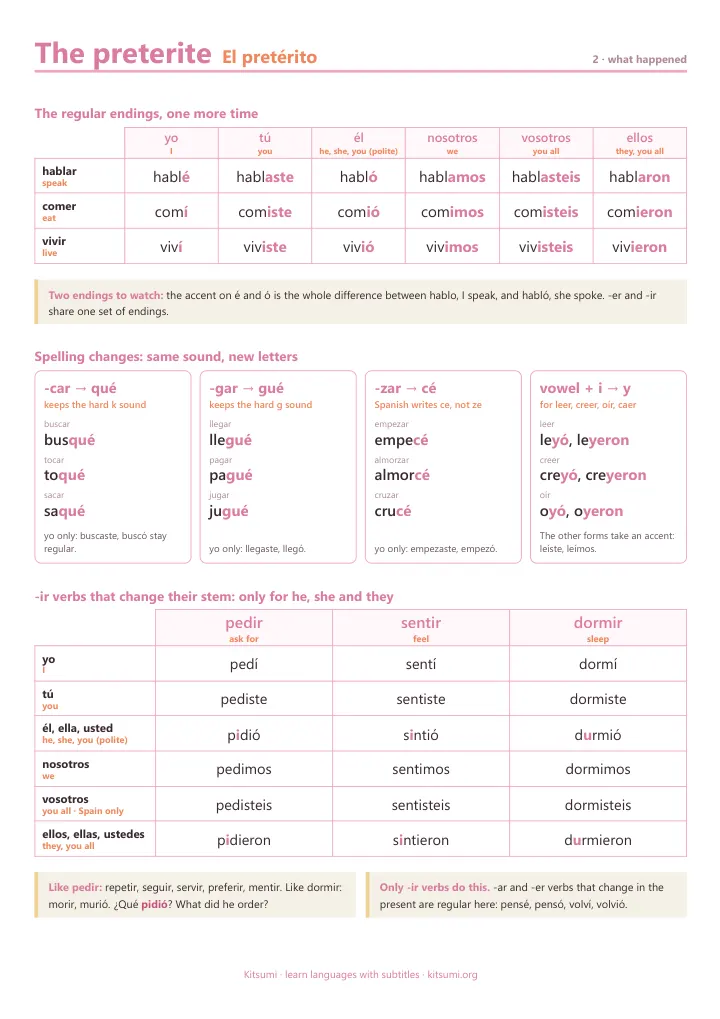
- The preteriteThe regular endings, the spelling changes in busqué, llegué, empecé and leyó, and the -ir verbs that change their stem: pidió, sintieron, durmió.
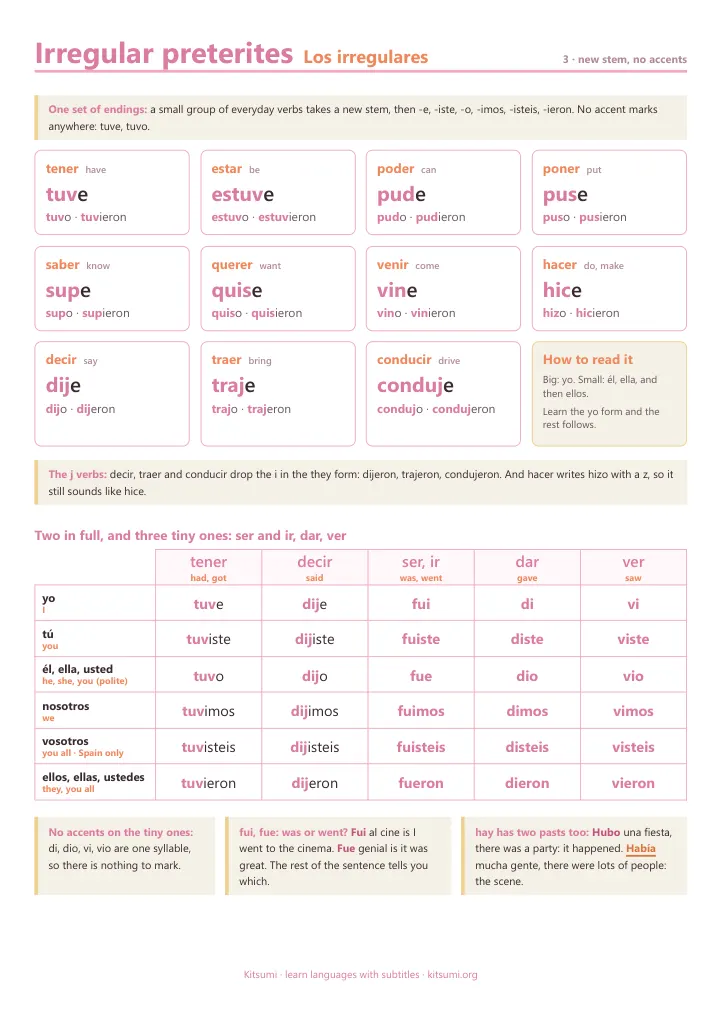
- Irregular preteritestuve, estuve, pude, puse, supe, quise, vine, hice, dije, traje and conduje, plus fui and fue for ser and ir, di and vi, and hubo next to había.
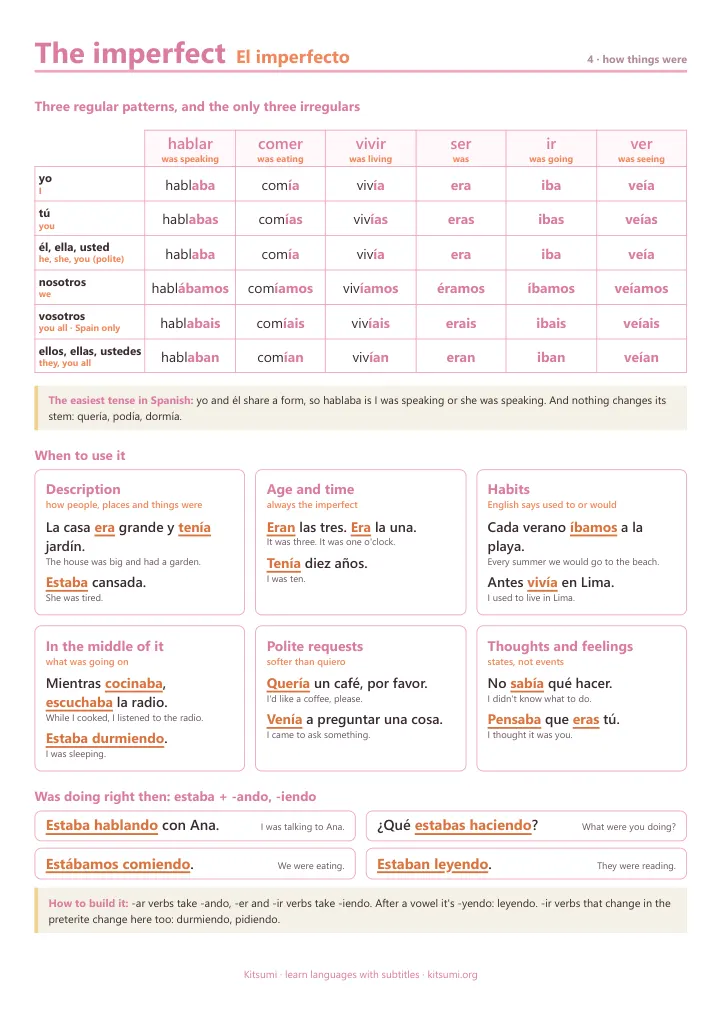 The imperfectThe -aba and -ía endings, the only three irregulars, era, iba and veía, and when to use it: description, age and time, habits, polite requests, and estaba + -ando.
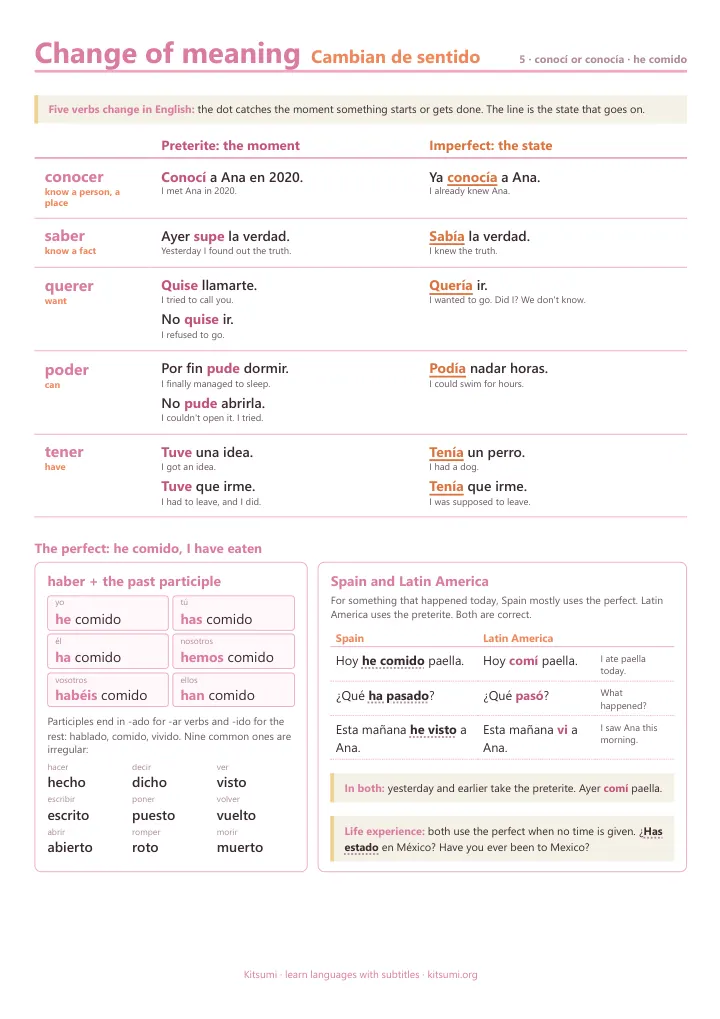 Change of meaningconocí and conocía, supe and sabía, quise and quería, pude and podía, tuve and tenía, then the perfect, he comido, and how Spain and Latin America use it.
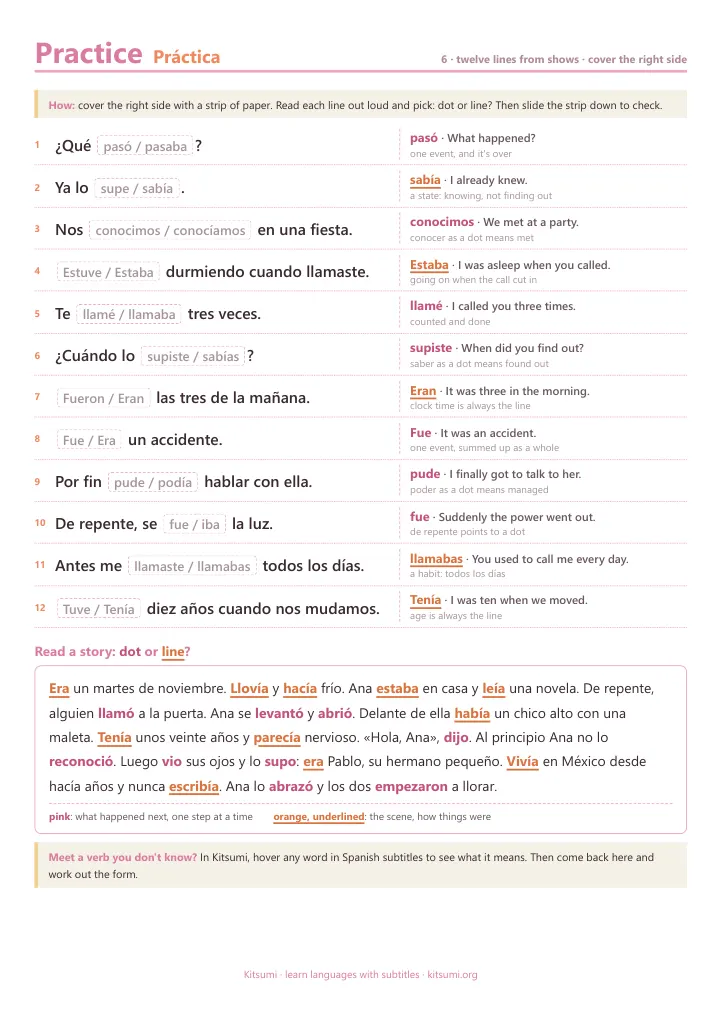 PracticeTwelve lines from shows where you pick the dot or the line, with the answer and why, then a short story with every past verb coloured: pink for what happened, orange for the scene.
How to use it
- Start with the Spanish verbs guide if the past is new to you.
- Read the first page and say the dot and the line examples out loud.
- Learn the irregular preterites by their yo form, a few each day.
- Cover the answers on the practice page, then listen for fue and era in Spanish subtitles. In Kitsumi, hover any word to see what it means.
More free Spanish printables
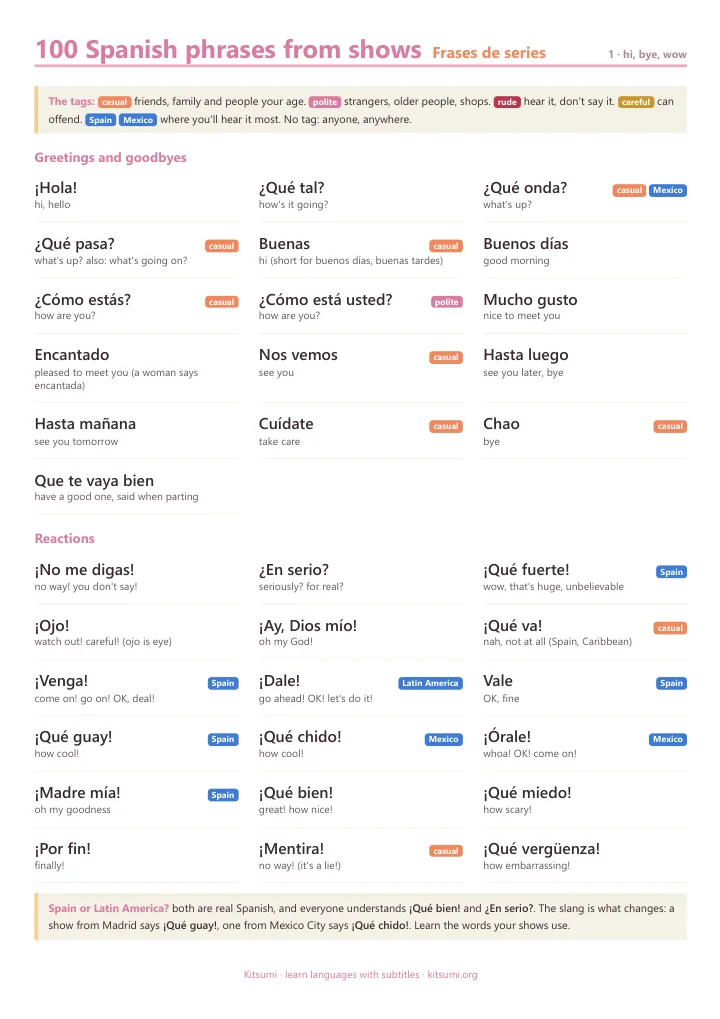 Next step100 Spanish phrases from showsThen pick up the lines series use all the time: ¡No me digas!, te quiero or te amo, ¡Déjame en paz! and what güey really means.
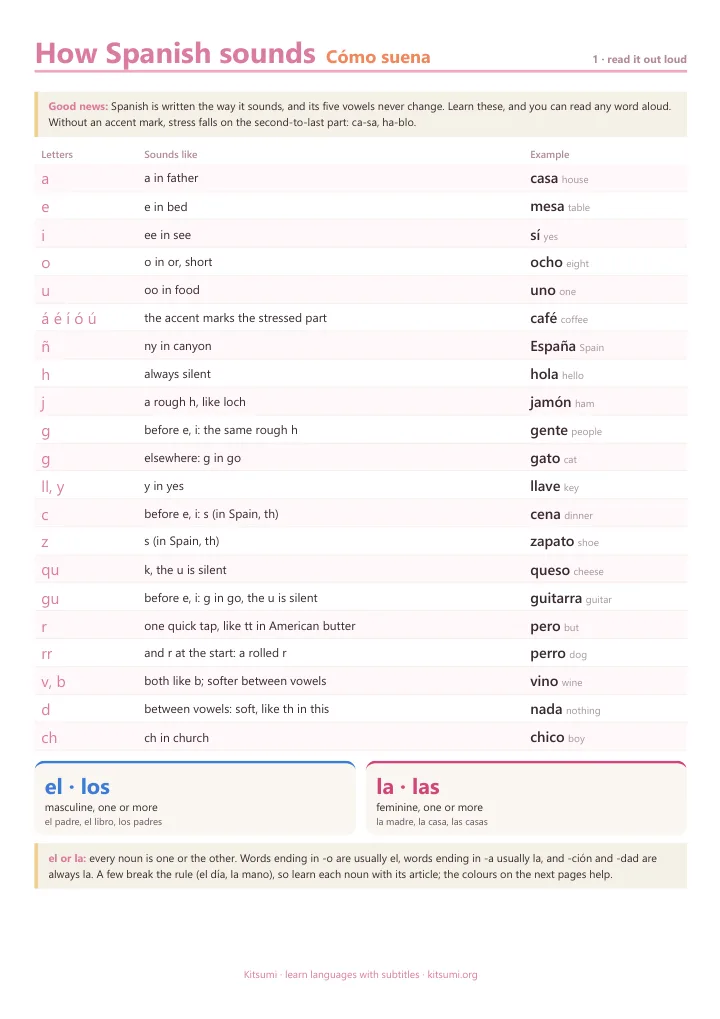 Basic Spanish wordsStart here. How every letter sounds, then 218 first words with el and la in colour.
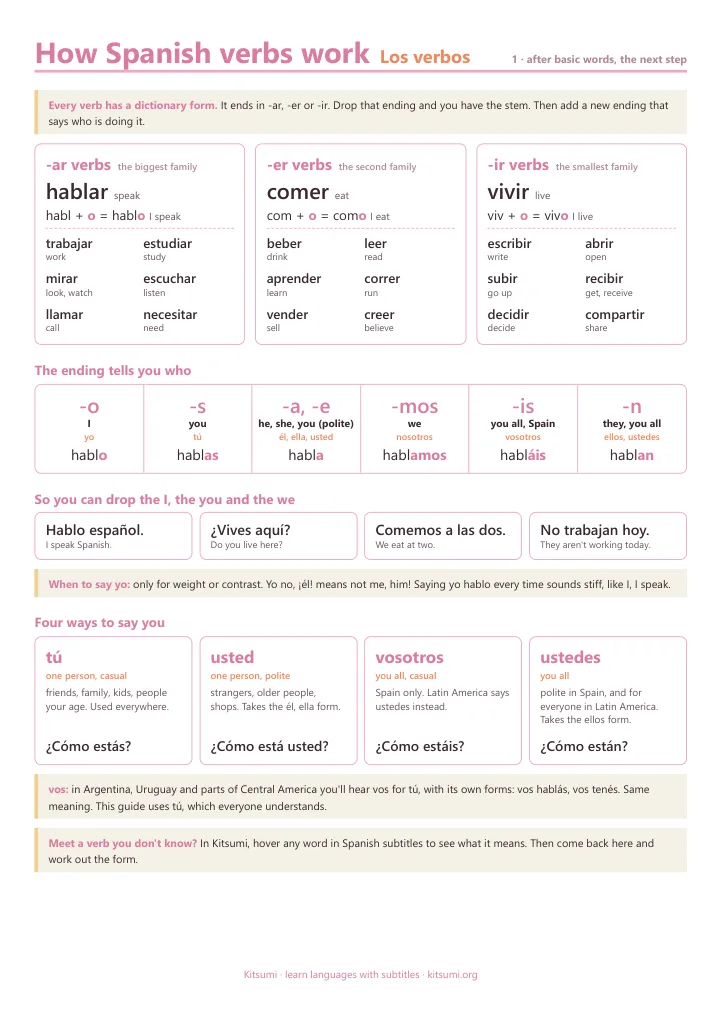 Spanish verbs guideMake verbs say who and when: the present, the boot verbs, the past and ir a.
Questions
Is the Spanish past tenses guide free?
Yes. It's a free PDF with no sign-up. Print it, keep it and share it.
What is the difference between the preterite and the imperfect?
The preterite tells what happened and finished, like comí, I ate. The imperfect paints the background, habits and things in progress, like comía, I was eating or I used to eat.
Do Spain and Latin America use the past differently?
Yes, a little. For something that happened today, Spain often says he comido, while Latin America says comí. Both are correct, and the guide shows both.