 Kitsumi
French subjunctive: verb forms and when to use them
A six-page printable PDF on the French subjunctive. It builds every form step by step from the ils form of the present, gives the seven irregular verbs in full, then shows when French needs it, with the subjunctive in pink and the everyday indicative in orange, and ends with twenty lines to check yourself on.
PDF · 6 pages · 325 KB · no sign-up · free to print and share
Was it useful?Ideas or a mistake? Tell us on Discord
Next, meet these words in real videos: Kitsumi is free for Chrome and Firefox.
What's inside
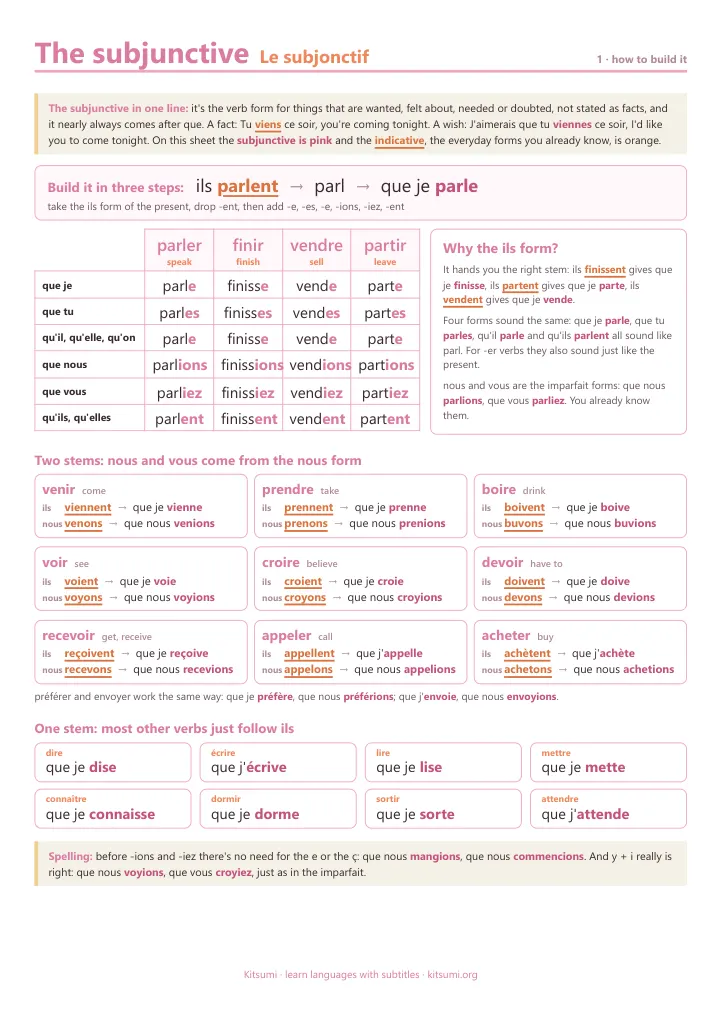
- How to build itTake the ils form, drop -ent and add -e, -es, -e, -ions, -iez, -ent: que je parle, que je finisse, que je parte. Verbs with two stems like venir and boire take nous and vous from the nous form: que je vienne, que nous venions.
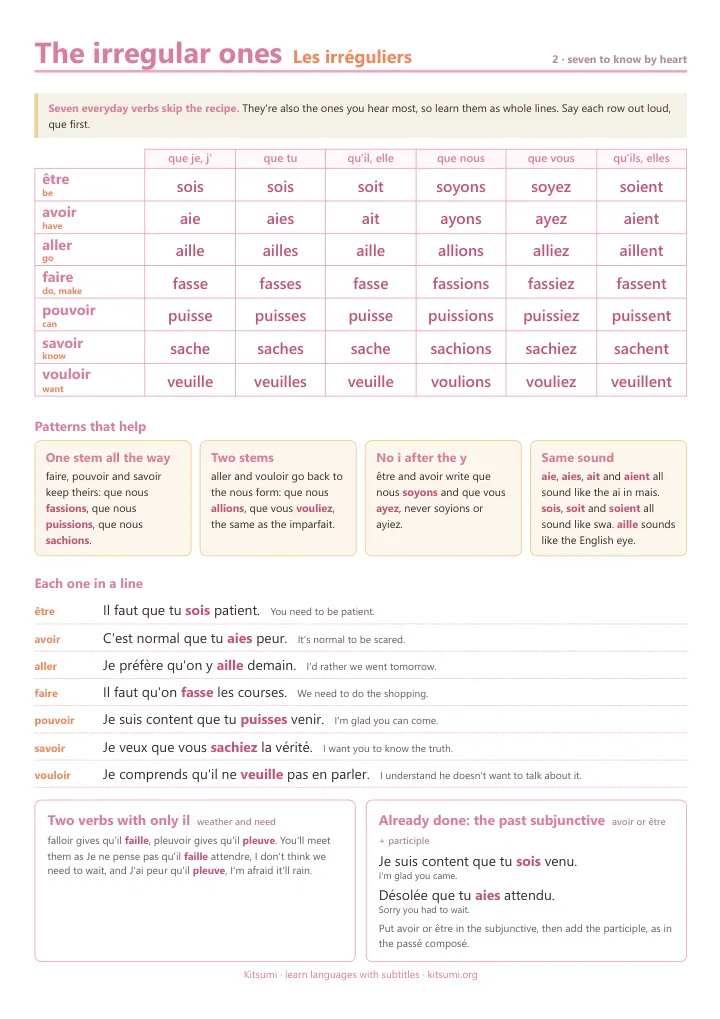
- The irregular onesêtre, avoir, aller, faire, pouvoir, savoir and vouloir in full, the patterns that make them easier, qu'il faille and qu'il pleuve, and the past subjunctive: je suis content que tu sois venu.
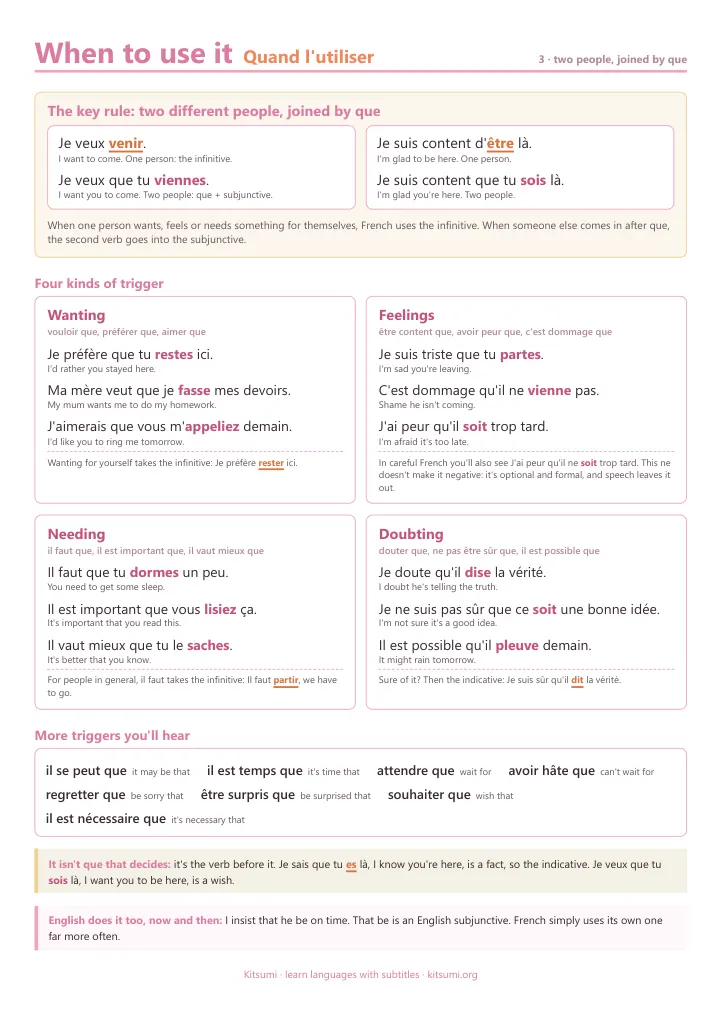
- When to use itThe key rule, two different people joined by que (je veux venir, je veux que tu viennes), then wanting, feelings, needing and doubting, the optional ne in j'ai peur qu'il ne soit trop tard, and more triggers like il est temps que.
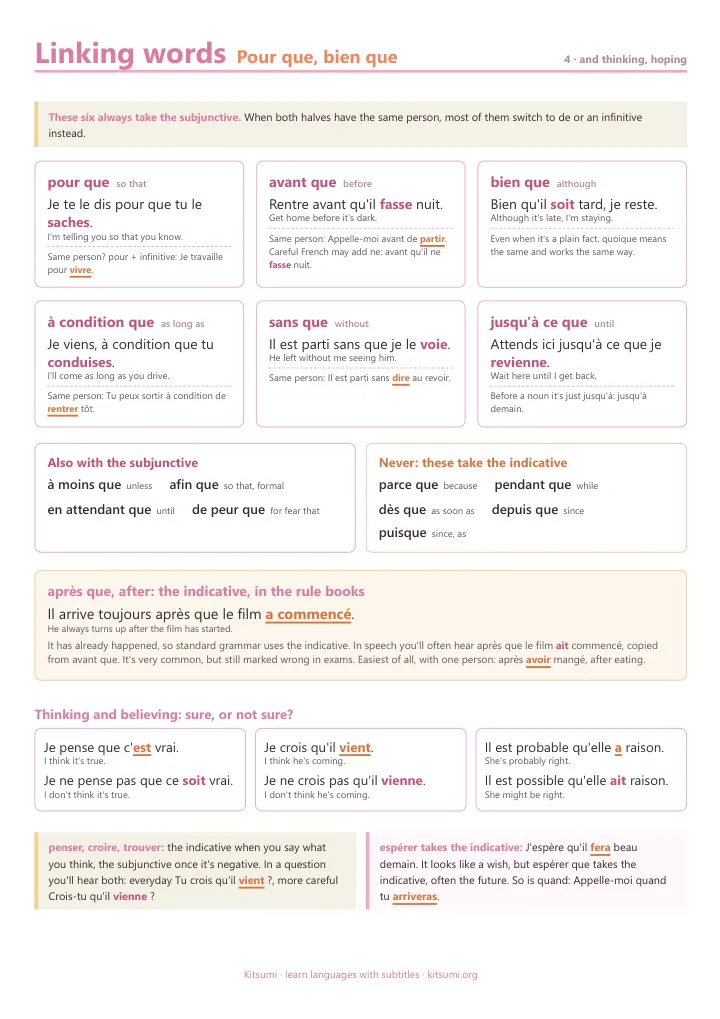 Linking words and thinkingpour que, avant que, bien que, à condition que, sans que and jusqu'à ce que, the linking words that never take it, an honest note on après que, je pense que c'est vrai next to je ne pense pas que ce soit vrai, and why espérer takes the indicative.
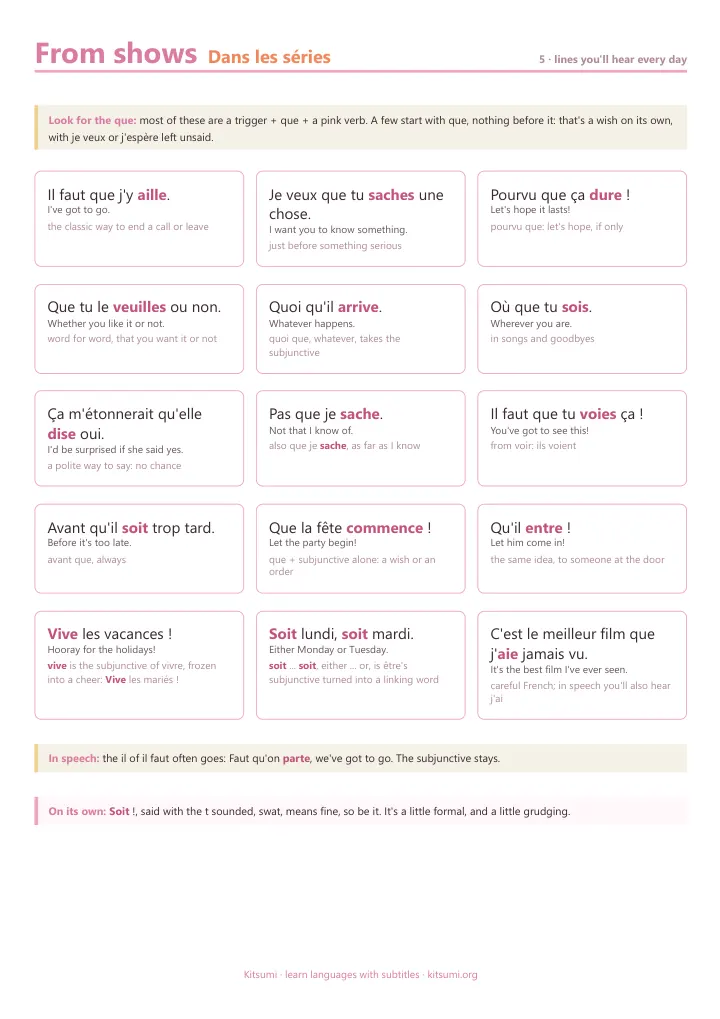 From showsFifteen everyday lines like Il faut que j'y aille, Pourvu que ça dure !, Que tu le veuilles ou non, Pas que je sache and Vive les vacances !, with soit ... soit and Soit !
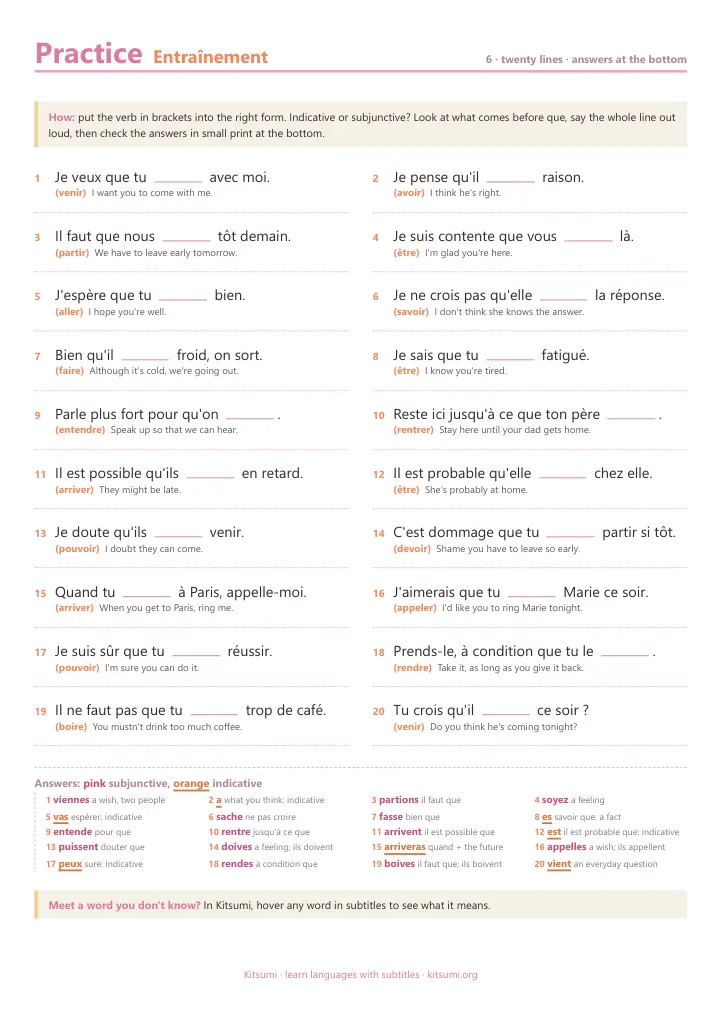 PracticeTwenty sentences where you choose the indicative or the subjunctive and make the form, with the answers and why in small print.
How to use it
- Start with the French verbs guide if the present tense is new to you.
- Build a few verbs a day from the ils form, then say the seven irregular rows out loud.
- On pages three and four, ask what comes before que: a fact, or a wish, a feeling or a doubt?
- Cover the answers on the practice page, then listen for il faut que and je veux que in French subtitles. In Kitsumi, hover any word to see what it means.
More free French printables
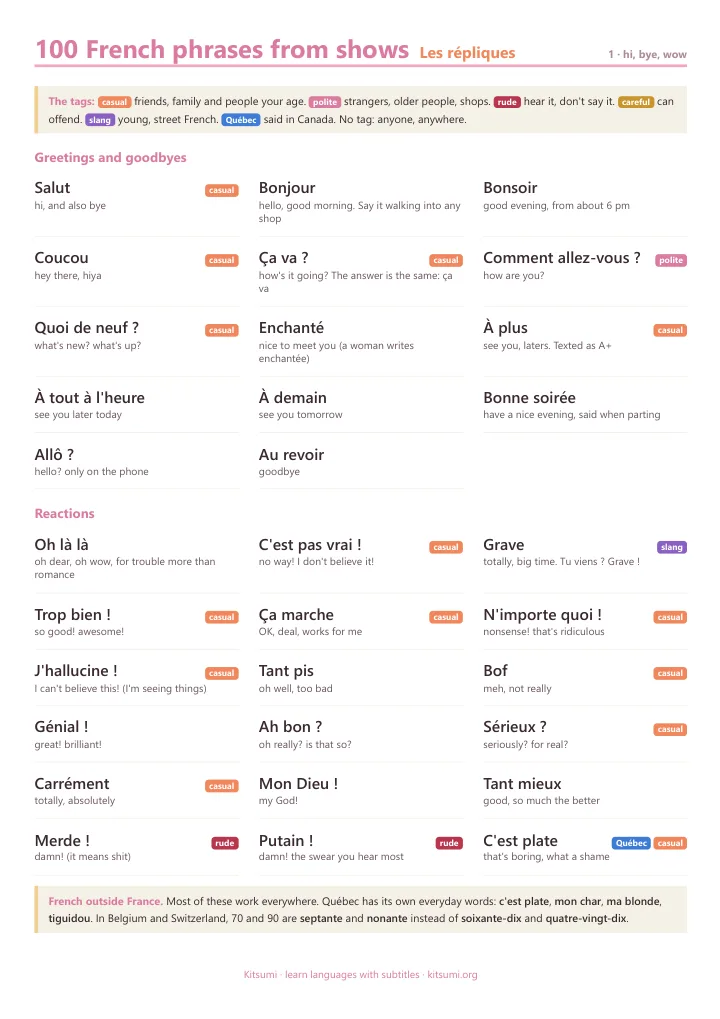 Next step100 French phrases from showsThen pick up the lines shows use all the time: Ça marche, je t'aime or je t'aime bien, Laisse-moi tranquille and what ouf and chelou really mean.
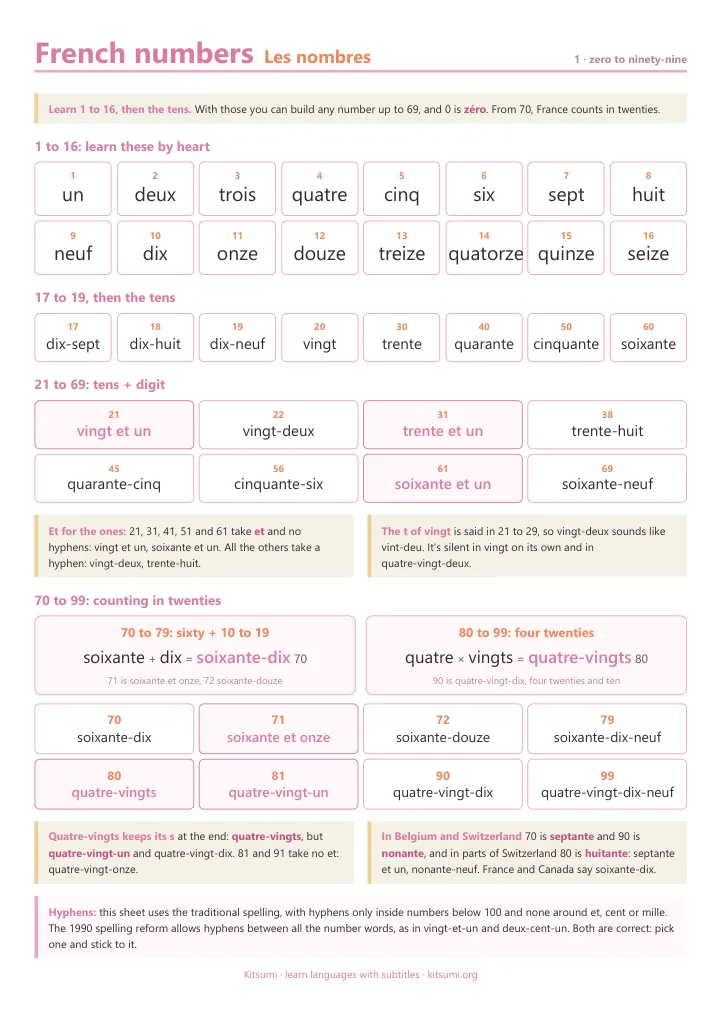 French numbers, time and moneyThen sort out numbers: soixante et onze and quatre-vingt-dix, deux cents and mille, then the time, dates and prices.
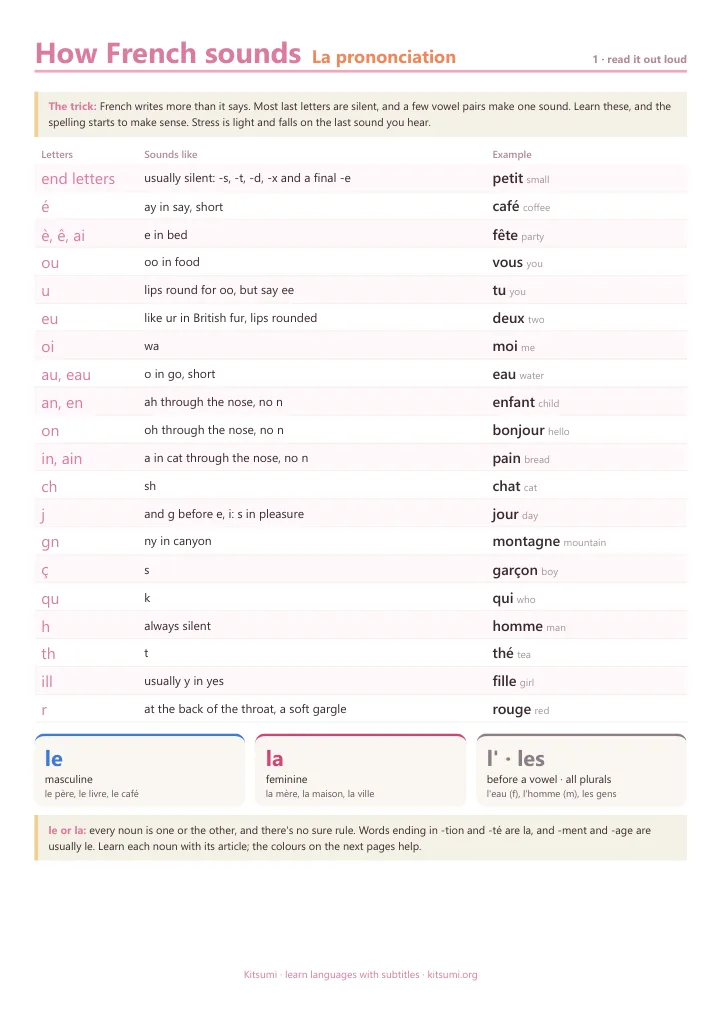 Basic French wordsStart here. Silent letters and nasal vowels made simple, then 214 first words with le and la in colour.
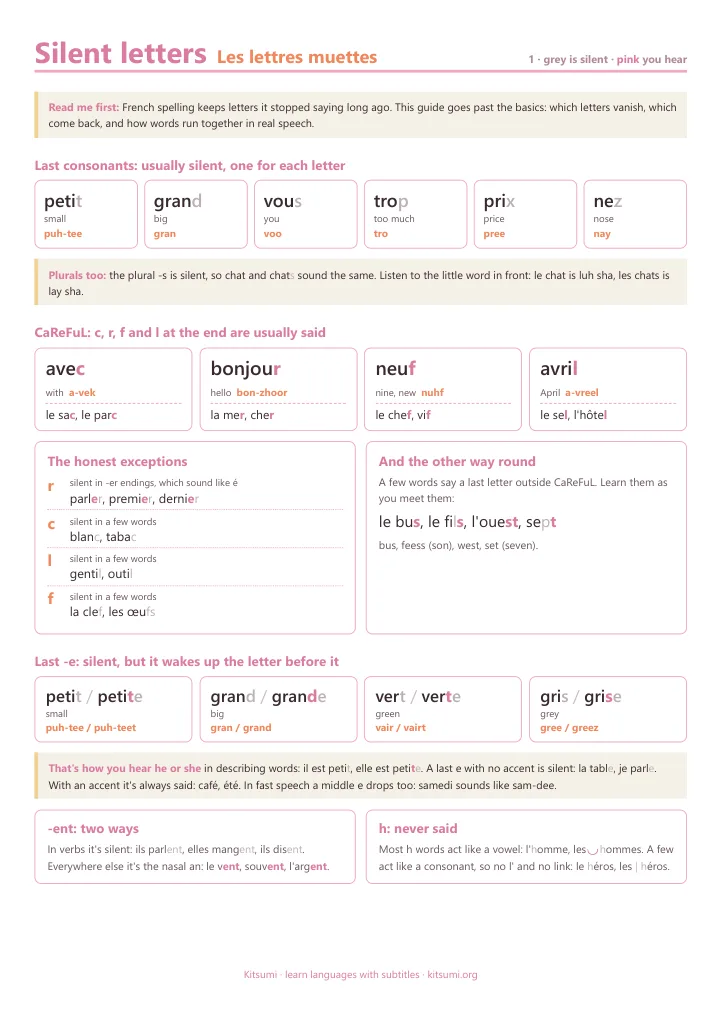 French pronunciation guideThen learn how the spelling turns into sound: which letters stay silent, the nasal vowels, and why spoken lines blur together.
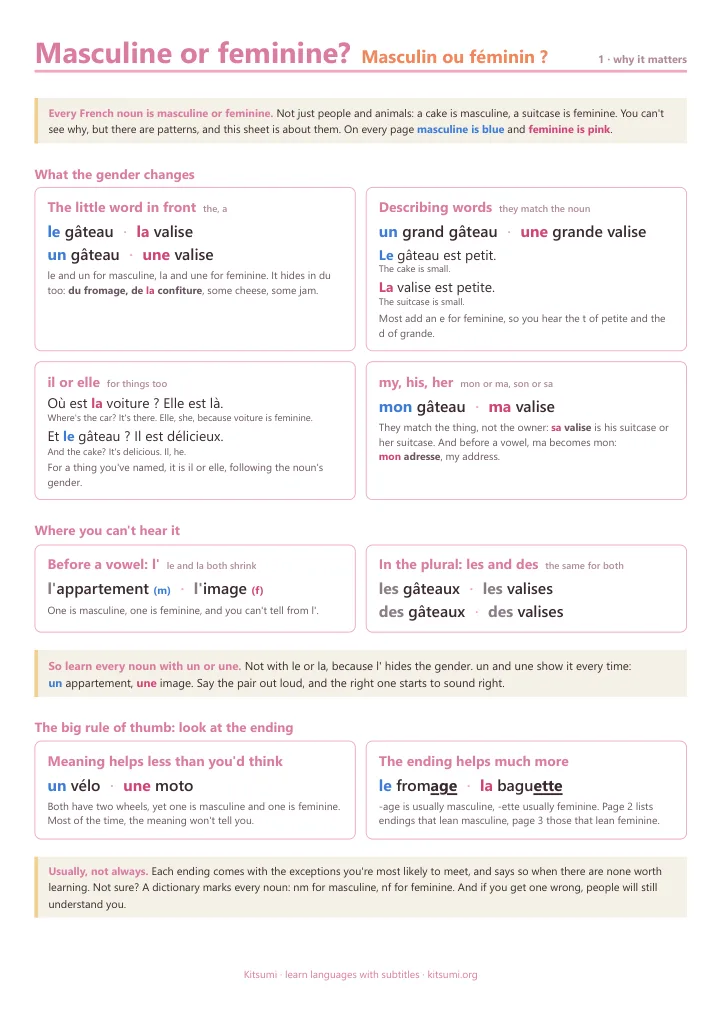 French grammar: masculine or feminine?Then learn to guess le or la from the ending: -age and -eau lean masculine, -tion and -ette lean feminine.
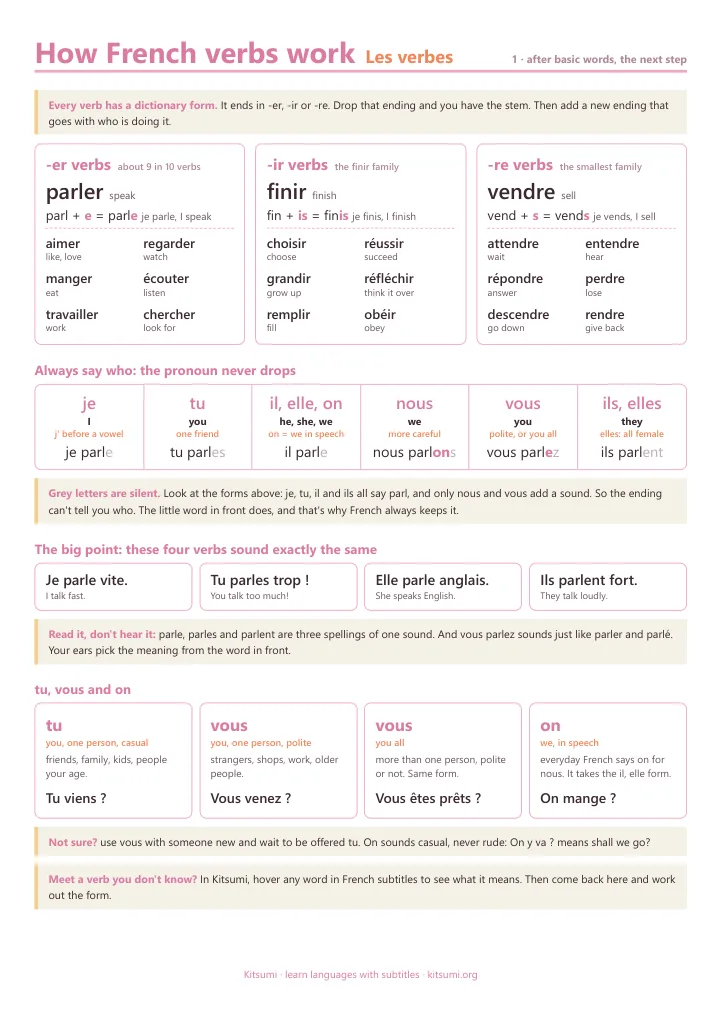 French verbs guideMake verbs say who and when: silent endings, the present, the passé composé, aller + verb and ne... pas.
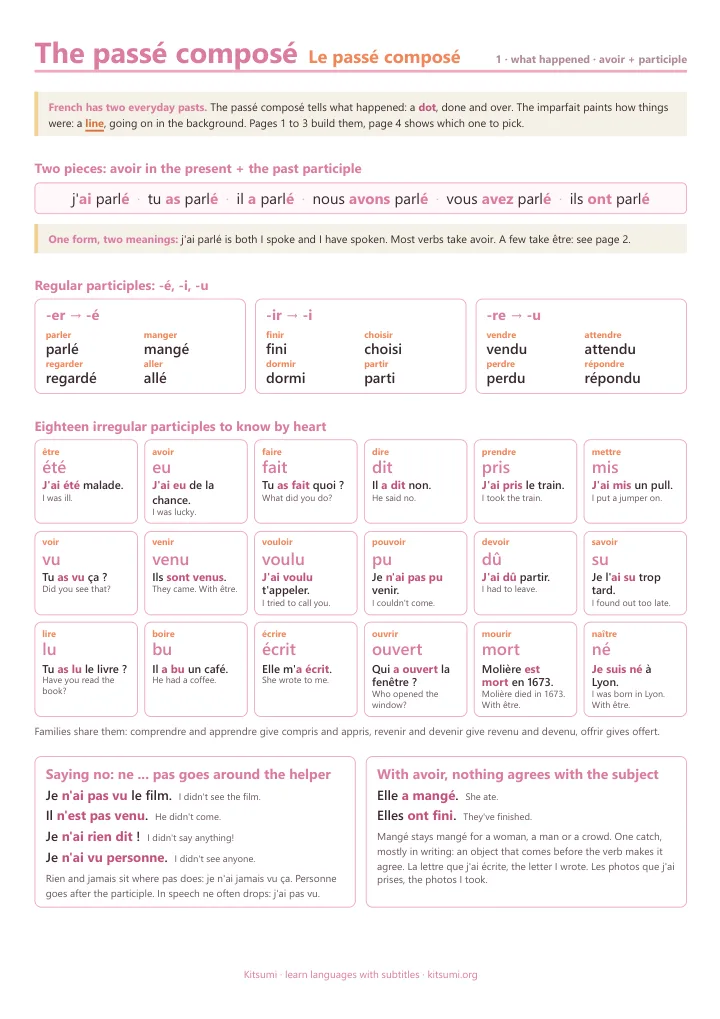 French past tenses: passé composé or imparfait?Then sort out the two pasts: j'ai vu or je voyais, je suis allé or j'allais, and why it matters.
Questions
Is the French subjunctive guide free?
Yes. It's a free PDF with no sign-up. Print it, keep it and share it.
How do you form the French subjunctive?
Take the ils form of the present, drop -ent and add -e, -es, -e, -ions, -iez, -ent: ils parlent gives que je parle. Nous and vous come from the nous form, so venir gives que je vienne but que nous venions. Seven common verbs, like être (que je sois) and avoir (que j'aie), are irregular.
When do you use the subjunctive in French?
Mostly after que when the first verb wants, feels, needs or doubts something about someone else: je veux que tu viennes, il faut que tu partes. It also follows linking words like pour que and bien que. Facts, espérer and après que take the indicative.