 Kitsumi
100 free French phrases from shows
A five-page printable PDF of the lines you hear in every French series and film, grouped by situation, with English and a tag that says how casual each one is.
PDF · 5 pages · 198 KB · no sign-up · free to print and share
Next, meet these words in real videos: Kitsumi is free for Chrome and Firefox.
What's inside
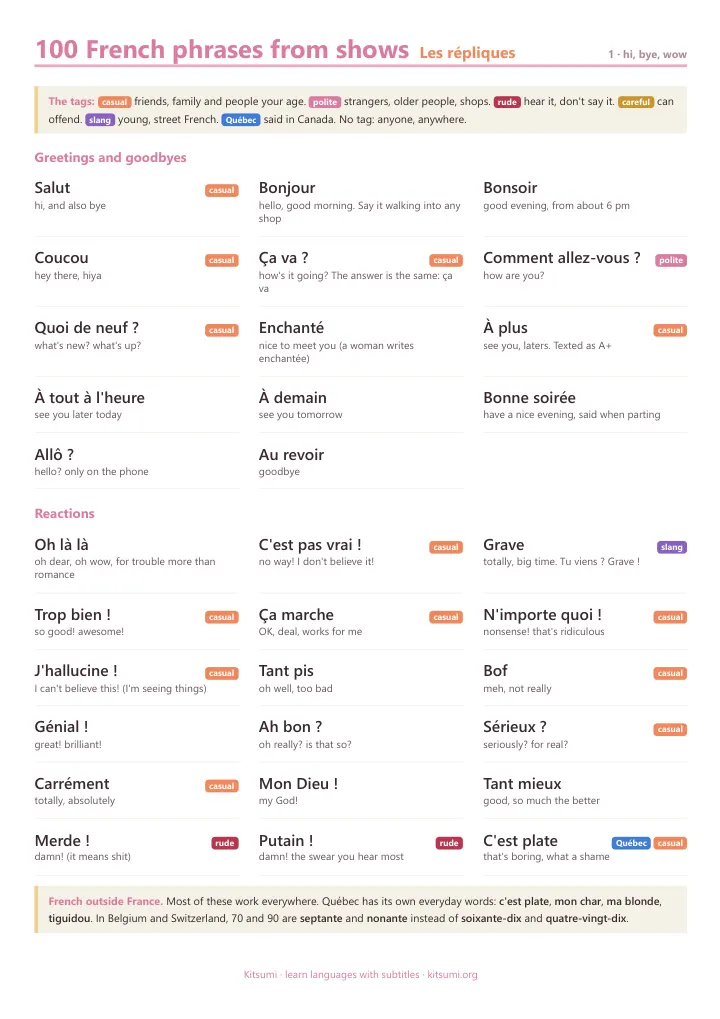
- Greetings and reactions32 lines like Salut, Coucou, Ça va ?, Quoi de neuf ?, À plus, Oh là là, Grave, J'hallucine and Bof, with a key to the tags and a note on Québec, Belgium and Switzerland.
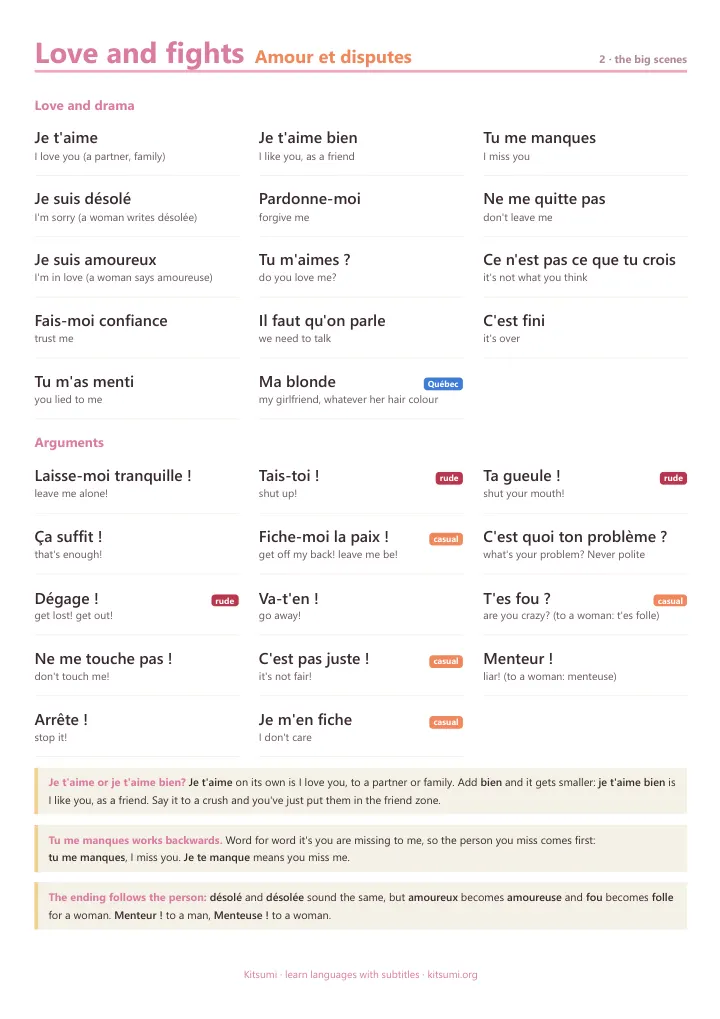
- Love and fightsJe t'aime and je t'aime bien and how they differ, why tu me manques works backwards, Ne me quitte pas, then the argument lines: Ça suffit !, Fiche-moi la paix !, and Tais-toi ! and Dégage !, marked rude.
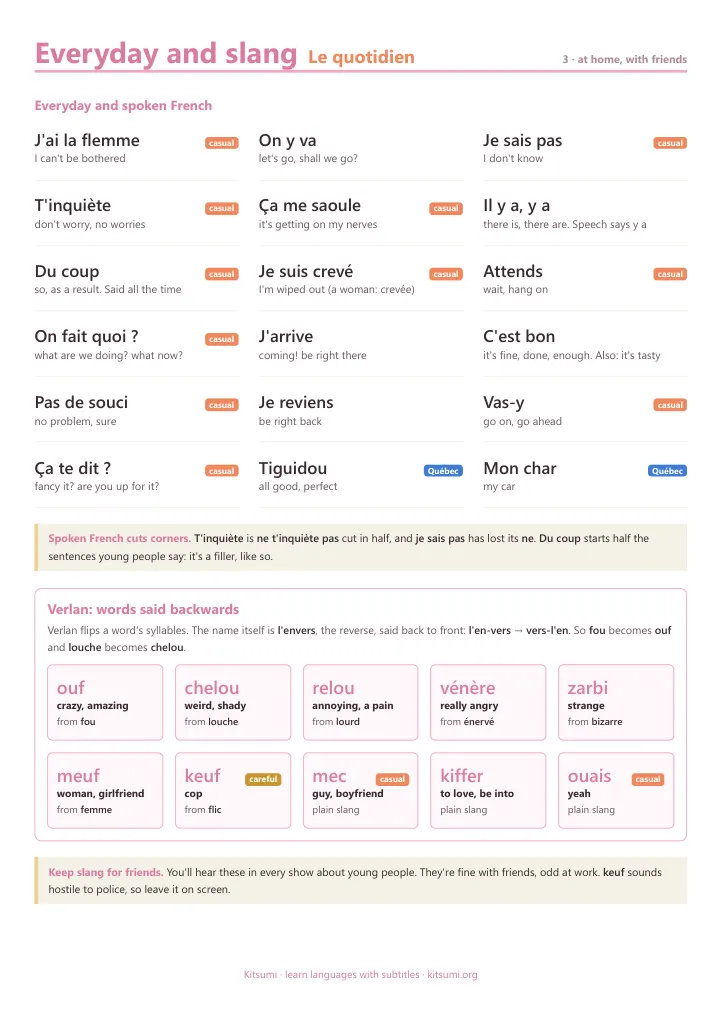
- Everyday and slang18 things people say at home and with friends, like J'ai la flemme, On y va, T'inquiète and du coup, then a verlan box: ouf, chelou, relou, meuf and keuf, and how verlan flips a word.
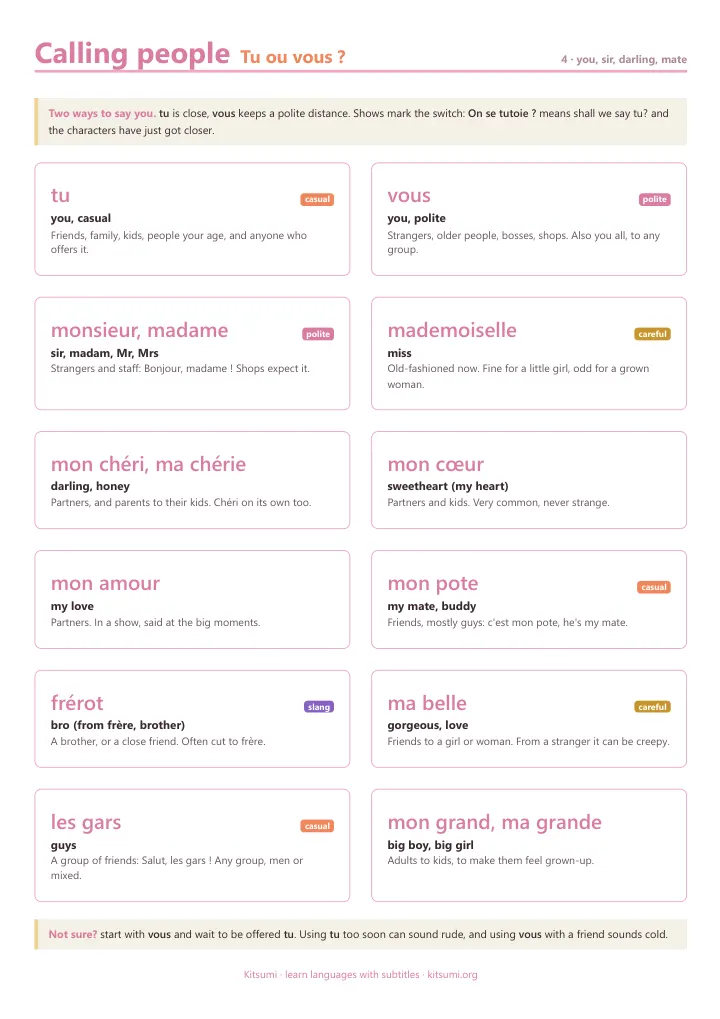 What people call each othertu and vous, monsieur and madame, mon chéri and mon cœur, then the friend words: mon pote, frérot, les gars and ma belle, with who uses which.
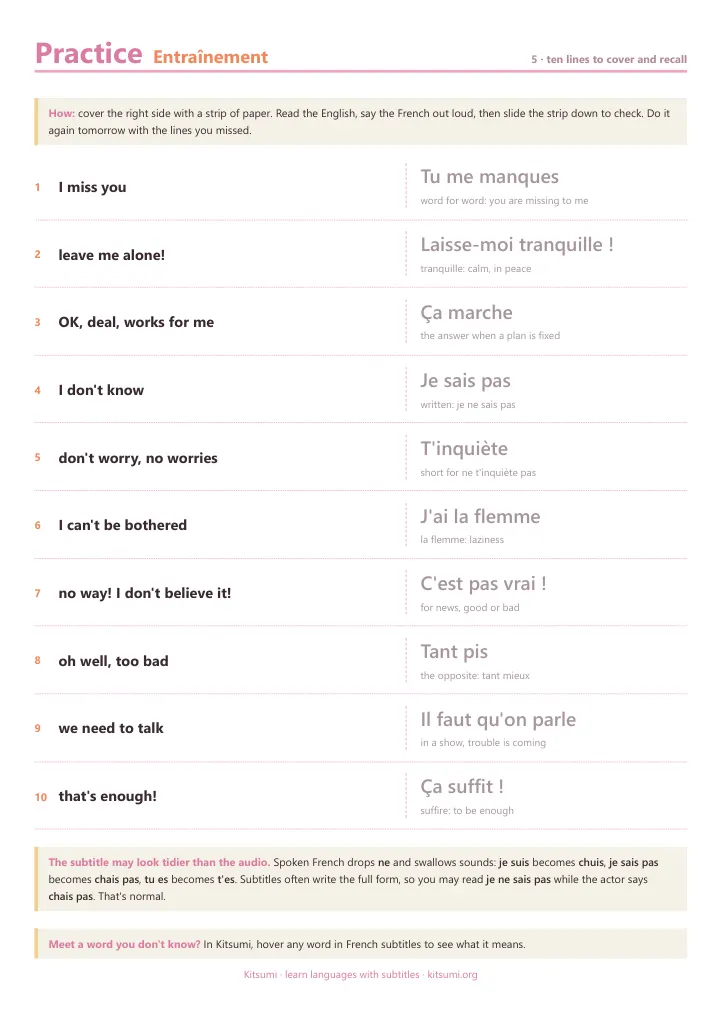 PracticeTen lines to cover and recall, plus a note on why spoken French drops ne and swallows sounds, so the subtitle may look tidier than the audio.
How to use it
- Learn a few basic words first. The verbs guide helps you see why each line looks the way it does.
- Read a page out loud, a few lines at a time, and notice the tags.
- Cover the right side of the practice page and say each line from the English.
- Watch a French series or film with Kitsumi and listen for the same lines.
More free French printables
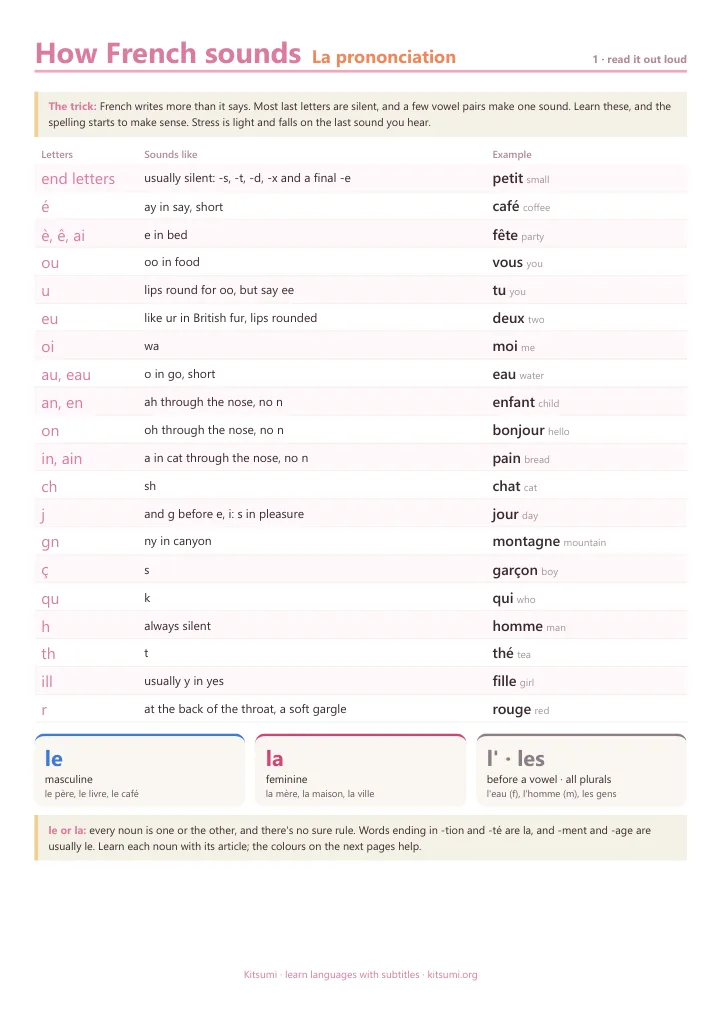 Basic French wordsStart here. Silent letters and nasal vowels made simple, then 214 first words with le and la in colour.
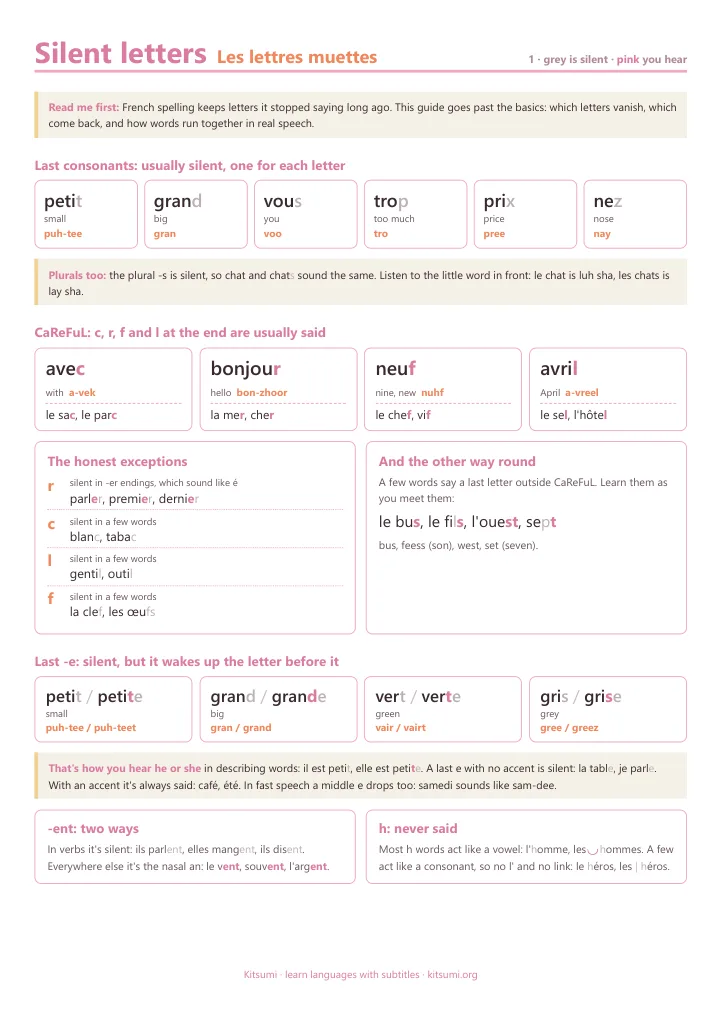 French pronunciation guideThen learn how the spelling turns into sound: which letters stay silent, the nasal vowels, and why spoken lines blur together.
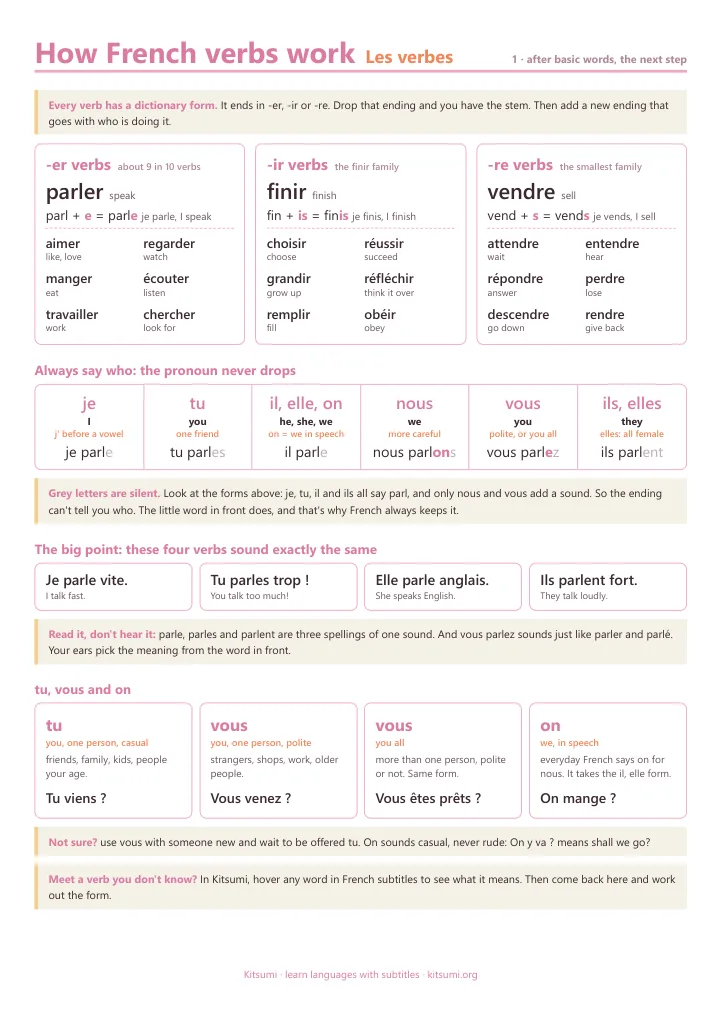 French verbs guideMake verbs say who and when: silent endings, the present, the passé composé, aller + verb and ne... pas.
Questions
Is the French show phrases PDF free?
Yes. It's a free PDF with no sign-up. Print it, keep it and share it.
Is it French from France?
Mostly, and it's understood everywhere. Québec words like c'est plate, mon char and ma blonde are marked, and a note covers septante and nonante in Belgium and Switzerland.
What is the difference between je t'aime and je t'aime bien?
Je t'aime is I love you, for a partner or family. Adding bien makes it smaller: je t'aime bien means I like you, as a friend.