 Kitsumi
French grammar: masculine or feminine?
A five-page printable PDF on French noun gender. The meaning rarely tells you whether a noun is masculine or feminine, but the ending often does. It shows what the gender changes, why l' and des hide it, which endings lean which way and the exceptions you're likely to meet, then the traps and twenty nouns to check yourself on.
PDF · 5 pages · 344 KB · no sign-up · free to print and share
Was it useful?Ideas or a mistake? Tell us on Discord
Next, meet these words in real videos: Kitsumi is free for Chrome and Firefox.
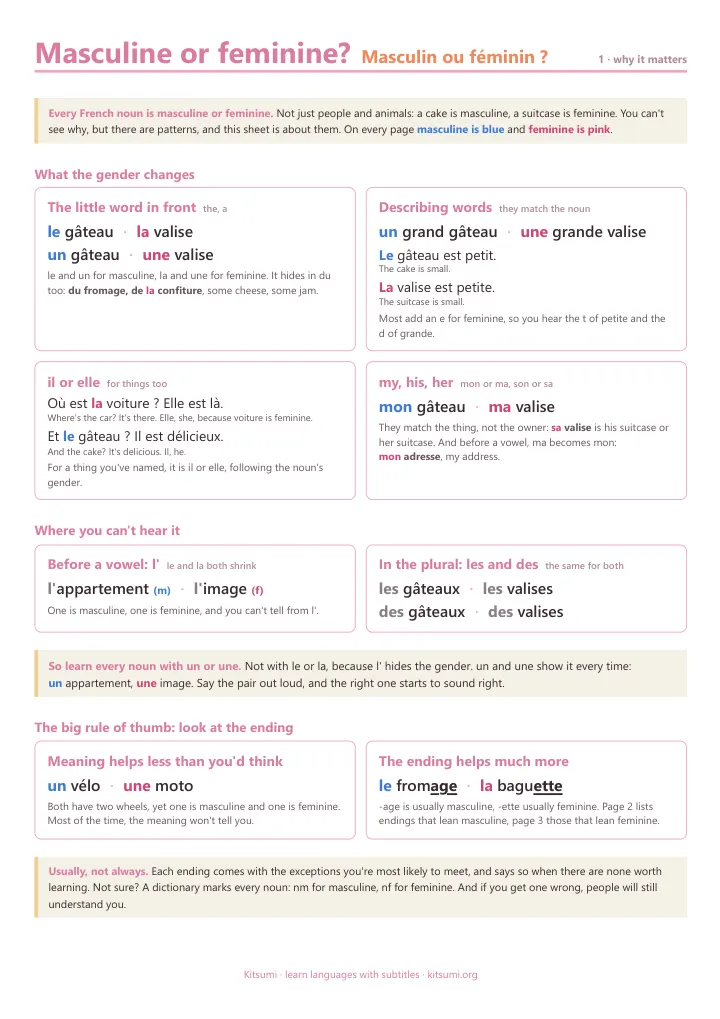
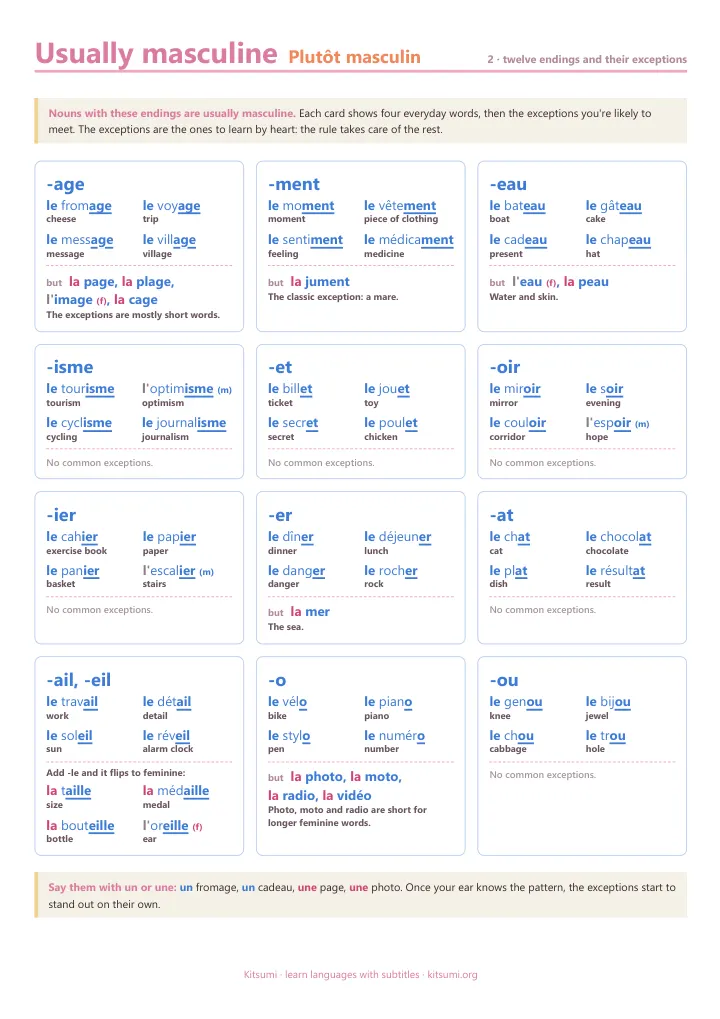
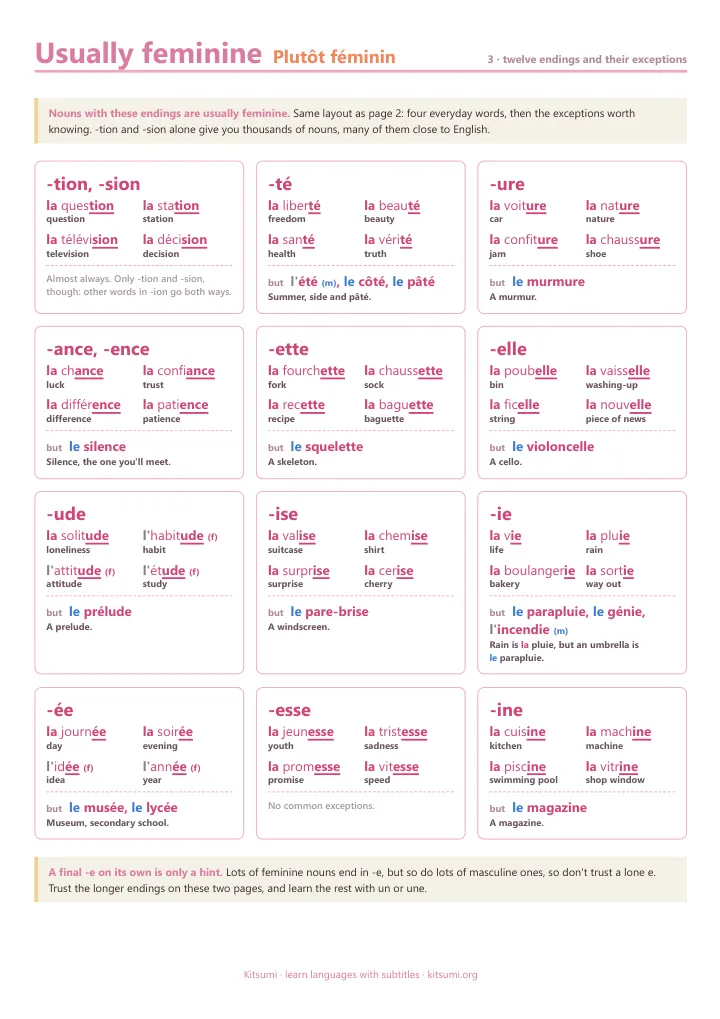
What's inside
- Why it mattersle or la, un or une, grand or grande, il or elle, mon or ma: what the gender changes, why l' and les hide it, and why every noun is best learned with un or une.
- Usually masculineTwelve endings like -age, -ment, -eau, -isme, -oir and -o, four everyday words each, and the exceptions worth knowing: la page, la plage, l'image, l'eau, la mer, la photo.
- Usually feminineTwelve endings like -tion, -té, -ure, -ette, -ie and -ée, with their exceptions: l'été, le silence, le parapluie, le musée, le lycée, le magazine.
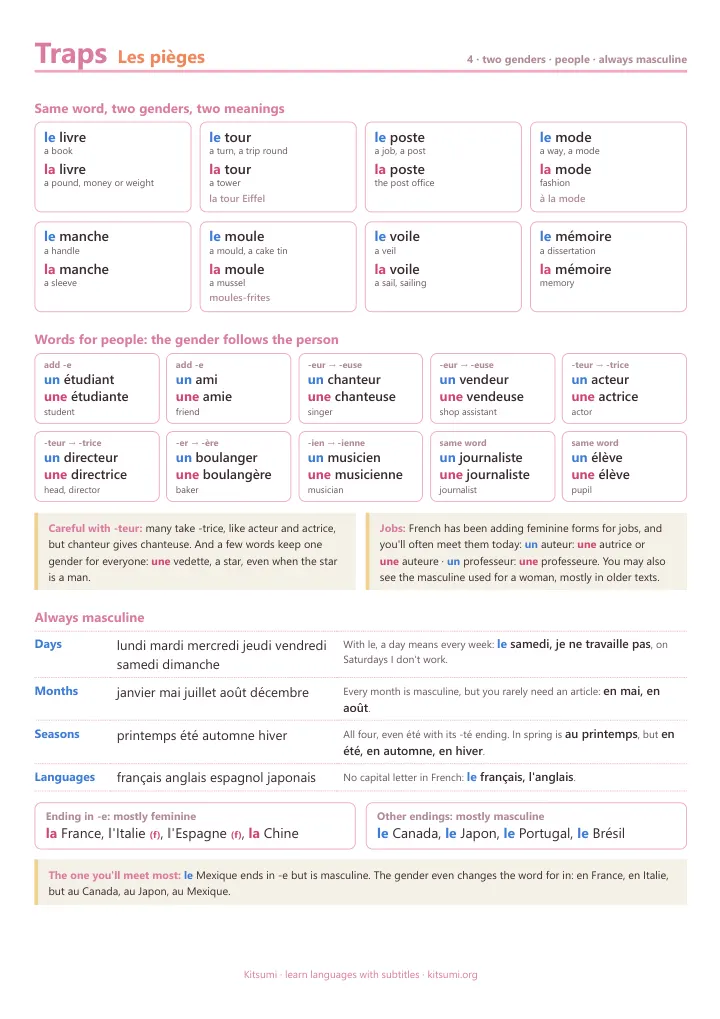 TrapsWords that change meaning with gender (le livre and la livre, le tour and la tour, le poste and la poste), words for people like acteur and actrice, the groups that are always masculine (days, months, seasons and languages) and countries.
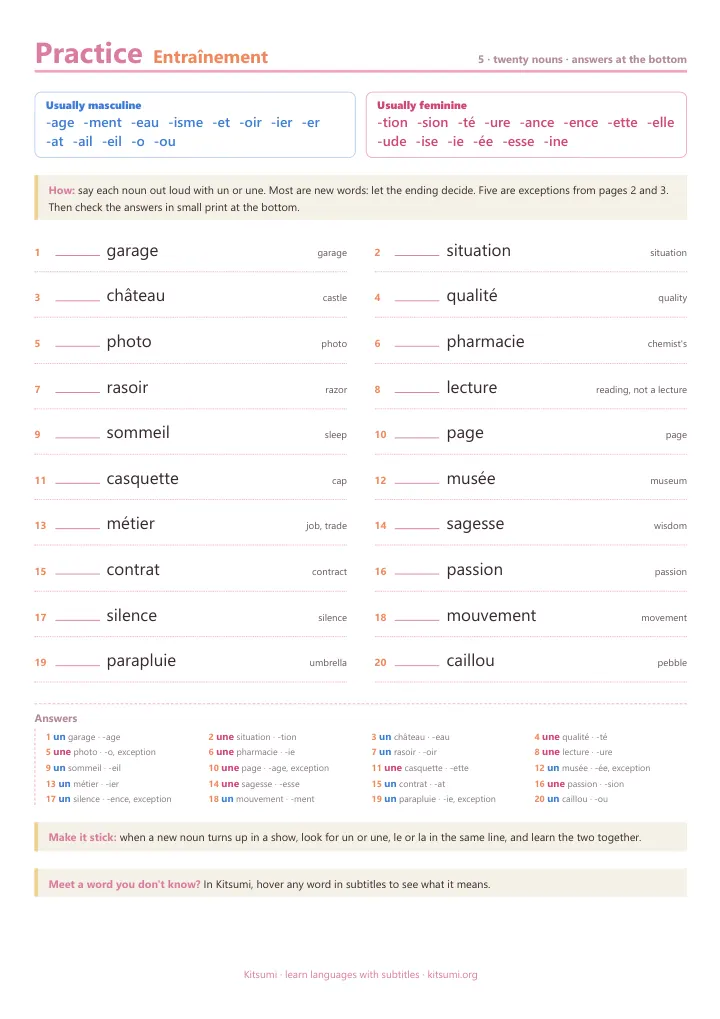 PracticeTwenty nouns: say un or une from the ending, then check the answers in small print, each with the ending that gave it away.
How to use it
- Read page 1 once, then learn every new noun with un or une, never alone.
- Take one card a day from pages 2 and 3 and say its words and exceptions out loud.
- Cover the answers on page 5 and say each noun with un or une.
- Watch something in French with Kitsumi and notice the endings. In Kitsumi, hover any word to see what it means.
More free French printables
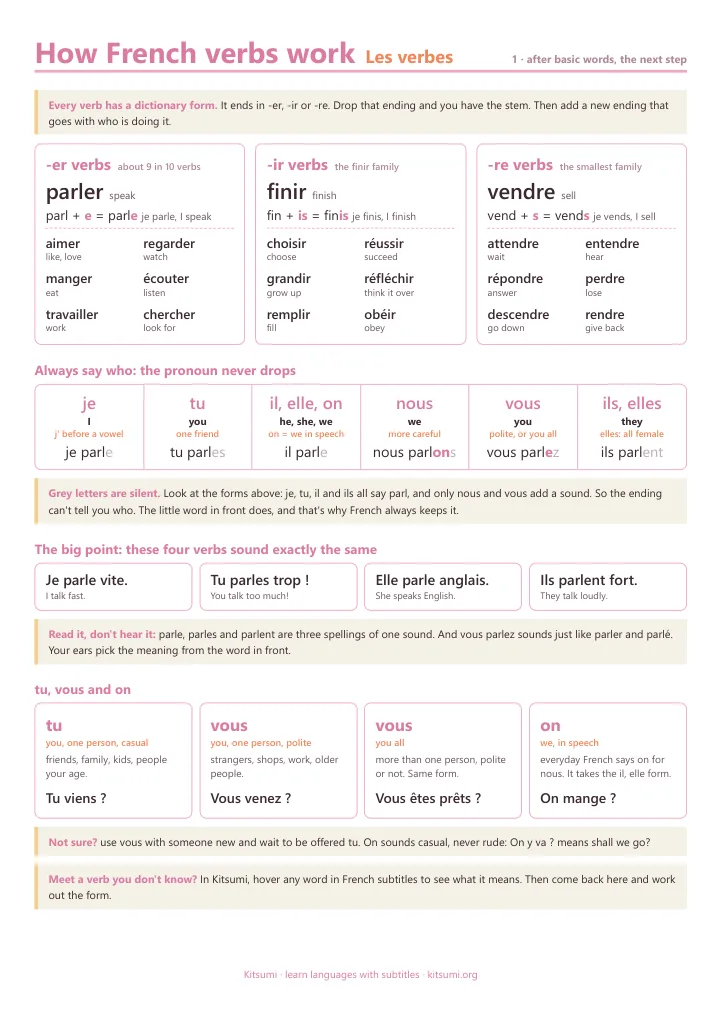 Next stepFrench verbs guideMake verbs say who and when: silent endings, the present, the passé composé, aller + verb and ne... pas.
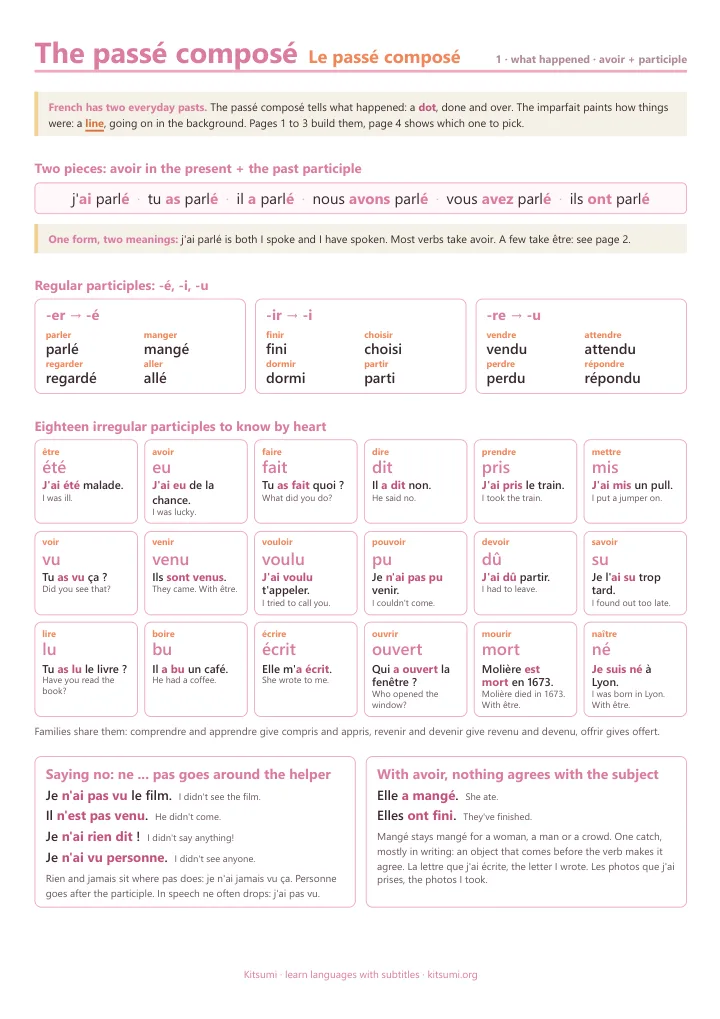 French past tenses: passé composé or imparfait?Then sort out the two pasts: j'ai vu or je voyais, je suis allé or j'allais, and why it matters.
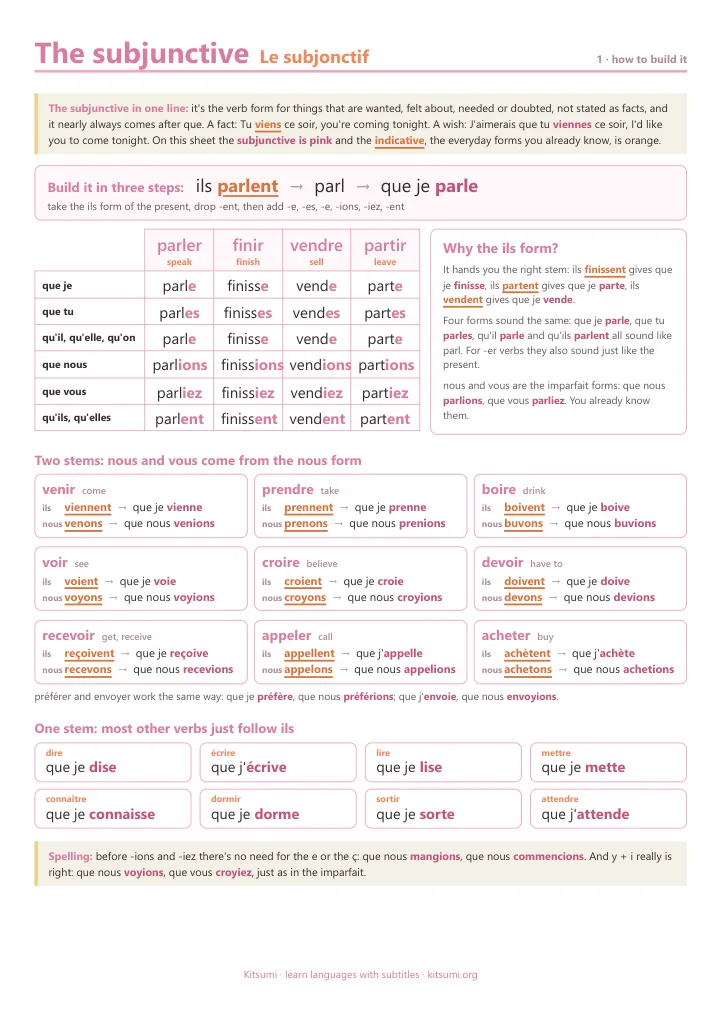 French subjunctive: verb forms and when to use themThen meet the subjunctive: je veux que tu viennes, il faut que j'y aille, and why j'espère que takes the indicative.
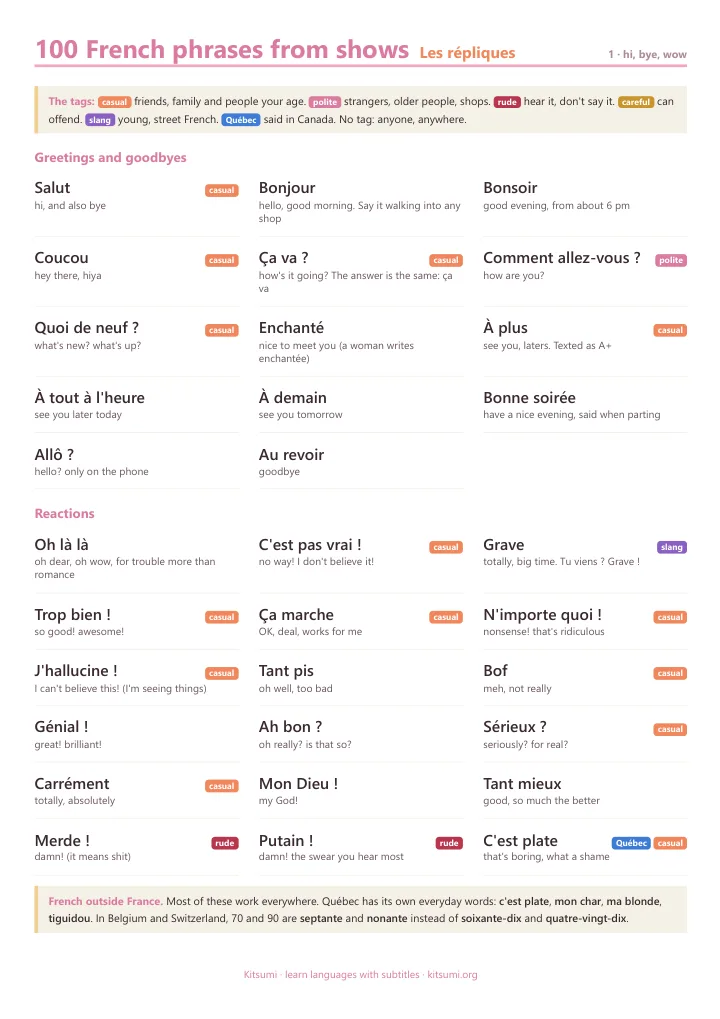 100 French phrases from showsThen pick up the lines shows use all the time: Ça marche, je t'aime or je t'aime bien, Laisse-moi tranquille and what ouf and chelou really mean.
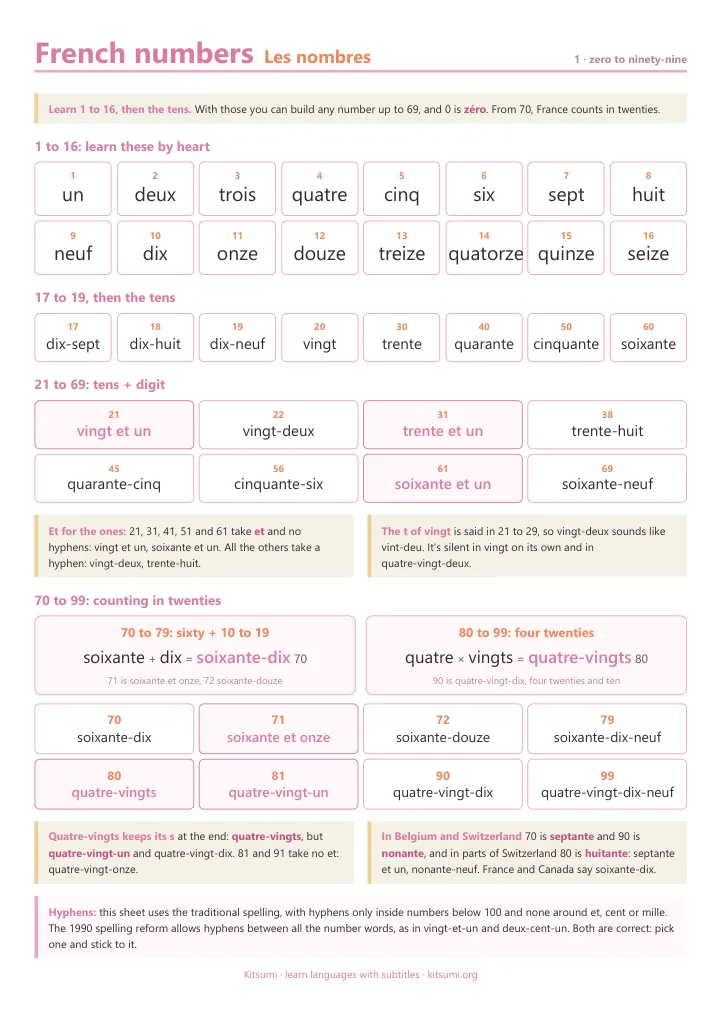 French numbers, time and moneyThen sort out numbers: soixante et onze and quatre-vingt-dix, deux cents and mille, then the time, dates and prices.
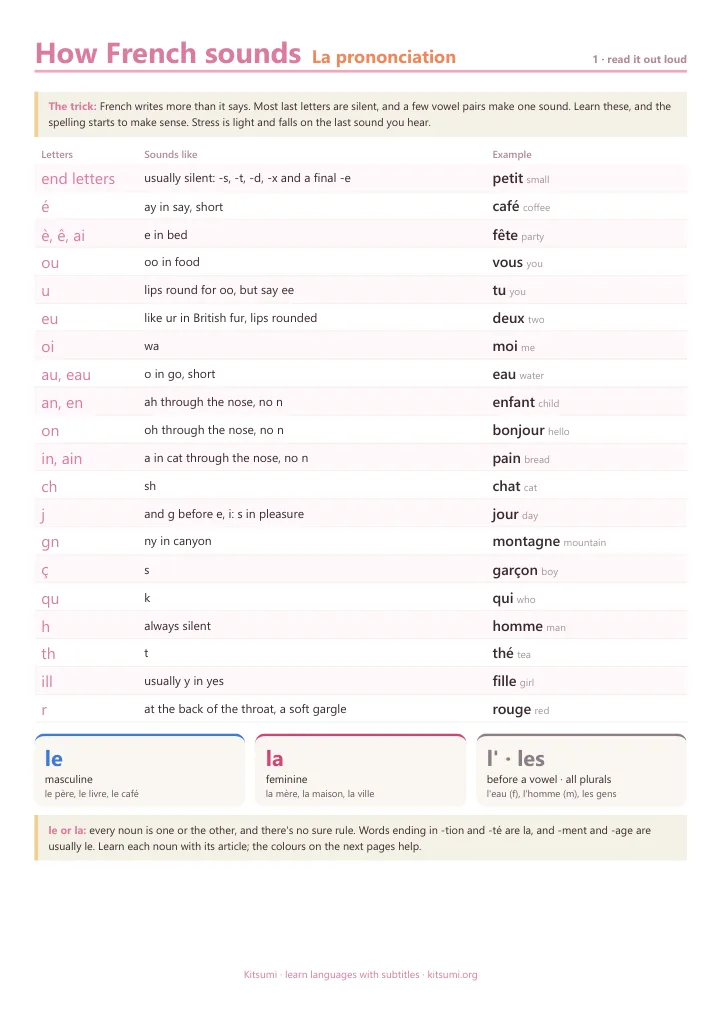 Basic French wordsStart here. Silent letters and nasal vowels made simple, then 214 first words with le and la in colour.
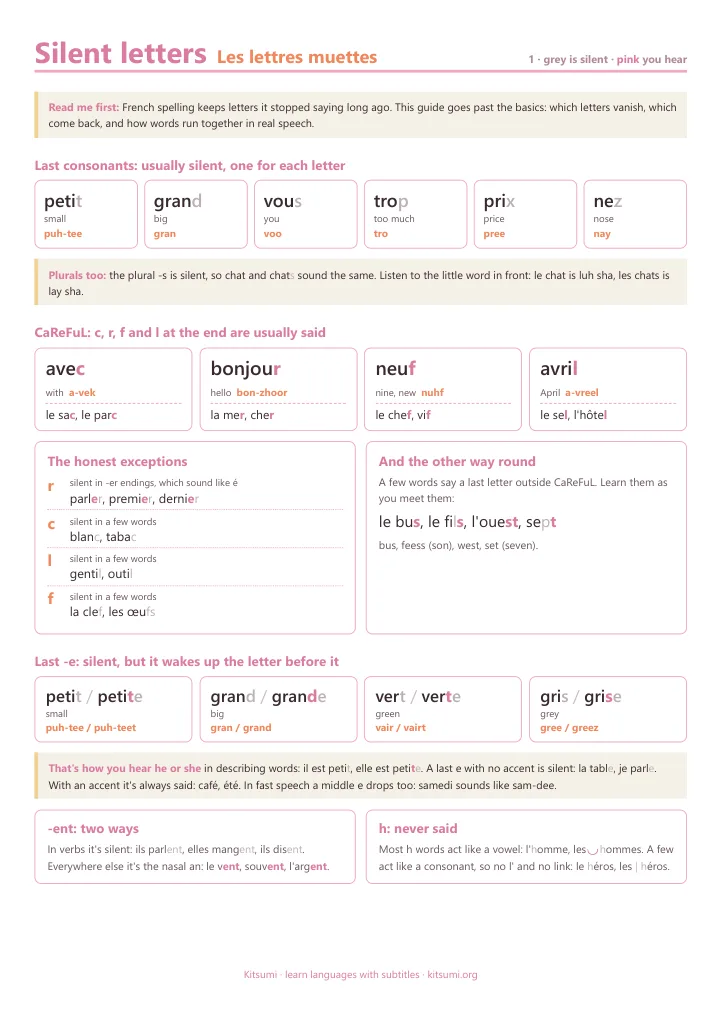 French pronunciation guideThen learn how the spelling turns into sound: which letters stay silent, the nasal vowels, and why spoken lines blur together.
Questions
Is the French masculine or feminine guide free?
Yes. It's a free PDF with no sign-up. Print it, keep it and share it.
How do you know if a French noun is masculine or feminine?
Look at the ending. Nouns in -age, -ment and -eau are usually masculine, and nouns in -tion, -té and -ette are usually feminine. Each ending has a few exceptions, like la page and l'été, and the guide lists the ones you're likely to meet.
Why learn French nouns with un or une?
Because le and la both turn into l' before a vowel, and les and des are the same for both, so they hide the gender. un and une always show it: un appartement, une image.