 Kitsumi
French past tenses: passé composé or imparfait?
A six-page printable PDF that goes deeper than the past page of the French verbs guide. It builds the passé composé and the imparfait step by step, then shows when to use which with one simple picture, a dot and a line, and ends with twenty lines to check yourself on.
PDF · 6 pages · 384 KB · no sign-up · free to print and share
Was it useful?Ideas or a mistake? Tell us on Discord
Next, meet these words in real videos: Kitsumi is free for Chrome and Firefox.
What's inside
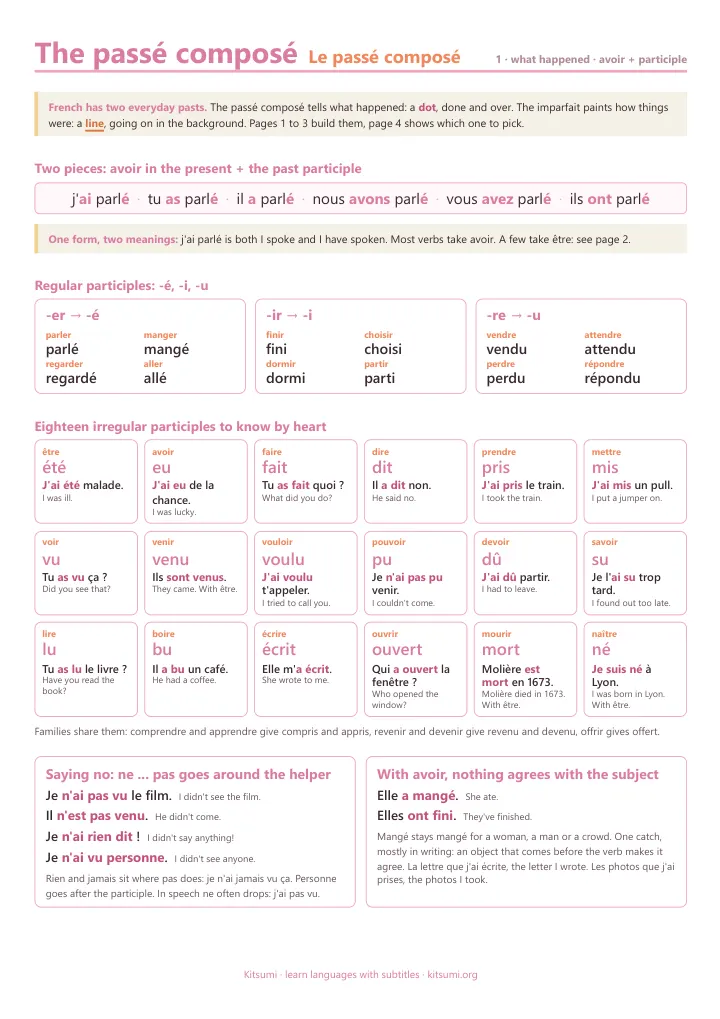
- The passé composéavoir + the past participle, the -é, -i and -u patterns, eighteen irregular ones like été, eu, fait, pris, vu, dû and né, and ne... pas around the helper: je n'ai pas vu.
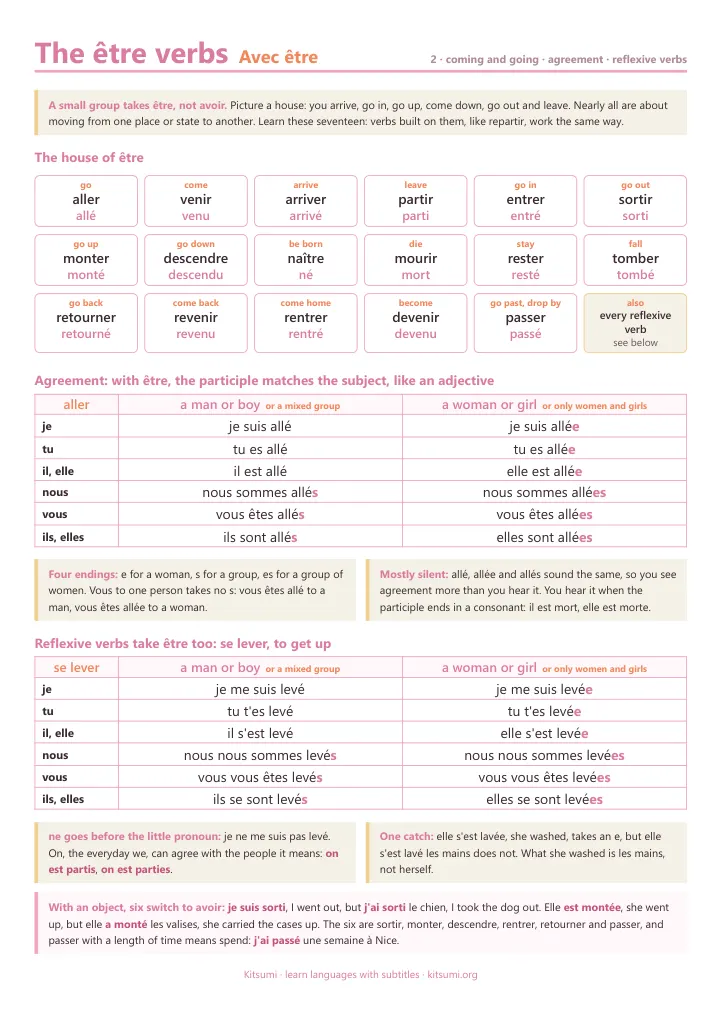
- The être verbsThe house of être, from aller and venir to naître and mourir, agreement written out in full (il est allé, elle est allée, ils sont partis), reflexive verbs like je me suis levé, and the six that switch to avoir with an object.
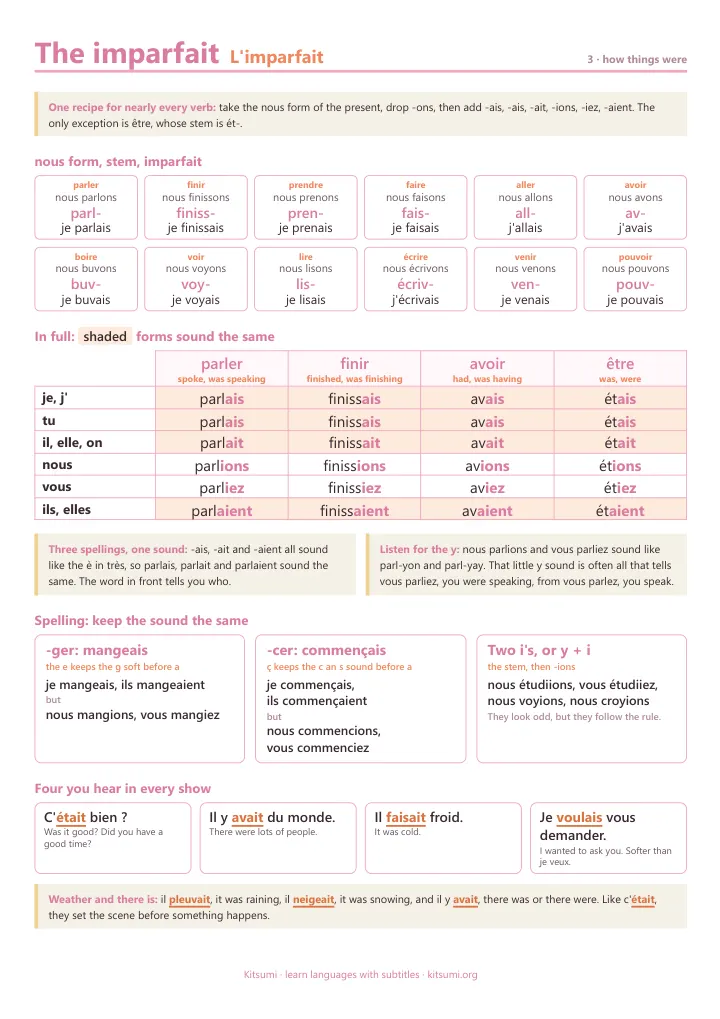
- The imparfaitThe nous form minus -ons plus -ais, -ais, -ait, -ions, -iez, -aient, être as ét-, the spelling of mangeais and commençais next to mangions and commencions, and c'était, il y avait and il faisait.
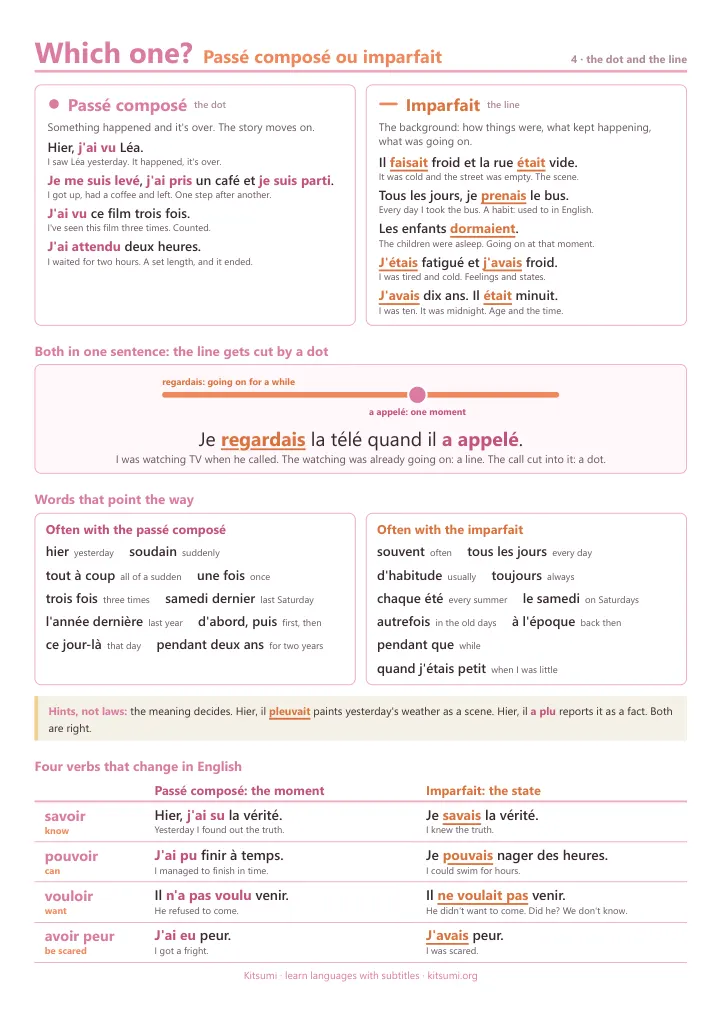 Which one?The passé composé for what happened, one step after another or a set number of times, the imparfait for the scene, habits, feelings and age, Je regardais la télé quand il a appelé, signal words like soudain and d'habitude, and j'ai su next to je savais.
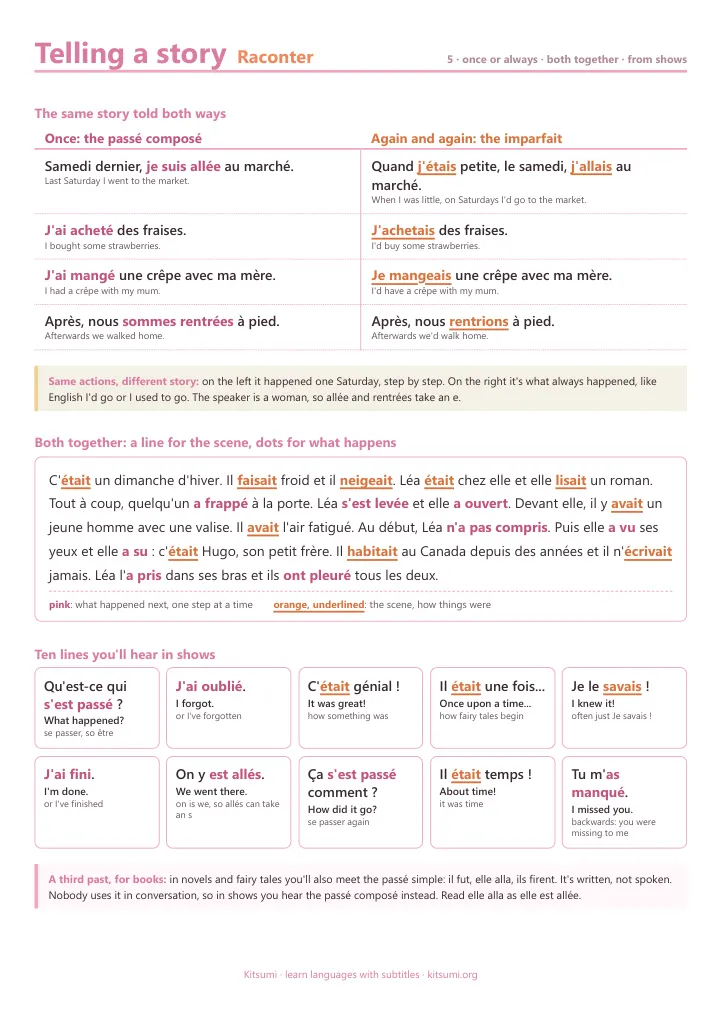 Telling a storyOne Saturday told once and as a habit, a short story with every past verb coloured, ten lines from shows like Qu'est-ce qui s'est passé ? and C'était génial !, and a word on the passé simple you meet in books.
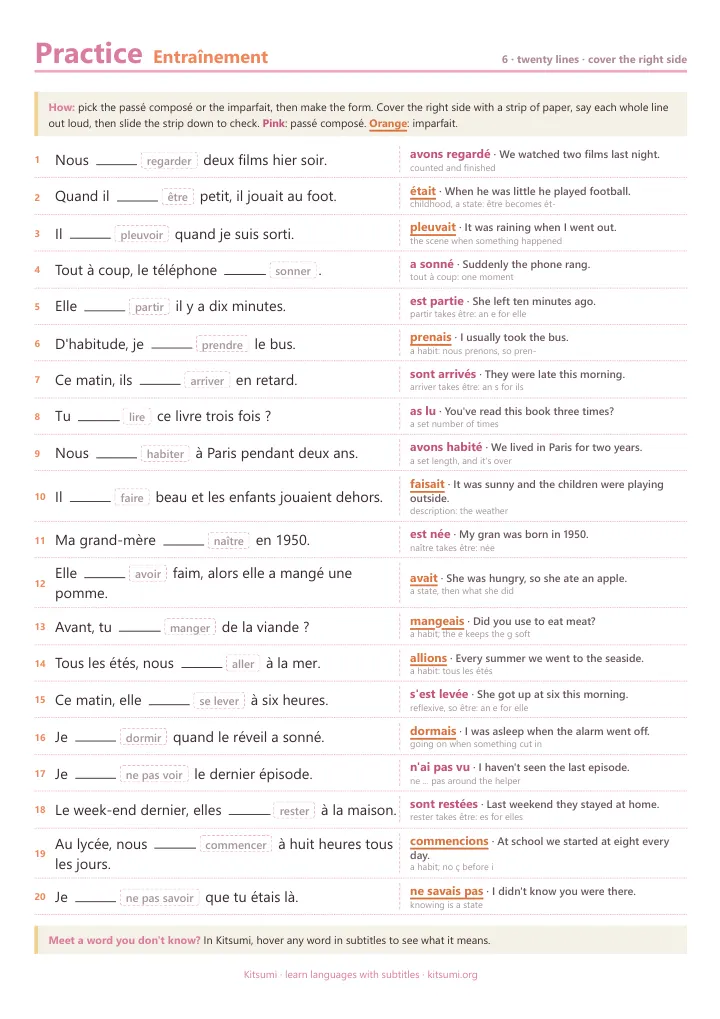 PracticeTwenty sentences where you pick the tense and make the form, with the answer and why in small print. Cover the right side with a strip of paper and check yourself.
How to use it
- Start with the French verbs guide if the past is new to you.
- Say the avoir line and the house of être out loud, a few verbs each day.
- Read the story on page five and say why each verb is pink or orange.
- Cover the answers on the practice page, then listen for c'était and j'ai vu in French subtitles. In Kitsumi, hover any word to see what it means.
More free French printables
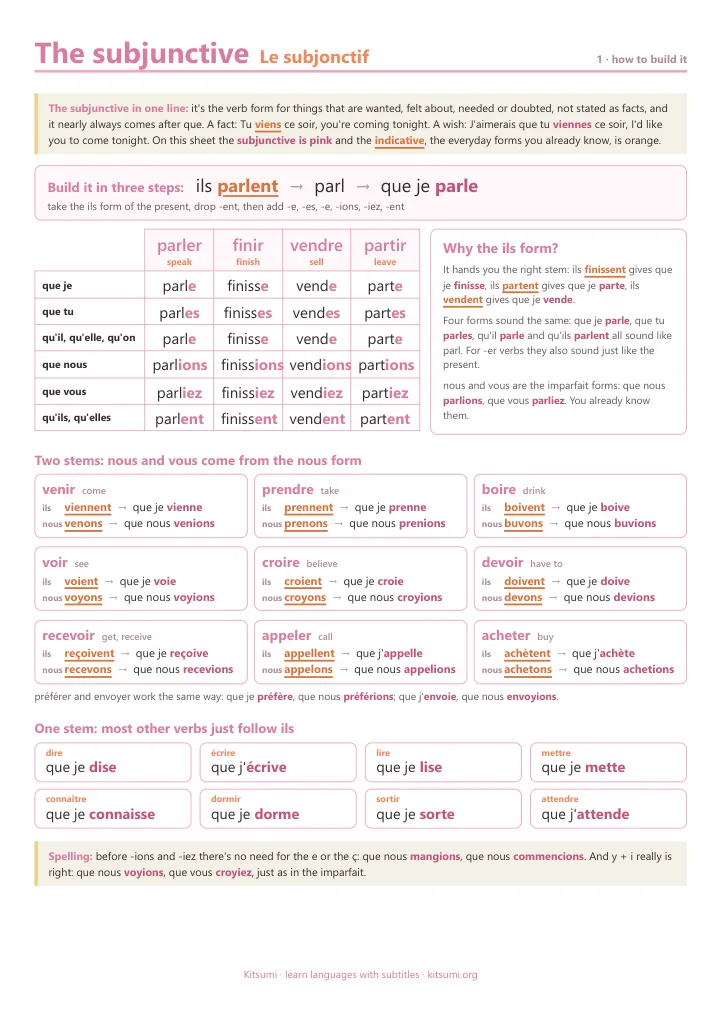 Next stepFrench subjunctive: verb forms and when to use themThen meet the subjunctive: je veux que tu viennes, il faut que j'y aille, and why j'espère que takes the indicative.
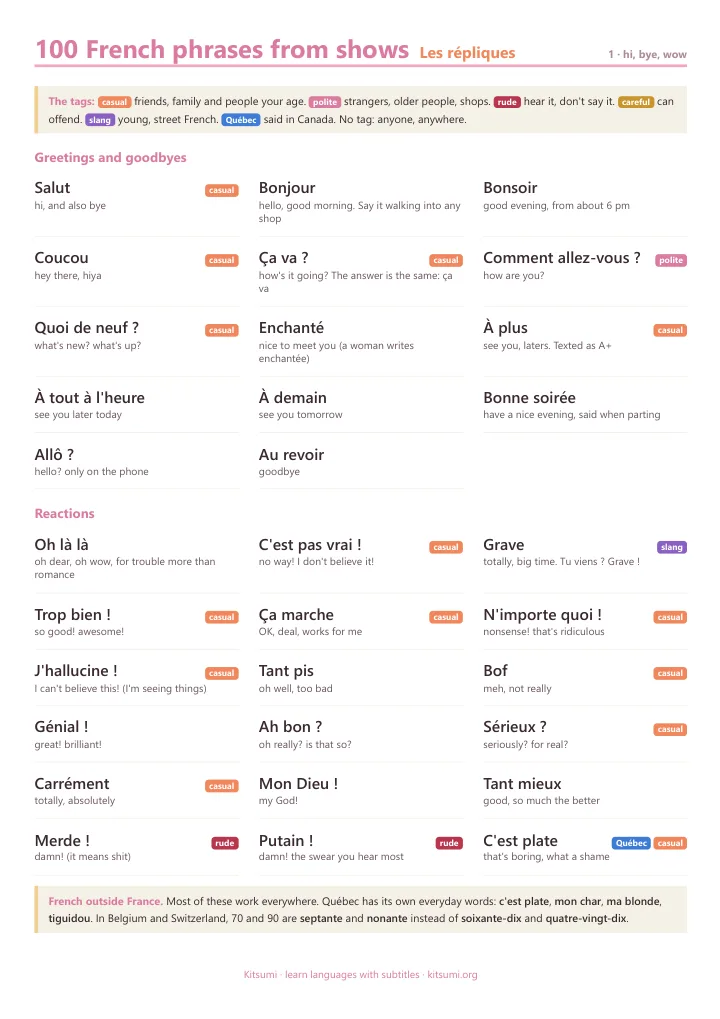 100 French phrases from showsThen pick up the lines shows use all the time: Ça marche, je t'aime or je t'aime bien, Laisse-moi tranquille and what ouf and chelou really mean.
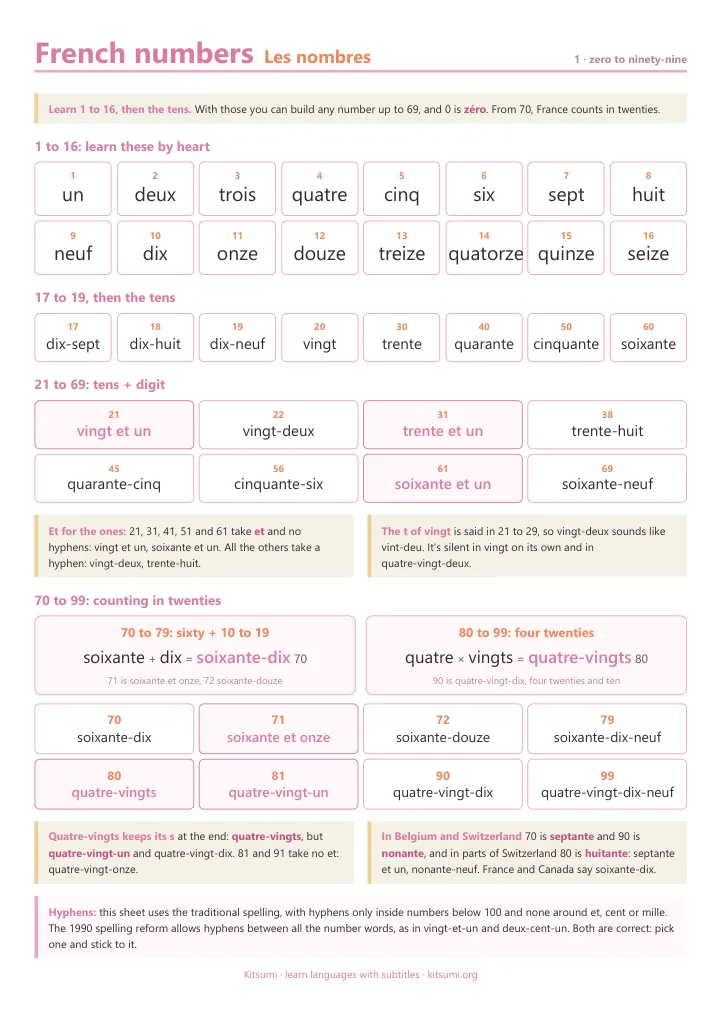 French numbers, time and moneyThen sort out numbers: soixante et onze and quatre-vingt-dix, deux cents and mille, then the time, dates and prices.
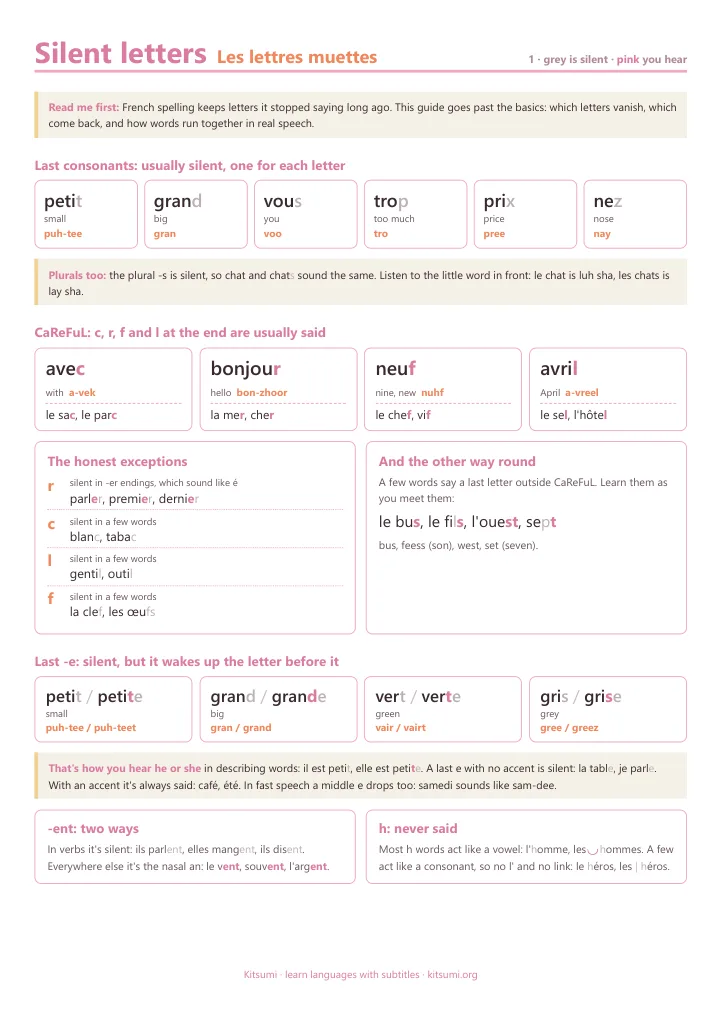
 Basic French wordsStart here. Silent letters and nasal vowels made simple, then 214 first words with le and la in colour.
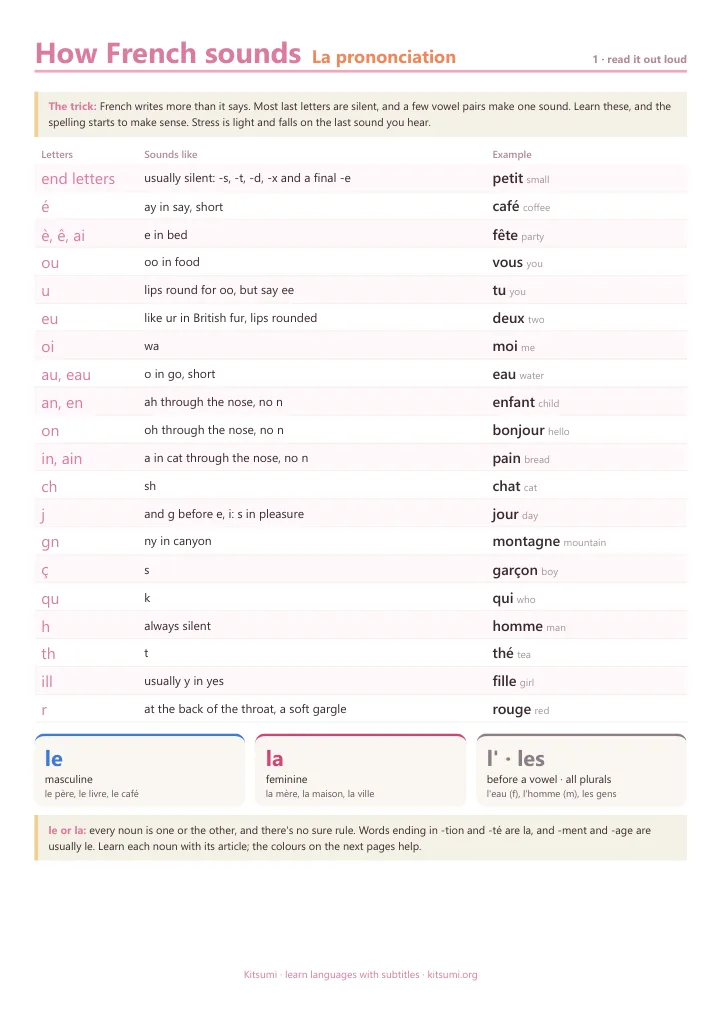
 French pronunciation guideThen learn how the spelling turns into sound: which letters stay silent, the nasal vowels, and why spoken lines blur together.
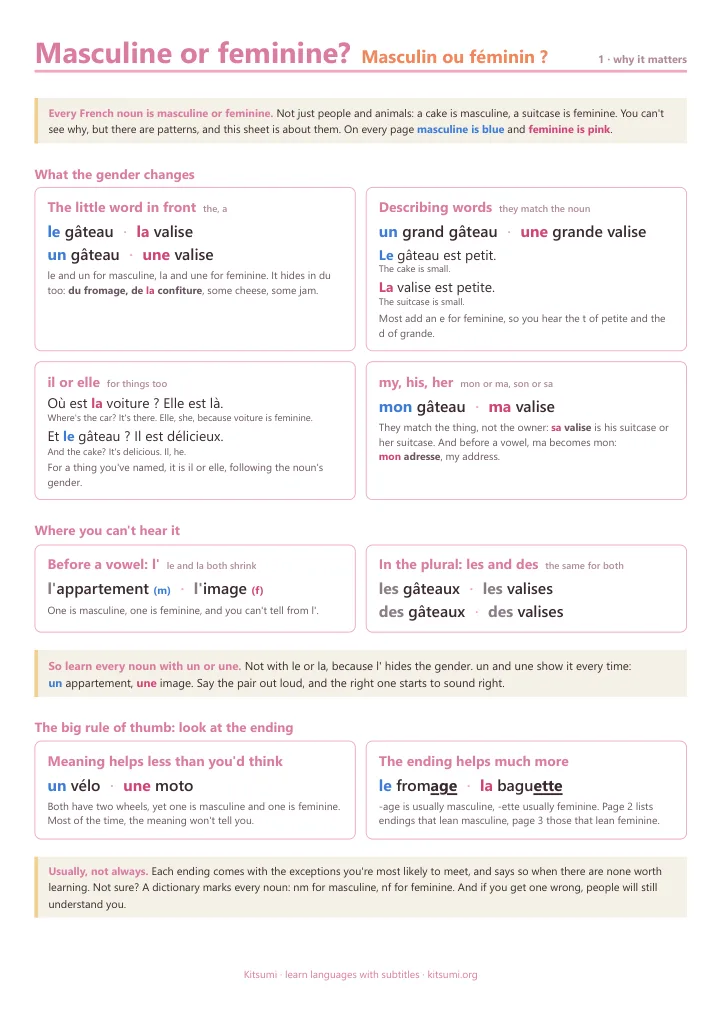 French grammar: masculine or feminine?Then learn to guess le or la from the ending: -age and -eau lean masculine, -tion and -ette lean feminine.
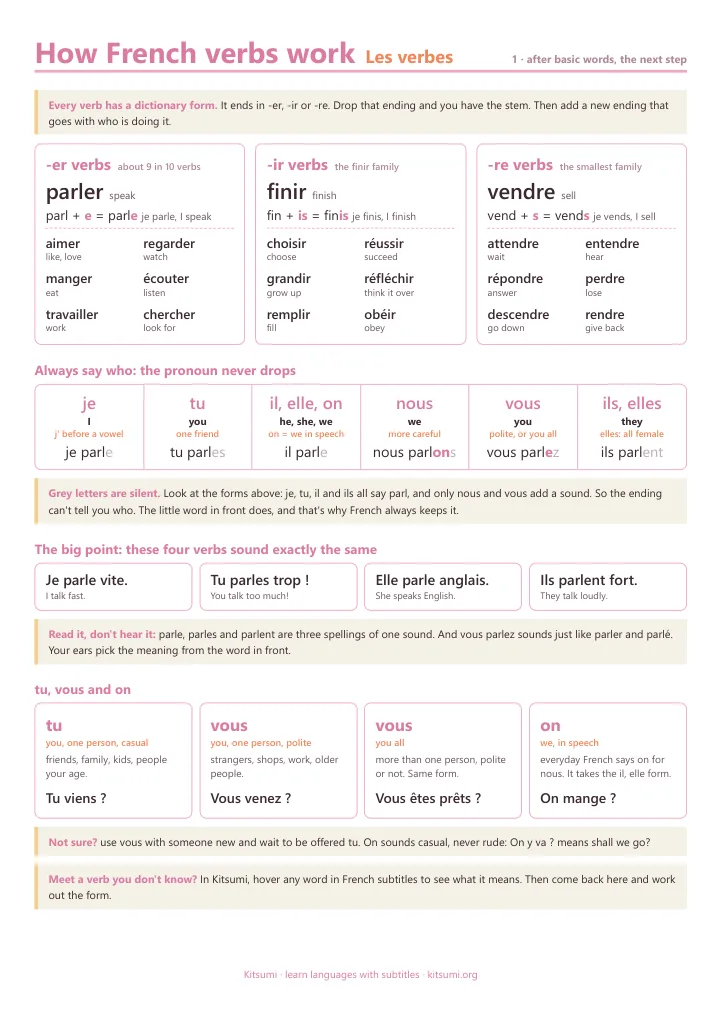 French verbs guideMake verbs say who and when: silent endings, the present, the passé composé, aller + verb and ne... pas.
Questions
Is the French past tenses guide free?
Yes. It's a free PDF with no sign-up. Print it, keep it and share it.
What is the difference between the passé composé and the imparfait?
The passé composé tells what happened and finished, like j'ai mangé, I ate. The imparfait paints the background, habits and things in progress, like je mangeais, I was eating or I used to eat.
Which verbs take être in the passé composé?
About seventeen verbs of coming, going and changing state, like aller, venir, partir, naître and mourir, plus every reflexive verb. With être the participle agrees with the subject: elle est allée. The guide lists them all.