 Kitsumi
Free French verbs guide
A five-page printable PDF for beginners: how French verbs change to say who and when, from je parle and tu viens to j'ai compris and je vais manger. It shows which letters you never hear, so the spelling stops being a mystery.
PDF · 5 pages · 298 KB · no sign-up · free to print and share
Next, meet these words in real videos: Kitsumi is free for Chrome and Firefox.
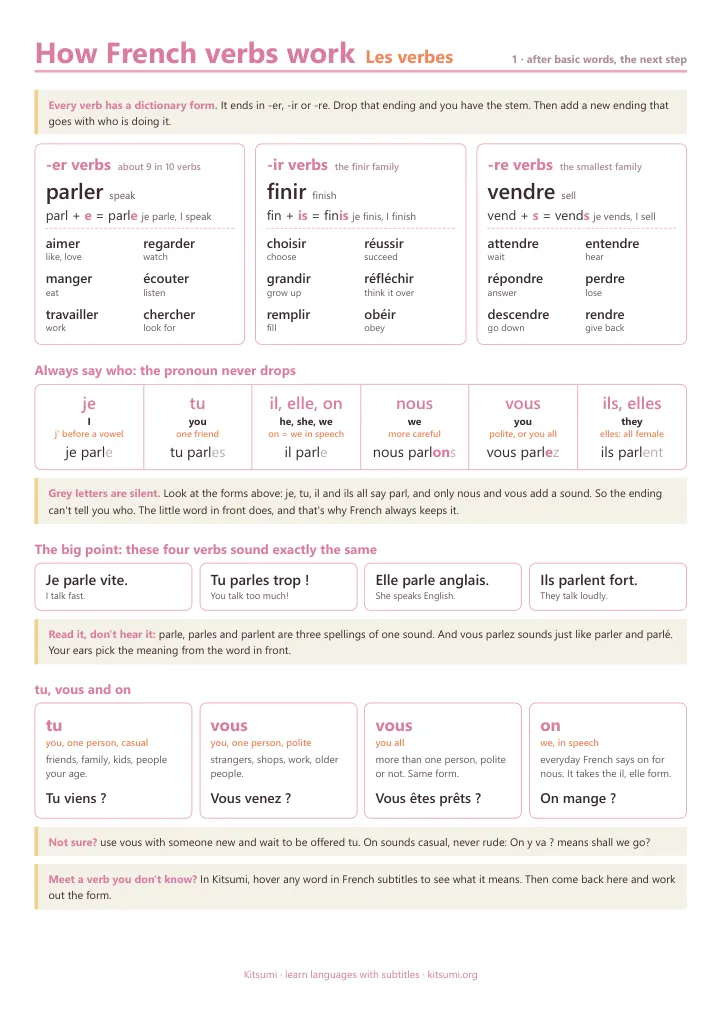
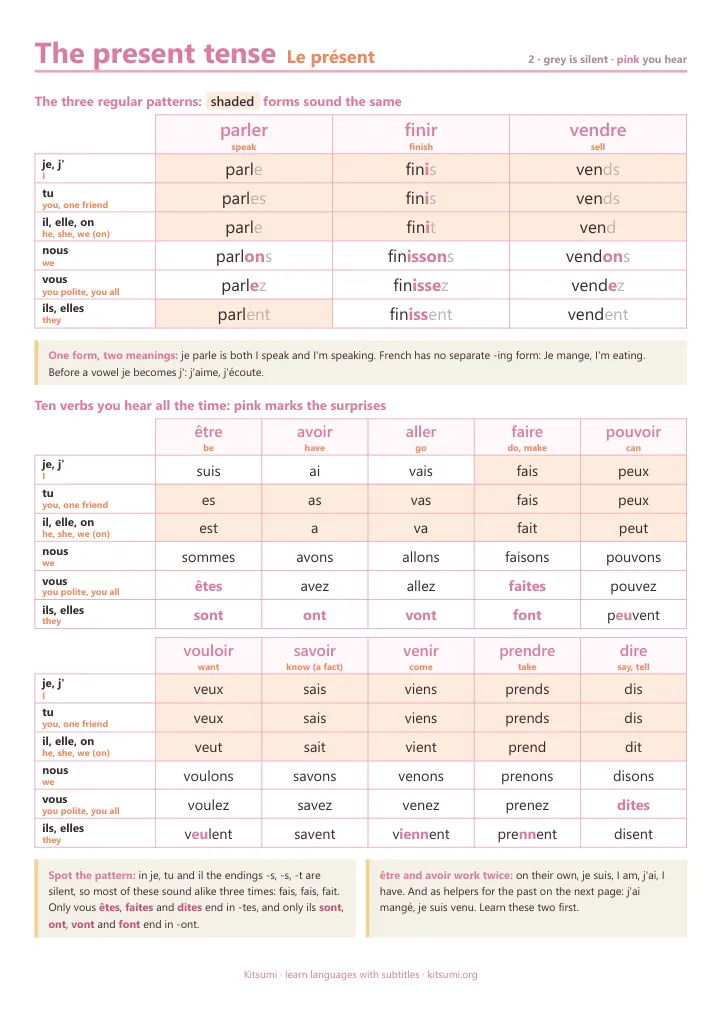
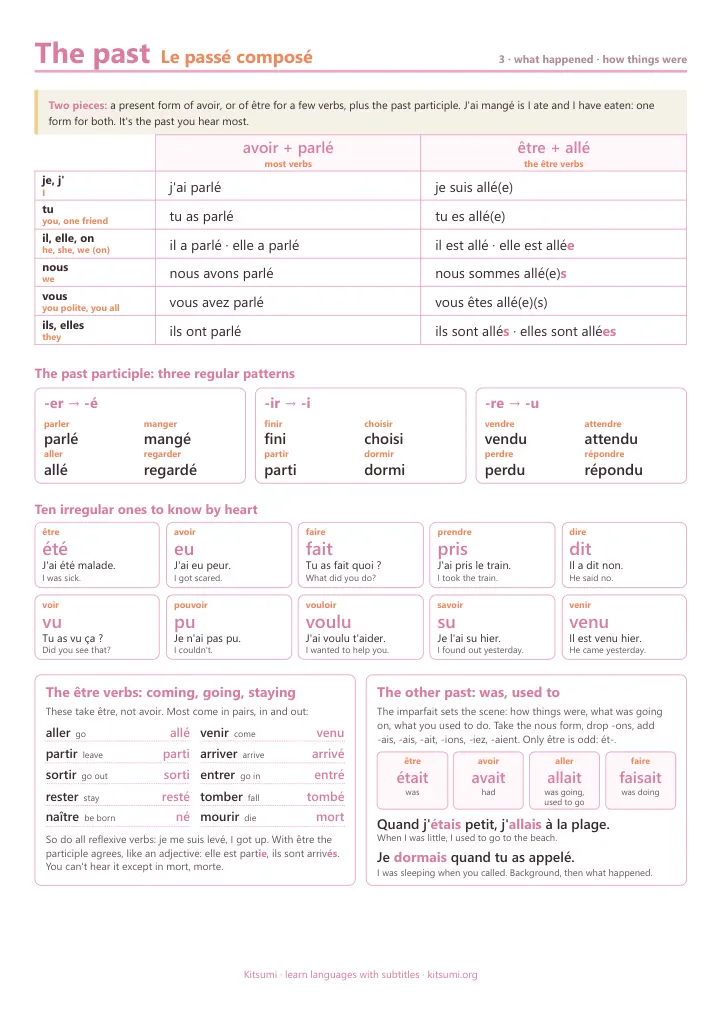
What's inside
- How French verbs workThe -er, -ir and -re families, why the pronoun never drops, tu, vous and on, and the big point: parle, parles and parlent all sound the same.
- The present tenseparler, finir and vendre in all six persons with the silent letters in grey, then ten verbs you hear all the time: être, avoir, aller, faire, pouvoir, vouloir, savoir, venir, prendre and dire.
- The pastThe passé composé with avoir or être, the -é, -i and -u participles, ten irregular ones like été, eu, fait and pris, the être verbs with agreement, and the imparfait for how things were.
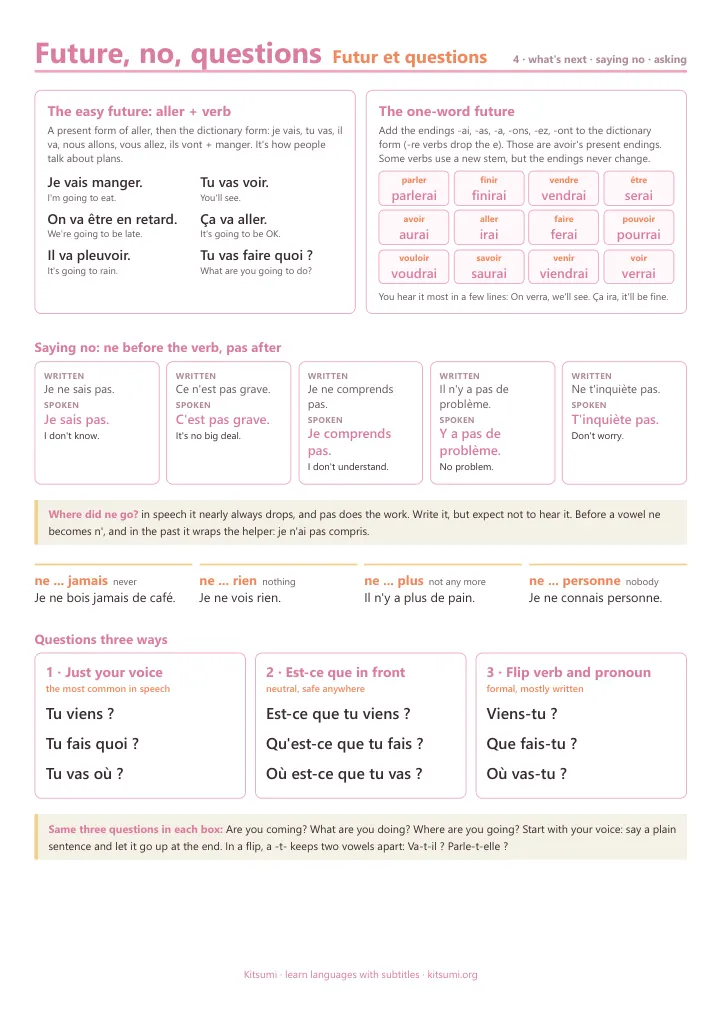 Future, no and questionsaller + verb for plans, the one-word future in one box, ne... pas and how ne vanishes in speech, and the same question asked three ways.
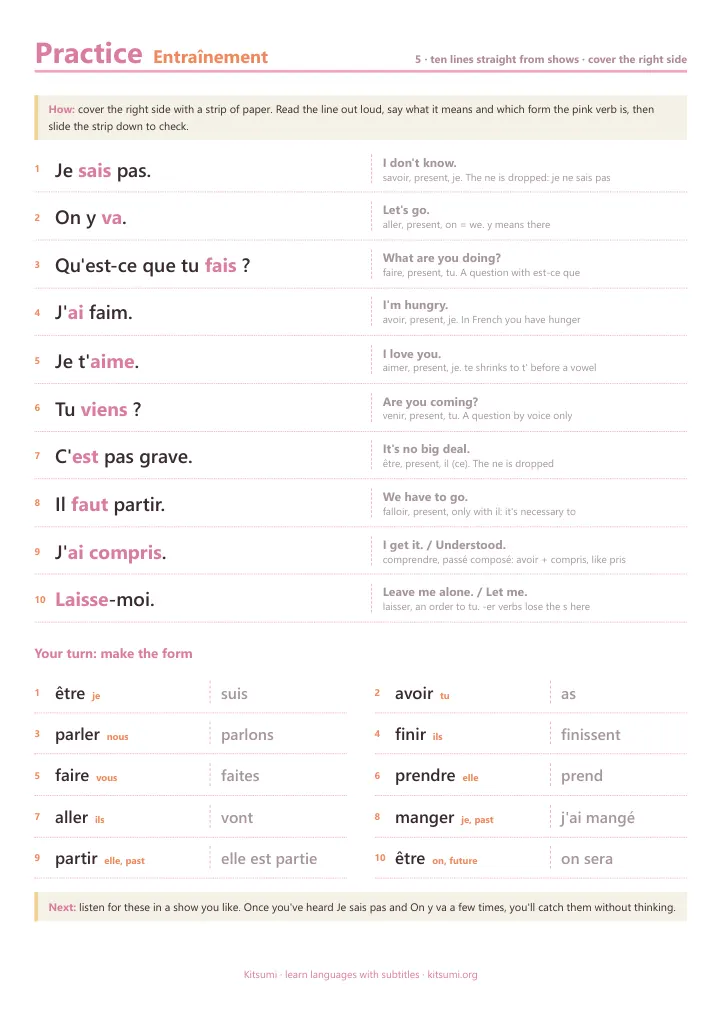 PracticeTen lines you hear in shows, like Je sais pas, On y va and Tu viens ?, to read and name the form, then ten verbs to put in the right form. Cover the answers with a strip of paper and check yourself.
How to use it
- Learn a few basic words first. This guide builds on them.
- Read the first page and say je parle, tu parles, ils parlent out loud. They should sound the same.
- Say one column of a table each day, then cover it and say it again.
- Cover the answers on the practice page, then listen for the same forms in shows with Kitsumi.
More free French printables
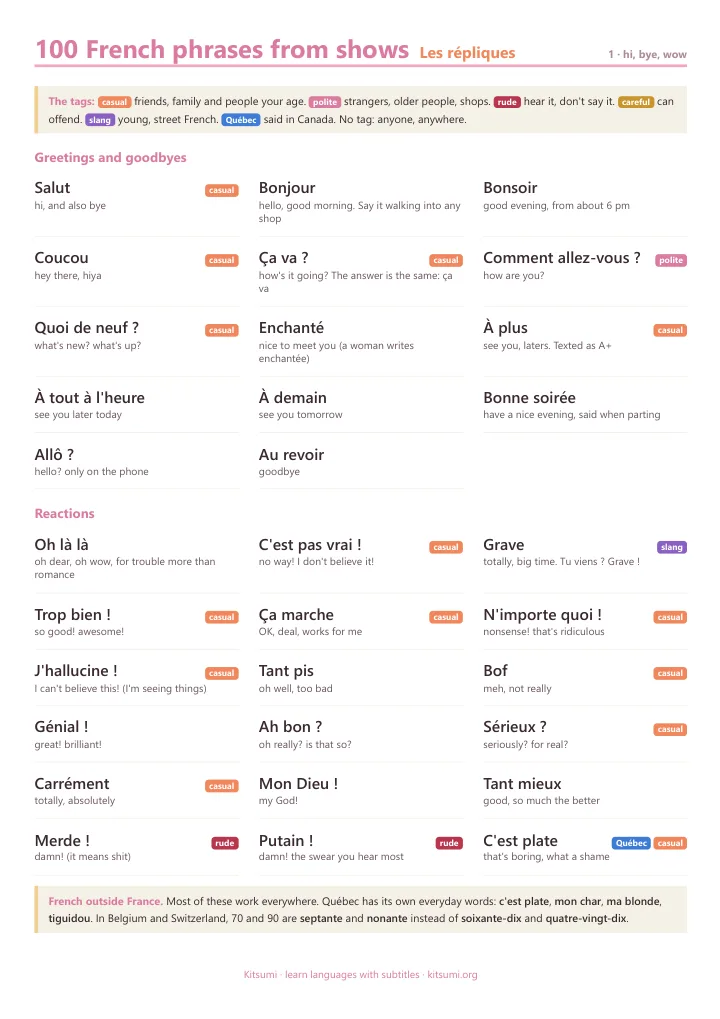 Next step100 French phrases from showsThen pick up the lines shows use all the time: Ça marche, je t'aime or je t'aime bien, Laisse-moi tranquille and what ouf and chelou really mean.
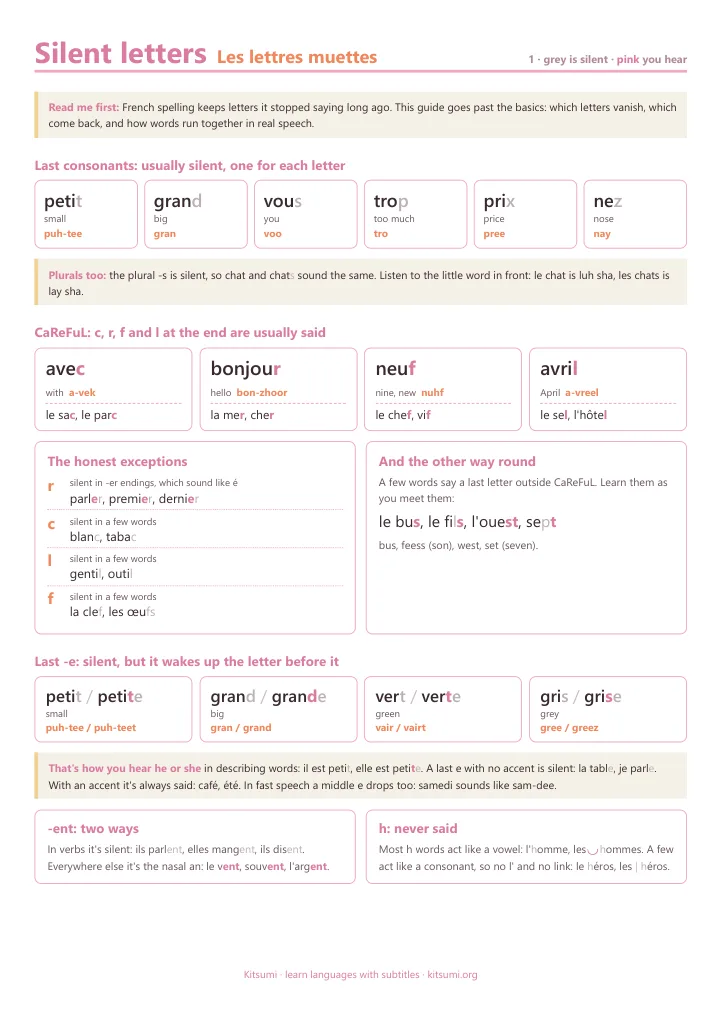
 Basic French wordsStart here. Silent letters and nasal vowels made simple, then 214 first words with le and la in colour.
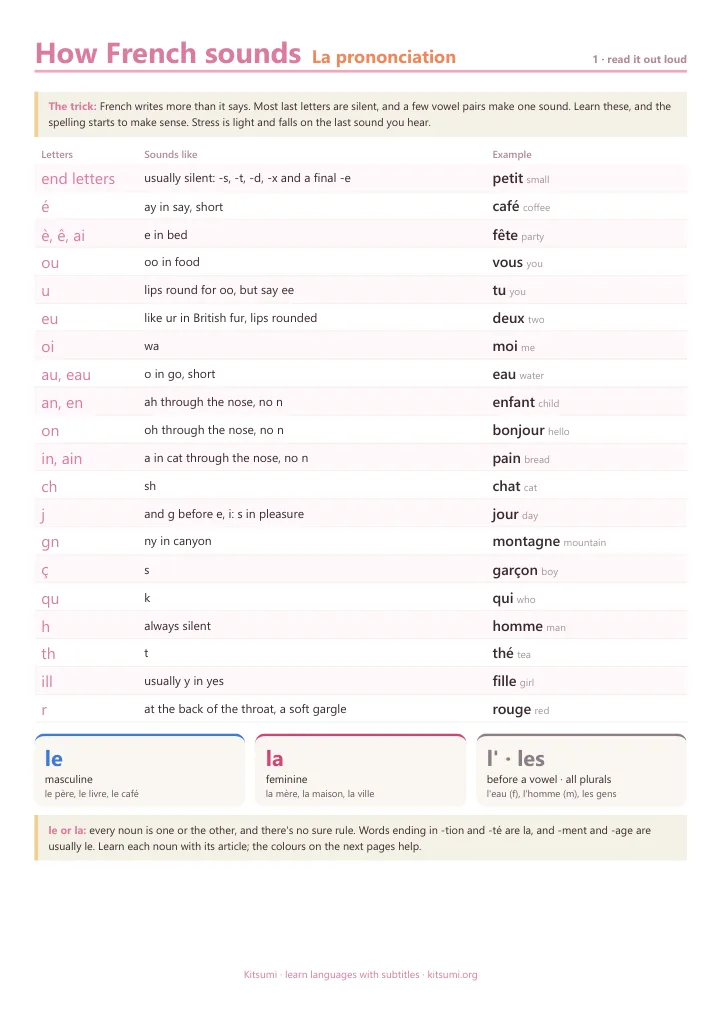
 French pronunciation guideThen learn how the spelling turns into sound: which letters stay silent, the nasal vowels, and why spoken lines blur together.
Questions
Is the French verbs guide free?
Yes. It's a free PDF with no sign-up. Print it, keep it and share it.
Why do parle, parles and parlent sound the same?
French doesn't say most last letters. The -e, -es and -ent endings are written but silent, so the word in front, je, tu or ils, tells you who.
Do I need avoir or être for the past?
Most verbs use avoir: j'ai mangé. About a dozen verbs of coming and going, like aller, venir and partir, use être, and so do all reflexive verbs. The guide lists them.