 Kitsumi
100 free Chinese drama phrases
A five-page printable PDF of the lines you hear in every C-drama, grouped by situation, in simplified characters with pinyin, English and a tag that says how casual, polite or rude each one is.
PDF · 5 pages · 250 KB · no sign-up · free to print and share
Next, meet these words in real videos: Kitsumi is free for Chrome and Firefox.
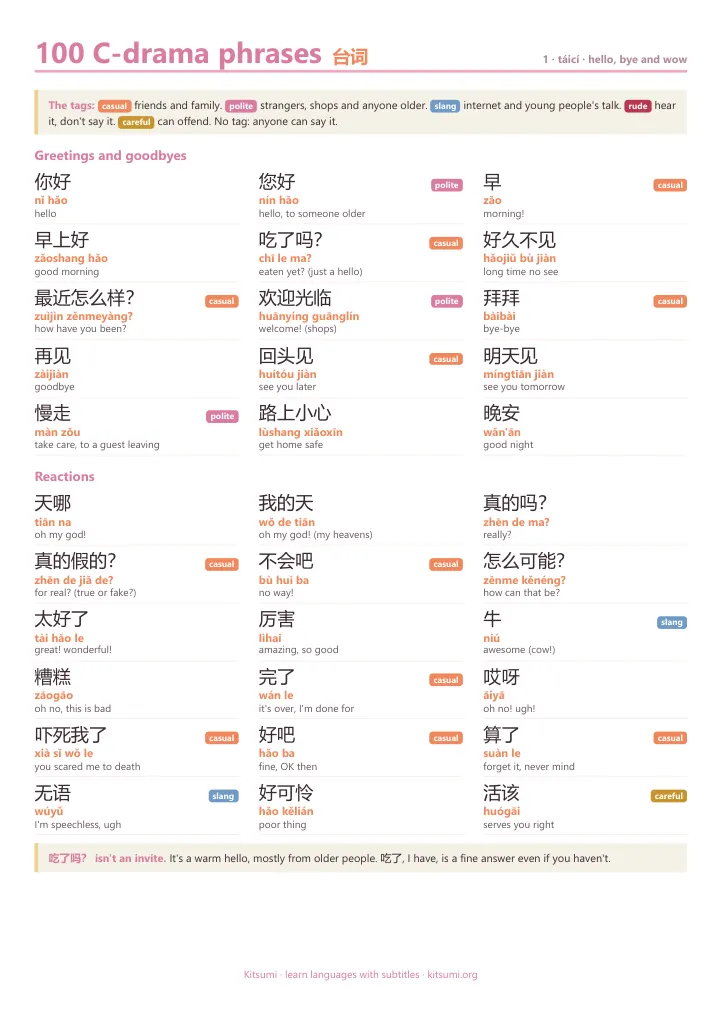
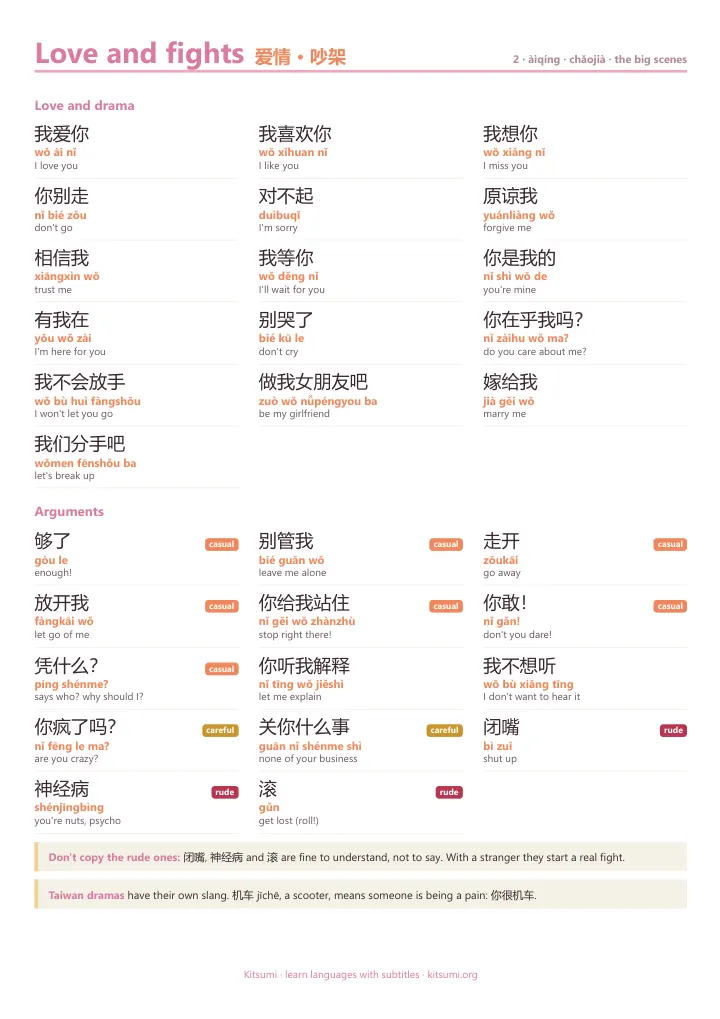
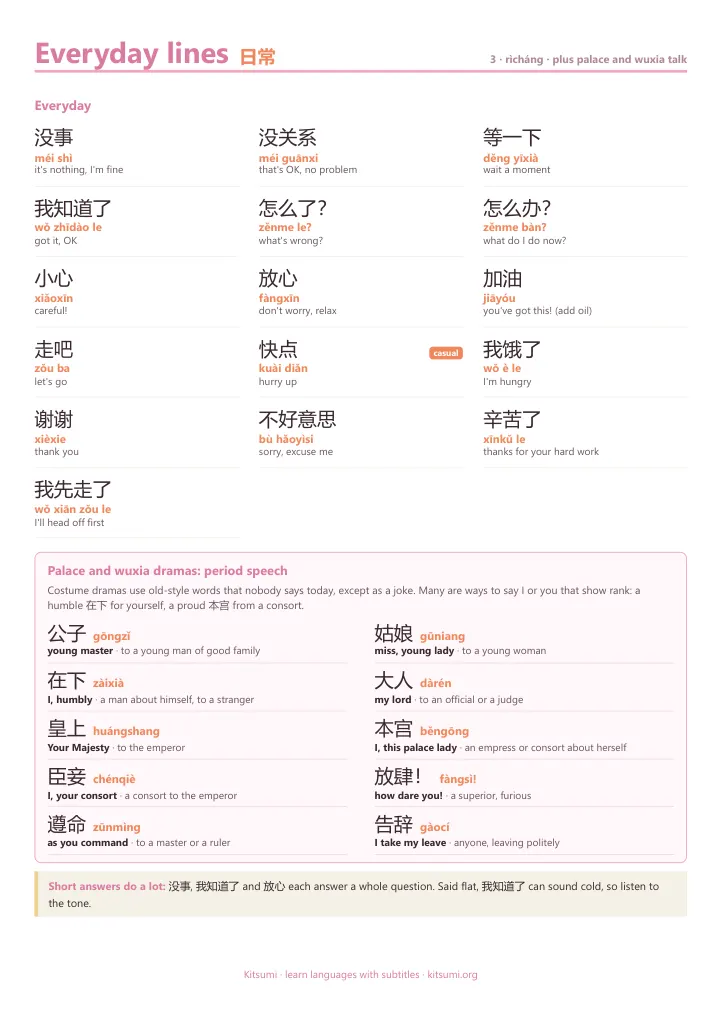
What's inside
- Greetings and reactions33 lines like 您好, 吃了吗?, 好久不见, 慢走, 回头见, 天哪, 不会吧, 无语 and 牛, with a key to the casual, polite, slang and rude tags.
- Love and fights我爱你, 我想你, 你别走 and 我们分手吧, then the argument lines: 够了, 别管我, 关你什么事, and 闭嘴 and 滚, marked rude.
- Everyday lines, palace and wuxia talk16 things people say every day, like 没事, 等一下, 加油 and 辛苦了, then the period words from costume dramas: 公子, 姑娘, 在下, 本宫 and 放肆!
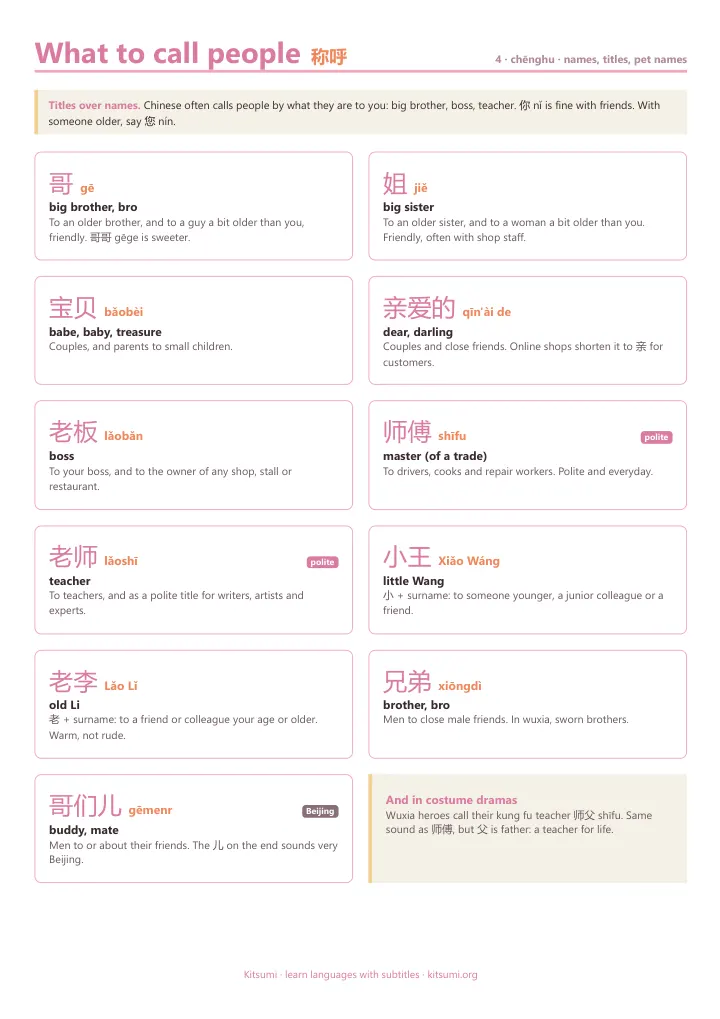 What people call each other哥, 姐, 宝贝, 亲爱的, 老板, 师傅, 老师, 小 and 老 before a surname, 兄弟 and 哥们儿, with who says each.
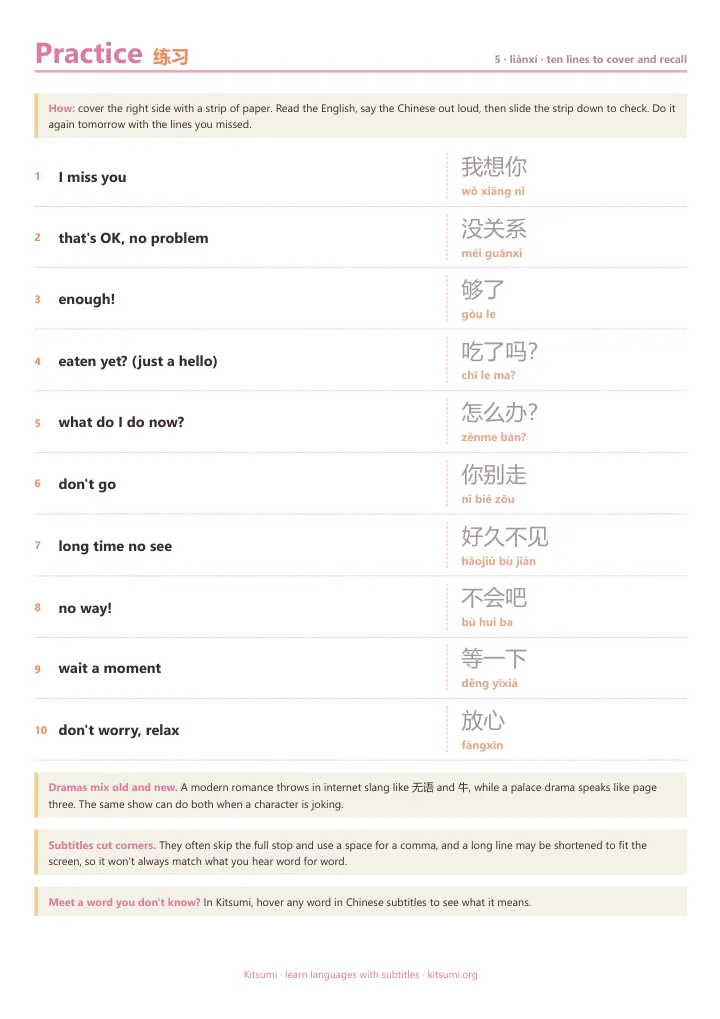 PracticeTen lines to cover and recall, plus notes on how dramas mix internet slang with period speech, and why subtitles don't always match what you hear.
How to use it
- Learn pinyin and your first words first. The grammar guide helps you see why each line looks the way it does.
- Read a page out loud, a few lines at a time, and notice the tags.
- Cover the right side of the practice page and say each line from the English.
- Watch a C-drama with Kitsumi and listen for the same lines.
More free Chinese printables
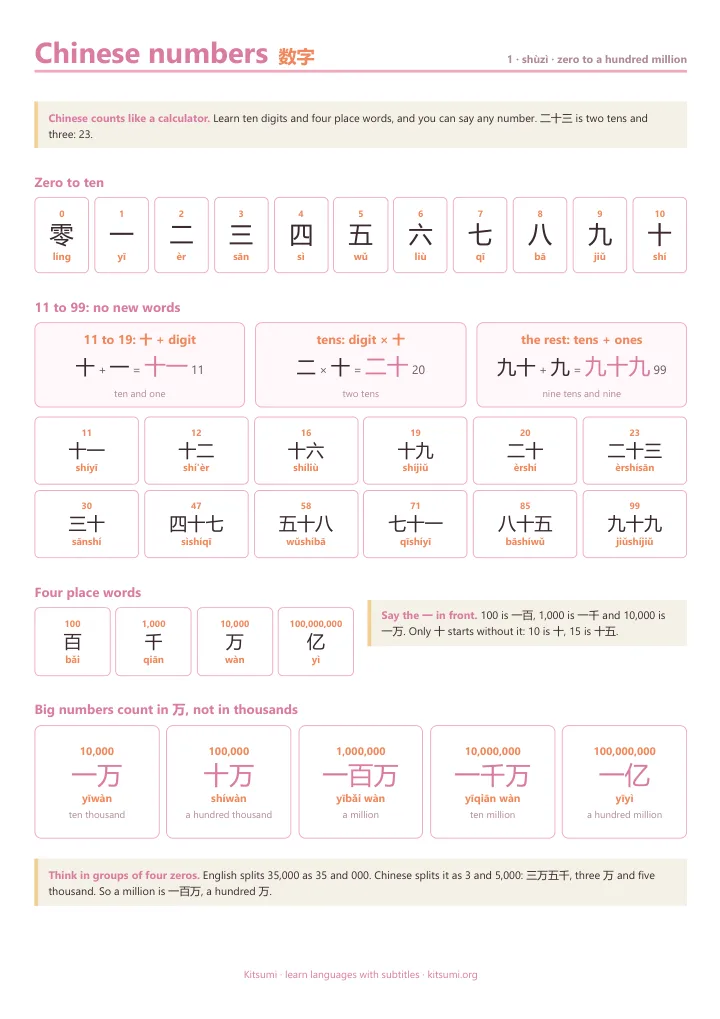 Next stepChinese numbers, time and moneyThen sort out numbers: 一 二 三 up to 万 and 亿, then prices, dates and the time.
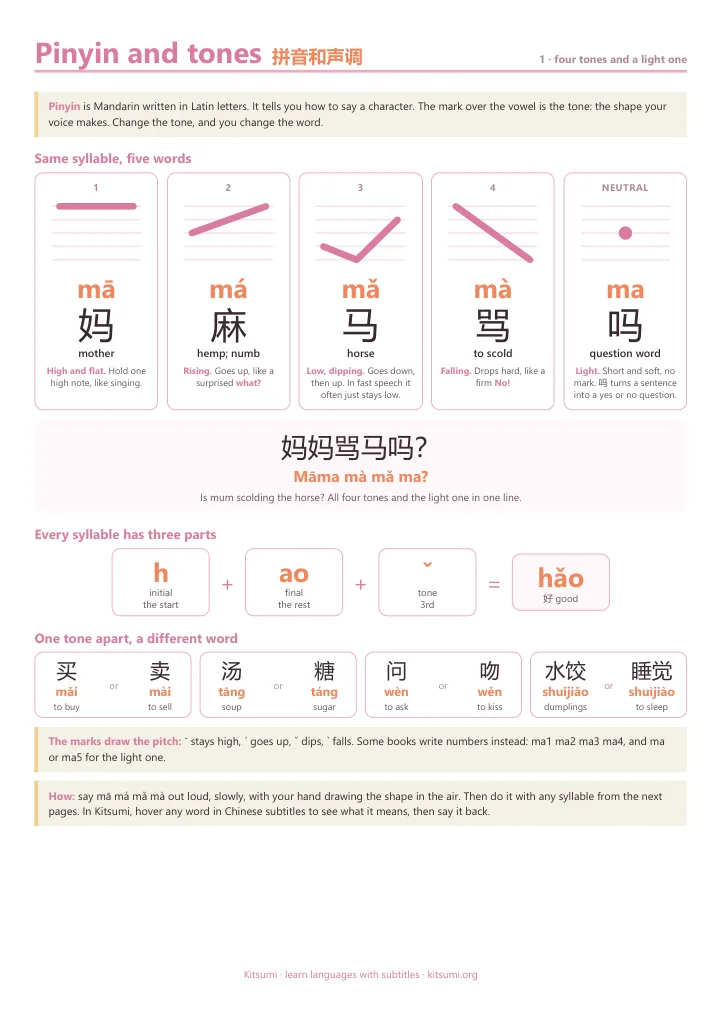 Chinese pinyin and tones chartStart with the sounds. The four tones, every initial and final, and the rules that tie them together.
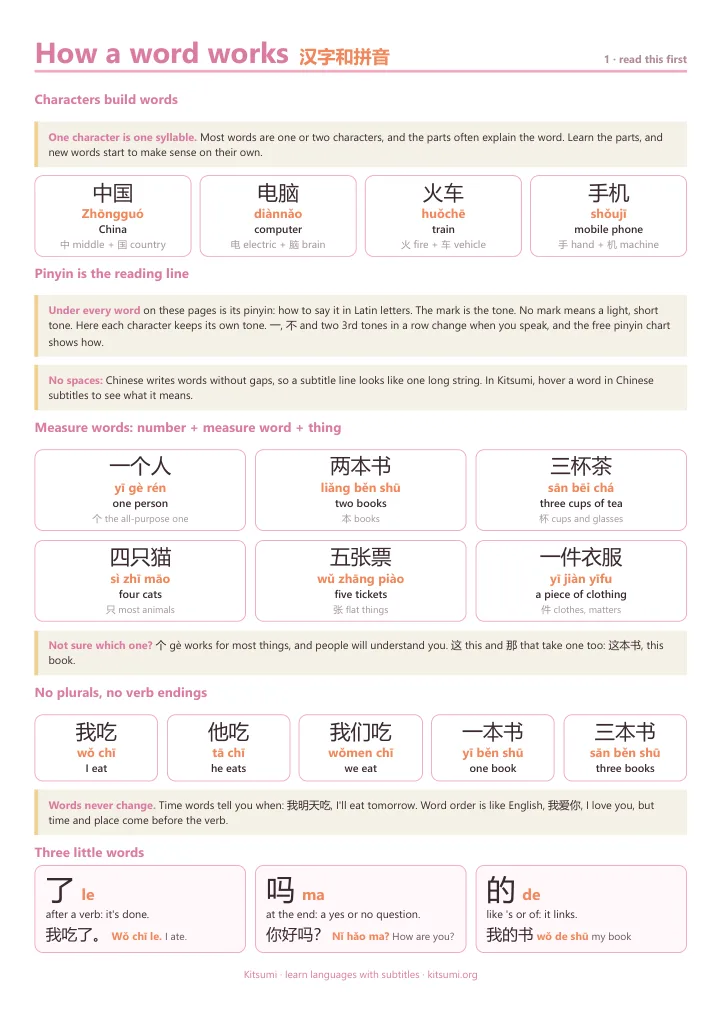 Basic Chinese wordsThen pick up the first 227 words: greetings, family, numbers, food, verbs and words from shows.
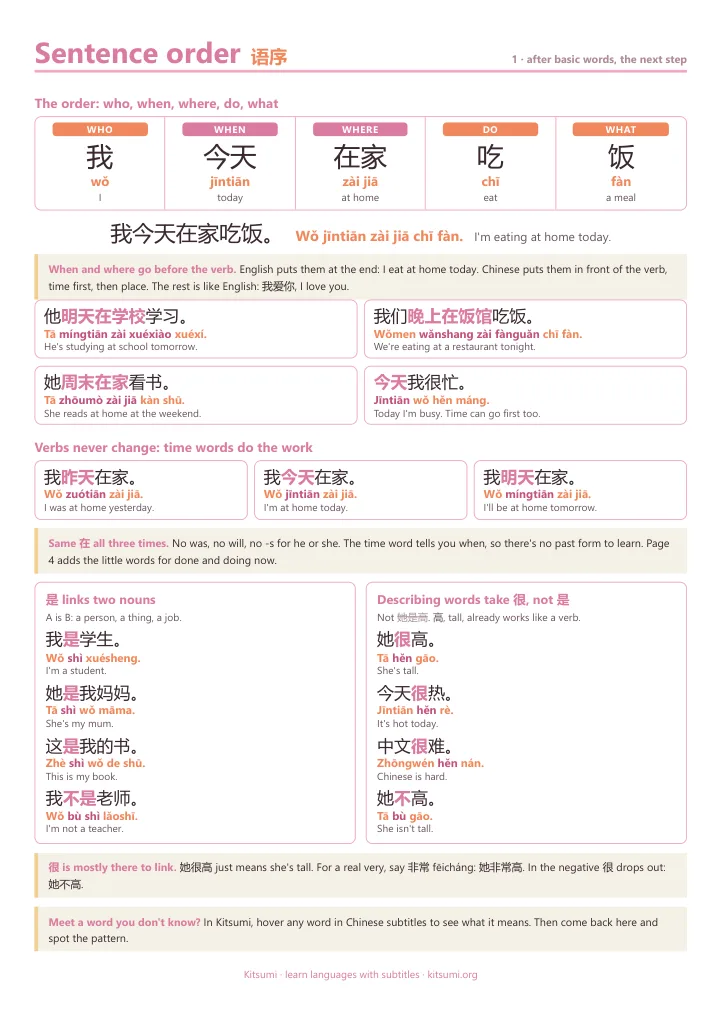 Chinese grammar basicsThen put words together: word order, questions, measure words, and 了, 过 and 在 for done, ever and doing now.
Questions
Is the Chinese drama phrases PDF free?
Yes. It's a free PDF with no sign-up. Print it, keep it and share it.
Is it Mandarin, and which characters does it use?
Mandarin, with simplified characters and pinyin for every line. A note on page two covers a bit of Taiwan slang.
Can I say 本宫 or 在下 in real life?
Only as a joke. They're period speech from palace and wuxia dramas, and page three explains who says them in the story.