 Kitsumi
Free Italian verbs guide
A five-page printable PDF for beginners: how Italian verbs change to say who and when, from parlo and capisco to ho capito and sono andata. It marks where the stress falls, so parlano comes out right the first time.
PDF · 5 pages · 329 KB · no sign-up · free to print and share
Next, meet these words in real videos: Kitsumi is free for Chrome and Firefox.
What's inside
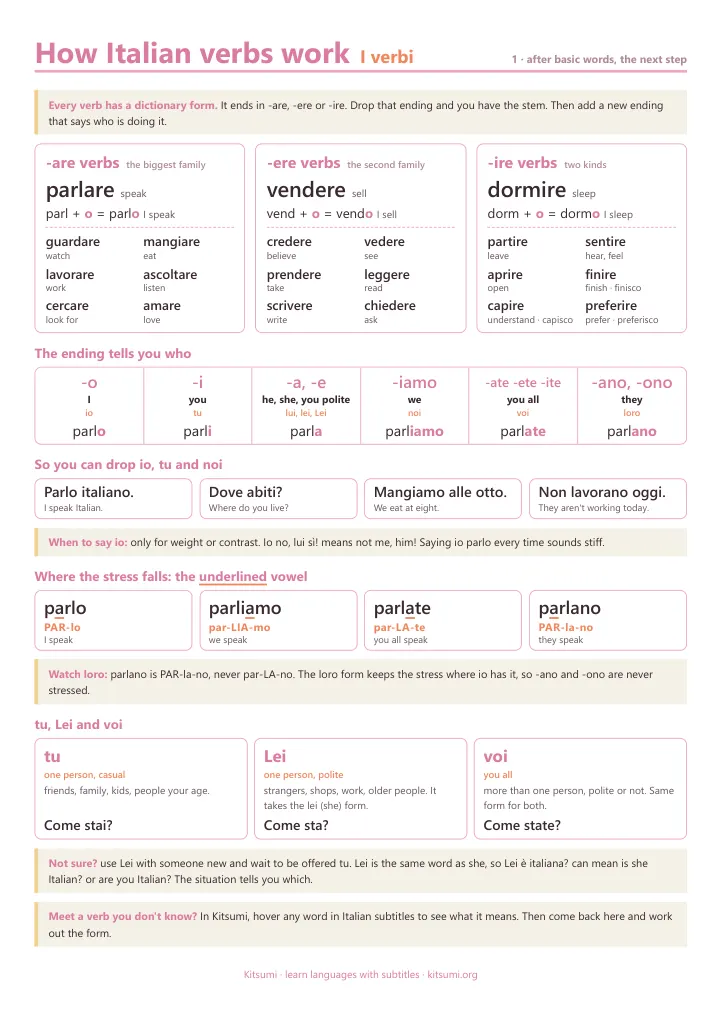
- How Italian verbs workThe -are, -ere and -ire families, how the ending tells you who, why io and tu are usually dropped, where the stress falls, and tu, Lei and voi.
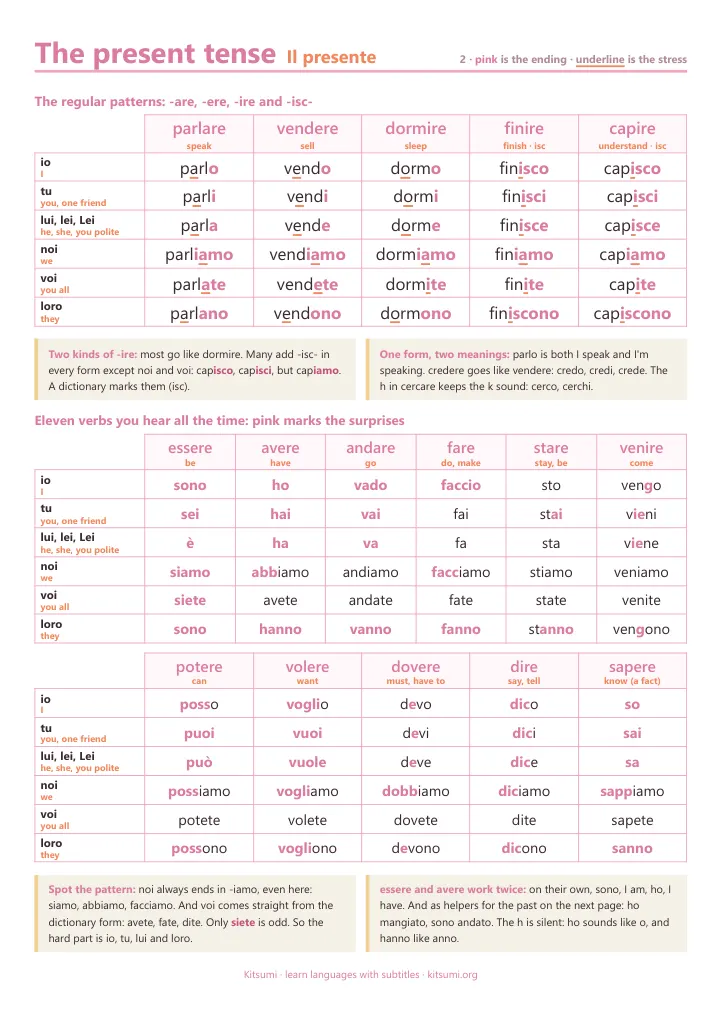
- The present tenseparlare, vendere, dormire and the -isc- verbs finire and capire in all six persons, then eleven verbs you hear all the time: essere, avere, andare, fare, stare, venire, potere, volere, dovere, dire and sapere.
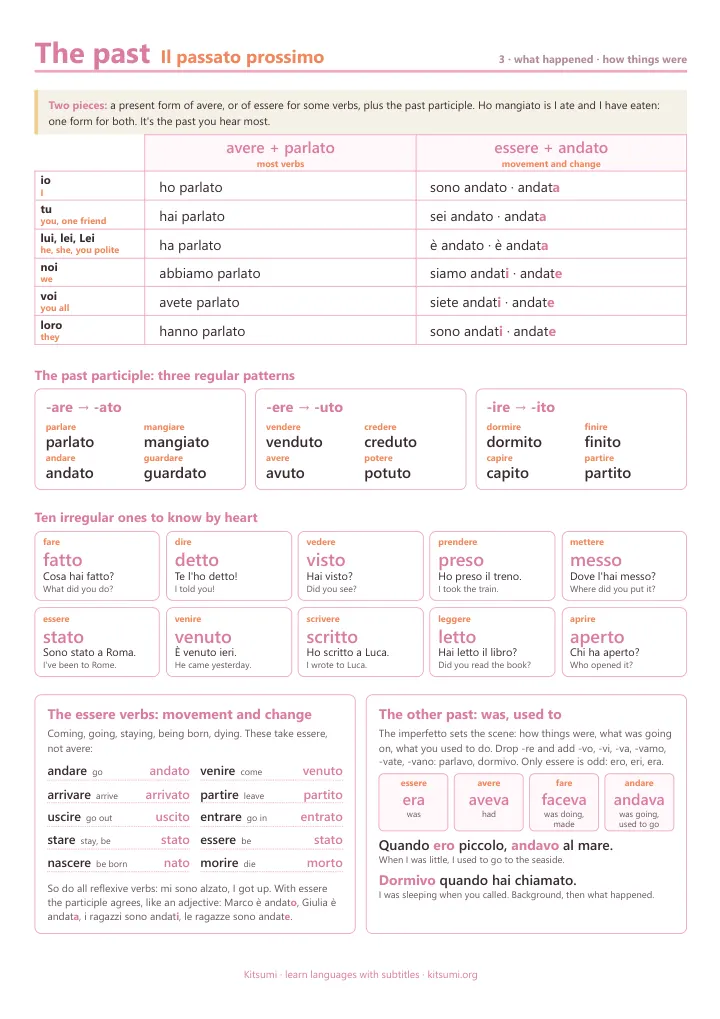
- The pastThe passato prossimo with avere or essere, the -ato, -uto and -ito participles, ten irregular ones like fatto, detto, visto and preso, the essere verbs with agreement, and the imperfetto for how things were.
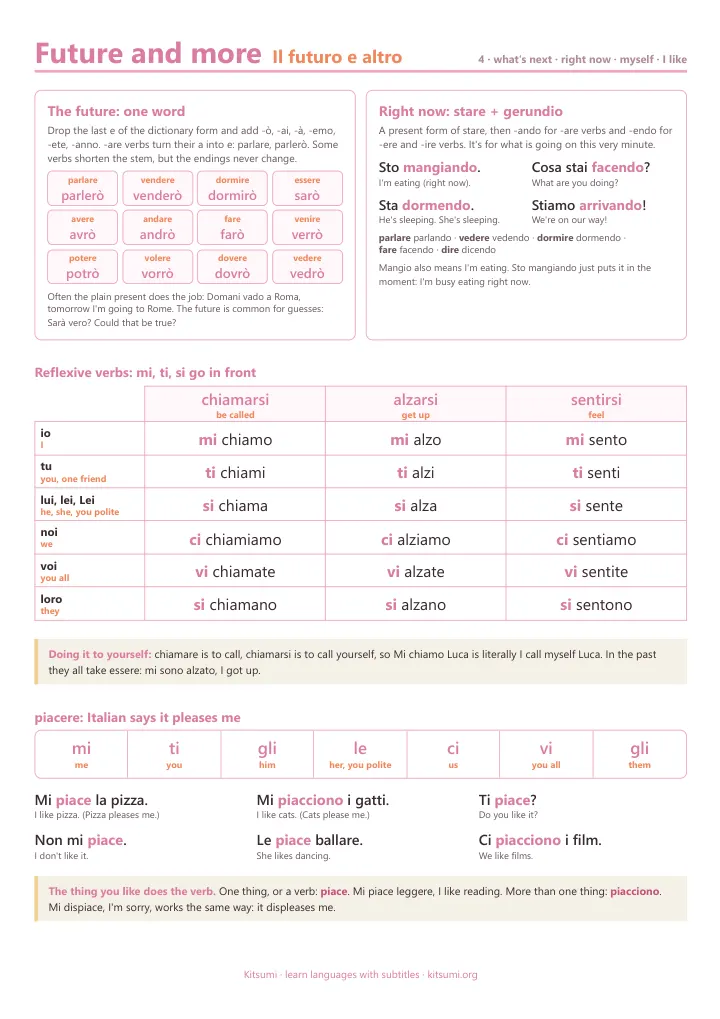 Future and moreThe one-word future in one box, stare + gerundio for right now, reflexive verbs like chiamarsi and alzarsi, and mi piace or mi piacciono.
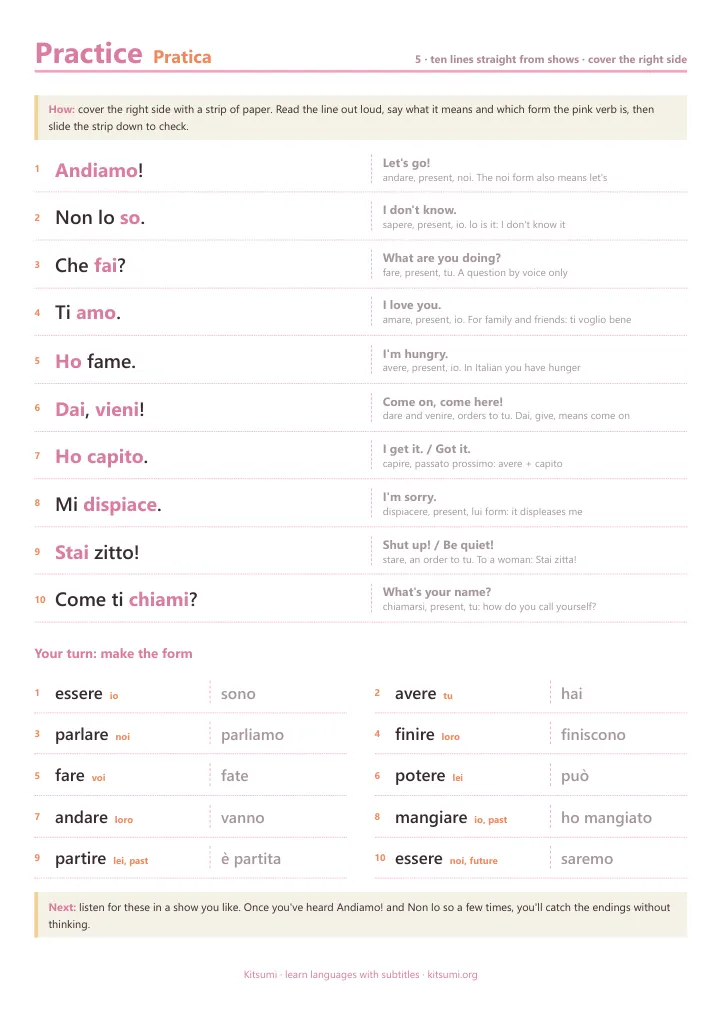 PracticeTen lines you hear in shows, like Andiamo!, Non lo so and Come ti chiami?, to read and name the form, then ten verbs to put in the right form. Cover the answers with a strip of paper and check yourself.
How to use it
- Learn a few basic words first. This guide builds on them.
- Read the first page and say parlo, parliamo, parlano out loud, with the stress where the line is.
- Say one column of a table each day, then cover it and say it again.
- Cover the answers on the practice page, then listen for the same forms in shows with Kitsumi.
More free Italian printables
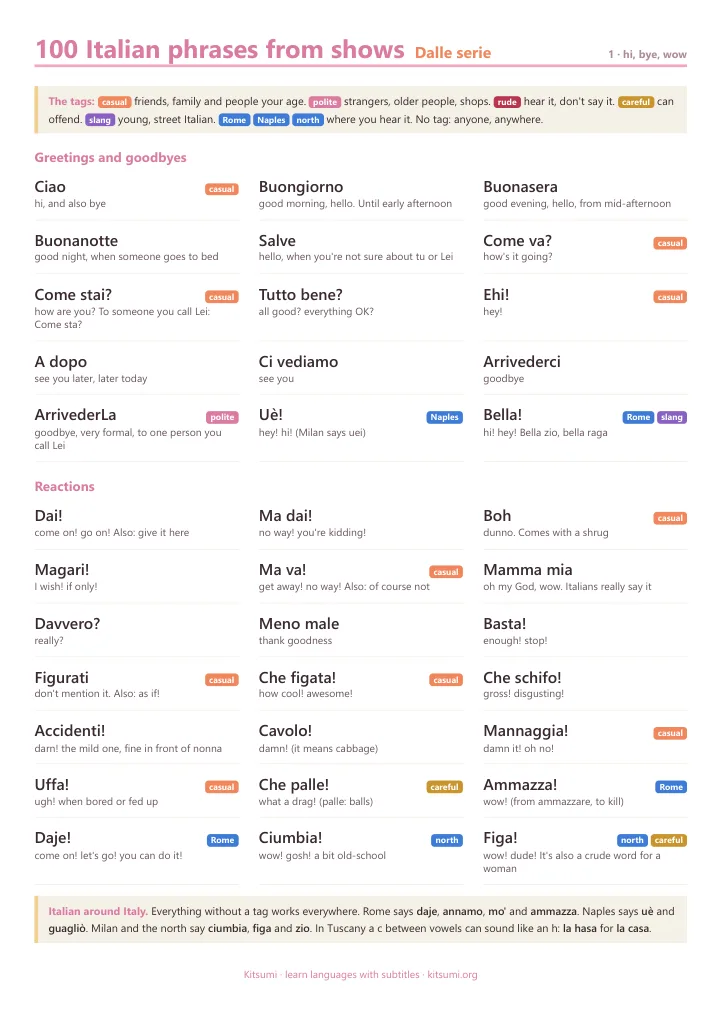 Next step100 Italian phrases from showsThen pick up the lines shows use all the time: Boh, Magari!, Ti amo or Ti voglio bene, Lasciami in pace and what Daje and guagliò really mean.
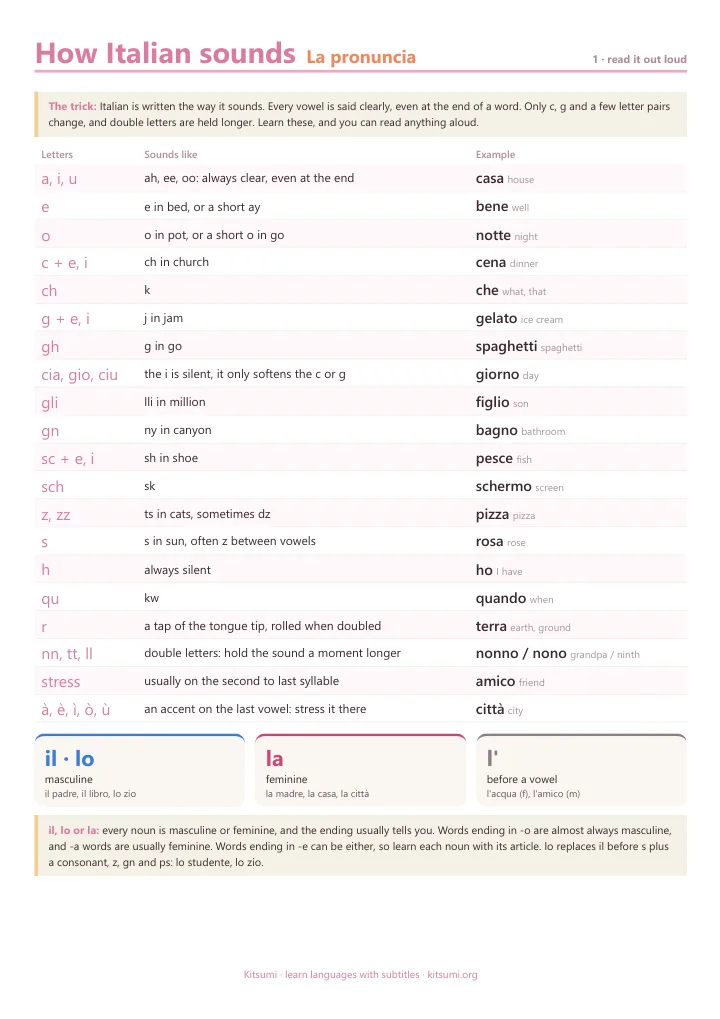 Basic Italian wordsStart here. c, g, gli and double letters made simple, then 221 first words with il, lo and la in colour.
Questions
Is the Italian verbs guide free?
Yes. It's a free PDF with no sign-up. Print it, keep it and share it.
Why do Italians drop io and tu?
The verb ending already says who: parlo can only be I speak, parli only you speak. io and tu come back only for weight or contrast.
Do I need avere or essere for the past?
Most verbs use avere: ho mangiato. Verbs of movement and change, like andare, venire, partire and nascere, use essere, and so do all reflexive verbs. The guide lists them.