 Kitsumi
100 free Italian phrases from shows
A five-page printable PDF of the lines you hear in every Italian series and film, grouped by situation, with English and a tag that says how casual each one is.
PDF · 5 pages · 185 KB · no sign-up · free to print and share
Next, meet these words in real videos: Kitsumi is free for Chrome and Firefox.
What's inside
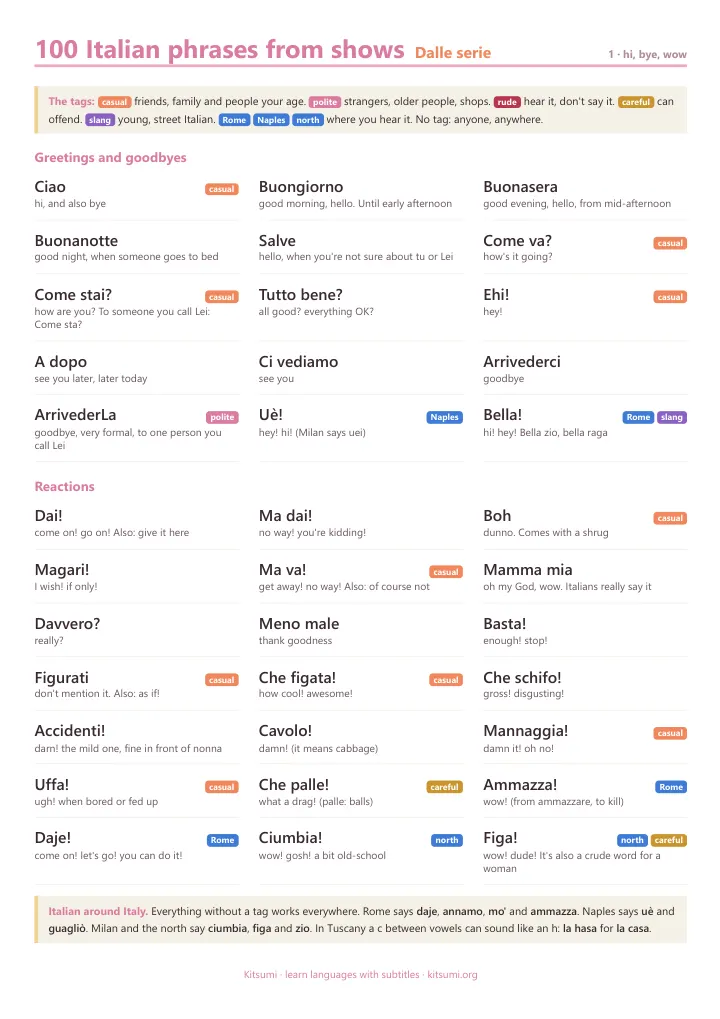
- Greetings and reactions36 lines like Ciao, Salve, Come va?, Ci vediamo, Dai!, Boh, Magari!, Mamma mia and Meno male, with a key to the tags and the regional ones marked: Daje and Ammazza in Rome, Uè in Naples, Ciumbia in the north.
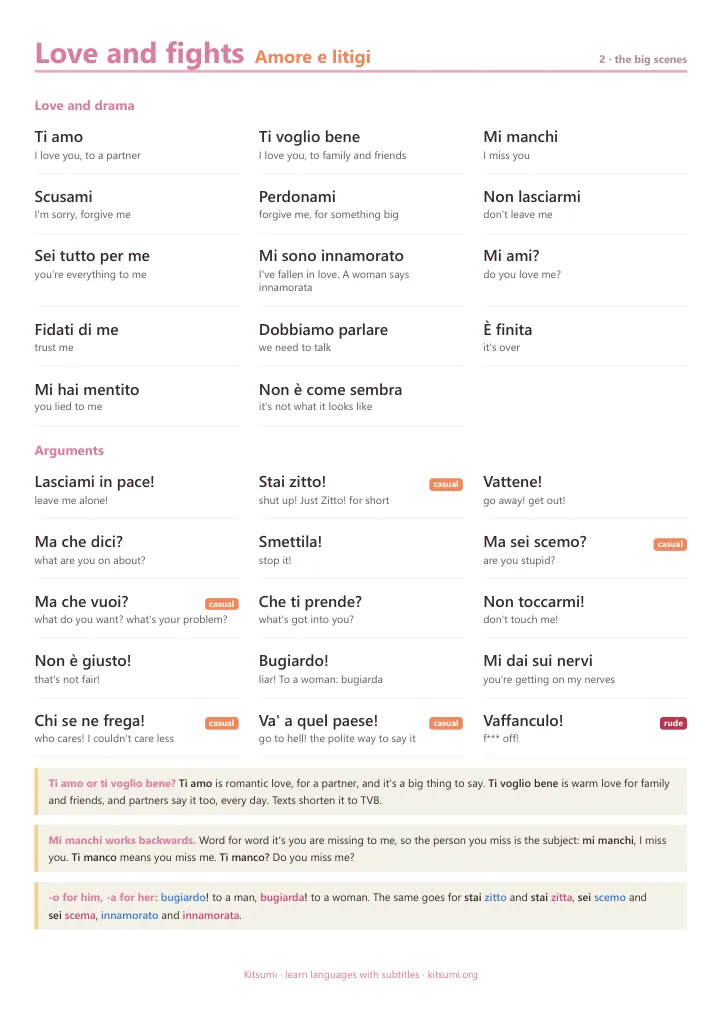
- Love and fightsTi amo and Ti voglio bene and how they differ, why Mi manchi works backwards, Non lasciarmi, then the argument lines: Ma che dici?, Smettila!, Ma sei scemo? and Vaffanculo!, marked rude.
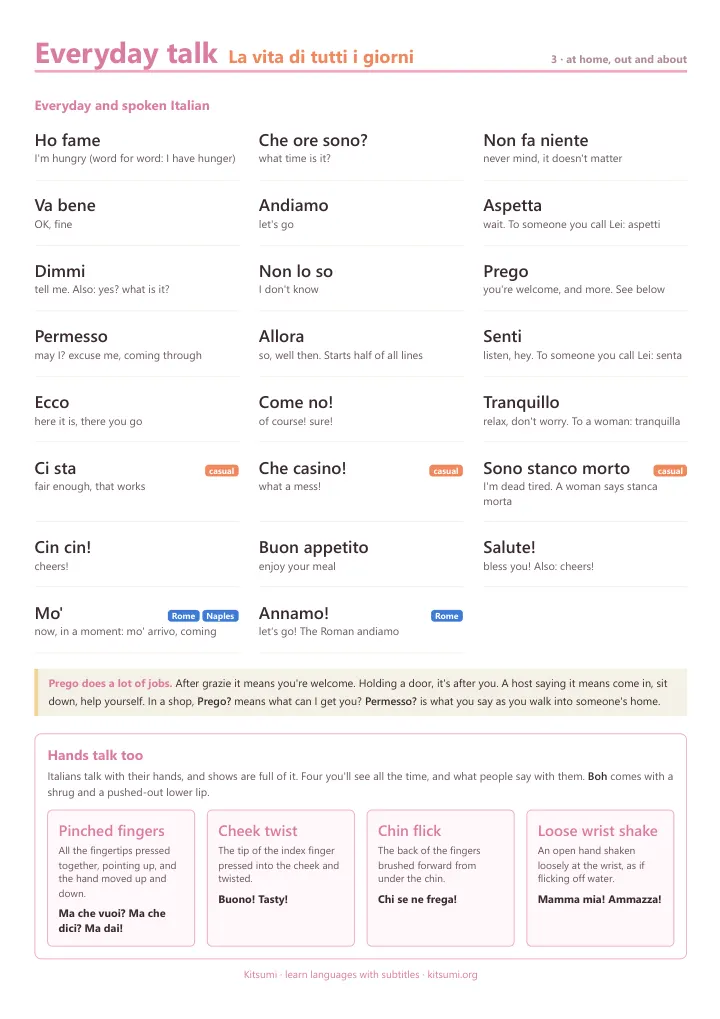
- Everyday talk and gestures23 things people say at home and out, like Non fa niente, Dimmi, Allora and Permesso, the many jobs of Prego, then four hand gestures you see in every show and the lines that go with them.
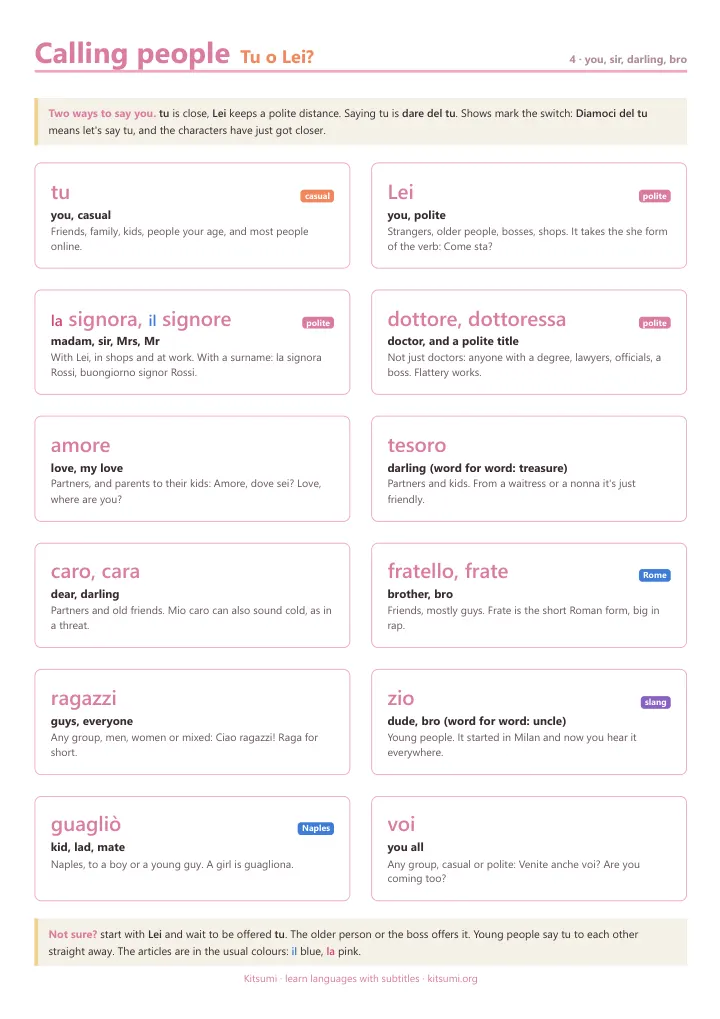 What people call each othertu and Lei and the switch between them, signora, signore and dottore, amore, tesoro and caro, then ragazzi, zio, frate in Rome and guagliò in Naples, with who uses which.
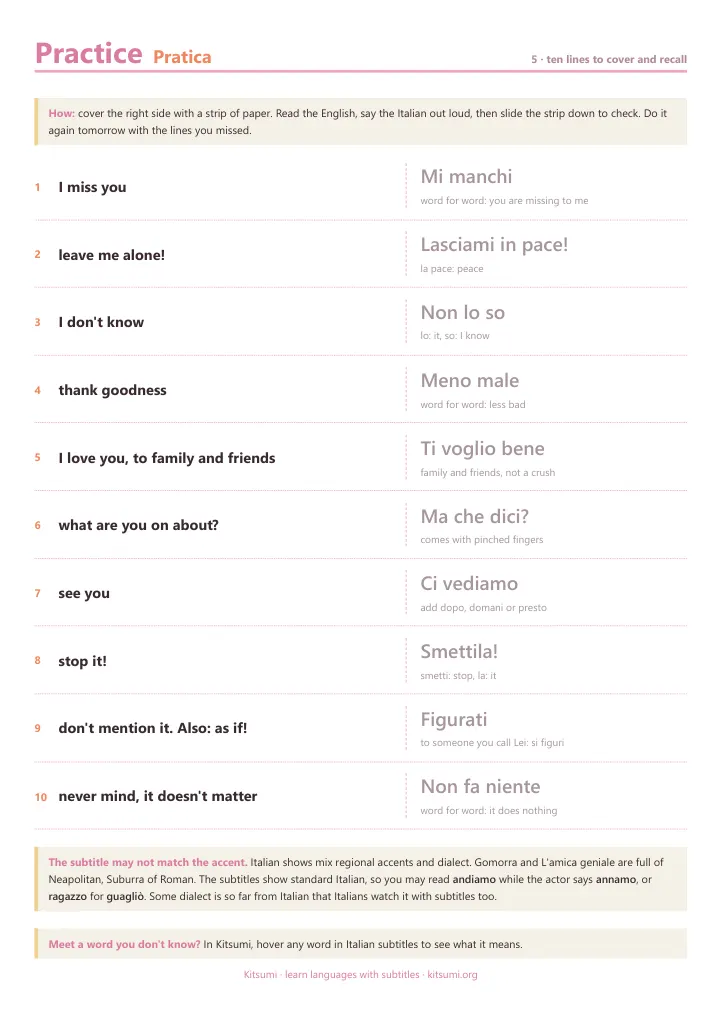 PracticeTen lines to cover and recall, plus a note on regional accents and dialect: the actor may say annamo while the subtitle shows standard Italian.
How to use it
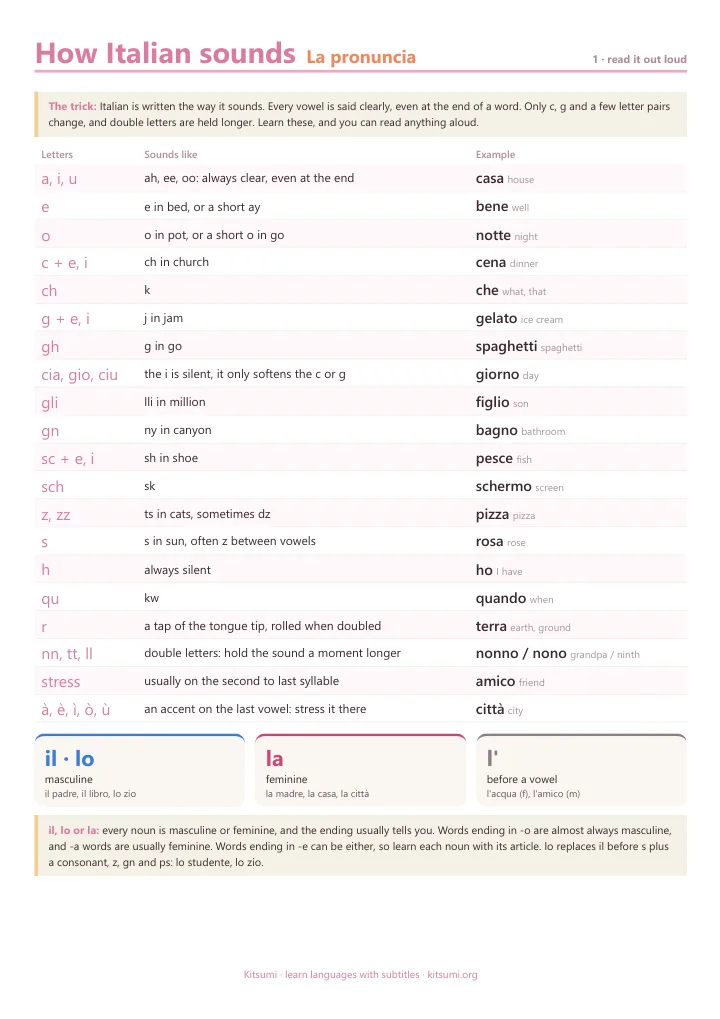
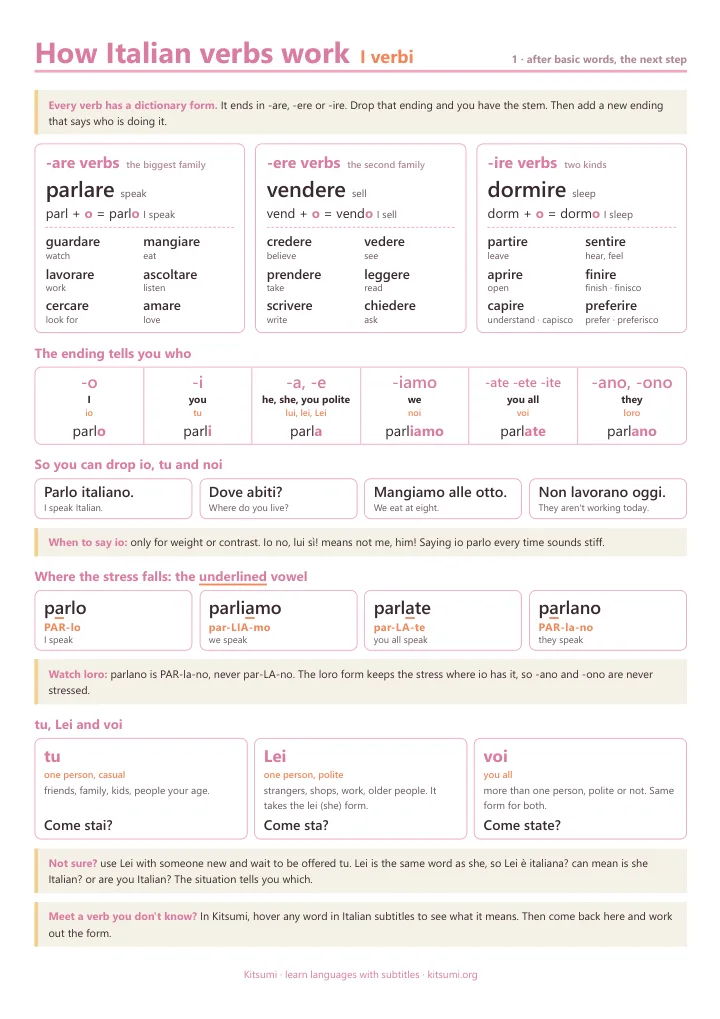
- Learn the basic Italian words first. The verbs guide helps you see why each line looks the way it does.
- Read a page out loud, a few lines at a time, and notice the tags.
- Cover the right side of the practice page and say each line from the English.
- Watch an Italian series or film with Kitsumi and listen for the same lines.
More free Italian printables
Questions
Is the Italian show phrases PDF free?
Yes. It's a free PDF with no sign-up. Print it, keep it and share it.
Is it standard Italian?
Mostly, and it's understood everywhere. Roman words like Daje, Annamo and Mo', Neapolitan ones like Uè and guagliò, and northern ones like Ciumbia are marked.
What is the difference between Ti amo and Ti voglio bene?
Ti amo is romantic love, for a partner. Ti voglio bene is warm love for family and friends, and partners say it too.