 Kitsumi
Free Italian pronunciation guide
A six-page printable PDF for anyone who watches Italian shows: how every letter sounds, with plain English sound hints like PAHL-lah for palla, so you can read any word aloud, hold the doubles and know which part to stress. Regional differences, like s and z in the north, are marked.
PDF · 6 pages · 391 KB · no sign-up · free to print and share
Was it useful?Ideas or a mistake? Tell us on Discord
Next, meet these words in real videos: Kitsumi is free for Chrome and Firefox.
What's inside
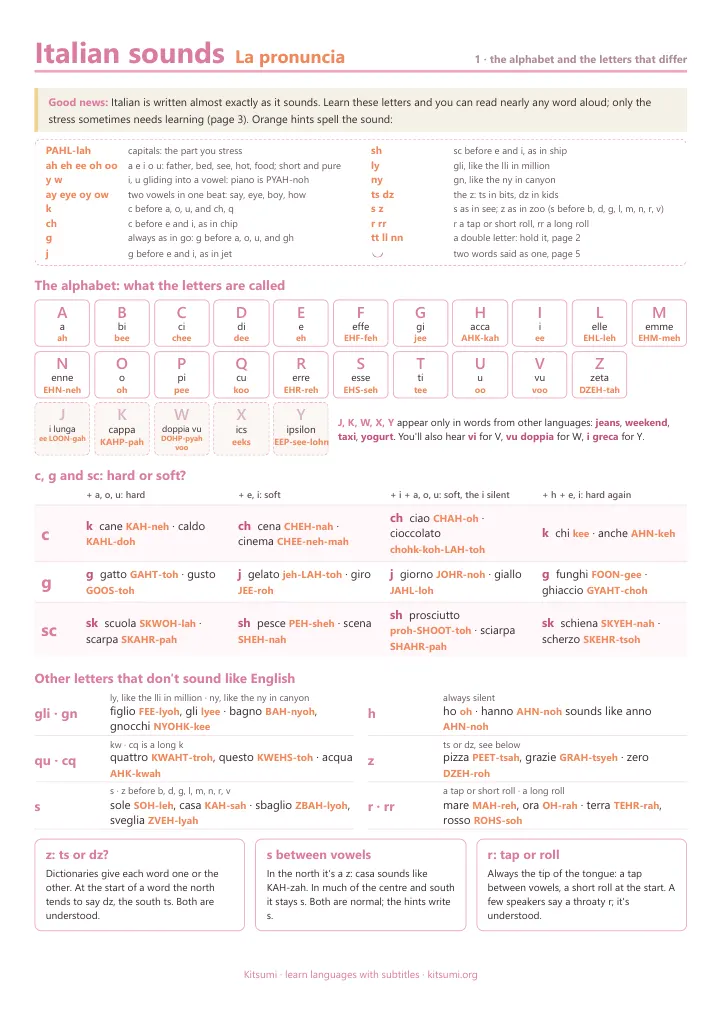
- The alphabet and the lettersWhat the letters are called, then the ones that trip up English speakers: c, g and sc hard or soft (cena, chi, ciao), gli and gn, the silent h, qu, z as ts or dz, s and the r. Every example has a sound hint.
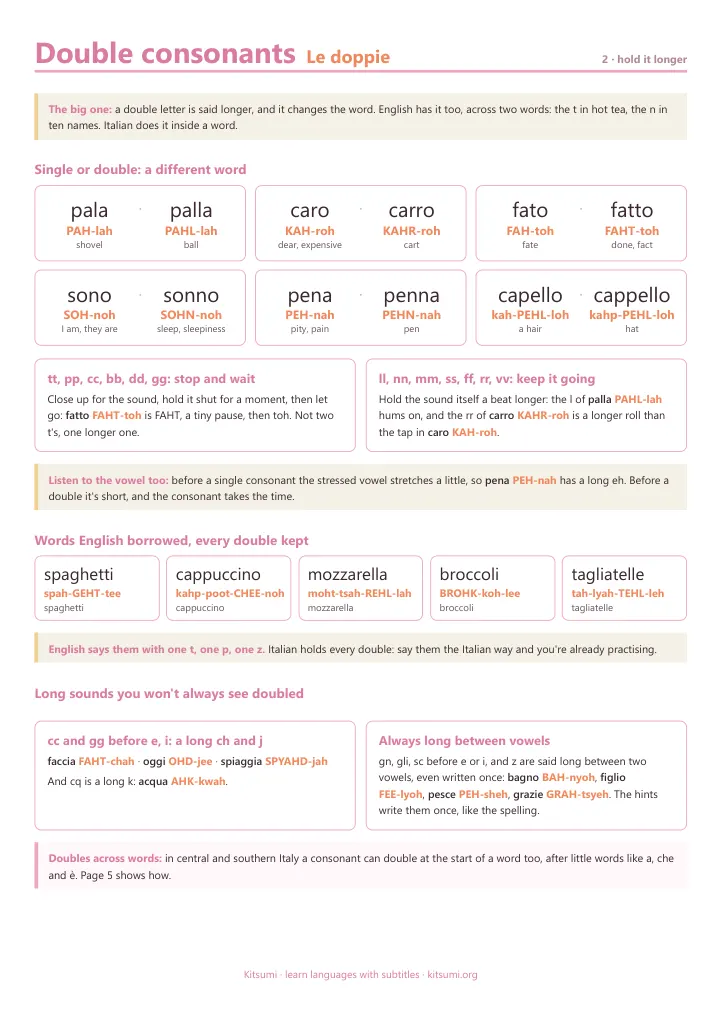
- Double consonantsWhy pala and palla, caro and carro, sono and sonno are different words, how to hold a double, the borrowed words English says wrong (spaghetti, cappuccino) and the long sounds you can't see.
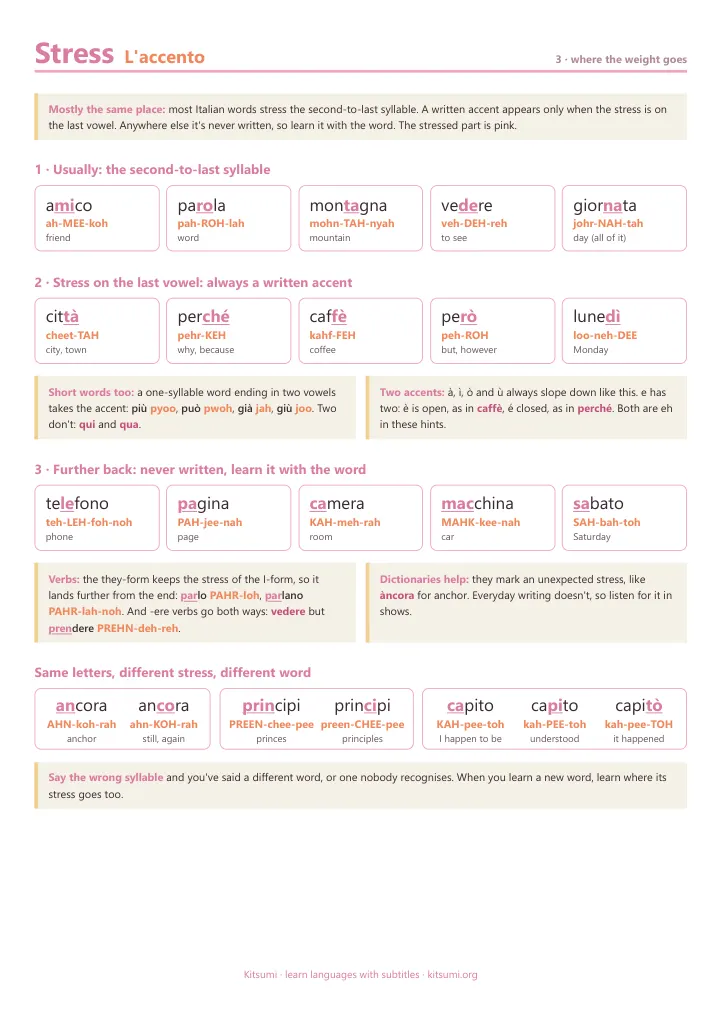
- Stress and accentsThe usual second-to-last syllable, the written accent on città, perché and caffè, unwritten stress like telefono and pagina, and words the stress tells apart (àncora and ancora, capito and capitò).
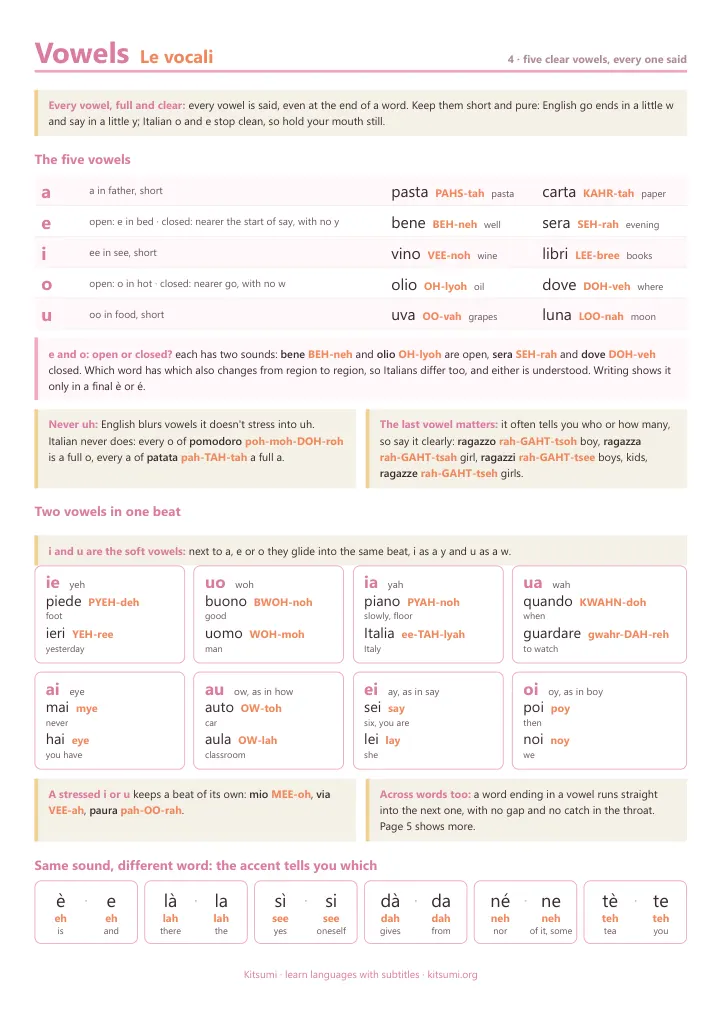 VowelsFive clear vowels that never turn into uh, open and closed e and o, why the last vowel matters (ragazzo, ragazza), the diphthongs, and accents that change the word (è and e, sì and si).
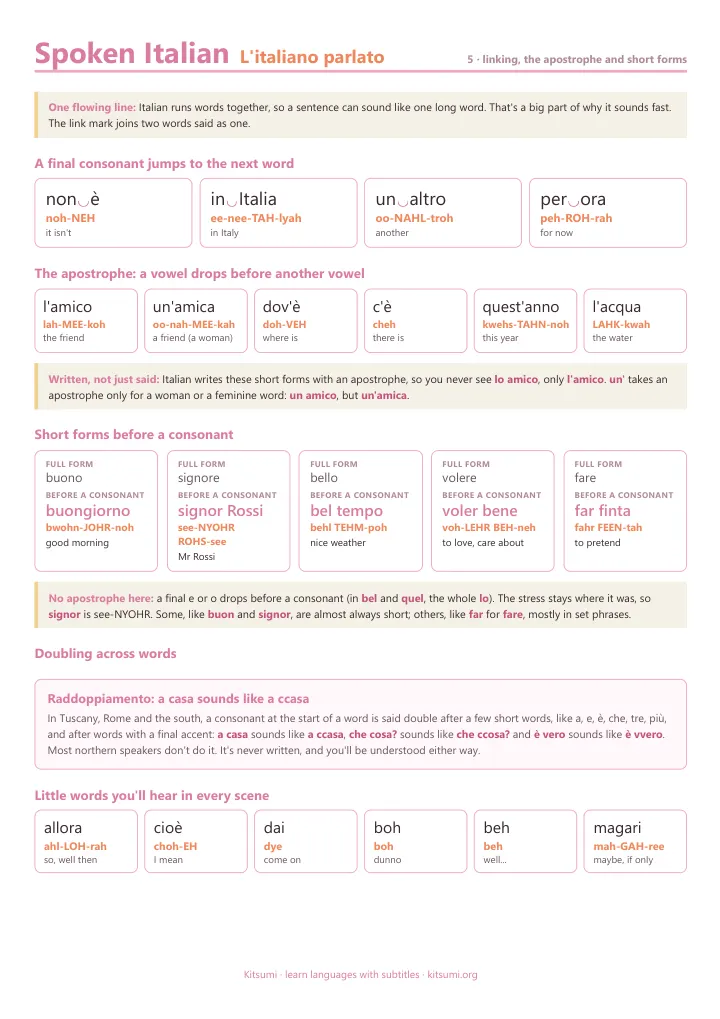 Spoken Italian and practiceHow words link (non è, in Italia), the apostrophe (l'amico, dov'è), short forms like buongiorno and signor Rossi, doubling across words in central and southern Italy, then pairs, four tongue twisters and ten sentences with the stress marked.
How to use it
- Learn a few basic words first, so the examples feel familiar.
- Read one page a day out loud, using the orange sound hints.
- Say the pairs on the practice page slowly, then fast, until single and double sound different.
- Cover the answers on the practice page, then listen for the same sounds in Italian shows with Kitsumi.
More free Italian printables
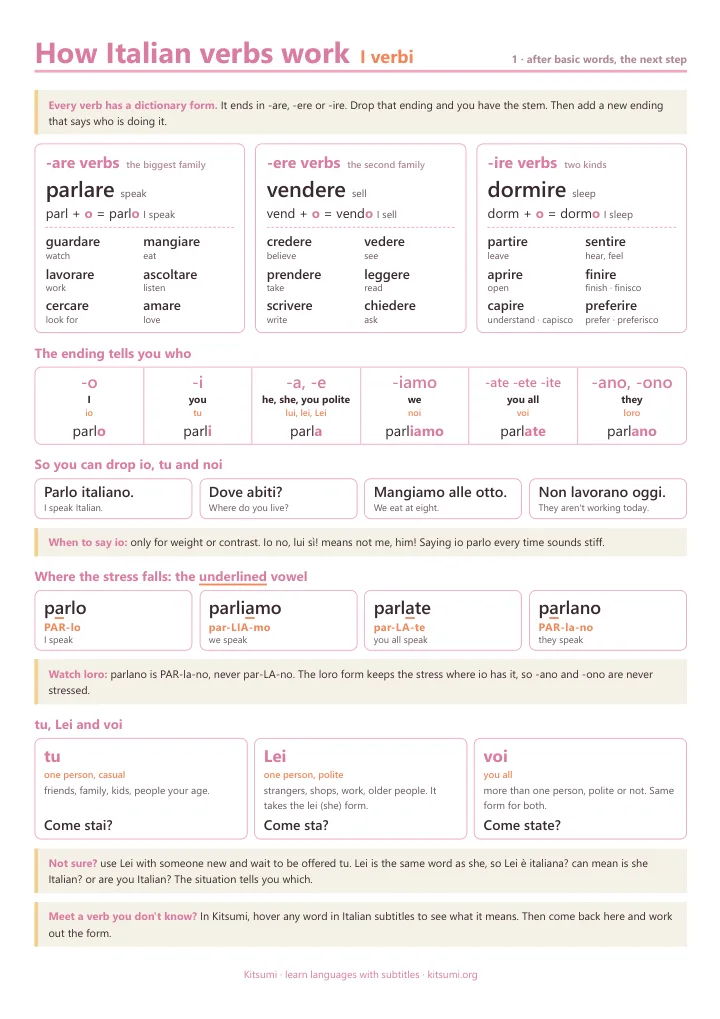 Next stepItalian verbs guideMake verbs say who and when: the endings, the present, the passato prossimo, the future and mi piace.
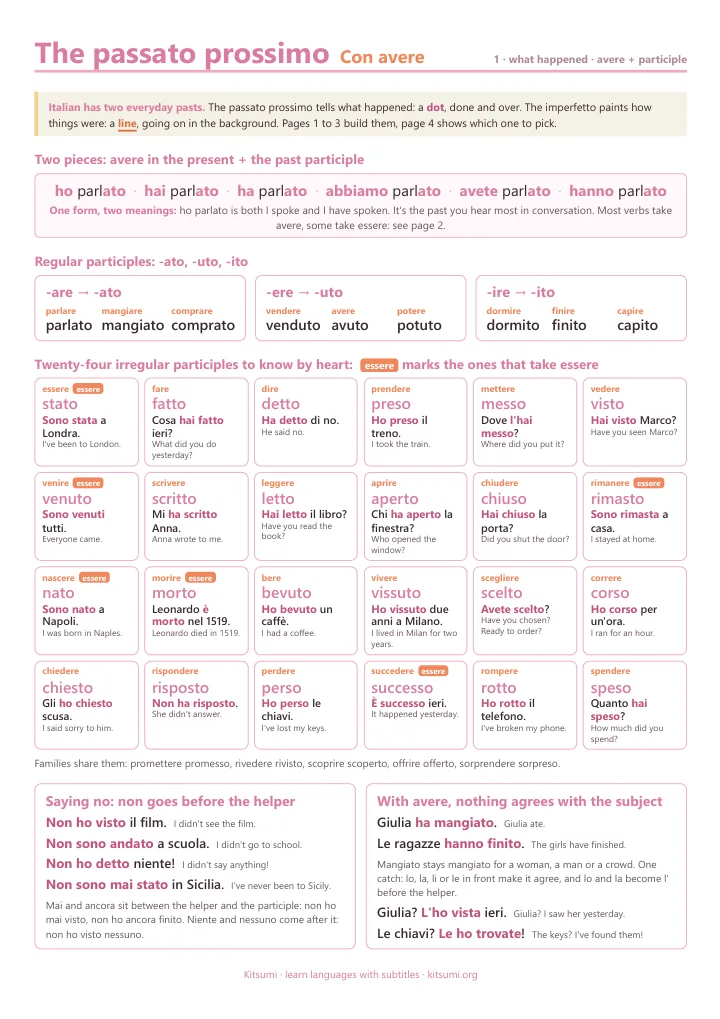 Italian past tenses: passato prossimo or imperfetto?Then sort out the two pasts: ho visto or vedevo, sono andato or andavo, and why it matters.
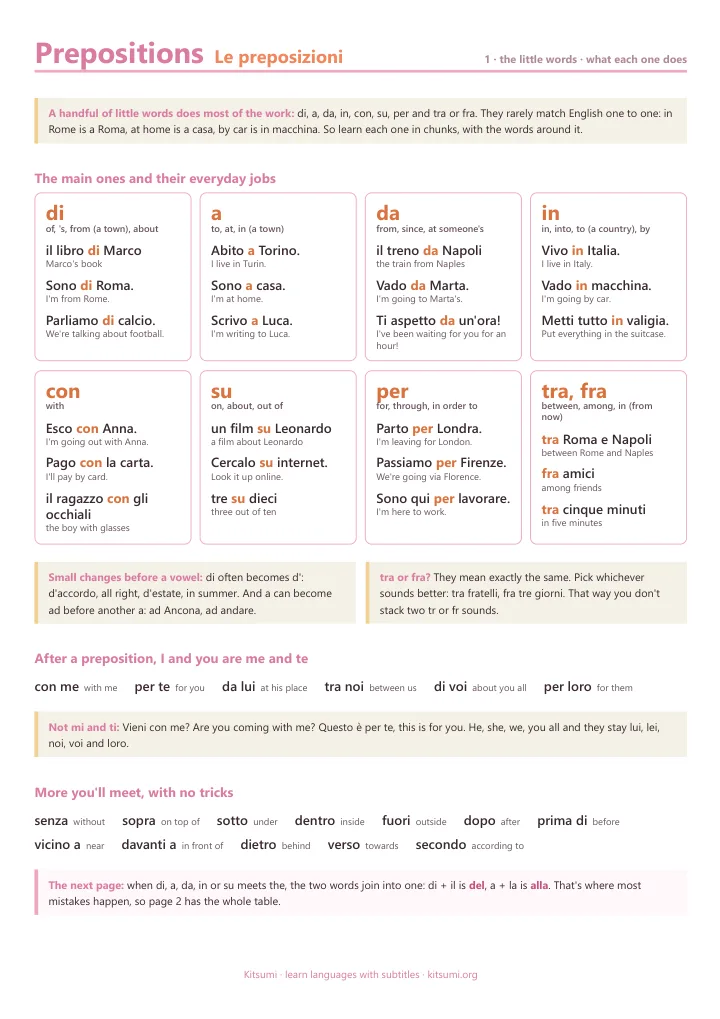 Italian grammar: prepositions and their joined formsThen pin down the little words: a Roma but in Italia, del, nella and sul, da tre anni and tre anni fa.
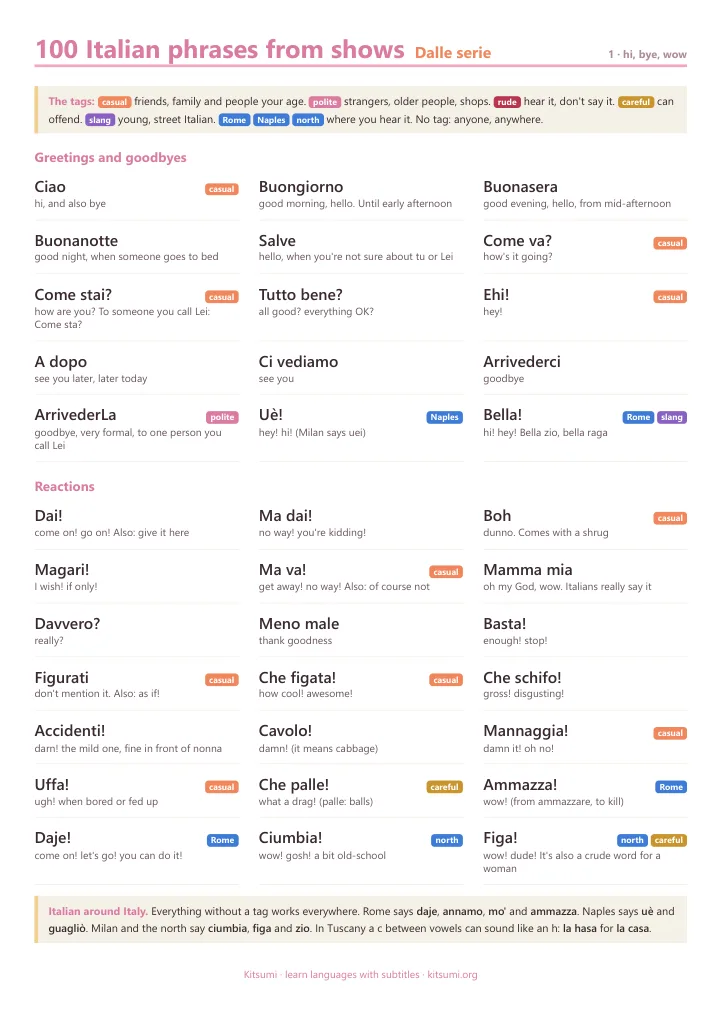 100 Italian phrases from showsThen pick up the lines shows use all the time: Boh, Magari!, Ti amo or Ti voglio bene, Lasciami in pace and what Daje and guagliò really mean.
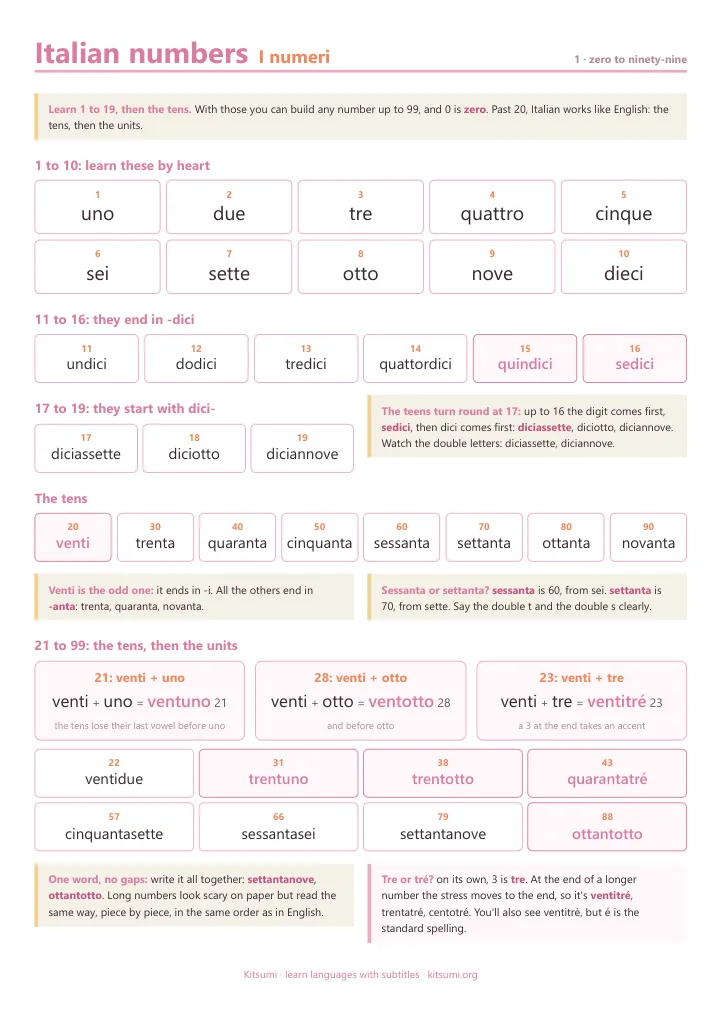 Italian numbers, time and moneyThen sort out numbers: ventuno and ventitré, cento, mille and duemila, then the time, dates and prices.
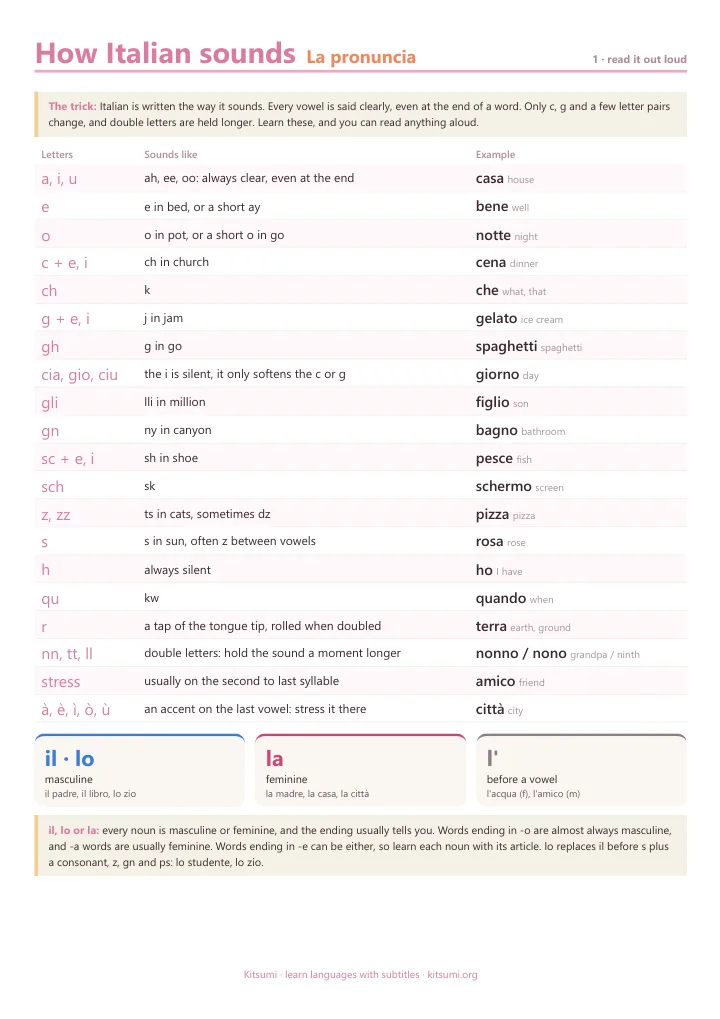 Basic Italian wordsStart here. c, g, gli and double letters made simple, then 221 first words with il, lo and la in colour.
Questions
Is the Italian pronunciation guide free?
Yes. It's a free PDF with no sign-up. Print it, keep it and share it.
Why do double letters matter in Italian?
A double consonant is held longer, and it can change the word: pala is a shovel, palla a ball; sono is I am, sonno is sleep. The guide shows how to hold each kind.
Do I need to learn IPA?
No. Every sound has a plain English hint like PAHL-lah or jeh-LAH-toh, with the stressed part in capitals.