 Kitsumi
Free German word order guide
A six-page printable PDF for beginners: where the German verb goes, and why. Every example is laid out in coloured slots (position 1, the verb, the middle and the end), so you can see the pattern instead of memorising sentences.
PDF · 6 pages · 438 KB · no sign-up · free to print and share
Was it useful?Ideas or a mistake? Tell us on Discord
Next, meet these words in real videos: Kitsumi is free for Chrome and Firefox.
What's inside
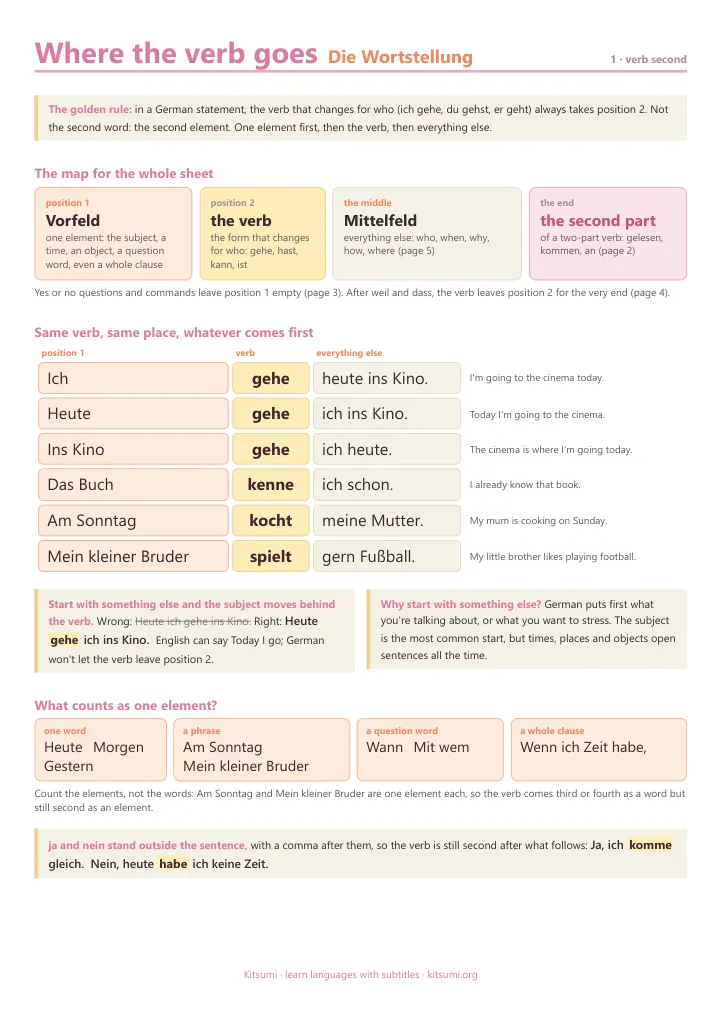
- Verb secondThe golden rule of the German statement: one element first, then the verb, whatever comes first. Ich gehe heute ins Kino, Heute gehe ich ins Kino, Ins Kino gehe ich heute, and what counts as one element.
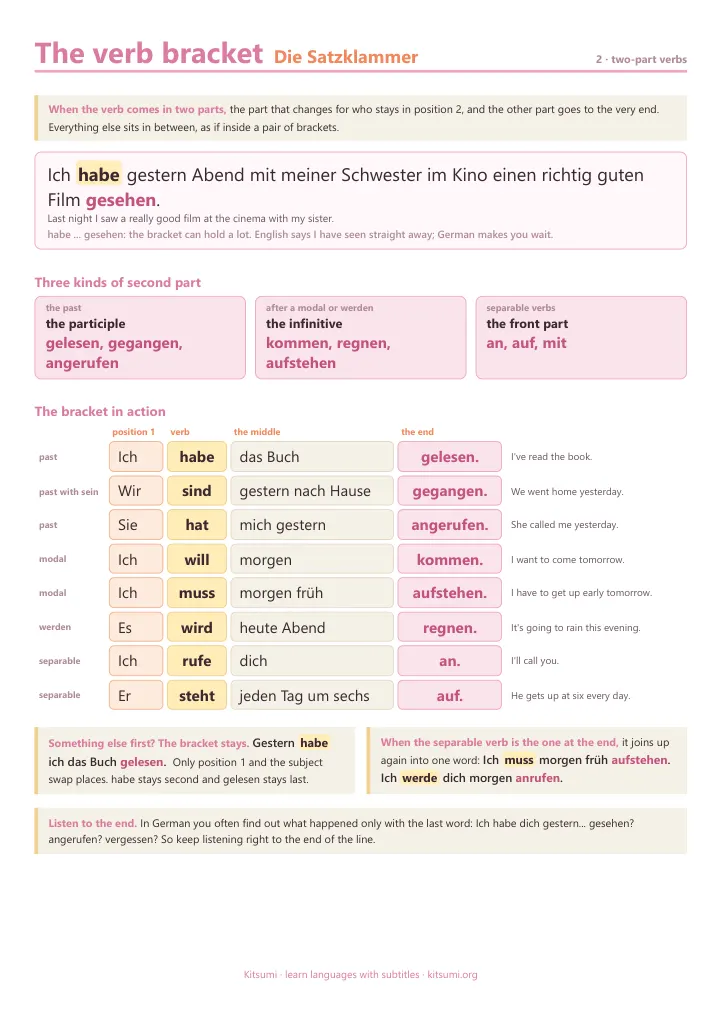
- The verb bracketThe Satzklammer: the helper verb second and the rest at the very end, with the Perfekt (Ich habe das Buch gelesen), modals (Ich will morgen kommen), werden and separable verbs (Ich rufe dich an).
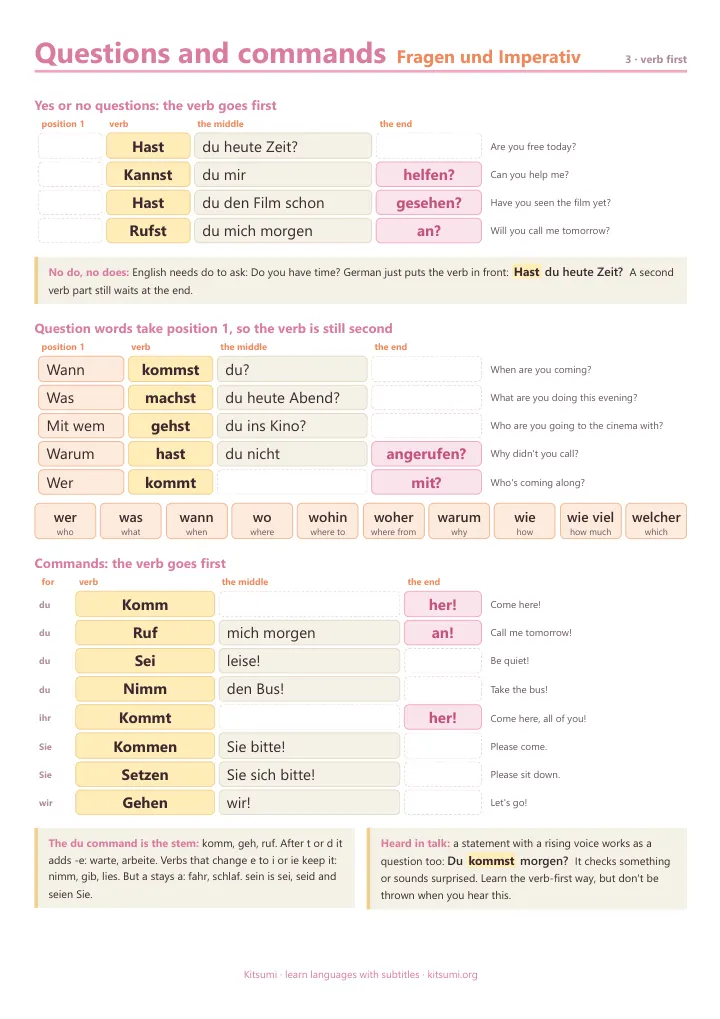
- Questions and commandsYes or no questions start with the verb (Hast du heute Zeit?), question words take position 1 (Wann kommst du?), and commands put the verb first: Komm her!, Kommen Sie bitte!
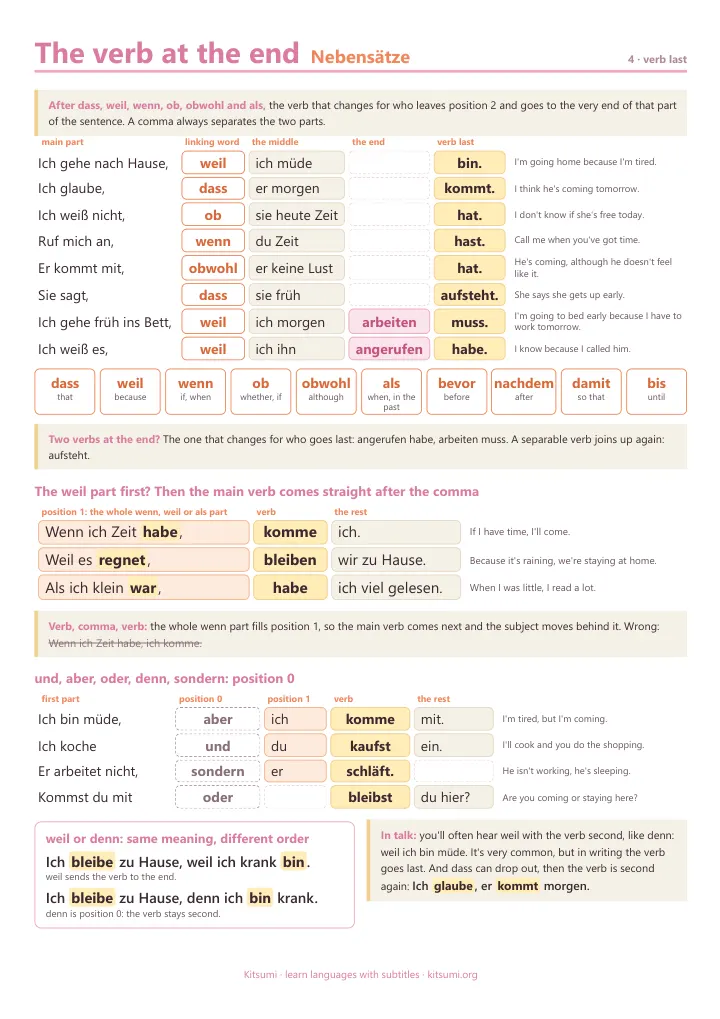 The verb at the enddass, weil, wenn, ob, obwohl and als send the verb to the end, the main verb straight after the comma when the weil part comes first, and why und, aber, oder, denn and sondern change nothing.
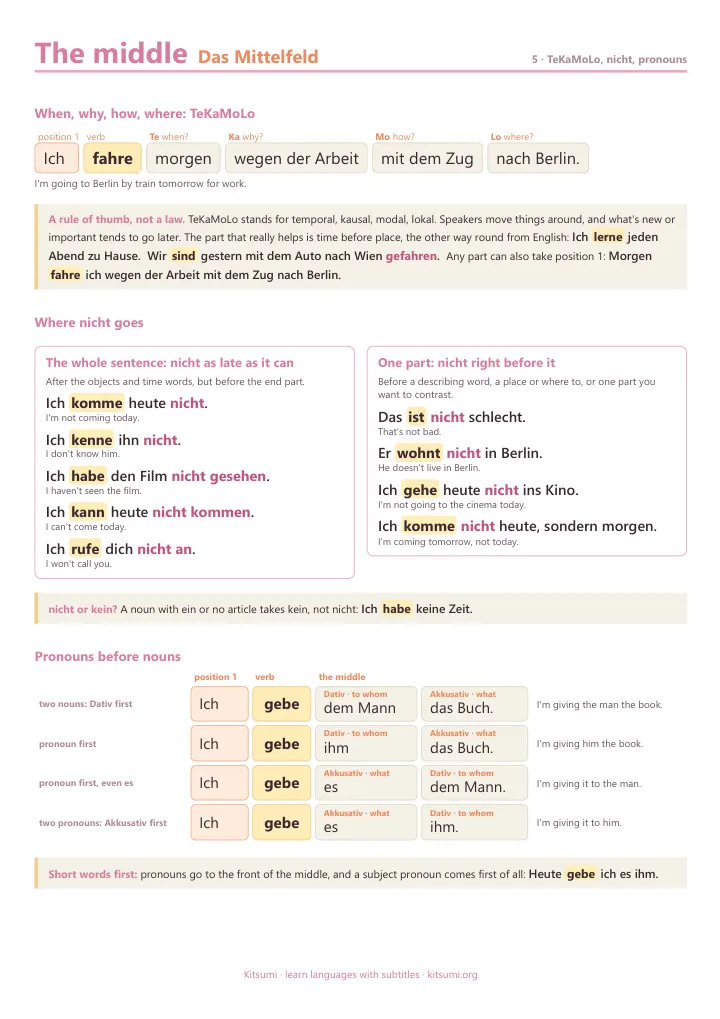 The middleTime, manner, place (TeKaMoLo) as a rule of thumb, where nicht goes, kein instead of nicht, and why it's Ich gebe es ihm but Ich gebe dem Mann das Buch.
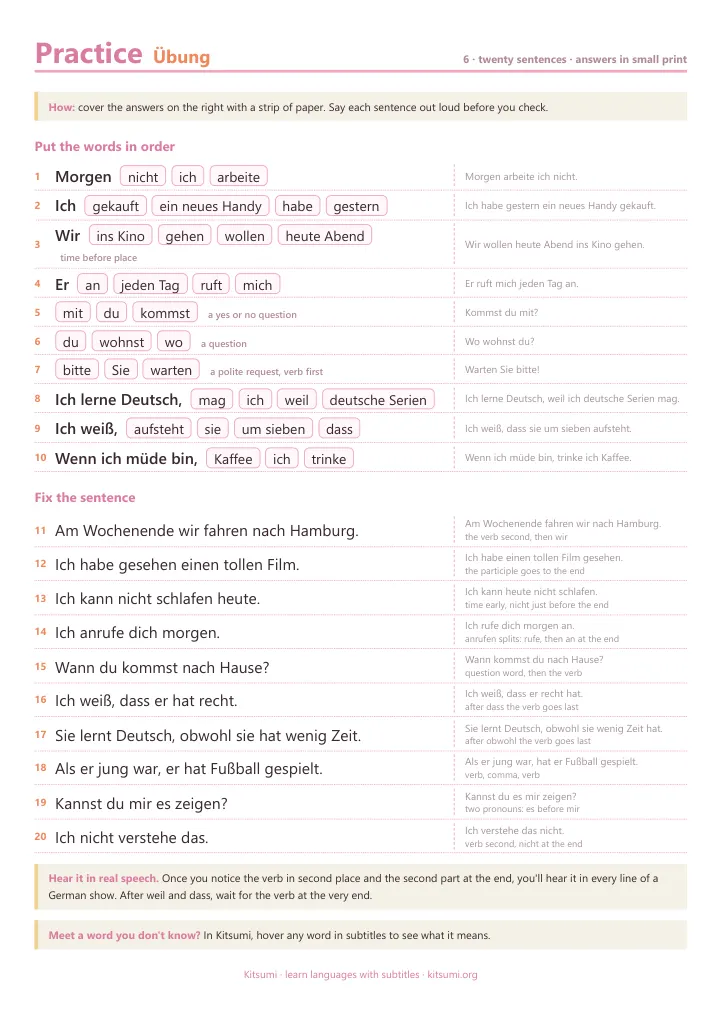 PracticeTen sentences to put in order and ten to fix, with the answers in small print. Cover them with a strip of paper and check yourself.
How to use it
- Learn the basic German words and the verbs guide first. This guide builds on them.
- Read the first page and say three sentences that start with Heute, Morgen or Am Sonntag, with the verb second.
- Take one page a day and say every example out loud, pointing at each slot as you go.
- Do the practice page, then listen for weil and dass in shows with Kitsumi and wait for the verb at the end.
More free German printables
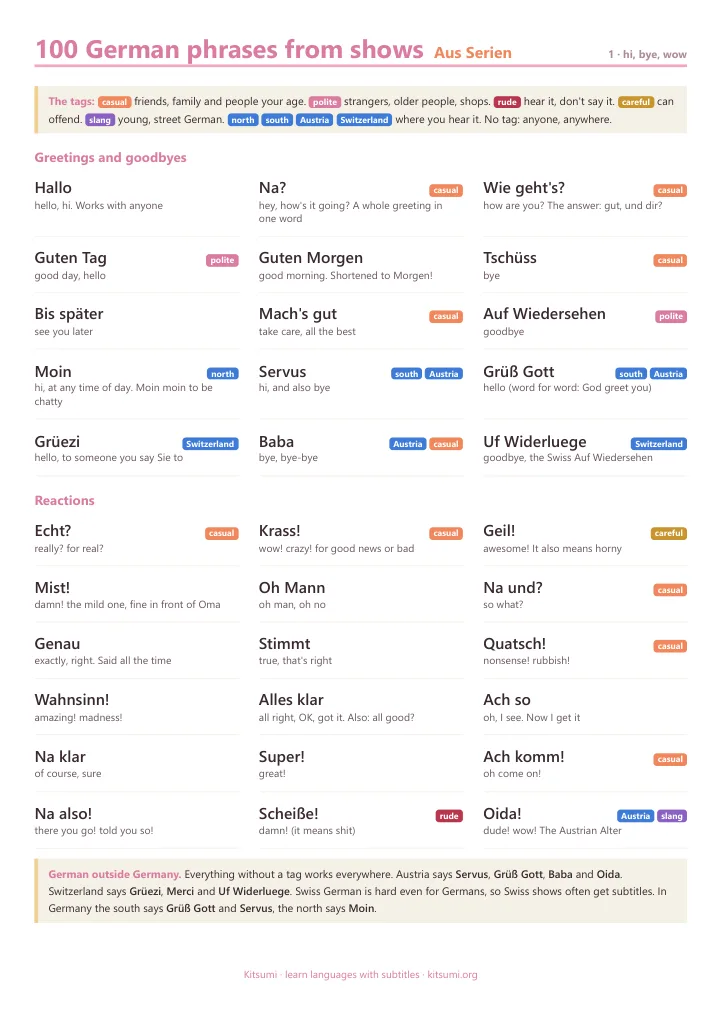 Next step100 German phrases from showsThen pick up the lines shows use all the time: Na?, Doch!, Ich liebe dich or Ich hab dich lieb, Lass mich in Ruhe and what Digga and Ehrenmann really mean.
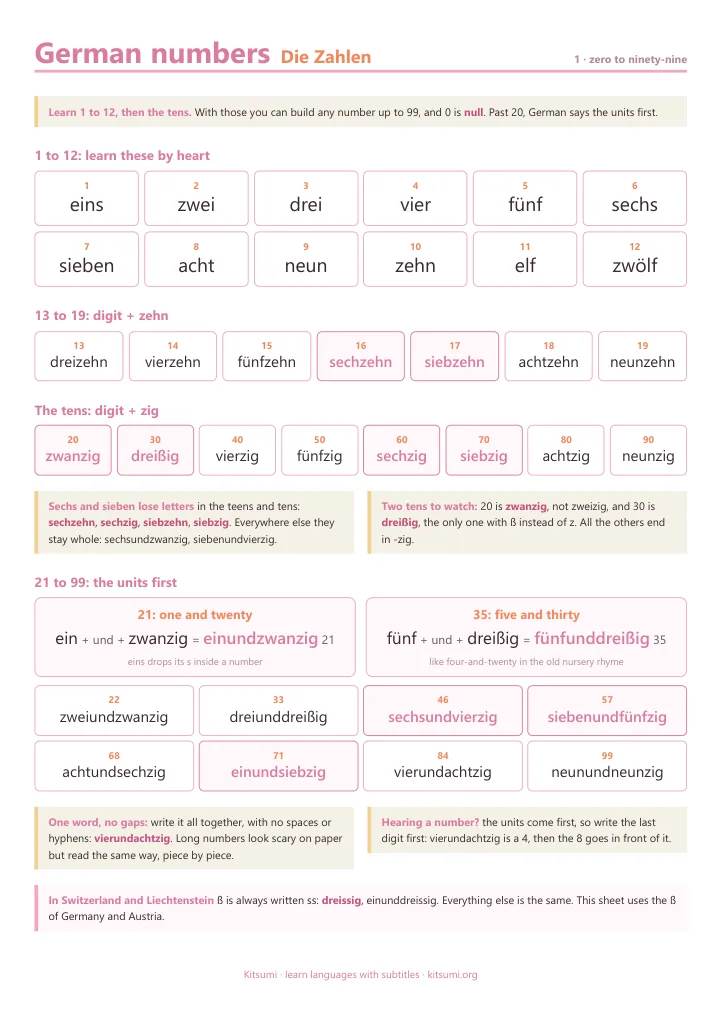 German numbers, time and moneyThen sort out numbers: einundzwanzig and dreißig, hundert and tausend, then the time, dates and prices.
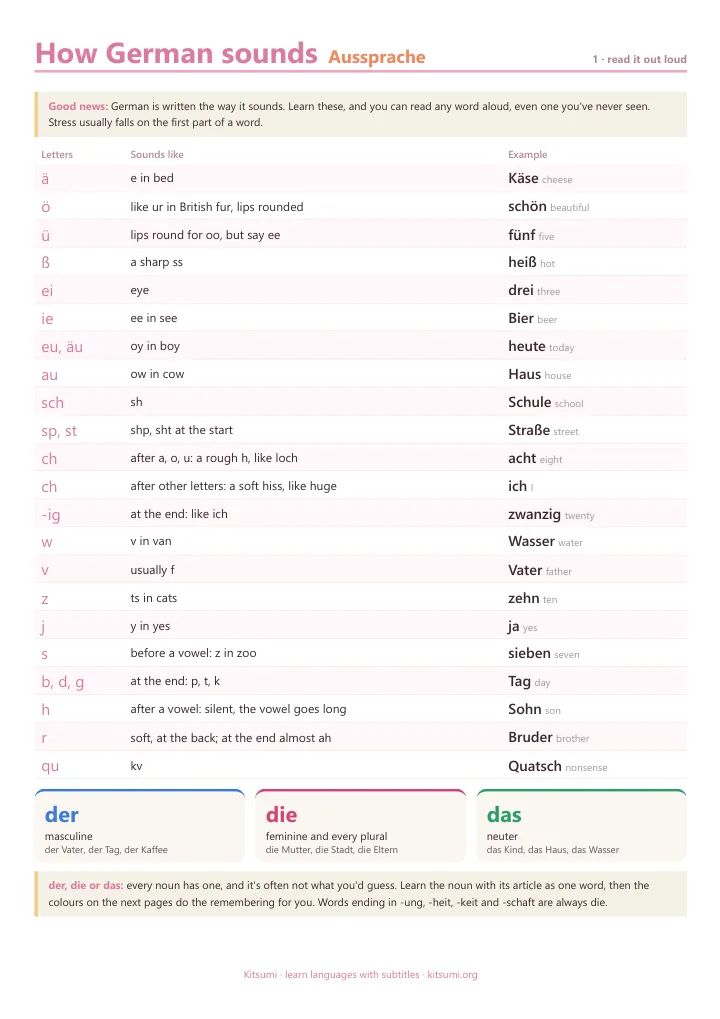 Basic German wordsStart here. How every letter sounds, then 215 first words with der, die and das in colour.
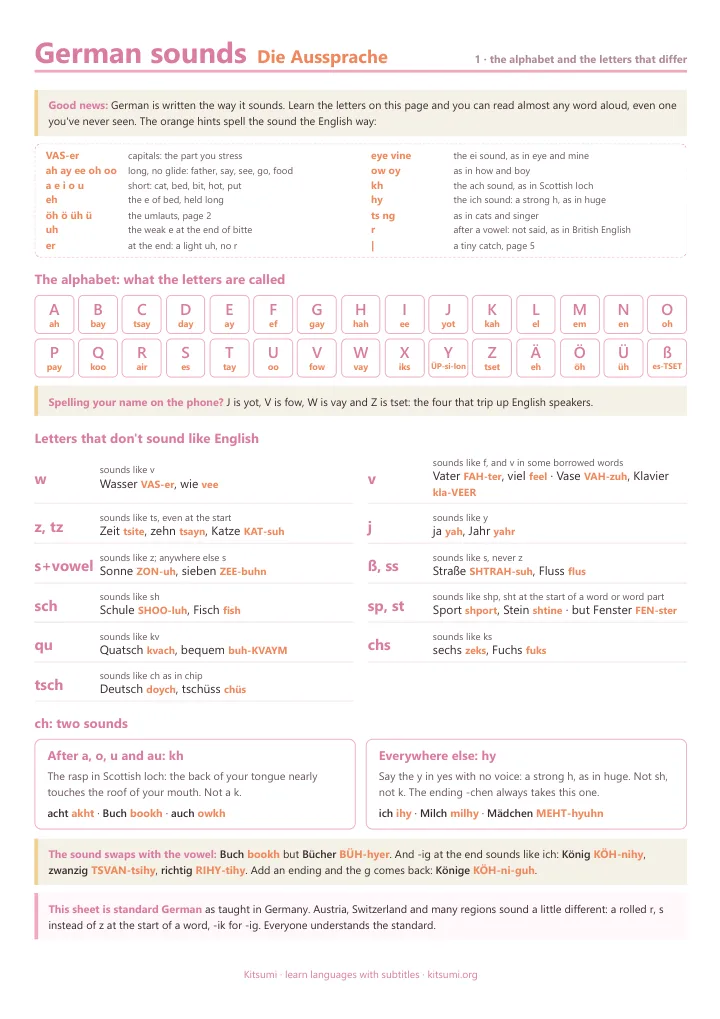 German pronunciation guideThen learn how the letters really sound: long and short vowels, the umlauts, the two ch sounds and where the stress falls.
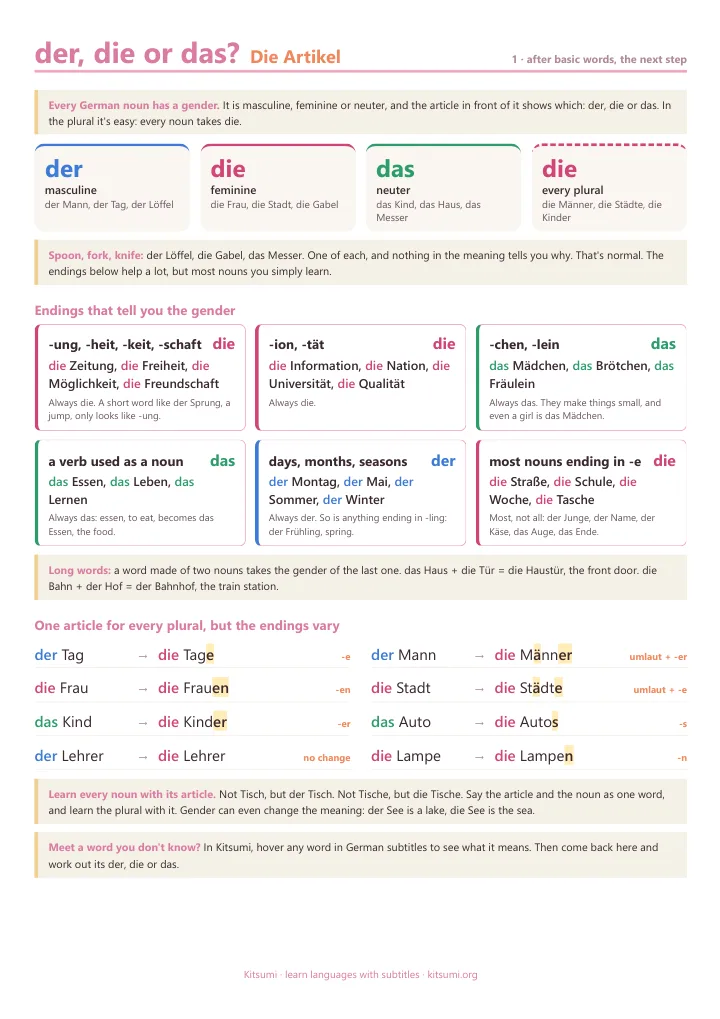 German der, die, das and cases guideMake der, die and das work in sentences: why der turns into den, dem and des.
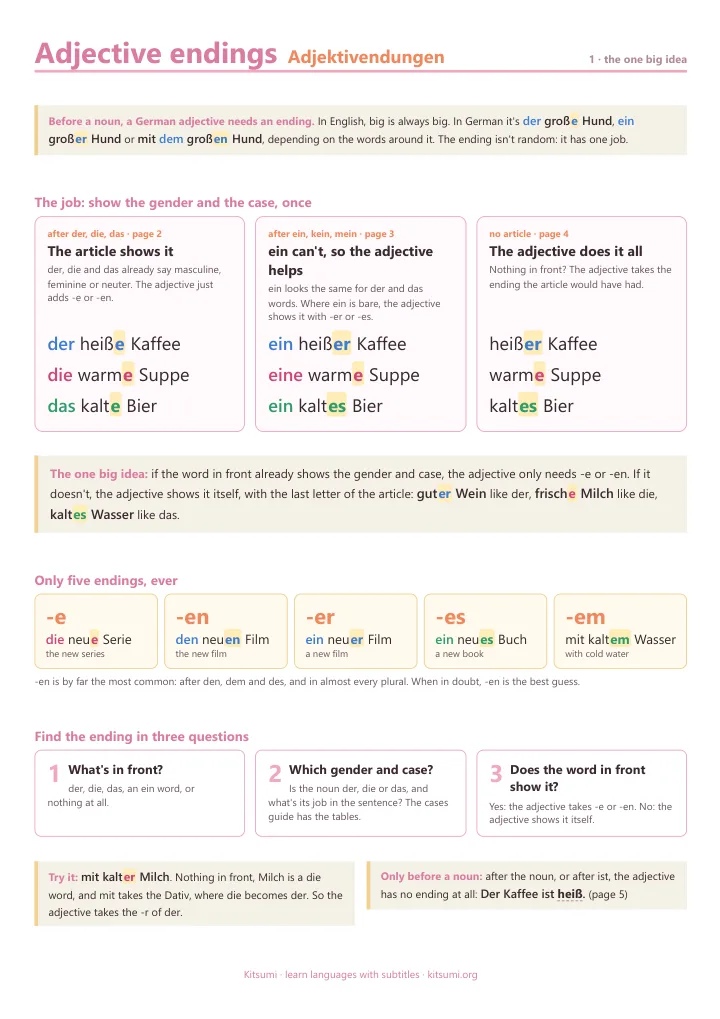 German adjective endings made simpleGive adjectives the right ending: -e or -en after der, -er or -es where ein can't show the gender, and the article's own ending when there's no article.
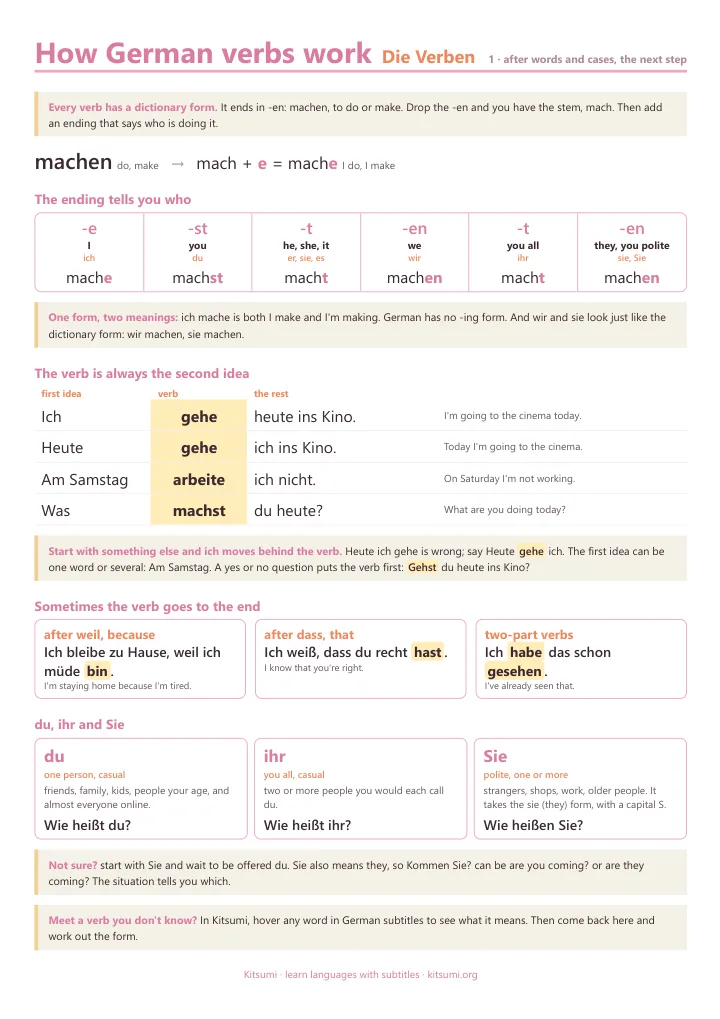 German verbs guideMake verbs say who and when: the endings, verb second, modals, separable verbs and the Perfekt.
Questions
Is the German word order guide free?
Yes. It's a free PDF with no sign-up. Print it, keep it and share it.
Why does the verb go second in German?
That's the rule for a normal statement: one element first, then the verb that changes for who. If the sentence starts with Heute, the verb comes next and ich moves behind it: Heute gehe ich ins Kino.
When does the verb go to the end?
After linking words like dass, weil, wenn, ob, obwohl and als. Ich bleibe zu Hause, weil ich müde bin. After und, aber, oder, denn and sondern the order doesn't change.