 Kitsumi
Free German adjective endings guide
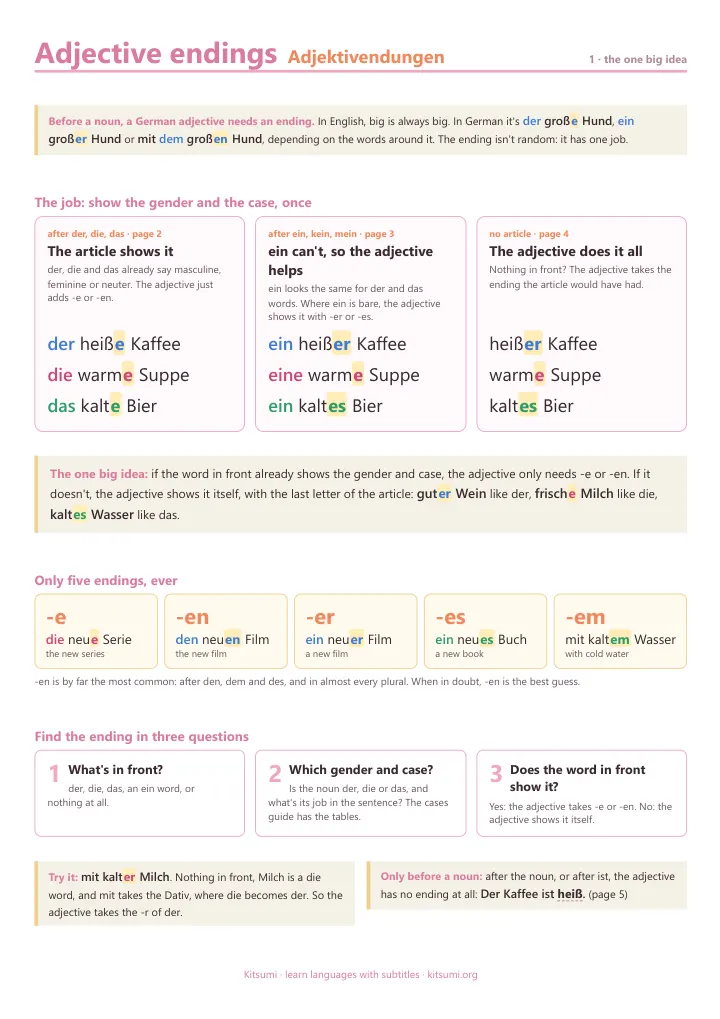
A six-page printable PDF for beginners: why der große Hund turns into ein großer Hund and mit dem großen Hund. One big idea explains all three tables, every ending is coloured by the noun's gender, and the shortcuts mean you don't have to learn 48 boxes by heart.
PDF · 6 pages · 338 KB · no sign-up · free to print and share
Was it useful?Ideas or a mistake? Tell us on Discord
Next, meet these words in real videos: Kitsumi is free for Chrome and Firefox.
What's inside
- The one big ideaThe ending shows the gender and case once: if der, die or das already shows it, the adjective takes -e or -en; if not, the adjective shows it itself. Only five endings exist, and three questions find the right one.
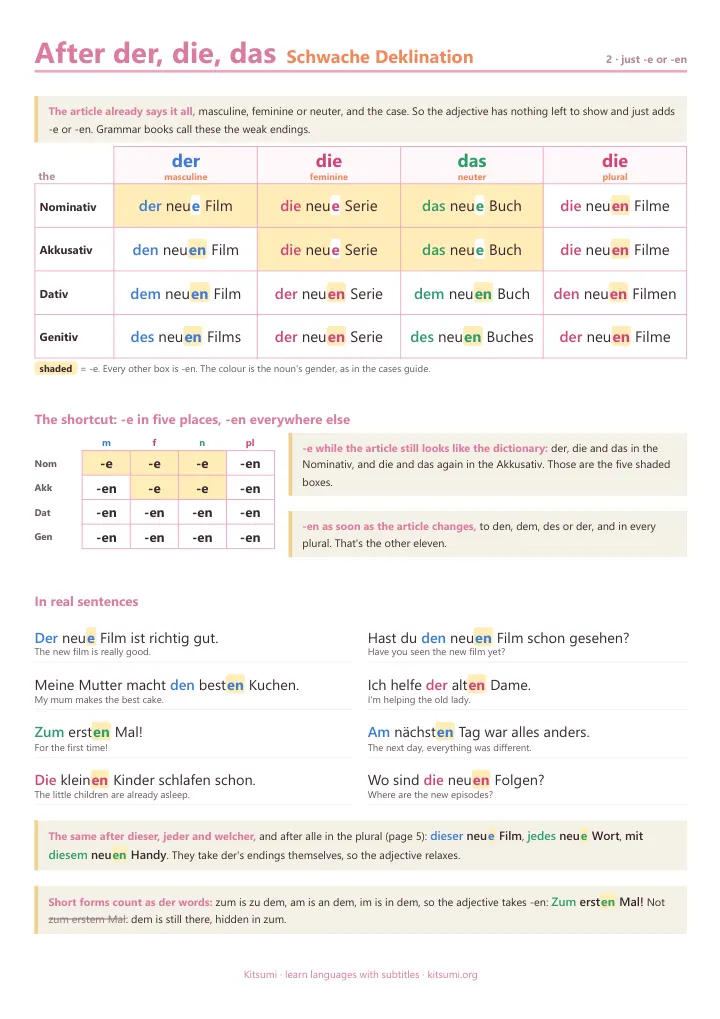
- After der, die, dasThe full table in all four cases, and the shortcut: -e in five places, -en everywhere else. The same after dieser, jeder and welcher, and short forms like zum ersten Mal.
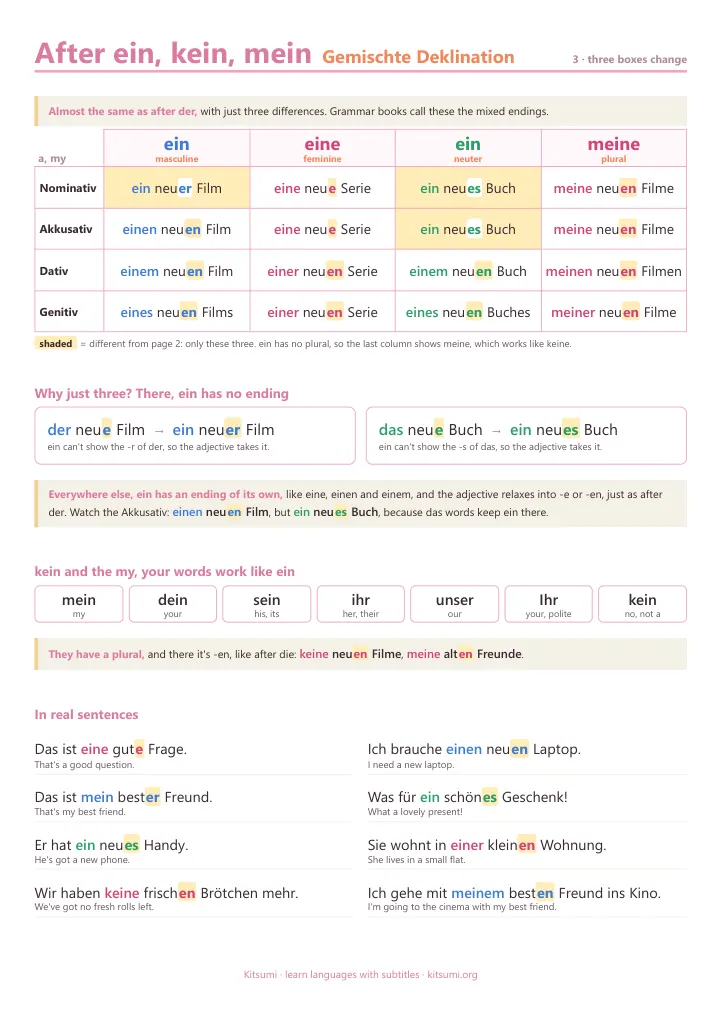
- After ein, kein, meinAlmost the same as after der, with three boxes that differ: ein neuer Film and ein neues Buch, because a bare ein can't show the gender. Plus kein, mein, dein and the plural.
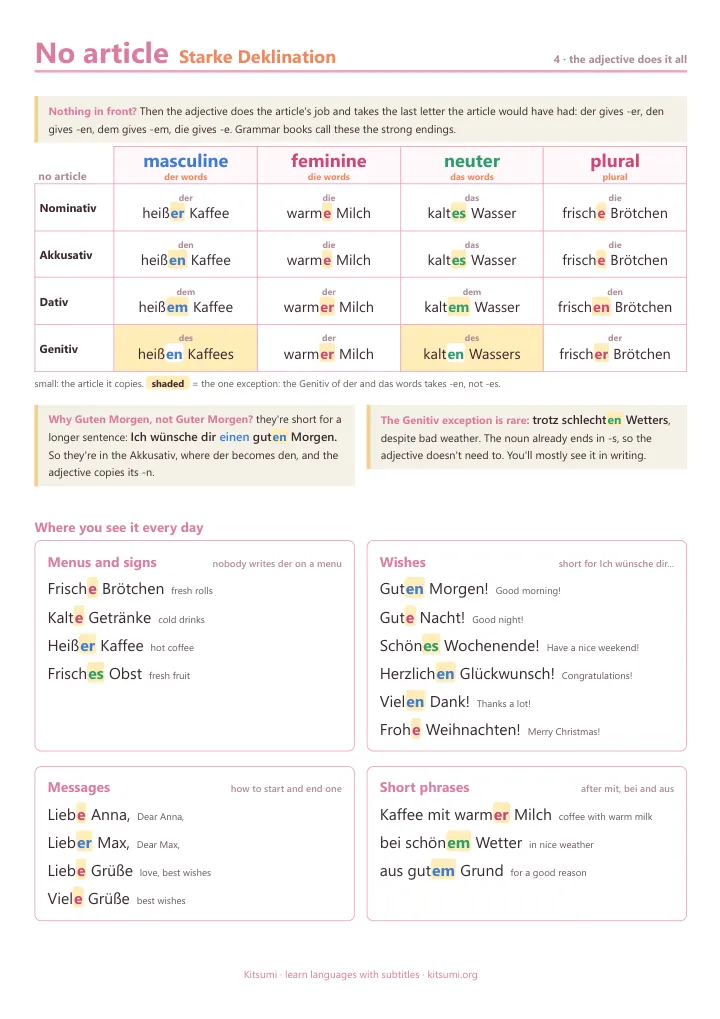 No articleThe adjective takes the article's own ending: guter Wein, frische Milch, kaltes Wasser. Why it's Guten Morgen, Gute Nacht and Liebe Grüße, and the one rare exception in the Genitiv.
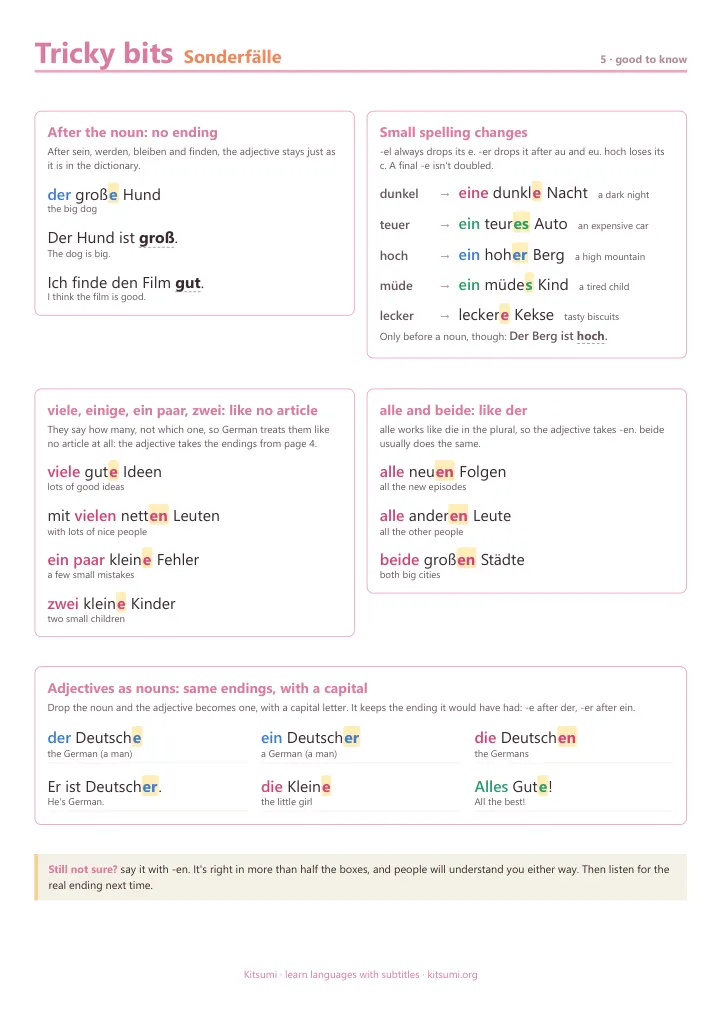 Tricky bitsNo ending after the noun (Der Hund ist groß), dunkel to dunkle, teuer to teures, hoch to hohe, viele and ein paar like no article, alle and beide like der, and der Deutsche, ein Deutscher.
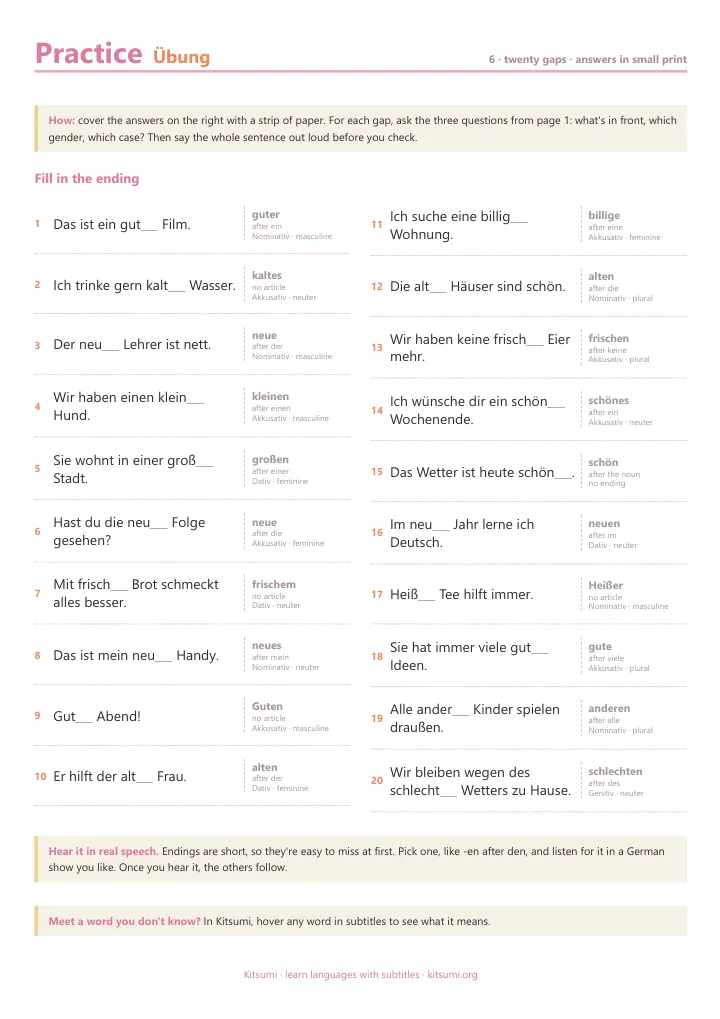 PracticeTwenty gaps to fill, with the answer, the case and the gender in small print. Cover them with a strip of paper and check yourself.
How to use it
- Learn the cases guide first. This guide builds on der, den, dem and des.
- Read the first page until you can say why it's ein großer Hund but der große Hund.
- Take one table a day and say each box out loud with its article, then cover it and say it again.
- Do the practice page, then listen for Guten, neuen and kleinen in shows with Kitsumi.
More free German printables
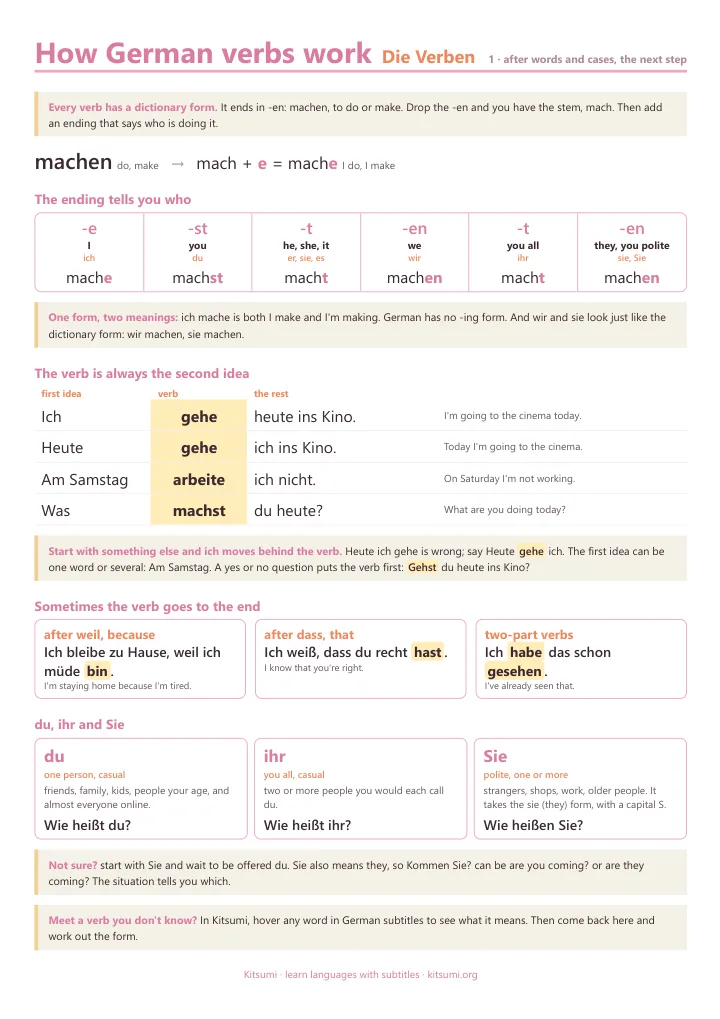 Next stepGerman verbs guideMake verbs say who and when: the endings, verb second, modals, separable verbs and the Perfekt.
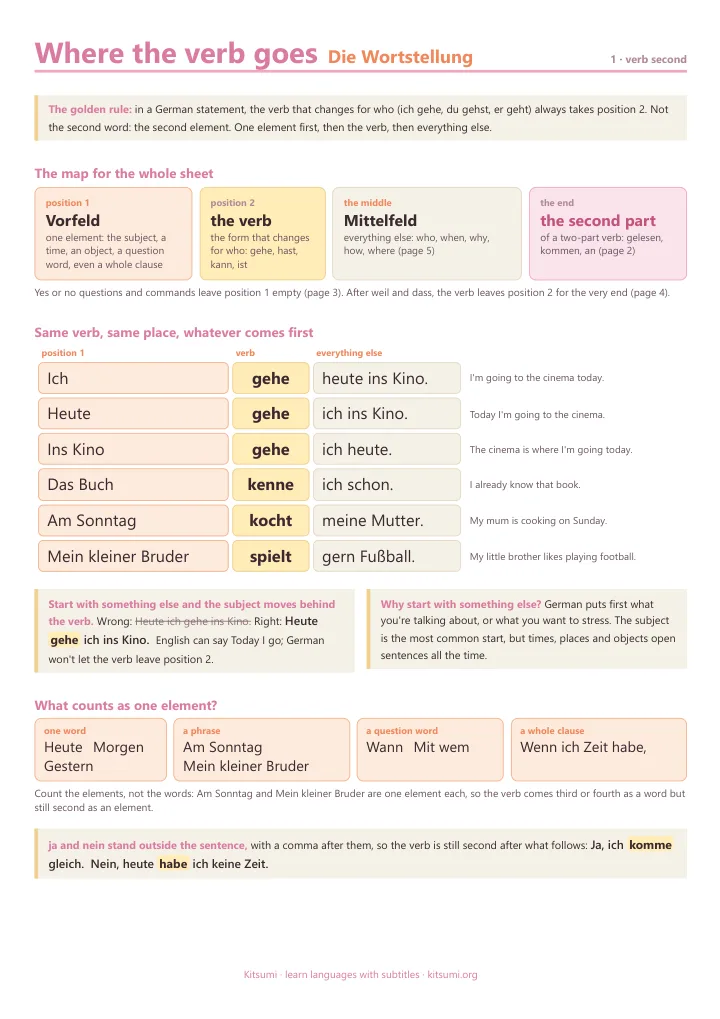 German word order guide: where the verb goesPut the words in the right order: the verb second, the second part at the end, and the verb last after weil and dass.
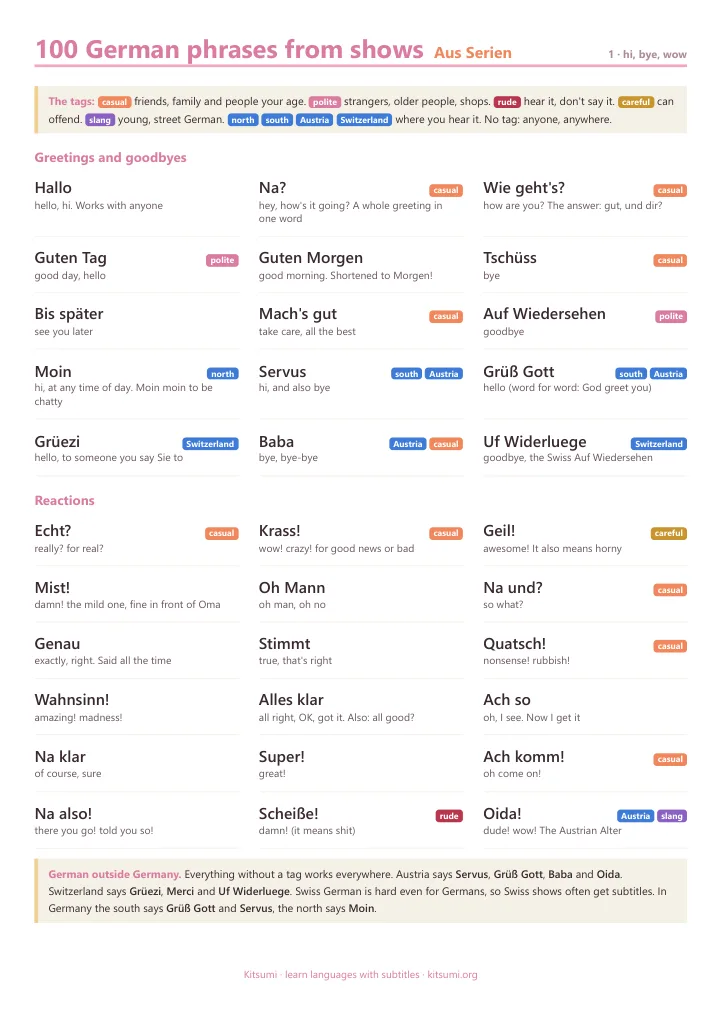 100 German phrases from showsThen pick up the lines shows use all the time: Na?, Doch!, Ich liebe dich or Ich hab dich lieb, Lass mich in Ruhe and what Digga and Ehrenmann really mean.
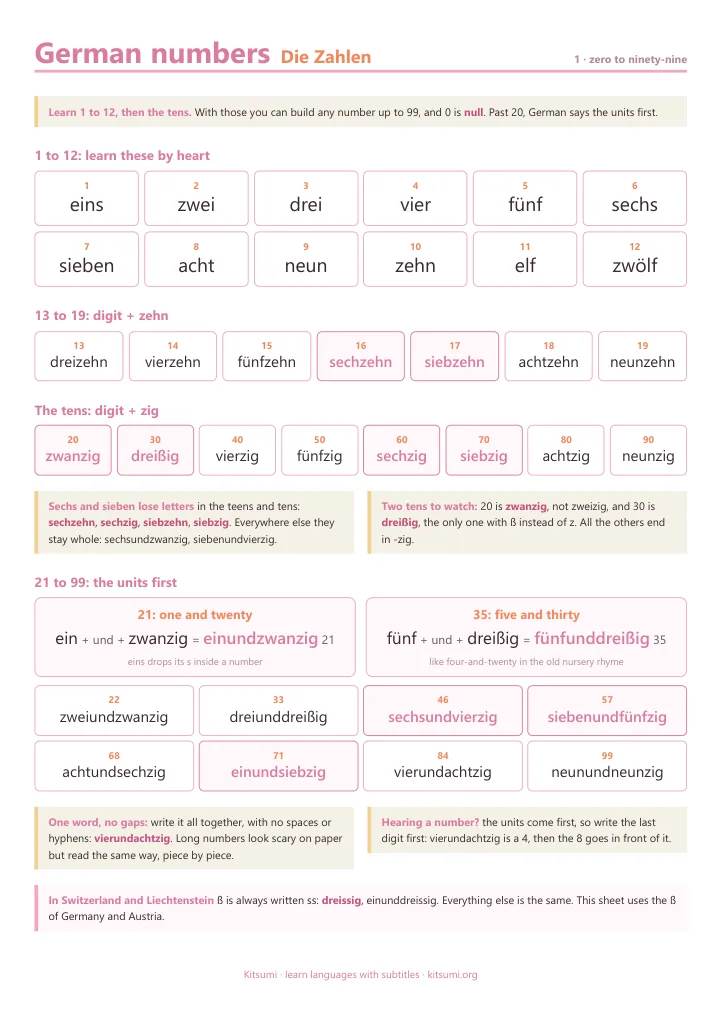 German numbers, time and moneyThen sort out numbers: einundzwanzig and dreißig, hundert and tausend, then the time, dates and prices.
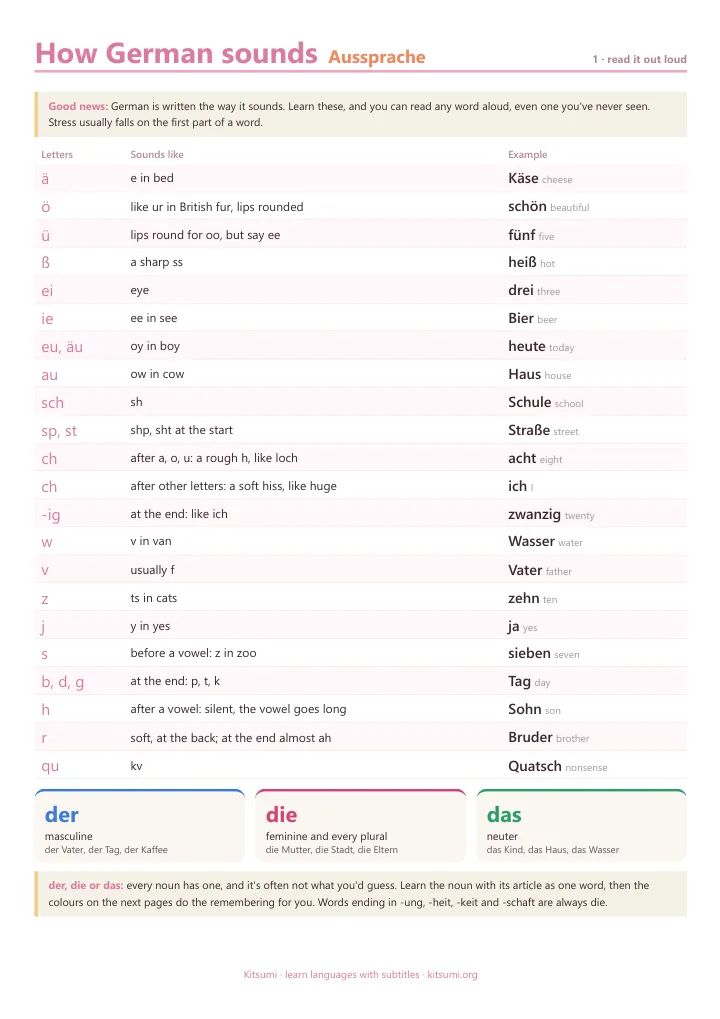 Basic German wordsStart here. How every letter sounds, then 215 first words with der, die and das in colour.
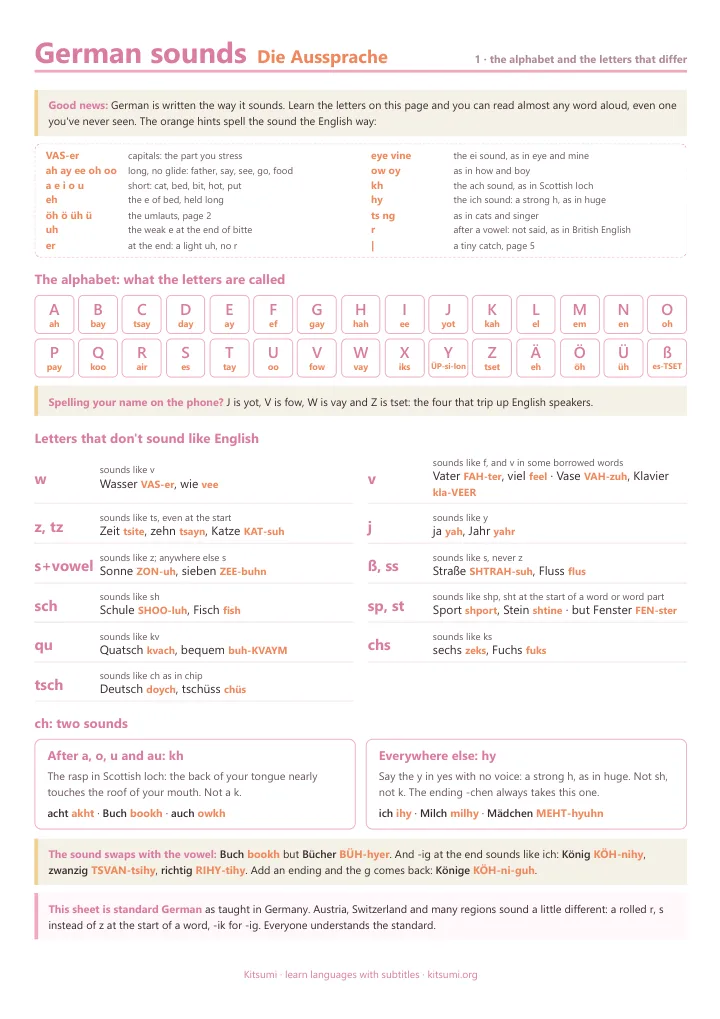 German pronunciation guideThen learn how the letters really sound: long and short vowels, the umlauts, the two ch sounds and where the stress falls.
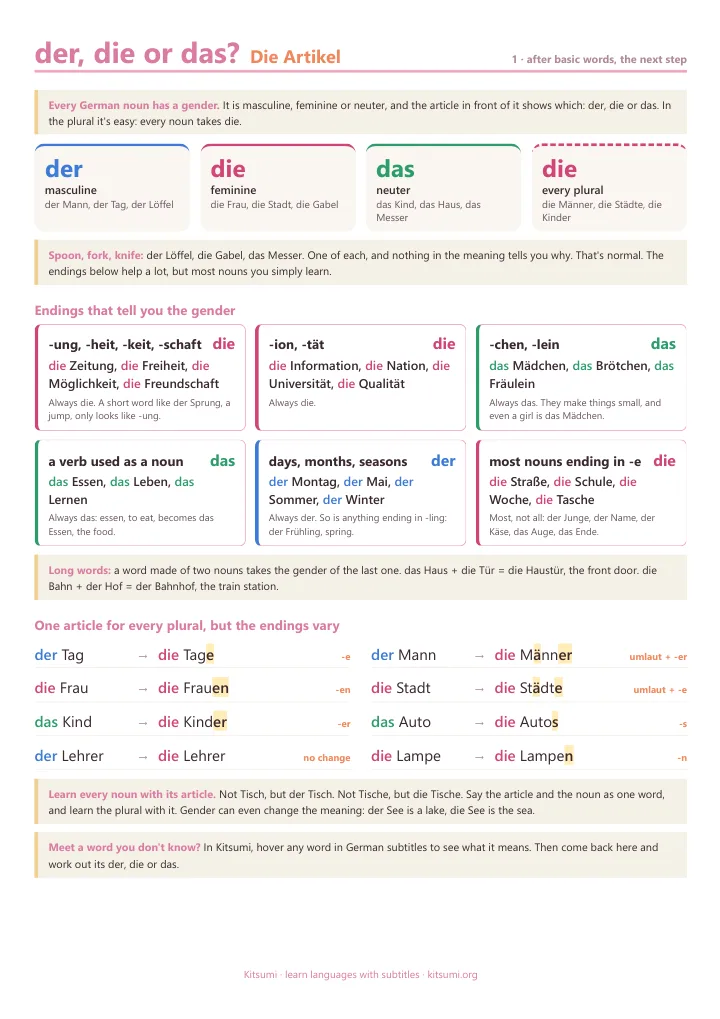 German der, die, das and cases guideMake der, die and das work in sentences: why der turns into den, dem and des.
Questions
Is the German adjective endings guide free?
Yes. It's a free PDF with no sign-up. Print it, keep it and share it.
Do I really have to learn three tables?
Not by heart. After der it's -e in five places and -en everywhere else. After ein only three boxes change. With no article, the adjective copies the last letter of der, die or das.
Why is it Guten Morgen and not Guter Morgen?
Wishes are short for Ich wünsche dir einen guten Morgen, so they're in the Akkusativ, where der becomes den. With no article, the adjective takes the -n.