 Kitsumi
Free German verbs guide
A five-page printable PDF for beginners: how German verbs change to say who and when, from ich mache and du fährst to ich kann nicht kommen and ich habe es gemacht. It shows where the verb goes in the sentence, so Heute gehe ich comes out right the first time.
PDF · 5 pages · 310 KB · no sign-up · free to print and share
Next, meet these words in real videos: Kitsumi is free for Chrome and Firefox.
What's inside
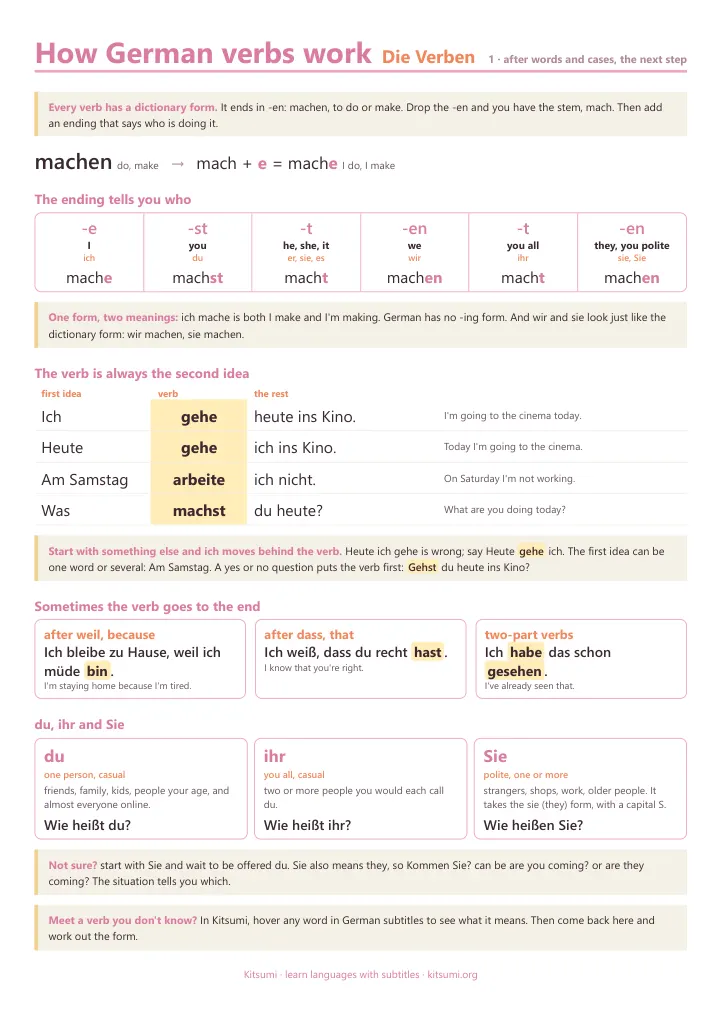
- How German verbs workThe stem and the six endings, why the verb is always the second idea, when it moves to the end after weil and dass, and du, ihr and Sie.
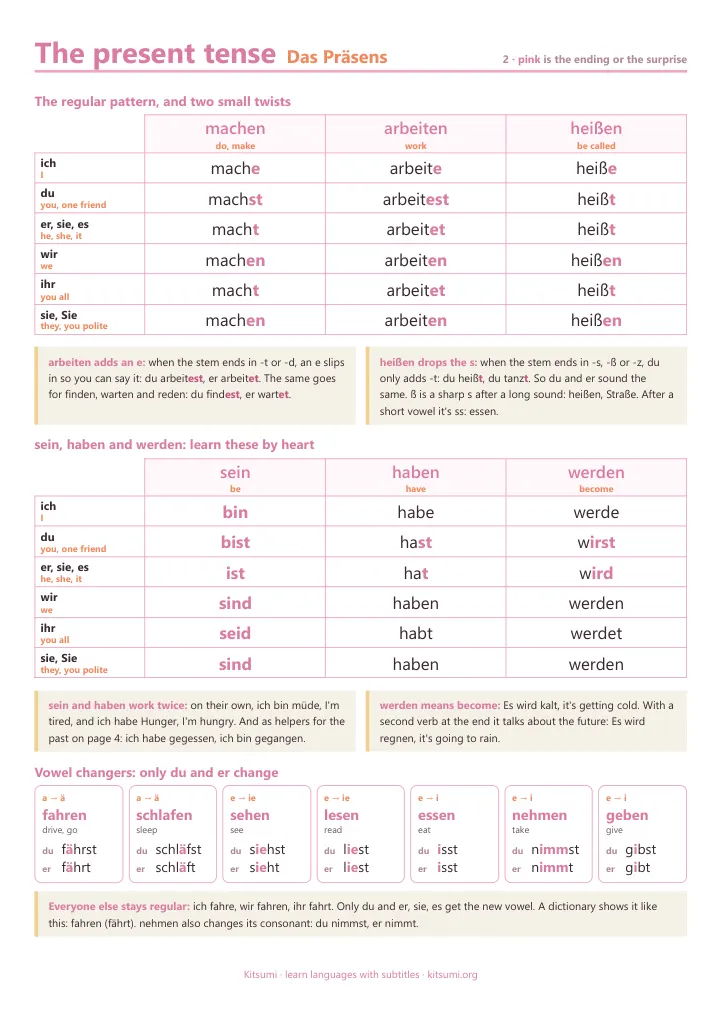
- The present tensemachen, arbeiten and heißen in all six persons, sein, haben and werden by heart, and the vowel changers like fahren, fährt and essen, isst, shown in the only forms that change.
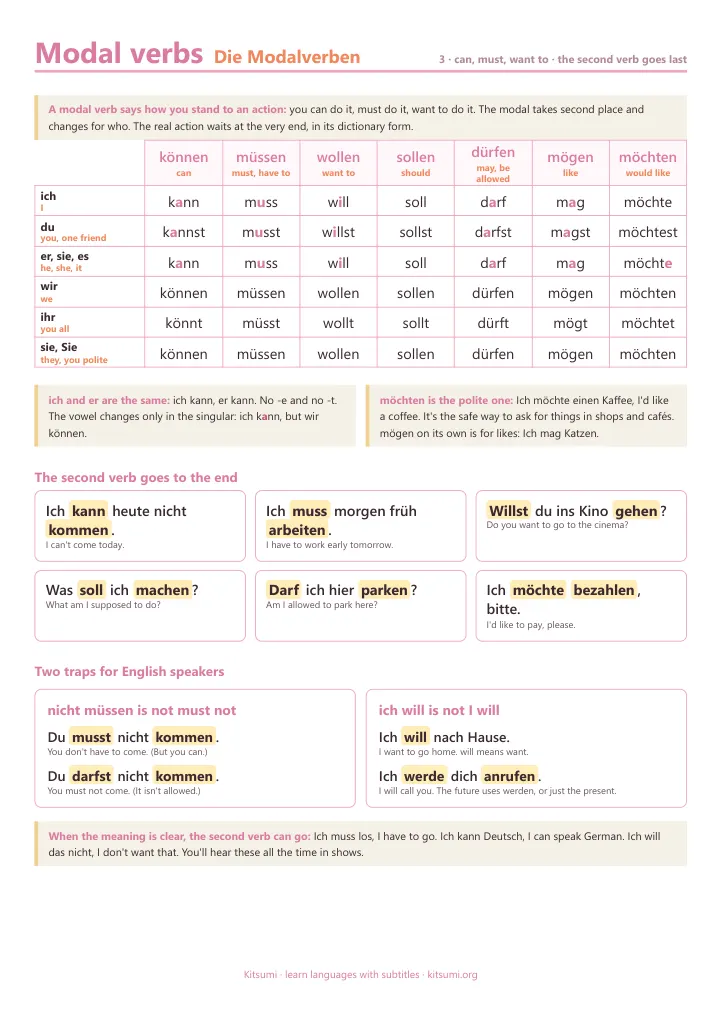
- Modal verbskönnen, müssen, wollen, sollen, dürfen, mögen and möchten in one table, the second verb at the end, and two traps: müssen nicht and ich will.
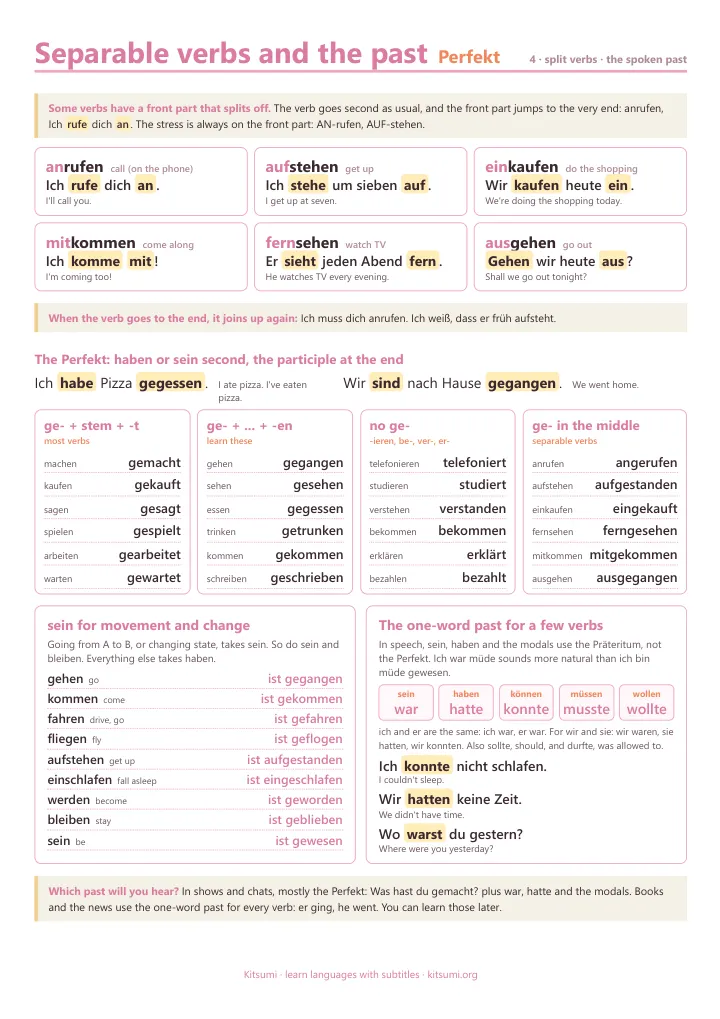 Separable verbs and the pastanrufen, aufstehen, einkaufen and more, with the front part at the end, then the Perfekt with haben or sein, participles like gemacht, gegangen and verstanden, and war, hatte, konnte, musste and wollte.
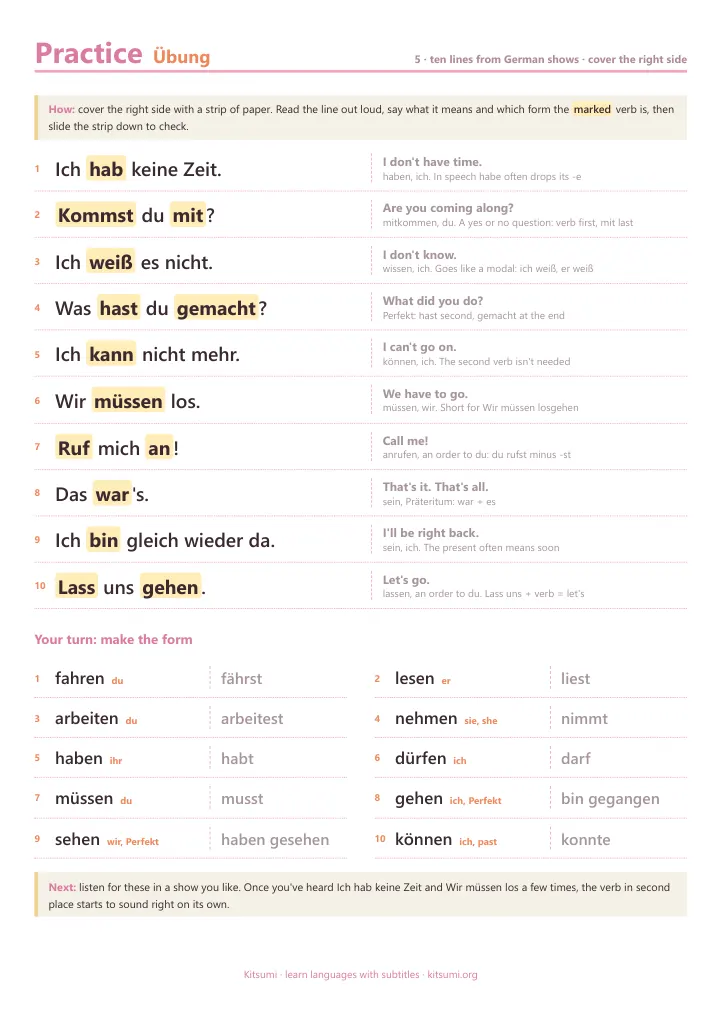 PracticeTen lines you hear in German shows, like Ich hab keine Zeit, Kommst du mit? and Lass uns gehen, to read and name the form, then ten verbs to put in the right form. Cover the answers with a strip of paper and check yourself.
How to use it
- Learn the basic German words and the cases guide first. This guide builds on them.
- Read the first page and say three sentences that start with Heute, with the verb second.
- Say one column of a table each day, then cover it and say it again.
- Cover the answers on the practice page, then listen for the same forms in shows with Kitsumi.
More free German printables
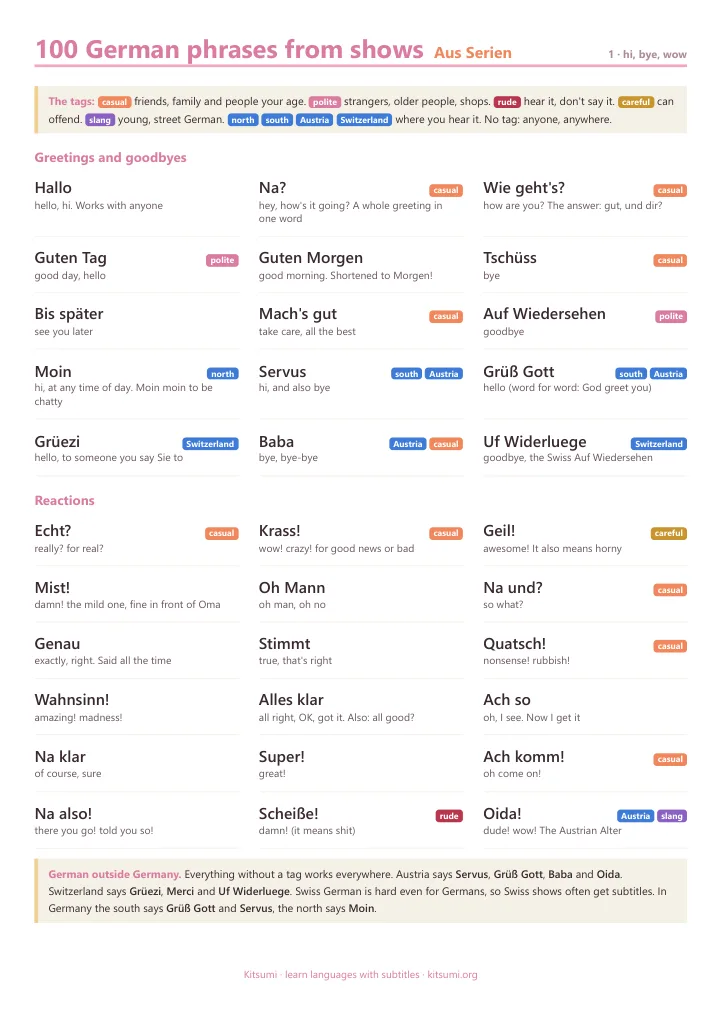 Next step100 German phrases from showsThen pick up the lines shows use all the time: Na?, Doch!, Ich liebe dich or Ich hab dich lieb, Lass mich in Ruhe and what Digga and Ehrenmann really mean.
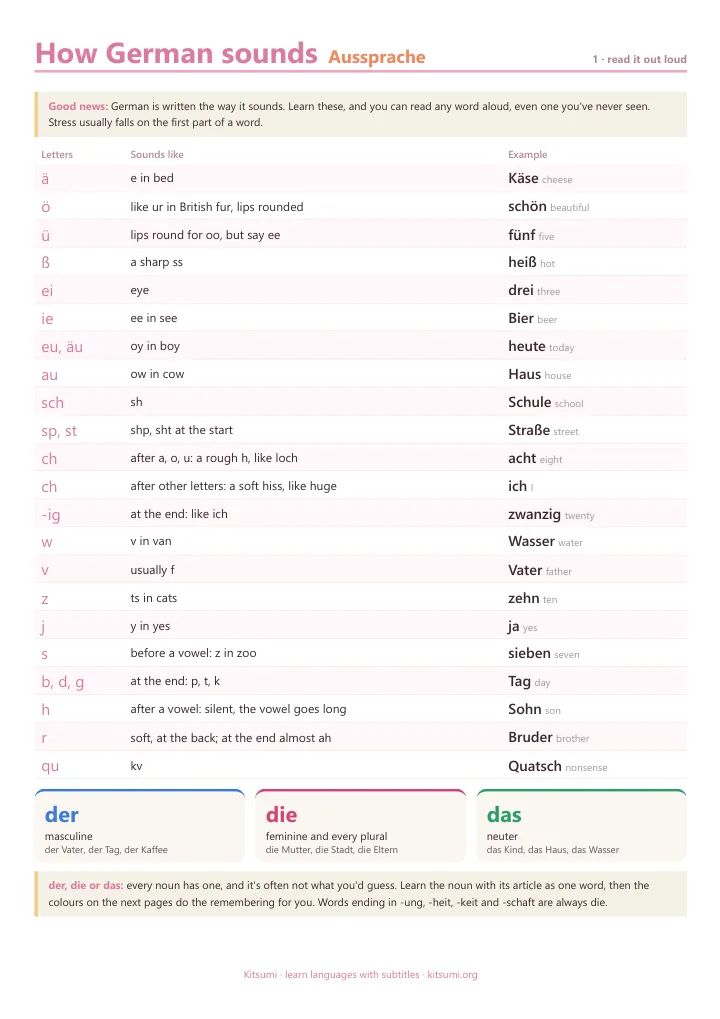 Basic German wordsStart here. How every letter sounds, then 215 first words with der, die and das in colour.
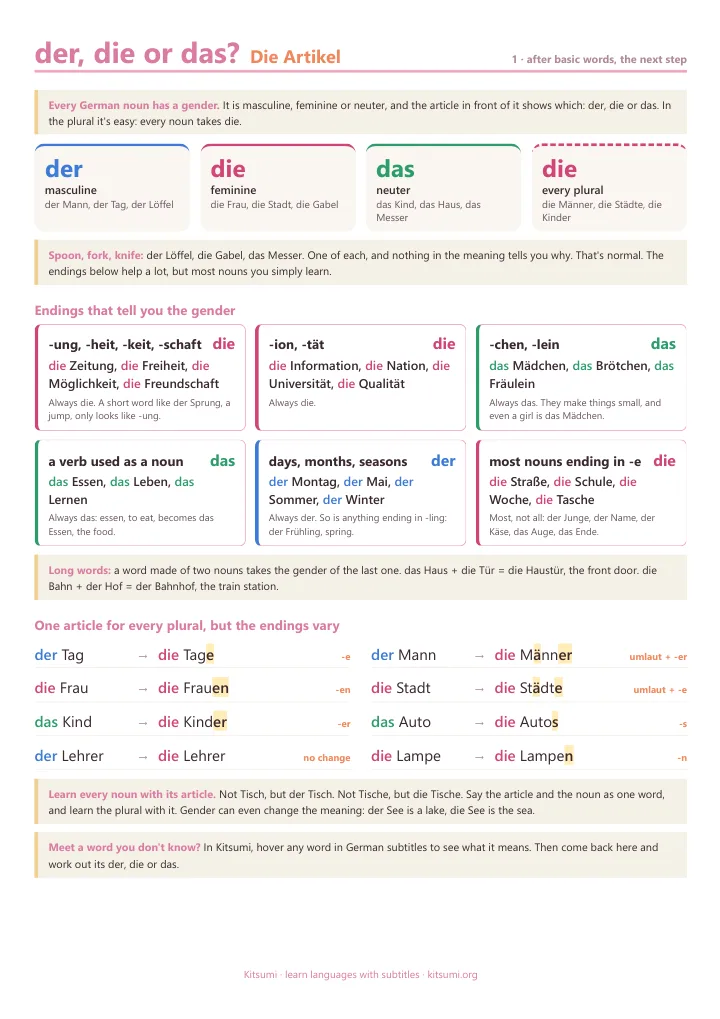 German der, die, das and cases guideMake der, die and das work in sentences: why der turns into den, dem and des.
Questions
Is the German verbs guide free?
Yes. It's a free PDF with no sign-up. Print it, keep it and share it.
Why does the verb go second in German?
That's the rule for a normal statement: one idea first, then the verb. If the sentence starts with Heute, the verb comes next and ich moves behind it: Heute gehe ich.
Do I need haben or sein for the past?
Most verbs use haben: ich habe gegessen. Verbs that move you from A to B or change your state, like gehen, fahren and werden, use sein, and so do sein and bleiben. The guide lists them.