 Kitsumi
Free Chinese grammar guide: 了, 过 and 着
A six-page printable PDF on how Mandarin talks about time with no tenses at all: time words set the scene, and three little words after the verb say whether something is done, has ever happened or is still that way. Every example has characters, pinyin and English.
PDF · 6 pages · 388 KB · no sign-up · free to print and share
Was it useful?Ideas or a mistake? Tell us on Discord
Next, meet these words in real videos: Kitsumi is free for Chrome and Firefox.
What's inside
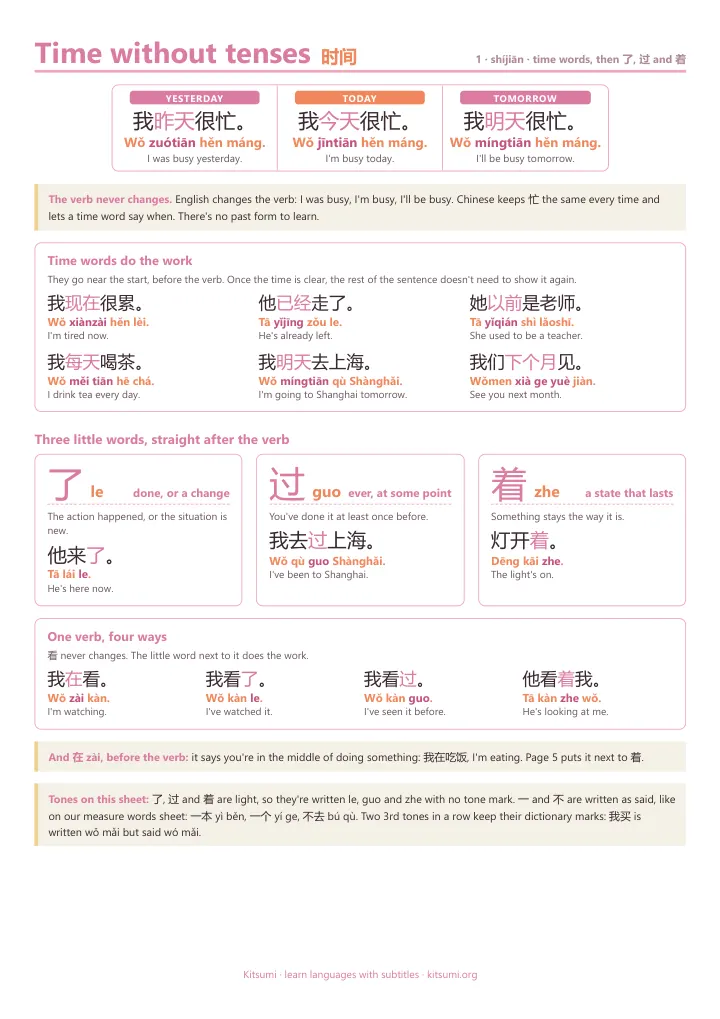
- Time without tenses我昨天很忙, 我今天很忙, 我明天很忙: the verb never changes. Time words like 现在, 已经 and 以前, then 了, 过 and 着 at a glance, and one verb four ways: 在看, 看了, 看过, 看着.
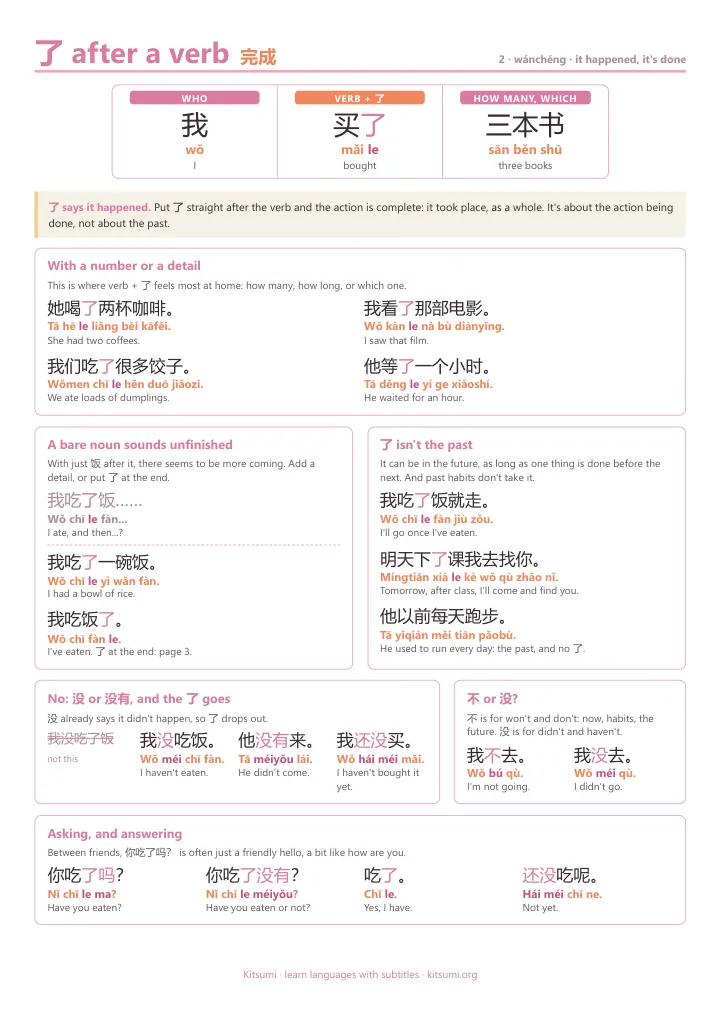
- 了 after a verbSomething happened: 我买了三本书. Why 我吃了饭 on its own sounds unfinished, why 了 isn't a past tense, 没 with no 了, 不 or 没, and asking 你吃了吗? or 你吃了没有?
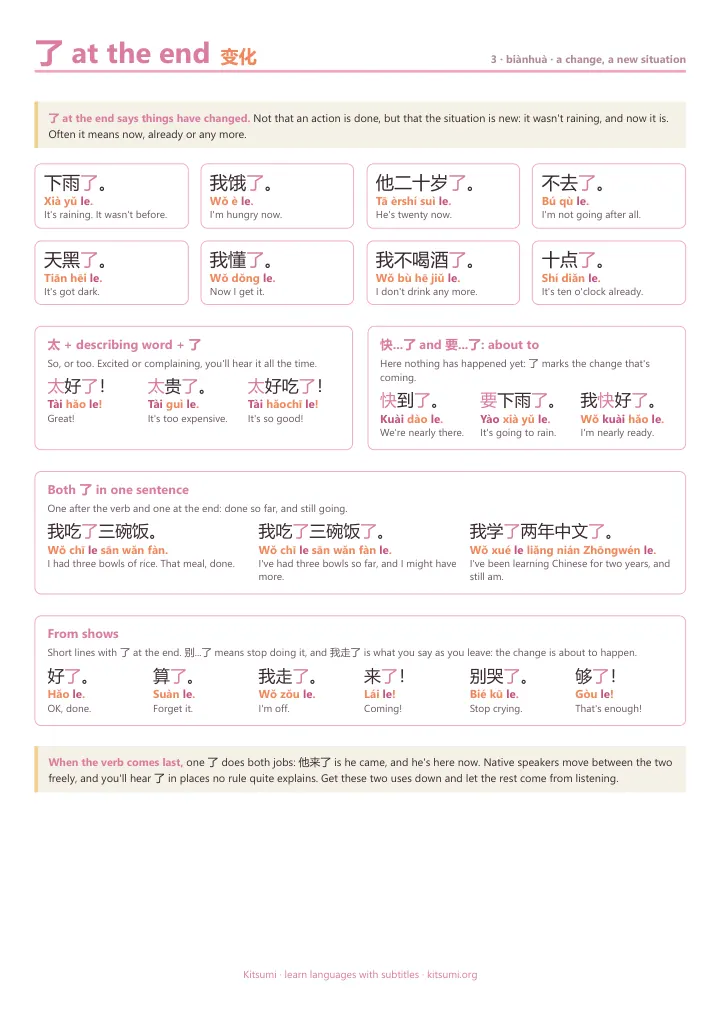
- 了 at the endA change or a new situation: 下雨了, 我饿了, 不去了. Then 太...了, 快...了 and 要...了, both 了 in one sentence, and short lines from shows like 算了 and 别哭了.
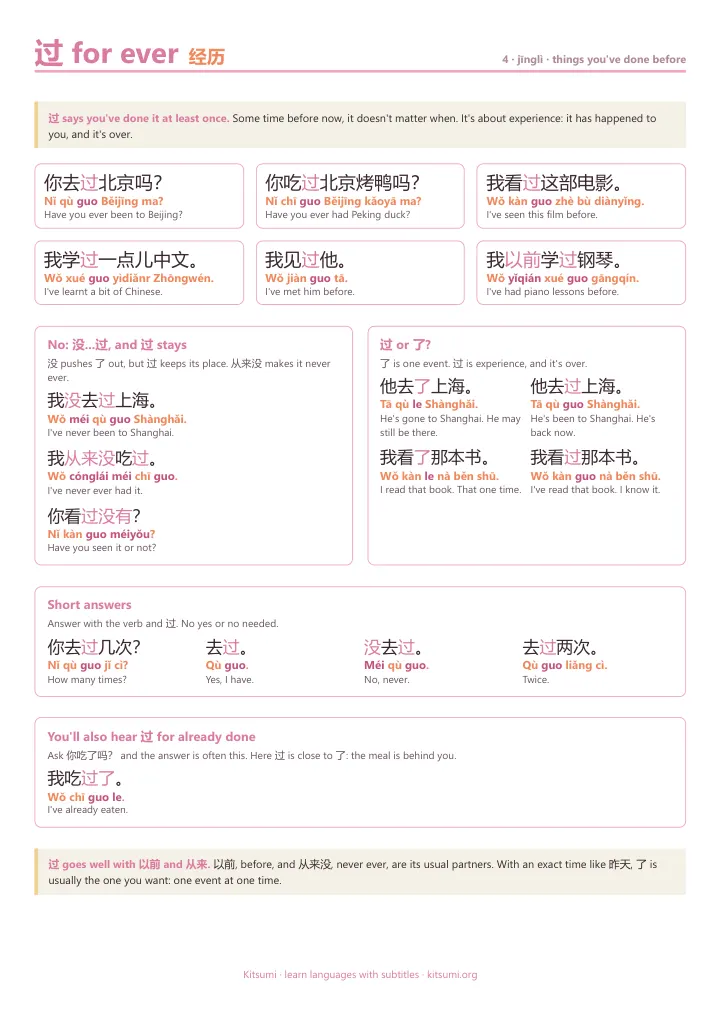 过 for everExperience: 你吃过北京烤鸭吗? 没...过 for never, short answers like 去过两次, and 过 or 了 side by side: 他去了上海 or 他去过上海.
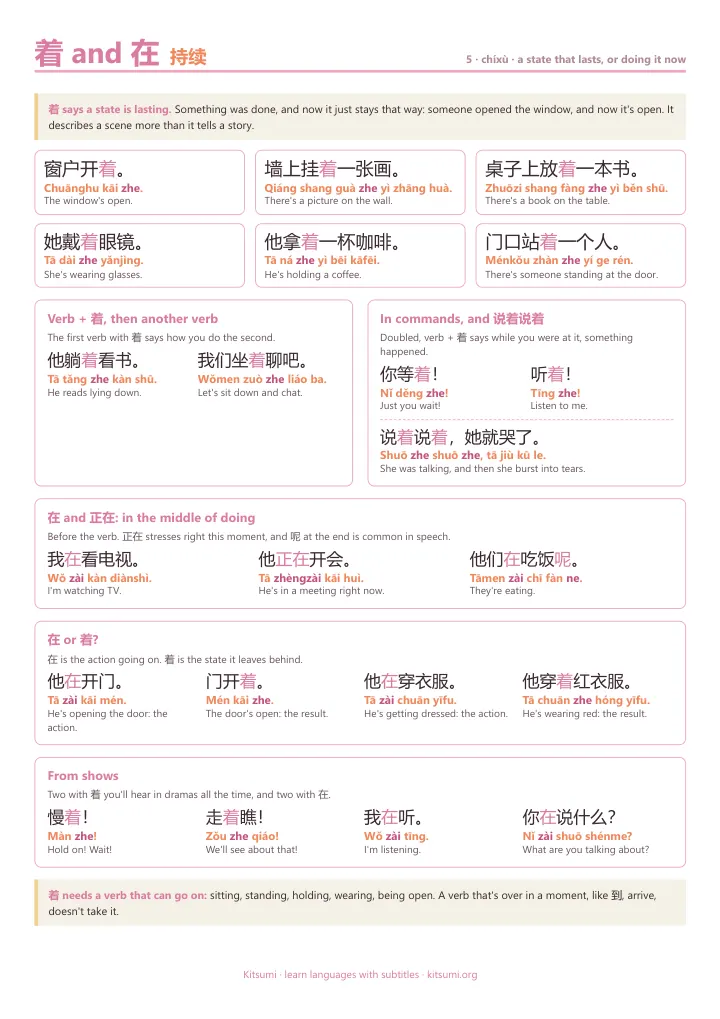 着 and 在A state that lasts: 门开着, 墙上挂着一张画. 着 for how you do something, 说着说着, then 在 and 正在 for doing it now, and 在 or 着 compared.
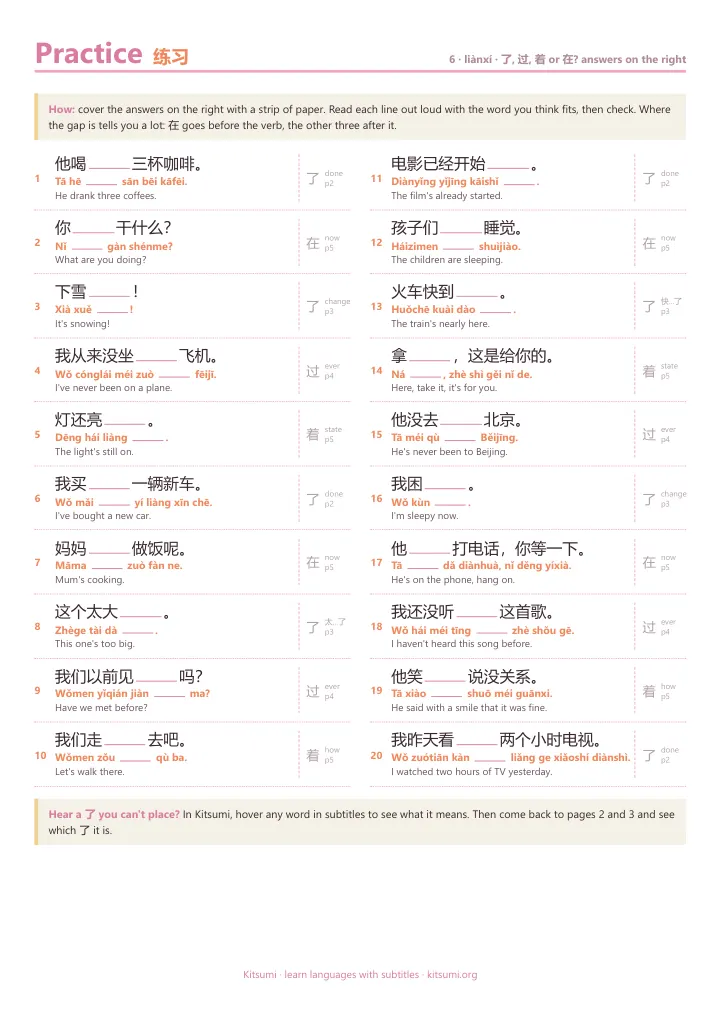 PracticeTwenty sentences with a gap: 了, 过, 着 or 在? Say each one out loud, then check the answer and the page it comes from.
How to use it
- Do the grammar basics guide first. This one goes deeper into the little words it introduces.
- Take one page at a time and read every example out loud, pinyin and all.
- Cover the answers on the practice page, fill each gap out loud, then check.
- Watch something with Chinese subtitles in Kitsumi and listen for 了 at the end of lines.
More free Chinese printables
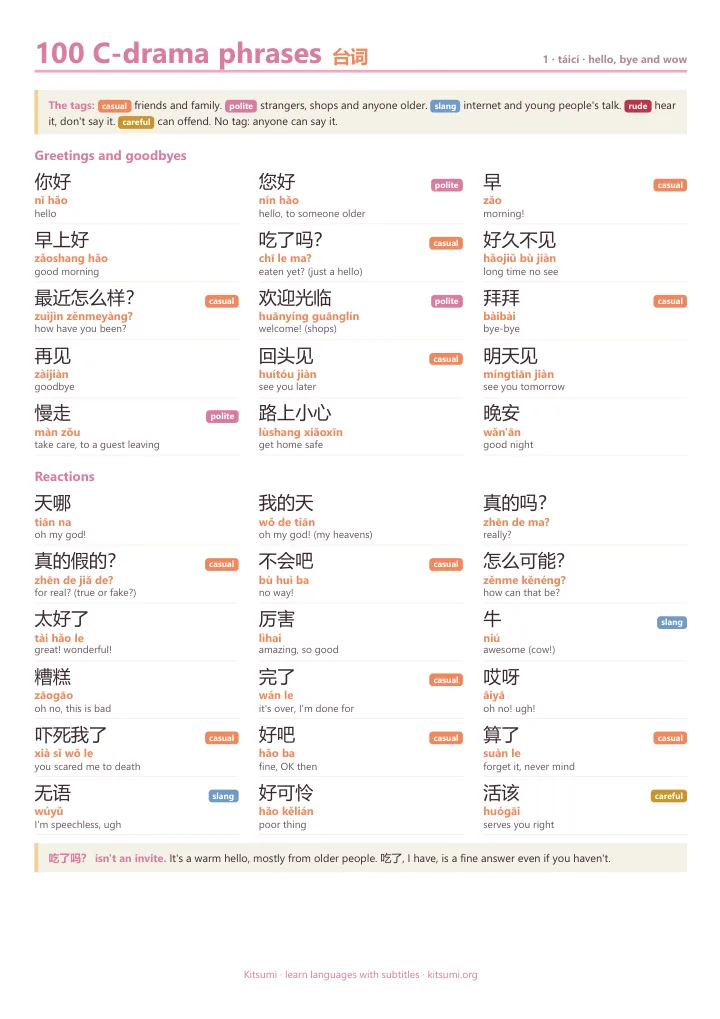 Next step100 Chinese drama phrasesThen pick up the lines dramas use all the time: 天哪, 我想你, 够了 and what 师傅 really means.
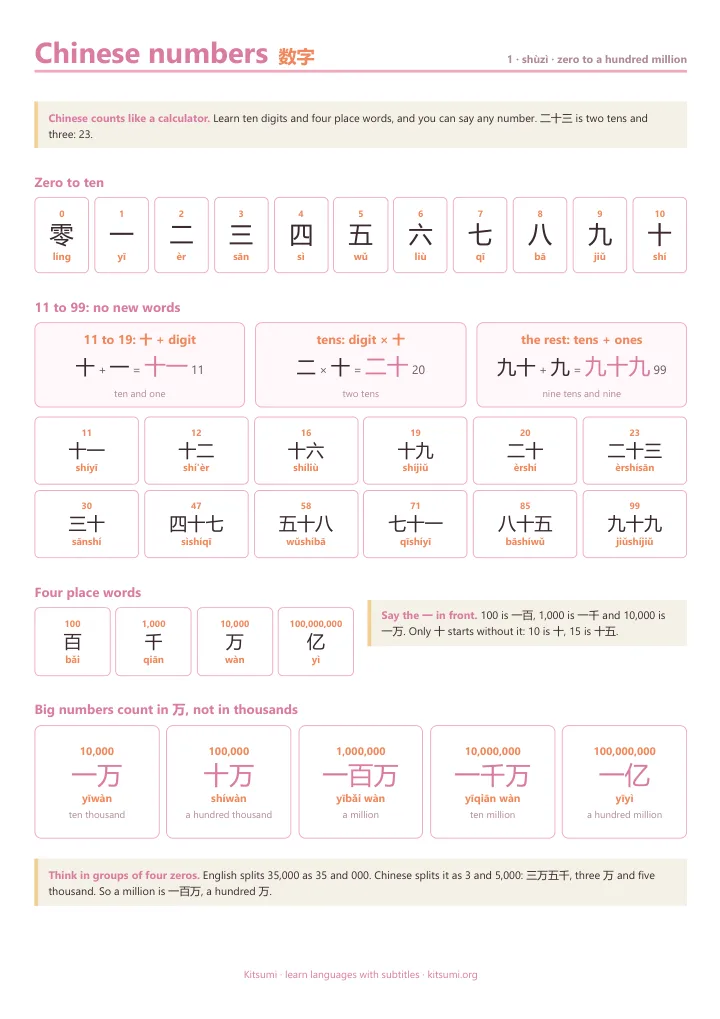 Chinese numbers, time and moneyThen sort out numbers: 一 二 三 up to 万 and 亿, then prices, dates and the time.
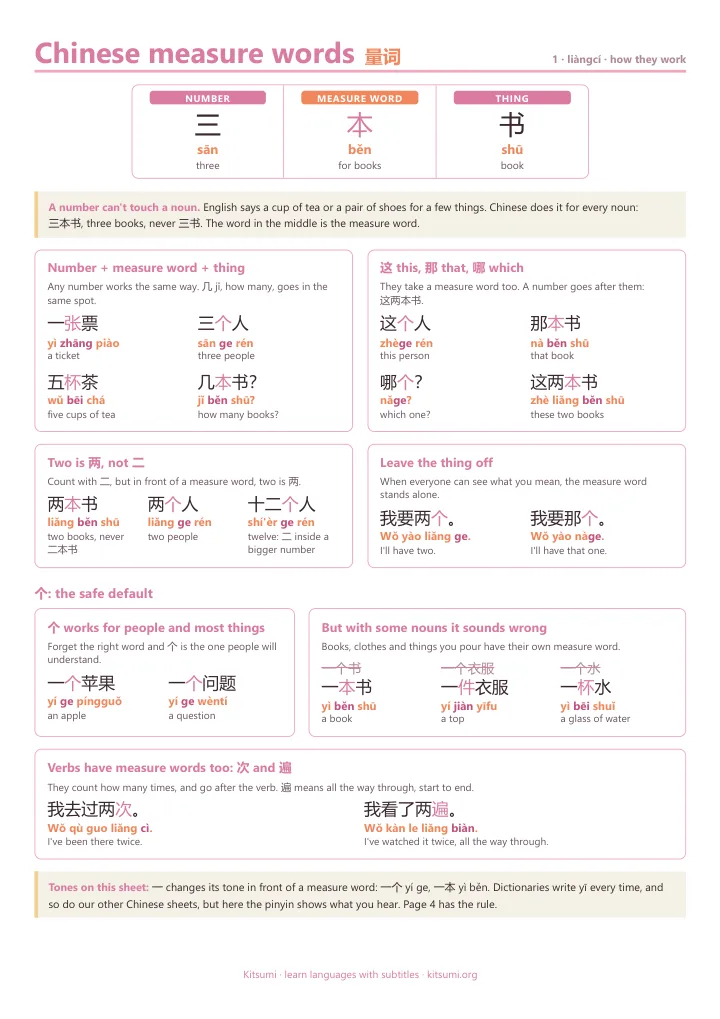 Chinese measure wordsThen learn the word that goes between a number and a thing: 一本书, 两张票, 一杯咖啡.
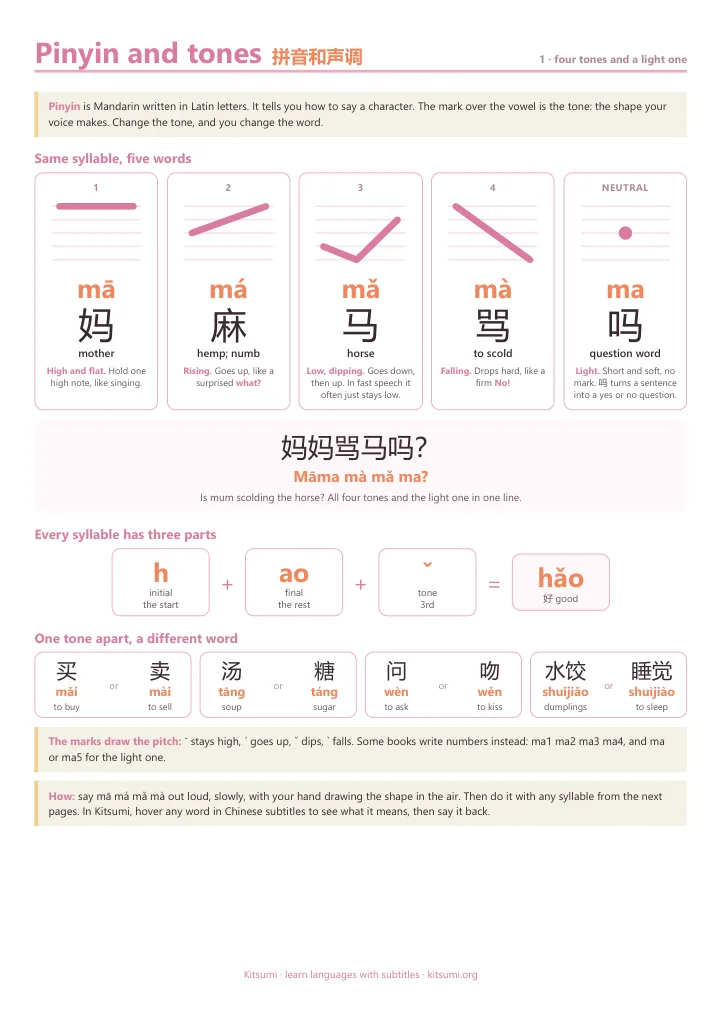 Chinese pinyin and tones chartStart with the sounds. The four tones, every initial and final, and the rules that tie them together.
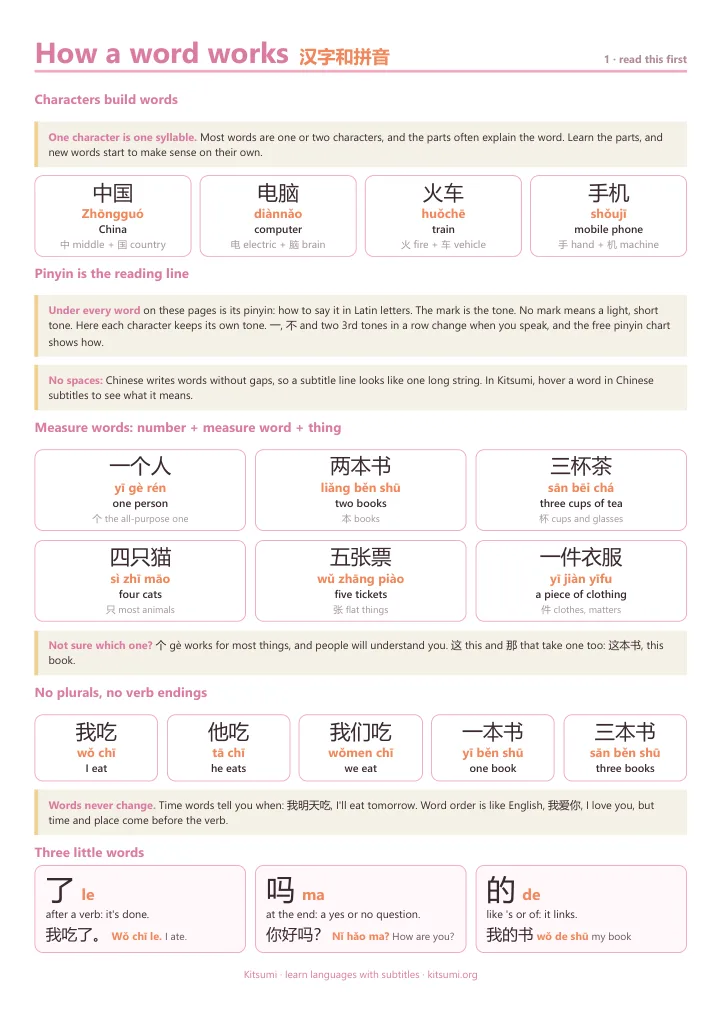 Basic Chinese wordsThen pick up the first 227 words: greetings, family, numbers, food, verbs and words from shows.
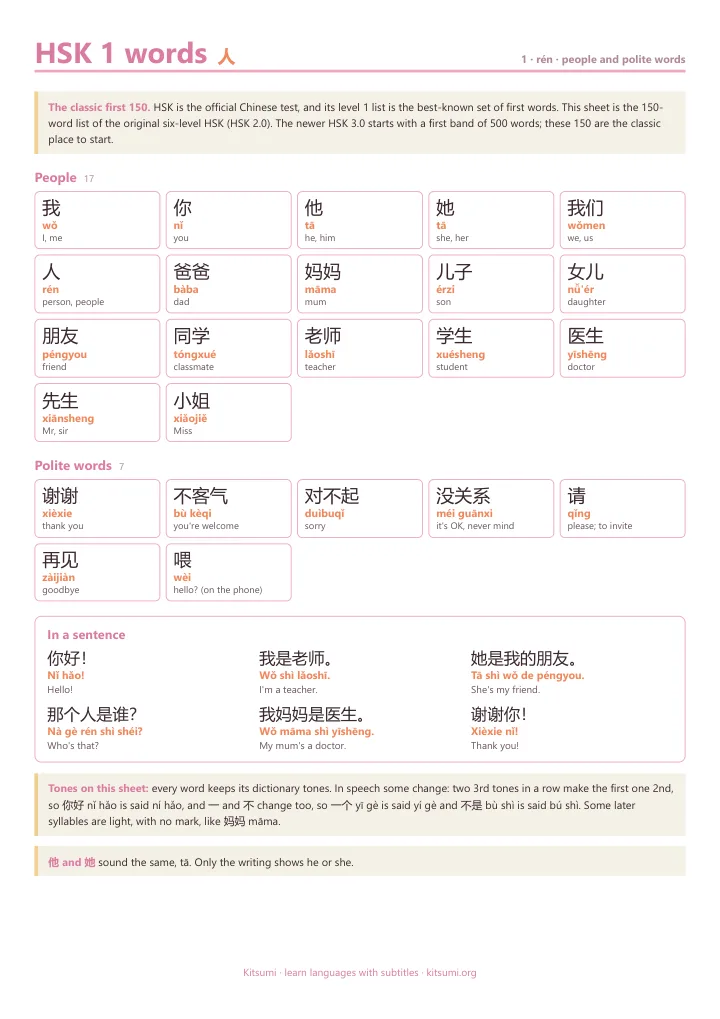 Chinese HSK 1 wordsThen learn the 150 words of HSK 1, the classic starting list, grouped by meaning.
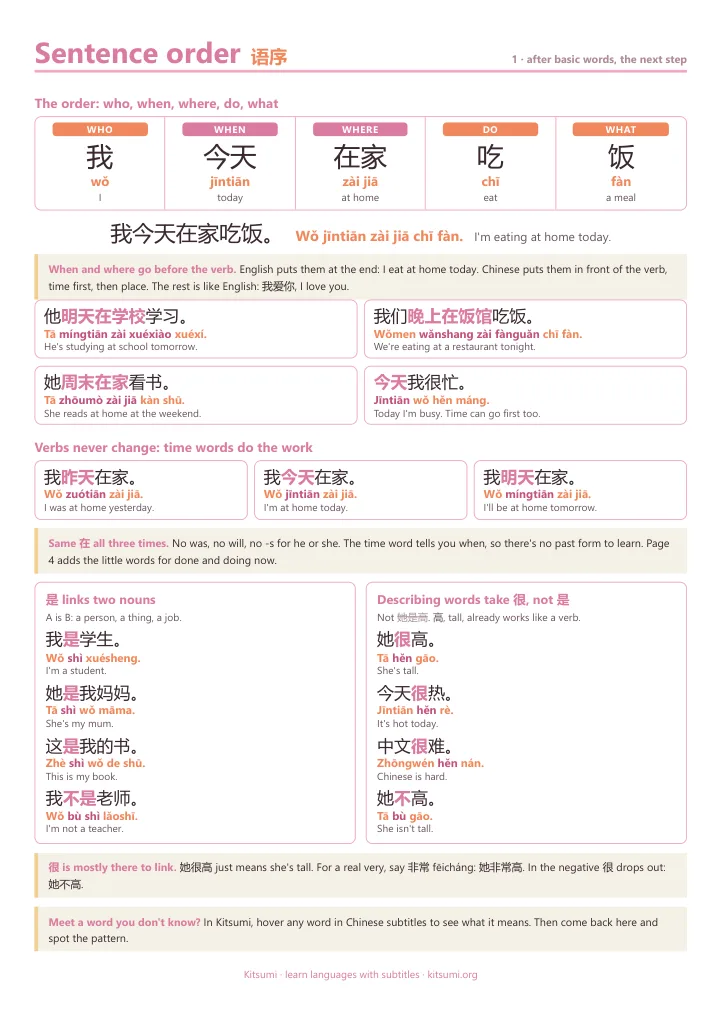 Chinese grammar basicsThen put words together: word order, questions, measure words, and 了, 过 and 在 for done, ever and doing now.
Questions
Is the 了, 过 and 着 guide free?
Yes. It's a free PDF with no sign-up. Print it, keep it and share it.
Is it Mandarin, and which characters does it use?
Mandarin, as spoken in mainland China, with simplified characters and pinyin for every example.
Is 了 the past tense?
No. Chinese has no tenses. 了 after a verb says an action is done, and that can even be in the future, like 我吃了饭就走, I'll go once I've eaten. 了 at the end says something has changed. Pages two and three show both.