 Kitsumi
Free basic Esperanto words
A seven-page printable PDF for your first weeks of Esperanto: how it sounds, how words work, 260 everyday words, sayings and sentences to read aloud.
PDF · 7 pages · 298 KB · no sign-up · free to print and share
Was it useful?Ideas or a mistake? Tell us on Discord
Next, meet these words in real videos: Kitsumi is free for Chrome and Firefox.
What's inside
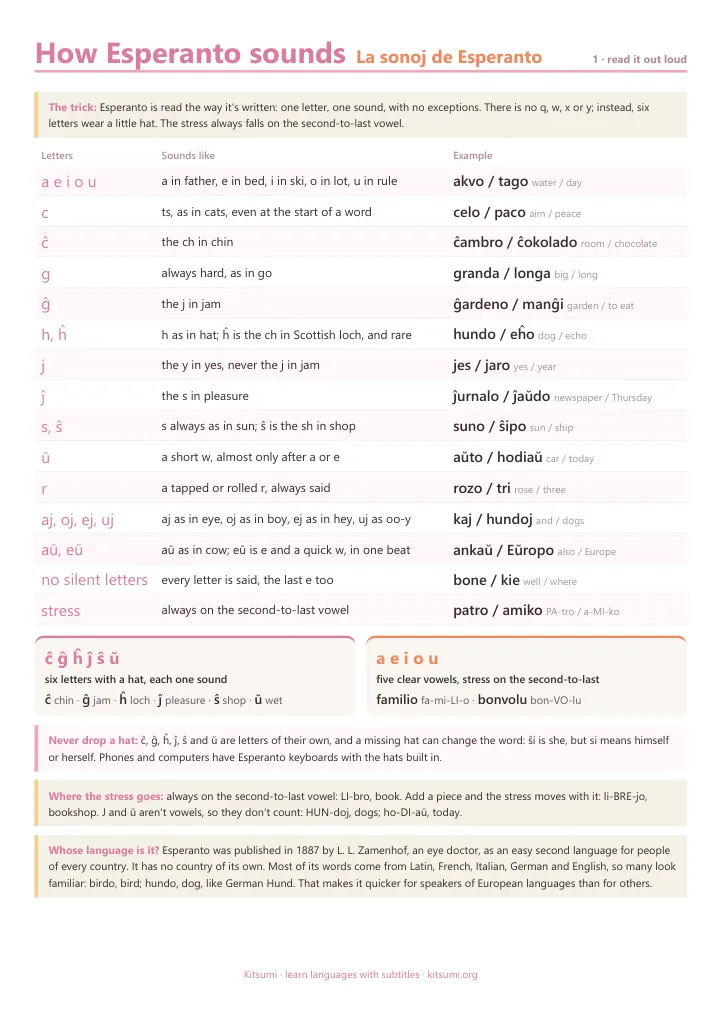
- How Esperanto soundsRead the way it's written: one letter, one sound, five clear vowels, c as ts and j as y, the six letters with a hat (ĉ, ĝ, ĥ, ĵ, ŝ and ŭ), aj, oj, ej, uj, aŭ and eŭ, and the stress always on the second-to-last vowel.
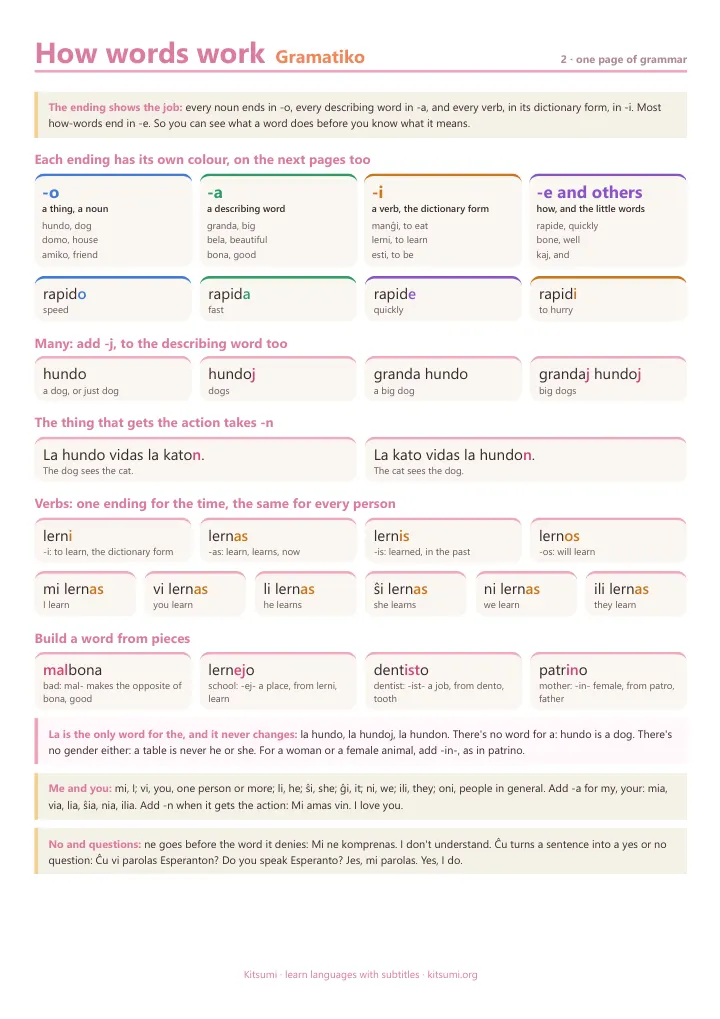
- How words workEndings that show the job (-o for a thing, -a to describe, -e for how, -i for a verb), -j for more than one, -n for the thing that gets the action, la as the only the, no gender, -as, -is and -os for now, past and future, the same for every person, ne and ĉu, and words built from pieces like malbona, lernejo, dentisto and patrino.
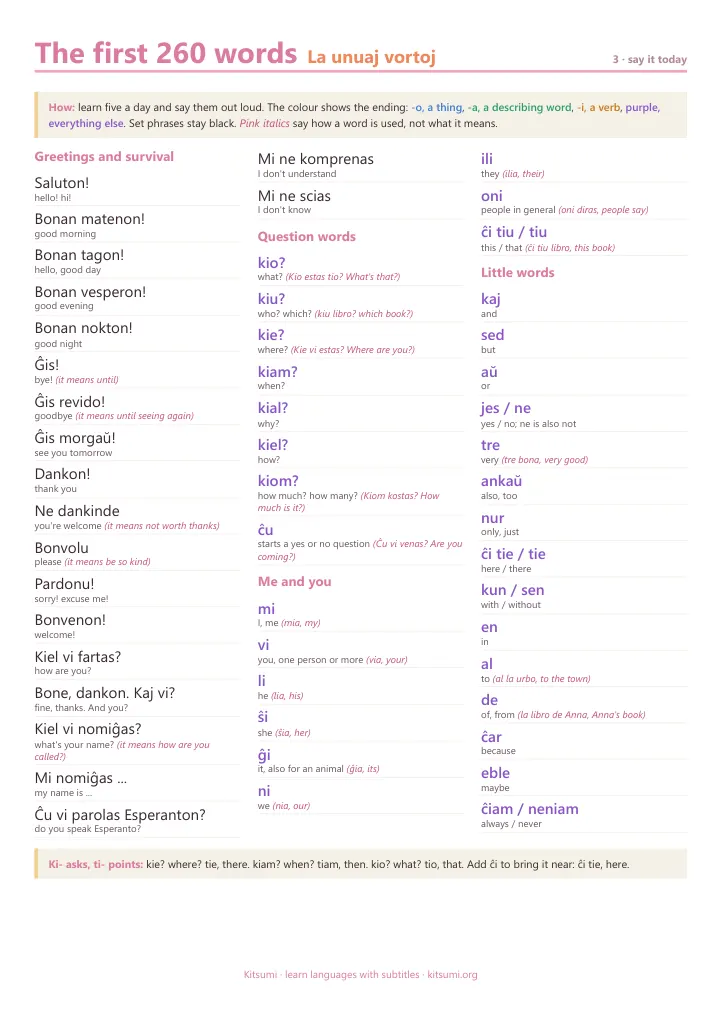
- 260 words, then sayingsSaluton!, dankon and bonvolu, family, numbers and telling the time, food, places and verbs. Then ne gravas, bonan apetiton and bonŝancon, ĉu vere? and kompreneble!, what to call people, and ten sentences to read before you check.
How to use it
- Read the sounds page aloud, one row at a time. Keep it next to you while you read the rest.
- Read the grammar page twice. You don't need to learn it, just to notice the four colours and how the ending tells you what a word does.
- Learn five words a day. Cover the grey English on the last page, read each sentence aloud, then slide the paper down to check.
- Watch or read something in Esperanto with Kitsumi and hover any word you don't know to see what it means.
Printables for other languages
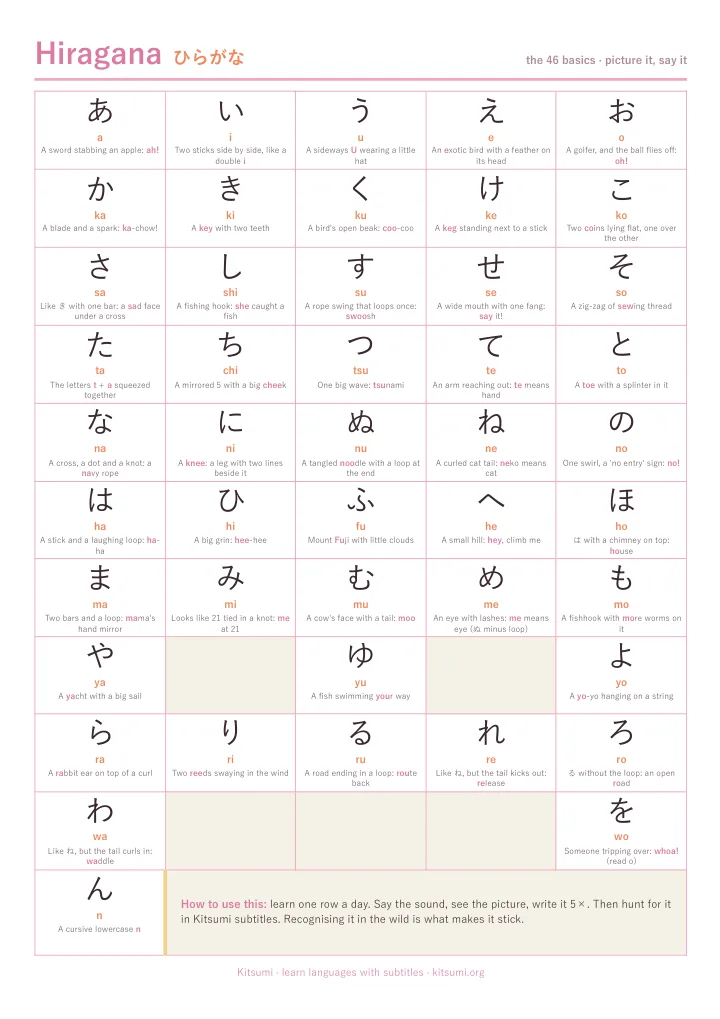 Hiragana and katakana chartLearn to read first. Every hiragana and katakana, with a picture to remember it by.
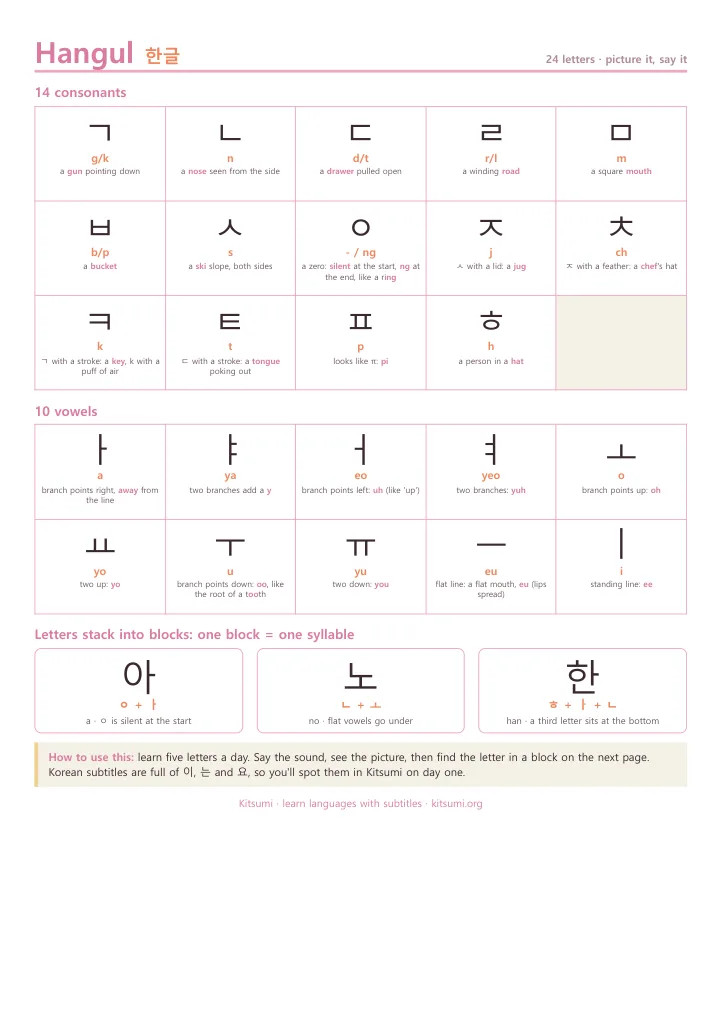 Korean Hangul chartLearn to read first. All 24 letters with a picture to remember each, and how they stack into blocks.
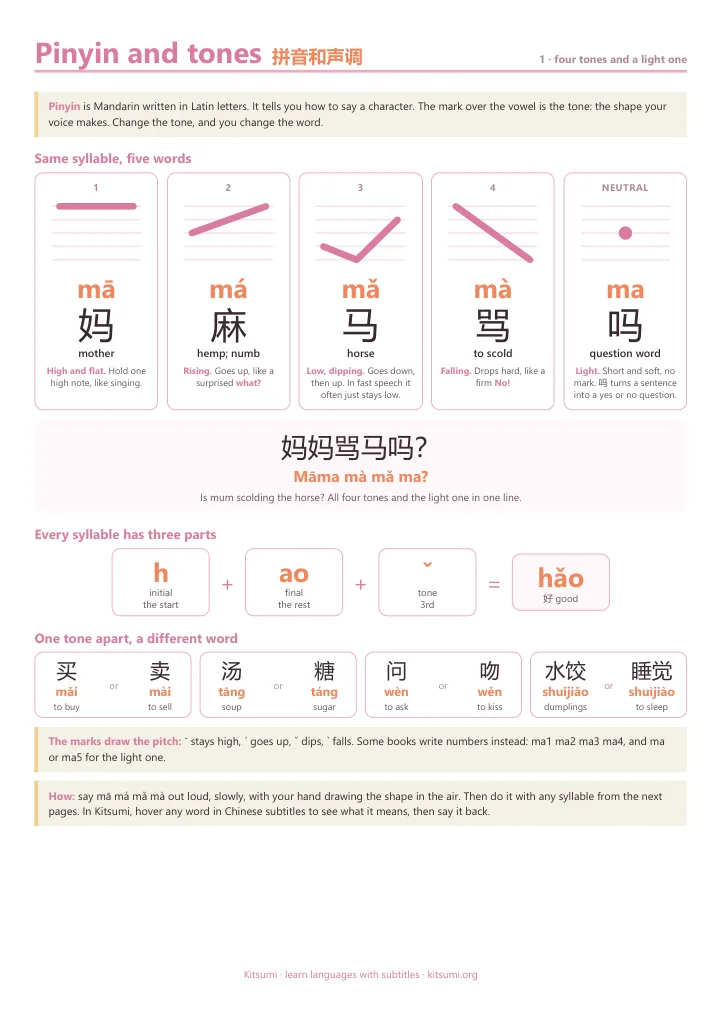 Chinese pinyin and tones chartStart with the sounds. The four tones, every initial and final, and the rules that tie them together.
Questions
Is it free?
Yes. It's a free PDF with no sign-up. Print it, keep it and share it.
Where is Esperanto spoken?
It has no country of its own. Esperanto was published in 1887 as an easy second language for everyone, and its speakers are spread around the world. They meet online, in local clubs and at yearly congresses.
What are the coloured words?
Esperanto has no masculine and feminine, but every word's ending shows its job. Blue words end in -o and are things, green ones end in -a and describe, amber ones end in -i and are verbs, and purple marks everything else, so the colour tells you what a word does at a glance.